
- Stone14
- Reports3
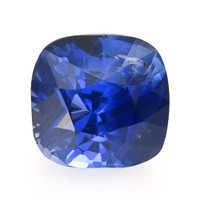


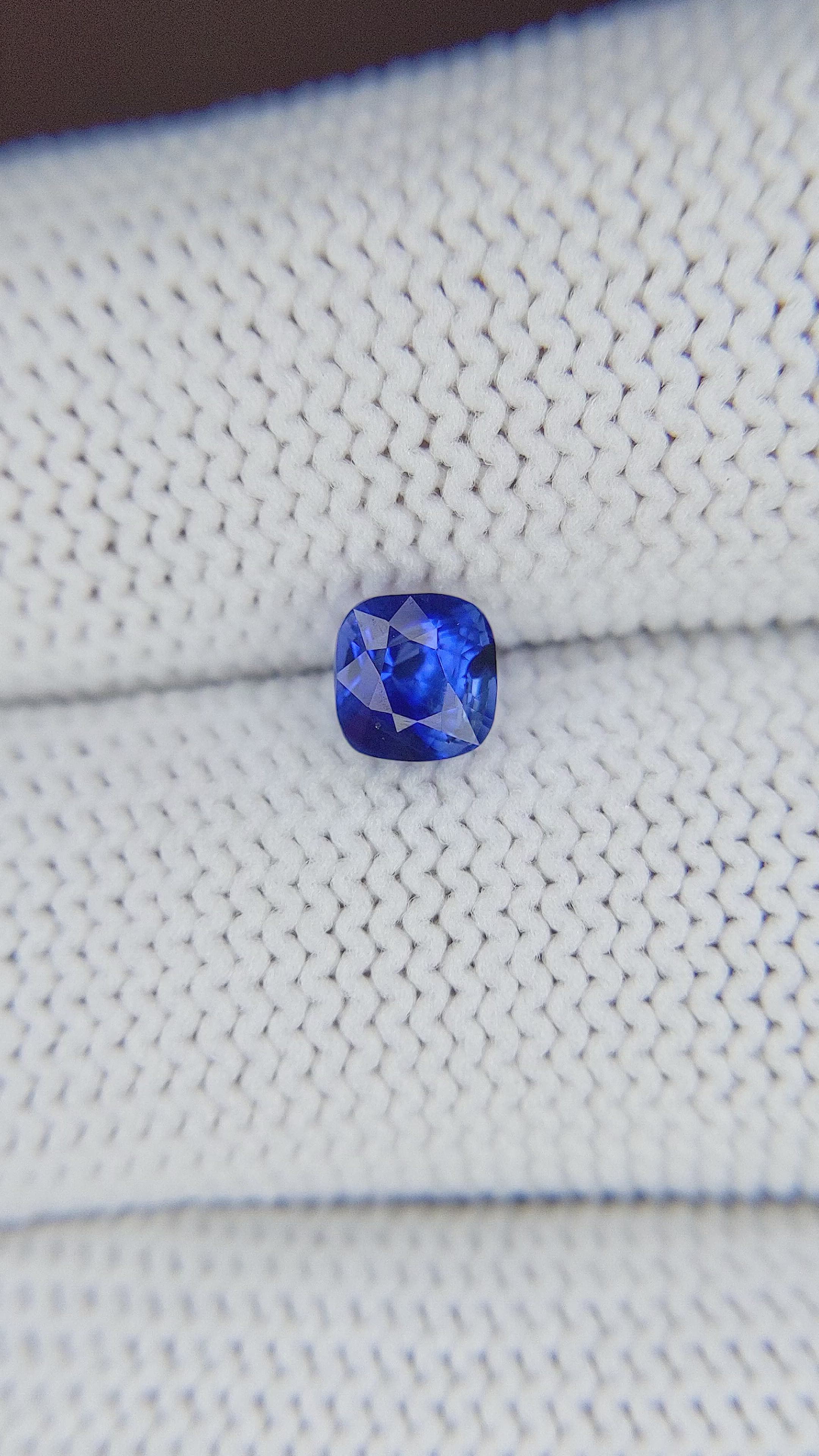
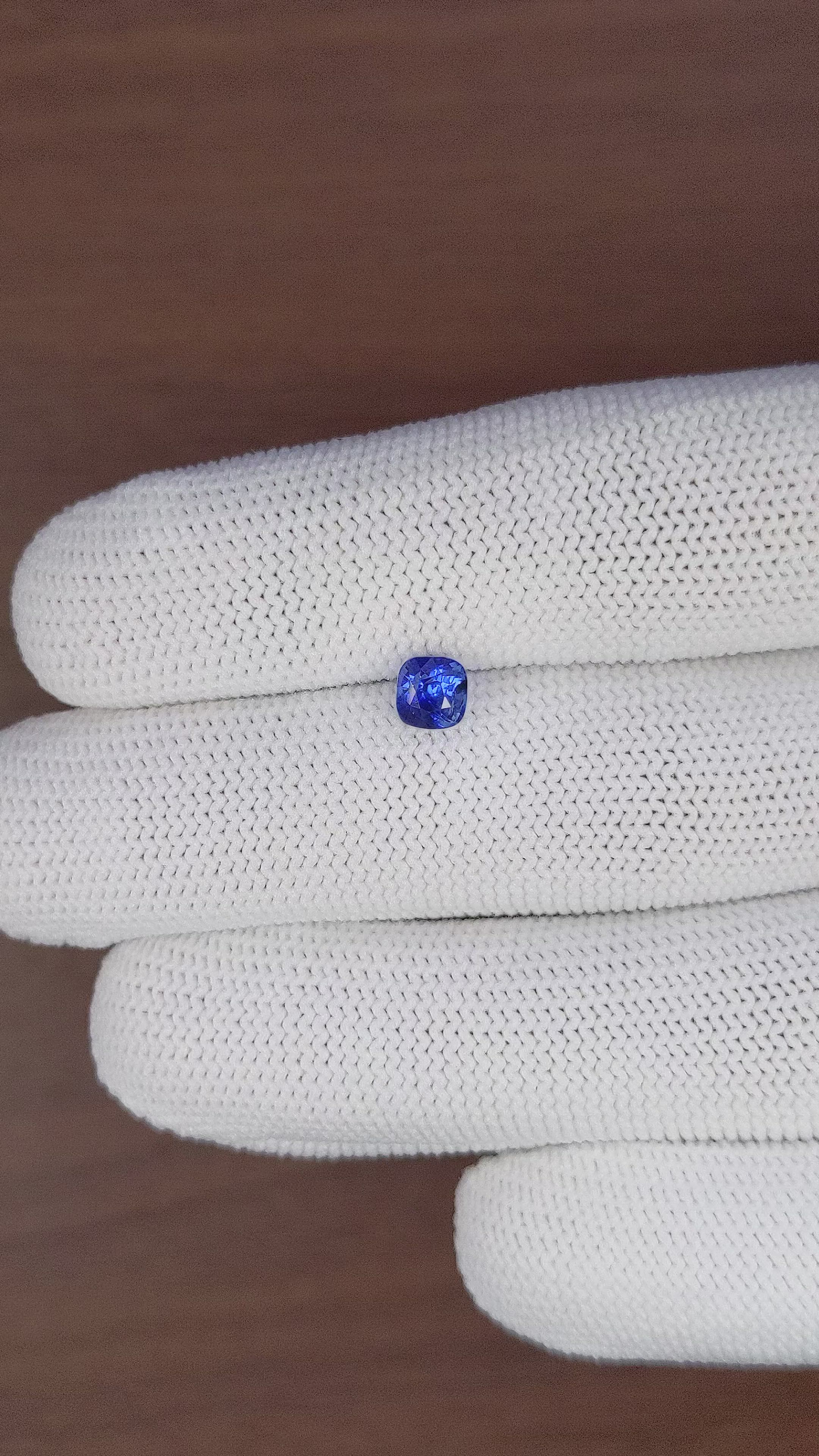
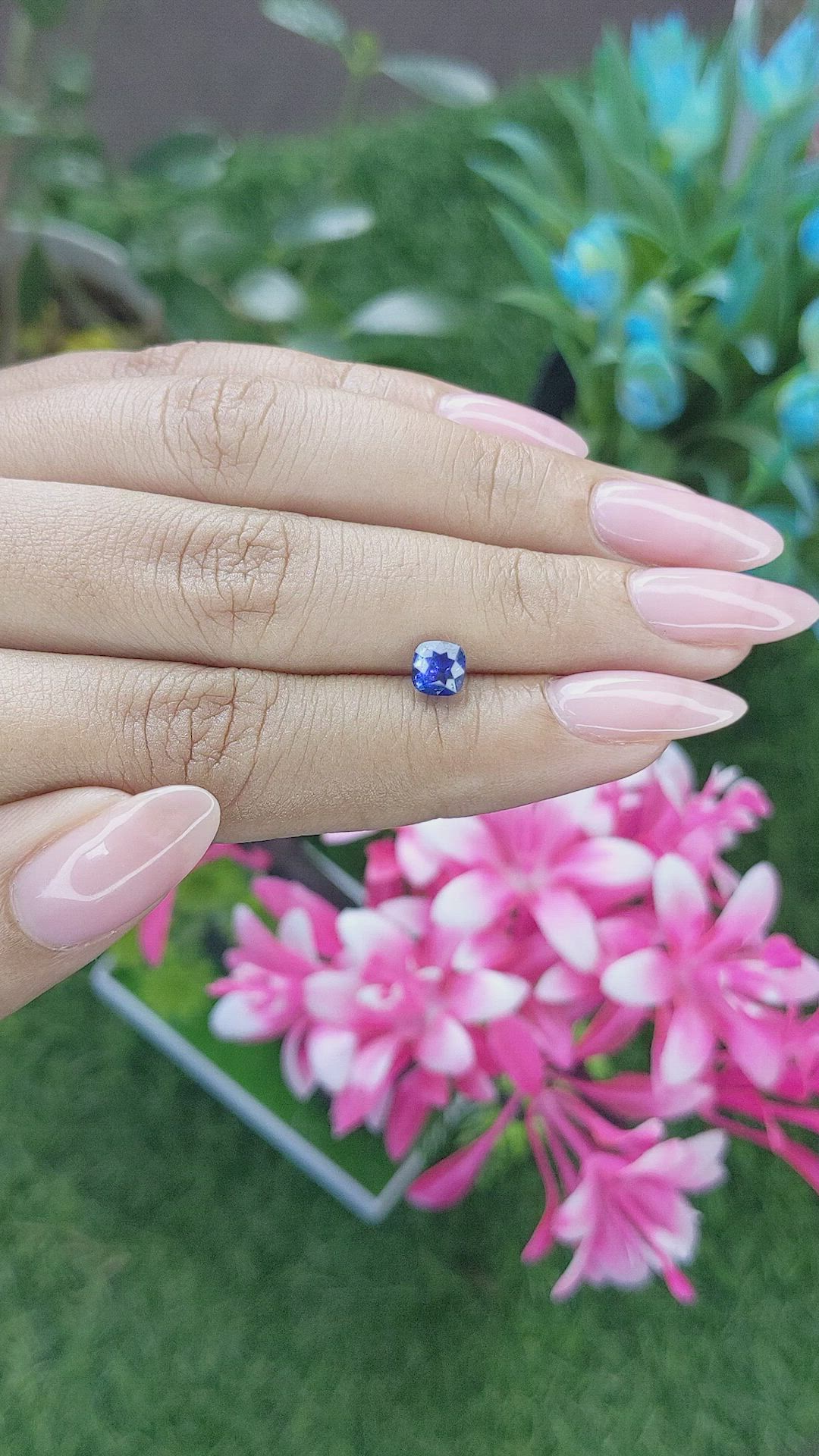
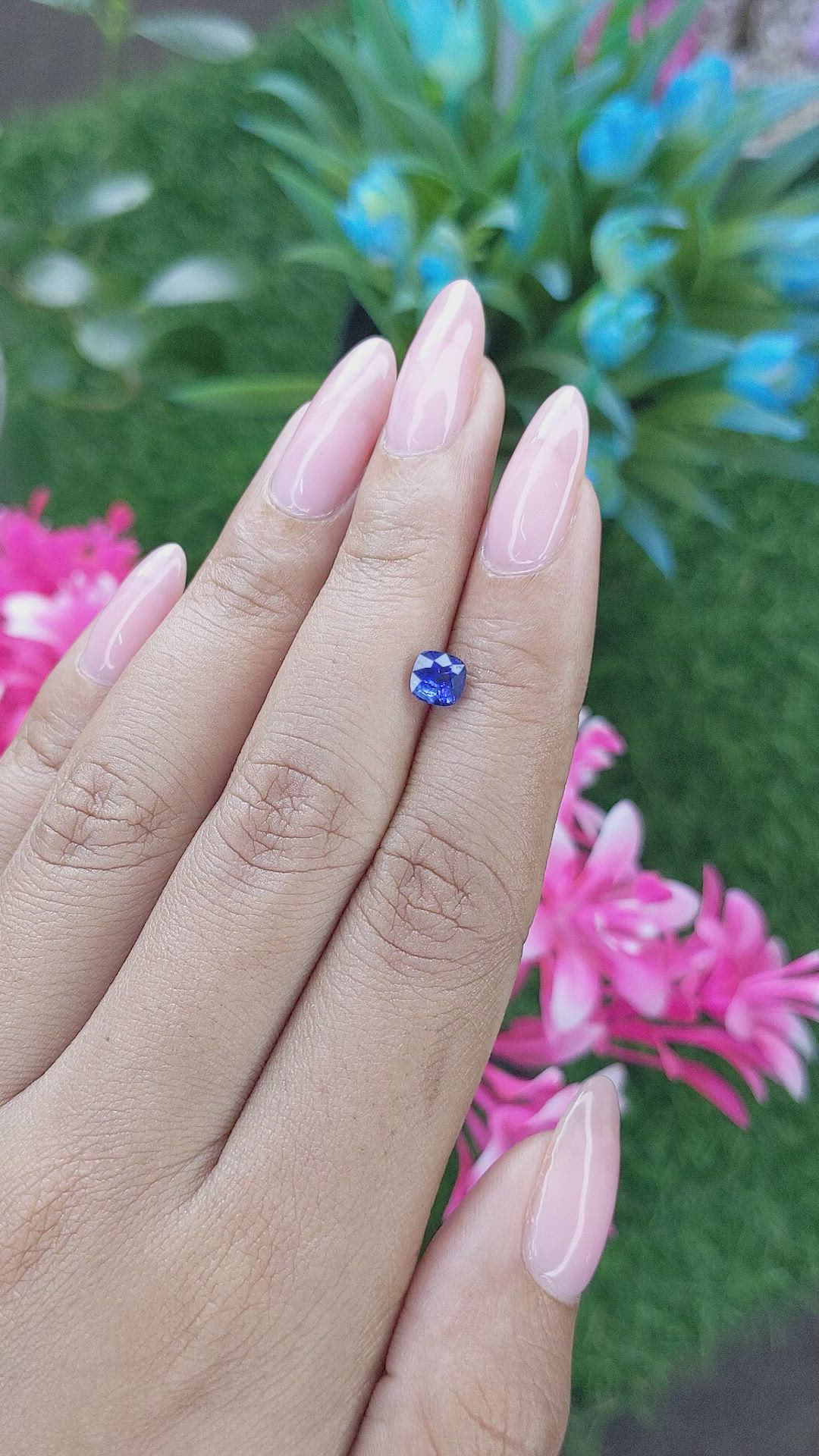
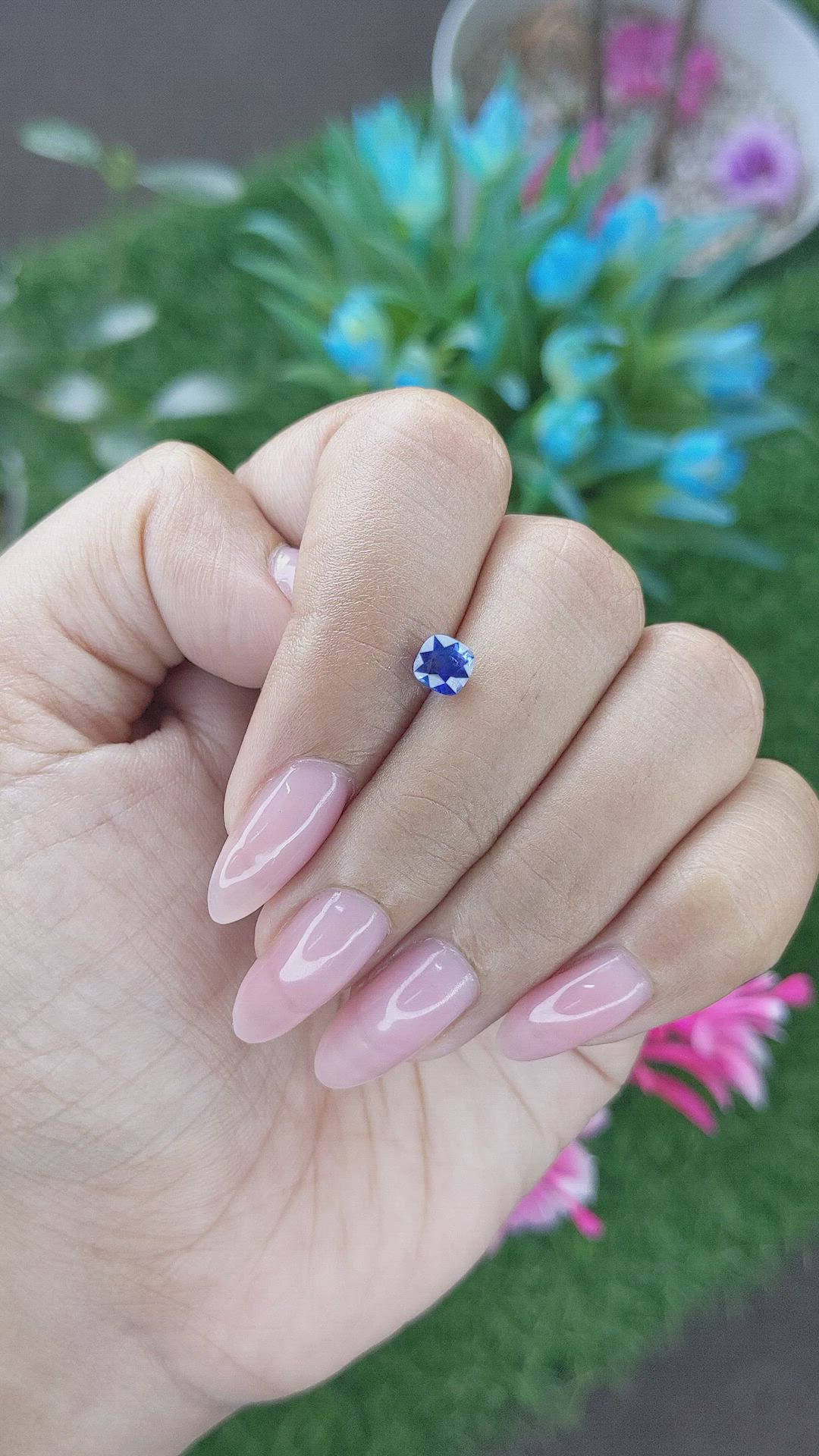




0.93 Ct. Blue Sapphire from Africa
This loose stone is available to ship now
Item ID: | S36316 |
|---|---|
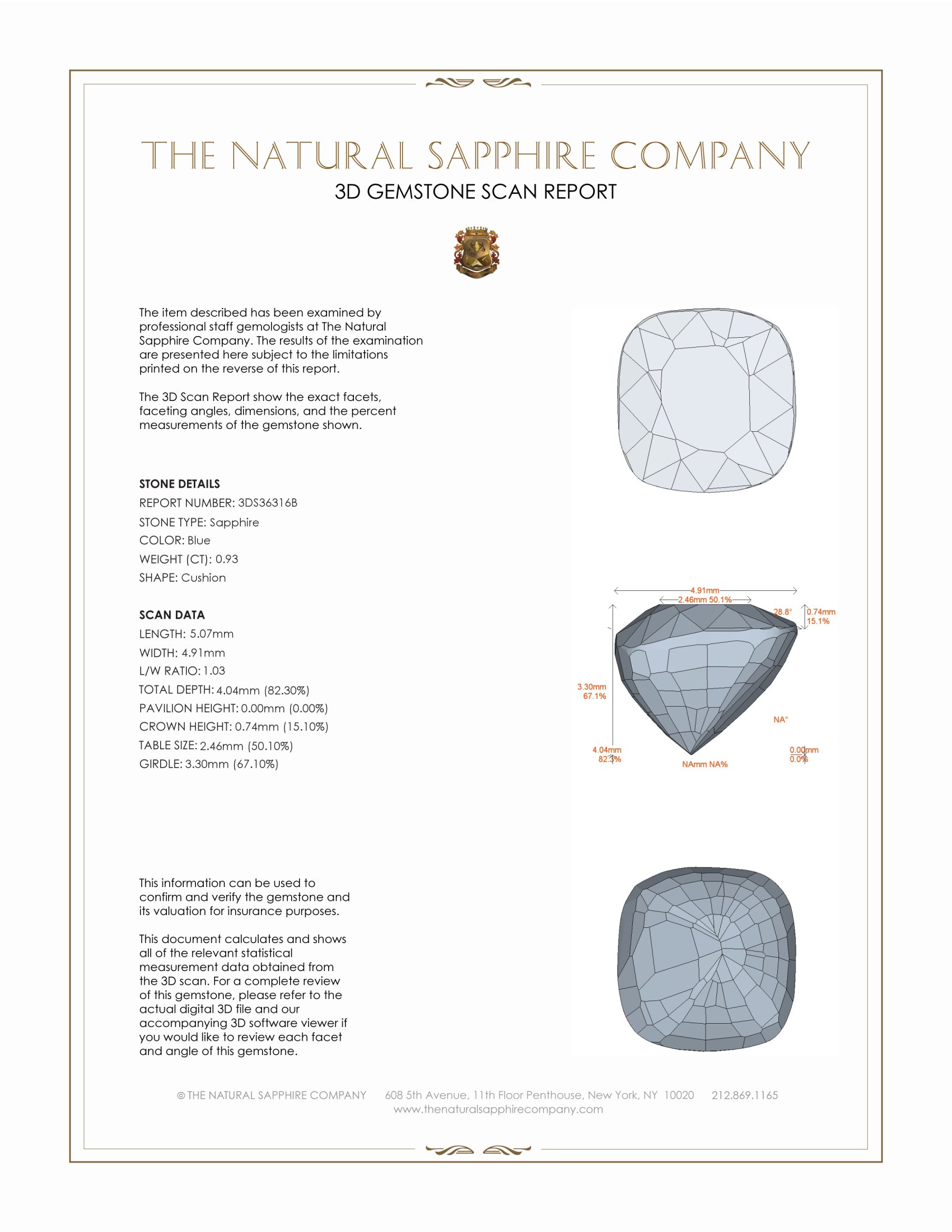
Dimensions (MM): help | Length: 5.07 Width: 4.91 Height: 4.04 |
Weight: | 0.93 Ct. |
Color: help | Blue |
Color intensity: help | Vivid |
Clarity: help | Slightly Included |
Shape: help | Cushion |
Cut: | Mixed Brilliant |
Cutting style: | Faceted |
Enhancements: help | Heat Treated |
Origin: help | Africa |
Per carat price: help | $1,505 |
This 0.93 carat cushion shape blue sapphire from The Natural Sapphire Company is an exercise in measured proportions and refined cutting, with dimensions of 5.07 by 4.91 by 4.04 millimeters. The cutter chose a mixed brilliant faceting schema, integrating a brilliant facet arrangement across the crown with a modified pavilion designed to enhance return of light while preserving color saturation. The cushion outline maintains soft, slightly rounded corners, and the overall depth measures approximately 81 percent when calculated against the mean diameter, a depth that works to deepen the stone's chroma while demanding precise facet planning to avoid loss of light. The table is balanced to present a principal window for direct viewing, while the crown angles and facet junctions generate controlled scintillation across a compact face. An excellent polish emphasizes crisp facet junctions, reduces surface diffusion of light, and produces the lively, glassy luster expected by discerning gem buyers.
Clarity is graded slightly included at eye level, a practical classification that reflects minor internal features which do not materially compromise the gem's transparency. Under loupe and microscopic examination the stone shows characteristic inclusions consistent with natural corundum, including fine oriented silk and a few pinpoint crystals, distributed in a manner that is typical for many high quality sapphires from African deposits. These inclusions interact with light to create zones of localized contrast, which can enhance visual depth without creating obvious dead windows. The slightly included clarity offers a favorable trade off, permitting a vivid color expression and strong transparency while maintaining the stone's structural integrity for daily wear. For setting and mounting, jewelers will note that the internal features sit well beneath the girdle plane, allowing secure prong placement that does not intersect key inclusions.
Color is the defining attribute of this sapphire, evaluated as vivid intensity with a strong, pure blue saturation and only minimal secondary violet undertones. The chromophore mechanism in blue corundum is driven by iron and titanium trace elements, and the optical result here is a deep, saturated blue that responds strongly to changes in light angle due to pleochroic behavior, showing slightly varied tones on different crystal directions. The sapphire has been heat treated, a controlled, industry standard enhancement intended to reduce silk and to optimize the balance between tone and saturation. High temperature treatment modifies the distribution and nature of microscopic inclusions and can adjust oxidation states of trace elements to achieve a more consistent and vivid blue, and when performed under responsible and disclosed conditions it is considered a stable, permanent enhancement. The combination of vivid natural potential and careful heat treatment yields a stone with both resilience and color intensity that will remain stable under normal wear conditions.
The geological narrative of this gemstone traces back millions of years, into a deep time sequence of metamorphism, magmatism, uplift, and erosion. Corundum forms where aluminum is abundant and silica is relatively scarce, conditions that arise during high grade regional metamorphism of aluminous sediments or within alkali igneous environments that concentrate aluminum and incompatible elements. In the African terranes where this sapphire originated, intense tectonic collisions and thermal regimes created pockets of stability for corundum to nucleate and grow, with trace iron and titanium incorporated into the crystal lattice to produce the blue hue. Over geological timeframes, heat and pressure allowed the corundum crystals to grow slowly, developing well formed crystal habits, and subsequent uplift exposed these rocks to surface weathering. Physical erosion liberated crystals from their primary host, transporting them through fluvial systems and depositing them into alluvial gravels and concentrated placer deposits. It is from these secondary deposits that many of the finer, transparent crystals are recovered, selected by experienced miners and handed to cutters who orient the rough to preserve size, color zoning, and optimal facets.
Craftsmanship in the cutting and finishing of this stone is focused on maximizing optical return from a relatively deep pavilion, and on producing a durable, wearable gem for fine jewelry. The mixed brilliant approach on the crown creates a network of small, precisely terminated facets that return flash and scintillation, while the pavilion geometry is tuned to allow internal multiple reflections that deepen tone and reduce leakage of blue into windows. The excellent polish and controlled facet symmetry allow clean facet junctions and balanced light performance, making the stone suitable for center settings where color and brilliance are paramount. For mounting recommendations, a low bezel or a protective four prong design that supports the rounded cushion corners will secure the stone and permit light to enter the pavilion without obstruction. The natural and treated history of the sapphire is fully disclosed, and The Natural Sapphire Company stands behind the sourcing and the gemological documentation provided with this piece. This cushion blue, with its precise dimensions, vivid chroma, and meticulous finish, represents a confluence of ancient geological processes and contemporary lapidary skill, offering a measured, technically refined choice for buyers who appreciate the material science and workmanship that define exceptional sapphires.


