
- Ring15
- Reports3


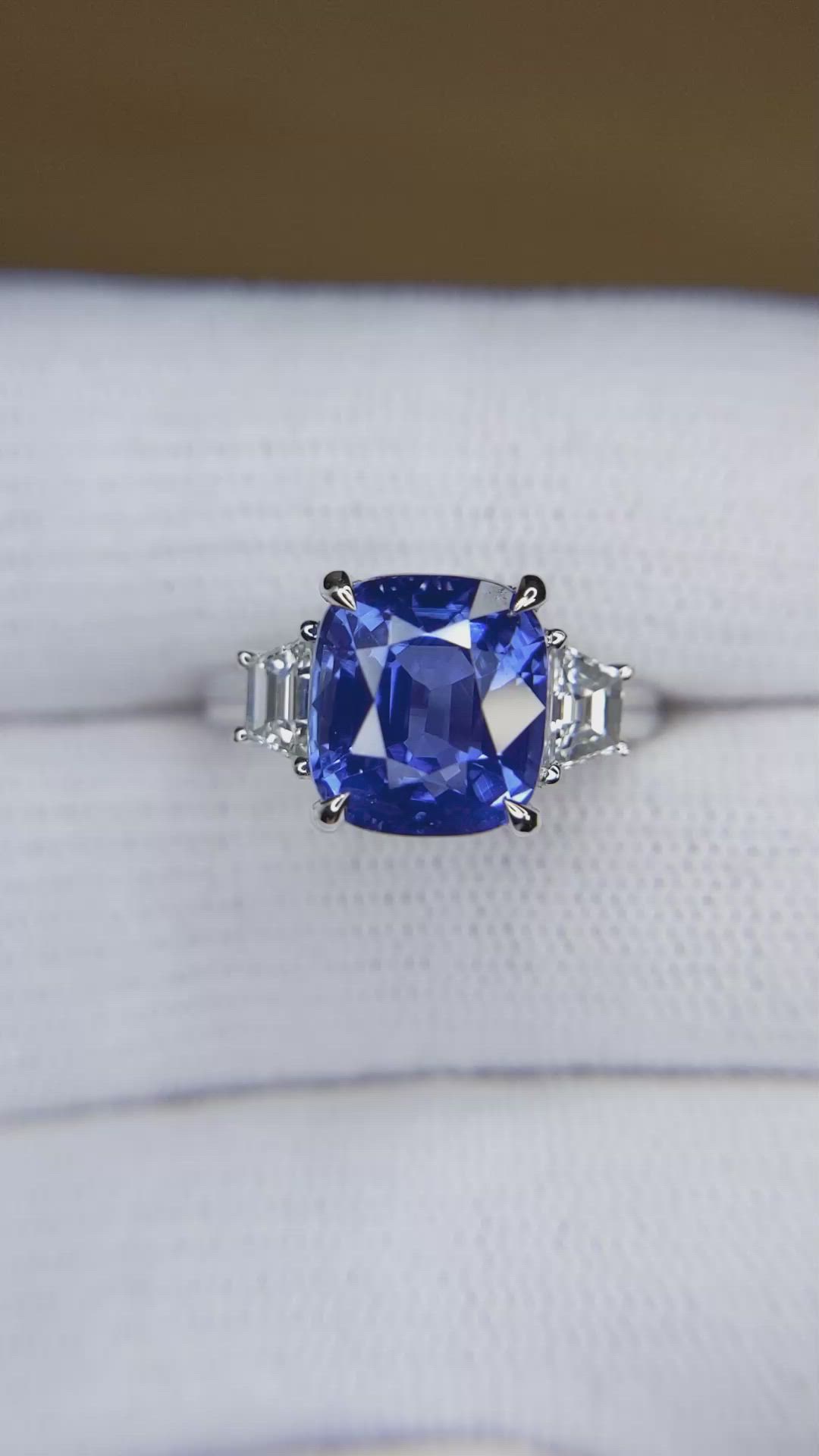
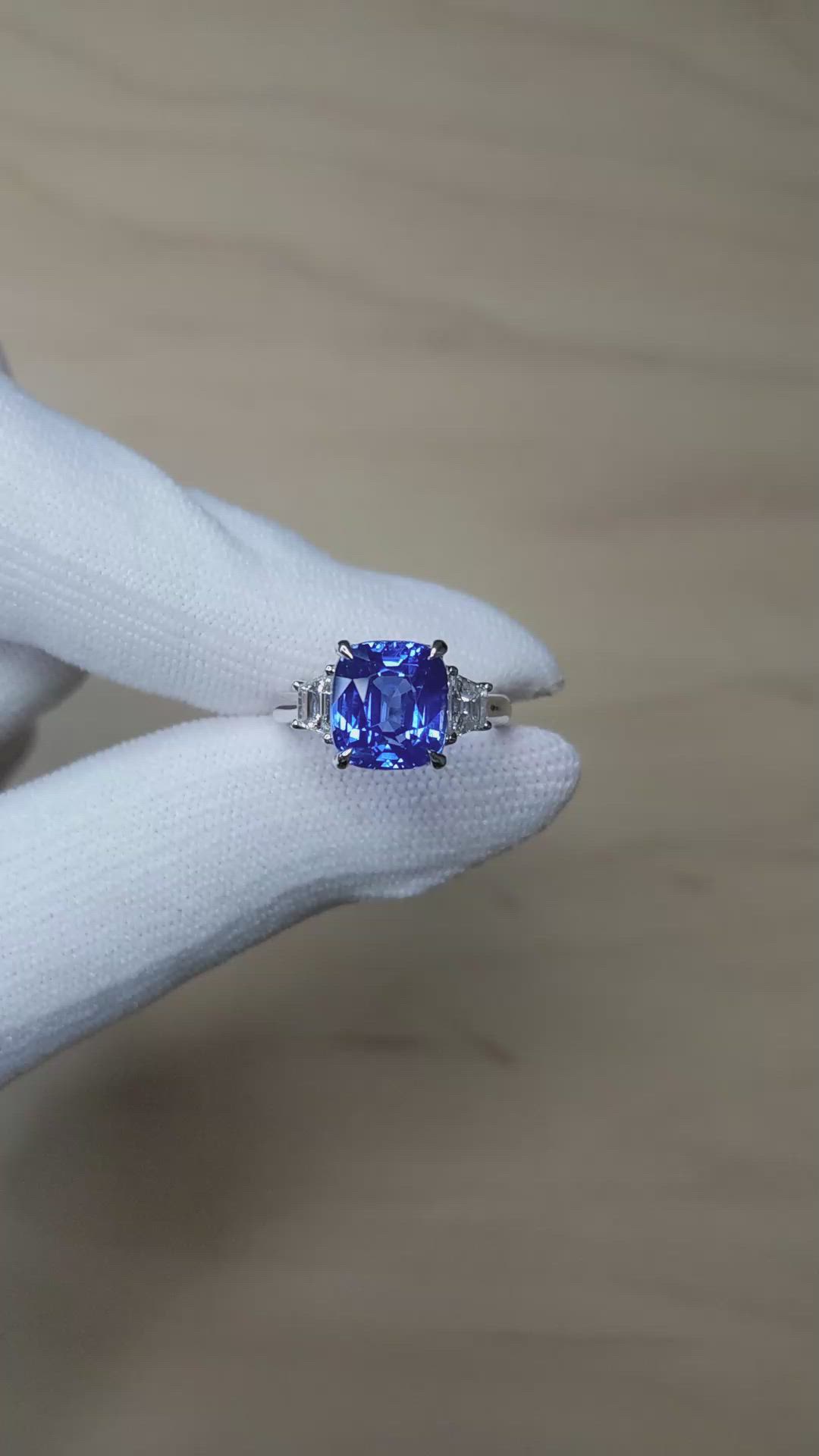
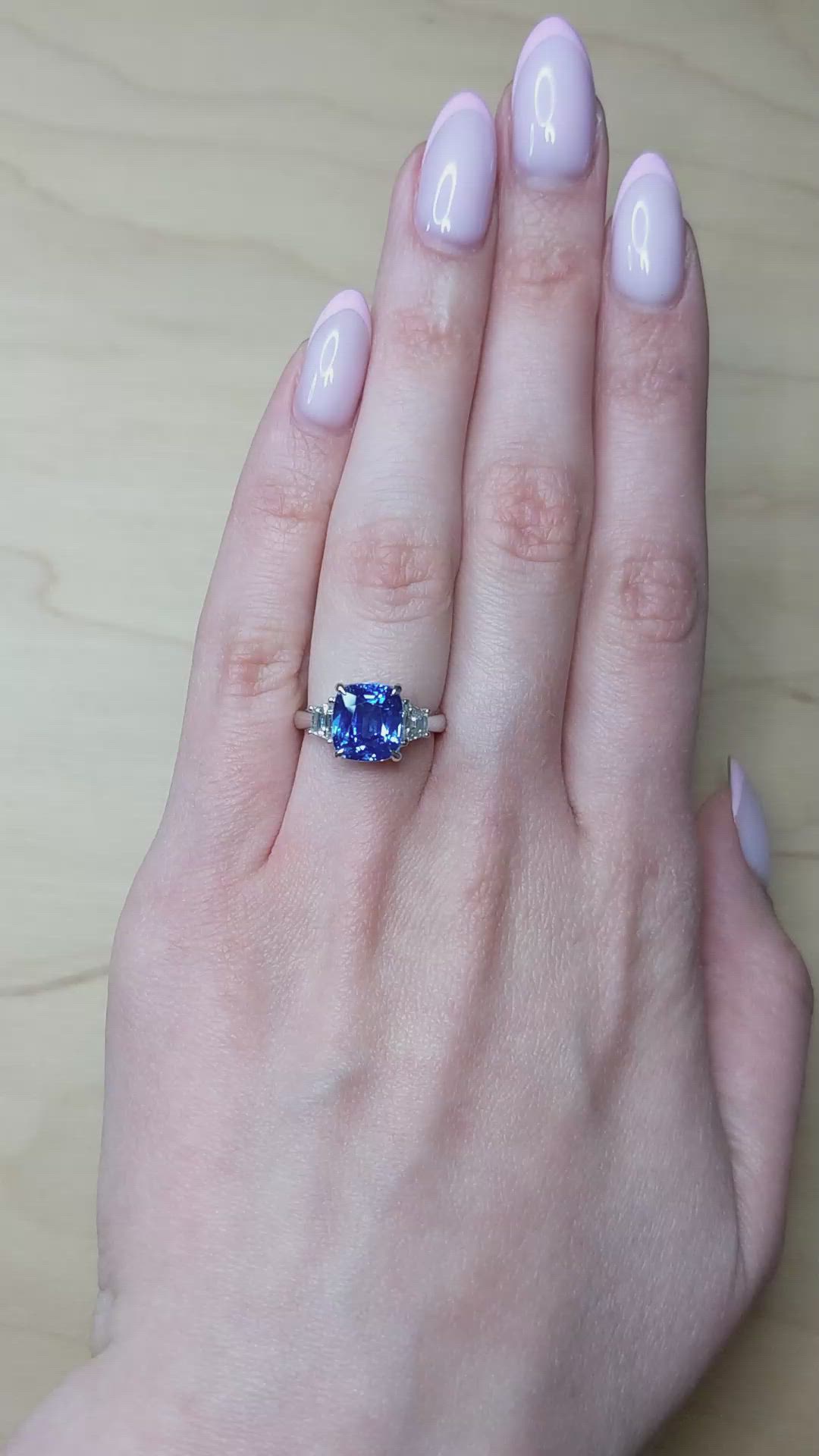
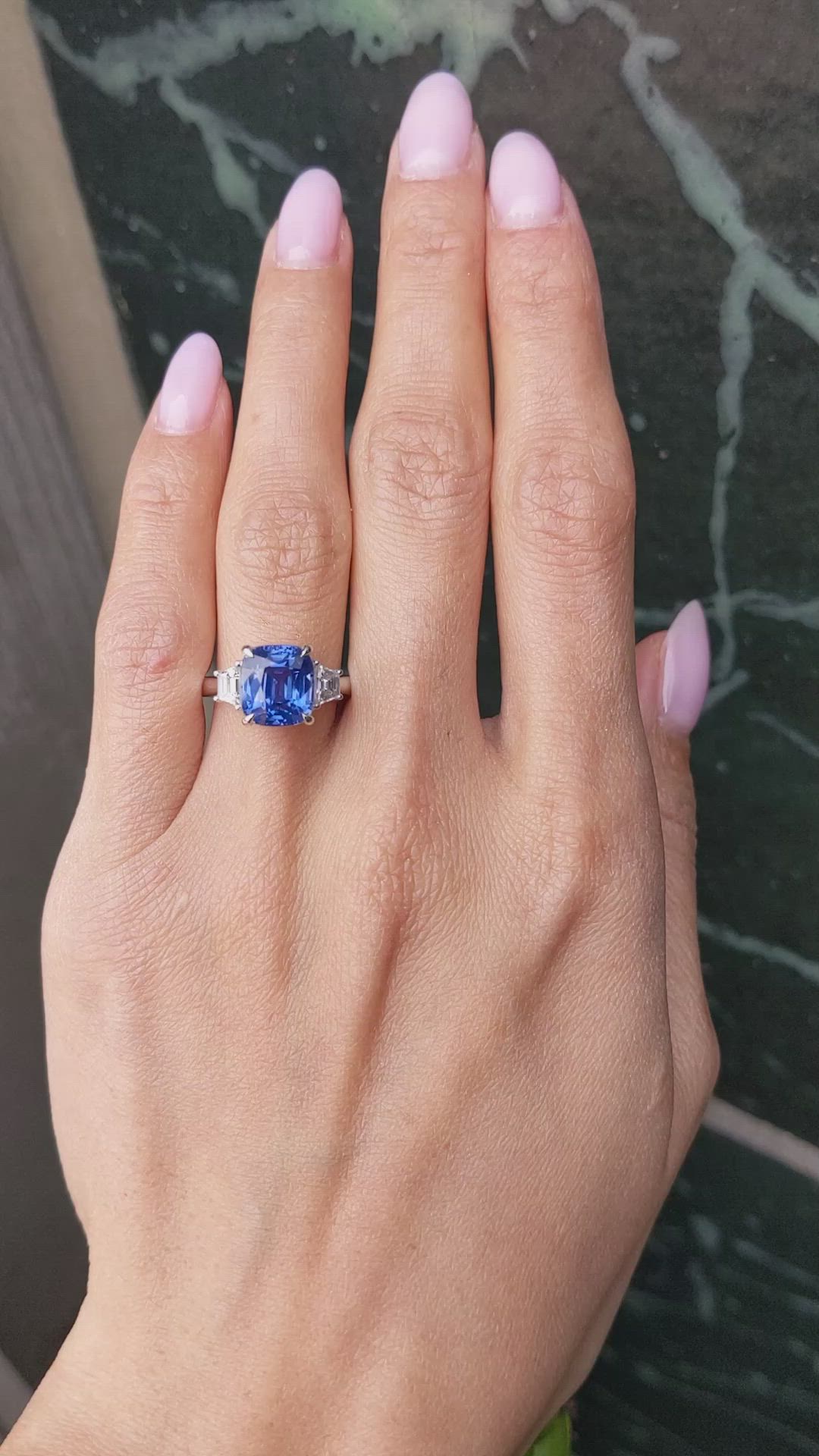
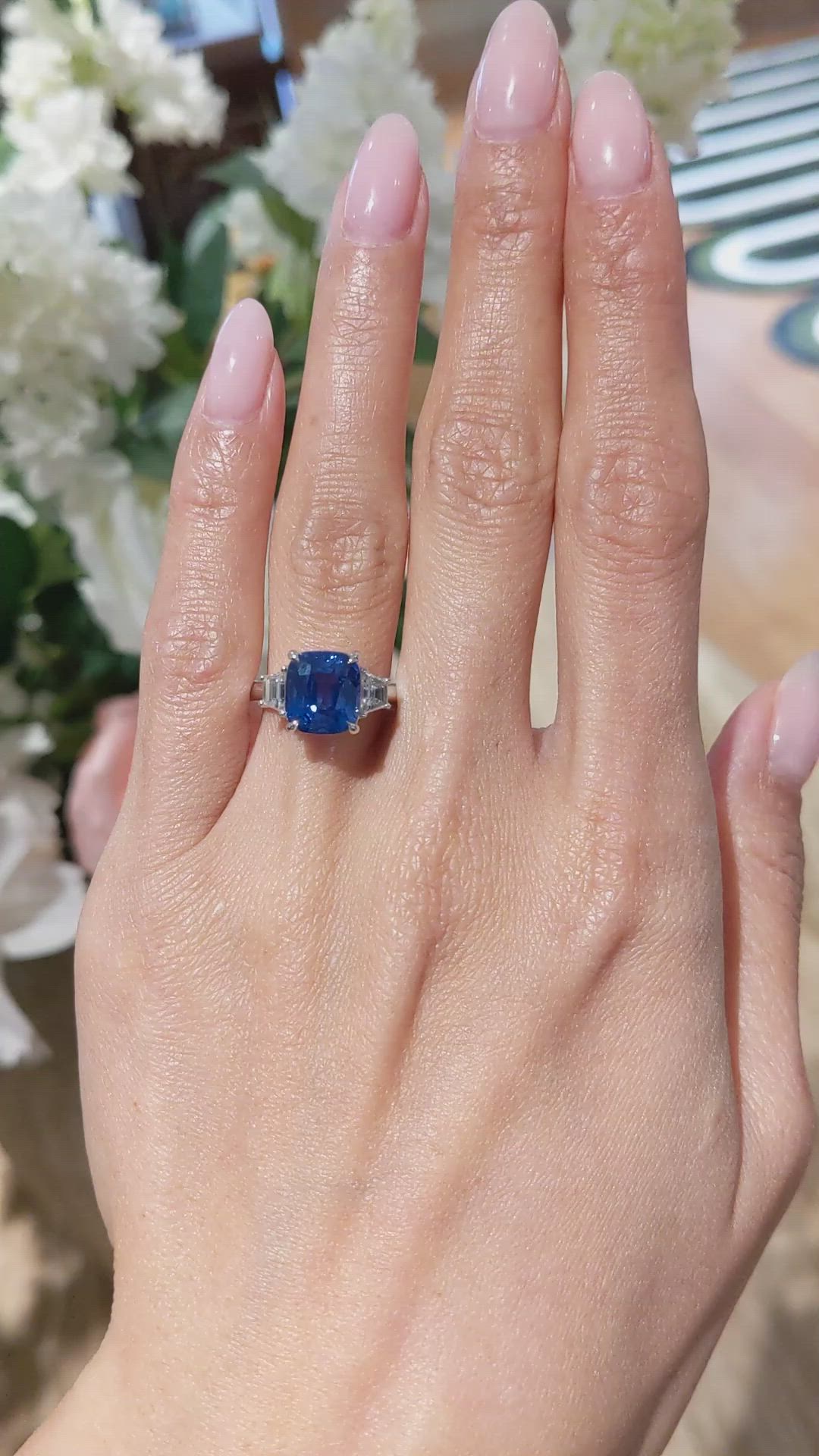




6.01 Ct. Blue Sapphire and Natural Diamond Three Stone Ring, 18K White Gold
This ring ships by Jun 9
Stone type: | Sapphire | Natural Diamond |
|---|---|---|
Quantity: | 1 | 2 |
Dimensions (MM): help | Length: 9.32 Width: 8.45 Height: 7.52 | Length: 4.4 Width: 3.6 Height: 2.5 |
Total weight: | 6.01 Ct. | 0.70 Ct. |
Color: | Blue | White |
Color intensity: help | Intense | N/A |
Color grade | F | |
Clarity: | Eye Clean | VS1 - Very Slightly Included |
Shape: help | Cushion | Trapezoid |
Cut: | Mixed Brilliant Cut | Fancy Cut |
Cutting style: | Faceted | Faceted |
Enhancements: help | No Enhancement | No Enhancement |
Origin: help | Madagascar | Unknown |
This ring centers on a cushion cut sapphire set in 18K white gold, the cutter having prioritized a modified brilliant pavilion and a softly faceted crown to enhance color saturation and internal light return, the result being a deep, velvety blue with strong saturation and a medium dark tone, minor silk inclusions contributing to the plush, diffused flash rather than detracting from clarity. The sapphire is secured by four tapered prongs that rise from a refined gallery, the shoulders stepping down into tapered baguette diamonds set in a stepped, channel adjacent layout, these side stones executed in a step faceting style to provide crisp, white contrast and to visually broaden the center stone without competing with its color. The shank is fully formed in 18K white gold, polished to a mirror finish to complement the sapphire, the metal weight and prong architecture calibrated to both protect the pavilion and allow light to enter the stone from multiple angles, enhancing pleochroic effects typical of corundum when viewed from different orientations.
The provenance of a sapphire profoundly influences both aesthetic perception and market valuation, because origin governs trace element chemistry, inclusion type, and growth history, each of which determines how a sapphire renders blue under varied lighting. Sapphires that originate from Kashmir are renowned for a unique, velvety cornflower blue produced by a delicate interplay of iron and titanium in a silica rich matrix, while Ceylon material tends toward a brighter, lively blue with slightly lighter tone and pronounced clarity, and Burmese sapphires often present a rich, intense blue with warmer undertones. For collectors and clients who value geological pedigree, documented origin, ideally supported by a reputable lab report, elevates desirability, because untreated stones from historically significant sources command a measurable premium. When evaluating this ring, consider both the technical excellence of the cushion cut and setting, and the potential impact of certified origin on rarity, stability of color under varied lighting, and long term value.


