
The Logan Sapphire
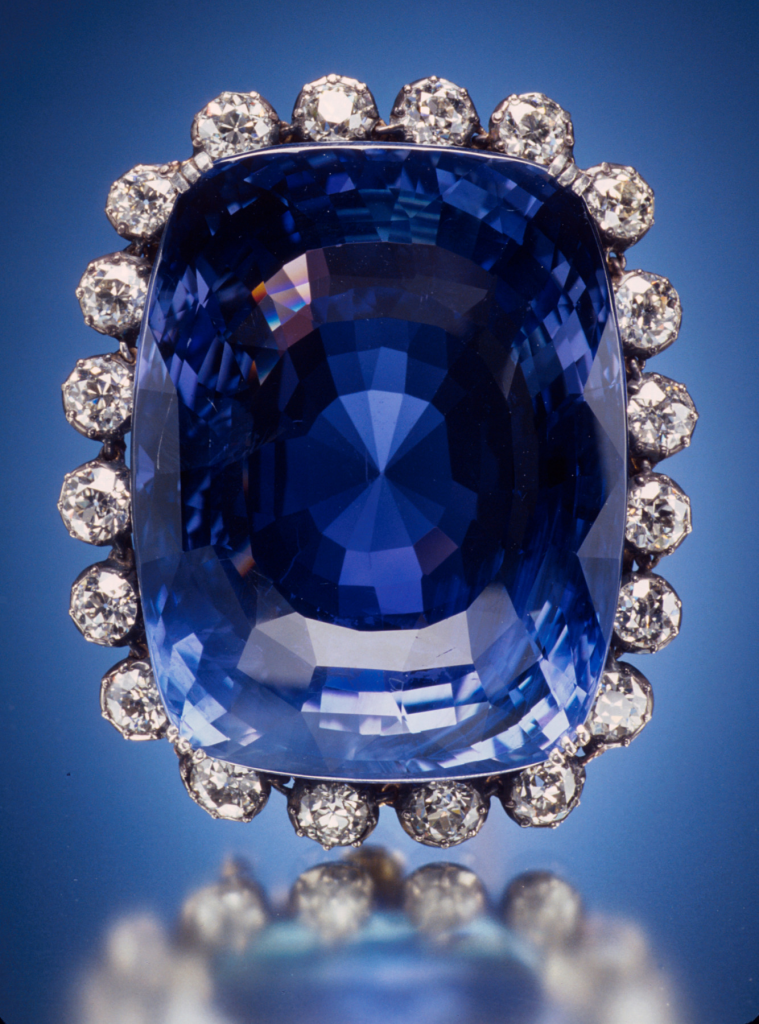
Among the world’s most remarkable sapphires, the Logan Sapphire stands out for its extraordinary size, beautiful blue color, Sri Lankan origin, and fascinating history. Weighing approximately 423 carats, this magnificent gemstone is one of the largest faceted blue sapphires in the world and today forms part of the Smithsonian’s National Gem Collection.
From its origins in Sri Lanka to its journey through prominent private collections and eventual donation to the Smithsonian, the Logan Sapphire represents far more than an exceptionally large gemstone. Its history connects Sri Lanka’s centuries-old gem trade with one of the world’s most important museum collections.
A Magnificent Sapphire from Sri Lanka
The Logan Sapphire originated in Sri Lanka, historically known as Ceylon, an island famous for producing exceptional sapphires. According to the Smithsonian National Museum of Natural History, the gemstone was cut from a sapphire crystal mined in Sri Lanka and weighs approximately 423 carats.


Sri Lanka has a gemstone history extending back thousands of years and is particularly renowned for producing large sapphires and star corundum. GIA identifies the Logan Sapphire among the famous gemstones associated with the island, alongside other celebrated stones such as the Blue Belle of Asia and the Star of India. GIA’s Sri Lanka: Expedition to the Island of Jewels provides further insight into the country’s remarkable gemstone heritage.
The Logan Sapphire therefore represents not only an extraordinary individual gemstone but also an important example of Sri Lanka’s long-established reputation as a source of exceptional sapphires.
An Extraordinary 423-Carat Blue Sapphire
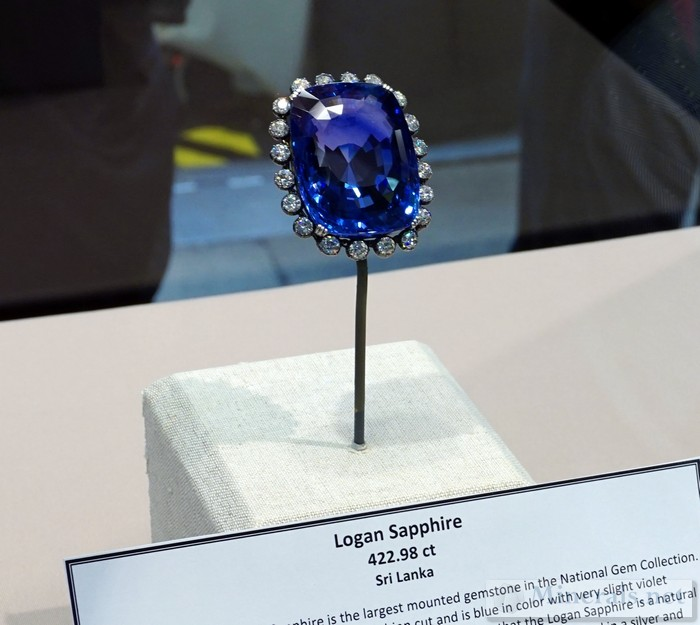
At approximately 423 carats, the Logan Sapphire immediately commands attention because of its exceptional size. The Smithsonian describes it as one of the world’s largest faceted blue sapphires and the heaviest mounted gemstone in the National Gem Collection.
The gemstone has a mixed cushion cut and displays a medium blue color with very slight violet overtones. Its broad shape and faceting allow the impressive blue color to remain the main focus of the jewel.
Large sapphires of notable quality are particularly remarkable because a rough crystal must have sufficient size and suitable characteristics to survive cutting while producing an attractive finished gemstone.
The Logan Sapphire demonstrates just how impressive natural sapphire can become when exceptional size, color, and skilled cutting come together.
The Beauty of Its Natural Blue Color
Color is one of the most important qualities when evaluating a sapphire. According to the Gemological Institute of America’s Sapphire Buyer’s Guide, the most highly valued blue sapphires generally display strong blue to violetish-blue colors without becoming so dark that their brightness is compromised.
The Logan Sapphire is recorded by the Smithsonian as medium blue with very slight violet overtones, giving the gemstone an attractive appearance characteristic of many celebrated Sri Lankan sapphires.
Sri Lankan sapphires are traditionally known for a broad range of blue tones, and the Smithsonian notes that stones from Sri Lanka are often light to medium blue and commonly referred to as Ceylon sapphires.
Experience the timeless beauty of Ceylon’s legendary gemstones – explore our stunning collection of Sri Lankan sapphires HERE and discover your perfect stone.
No Evidence of Heat Treatment
Another important characteristic of the Logan Sapphire is its natural color.
According to the Smithsonian, a Gemological Institute of America report dated June 1997 concluded that the sapphire’s color was natural and that no evidence of heat treatment was detected.
Heat treatment is widely accepted within the sapphire industry and is commonly used to improve the appearance of gemstones. However, GIA explains that for fine-quality sapphires, independent laboratory confirmation that there is no evidence of heat treatment can contribute to a gemstone’s rarity and value. GIA’s explanation of sapphire heat treatment provides additional information about its importance.
For a sapphire as large and historically important as the Logan Sapphire, its unheated status adds another remarkable characteristic to an already extraordinary gemstone.
Surrounded by Twenty Diamonds
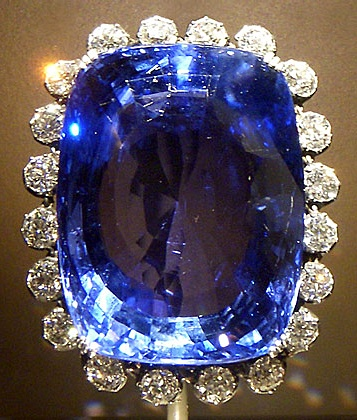
The Logan Sapphire is not displayed as a loose gemstone. Instead, it forms the centerpiece of an impressive piece of jewelry.
The sapphire is mounted in a silver-and-gold brooch setting and surrounded by 20 round brilliant-cut diamonds, which together weigh approximately 16 carats.
The arrangement creates a classic contrast between the rich blue center stone and the brilliance of the surrounding diamonds. Despite the considerable total weight of the diamonds, the enormous sapphire remains unmistakably the centerpiece.
The Smithsonian’s collection record also describes the Logan Sapphire as a cushion mixed-cut medium-blue corundum mounted as a pendant or brooch. View the Logan Sapphire in the Smithsonian collection.
The Story Behind the Logan Name
The gemstone’s name comes from Rebecca Pollard Guggenheim Logan, whose ownership ultimately led to the sapphire becoming part of the Smithsonian collection.

According to the Smithsonian, Rebecca Pollard Guggenheim received the sapphire as a Christmas and anniversary gift in late 1952 or early 1953 from her then-husband, Colonel M. Robert Guggenheim. She later married John A. Logan, which explains why the gemstone became known as the Logan Sapphire.
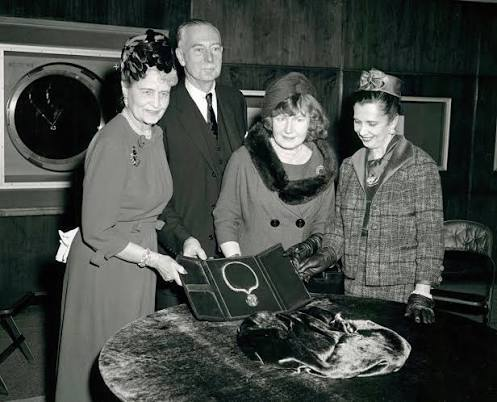
The Smithsonian records the gemstone as a gift from Mrs. John A. Logan in 1960, although she retained possession of the jewel until April 1971.
GIA’s historical account similarly notes that Rebecca Pollard Guggenheim donated the sapphire in 1960 but retained it until she formally presented it to the museum in 1971.
A History Before the Guggenheim Family
The history of the Logan Sapphire extends even further back.
Before Colonel M. Robert Guggenheim acquired the gemstone, it belonged to Sir Ellice Victor Sassoon, third Baronet of Bombay. According to the Smithsonian, the Sassoon family was said to have acquired the gemstone from a maharajah in India.


This part of the sapphire’s history is less firmly documented, and the Smithsonian itself presents the maharajah connection as a reported tradition rather than an established fact. Nevertheless, its association with the Sassoon family adds another fascinating chapter to the gemstone’s journey before it reached the United States.
Its movement from Sri Lanka through prominent private ownership and eventually into a national museum collection reflects the international history shared by many celebrated gemstones.
The Logan Sapphire at the Smithsonian
Today, the Logan Sapphire belongs to the National Gem Collection at the Smithsonian National Museum of Natural History in Washington, D.C.
Its official catalogue number is NMNH G3703, and the Smithsonian records its locality as Sri Lanka, its color as medium blue, its cut as cushion mixed, and its weight as 423 carats.
Its place within the National Gem Collection allows millions of visitors and gemstone enthusiasts to appreciate an extraordinary example of natural sapphire while learning about its geological and historical significance.
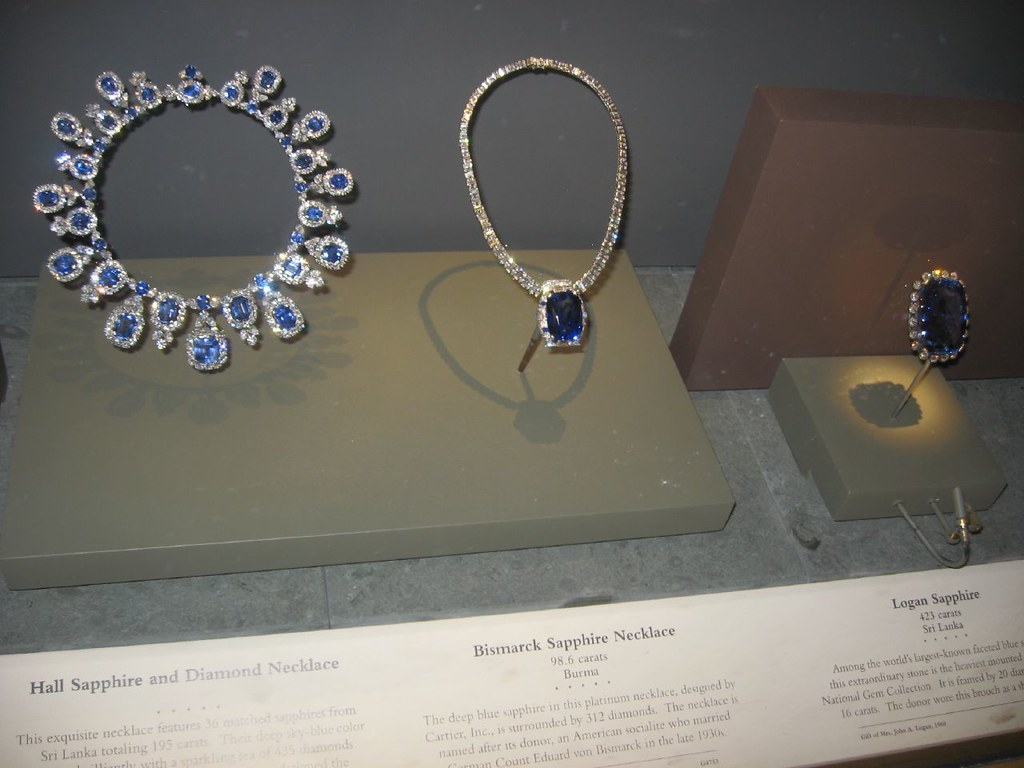
The Logan Sapphire also appears alongside other important sapphire jewelry within the Smithsonian collection, including the Hall Sapphire Necklace and the Bismarck Sapphire Necklace.
Why Sri Lankan Sapphires Are So Important
The Logan Sapphire is also an important reminder of Sri Lanka’s exceptional contribution to the global gemstone industry.
Sri Lanka has been associated with gemstones for at least 2,000 years, and historical names for the island reflected its gemstone wealth. GIA notes that it was known in Sanskrit as Ratna Dweepa, meaning Island of Jewels, while Arab traders called the island Serendib.
The island has produced a remarkable number of historically significant sapphires. GIA specifically identifies the Logan Sapphire as one of the famous stones originating from Sri Lanka and highlights the country’s reputation for producing large and exceptional sapphire and star corundum.
The Logan Sapphire therefore serves as an extraordinary ambassador for the natural gemstone heritage of Sri Lanka.
What Makes the Logan Sapphire So Special?
Many individual qualities contribute to the importance of the Logan Sapphire.
Its 423-carat weight makes it one of the world’s largest faceted blue sapphires. Its Sri Lankan origin connects it with one of history’s most celebrated sapphire-producing regions. Its medium-blue color with subtle violet overtones gives it distinctive visual appeal, while laboratory examination found no evidence of heat treatment.
Its setting also contributes to its impressive appearance, with 20 diamonds totaling approximately 16 carats framing the enormous blue gemstone.
Beyond these physical characteristics, the sapphire has an intriguing ownership history and now occupies an important place in one of the world’s leading natural history museums.
It is this combination of size, natural beauty, origin, history, and provenance that makes the Logan Sapphire truly exceptional.
A Lasting Symbol of Sapphire Beauty
The story of the Logan Sapphire demonstrates why extraordinary natural gemstones can become much more than beautiful objects.
From its geological beginnings in Sri Lanka to its ownership by prominent families and eventual place in the Smithsonian’s National Gem Collection, the sapphire has travelled through different cultures, generations, and periods of history.
Today, its magnificent blue color and extraordinary 423-carat size continue to attract attention, while its documented Sri Lankan origin and absence of detectable heat treatment add to its gemological importance.
For gemstone enthusiasts, the Logan Sapphire remains a remarkable example of what nature can create and a lasting symbol of Sri Lanka’s extraordinary sapphire heritage.
Discover the captivating beauty of Ceylon and visit HERE to explore some of the finest Sri Lankan sapphires in our collection.
References
Smithsonian National Museum of Natural History – Logan Sapphire
Smithsonian National Museum of Natural History – Logan Sapphire Collection Record
Gemological Institute of America – Sri Lanka: Expedition to the Island of Jewels
Gemological Institute of America – Sapphire Buyer’s Guide
Gemological Institute of America – Sapphire History and Lore