
- Stone9
- Reports4
-pear-yellow-sapphire-3.0100-cts-s4572-1.jpg?d=200x200&v=20230227143919)


-pear-yellow-sapphire-3.0100-cts-s4572-1.jpg?d=750x750&s=nsc&v=20230227143919)


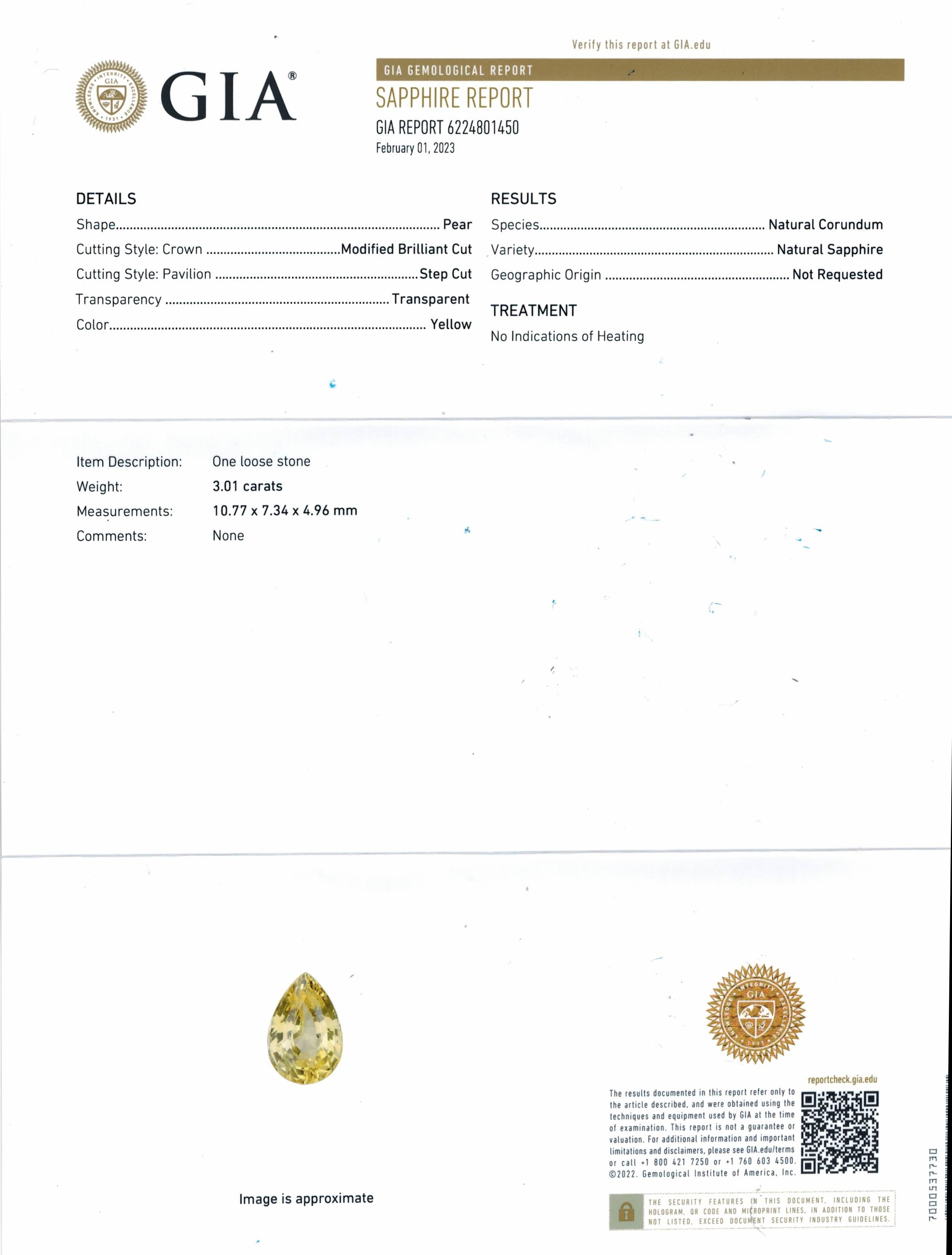
3.01 Ct. Yellow Sapphire from Ceylon (Sri Lanka)
This loose stone is available to ship now
Item ID: | S4572 |
|---|---|
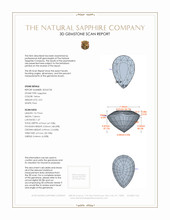
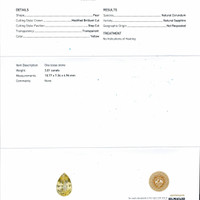
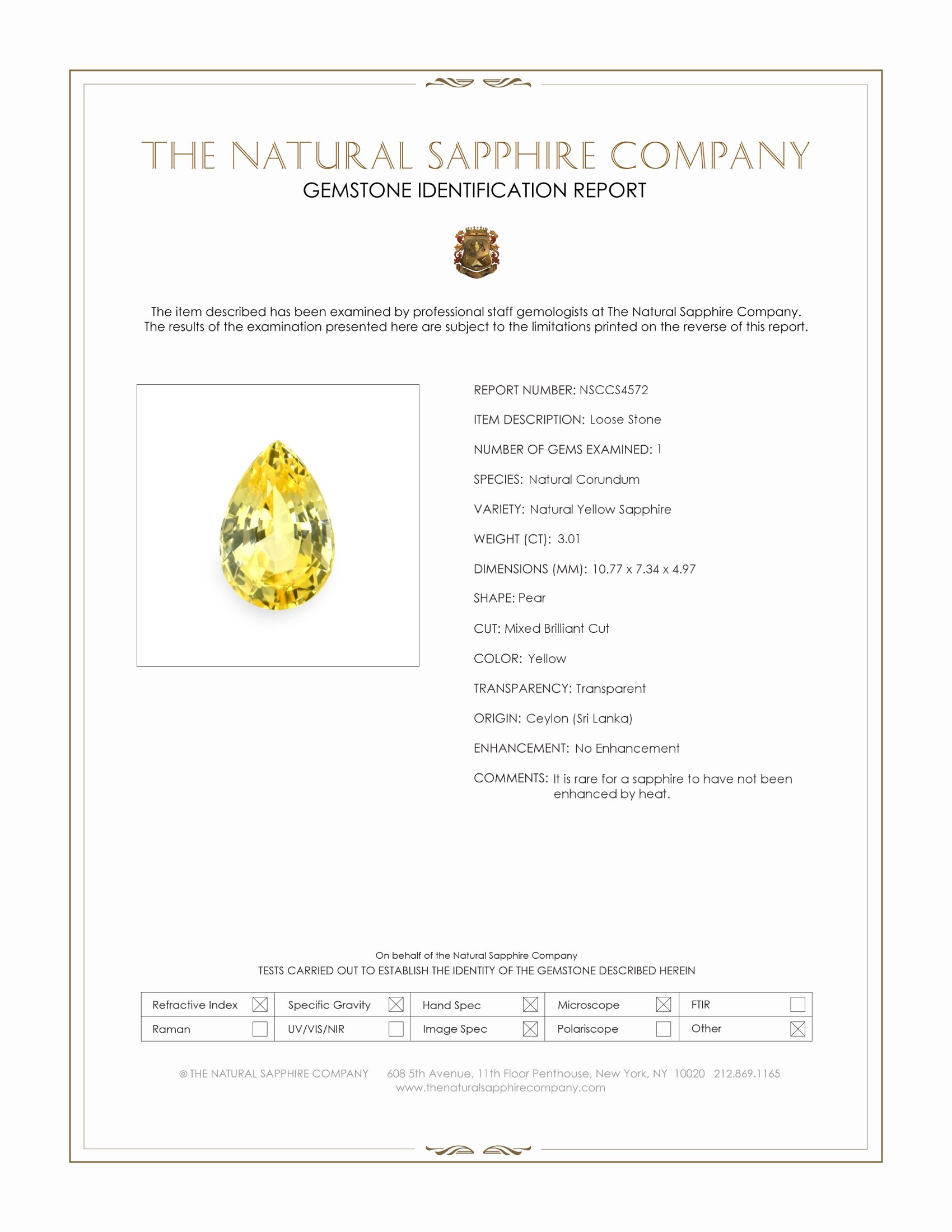
Dimensions (MM): help | Length: 10.77 Width: 7.34 Height: 4.97 |
Weight: | 3.01 Ct. |
Color: help | Yellow |
Color intensity: help | Medium |
Clarity: help | Very Very Slightly Included |
Shape: help | Pear |
Cut: | Mixed Brilliant Cut |
Cutting style: | Faceted |
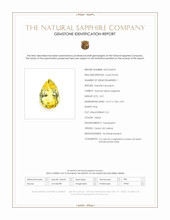
Enhancements: help | No Enhancement |
Origin: help | Ceylon (Sri Lanka) |
Per carat price: help | $1,665 |
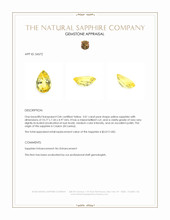
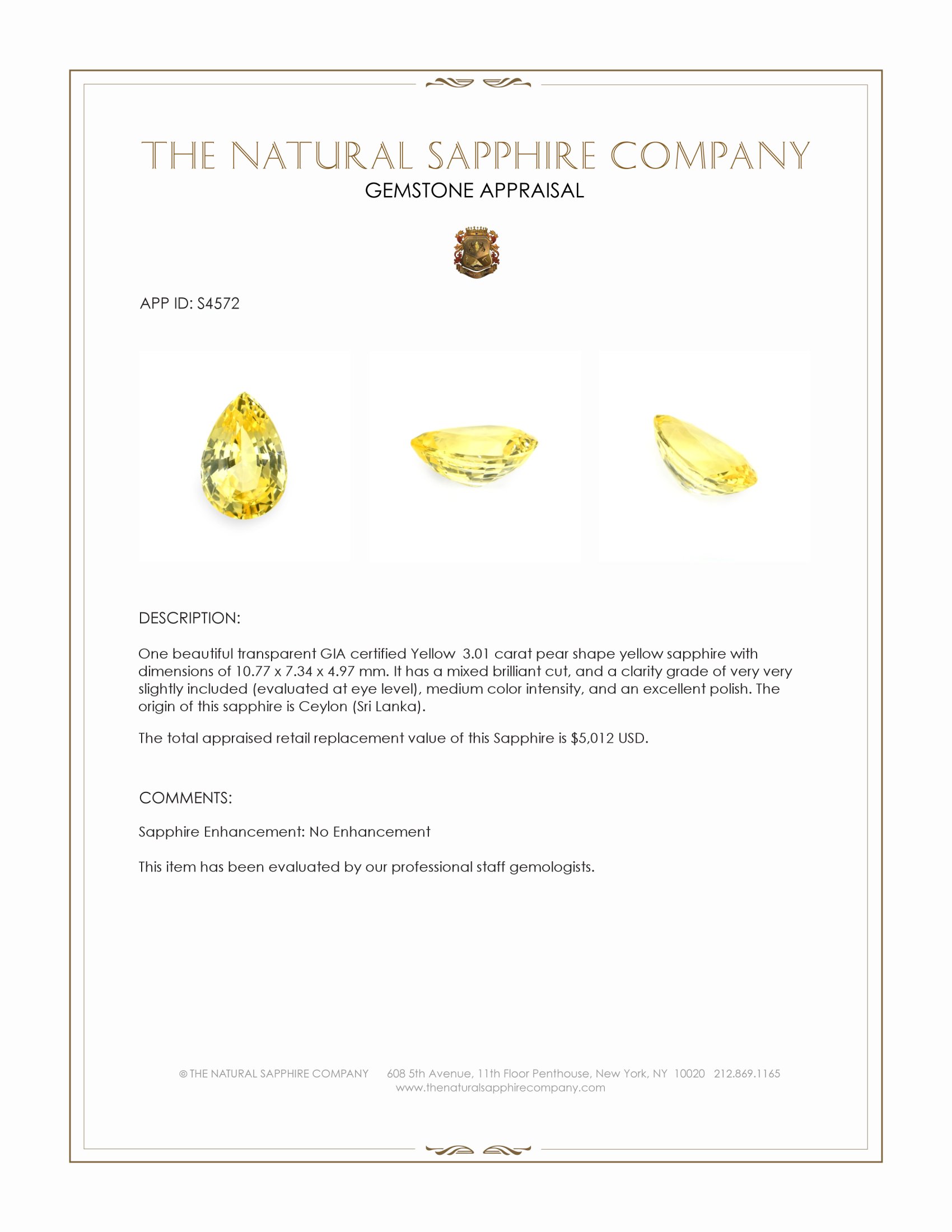
This is a beautiful, transparent, GIA certified yellow sapphire weighing 3.01 carats, presented in an elegant pear shape that measures 10.77 by 7.34 by 4.97 millimeters. The cutting style is faceted, executed in a mixed brilliant cut to balance color saturation with lively brilliance, and the polish is graded excellent. Clarity is described as very very slightly included when evaluated at eye level, which in practical terms means the stone reads as eye clean to most observers while delivering an exceptional level of transparency and sparkle. The color intensity registers as medium, offering a richly golden yellow that is neither washed out nor overpowering. Crucially for connoisseurs and investors, this sapphire has no enhancement, so the color and condition are wholly natural, and the origin is Ceylon Sri Lanka, a region renowned for producing some of the finest and most lustrous corundum in the world. The Natural Sapphire Company proudly offers this GIA certified example as part of our curated collection of untreated, responsibly sourced gemstones.
Understanding why this sapphire commands attention requires a brief review of the classical grading factors. Color is the most important attribute for yellow sapphires, and medium intensity provides optimal visual impact without losing subtlety, giving the stone versatility for both daytime and evening wear. The absence of enhancement elevates the stone above the majority of market material, many examples of which are heat treated to refine tone and clarity. Clarity described as very very slightly included at eye level indicates that inclusions are extremely minor and do not interfere with light performance, preserving both brilliance and fire. The mixed brilliant cut is a sophisticated compromise between faceting styles, combining facets that maximize scintillation with pavilion angles chosen to emphasize color depth, and the excellent polish ensures that light passes cleanly through the stone without surface disturbance. The dimensions produce a substantial face up presence for a three carat gem, and the pear silhouette offers elegant elongation and versatility for a range of settings.
When placing this gem in historical context, it is useful to compare its qualities to famous gemstones to clarify its unique appeal. Blue sapphires such as the Star of India and the Logan Sapphire are celebrated for their size and historical provenance, yet many iconic sapphires of history are either cabochon star sapphires or heat treated to enhance color, and their aesthetic impact derives from scale or from asterism rather than from transparent brilliance. In contrast, the transparency and faceted brilliance of this Ceylon yellow sapphire recalls the luminous appeal of famed colored gems like certain historic yellow diamonds, while remaining distinct because it is corundum, with a higher hardness and exceptional wearability. The Tiffany Yellow Diamond serves as a touchstone for rare, naturally saturated yellow gemstones in the broader gem world, yet it is a diamond rather than sapphire, and it illustrates how rare vivid undertones can be regardless of species. This Sri Lankan yellow sapphire occupies a unique position, combining a naturally derived, untreated medium yellow, exceptional clarity for its class, and a modern mixed brilliant cut that showcases internal sparkle rather than surface sheen alone. Collectors who study provenance will appreciate the Ceylon origin, because Sri Lanka has a long record of producing sapphires that combine attractive color with excellent luster, a lineage that connects this gem to centuries of valued material while remaining distinct in hue and treatment.
For the educated buyer this sapphire represents a compelling synthesis of rarity, aesthetics, and technical quality. From an investment and longevity perspective, corundum rates nine on the Mohs hardness scale, ensuring that a sapphire of this calibre will wear well in everyday jewelry with appropriate care, and the excellent polish and precision cutting maximize durability by minimizing stress concentrations. The GIA certification attests to the gemological parameters and confirms the lack of enhancement, which directly affects market value and desirability among collectors and jewelers. The pear shape offers exceptional design flexibility, suitable for solitaire pendants, halo engagement rings, or bespoke multi stone settings that pair well with diamonds or complementary colored sapphires. The Natural Sapphire Company stands behind each stone we offer, and we are able to provide the full GIA report and provenance documentation for buyers who require thorough due diligence. For those seeking a natural, untreated, and finely cut yellow sapphire with measurable presence and historical resonance through its Sri Lankan origin, this 3.01 carat pear shape gem offers an elegant and enduring choice. If you would like further information about setting options, certification details, or to view high resolution imagery, The Natural Sapphire Company will be pleased to assist you.


