
- Stone15
- Reports2
-various-yellow-sapphire-29.8500-cts-s42845-1.jpg?d=200x200&v=20260710082730)
-various-yellow-sapphire-29.8500-cts-s42845-lifestyleimage-1.jpg?d=200x200&v=20260713054605)
-various-yellow-sapphire-29.8500-cts-s42845-lifestyleimage-2.jpg?d=200x200&v=20260713054605)
-various-yellow-sapphire-29.8500-cts-s42845-lifestyleimage-3.jpg?d=200x200&v=20260713054605)
-various-yellow-sapphire-29.8500-cts-s42845-lifestyleimage-4.jpg?d=200x200&v=20260713054606)

-various-yellow-sapphire-29.8500-cts-s42845-1.jpg?d=750x750&s=nsc&v=20260710082730)
-various-yellow-sapphire-29.8500-cts-s42845-lifestyleimage-1.jpg?d=750x750&s=nsc&v=20260713054605)
-various-yellow-sapphire-29.8500-cts-s42845-lifestyleimage-2.jpg?d=750x750&s=nsc&v=20260713054605)
-various-yellow-sapphire-29.8500-cts-s42845-lifestyleimage-3.jpg?d=750x750&s=nsc&v=20260713054605)
-various-yellow-sapphire-29.8500-cts-s42845-lifestyleimage-4.jpg?d=750x750&s=nsc&v=20260713054606)

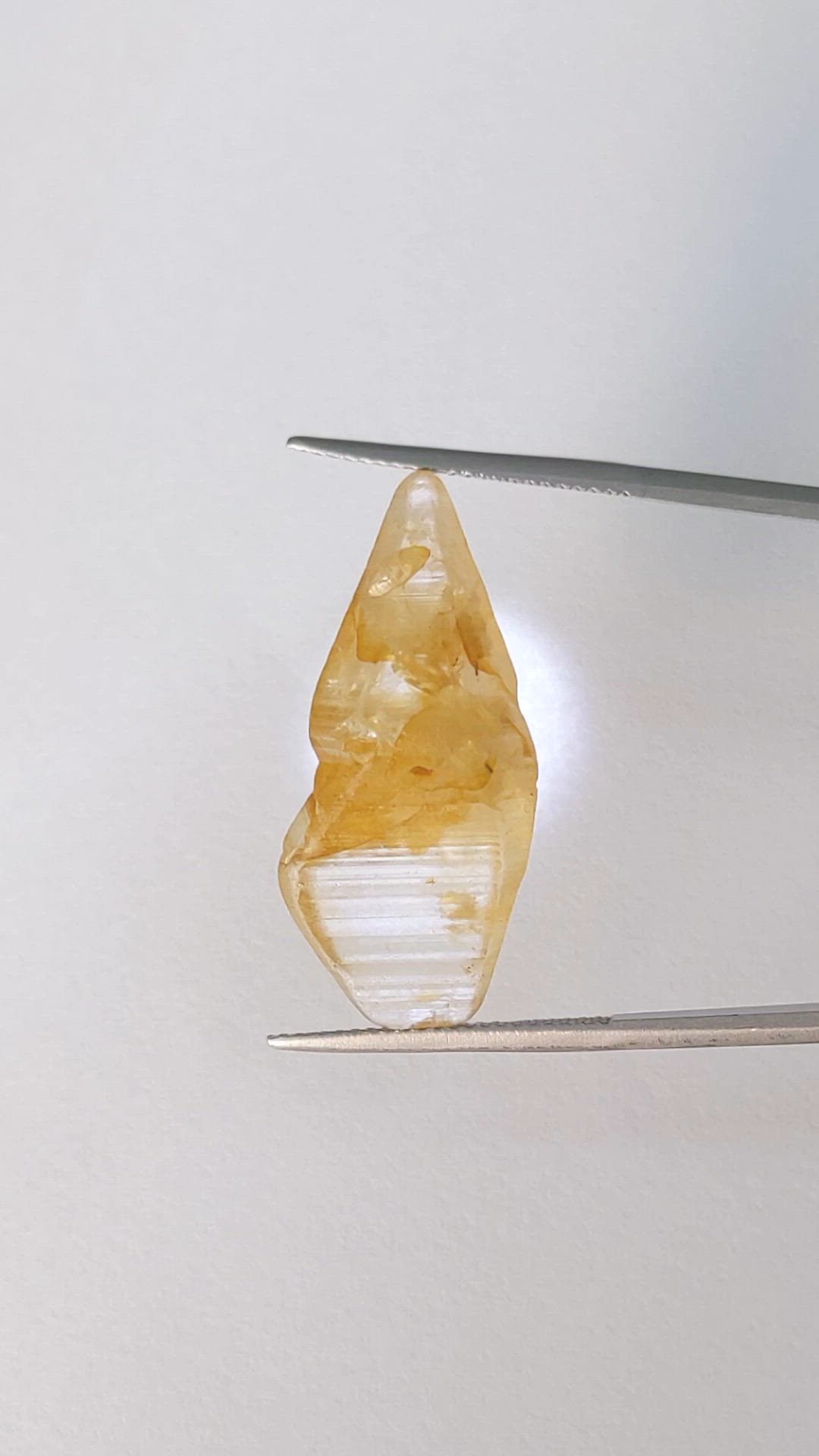
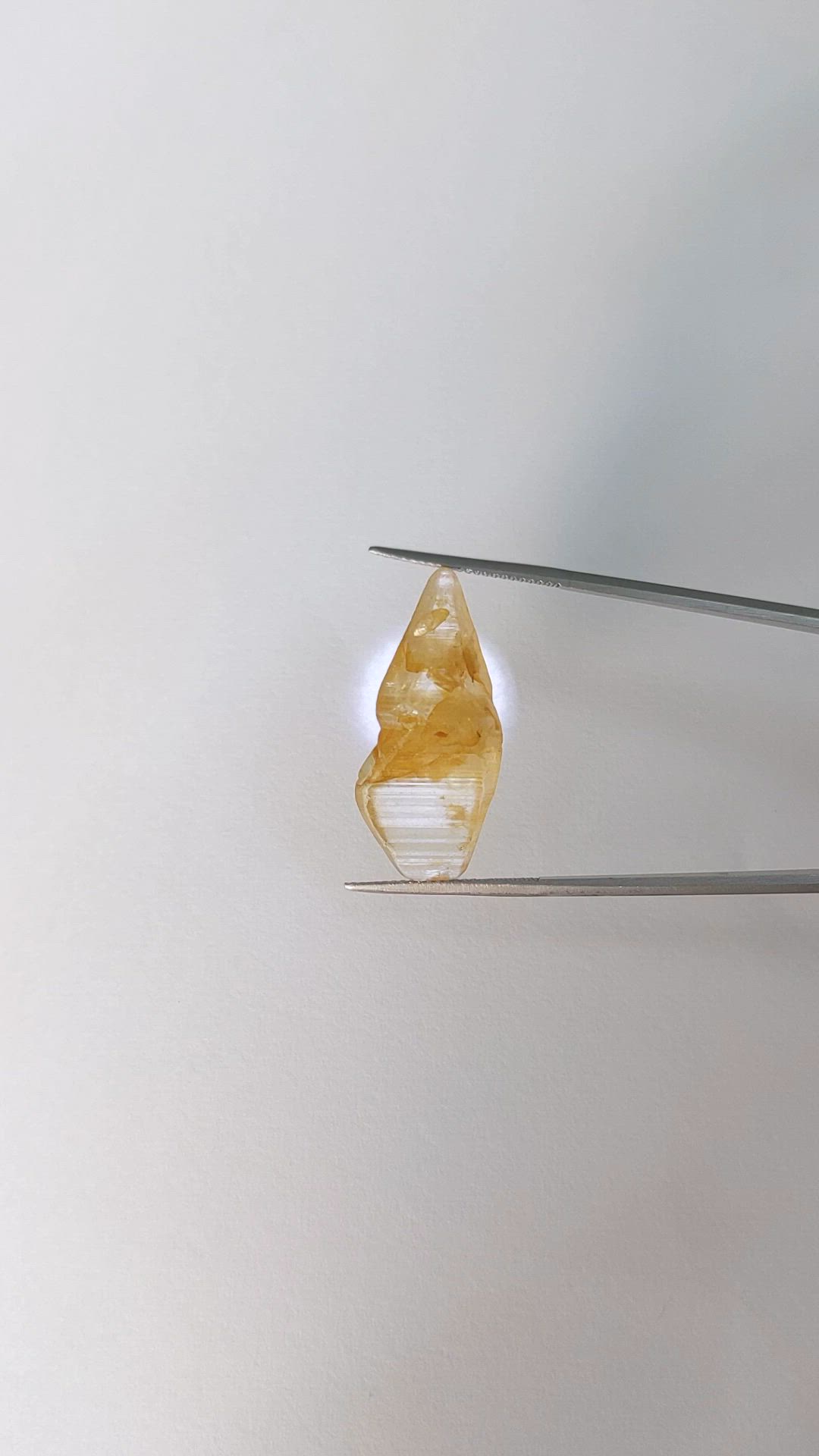
29.85 Ct. Yellow Sapphire from Ceylon (Sri Lanka)
This loose stone ships by Oct 16
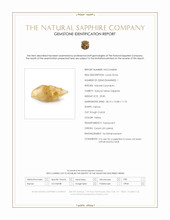
Item ID: | S42845 |
|---|---|
Dimensions (MM): help | Length: 30.15 Width: 13.08 Height: 11.72 |
Weight: | 29.85 Ct. |
Color: help | Yellow |
Color intensity: help | Medium |
Clarity: help | Slightly Included |
Shape: help | Various |
Cut: | Rough Crystal |
Cutting style: | Rough |
Enhancements: help | No Enhancement |
Origin: help | Ceylon (Sri Lanka) |
Per carat price: help | $40 |
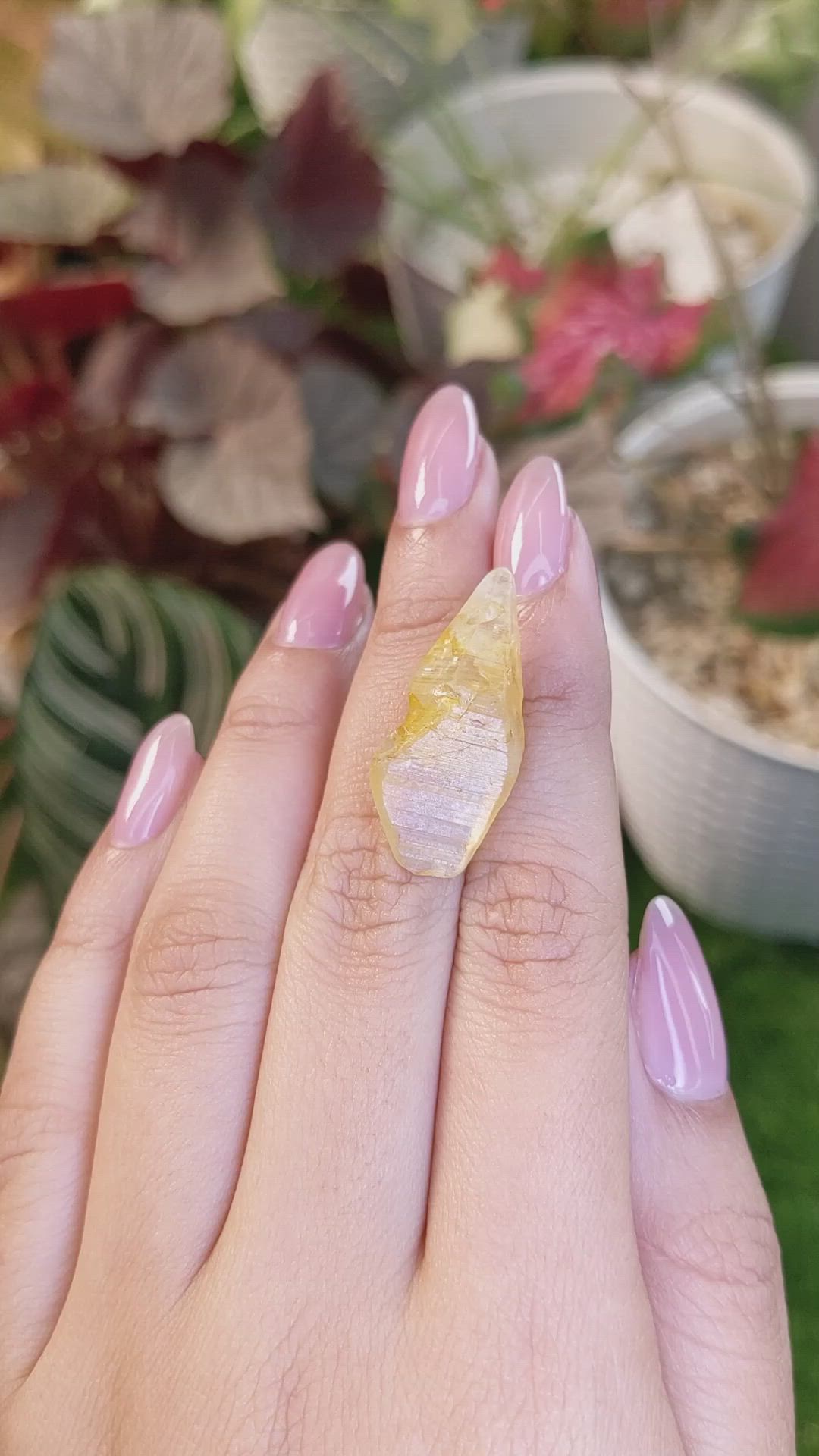
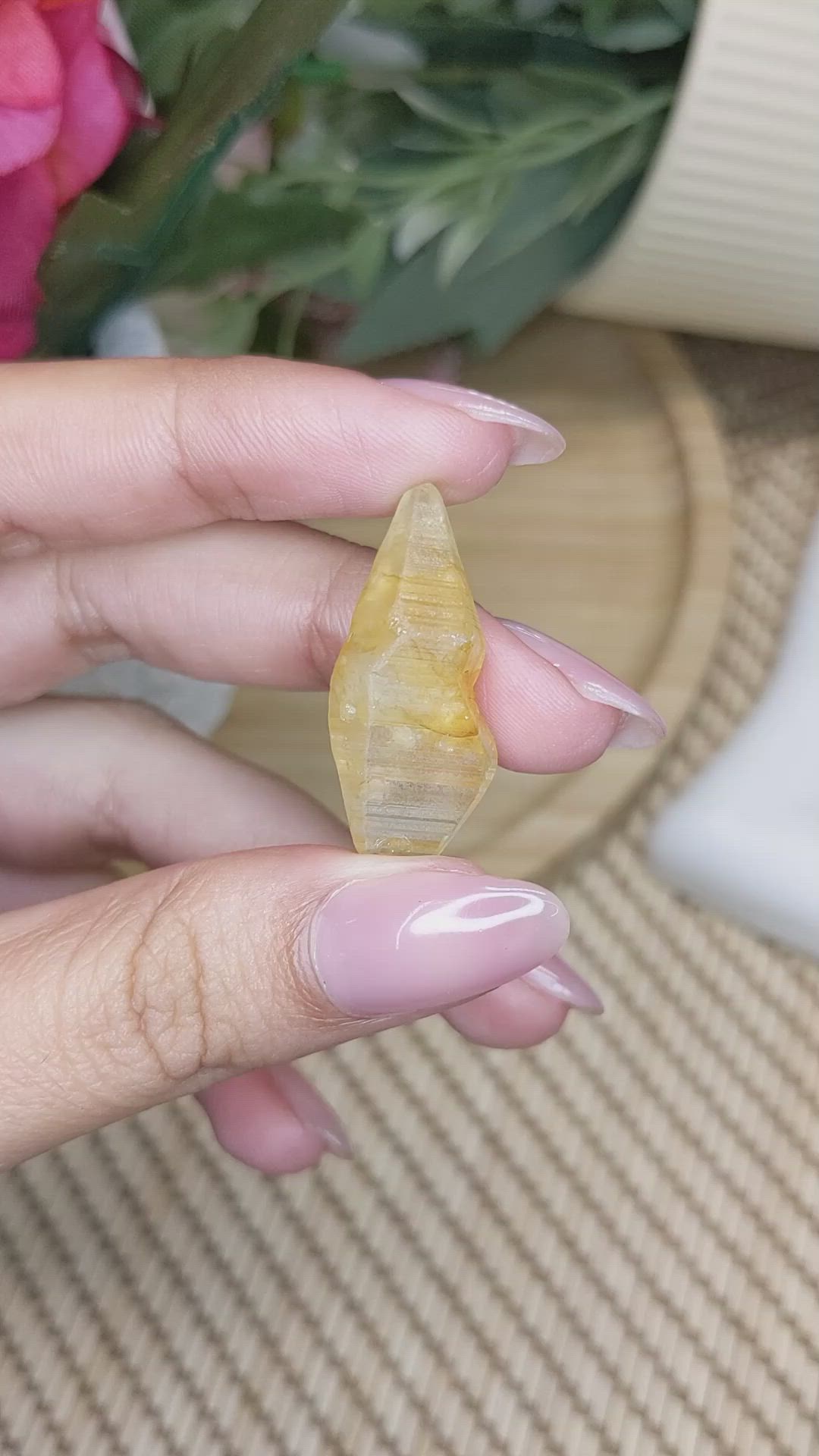
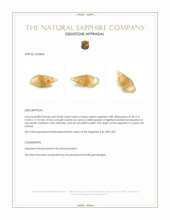
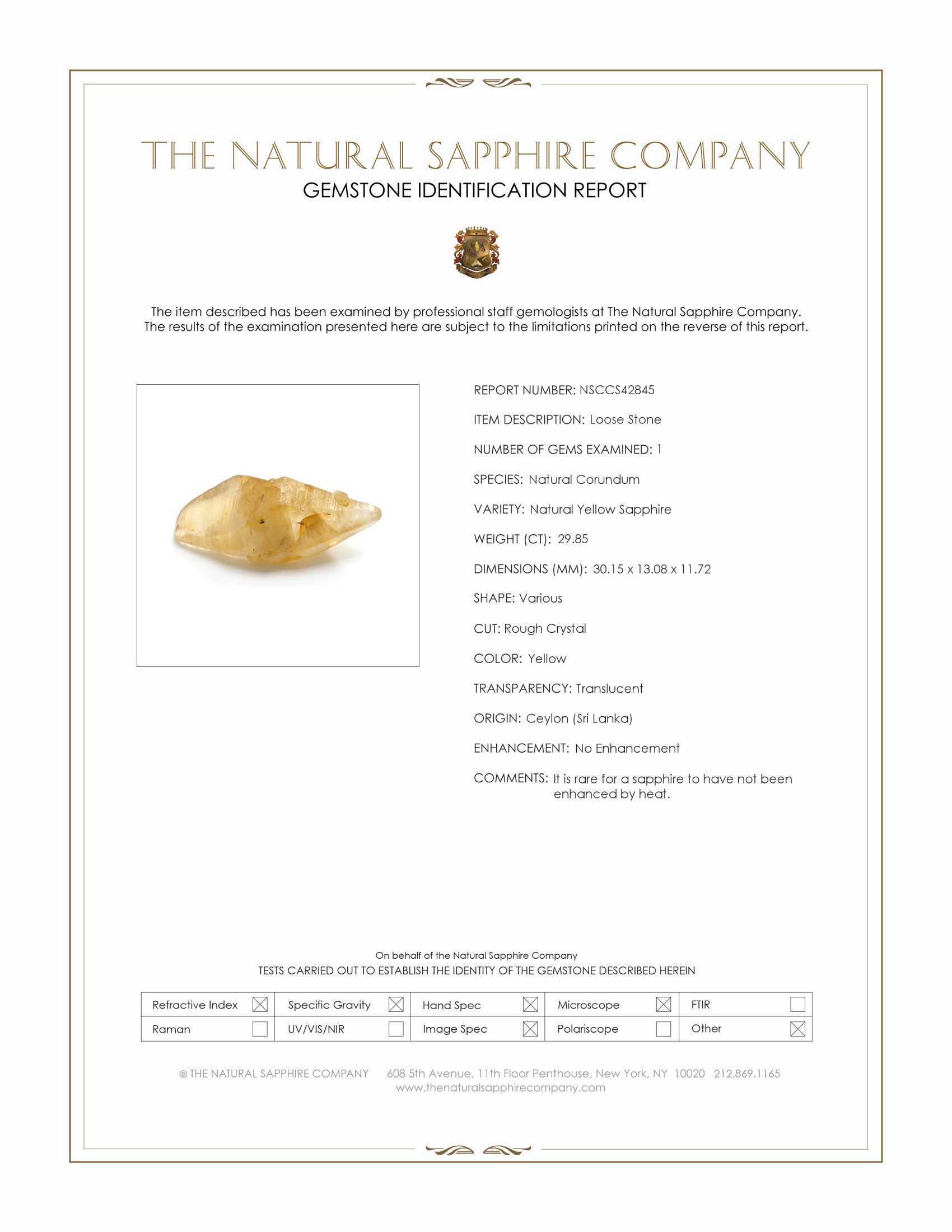
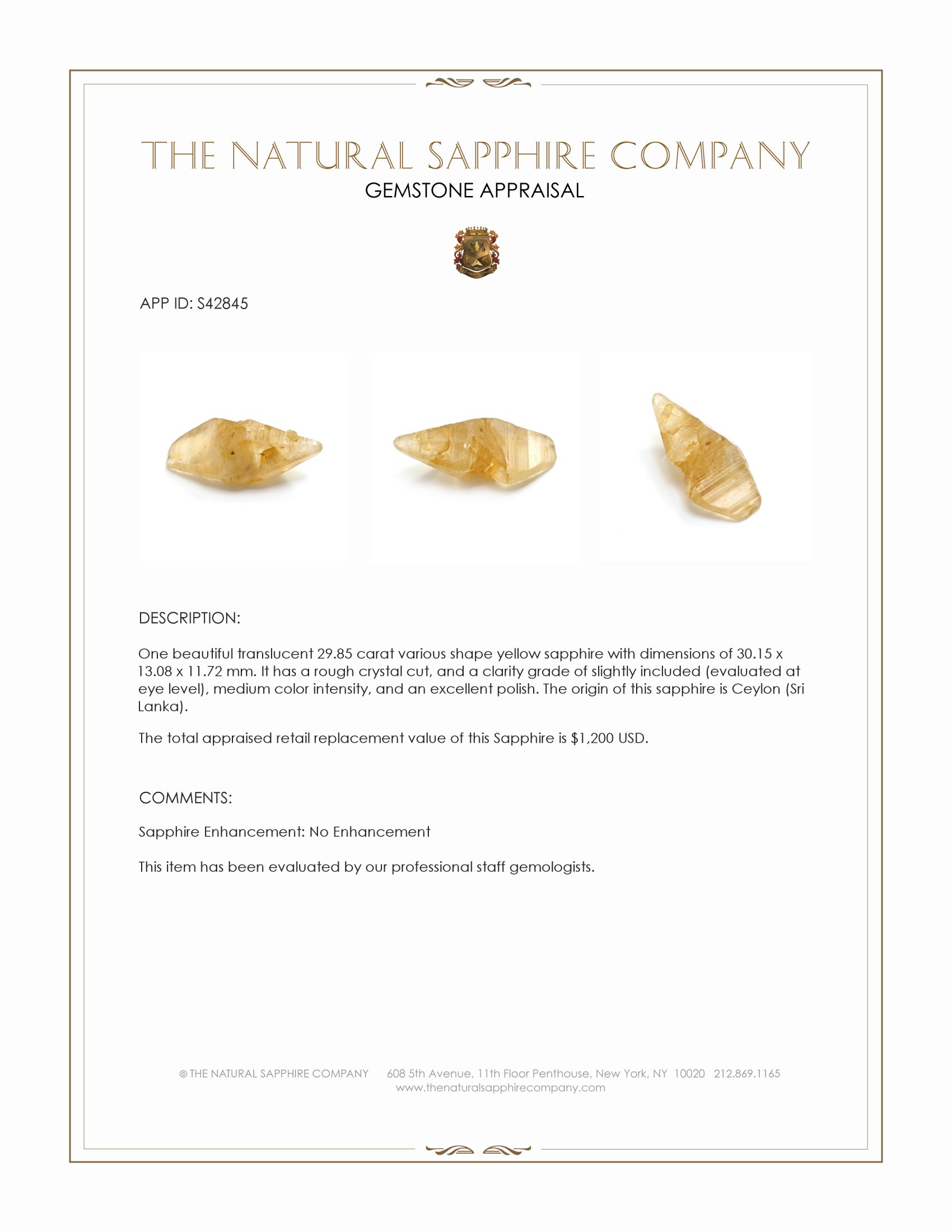
This translucent yellow sapphire presents as a substantial specimen at 29.85 carat, with dimensions of 30.15 by 13.08 by 11.72 millimeters, a various shape that follows the original crystal outline, and a deliberate rough crystal cut. The rough crystal cut retains natural terminations and growth faces rather than imposing a standard symmetrical pavilion and crown geometry. Clarity is graded slightly included at eye level, a useful designation for connoisseurs who expect visible natural features but value overall transparency and brilliance. Color evaluation indicates a medium intensity yellow, evenly distributed along the length of the crystal with zones of deeper golden hue aligned to growth planes. The polish is excellent, achieved on the natural planes and on selected faceted surfaces to enhance light return while preserving the stone character. No enhancement has been performed on this sapphire, and its origin is Ceylon Sri Lanka, a provenance known for producing material with fine color and distinctive growth zoning. The Natural Sapphire Company offers this piece as a rare rough crystal cut specimen, suitable for collectors who appreciate the interplay between natural habit and skilled finishing, and for designers seeking a statement element that requires minimal reworking to showcase inherent structure.
Optically the piece exhibits the classic properties of corundum, with a refractive index range and birefringence consistent with sapphire species and with the strong durability expected of aluminum oxide. The medium color intensity results from trace iron substituting into the corundum lattice, producing yellow tones without the presence of trace elements that would shift the stone into orange or green categories. Under magnification one can observe parallel growth zoning and planar features that follow the trigonal crystal habit, including flattened prism faces and stepped terminations, which are hallmarks of natural growth and episodic crystallization. Inclusions are modest in size and frequency, which informs the slightly included clarity grade at normal viewing distances, and they often manifest as wisps, thin plates, or minute crystal pockets that sit within growth zones rather than disrupting overall transparency. These internal features are part of the gem story, acting as fingerprints of the geological environment and confirming that the color and structure are intrinsic. In hand the stone transmits light with a warm golden transmission, and when oriented against a white field the zoning becomes an aesthetic attribute, not a detractor, providing visual texture and depth.
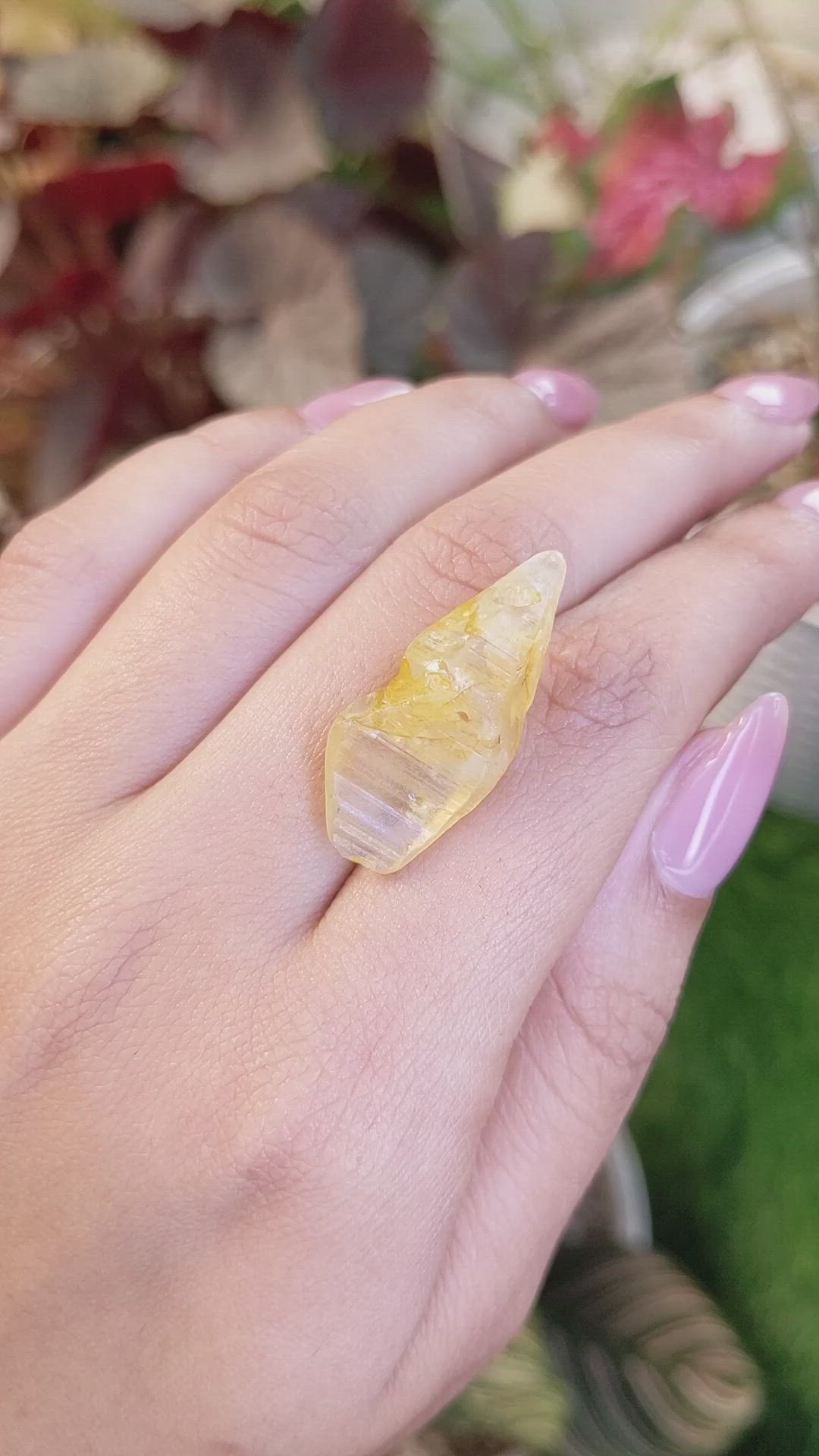
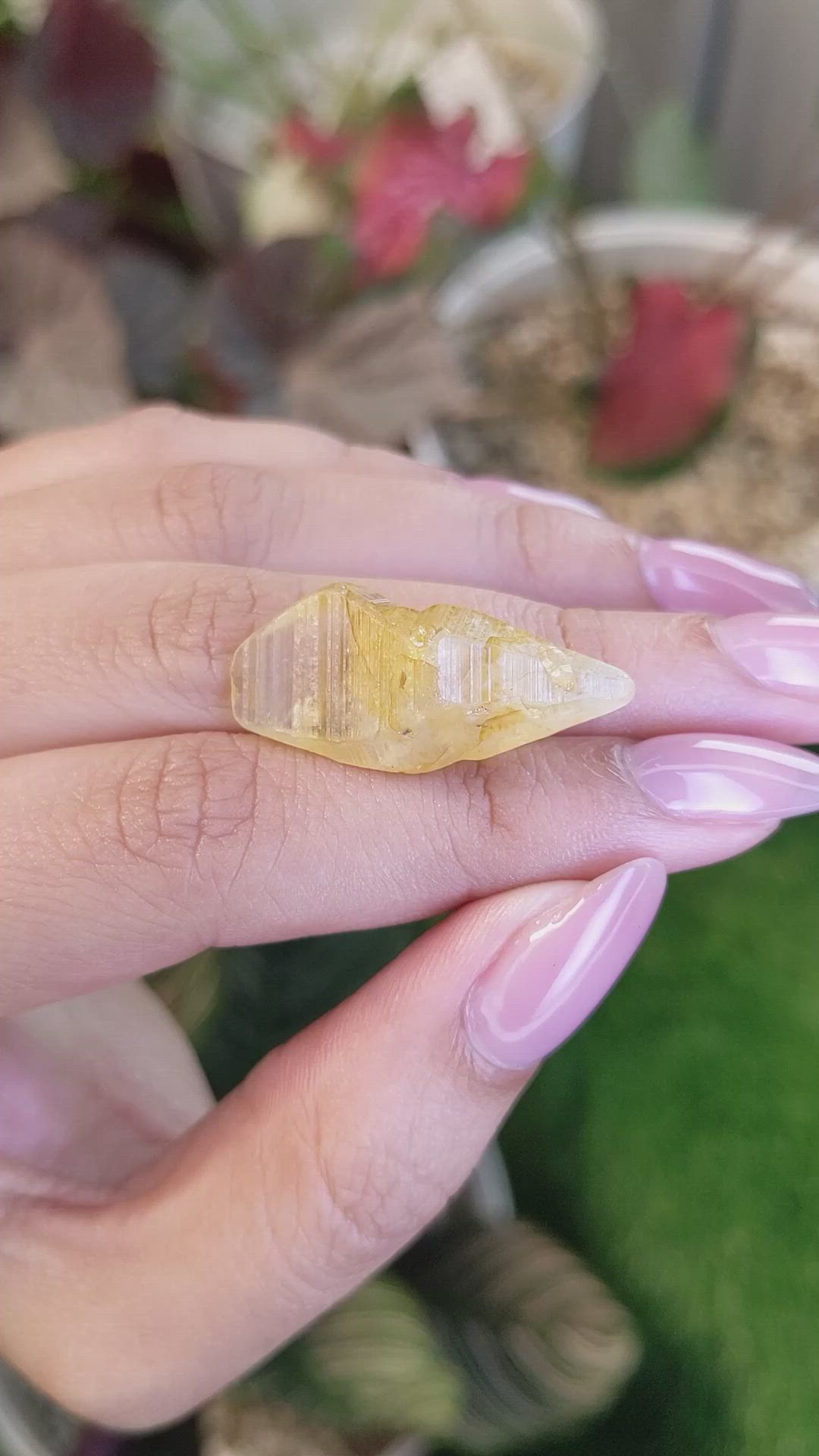
The decision to present this sapphire in a rough crystal cut reflects a conscious lapidary philosophy that balances weight retention with presentation. Rather than fully refaceting into a standard cut and losing a significant portion of carat weight, the cutter preserved the original external morphology while cleaning and refining selected planes to create smooth polished surfaces. Preforming began with careful assessment of inclusions and growth orientation, followed by precision abrasion using diamond laps to remove surface disruption and to define the primary outline. Subsequent stages used progressively finer abrasives and diamond pastes applied with matched laps to achieve the excellent polish described, focusing especially on the terminations and on planar faces that catch light. The result is a hybrid aesthetic, where natural growth faces remain legible, and targeted polishing provides scintillation and crispness at key viewing angles. The various shape is thus a considered trade off, providing maximum presence on the finger as shown in accompanying scale images, while maintaining the geological narrative that only rough crystals can convey. For jewelers and designers this approach reduces the need for invasive shaping, enabling bespoke settings that cradle the natural form and emphasize striations and zoning as design elements.
The geological history of this sapphire reads like a record of deep time, formed many millions of years ago in a dynamic crustal environment that fostered the growth of corundum. In Sri Lanka the terrain that produces gem quality sapphire is typically a complex metamorphic terrane, where high temperature and variable pressure conditions acted on aluminum rich protoliths. During regional metamorphism and localized metasomatic events aluminum became available in a silica deficient medium, allowing corundum to nucleate and grow instead of common silicate minerals. Pulses of fluid activity transported small amounts of iron into the growth environment, creating the subtle chromophore content that later manifested as yellow color. Growth occurred in episodes, producing the planar zoning and stepped terminations visible today, as changes in temperature pressure and fluid composition altered the rate and chemistry of crystallization. Over geological time uplift and erosion released crystals from their host rocks and concentrated them in secondary alluvial deposits, where transport and abrasion rounded some edges yet left characteristic faces intact. The crystal you see therefore carries within its growth bands a chronology of variables, each band a snapshot of a particular moment in the gem forming environment, and the polished faces make those snapshots legible to the trained eye. The Natural Sapphire Company presents this piece as an authentic, untreated example of Ceylon origin, a specimen that combines geological pedigree with thoughtful lapidary execution, and that invites a collector or designer to celebrate both the natural process and the skilled human intervention that brings the material to a finished state.


