
- Stone14
- Reports3
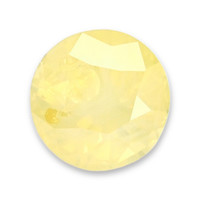
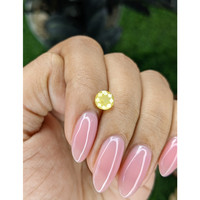
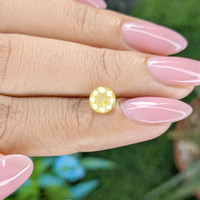
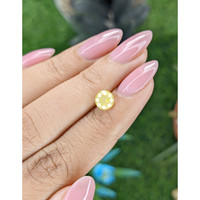
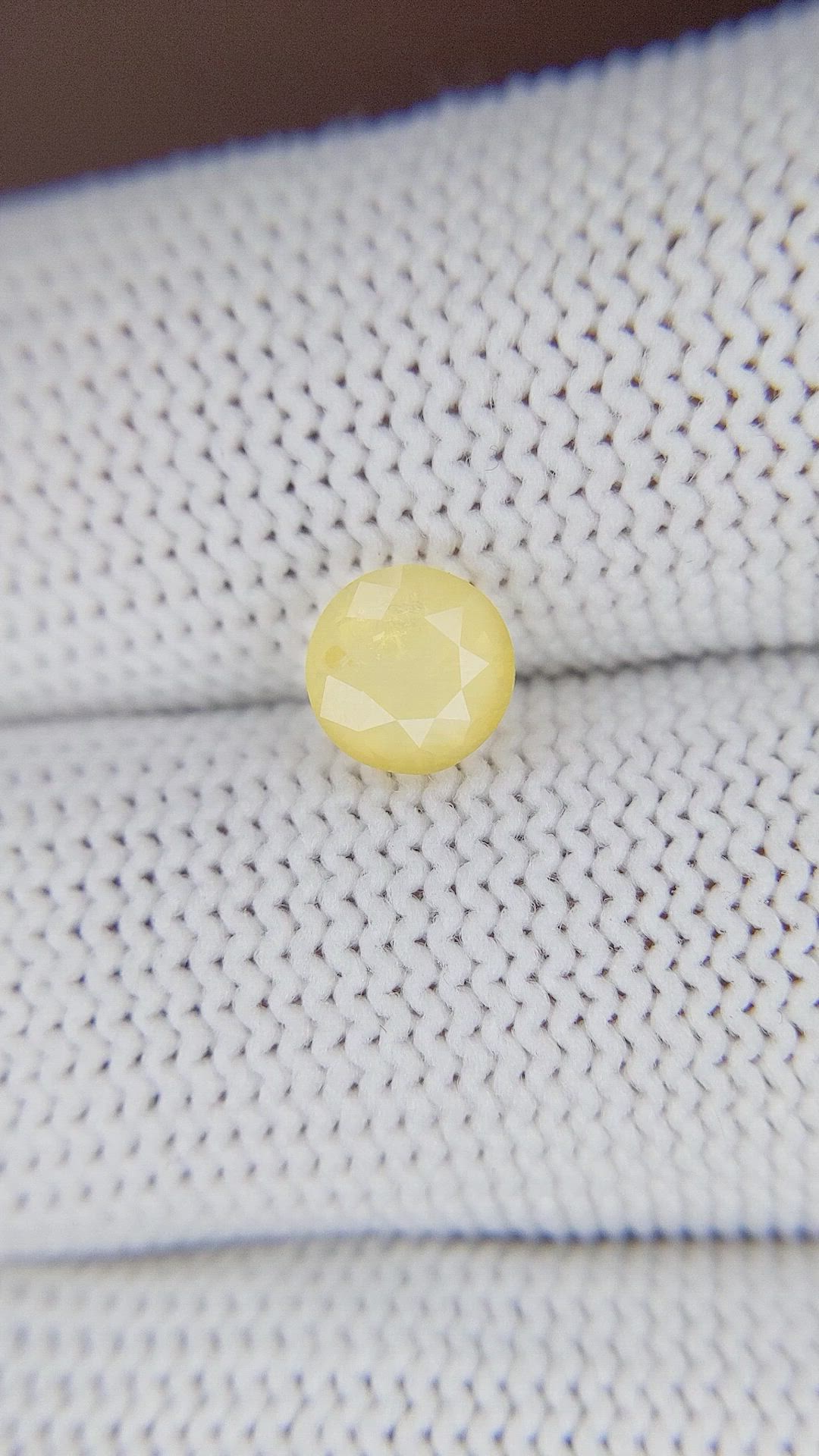
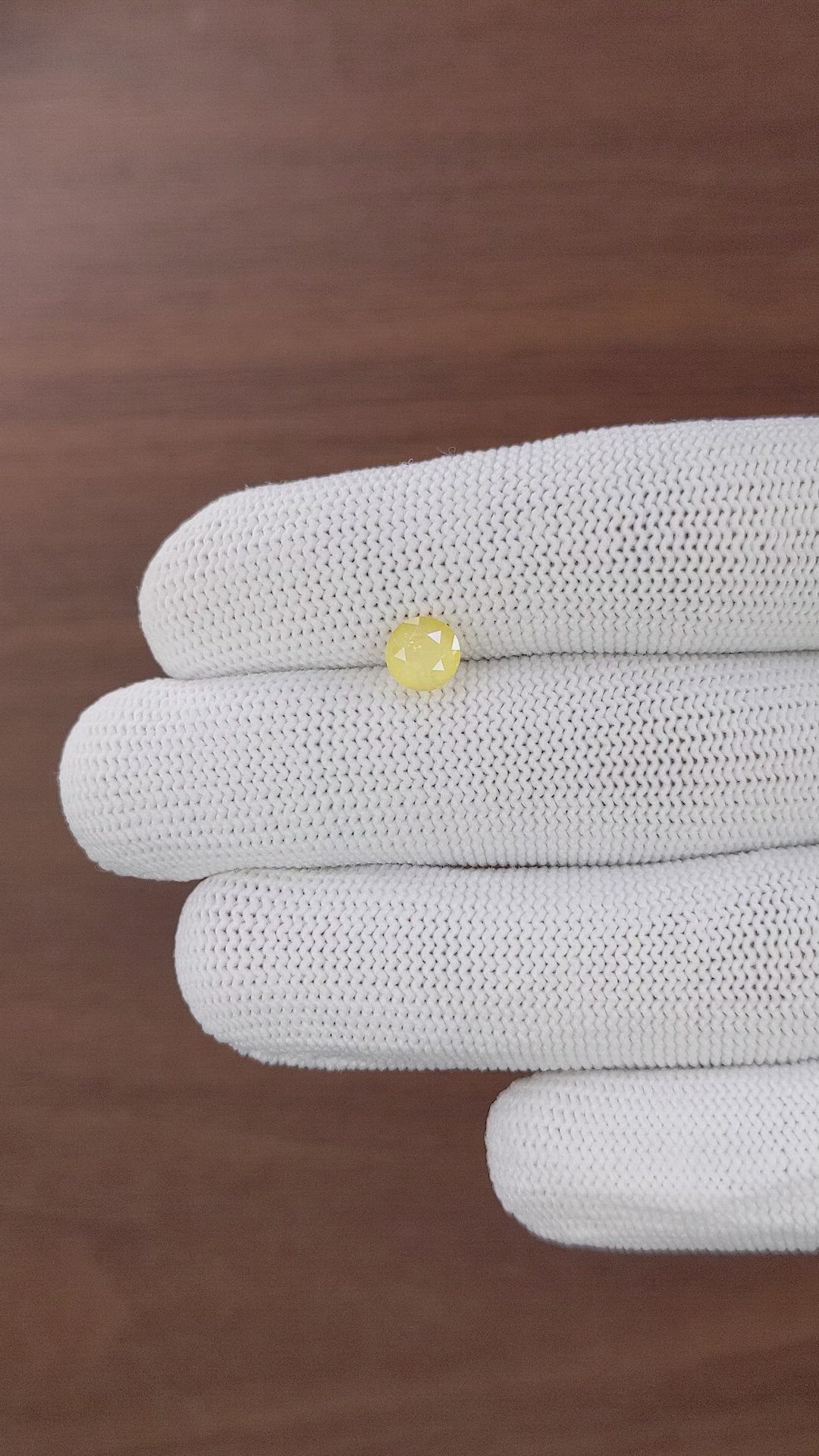
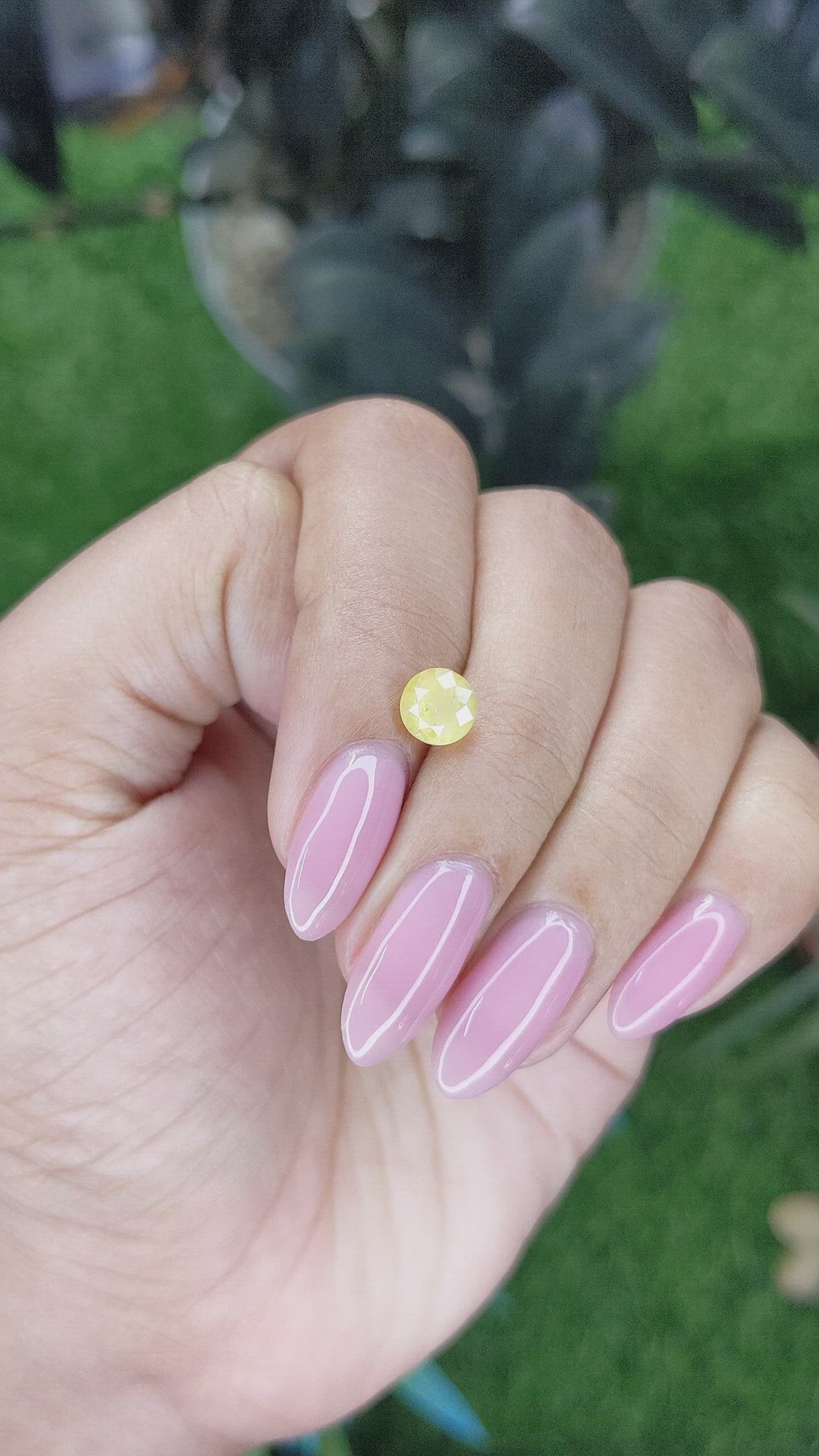
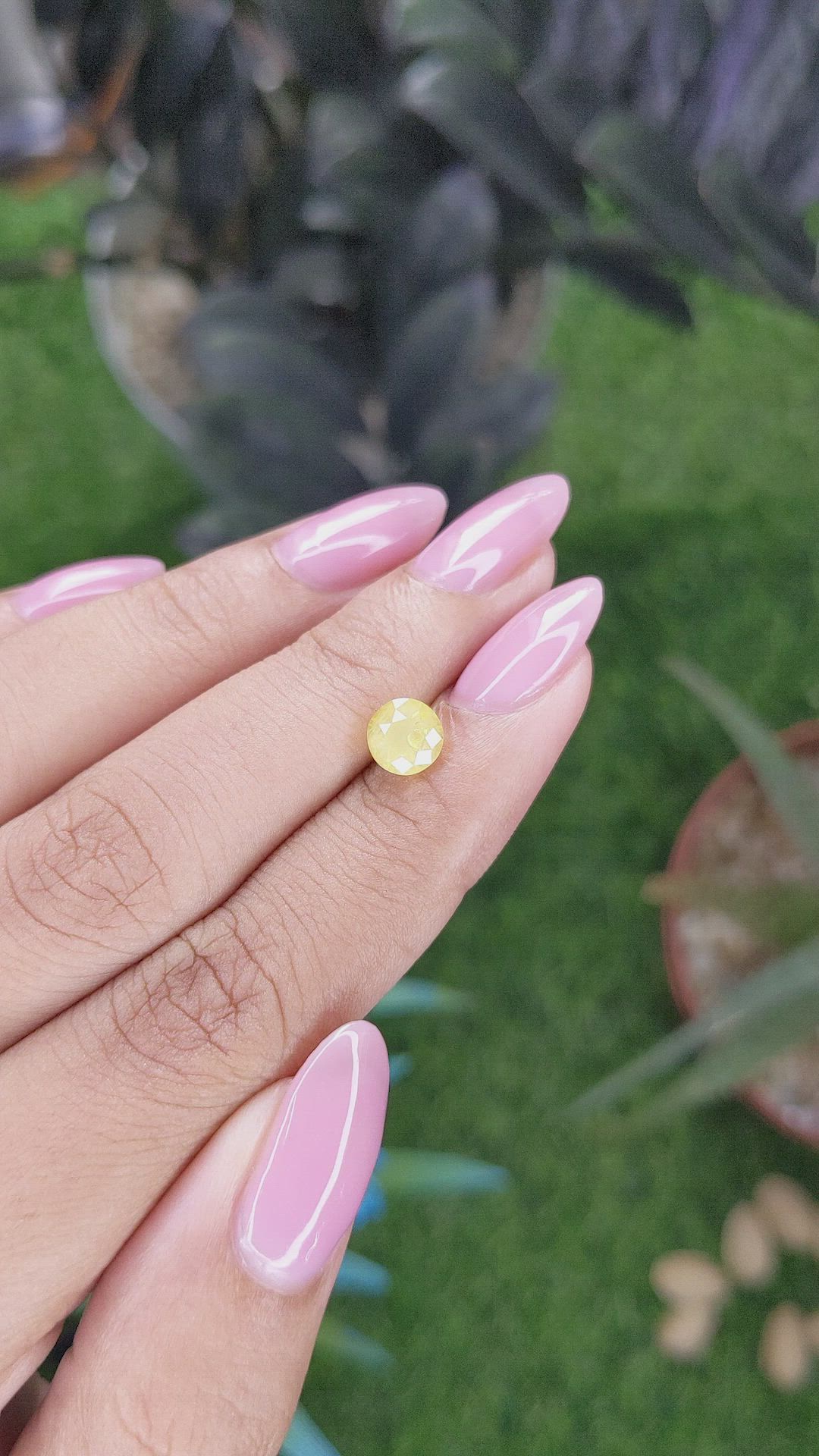

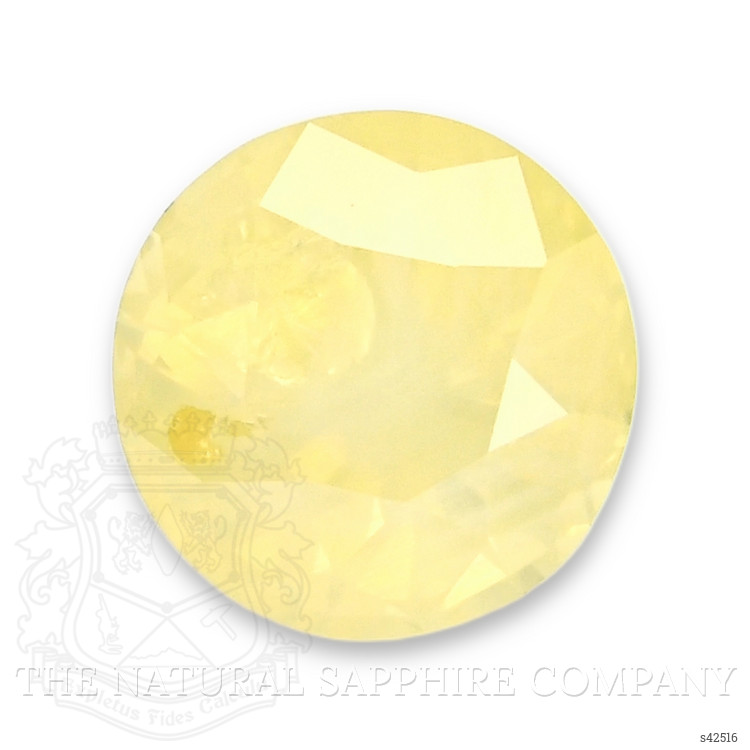
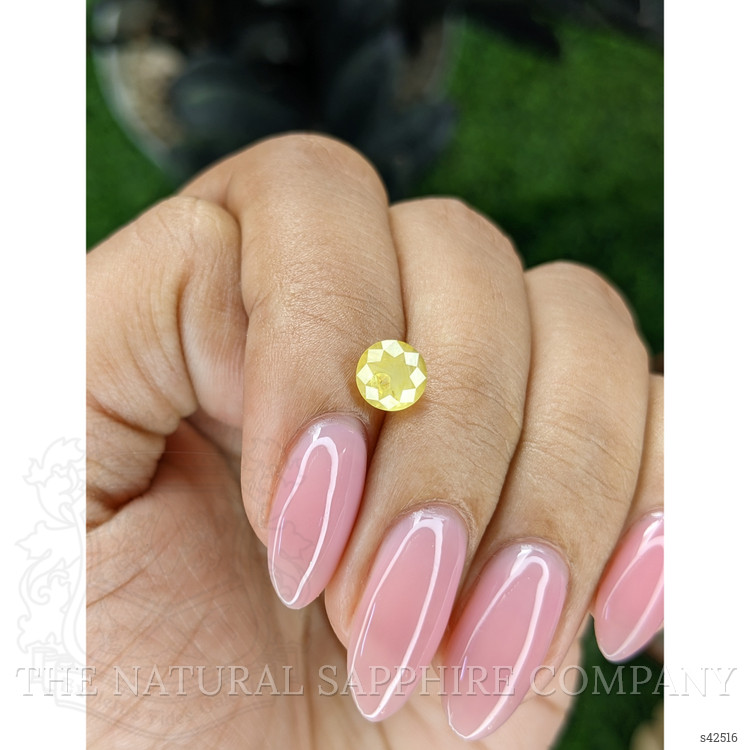
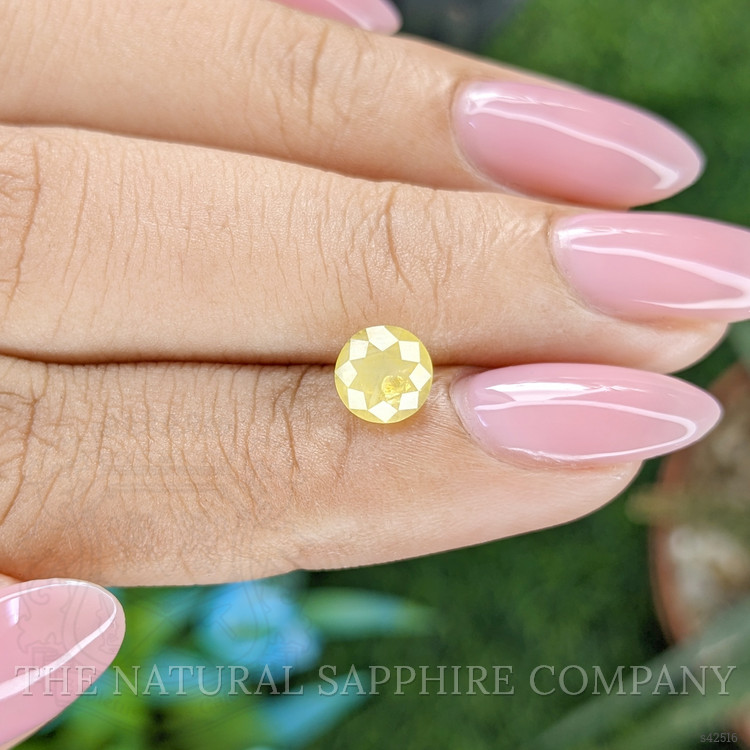
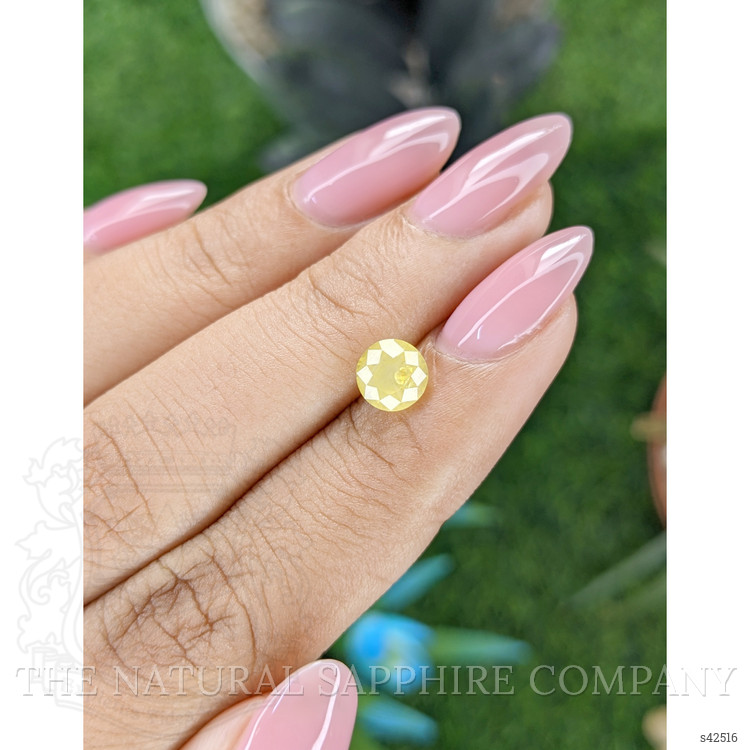

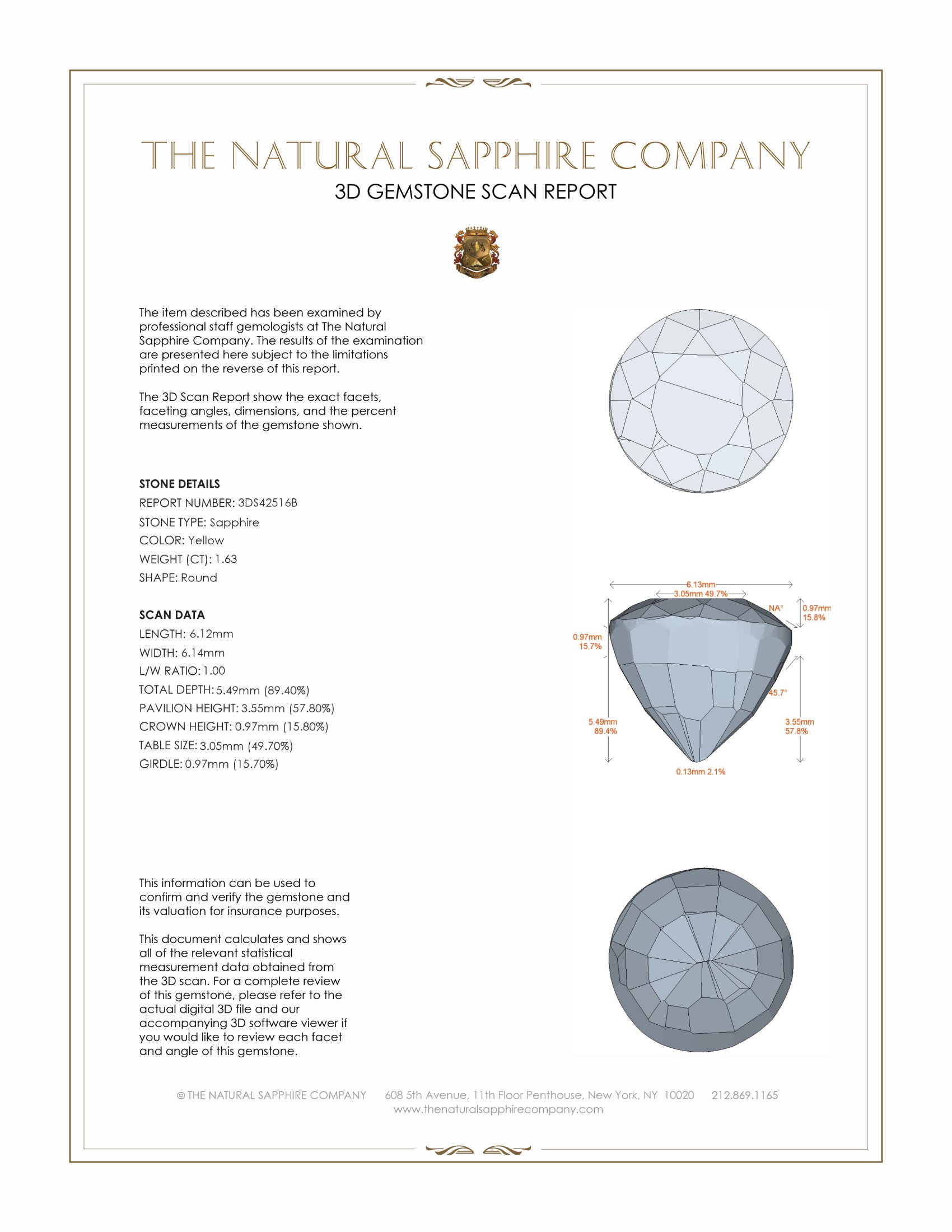
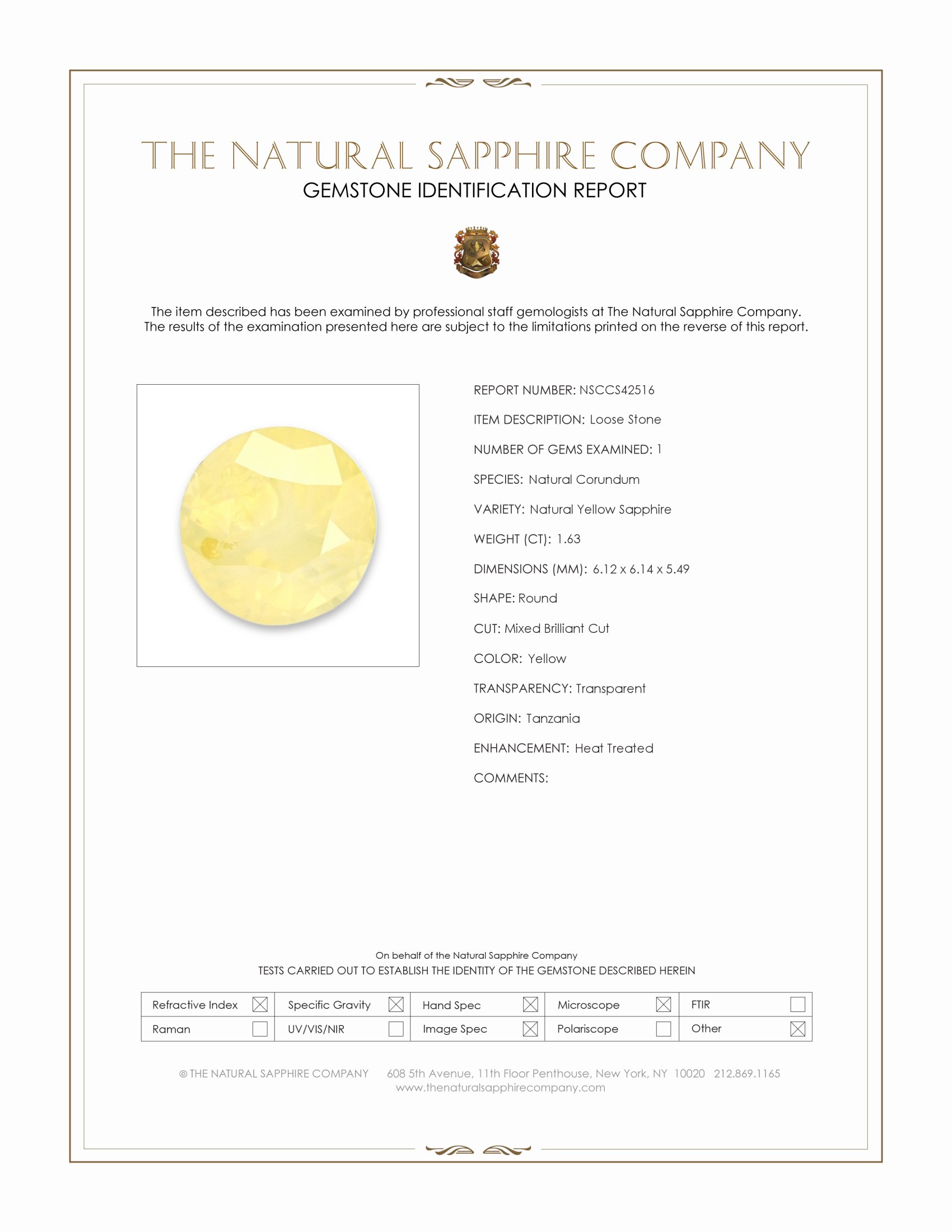
1.63 Ct. Yellow Sapphire from Tanzania
This loose stone ships by Oct 29
Item ID: | S42516 |
|---|---|
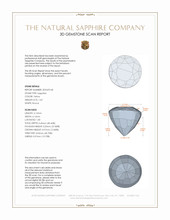
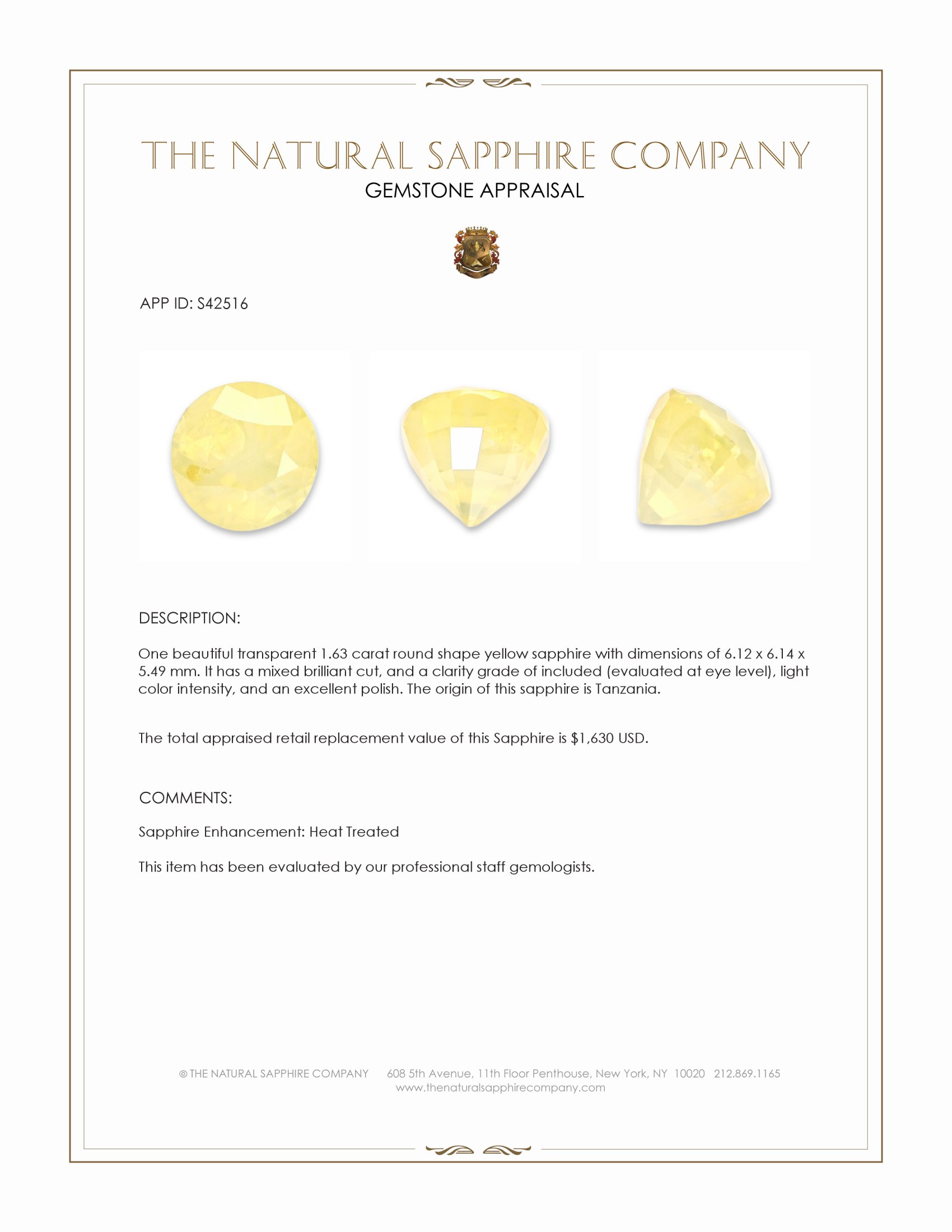
Dimensions (MM): help | Length: 6.12 Width: 6.14 Height: 5.49 |
Weight: | 1.63 Ct. |
Color: help | Yellow |
Color intensity: help | Light |
Clarity: help | Included |
Shape: help | Round |
Cut: | Mixed Brilliant Cut |
Cutting style: | Faceted |
Enhancements: help | Heat Treated |
Origin: help | Tanzania |
Per carat price: help | $1,000 |
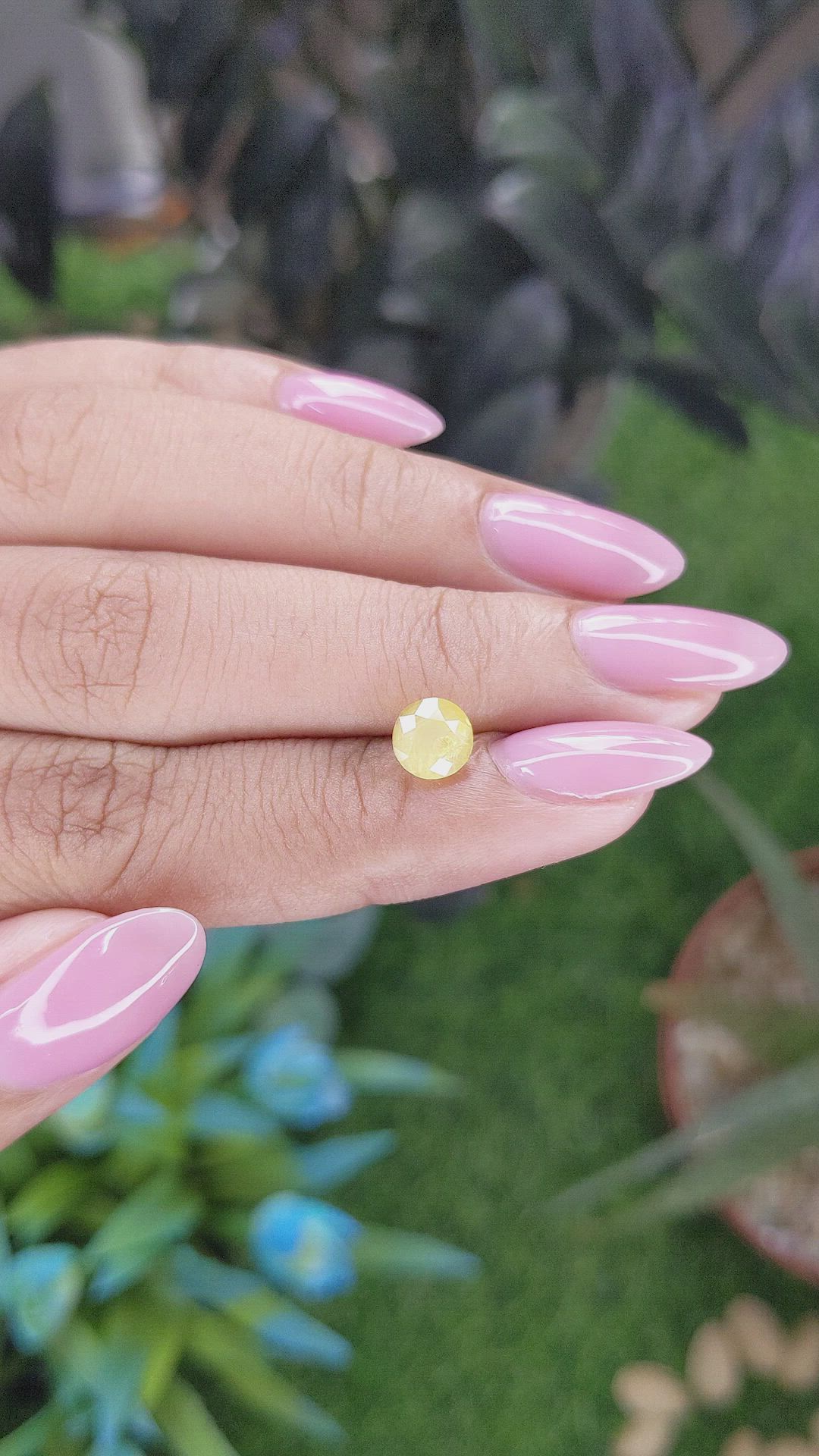
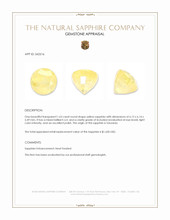
This transparent 1.63 carat round yellow sapphire measures 6.12 by 6.14 by 5.49 millimeters, and it has been fashioned in a mixed brilliant cut to balance face up color with controlled light return. The mixed brilliant strategy used here combines a well proportioned brilliant style crown with a modified pavilion geometry, yielding a pattern of larger crown facets that emphasize color saturation, paired with a denser lower facet arrangement that preserves weight from the rough while directing light back through the table. The stone is evaluated as included at eye level, and those internal features act as light scattering centers that soften contrast and create a warm luminous field rather than pinpoint star like flashes. Surface finish is excellent polish, which minimizes surface scattering and allows the internal reflections to read cleanly. This sapphire is heat treated, a standard and stable enhancement that improves color homogeneity and can partially reduce the visibility of silk and fine inclusions, and the material is sourced from Tanzania which contributes trace element chemistry that typically produces the iron related yellow hue present in this gem.
From an optical standpoint this sapphire displays the characteristic reflective profile of corundum, with a refractive index range near 1.762 to 1.770 and a dispersion of approximately 0.018, and those values explain the gem's restrained fire and emphasis on strong, broad flashes of yellow when compared to higher dispersion stones. Compared to diamond which has a refractive index near 2.417 and a dispersion of about 0.044, this sapphire will not produce the same degree of white and colored spectral fire, but it offers a deeper uniform color presence face up because its lower dispersion reduces spectral flash and allows hue and saturation to dominate. Against other yellow gemstones in the market, such as yellow topaz with a refractive index around 1.61 and dispersion near 0.014, this sapphire provides higher brilliance and a firmer facet contrast, and it will outlast topaz in wear because of corundum hardness near 9 on the Mohs scale. Versus natural citrine and quartz family material that sits around 1.54 refractive index, the sapphire has a noticeably stronger light return and a crisper facet separation. Compared to zircon which can have a high refractive index approaching 1.95 and stronger dispersion that yields pronounced fire, this sapphire reads as more subtly sophisticated, offering elegant broad scintillation rather than isolated spectral flashes, and it has superior toughness relative to zircon which is more brittle and prone to cleavage.
When assessing design and setting choices for this yellow sapphire the mixed brilliant cut and the stone proportions make it ideal for settings that favor face up color, such as low to medium bezel or classic four and six claw mounts that expose the crown while protecting the girdle. The slightly deeper pavilion depth encourages rich face up color and reduces windowing, and it performs especially well under direct and diffused light sources by presenting an even bright yellow appearance across the table. Inclusions evaluated at eye level mean that when selecting mounting style one should avoid extremely high profile settings that allow bright point source lights to emphasize internal contrast, and instead choose settings that moderate light angles to present the stone as a warm, luminous focal point. At The Natural Sapphire Company we detail all known treatments and origin information so that technical buyers can match the material to their design and longevity expectations, and our gemological team can advise on facet orientation and setting geometry to maximize the visual strengths of this Tanzanian yellow sapphire.


