
- Stone14
- Reports3


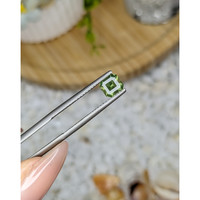

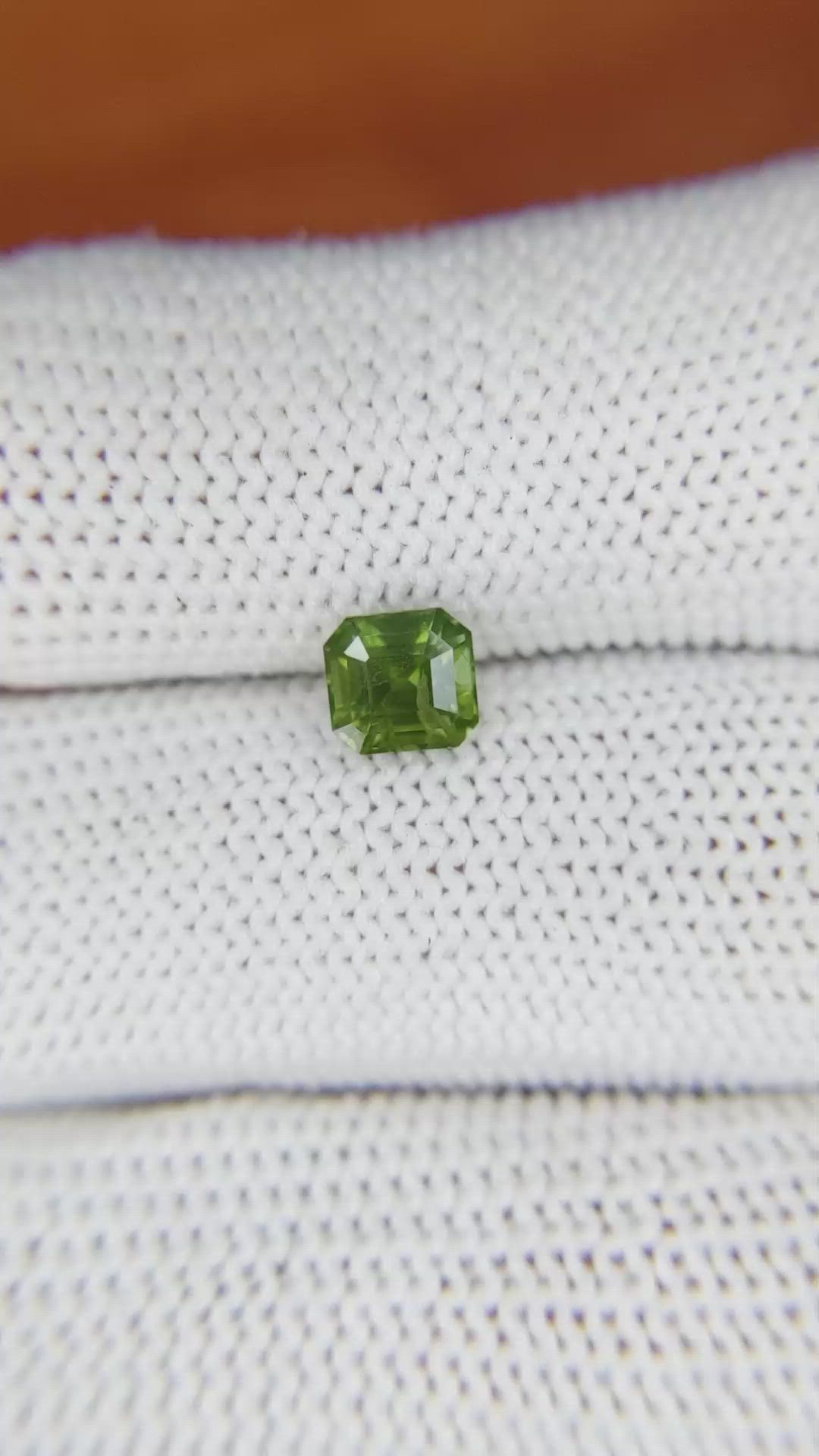
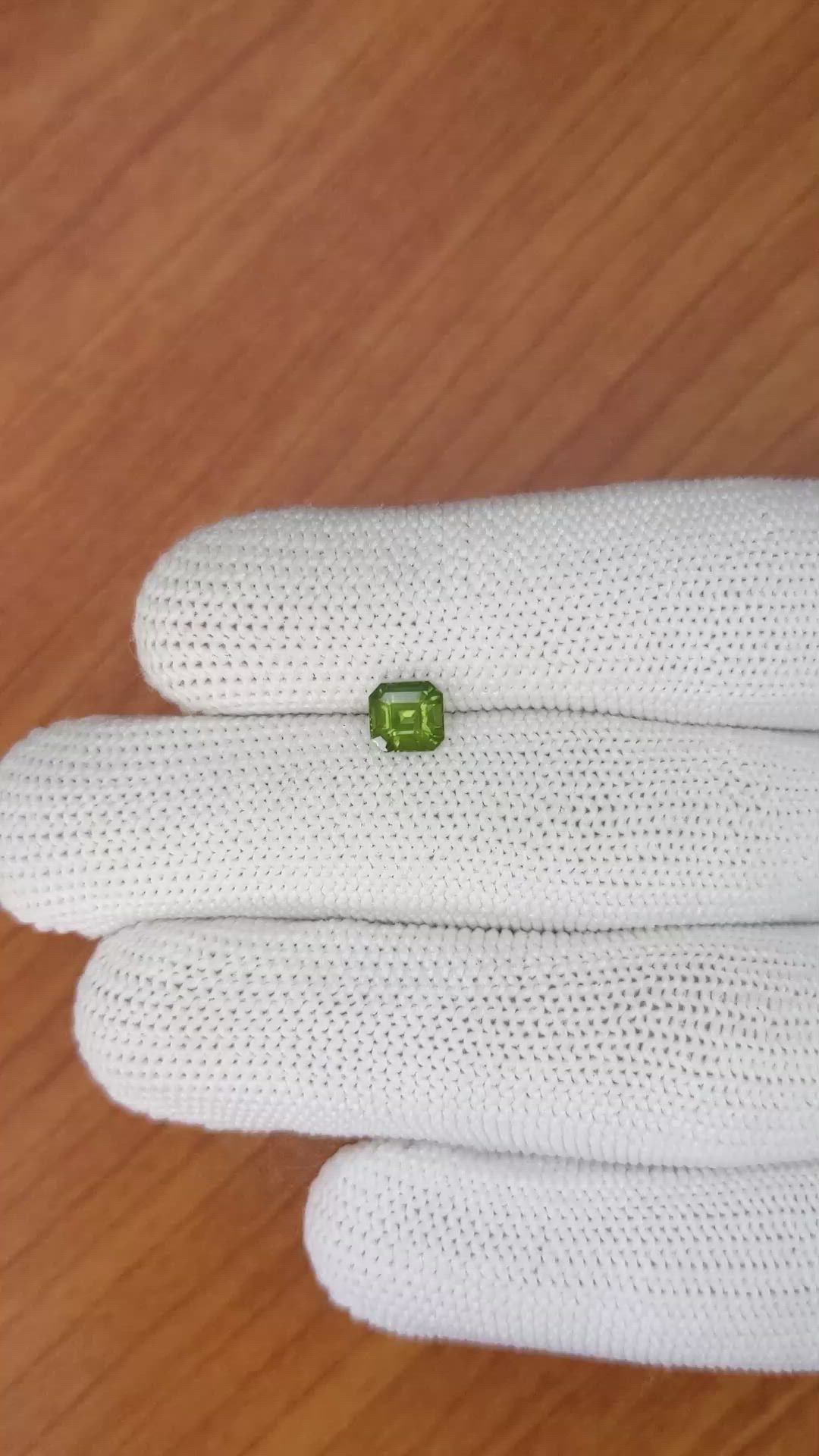
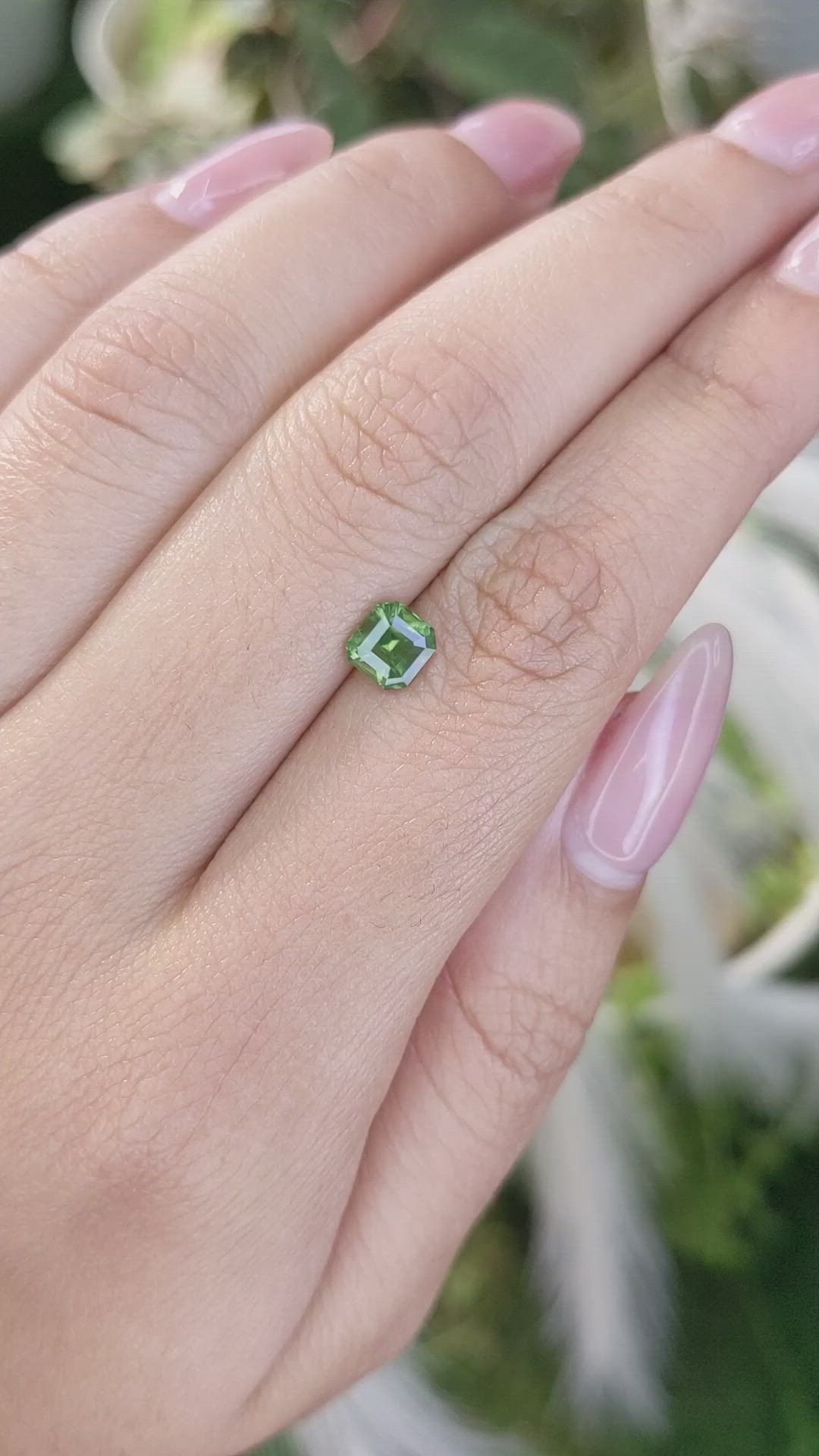
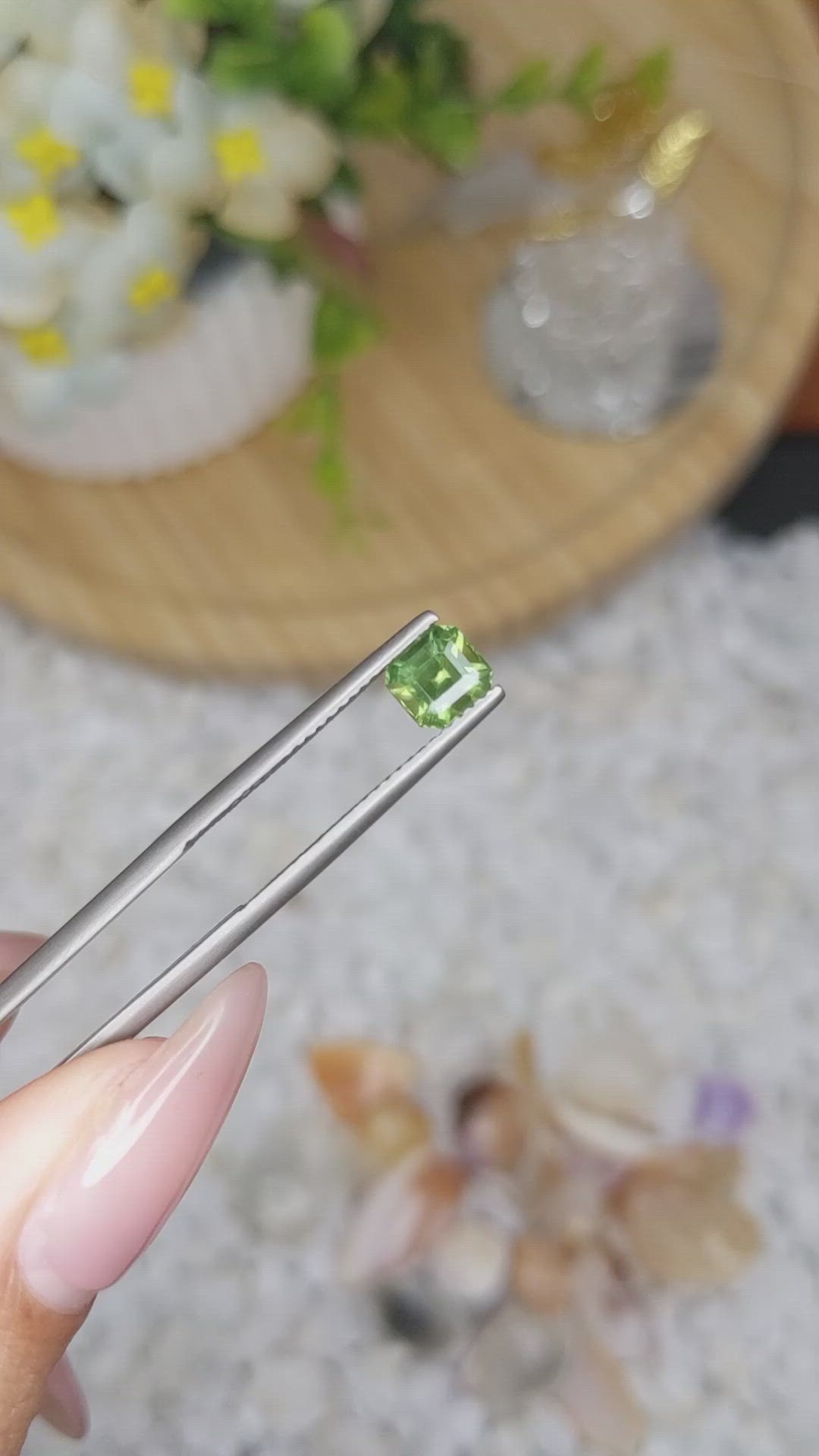
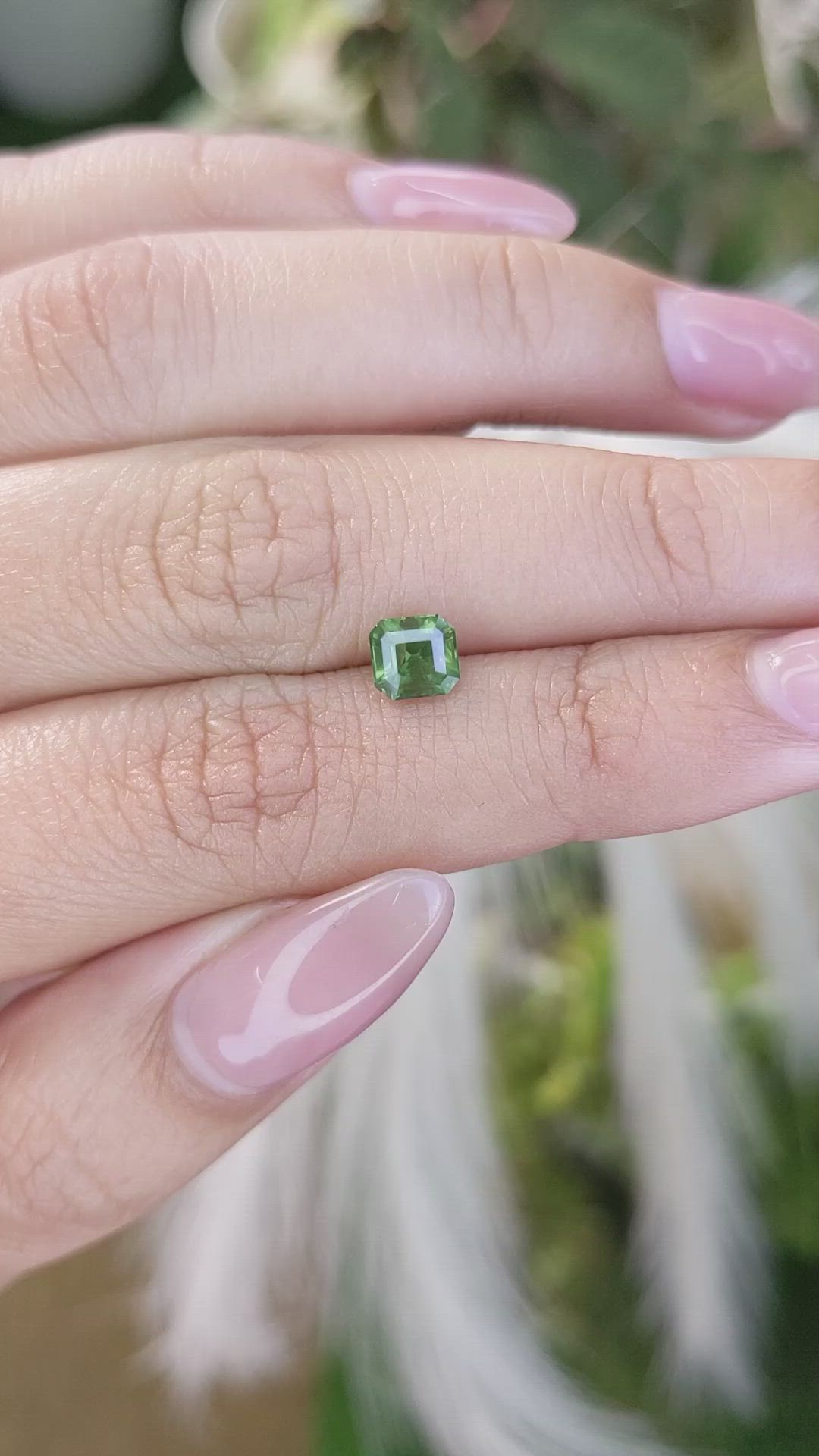


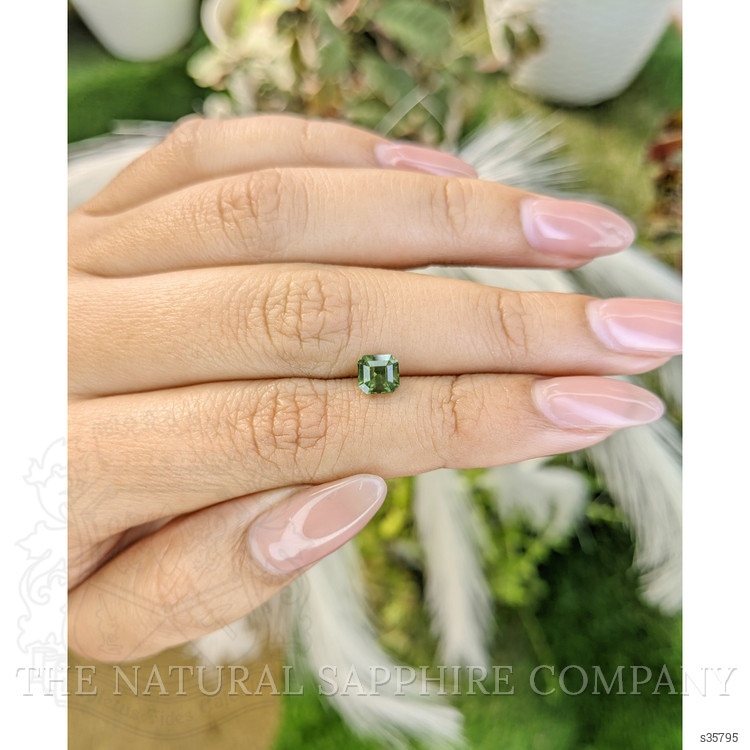
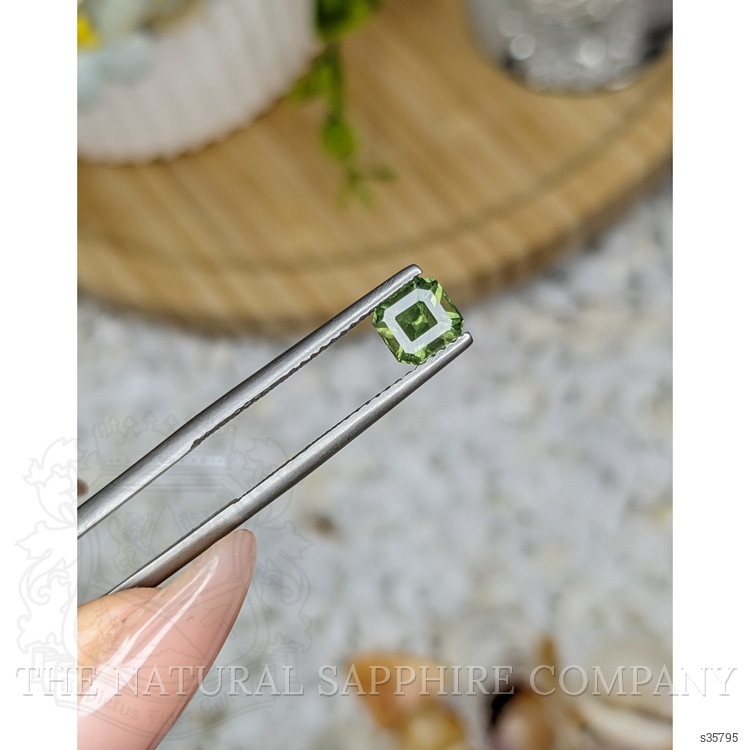
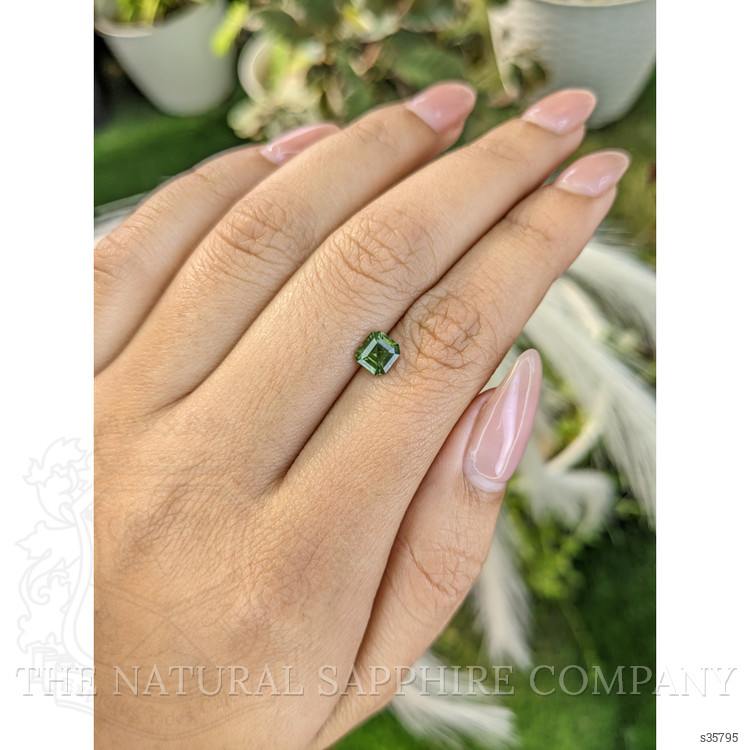


1.13 Ct. Yellowish Green Sapphire from Madagascar
This loose stone ships by Sep 12
Item ID: | S35795 |
|---|---|
Dimensions (MM): help | Length: 5.49 Width: 5.19 Height: 4.16 |
Weight: | 1.13 Ct. |
Color: help | Yellowish Green |
Color intensity: help | Intense |
Clarity: help | Slightly Included |
Shape: help | Asscher - Octagon |
Cut: | Asscher Cut |
Cutting style: | Faceted |
Enhancements: help | Heat Treated |
Origin: help | Madagascar |
Per carat price: help | $300 |
This one point thirteen carat, transparent, asscher, octagon shape yellowish green sapphire measures 5.49 by 5.19 by 4.16 millimeters, presenting a depth that is approximately seventy eight percent of its average diameter. The carving is a classic asscher step cut, with a broad, squared table, concentric step facets on the crown, and a series of parallel pavilion steps that create a mirror like hall of light. Clarity has been graded as slightly included at eye level, which is consistent with natural sapphire material from Madagascar, and the excellent polish yields crisp facet junctions and tight facet symmetry. Color intensity is described as intense, with a distinct yellow green hue that displays both warm and cool flashes depending on light angle. The piece has been heat treated, a standard and stable enhancement used to intensify color and improve clarity, and its origin from Madagascar is recorded, contributing to its provenance and geological character. The Natural Sapphire Company offers this gem with full disclosure of these technical attributes, allowing designers and clients to plan settings and treatments with precision.
From a lapidary and optical standpoint the asscher faceting emphasizes large flat facets and parallel geometry, which governs how inclusions and color are perceived face up. The asscher step pattern produces broad flashes of return rather than scattered brilliance, so the slightly included clarity must be considered when selecting a setting and orientation. The deep pavilion and step facet angles concentrate light, enhancing saturation and producing strong face up color, while also increasing the risk of windowing if mounted shallowly. The excellent polish ensures that facet planes act as clean mirrors, maximizing contrast between the steps and creating the characteristic cage like internal reflections valued in high quality asscher cuts. The table proportion and crown height, balanced for this gem, make it ideal for viewers who appreciate a disciplined, architectural light performance, rather than a brilliant cut flash. These technical details mean the gem will read darker or more saturated under certain lighting, and will show lively facet flashes when tilted, a property that skilled setters and designers can exploit.
Customization possibilities are extensive, and the gem is particularly well suited to designs that protect the corner facets while showcasing the asscher geometry and yellowish green color. Four prong settings with substantial corner protection or four bezel keyed corners are excellent for maintaining the octagon silhouette while guarding against knocks. A full bezel setting will emphasize the gem as a modern solitary and will protect the deep pavilion, while a low profile bezel or partial bezel will reduce the visual weight on the finger. Halo designs, using small brilliant cut diamonds or green sapphires, will create contrast and a visual increase in face up size, and they can be configured as a single row or a double tray halo to complement the step facet lines. For a contemporary look, an invisible or channel set surround with baguettes oriented parallel to the asscher steps will echo the geometry, while tension settings will showcase the table and create a floating appearance, provided the mount is engineered to accommodate the stone depth. For pendants and earrings, low bezel or three prong configurations preserve the square silhouette and keep the gem close to the body, which reduces the chance of catching on clothing. Metal choice will significantly affect perceived color, with yellow gold enhancing the warm yellow notes, rose gold deepening the green toward olive tones, and white metals creating sharp, cooler contrast that makes the yellow green read brighter. Accent stones arranged to flank the gem along its east west axis will play with the step lines and elongate the visual axis, a useful technique for ring shanks and bracelet mounts.
Practical considerations for fabrication and long term wear are important to achieve a finished piece that highlights the stone while ensuring durability. The deep pavilion means the mounting must be designed to allow adequate seat depth, and setting seats or collets should be machined to cradle the pavilion without forcing stress on the girdle. Because step cut facets reveal internal features more readily than mixed cuts, The Natural Sapphire Company can provide orientation recommendations so that inclusions are positioned under prongs or metal accents when feasible, reducing visibility without recutting. Recutting or re faceting to shallow the pavilion is possible, but will reduce carat weight and alter the asscher aesthetic, a trade off that should be discussed prior to any alteration. For clients seeking bespoke designs, we offer CAD renderings, wax models, and prototyping, allowing adjustments in crown height, prong profile, bezel thickness, and halo spacing to be refined before production. We can also match this sapphire to complementary stones for three stone rings or to create a coordinated set, taking into account color shift under various light sources, and ensuring a harmonious ensemble. If you would like technical guidance on tolerance specifications for prongs, bezel lip thickness, or recommended seat depths for this 5.49 by 5.19 by 4.16 millimeter asscher, The Natural Sapphire Company is available to consult on custom manufacturing and on setting designs that maximize brilliance, protect the gem, and highlight its intense yellowish green character.


