- Stone12
- Reports3


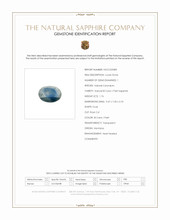
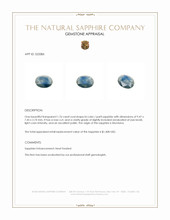


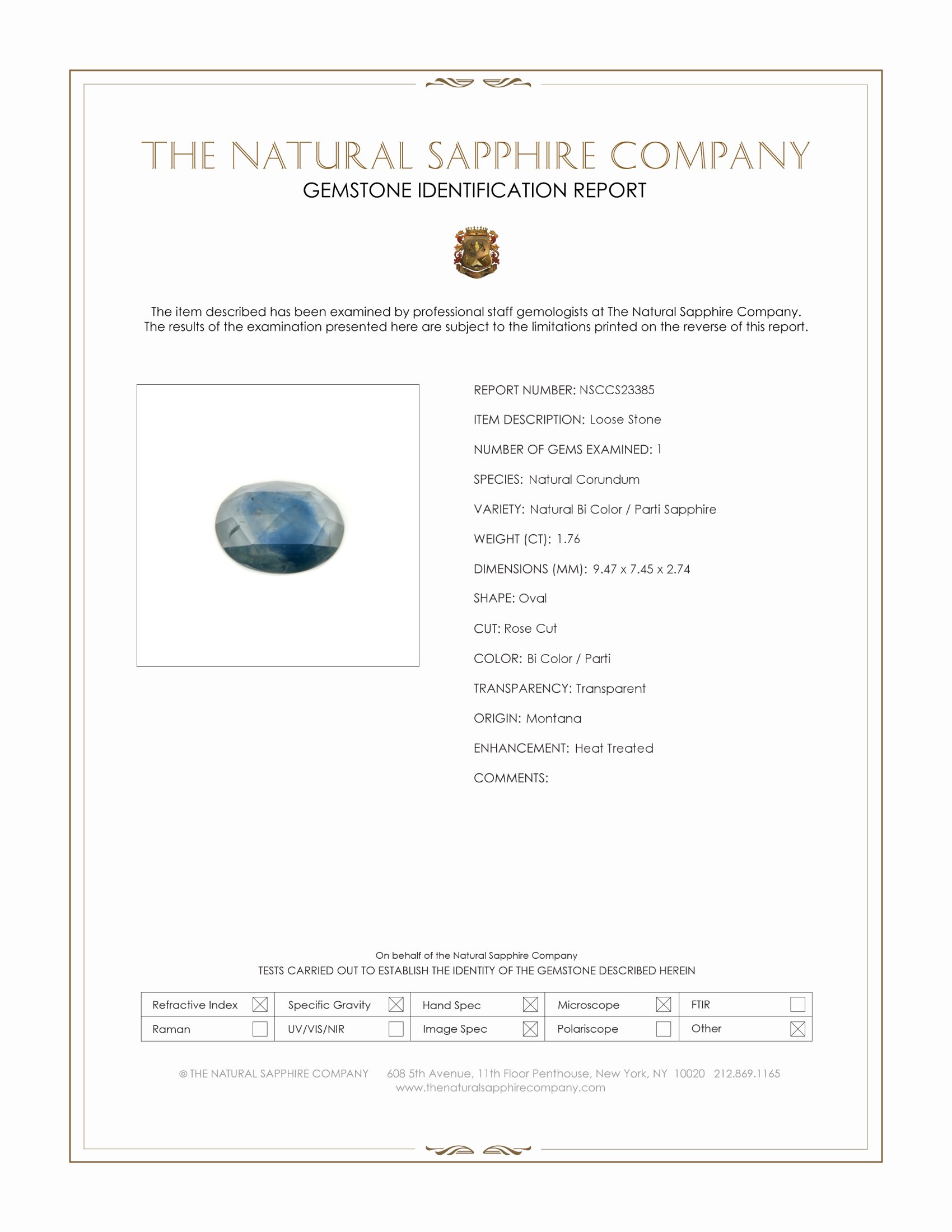
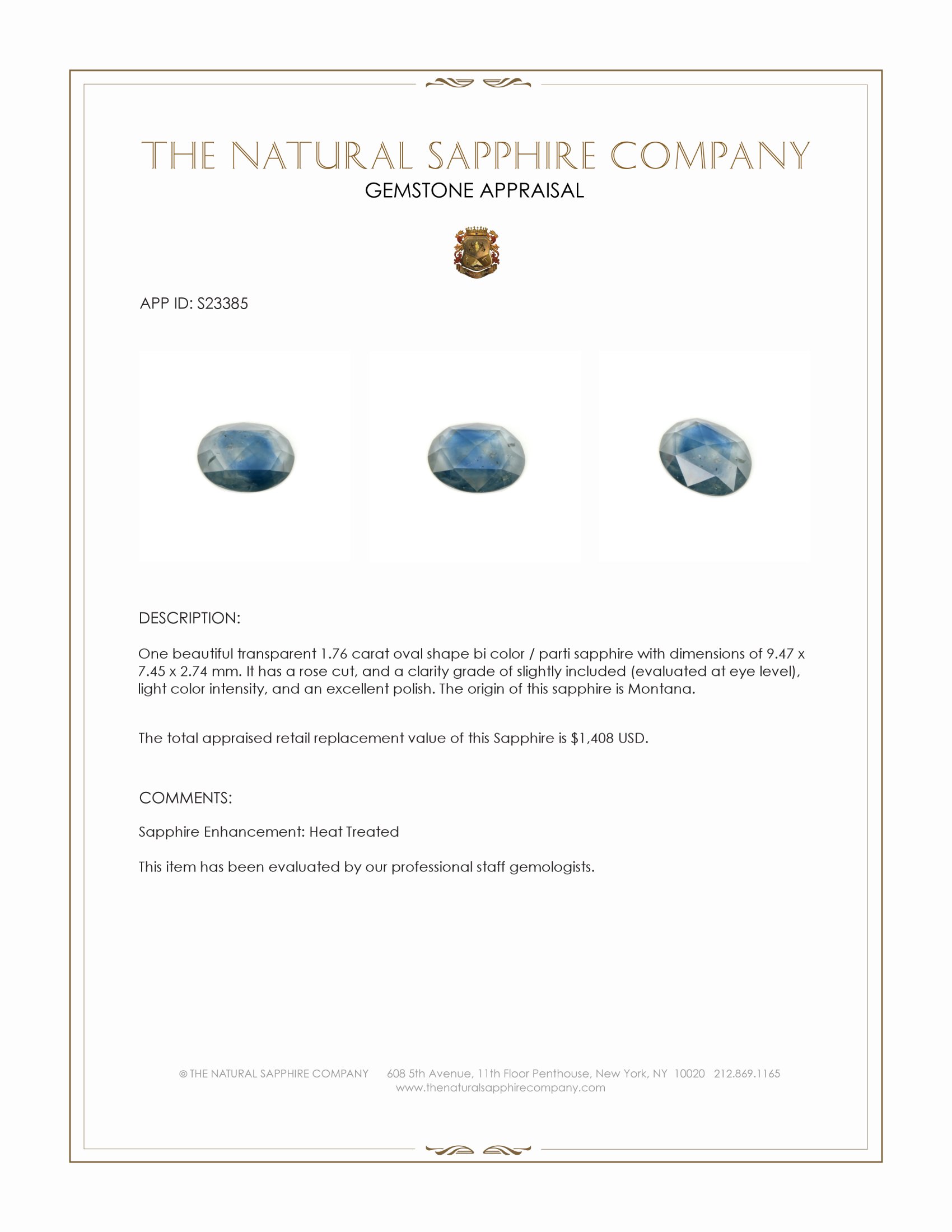
1.76 Ct. Bi Color / Parti Sapphire from Montana
This loose stone is available to ship now
Item ID: | S23385 |
|---|---|
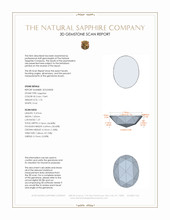
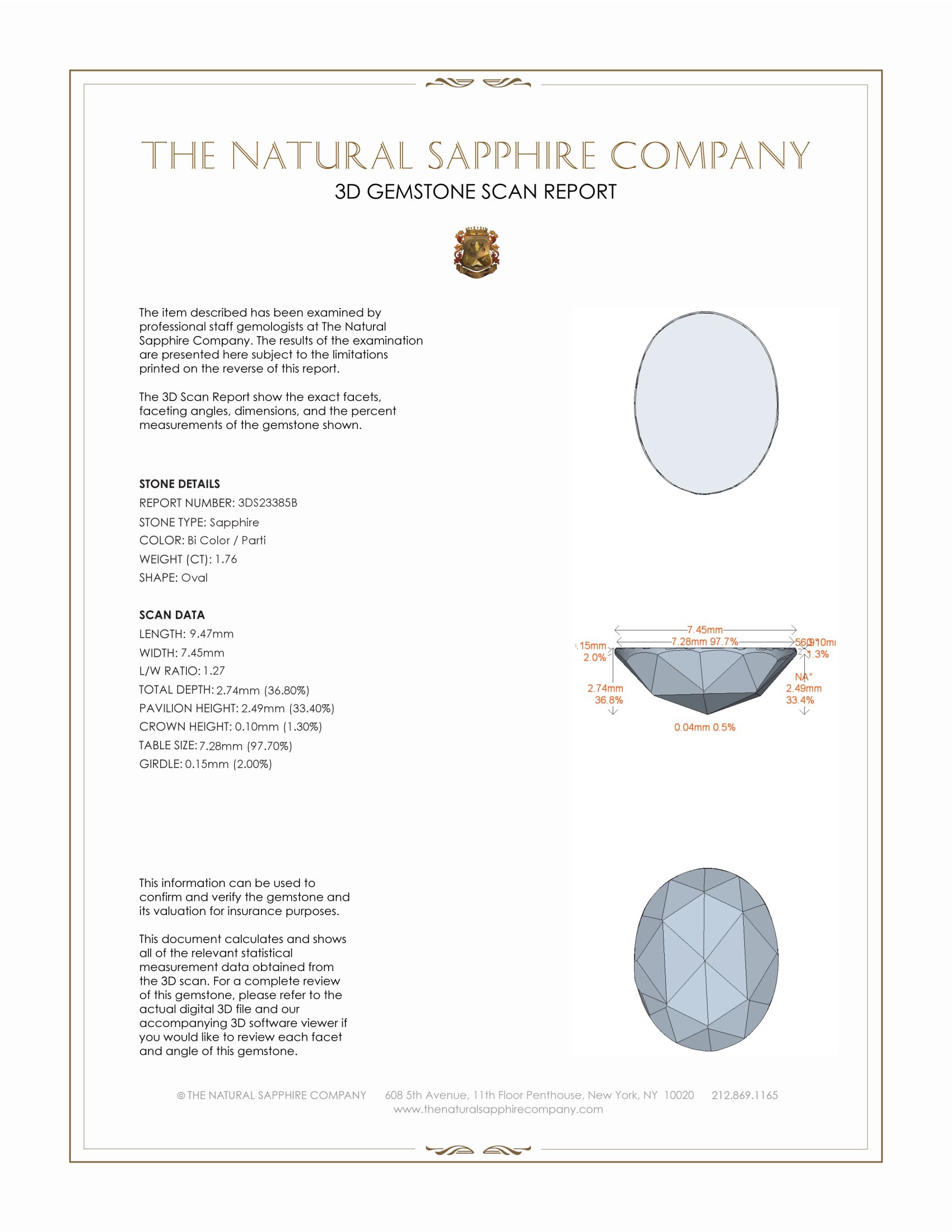
Dimensions (MM): help | Length: 9.47 Width: 7.45 Height: 2.74 |
Weight: | 1.76 Ct. |
Color: help | Bi Color / Parti |
Color intensity: help | Light |
Clarity: help | Slightly Included |
Shape: help | Oval |
Cut: | Rose Cut |
Cutting style: | Faceted |
Enhancements: help | Heat Treated |
Origin: help | Montana |
Per carat price: help | $800 |
This 1.76 carat oval bi color sapphire is a study in restrained complexity, offered by The Natural Sapphire Company. Measuring 9.47 by 7.45 by 2.74 millimeters, this transparent gem displays a light color intensity with distinct bi color zoning that is most apparent when the stone is oriented on table. The cutting style is faceted in a traditional rose cut configuration, with a low domed crown composed of converging triangular facets and a flat pavilion plane, a geometry that moderates brilliance in favor of a soft, internal diffusion of color. Clarity is graded as slightly included at eye level, with small natural crystals and wispy silk that are present but do not detract from overall transparency, these inclusions providing internal character and stabilization for the rose cut geometry. The surface finish is an excellent polish, with sharp facet junctions and an even lap that allows the rose cut facets to read cleanly to the eye, and the stone has been heat treated, a standard enhancement to optimize chroma and reduce veil, applied with controlled thermal parameters to preserve the inherent blue and green partitioning typical of Montana origin sapphires.
From a gemological standpoint the interplay between the rose cut faceting and the bi color distribution deserves careful attention, because the shallow crown and flat pavilion change how color saturation and light return are perceived compared with modern brilliant cuts. The rose cut facets create broad light windows that emphasize lateral color banding, so the bi color effect reads as two adjacent fields of tone rather than rapid flashes. This makes orientation and setting critical for visual performance, the long axis of the oval aligning with the viewer to present a graduated transition from the cooler, deeper blue zone to the paler, more silvery blue, the transition appearing smoother under diffused light and more defined under directional illumination. The slightly included clarity grade, evaluated at standard jewelry loupe distances, is advantageous in this context, because the inclusion patterns act as micro scatterers, softening harsh facet contrast and contributing to the stone’s depth without compromising transparency. The excellent polish enhances facet crispness and ensures that light grazing the dome is redirected efficiently, providing a pleasing mix of surface luster and internal glow, and the heat treatment has been applied to harmonize the color distribution while maintaining the stone’s natural zoning and provenance from Montana, a locale known for parti and bi color sapphires with subtle teal and steel blue tendencies.
Beyond the technical narrative, there is a romantic provenance embedded in the stone’s color and clarity that will resonate with discerning collectors who value story as much as specification. The bi color partition reads like a twilight conversation across a western sky, the deeper blue reminiscent of the last reliable light over alpine lakes, while the paler blue evokes the first cool breath of night, the slight inclusions analogous to constellations interrupting a smooth horizon. When set with the rose cut crown upward, the gem tells a visual story of two zones learning to coexist, the junction between them a soft seam rather than an abrupt break, an aesthetic that suits symbolic commissions such as engagement rings or anniversary pieces where duality and unity are themes. From a craftsmanship perspective, mounting recommendations include an open backed bezel or a low prong assembly to permit light ingress from the pavilion plane, preserving the delicate balance between the stone’s rose cut diffusion and the bi color reading, and a warm metal like rose gold can introduce a complementary counterpoint to the cooler blue tones without overpowering them. This sapphire is intended for the buyer who appreciates measured technical detail, provenance, and a poetic narrative, it is a precise specimen that balances measurable attributes with evocative visual character, a Montana rose cut bi color sapphire that combines transparent material, considered faceting, and careful enhancement into a piece ready for a bespoke setting.


