
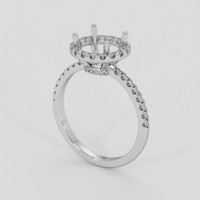
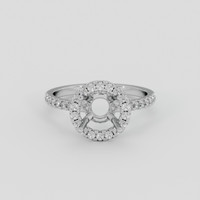
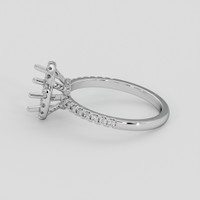
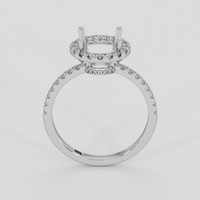
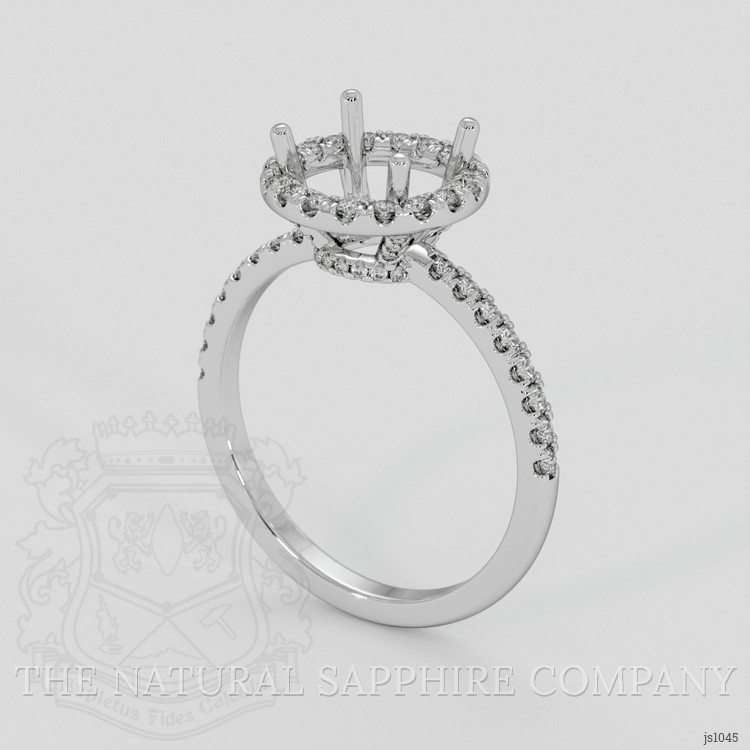
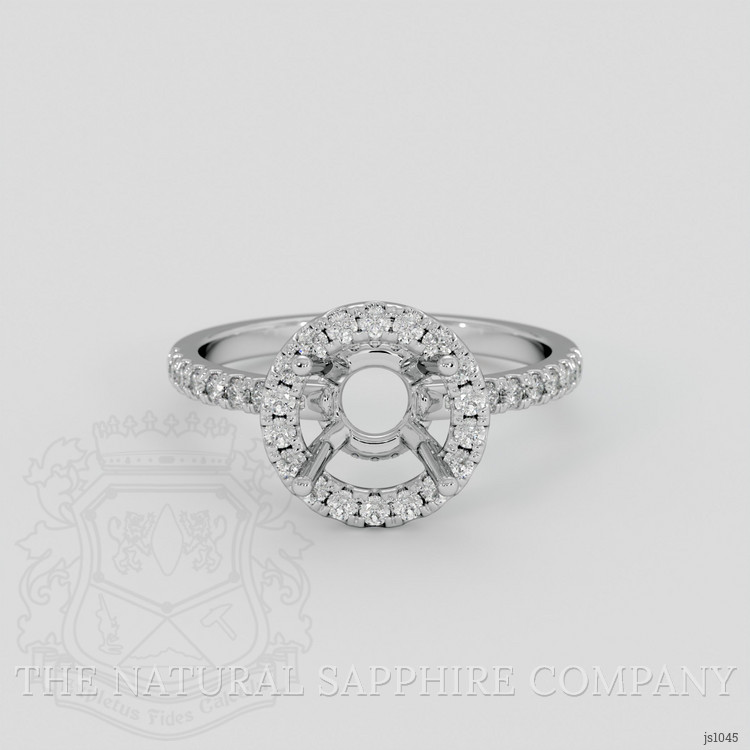
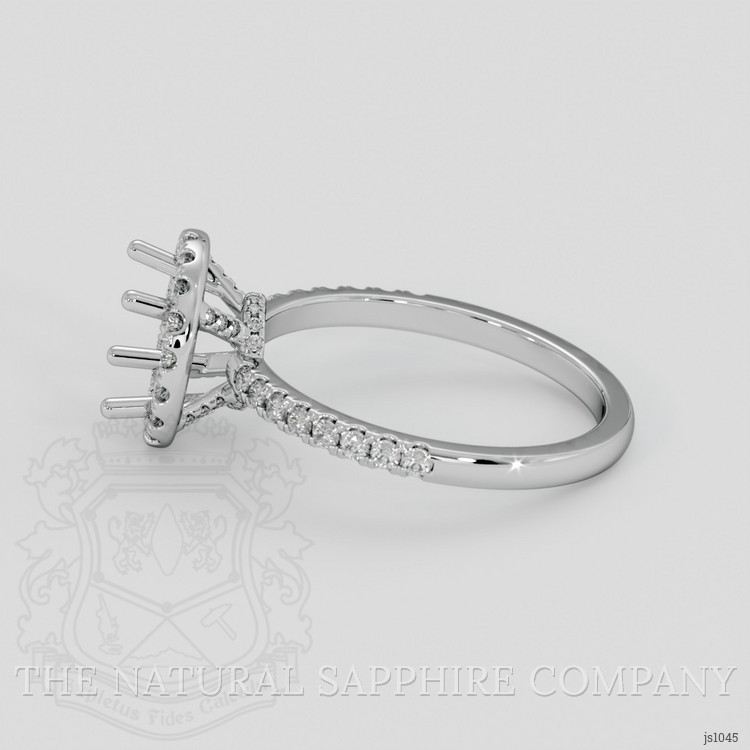
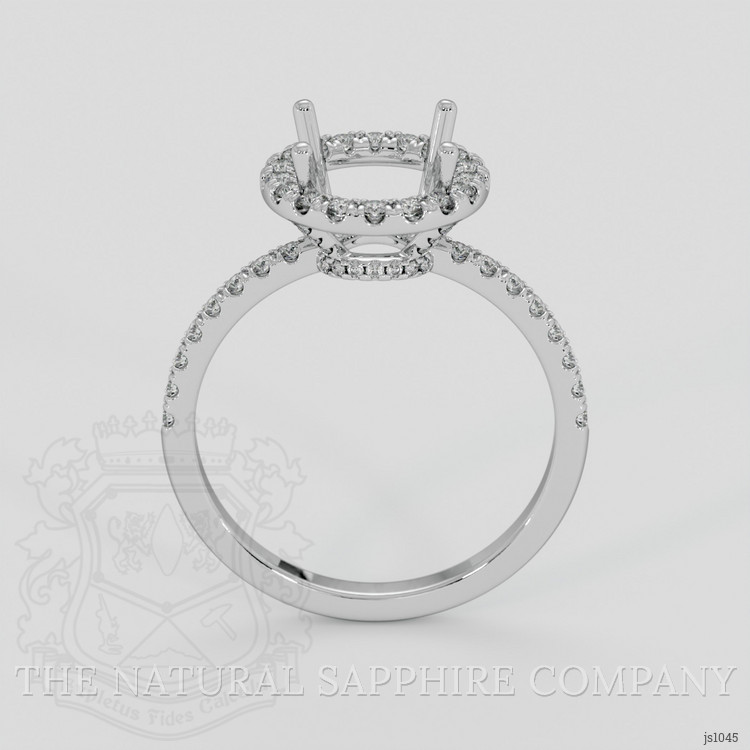
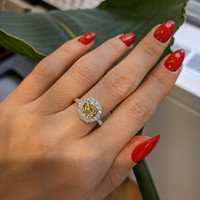
14K White Gold Pave Ring Setting


The halo style consists of a primary center gemstone encircled by a continuous ring of smaller stones, each positioned to return additional light into the focal gem, thereby increasing perceived size and overall brilliance. In technical terms the halo typically employs round brilliant melee stones, chosen for their 57 facet architecture which maximizes scintillation at small diameters, and set in a close grain or shared prong configuration to minimize metal visibility and maximize reflective surface area. The halo diameter and the distribution of pavé points are calculated to complement the table size and crown height of the center gem, so that the halo sits at a precise optical distance to reinforce the crown pavilion interplay of light return. For colored centers such as sapphire, ruby, and emerald the halo can be calibrated in stone size and facet alignment to create a color contrast or halo tinting effect, where cooler white diamonds intensify the saturation of warm tones, and warmer rose gold settings subtly enrich the red and pink spectrum of certain gems. The number of halo stones, their individual diameter, and their spacing are planned to preserve symmetry and evenly distribute light, and typical melee sizes for a halo range from 1.0 millimeter to 2.0 millimeter depending on the desired halo density and the center stone diameter.
The pavé style refers to a technique where small diamonds or gemstones are set in intimate proximity such that the metal between stones is reduced to minuscule beads or grains, creating a continuous field of light across the shank and gallery. Pavé setting mechanically relies on consistent seat depths, precise girdle alignment, and uniform bead formation, all executed within tight tolerances to prevent stone rotation or loss. For durable optical performance the pavé melee are often specified in color grades G to H and clarity grades VS to SI, which balance affordability and the visual requirement that the pavé read as near colorless at typical viewing distances. The choice of faceting on pavé stones leans toward well proportioned round brilliants, where crown and pavilion angles adhere to established ranges to optimize return and scintillation, allowing dozens of minute flashes to combine into a coherent sparkle. Micro pavé techniques use laser incision and high magnification setting to create beads as small as tenths of a millimeter, while traditional pavé uses hand graver work and burnishing to form secure seats. The outcome is a seamless, elegant appearance where surface continuity is achieved by matching stone profiles, polishing bead walls to mirror finish, and verifying uniform light dispersion across the band and halo.
This ring is a custom made setting available in a spectrum of metals including rose gold, 10k yellow gold, white gold, 10k white gold, yellow gold, platinum, and silver, and designed to accommodate center stones such as sapphire, ruby, emerald, or other gemstones, using pavé and halo design principles. Metal selection is specified with consideration to hardness and color interaction, for example platinum offers superior tensile strength and fatigue resistance ideal for a raised basket in which a large center stone will be seated, while rose gold provides a warm backdrop that enhances red and pink undertones of rubies and certain sapphires. Gold alloys in 10k and higher increase hardness but reduce reflectivity compared to platinum, and white gold is routinely rhodium plated to achieve a high gain in perceived whiteness and light return, a useful option when matching pavé diamonds to halo brightness. Center stone selection is addressed with technical specificity, for corundum species such as sapphire and ruby the cutter may favor mixed cuts or modified brilliants to marry strong color saturation with scintillation, whereas for emeralds a step cut with broad facets may be preferred to reduce internal stress and showcase clarity windows, in which case the halo geometry is adjusted to preserve the step facet reflections rather than overwhelm them with scintillation.
The design of this setting enhances both security and brilliance through a combination of engineered geometry and fine hand finishing, starting with a precision machined head whose four or six prongs are dimensioned to a standard that preserves a minimum cross sectional thickness through the prong neck, typically around one millimeter in the contact zone, thereby resisting deformation during daily wear. The center seat is milled to the exact girdle contour of the chosen gemstone, enabling a tight seating that distributes lateral forces into the basket and undergallery rather than into the stone girdle, and the basket includes reinforcing struts and a finished inner ledge to prevent vertical displacement. The halo and pavé fields are set with matched calipers, each bead cut and burnished to envelop the girdle of the melee without intruding on the crown facet plane of adjacent stones, this precision reduces the risk of chips and creates a continuous reflective plane that funnels incident light back into the center gem. Optical performance is further refined by selecting pavé melee with idealized cutting proportions for their size, by positioning the halo at a calibrated distance from the center so that light leaving the center crown is intercepted and redirected by the halo facets, and by choosing metal tone and polish to complement the stone palette, such as rhodium plating on white gold to increase white light return or rose gold to absorb blue undertones and enrich warm hues. Final quality control includes microscopic inspection of bead integrity, stress testing of prongs under controlled force, and a final hand polish and ultrasonic clean to ensure the setting not only secures the gemstones, but also amplifies their brilliance in a technically optimized fashion.

