
- Stone7
- Reports3


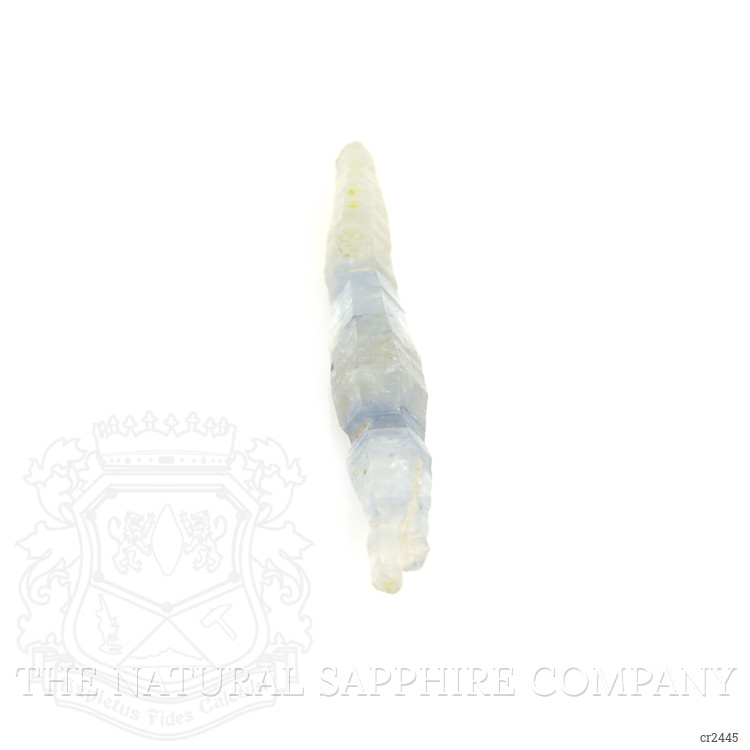

8.30 Ct. Bi Color / Parti Rough Sapphire from Ceylon (Sri Lanka)
This loose stone is available to ship now
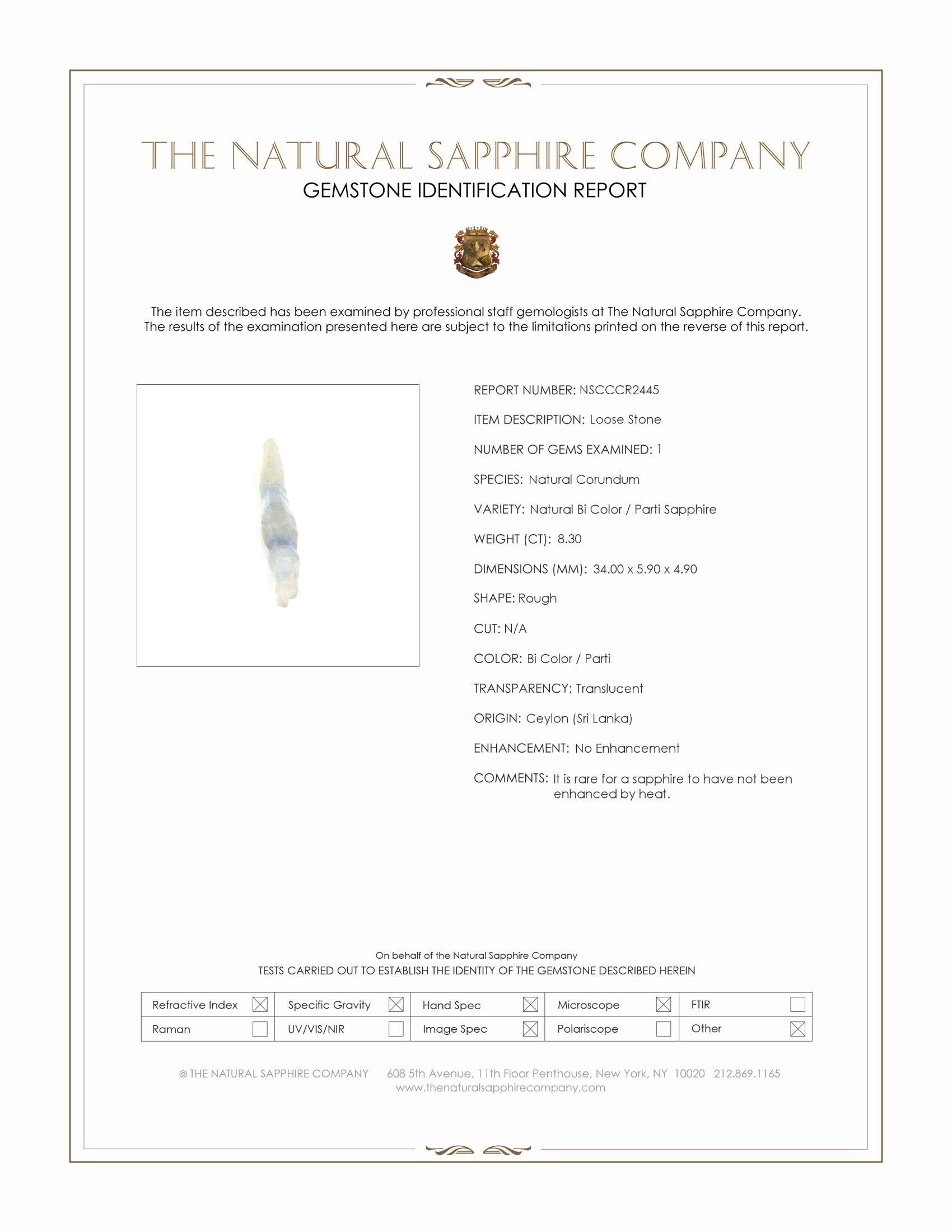
Item ID: | CR2445 |
|---|---|
Dimensions (MM): help | Length: 34 Width: 5.9 Height: 4.9 |
Weight: | 8.30 Ct. |
Color: help | Bi Color / Parti |
Color intensity: help | Medium |
Clarity: help | Slightly Included |
Shape: help | Rough |
Cut: | N/A |
Cutting style: | N/A |
Enhancements: help | No Enhancement |
Origin: help | Ceylon (Sri Lanka) |
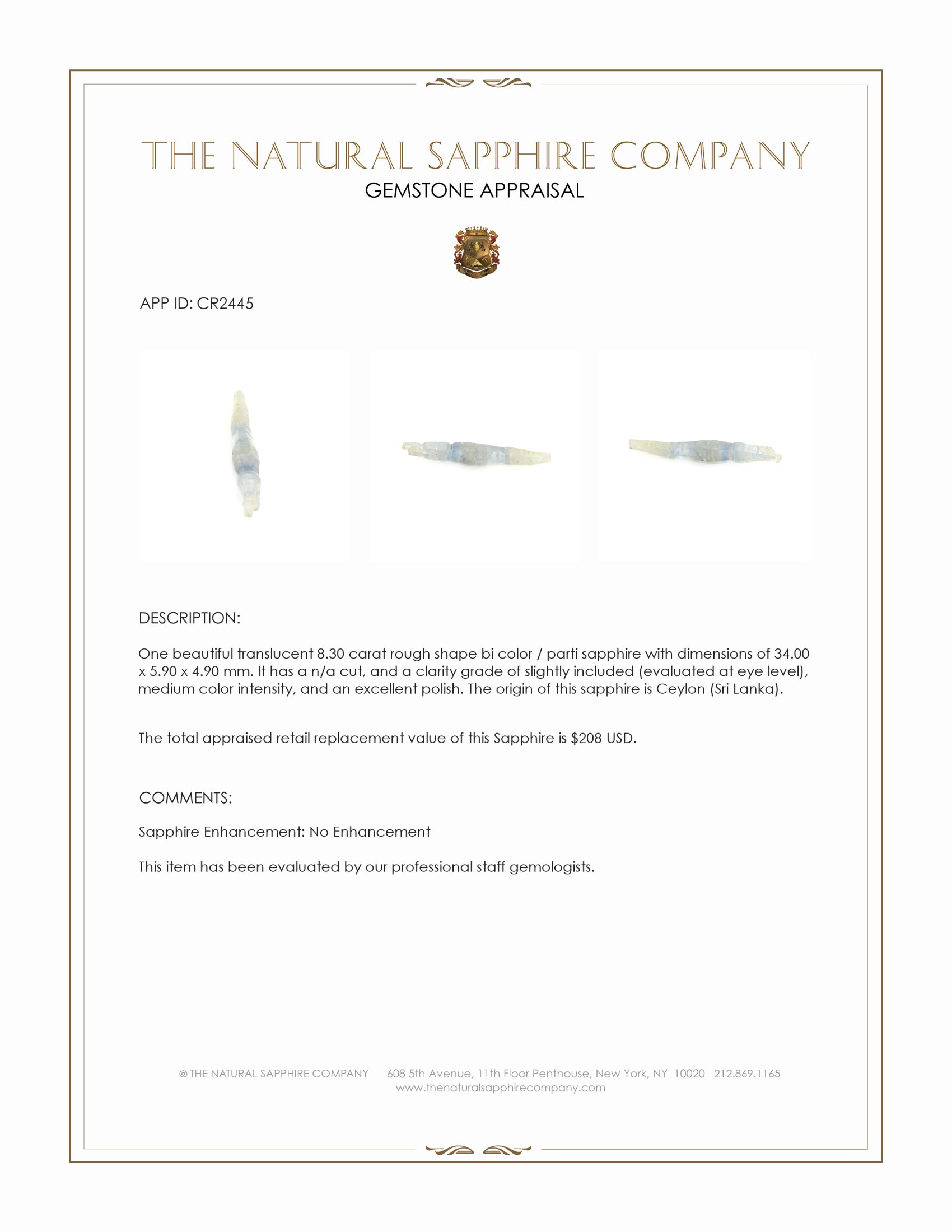
Per carat price: help | $25 |
This listing describes one translucent 8.30 carat rough shape bicolor parti sapphire, measuring 34.00 x 5.90 x 4.90 mm, originating from Ceylon Sri Lanka. The specimen is presented in its natural rough form with no standard cutting style applied, retaining the organic profile of the crystal. Clarity is evaluated as slightly included at eye level, with internal features that are consistent with natural formation. Color intensity is medium, and the stone exhibits a bicolor distribution that presents subtle shifts between cooler and warmer tones along its length. The surface finish has been completed to an excellent polish, and no enhancements have been applied. The Natural Sapphire Company offers this piece as a natural, untreated example of Sri Lankan sapphire material, suitable for collectors and custom lapidary work.
The sapphire’s bicolor character is the defining visual attribute, with translucent body color allowing internal zoning to be appreciated from multiple viewpoints. The medium color intensity provides a balanced saturation that is neither weak nor overly deep, permitting light to diffuse through the crystal and reveal internal color bands when viewed against a light source. Because the stone remains in a rough shape, its elongated proportions emphasize the transition of tones, producing a linear display of color that changes as the stone is rotated. The excellent surface polish enhances this behavior by minimizing surface scattering, so light transmission and internal color differentiation remain clear and consistent across viewing angles.
Surface condition is a critical factor in how a rough or partially shaped stone presents in a finished setting or during evaluation, and in this specimen the surface polish can be described as effectively flawless. That flawless surface finish accentuates the sapphire’s translucency and clarifies the boundaries of color zones, enabling the eye to follow the parti distribution with minimal distraction. The slightly included clarity grade describes internal features that are observable at eye level, yet these inclusions are generally benign in terms of light performance. The inclusions may provide a natural fingerprint and provenance indicators without materially diminishing the stone’s visual appeal when combined with the excellent polish and intact crystal faces. From oblique angles the polished surfaces allow reflections that trace the length and form of the stone, while from direct transmission views the polish supports consistent color passage and clarity assessment.
From a practical perspective for gem cutters, designers, and collectors, this sapphire presents multiple options. The elongated dimensions and rough profile make it suitable either for creative preservation of an organic aesthetic, or for consideration as a candidate for careful cutting to optimize yield and color placement. The absence of enhancement preserves the stone’s natural state, which is important for treatment conscious purchasers and for accurate color and clarity assessment prior to any cutting decisions. The specimen’s provenance from Ceylon Sri Lanka provides known geological context and market recognition. In either route the stone’s excellent surface polish and evident translucency ensure that its visual attributes are accessible from every angle, whether displayed as a museum style piece, set in a bespoke piece of jewelry that follows its natural lines, or prepared for a tailored cutting plan.


