
- Stone6
- Reports2
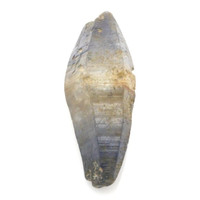
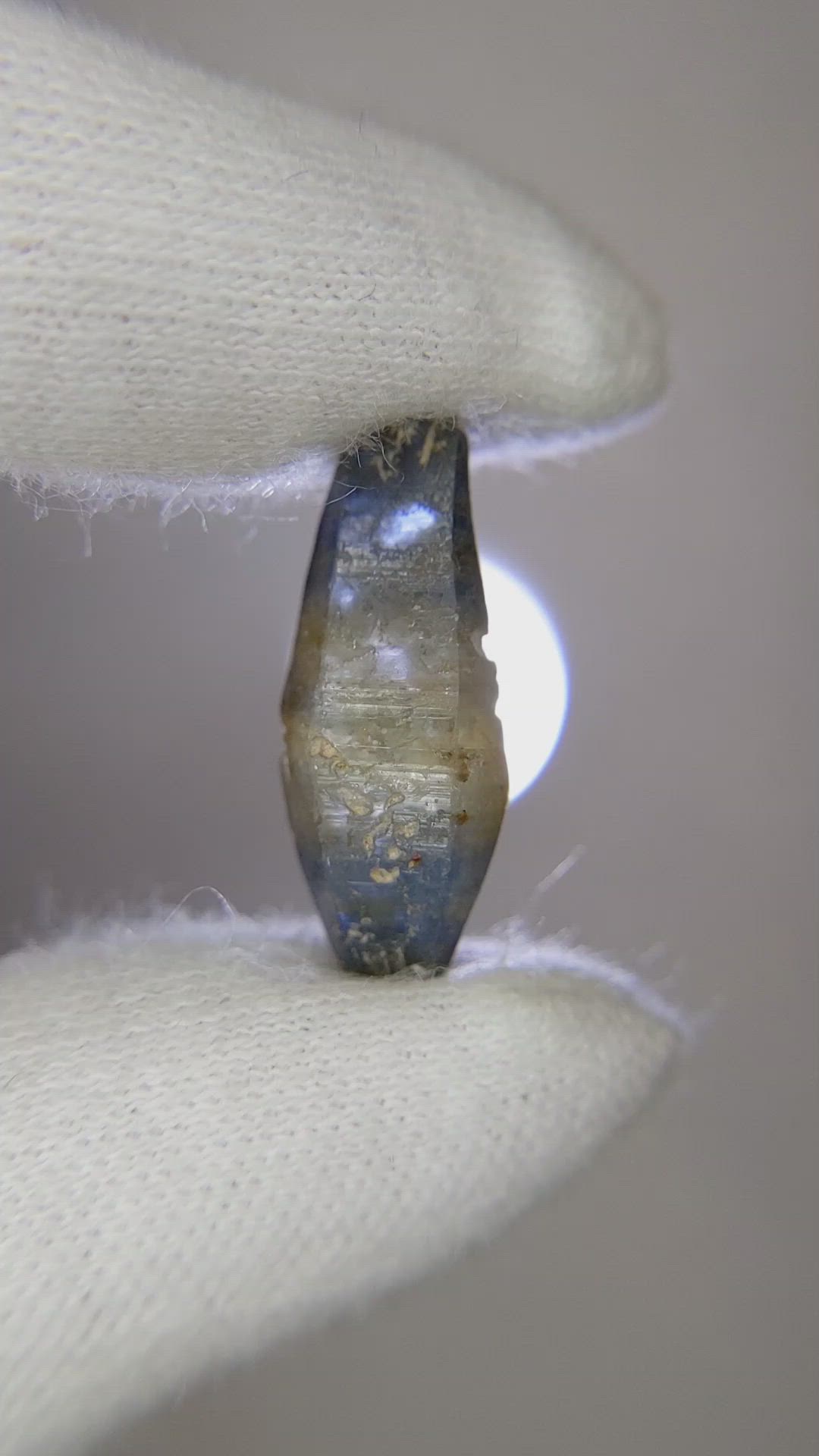
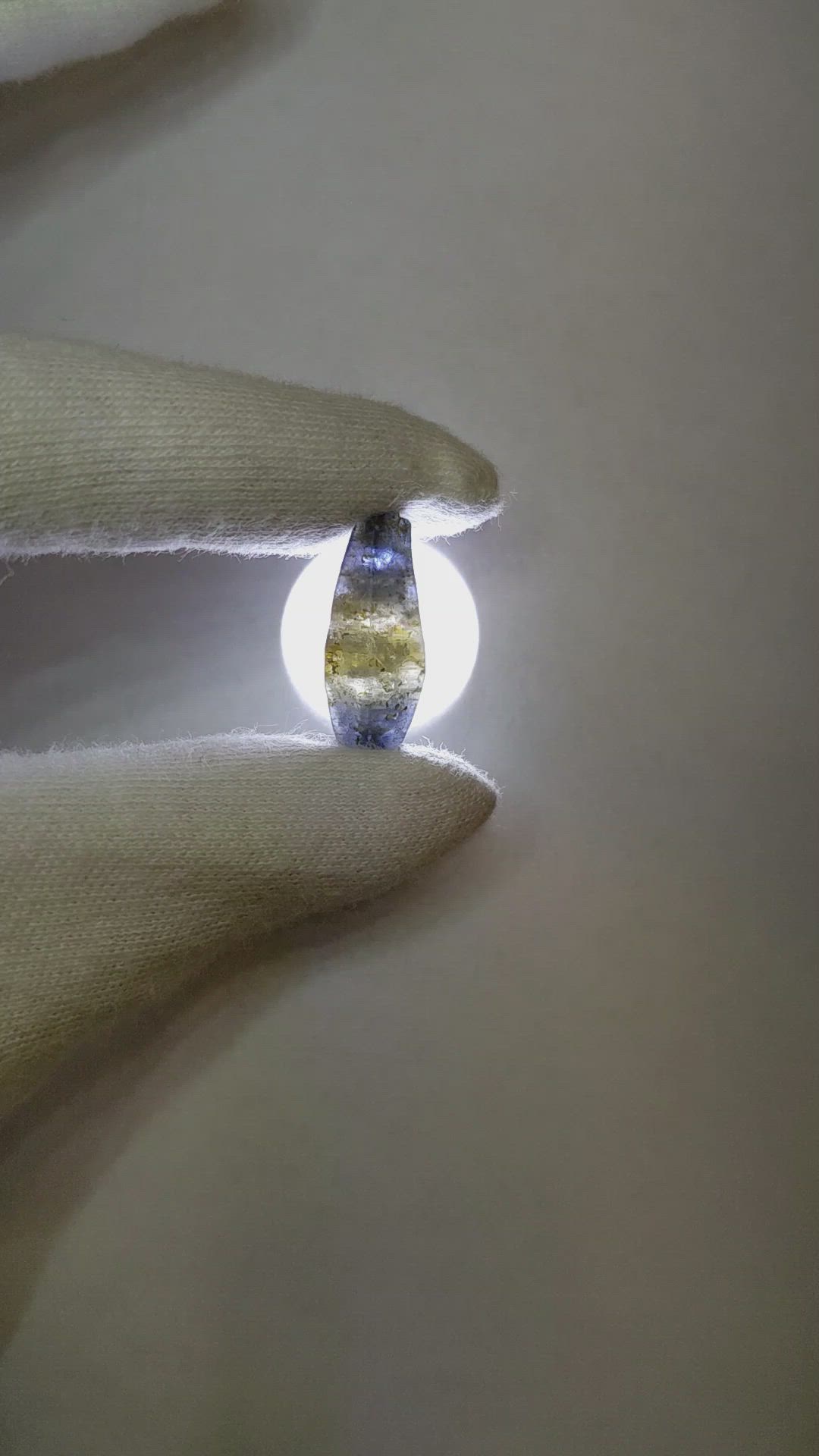


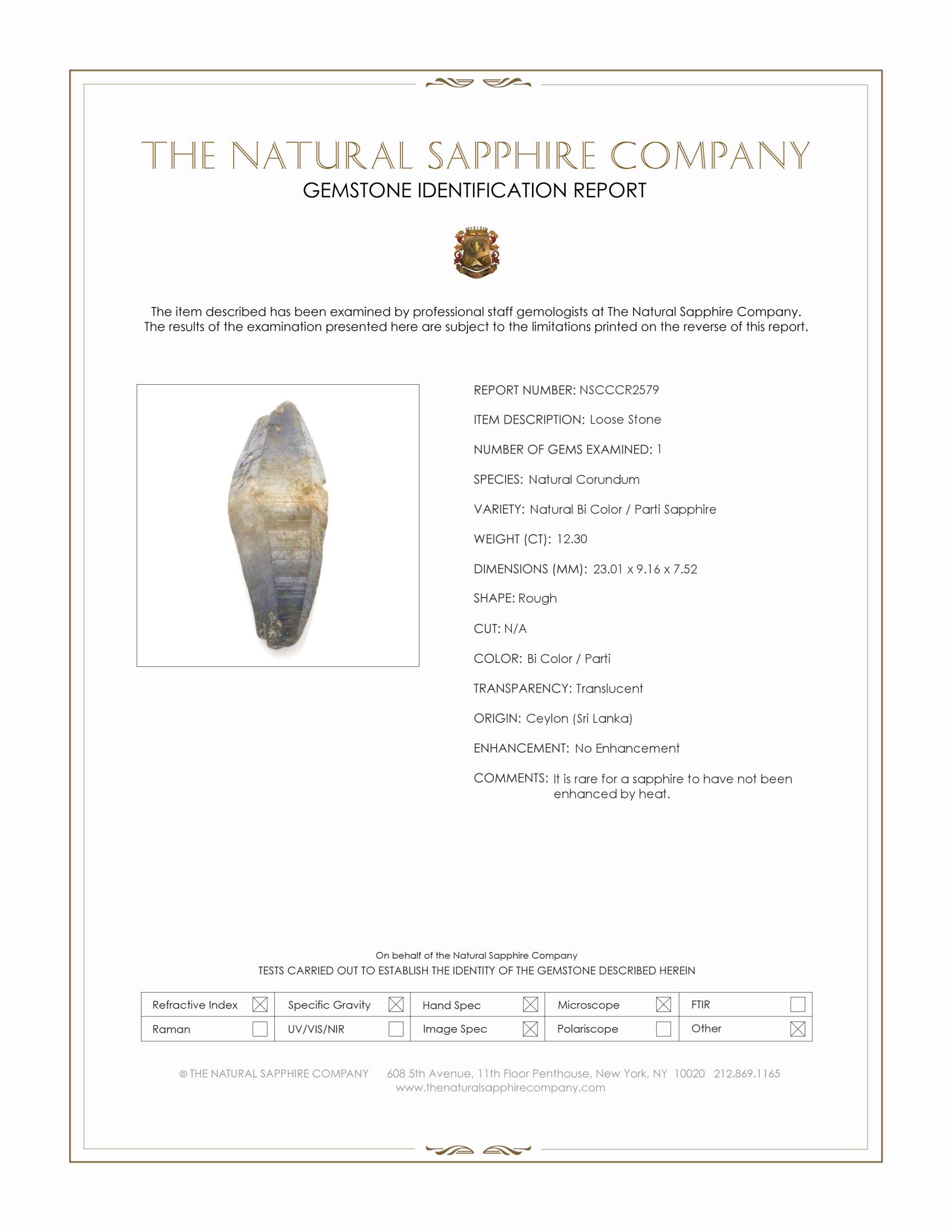
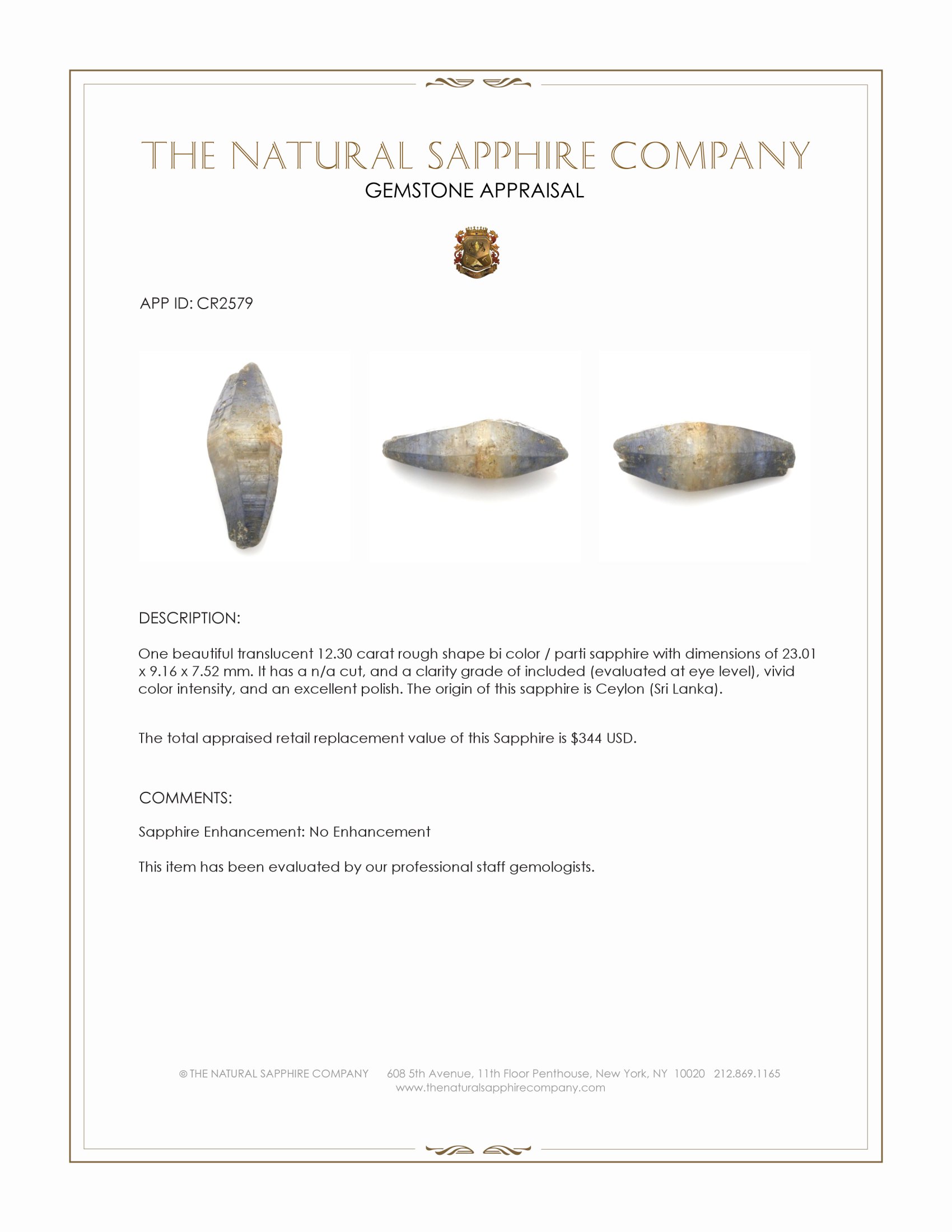
12.30 Ct. Bi Color / Parti Rough Sapphire from Ceylon (Sri Lanka)
This loose stone is available to ship now
Item ID: | CR2579 |
|---|---|
Dimensions (MM): help | Length: 23.01 Width: 9.16 Height: 7.52 |
Weight: | 12.30 Ct. |
Color: help | Bi Color / Parti |
Color intensity: help | Vivid |
Clarity: help | Included |
Shape: help | Rough |
Cut: | N/A |
Cutting style: | N/A |
Enhancements: help | No Enhancement |
Origin: help | Ceylon (Sri Lanka) |
Per carat price: help | $28 |
This listing describes one translucent 12.30 carat rough shape bi color parti sapphire from Ceylon Sri Lanka, offered by The Natural Sapphire Company. The stone measures 23.01 by 9.16 by 7.52 millimeters and presents an elongated crystal habit that retains its natural form, with no faceting applied. Cut and cutting style are not applicable, and the surface exhibits an excellent polish on its natural faces, consistent with careful preforming and handling. Clarity has been evaluated as included at eye level, meaning that internal characteristics are visible without magnification and are intrinsic to the crystal as it formed. Color intensity is vivid, with distinct zoning that shows a pleasing transition between blue and warm golden tones, a characteristic that defines parti sapphires and contributes to their visual complexity. No enhancement has been performed, so the color and clarity are entirely natural and untreated.
Geologically and gemologically this sapphire is a classic example of Ceylon corundum exhibiting natural color zoning. The bi color effect results from variations in trace element chemistry and growth conditions during crystal formation, and it is recorded permanently within the crystal lattice and internal growth features. The specimen displays the typical internal features associated with natural growth, including banded zoning and mineral inclusions that testify to its origin and history. These features are not defects in a geological sense, but rather identifiers that allow gemologists to assess provenance and formation. Origin from Sri Lanka places this sapphire within a long established and well documented gem tradition, where local geological environments have produced a wide range of high quality sapphires and where natural parti specimens are well known and sought for their distinct color interplay.
When compared to laboratory grown sapphires it is important to distinguish differences in formation, appearance, and market implications. Both natural and lab grown sapphires are corundum and share the same fundamental hardness and chemical durability. Lab grown material typically displays greater uniformity of color, fewer internal inclusions, and more predictable cutting results, which can be advantageous for certain manufacturing and price sensitive applications. Natural stones however offer attributes that lab grown material cannot replicate. The internal growth structures in this natural Ceylon sapphire provide a unique fingerprint of its geological origin, and the color zoning is inherently irregular and individually distinctive. This uniqueness supports collector interest and often carries a premium in markets focused on natural provenance and rarity. Because this specimen is untreated it conveys additional value to collectors and connoisseurs who prioritize natural state material. Natural inclusions and zoning can also enhance the visual character of a parti sapphire when oriented and cut thoughtfully, creating effects that are impossible to reproduce in synthetic material.
Practical considerations for use and finishing are centered on preserving the parti character and the overall weight of the stone. Given the elongated rough shape and vivid color zoning, options to consider are minimal cutting to preserve the natural crystal outline, thin slices to display the color banding as cabochon or freeform elements, or careful preforming to yield a single oriented cabochon that maximizes the visible contrast between color zones. Aggressive faceting would reduce weight and may homogenize the color distribution, which would diminish the very attribute that makes this sapphire distinctive. The included clarity grade indicates that transparency will be affected by visible internal features, so cabochon or slice presentations that embrace translucency and color zoning are often the preferable design choices. For clients seeking formal certification, The Natural Sapphire Company can arrange gemological reporting and advise on the most appropriate lapidary approach to balance retention of carat weight with the aesthetic goal of showcasing vivid parti coloration. This untreated 12.30 carat Ceylon parti sapphire represents a rare natural expression of corundum, valued for its provenance, its geological story, and its singular visual identity.


