
- Stone14
- Reports4


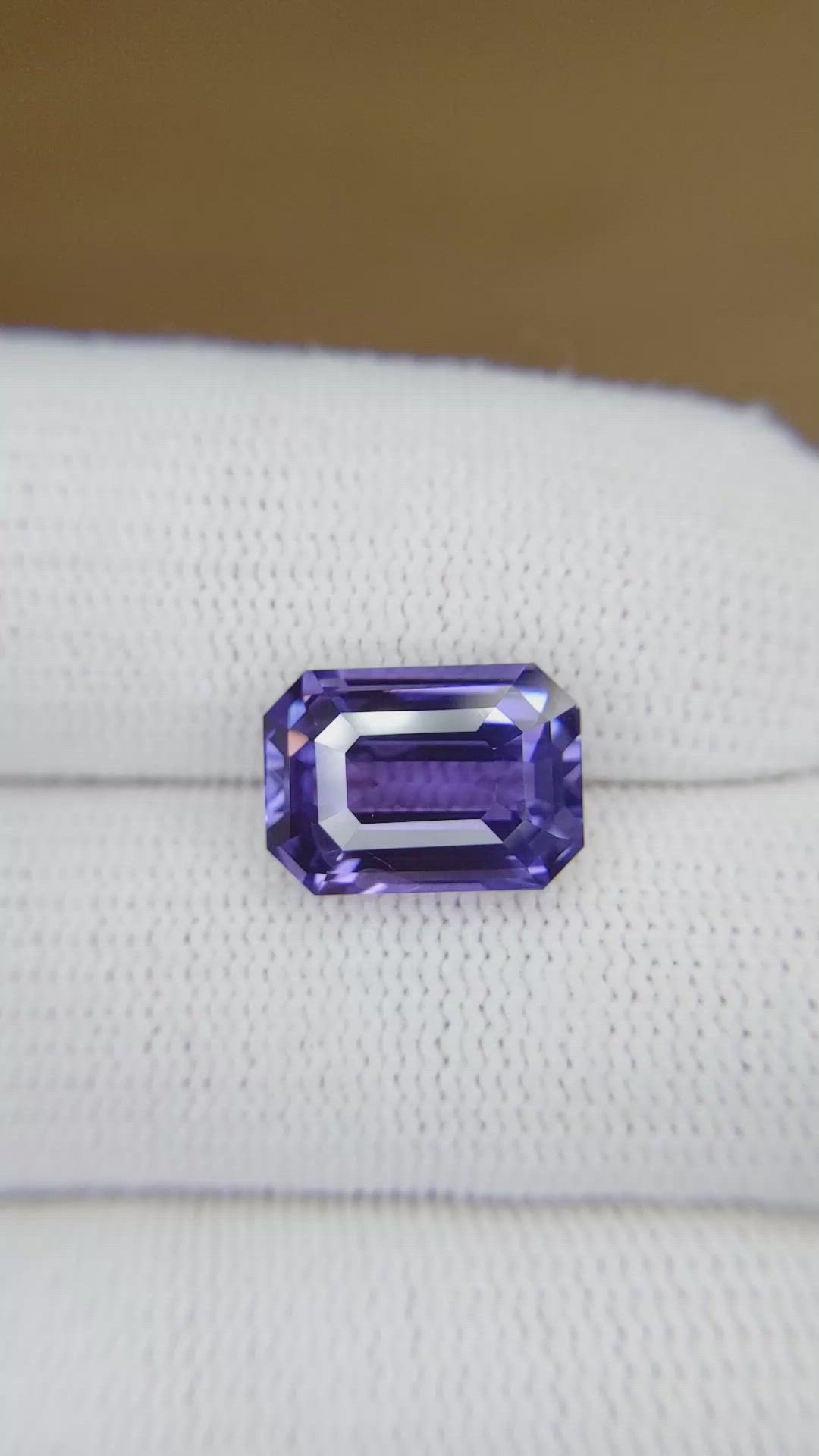
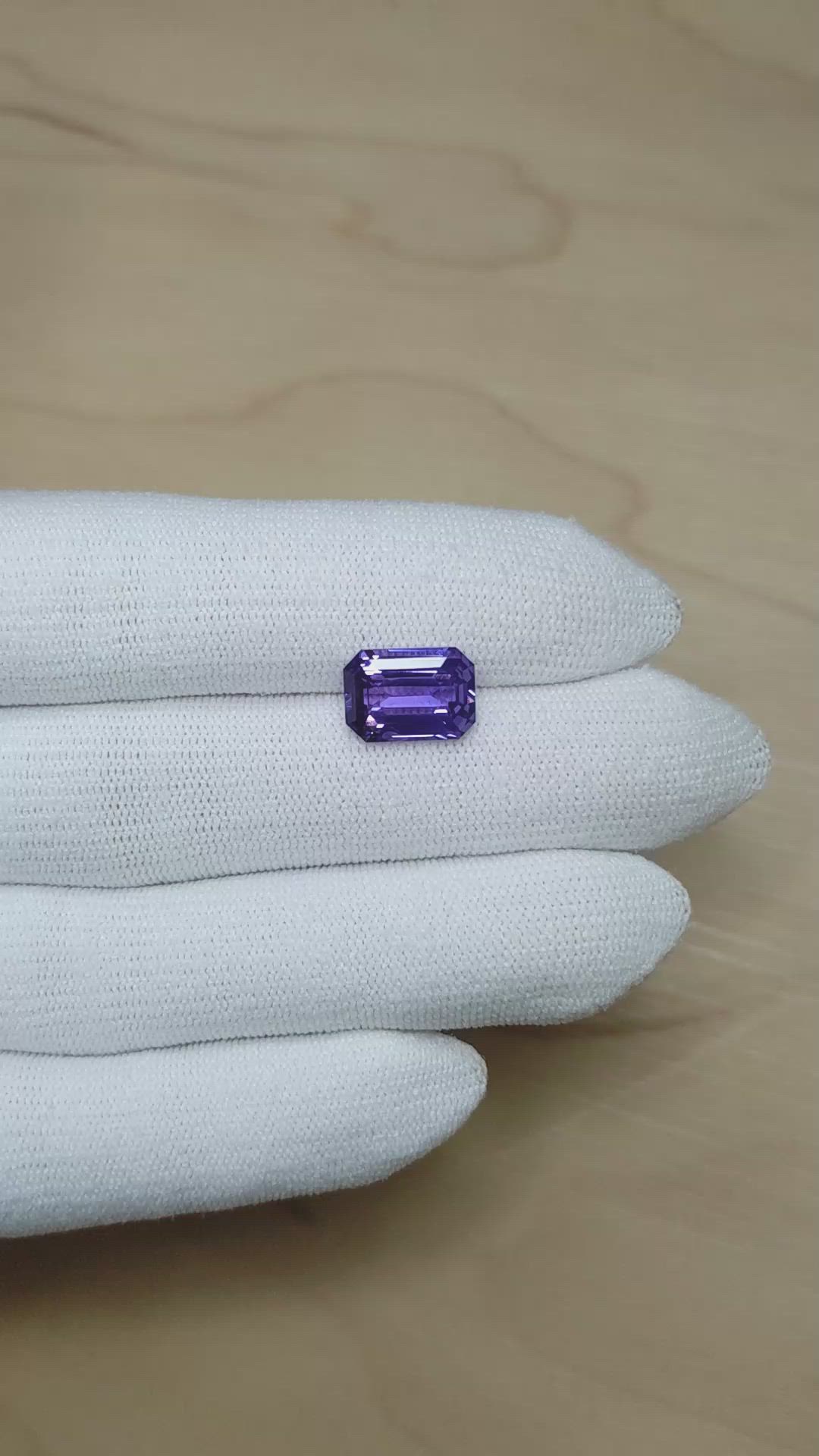
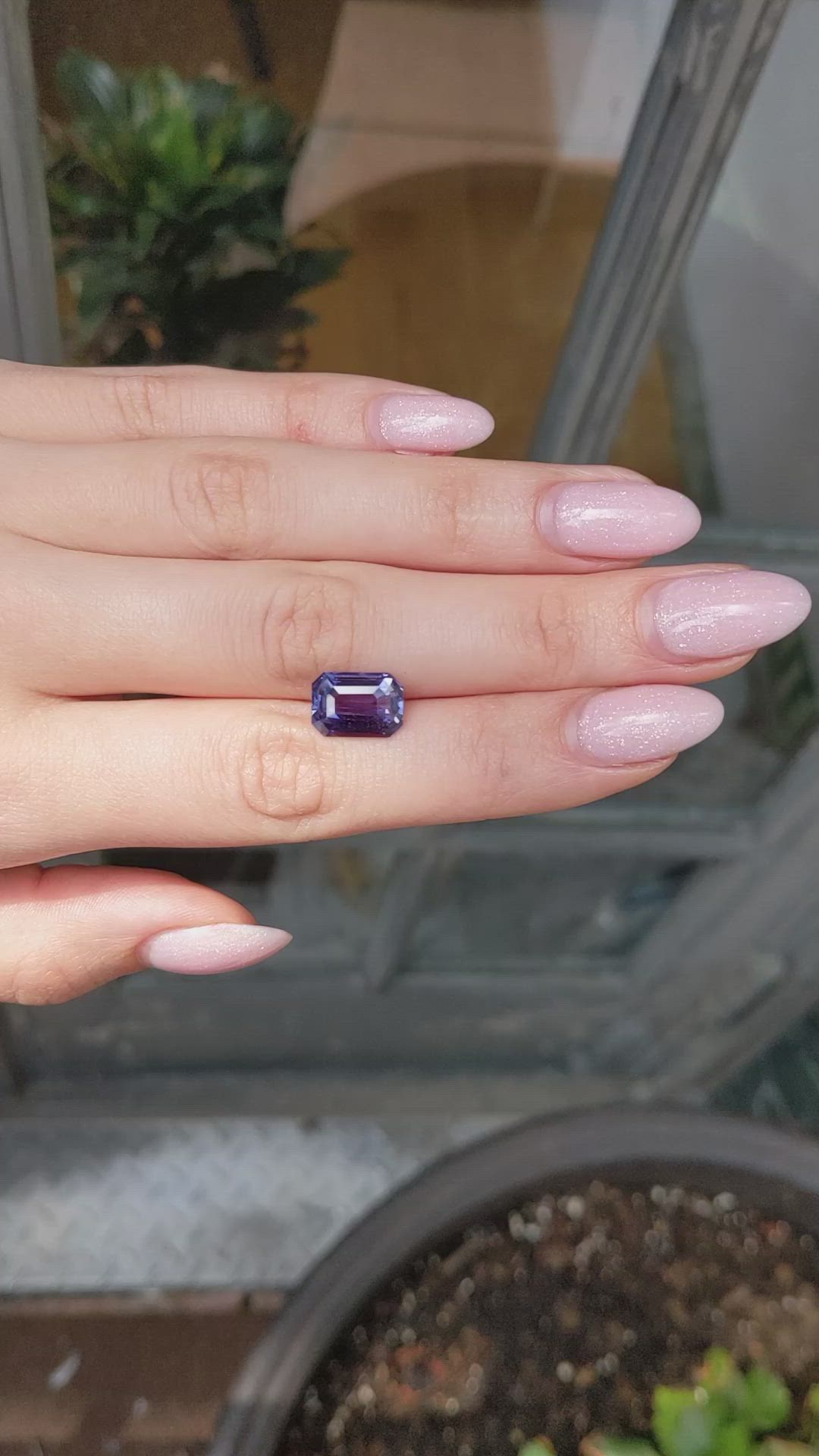
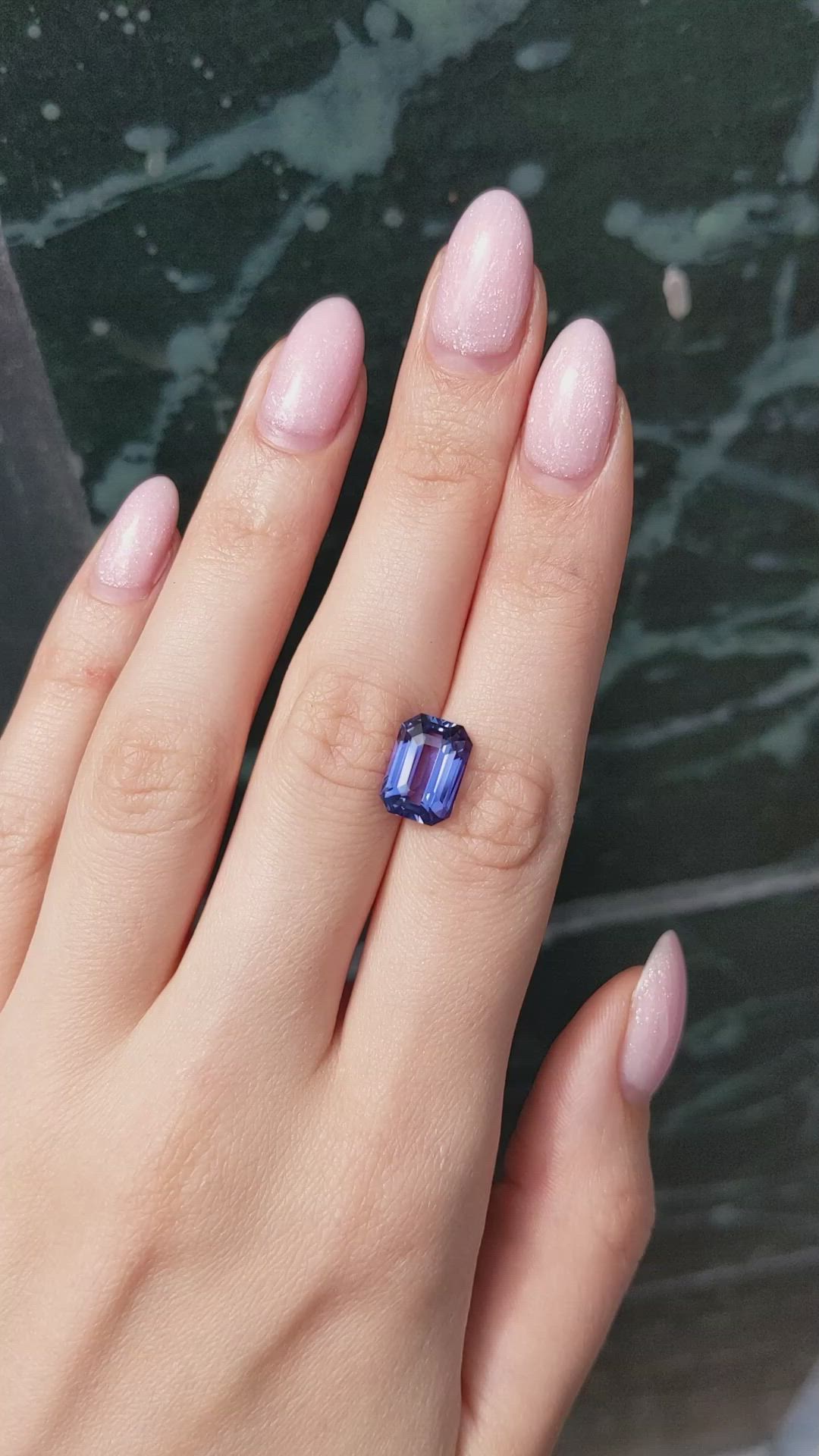


5.57 Ct. Purple Sapphire from Madagascar
Item ID: | S44620 |
|---|---|
Dimensions (MM): help | Length: 11.8 Width: 8.35 Height: 5.43 |
Weight: | 5.57 Ct. |
Color: help | Purple |
Color intensity: help | Intense |
Clarity: help | Eye Clean |
Shape: help | Emerald Cut |
Cut: | Emerald Cut |
Cutting style: | Faceted |
Enhancements: help | No Enhancement |
Origin: help | Madagascar |
Per carat price: help | $9,860 |
This AGL certified violetish purple sapphire from Madagascar presents as a precision executed emerald cut weighing 5.57 carats, with exact dimensions of 11.80 by 8.35 by 5.43 millimeters, an eye clean clarity grade when evaluated at normal viewing distance, intense color intensity, and an excellent polish, with no enhancement reported. The combination of a fully natural origin and a documented AGL report situates this gem in the rare class of untreated corundum specimens, a factor that materially affects both connoisseur appeal and long term value. Physically this stone exhibits the expected optical properties of gem corundum, including a refractive index in the range 1.762 to 1.770 and a low birefringence, and a specific gravity near 4.00, which together with the gemological report confirm species and authenticity. The surface finishing shows crisp facet junctions and a high polish across the broad table and step facets, minimizing light leakage and emphasizing saturated body color rather than scattering, while the emerald cut proportions have been chosen to balance face up size with depth retention to preserve the vivid violetish purple tone throughout the pavilion.
From a faceting and optical performance perspective, the emerald cut employed here follows the classical step cut geometry, featuring a large rectangular table, truncated corners, and parallel crown and pavilion facets that create broad flashes of color and controlled reflection planes rather than scintillation typical of brilliant cuts. That architectural approach to cutting emphasizes color saturation and body tone, which is particularly advantageous for a violetish purple sapphire where uniformity of hue is prized, and it produces a visual effect that can be compared to the way historic high value sapphires exhibited deep, even color under museum lighting. Where the Logan Sapphire and other famous museum pieces are celebrated chiefly for their royal blue saturation and scale, this Madagascar stone offers a divergent but equally compelling narrative, in that its violet inflection sits at the less common end of the corundum color spectrum, making it comparable in rarity to select historic gems that were distinguished by unique hue within a species. Unlike many commercially heated or otherwise enhanced sapphires, which can achieve intense blue or purple tones through treatment, the untreated status of this sapphire aligns it with the most desirable historic examples prized by collectors, because natural color, when present and well saturated, commands greater provenance value.
In practical terms for jewellery design and long term stewardship, the 11.80 by 8.35 millimeter footprint and the 5.43 millimeter depth yield a stone that is well suited to a center stone application in a ring or a pendant where the step cut silhouette can be showcased, and the eye clean clarity permits open prong or bezel settings that reveal the table and the step facets without visual obstruction. The intense color intensity will read differently under varied light sources, offering a cooler, bluer violet in daylight and a warmer, more purple tone under incandescent or LED with warm spectral output, and for clients seeking consistency across environments we recommend evaluating the piece under multiple light sources prior to final mounting. The Natural Sapphire Company certifies this sapphire with accompanying AGL documentation, and our in house quality control inspects facet symmetry, polish, and the presence or absence of enhancements prior to release, ensuring that what you receive is an accurate representation of the gem described. For collectors who appreciate historical resonance, the stone provides a distinct counterpoint to famous blue sapphires in museum collections, offering a rarer violetish purple hue with natural provenance and meticulous cutting, a combination that makes it both a wearable statement and a considered investment grade addition to a curated collection.


