
- Stone14
- Reports3


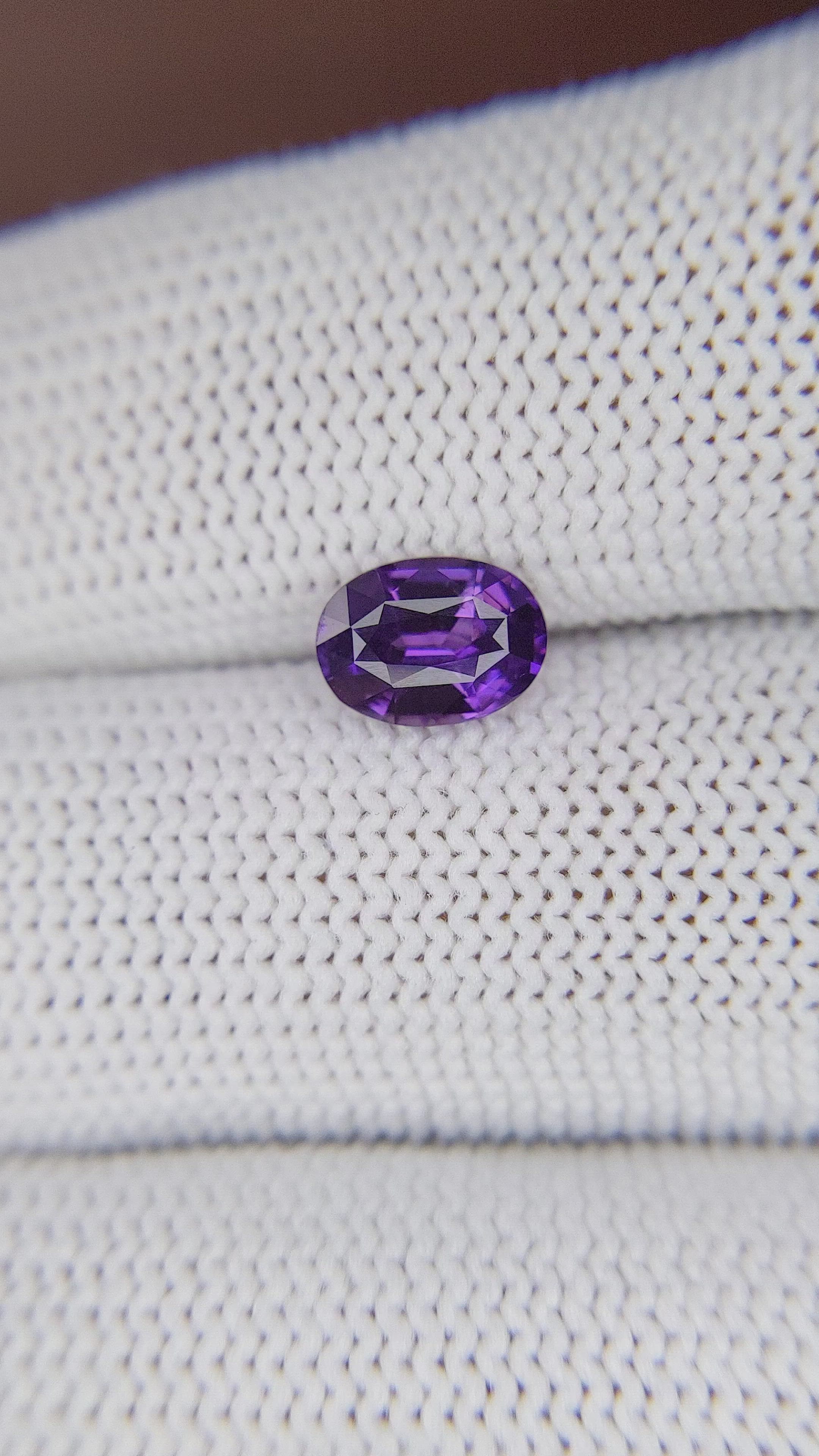
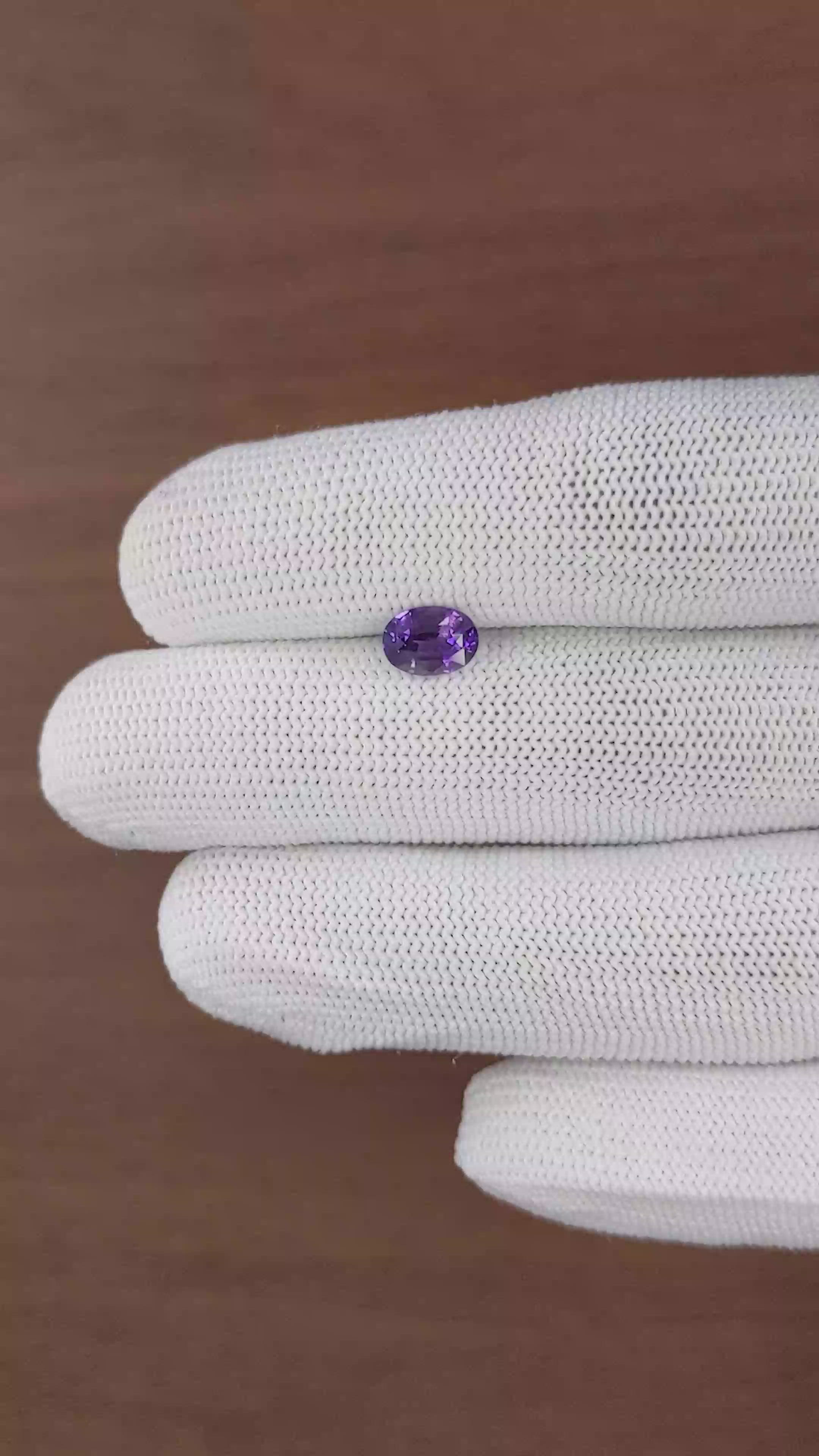
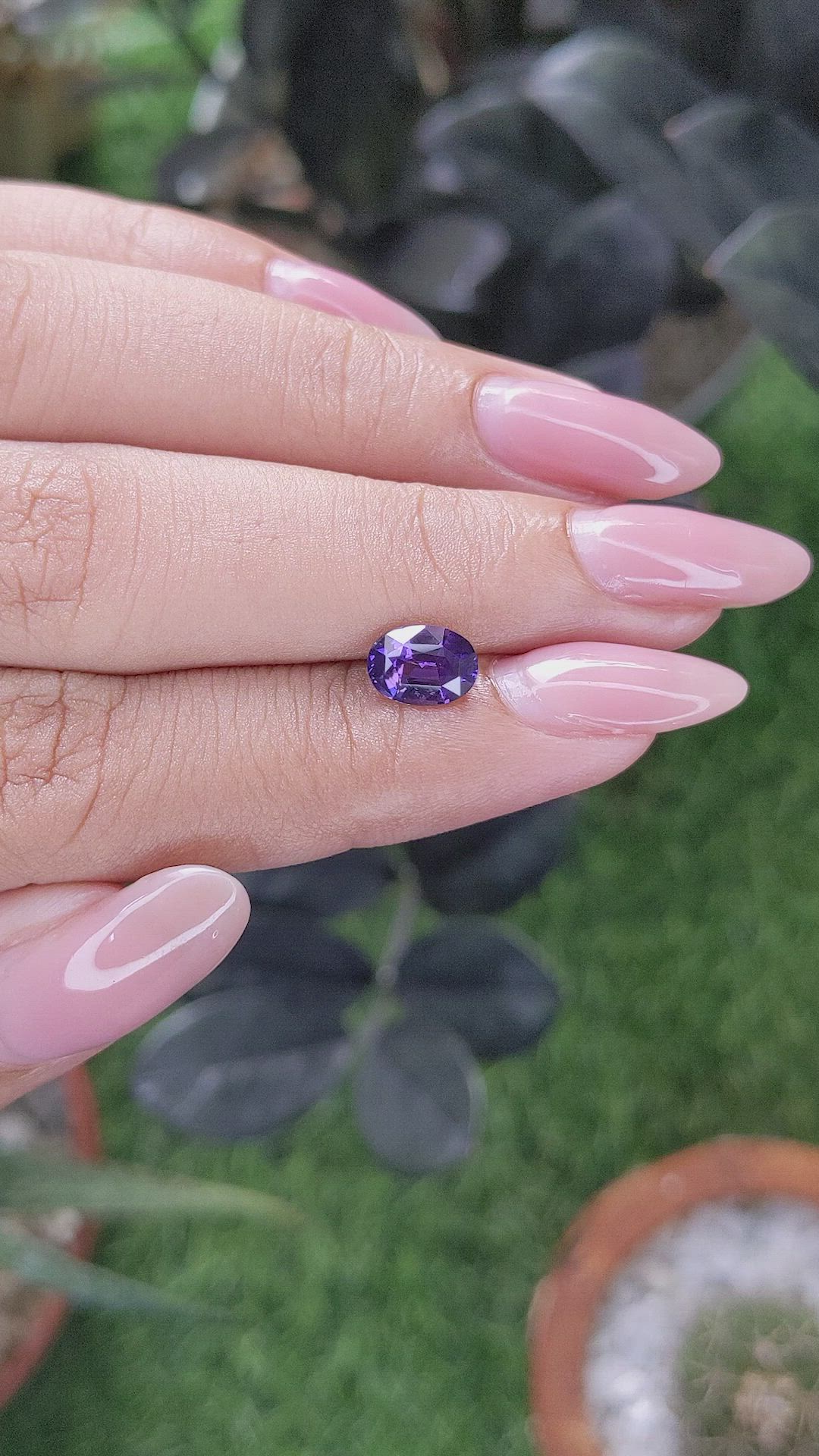
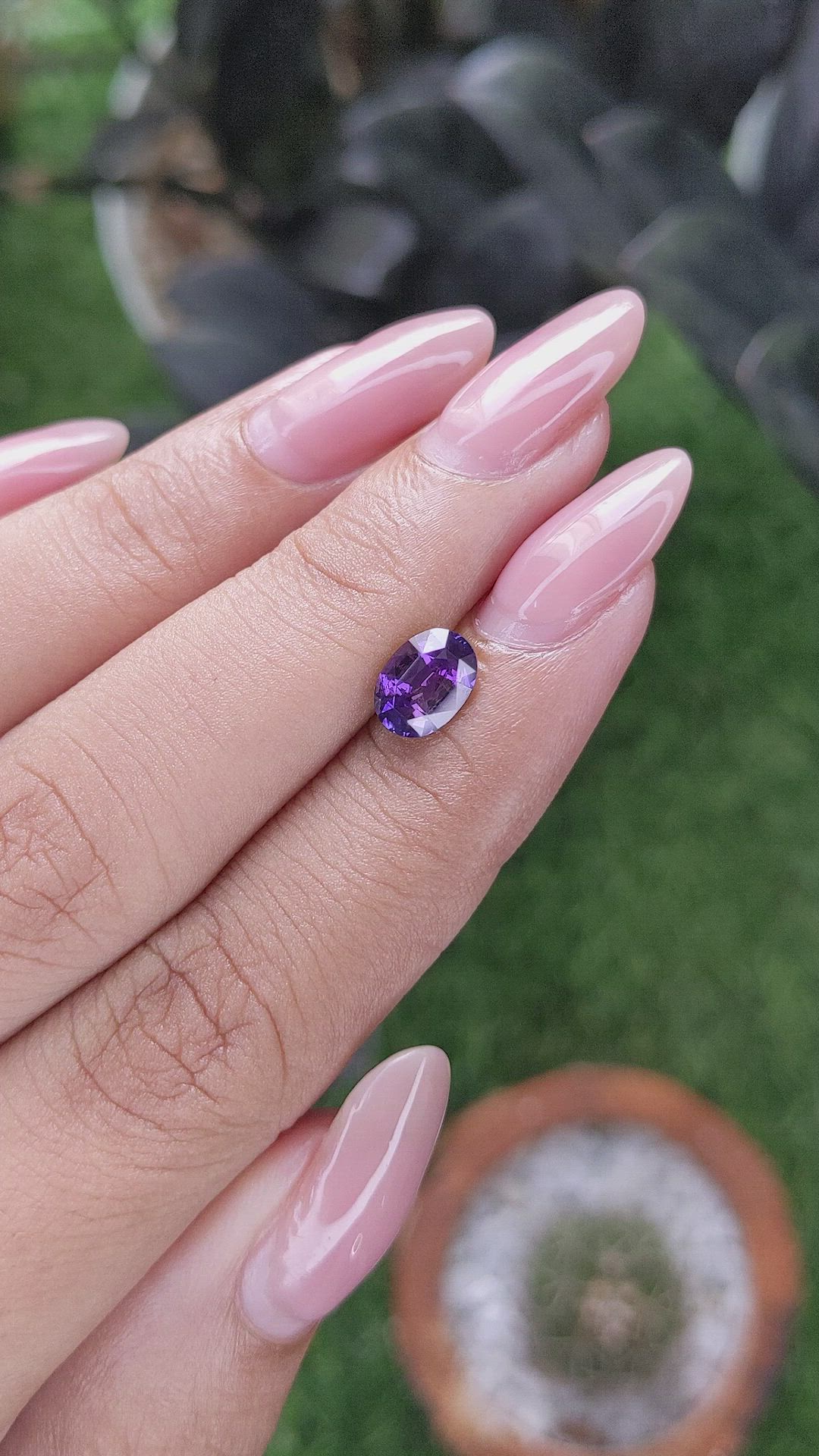
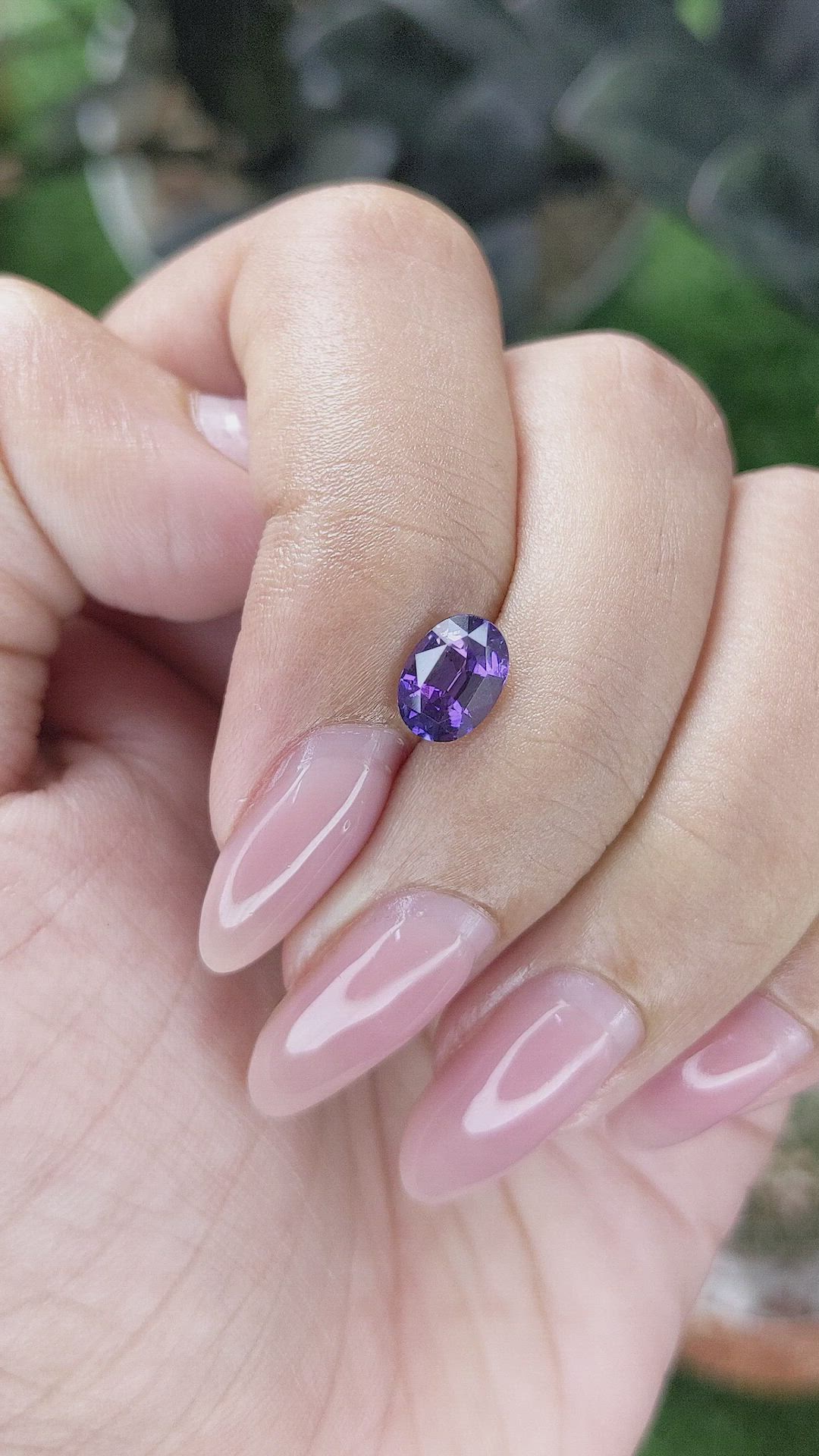


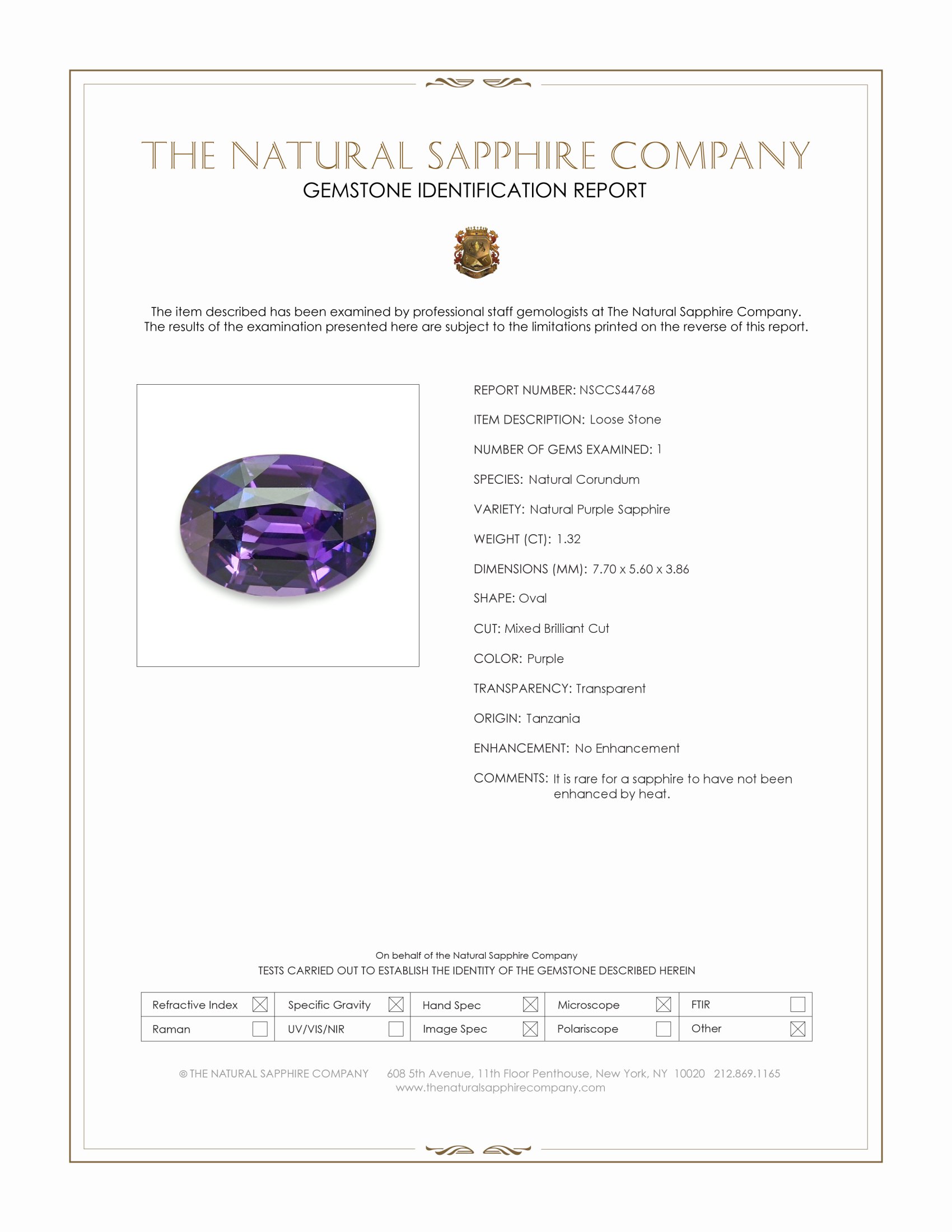
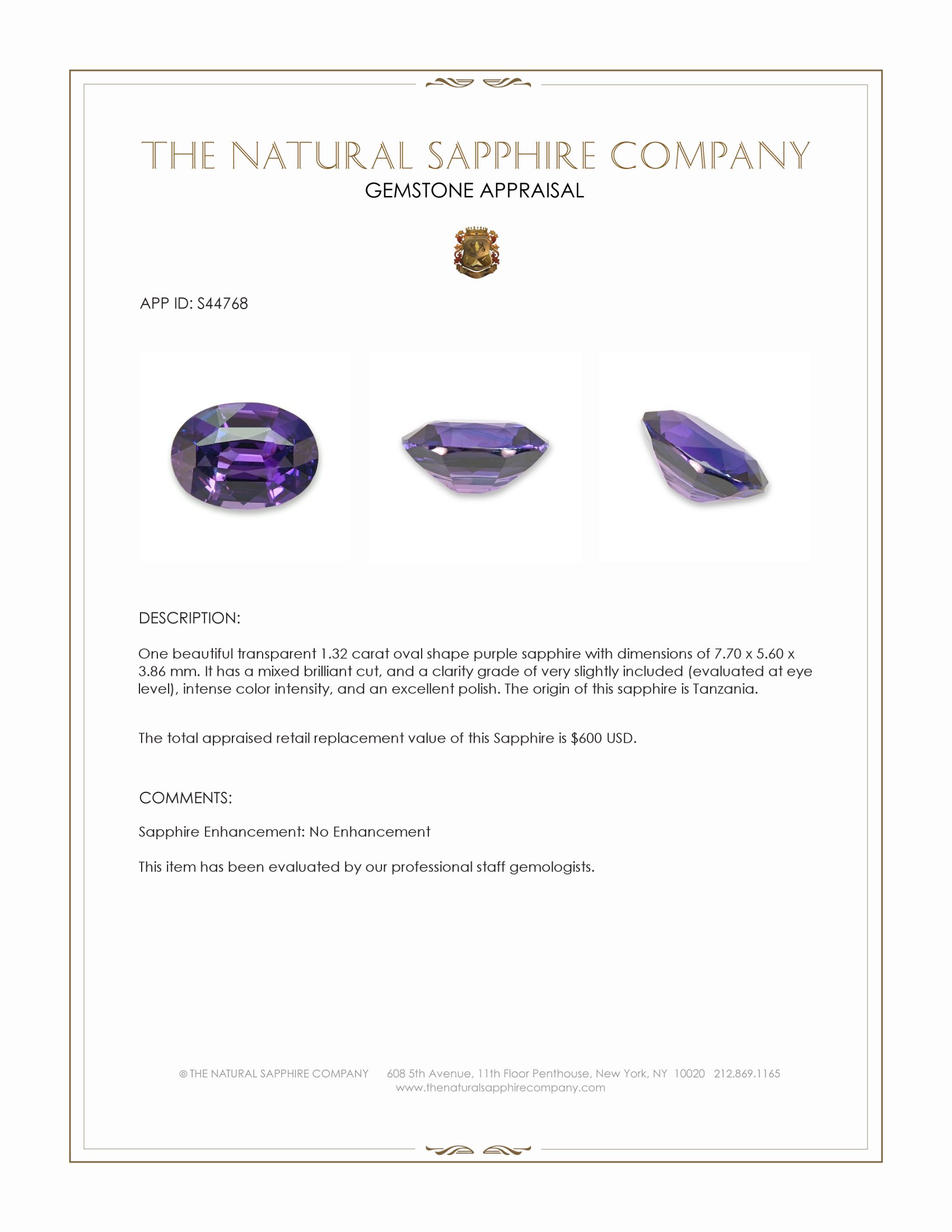
1.32 Ct. Purple Sapphire from Tanzania
This loose stone ships by Sep 12
Item ID: | S44768 |
|---|---|
Dimensions (MM): help | Length: 7.7 Width: 5.6 Height: 3.86 |
Weight: | 1.32 Ct. |
Color: help | Purple |
Color intensity: help | Intense |
Clarity: help | Very Slightly Included |
Shape: help | Oval |
Cut: | Mixed Brilliant Cut |
Cutting style: | Faceted |
Enhancements: help | No Enhancement |
Origin: help | Tanzania |
Per carat price: help | $455 |
This 1.32 carat oval purple sapphire is presented with exacting attention to proportion and light performance, measuring 7.70 by 5.60 by 3.86 millimeters, and cut to a mixed brilliant style that marries a classical brilliant crown with a precision modified pavilion. The crown employs a conventional brilliant facet scheme to enhance scintillation, while the pavilion geometry has been adjusted to a modified pavilion to preserve weight and reinforce return of light across the elongated oval outline. The measured depth is roughly fifty eight percent of the average diameter, a proportion that balances face up spread with internal reflection, avoiding the windowing that plagues overly shallow stones and the light loss typical of excessively deep cuts. The table is proportioned to allow strong return from the pavilion facets, and the overall symmetry and facet alignment produce even facet patterning, consistent fire, and controlled scintillation. The excellent polish enhances contrast between facet planes, producing crisp facet junctions and a lively play of light under viewing conditions typical of jewelry wear.
Color characteristics are central to this sapphire, which exhibits an intense color intensity in a saturated purple hue. The primary hue is a clear violet purple with a cool bias that leans neither toward brown nor toward an overtly blue cast, producing visual depth and a rich chromatic saturation. Compared to classic Ceylon sapphires from Sri Lanka, which often present a lighter, more pastel violet or bluish violet with higher tone clarity, this Tanzanian example carries a deeper saturation and a more pronounced purple dominance. Against Kashmir blue sapphires, which are renowned for a velvety cornflower blue tone with a subtle silkiness, this gem is decisively purpler and more vivid, lacking the blue dominant character of Kashmir material. When compared to Madagascar and Umba region stones, which can display a wide gamut from blue violet to purplish pink, the current sapphire aligns with the more saturated Tanzanian and Malagasy purples, but it is distinguished by a clearer, cooler purple that does not shift dramatically to pink in different lights. Against Australian sapphires, which can exhibit very dark, inky tones and sometimes heavy blue bias, this gem is lighter in tone and more transparent, offering higher brilliance and a livelier face up presence. For buyers familiar with Montana sapphires, which are often characterized by steelier, more subdued blue violet tones, this Tanzanian stone reads as markedly more vibrant and saturated, with a color intensity that reads as bold yet refined.
Clarity and treatment status further define the gem, the clarity grade being very slightly included as evaluated at eye level, which means minute inclusions are present but do not interfere with transparency or overall brilliance under normal viewing. The stone is transparent, free of clouding, and shows internal features that are typical of natural corundum, adding character without compromising optical performance. Critically for collectors and connoisseurs, this sapphire is unenhanced, with no heat treatment or other laboratory interventions reported, rendering the color and clarity wholly natural. The provenance from Tanzania contributes to its desirability, reflecting geological conditions that produce intense violet purples with excellent crystalline integrity. From a setting and design perspective, the stone’s mixed brilliant cut and stable proportions make it well suited to both solitaire and halo designs, where the intense purple will register strongly against both white and yellow precious metals. For practical wear, sapphire hardness and the excellent polish provide resilience, while standard care recommended for corundum will maintain surface luster. At The Natural Sapphire Company we document origin, cut, and treatment status for each stone, and this Tanzanian purple sapphire represents a technically precise, aesthetically compelling example for the buyer who values a fully natural intense purple, carefully cut proportions, and transparent craftsmanship.


