
- Stone16
- Reports3


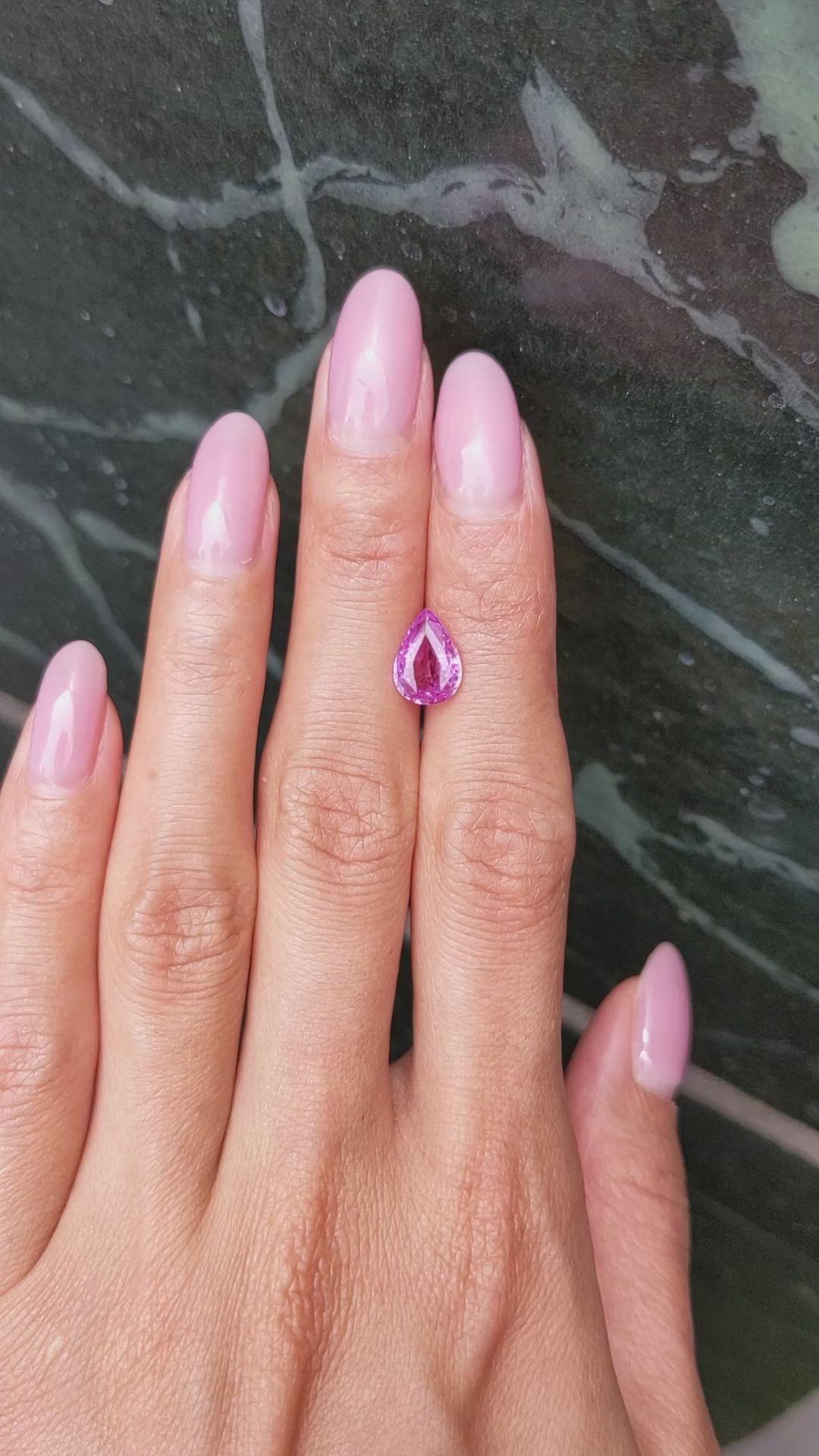
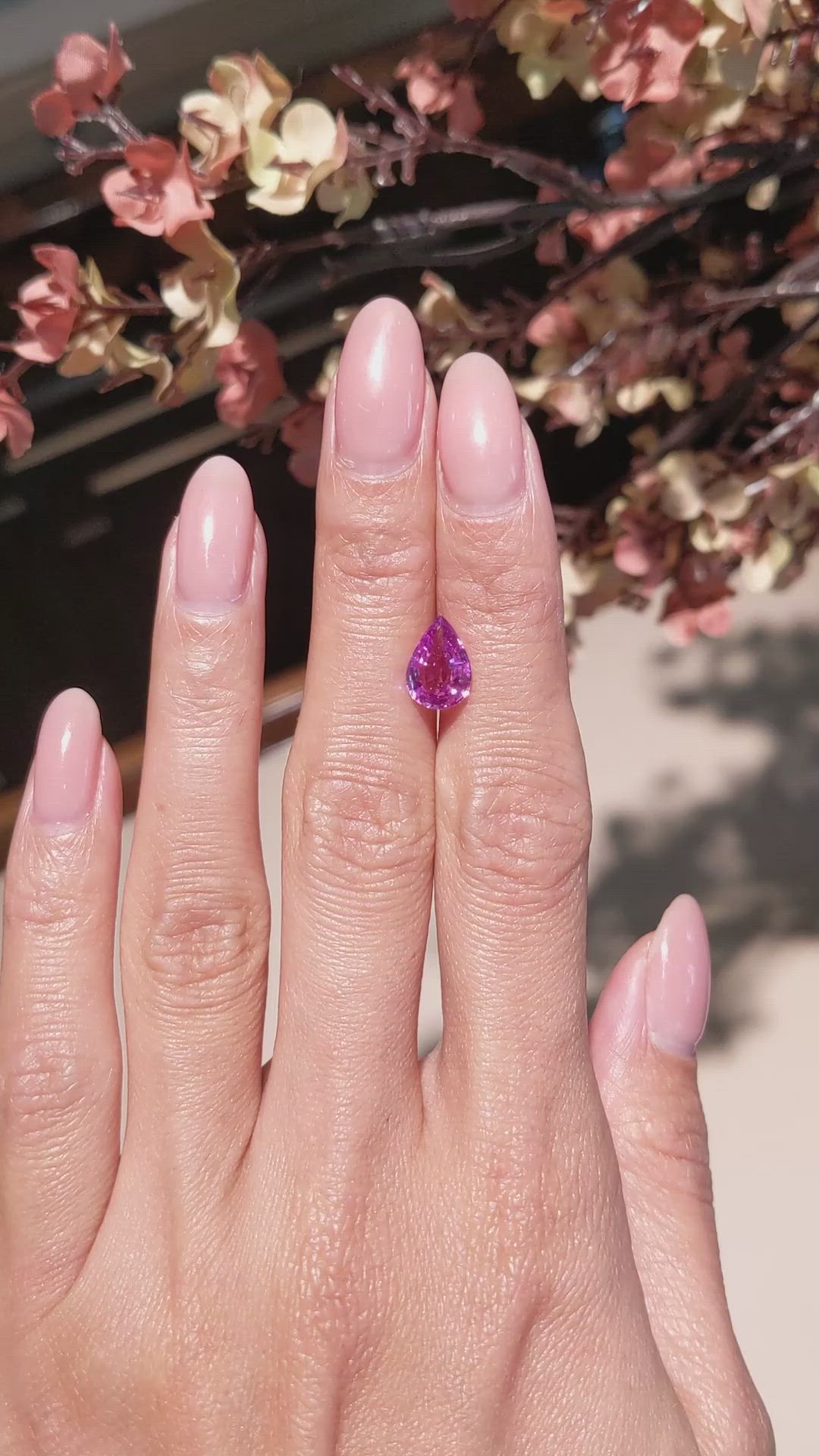
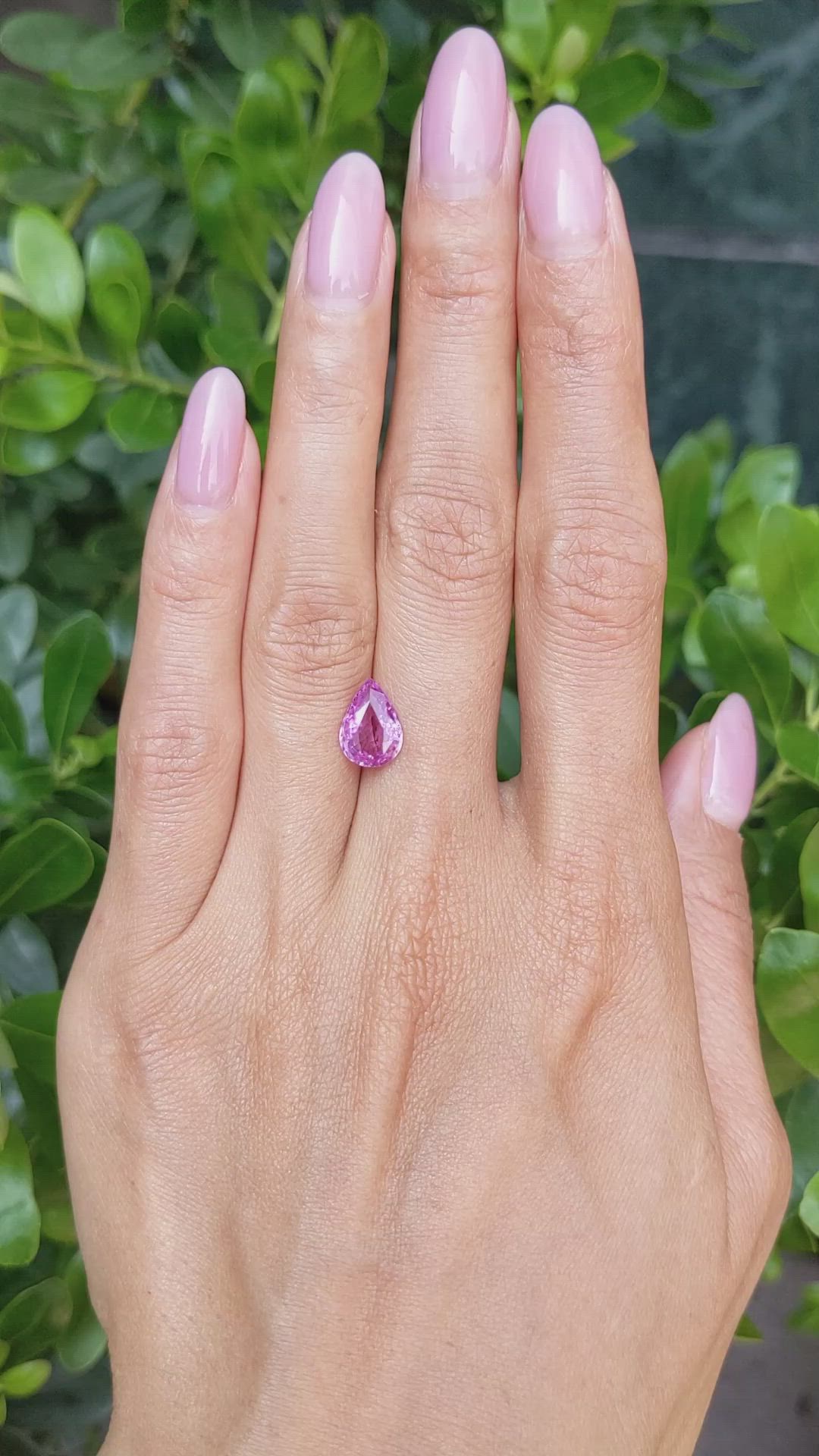
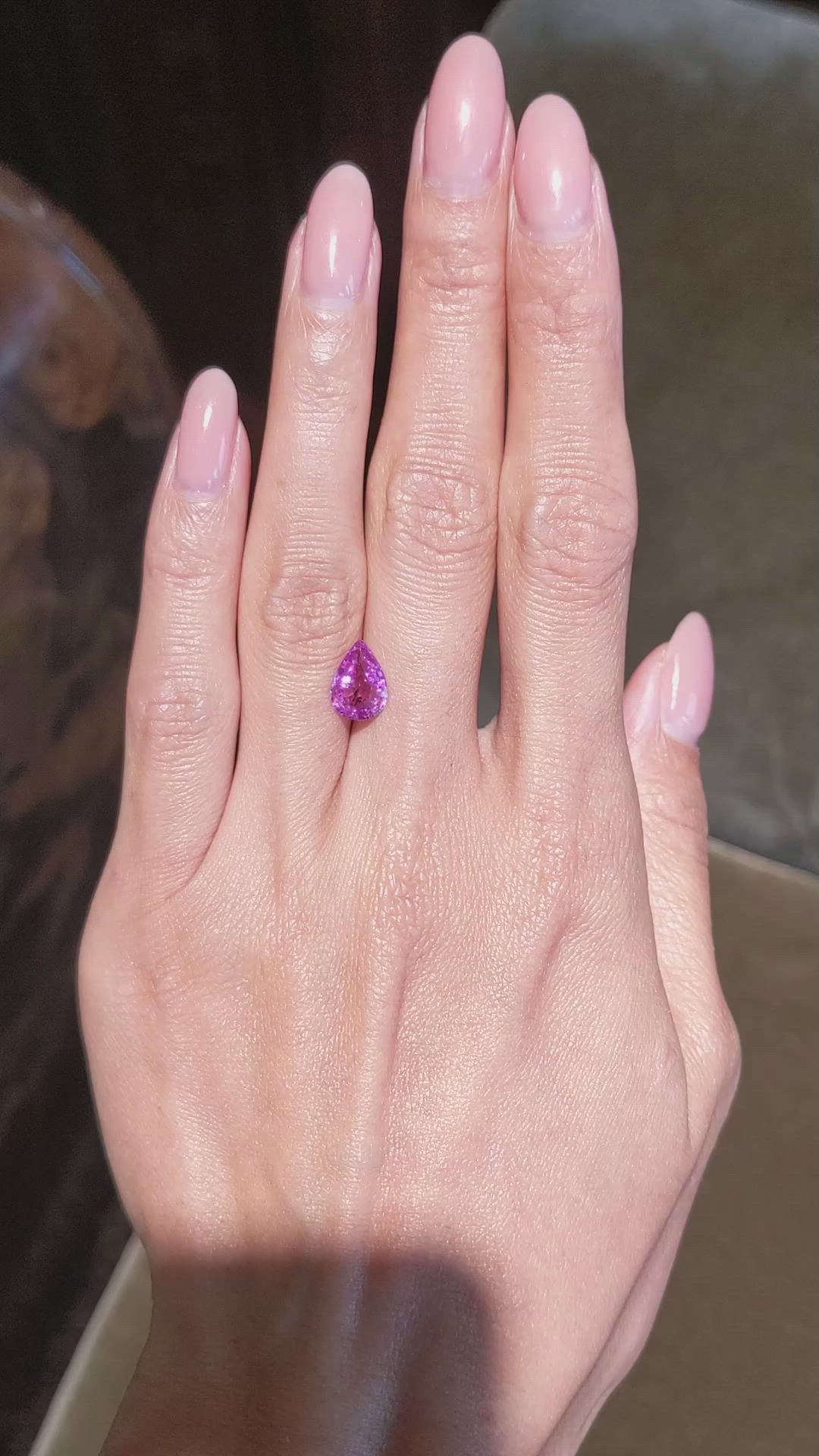


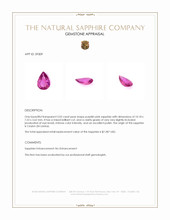


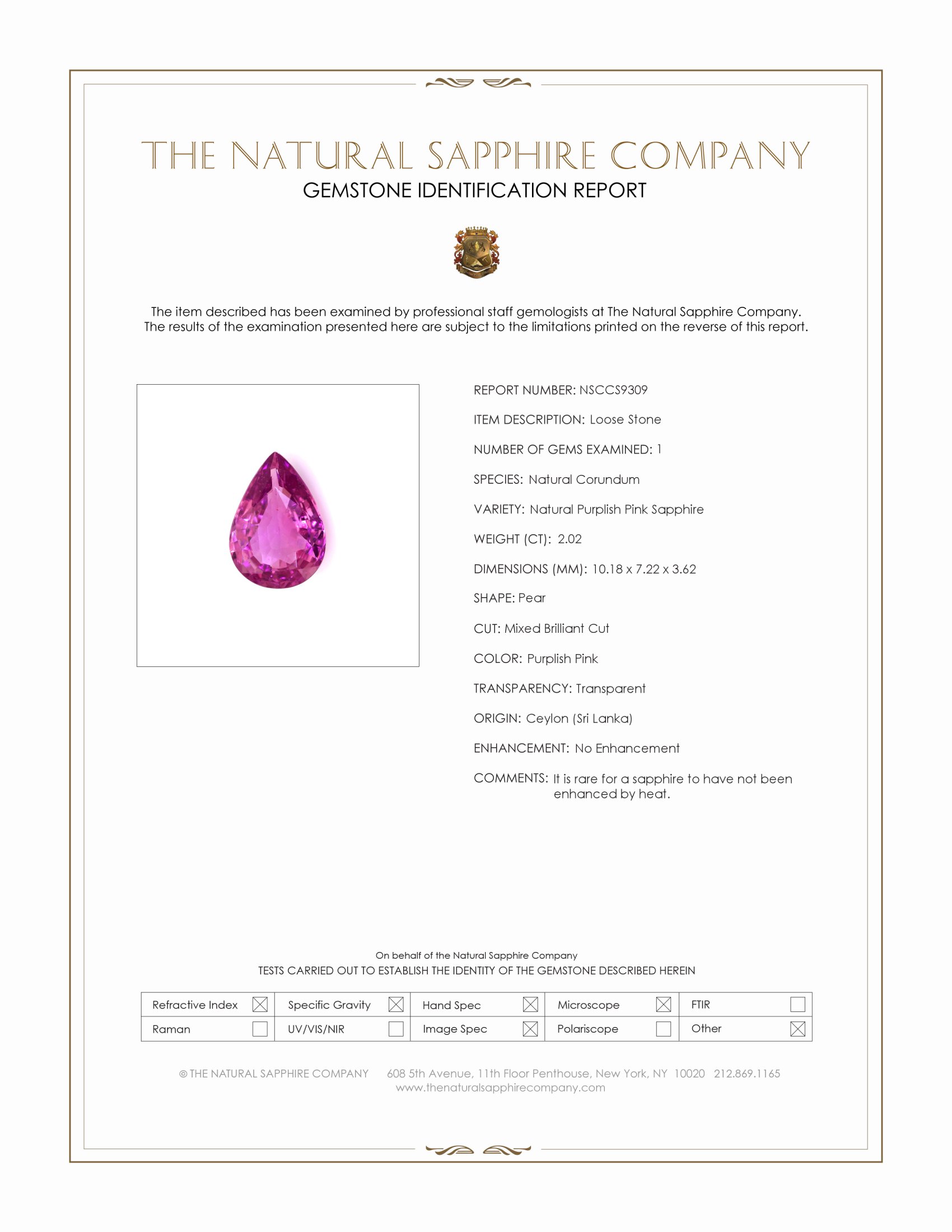

2.02 Ct. Purplish Pink Sapphire from Ceylon (Sri Lanka)
This loose stone is available to ship now
Item ID: | S9309 |
|---|---|
Dimensions (MM): help | Length: 10.18 Width: 7.22 Height: 3.62 |
Weight: | 2.02 Ct. |
Color: help | Purplish Pink |
Color intensity: help | Intense |
Clarity: help | Very Very Slightly Included |
Shape: help | Pear |
Cut: | Mixed Brilliant Cut |
Cutting style: | Faceted |
Enhancements: help | No Enhancement |
Origin: help | Ceylon (Sri Lanka) |
Per carat price: help | $3,607 |
This listing presents a transparent, pear shape sapphire weighing 2.02 carat, with precise dimensions of 10.18 x 7.22 x 3.62 mm. The cutting style is faceted, executed as a mixed brilliant cut, which combines the optical lift of brilliant faceting with the elegant outline of a pear shape. The stone exhibits an intense purplish pink hue, a clarity grade evaluated as very very slightly included at eye level, and an excellent polish that enhances light return and surface finish. This sapphire bears no enhancement, and its origin is Ceylon, Sri Lanka. The Natural Sapphire Company offers this gem with full disclosure of its physical characteristics, allowing gemmological assessment and informed selection.
Visually, the combination of shape, cut, and color creates a gem that balances presence and refinement. The pear outline yields a versatile silhouette for a range of jewelry applications, from solitaire pendants and tapered halo rings to custom settings that emphasize length and motion. The mixed brilliant cut concentrates brilliance in the pavilion while maintaining a pleasing crown faceting pattern, producing lively scintillation and a stable color face up. The intense purplish pink tone remains saturated without appearing overly dark, permitting both table and crown facets to display flashes of lively fire. Clarity is strong, with only very very slight inclusions visible under normal viewing, a characteristic that preserves transparency and optical performance while confirming the natural origin of crystalline growth.
Comparing this natural sapphire to lab grown gemstones highlights several relevant distinctions which affect selection, long term value, and character. Chemically and physically, many lab grown sapphires mimic their natural counterparts closely, sharing hardness and basic optical properties. However, natural sapphires form over geological time under variable pressure, temperature, and trace element conditions, producing internal features and growth patterns that act as a geological fingerprint. These natural inclusions and zoning are not defects in the sense of reduced durability, they are evidence of provenance and a record of natural formation, attributes sought after by collectors and those who value geological authenticity. A natural, unenhanced Ceylon sapphire, such as this example, retains rarity and the potential for sustained recognition in the market, whereas lab grown stones, while consistent and often less costly, do not offer the same provenance or geological rarity.
From a practical and longevity perspective, natural sapphires are exceptionally suited to everyday wear. The mineral hardness of sapphire places it among the hardest gem materials available, second only to diamond and several of its own polymorphs, which confers excellent resistance to scratching and abrasion in normal use. This specimen has an excellent polish and a robust mixed brilliant faceting scheme, both of which reduce the likelihood of surface wear becoming visually intrusive. No enhancement has been applied, ensuring that the material has not been subjected to heat treatments or other processes that could alter stability or require special care. Cleaning is straightforward, compatible with warm soapy water and soft brushes, and periodic professional inspection will preserve the integrity of the setting and stone. When contrasted with certain treated natural stones or some lab grown material that may have been subjected to post growth diffusion or other processes, an unenhanced natural sapphire reduces concerns about changes over time.
Provenance and responsible sourcing are central to the appraisal of this gemstone. Origin from Ceylon, Sri Lanka, situates the stone within a storied gem producing region known for fine sapphires with lively colors and attractive crystal habit. The Natural Sapphire Company documents origin and treatment status, and our gemmological team evaluates each stone for transparency and disclosure. For buyers prioritizing a combination of visual quality, natural formation, and long term desirability, an unenhanced natural sapphire from Ceylon presents advantages in terms of rarity and narrative that are not replicable by man made material. This 2.02 carat, purplish pink pear shape sapphire is presented as a specimen that balances gemological integrity, aesthetic appeal, and practical performance, suitable for a refined jewellery setting that benefits from the natural character and enduring qualities of sapphire.


