
- Stone14
- Reports3
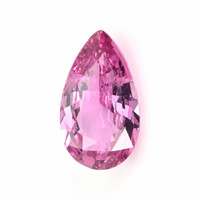
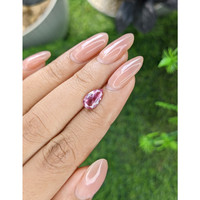
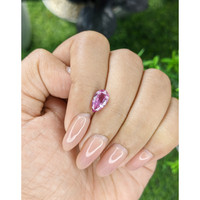
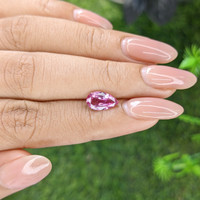
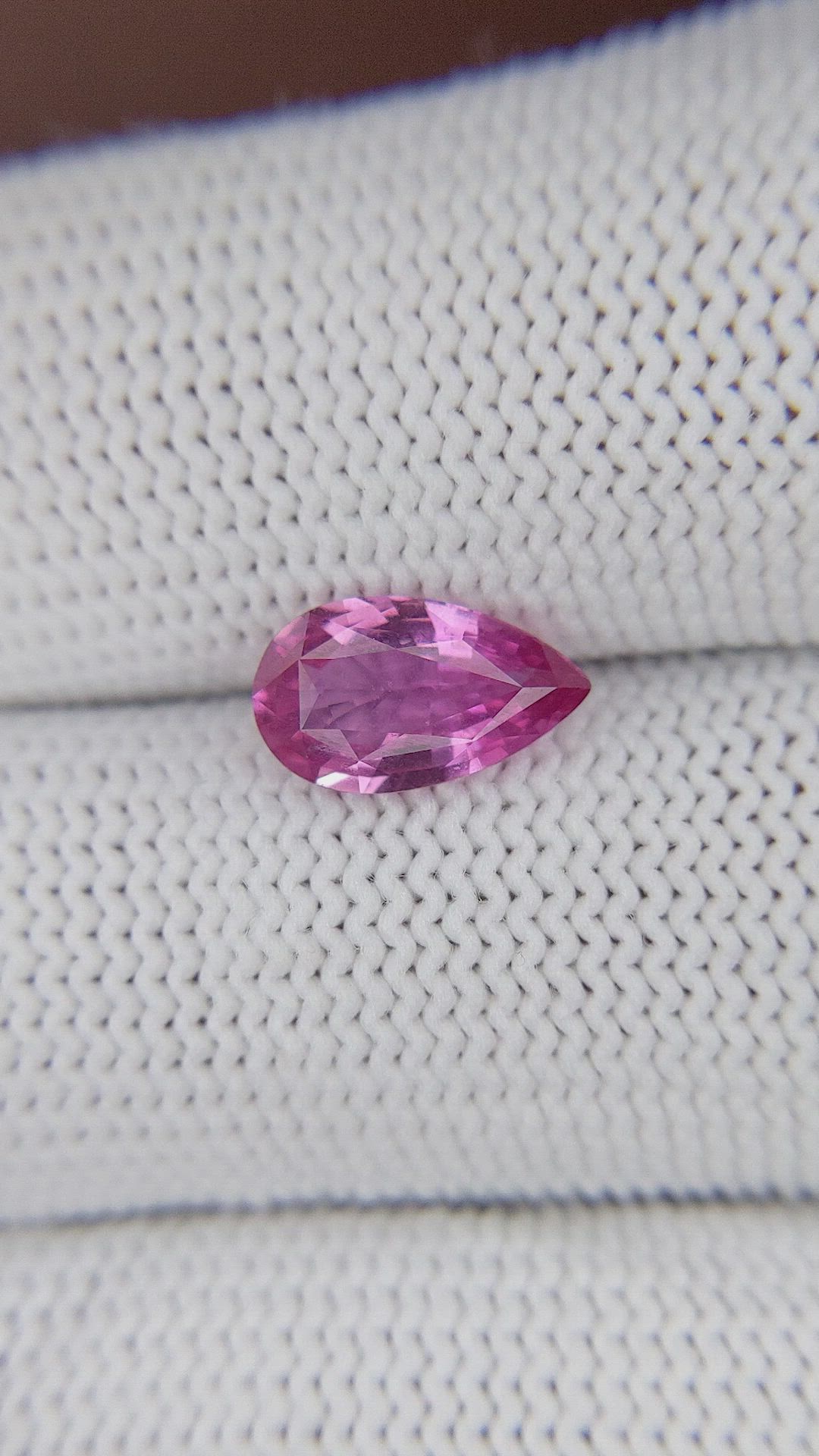
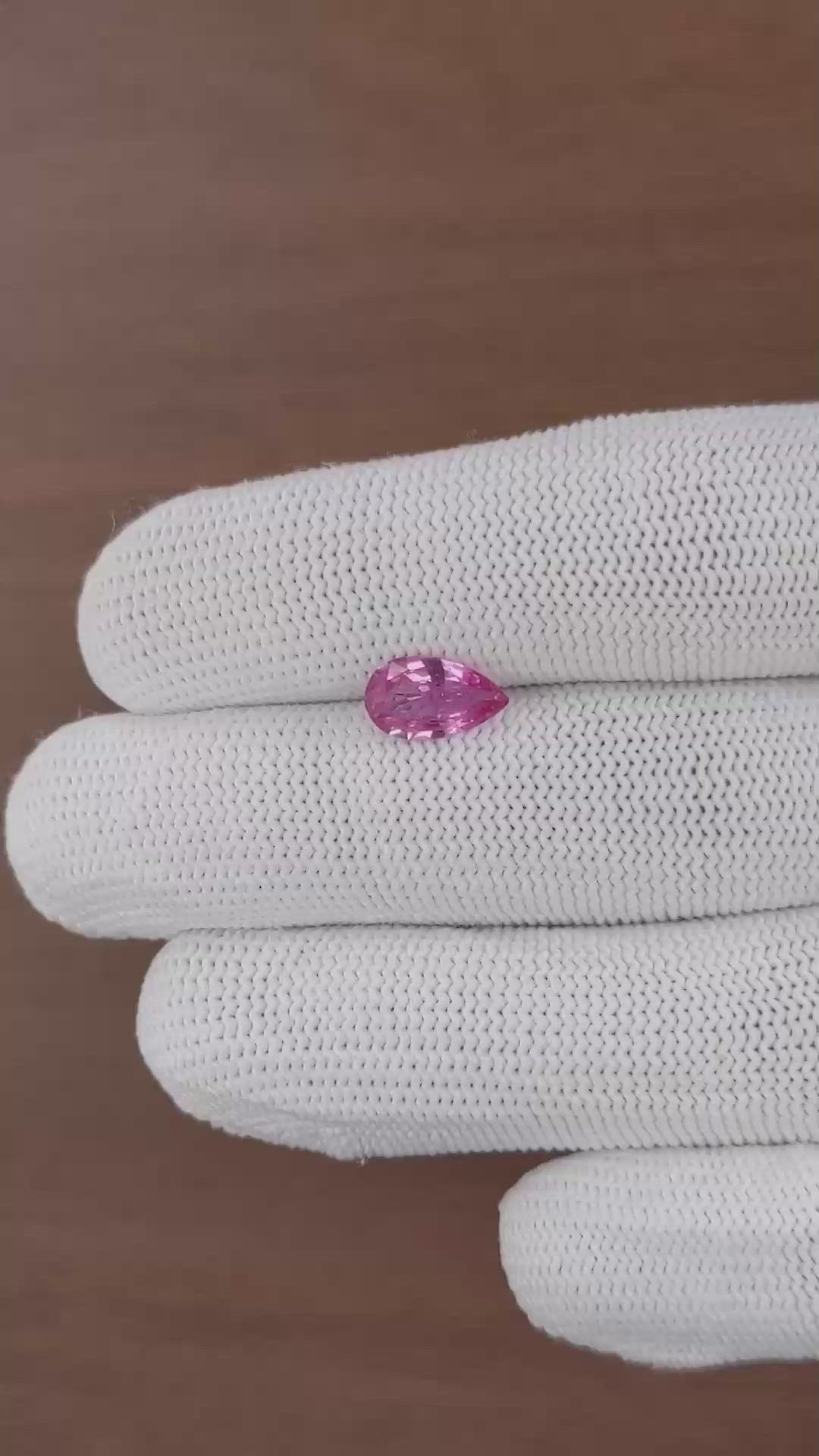
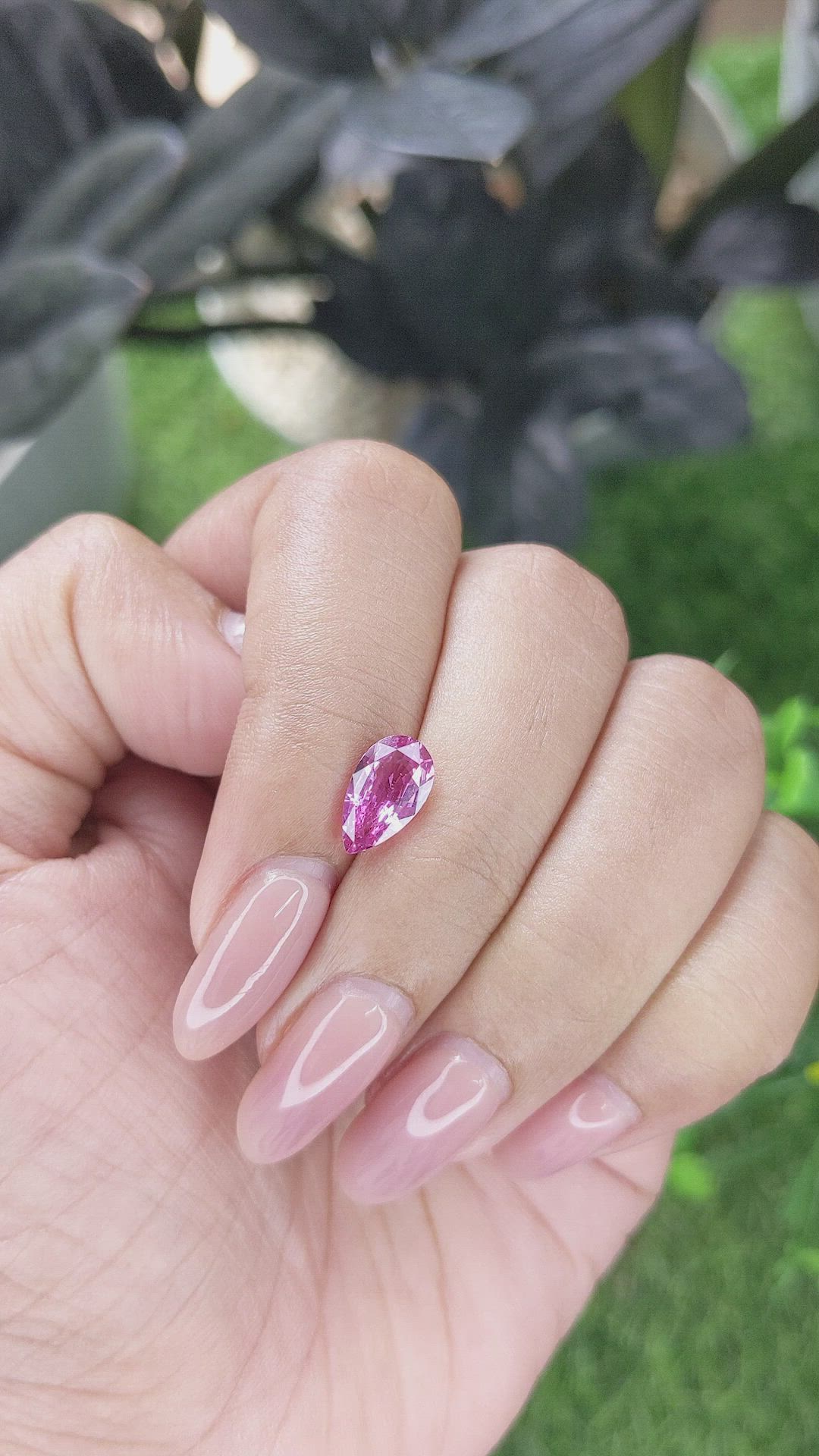
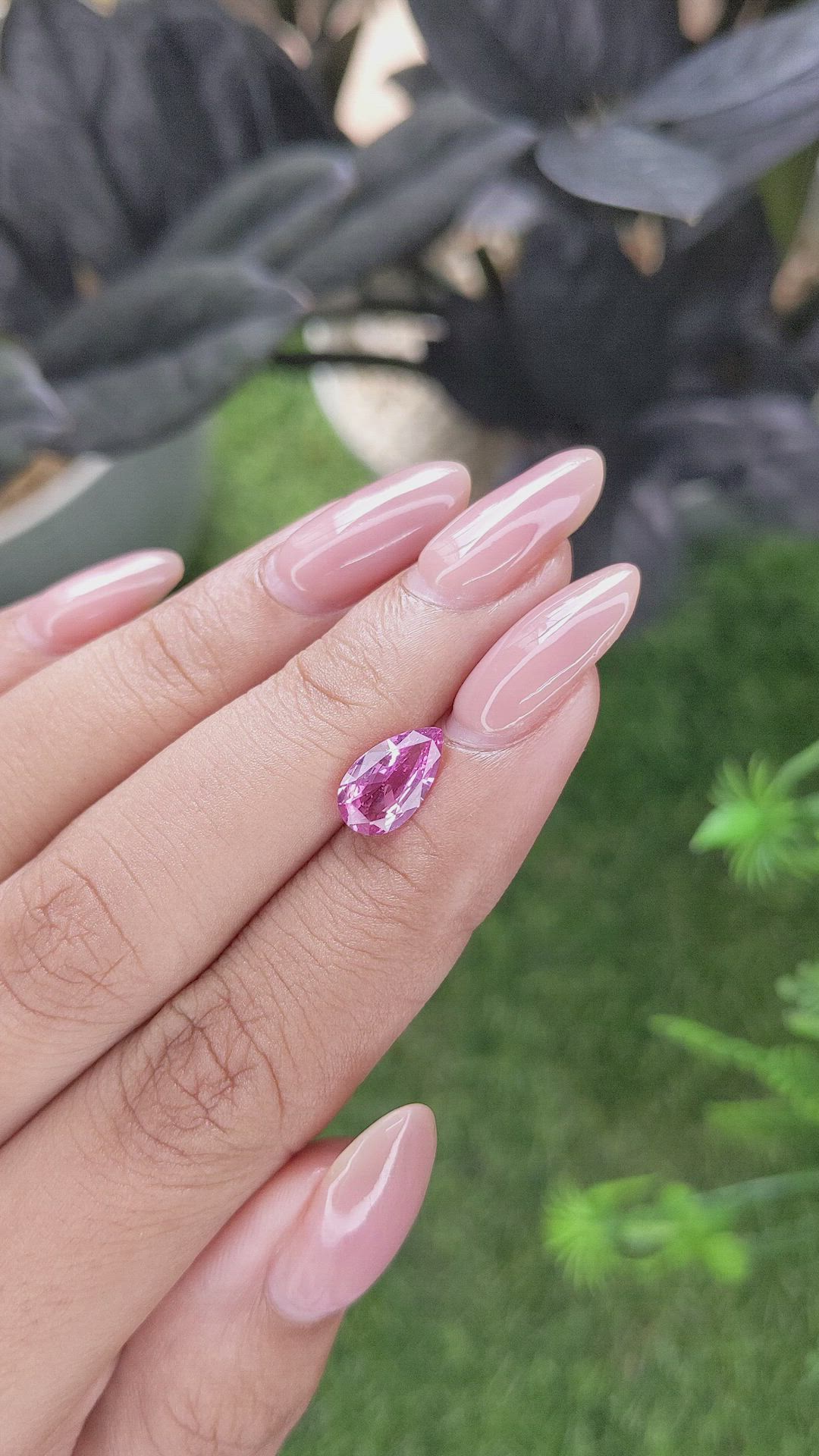
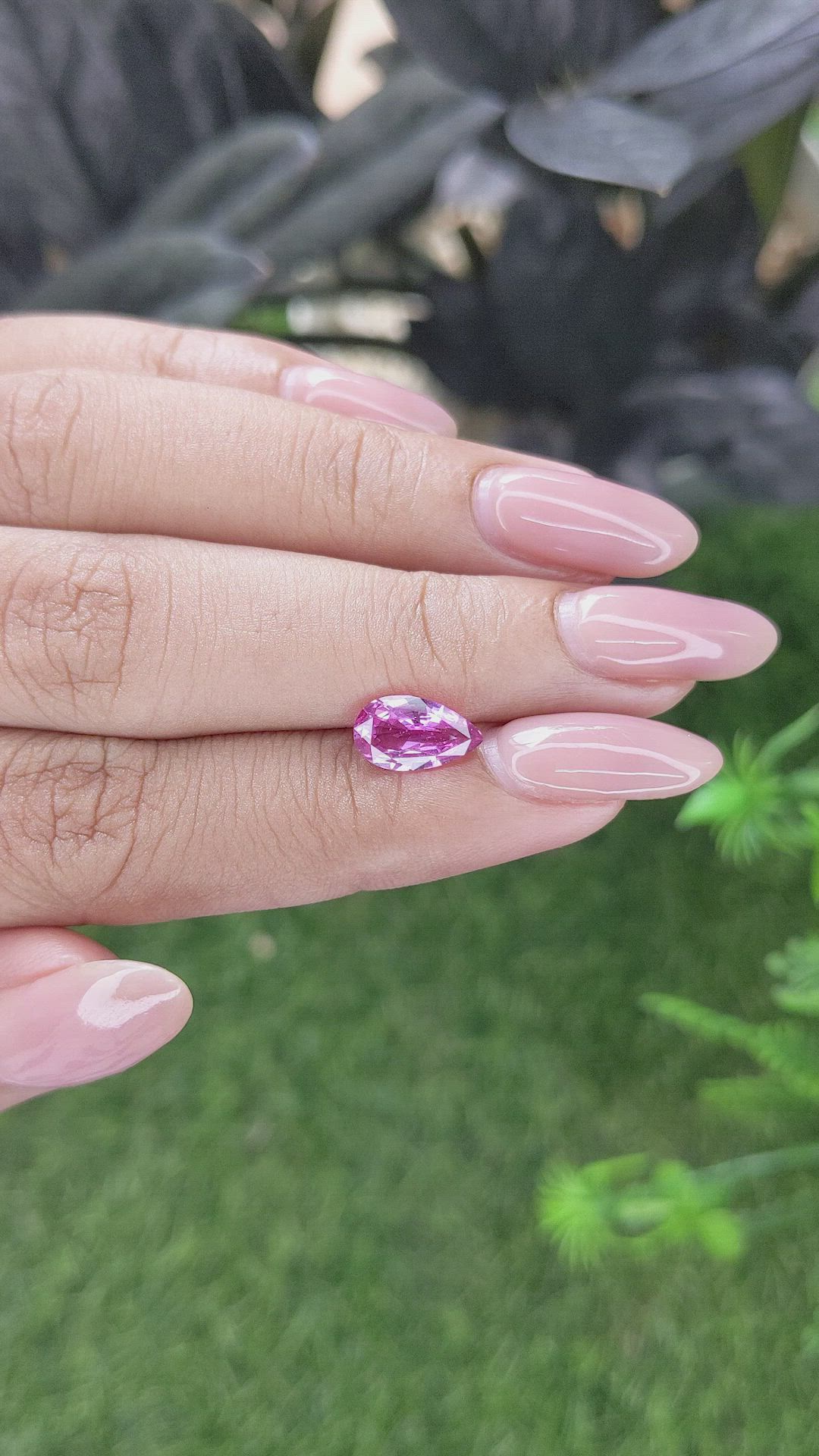




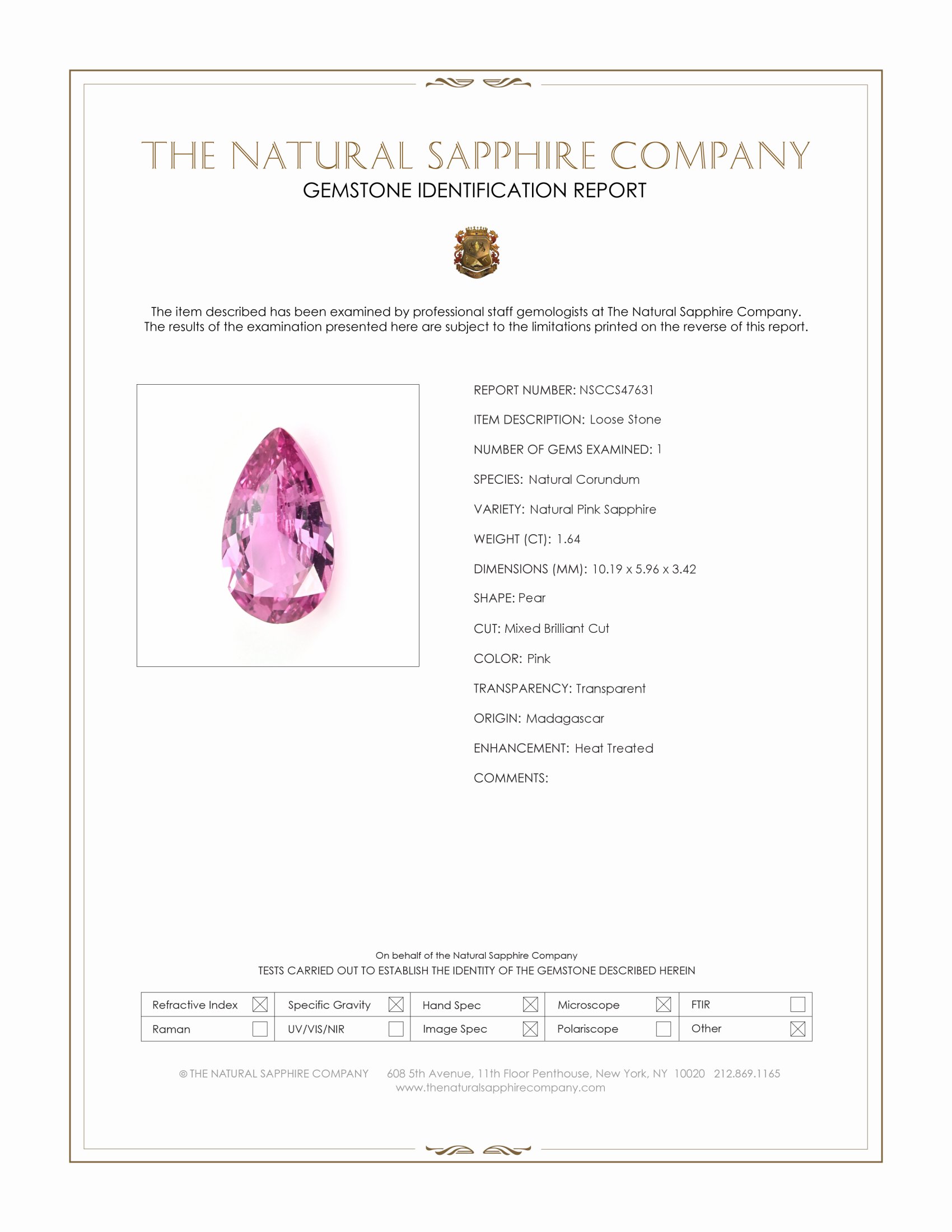
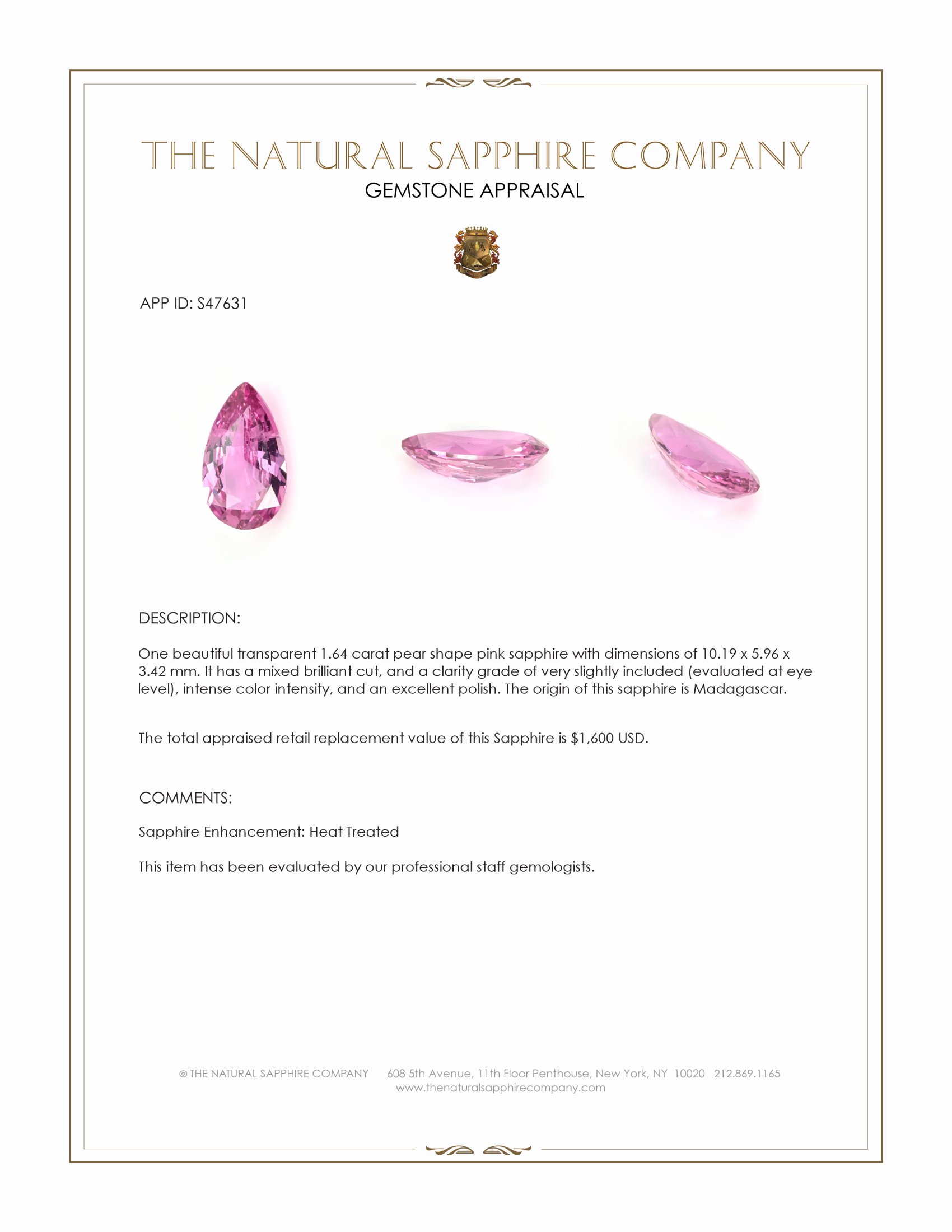
1.64 Ct. Pink Sapphire from Madagascar
This loose stone ships by Sep 25
Item ID: | S47631 |
|---|---|
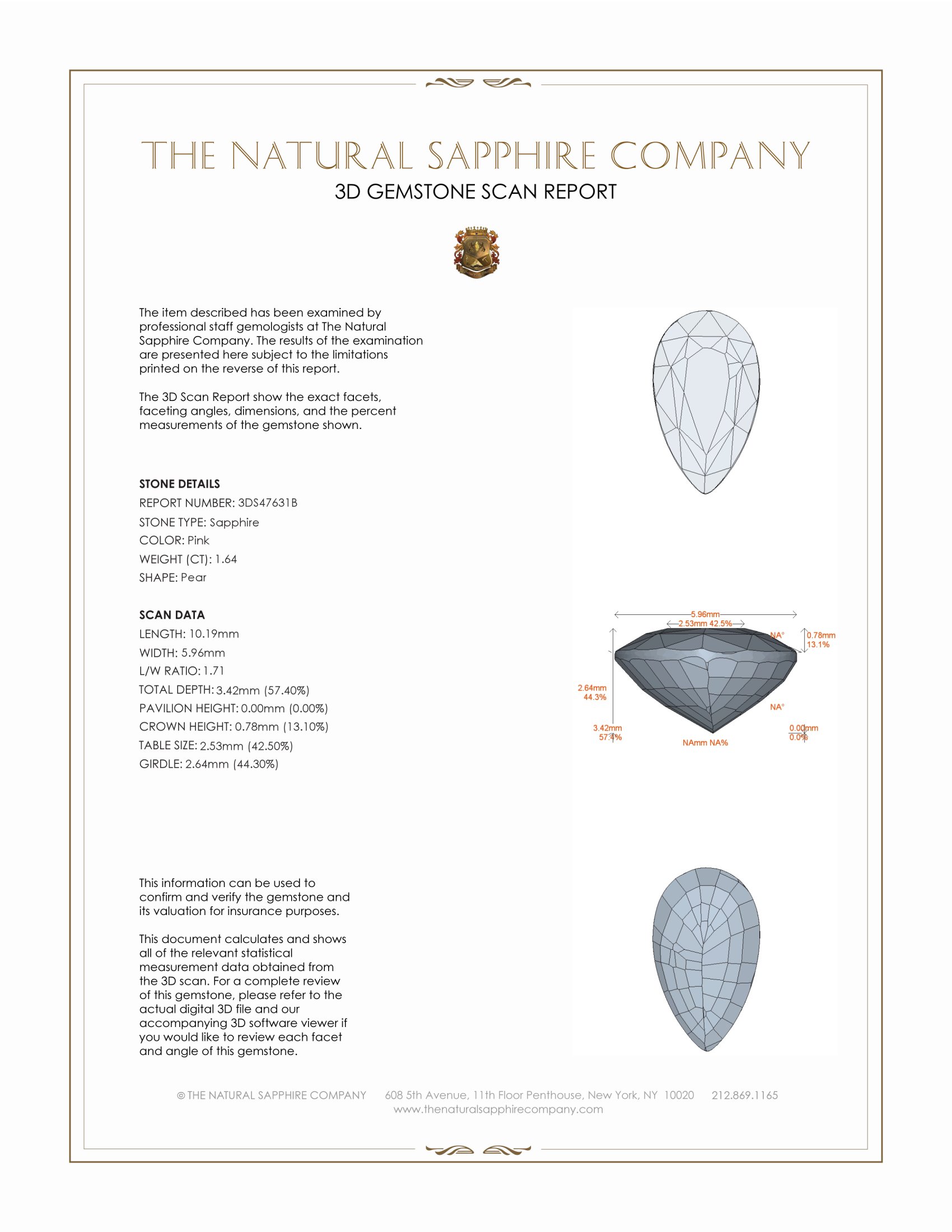
Dimensions (MM): help | Length: 10.19 Width: 5.96 Height: 3.42 |
Weight: | 1.64 Ct. |
Color: help | Pink |
Color intensity: help | Intense |
Clarity: help | Very Slightly Included |
Shape: help | Pear |
Cut: | Mixed Brilliant Cut |
Cutting style: | Faceted |
Enhancements: help | Heat Treated |
Origin: help | Madagascar |
Per carat price: help | $976 |
This listing describes a single transparent 1.64 carat pear shaped pink sapphire from Madagascar, presented by The Natural Sapphire Company. The gem measures 10.19 by 5.96 by 3.42 millimeters and is faceted with a mixed brilliant cut, a cutting style that combines pavilion facets optimized for scintillation with crown facets that promote color dispersion. The stone displays an intense pink saturation, even tone distribution, and an excellent polish that enhances overall brilliance. Clarity is graded as very slightly included, evaluated at eye level, with inclusions that do not interfere with the gem to unaided observation and that contribute to the natural character of the sapphire. The material has been heat treated, a standard and stable enhancement for corundum that improves color and clarity without affecting the structural integrity of the crystal when set and worn under normal conditions.
The pear shape offers a versatile silhouette that works well in both pendant and ring designs, where the tapered point can elongate the finger or create an elegant focal point in a bespoke setting. The mixed brilliant cut in this example has been executed to balance light return and color concentration, allowing the intense pink hue to present evenly across the table while maintaining lively brilliance from the pavilion facets. The dimensions provide a pleasing length to width ratio typical of classic pear proportions, offering an attractive face up area for the stated weight. The excellent polish supports crisp facet outlines and clear windows through the stone, which is particularly desirable in transparent material such as this sapphire. Origin from Madagascar is noted for producing a diverse range of corundum colors, and provenance can be an informative part of the gem profile that complements the observation of color, clarity, and cut.
Hardness and durability are important for practical use, and this sapphire is composed of corundum, which ranks 9 on the Mohs hardness scale. Only diamond, rated at 10 on the Mohs scale, is harder, while common jewelry gems such as topaz and quartz are softer, rated around 8 and 7 respectively. This high rating means the sapphire is highly resistant to scratching in the context of normal wear, and it is therefore well suited to engagement rings and other daily wear pieces when set appropriately. While hardness relates to scratch resistance, toughness and cleavage are also relevant to overall durability, and corundum is known for good toughness, making it less likely to chip than many alternative gemstones when handled carefully. Heat treatment, as applied to this stone, is a stable enhancement that does not compromise hardness, however mechanical impacts and sharp blows to edges or the tip of the pear should be avoided. For routine maintenance, cleaning with warm soapy water and a soft brush is recommended, and professional inspection of settings is advisable to confirm secure mounting before regular wear.
When considering this gem for a commission or an existing jewellery design, the combination of intense color, transparent clarity, precise mixed brilliant faceting, and an excellent polish makes it a refined candidate for both classic and contemporary settings. The practical advantages of a Mohs hardness of 9 support everyday use, while the pear shape allows creative freedom for jewelers and designers who wish to emphasize length, symmetry, or directional color flow. The Natural Sapphire Company provides detailed information about treatment and origin with each gemstone, and this Madagascar pink sapphire is supplied with those attributes documented for informed decision making. Careful setting selection and routine care will preserve the appearance and structural integrity of the stone, ensuring that its notable color and brilliance remain an enduring element in a finished piece.


