
- Stone9
- Reports3





1.56 Ct. Pinkish Purple Sapphire from Tanzania
This loose stone ships by Sep 11
Item ID: | S15367 |
|---|---|
Dimensions (MM): help | Length: 6.41 Width: 6.27 Height: 4.05 |
Weight: | 1.56 Ct. |
Color: help | Pinkish Purple |
Color intensity: help | Intense |
Clarity: help | Very Very Slightly Included |
Shape: help | Cushion |
Cut: | Mixed Brilliant Cut |
Cutting style: | Faceted |
Enhancements: help | No Enhancement |
Origin: help | Tanzania |
Per carat price: help | $1,281 |
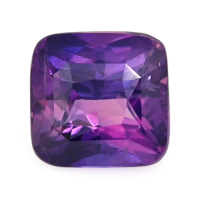
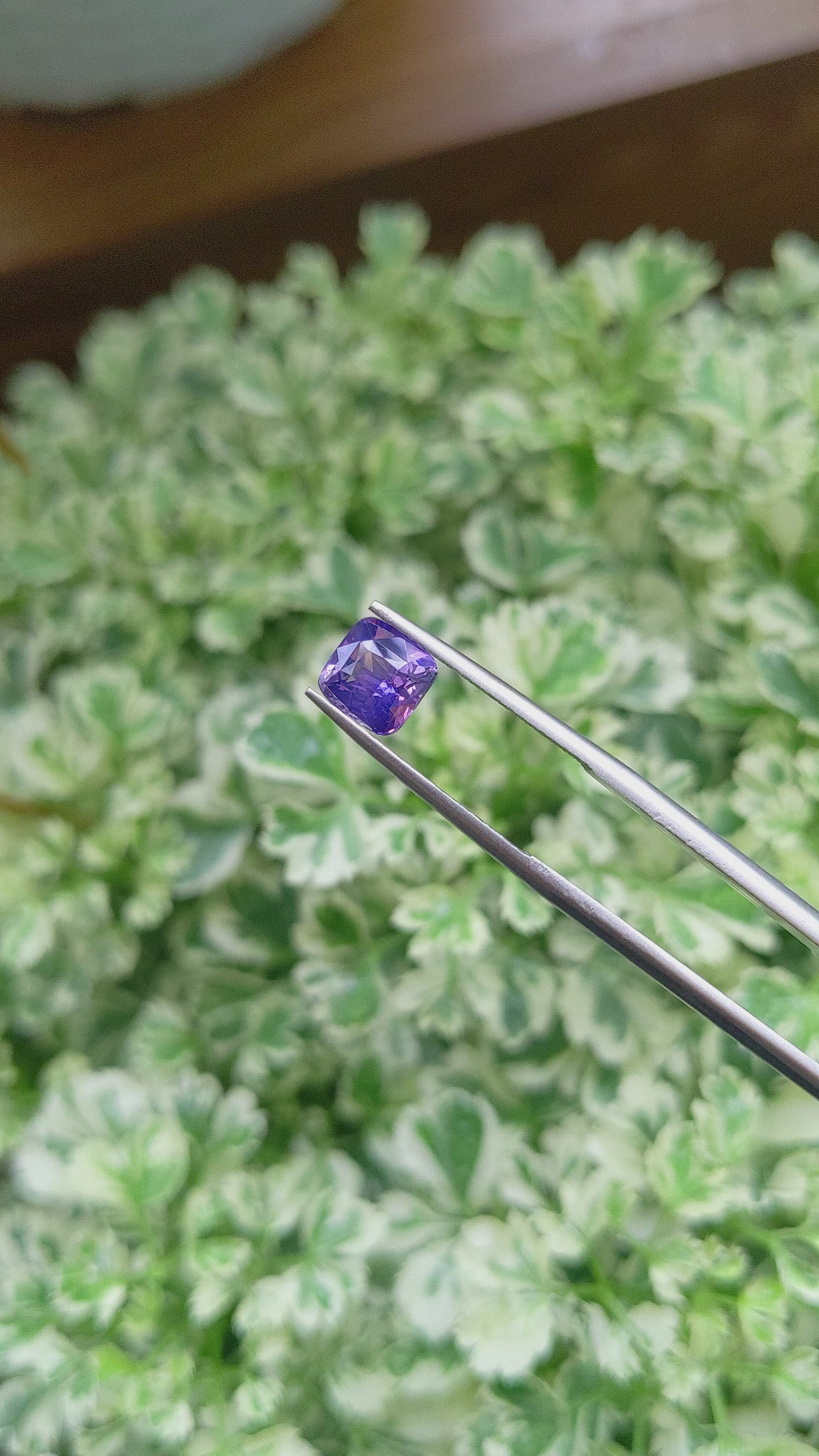
This transparent 1.56 carat cushion shape pinkish purple sapphire measures 6.41 x 6.27 x 4.05 mm, and carries a mixed brilliant cut designed to optimize both scintillation and color saturation. The stone exhibits an intense color intensity, and a clarity grade of very very slightly included evaluated at eye level, which means inclusions are minute and do not impede transparency or light transmission under typical viewing. The excellent polish ensures that facet junctions are precise and surfaces are smooth, permitting maximum facet reflection and minimal surface diffusion. The measured depth, approximately 4.05 mm against an average diameter of 6.34 mm, yields an approximate depth percentage of 63.9 percent, a proportion conducive to balanced light return and preserved face up color for a cushion outline. The sapphire is from Tanzania and is offered with no enhancement, an important factor for collectors and connoisseurs who prioritize natural color provenance and stability.
The mixed brilliant cut on this cushion integrates a brilliant facet crown with a pavilion geometry that carries step influenced elements to modulate color versus brilliance. This configuration creates a dense network of small, precisely angled crown facets that generate lively scintillation, while the pavilion planes control internal light leakage and reinforce the stone’s intense hue. The result is a dynamic tradeoff, where flashes of white light are combined with saturated flashes of pinkish purple, allowing the color to read richly at face up angles without sacrificing sparkle. Excellent polish contributes to crisp facet intersections, and careful girdle finishing preserves symmetry, factors that collectively improve optical performance when the sapphire is set. For designers and lapidaries, this cutting approach is intentionally chosen to retain as much weight as possible in a compact cushion table while producing a pleasing equilibrium between dispersion and color saturation.
From a gemological perspective the pinkish purple hue of this sapphire arises from trace chromophores, consistent with many Tanzanian stones, and can show subtle pleochroic tendencies as the stone is turned under direct light. The intense color intensity indicates strong saturation, with tone leaning toward medium to medium dark, rendering the gem visually impactful at lending pieces. The clarity grade very very slightly included, evaluated at eye level, signifies that inclusions are typically needle or pinpoint class and do not detract from clean transparency or interfere with the passage of light. Because the stone is untreated, the internal characteristics and color zoning provide natural fingerprints of origin that experienced gemologists can correlate with Tanzanian sources, making this sapphire attractive for buyers who place a premium on natural state and traceable provenance. The dimensions and proportional depth are also supportive of settings that allow light ingress, whether via open back gallery designs or minimally obstructive prongs, preserving the gem’s face up intensity and ensuring consistent color delivery in wearable settings.
When considering how this pinkish purple sapphire complements skin tones and metal choices, the technical interplay of hue and background reflectance becomes critical. For cool undertones, such as skin with bluish veins or pinkish base tones, mounting the sapphire in white gold or platinum will preserve and subtly enhance the purple aspect, because the neutral white reflex will not add warmth to the gem, allowing violet notes to remain pure and crisp. For warm undertones, including warm beige and golden olive complexions, yellow gold will introduce a warm reflected field that intensifies the pink facet of the stone, making the gem read as more rosy in deployed jewelry. Rose gold, because of its copper content, selectively augments red to pink components, and for fair to medium warm skin this can amplify the pink side of the pinkish purple, creating a harmonious, slightly vintage aesthetic. For deeper complexions, the sapphire’s intense saturation provides excellent contrast and presence against rich skin tones, and both yellow and rose gold will create a dramatic, luxurious appearance, while a polished platinum or rhodium plated white metal setting will yield a striking, high contrast look, emphasizing purity of hue and crispness of sparkle. In practical mounting terms, an open gallery, four or six prong setting, or a low bezel with internal polishing will maximize light interaction and ensure that the face up color remains vibrant, while a halo of high quality near colorless diamonds can increase perceived size and brilliance, without materially shifting the gem’s natural color when set with balanced color grade accents. At The Natural Sapphire Company we can advise on metal and setting choices that match individual skin undertone and design intention, and we provide documentation to support origin, cut, and untreated status to assist in making an informed selection.


