- Stone12
- Reports3


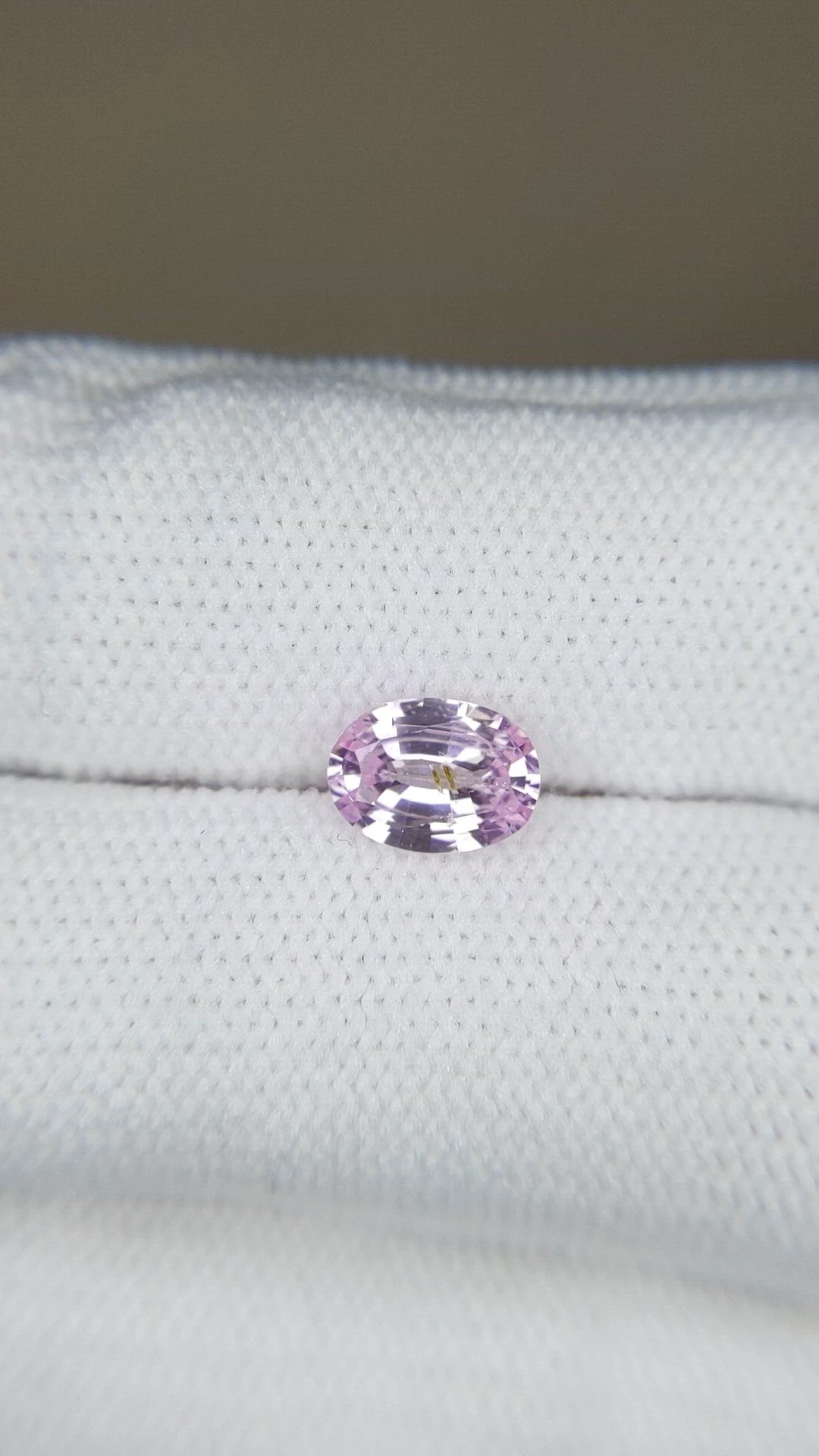
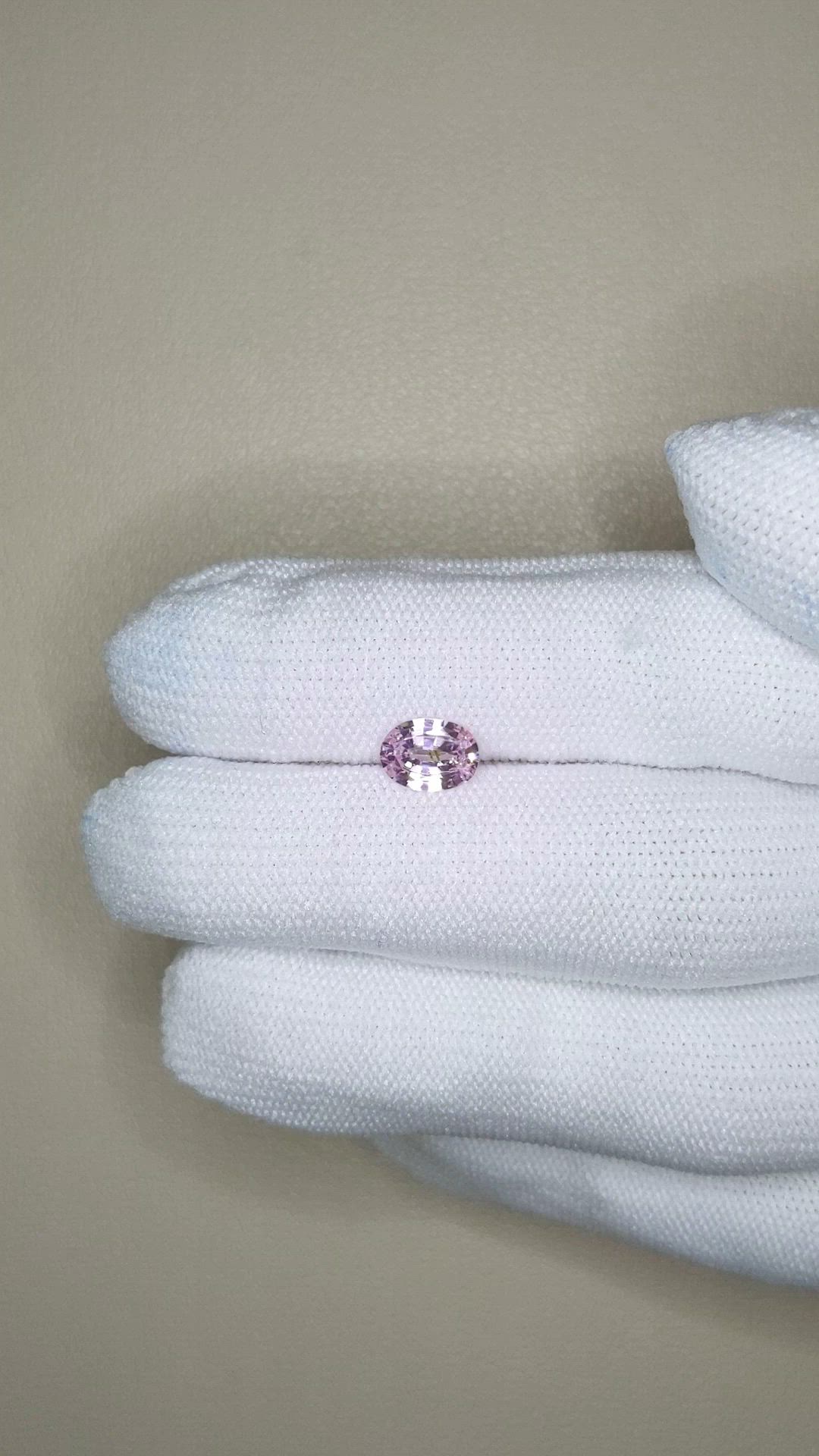
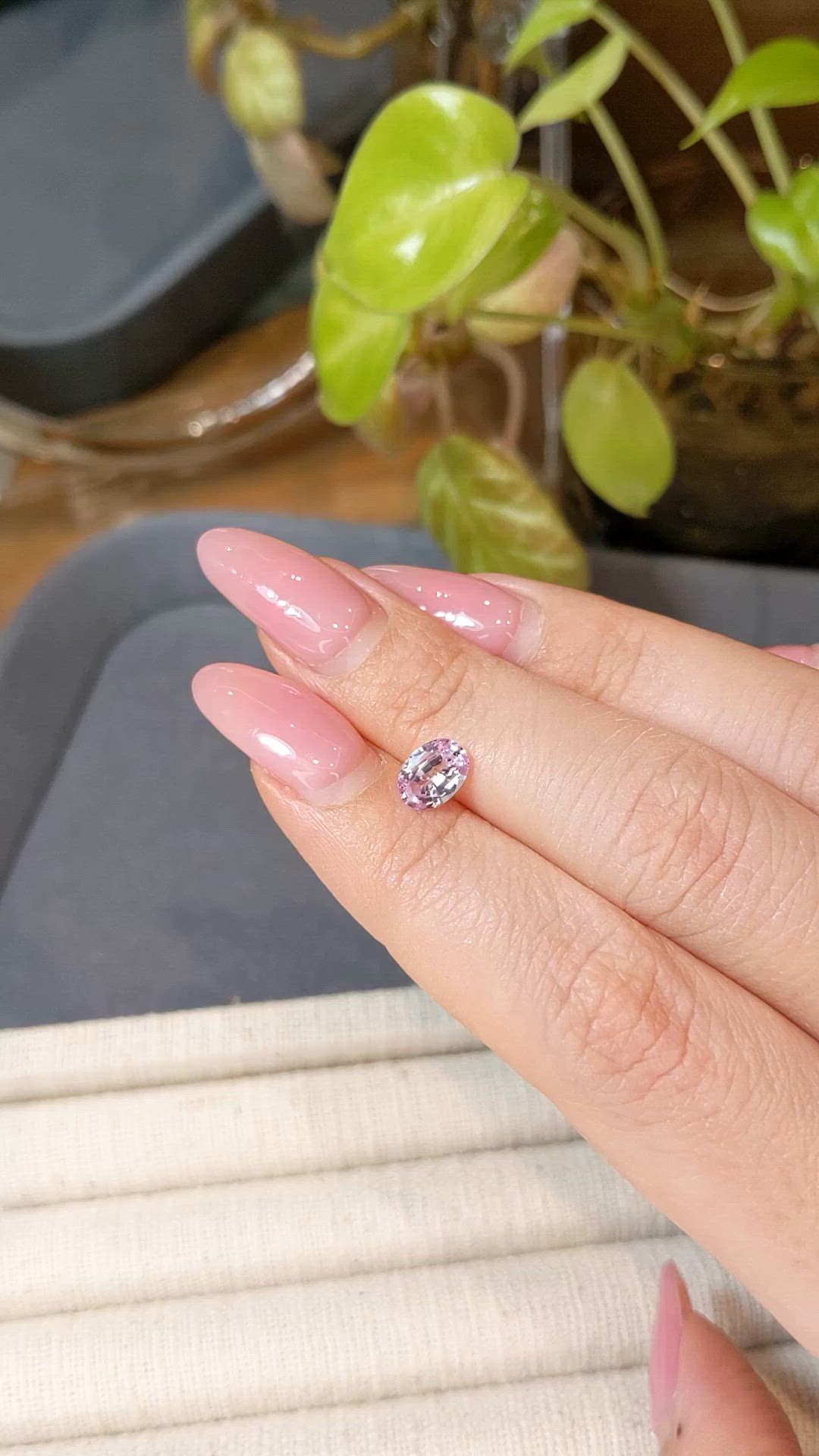
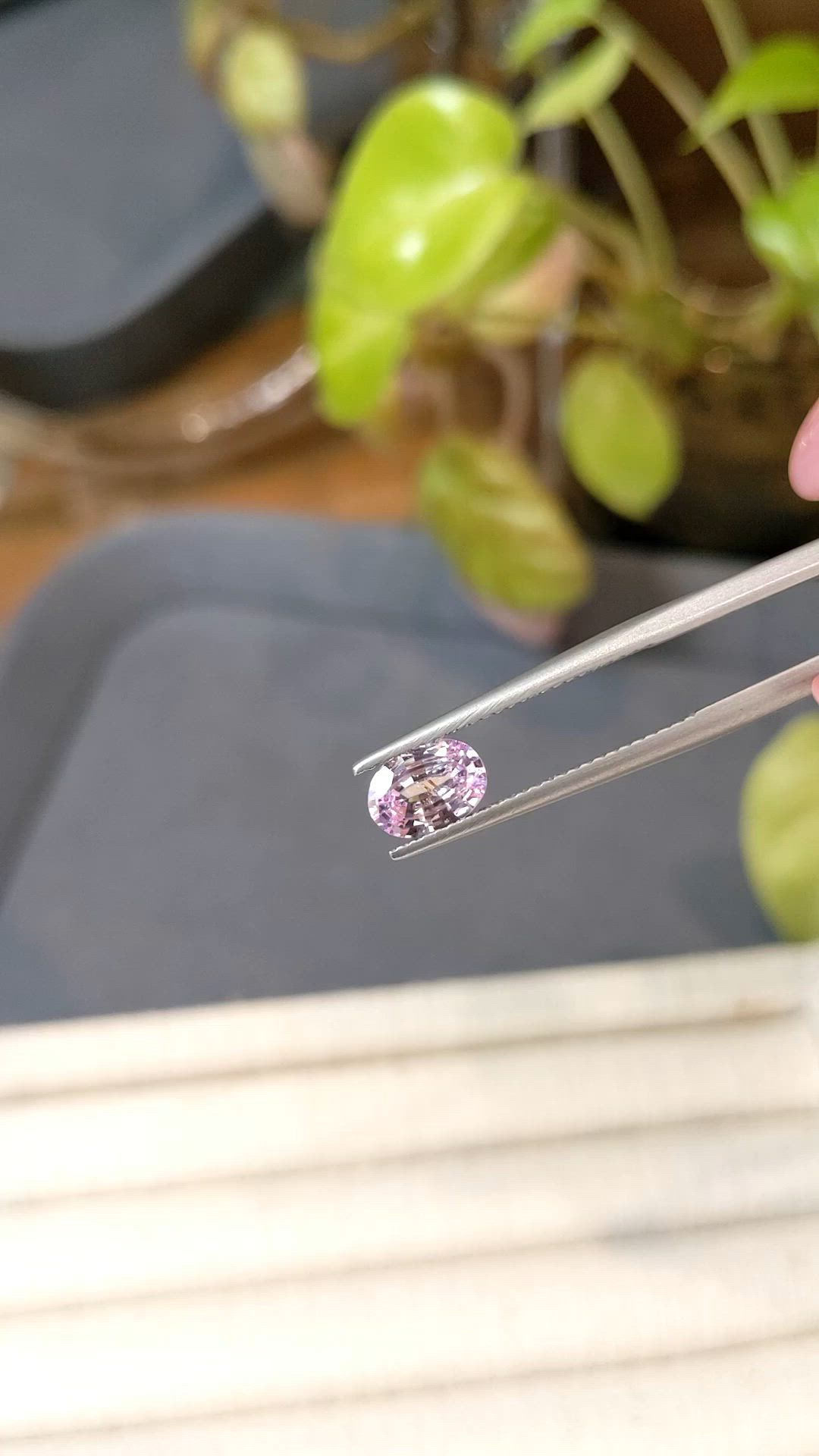



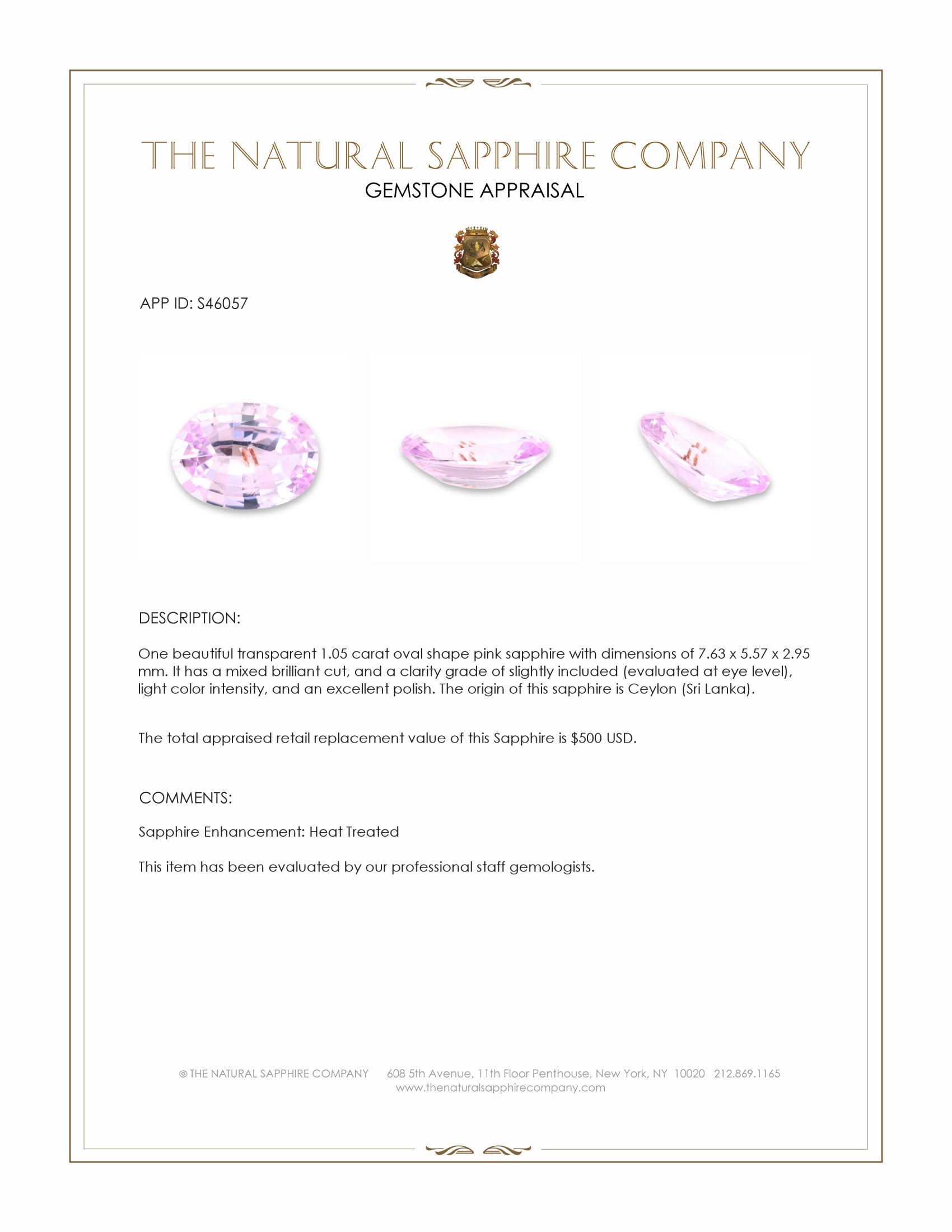
1.05 Ct. Pink Sapphire from Ceylon (Sri Lanka)
This loose stone ships by Nov 6
Item ID: | S46057 |
|---|---|
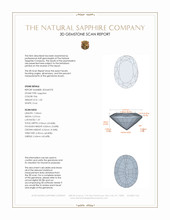
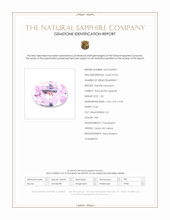
Dimensions (MM): help | Length: 7.63 Width: 5.57 Height: 2.95 |
Weight: | 1.05 Ct. |
Color: help | Pink |
Color intensity: help | Light |
Clarity: help | Slightly Included |
Shape: help | Oval |
Cut: | Mixed Brilliant Cut |
Cutting style: | Faceted |
Enhancements: help | Heat Treated |
Origin: help | Ceylon (Sri Lanka) |
Per carat price: help | $476 |
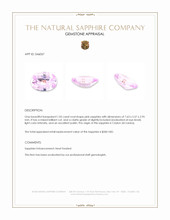
This transparent 1.05 carat oval pink sapphire measures 7.63 x 5.57 x 2.95 millimeters and is offered by The Natural Sapphire Company. The stone displays a light color intensity located in the delicate pink range that is characteristic of premium Ceylon Sri Lanka material. The cutting style is faceted with a mixed brilliant design, the clarity grade is slightly included as evaluated at eye level, the polish is excellent, and the piece has been heat treated, a stable and widely accepted enhancement in the trade. Proportionally the girdle to overall dimensions yields an approximate depth percent of 44.7 percent, and the length to width ratio is about 1.37 which gives a balanced oval outline for traditional and modern settings alike. As natural corundum, the stone will exhibit a refractive index in the region of 1.762 to 1.770 and a birefringence around 0.008, with a Mohs hardness of 9 that ensures strong durability for daily wear when set appropriately.
The mixed brilliant faceting on this oval integrates a brilliant facet arrangement on the crown with controlled step facets on the pavilion, a design choice that optimizes scintillation while preserving color saturation. In practice the crown facet angles and table proportion create a lively face up appearance, returning light as pinpoint flashes from the crown facets, while the pavilion steps help to retain and deepen the pink hue when viewed face up. The excellent polish enhances facet junction crispness and minimizes light leakage from surface abrasion, resulting in a cleaner and more vivid presentation. Given the stone thickness of 2.95 millimeters and the moderate depth percent, this sapphire presents a slightly shallower pavilion than extremely deep stones, which makes it sit with a bright, open face, and reduces the risk of a dark center when mounted in low profile bezels or fine prong settings.
Internally the slightly included clarity grade reflects natural growth features that are diagnostic of terrestrial corundum. Typical internal characteristics include isolated crystal inclusions and fine needle like silk that can be observed under magnification and which scatter light in subtle ways, contributing to the stone character rather than detracting from it. These inclusions are often useful when establishing provenance and distinguishing natural material from synthetic growth, since natural inclusions retain random orientation and complex relationships that are difficult to replicate exactly in synthetic processes. Heat treatment in this example has been applied to enhance tone and reduce the visibility of some internal features, a conventional and stable enhancement that improves the visual balance between color and clarity without altering the fundamental corundum structure. The Ceylon Sri Lanka origin is consistent with a tendency toward soft pastel pinks and fine crystallographic habit, and the stone can show subtle pleochroism that slightly shifts the perceived pink between different viewing angles.
When comparing this natural Ceylon pink sapphire to lab grown corundum, it is important to separate technical equivalence from intrinsic value. Lab grown sapphires share the same chemical composition and hardness, and they often present with fewer inclusions, highly consistent color, and a more accessible price point. These attributes make lab grown stones an excellent option for applications where cost predictability and optical uniformity are priorities. Natural sapphires, however, retain advantages that appeal to collectors and discerning buyers. Natural stones carry unique growth fingerprints in their inclusion suites and zoning patterns, they offer tangible provenance through geographic origin, and they frequently hold stronger resale desirability in the marketplace due to rarity and historical demand. Heat treated natural sapphires that are well cut and polished, such as this 1.05 carat oval from The Natural Sapphire Company, provide a combination of natural character and market recognition that lab grown material cannot replicate. For buyers seeking a durable gem with verifiable natural origin, classical Ceylon color characteristics, and the nuanced light performance of a mixed brilliant oval, this sapphire represents a technically compelling choice that performs well in a variety of settings and continues to reward close inspection.


