
- Pair15
- Reports4


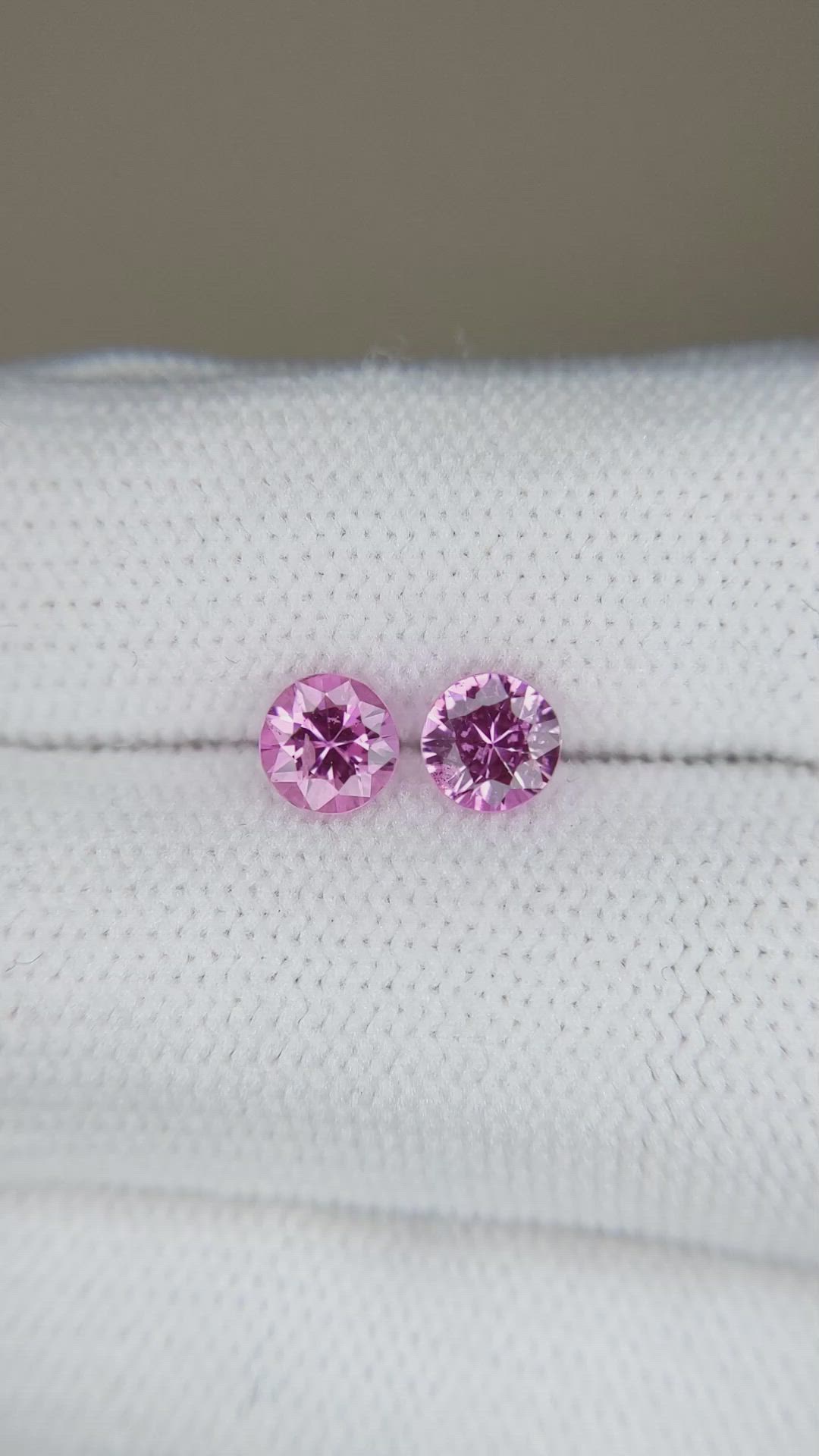
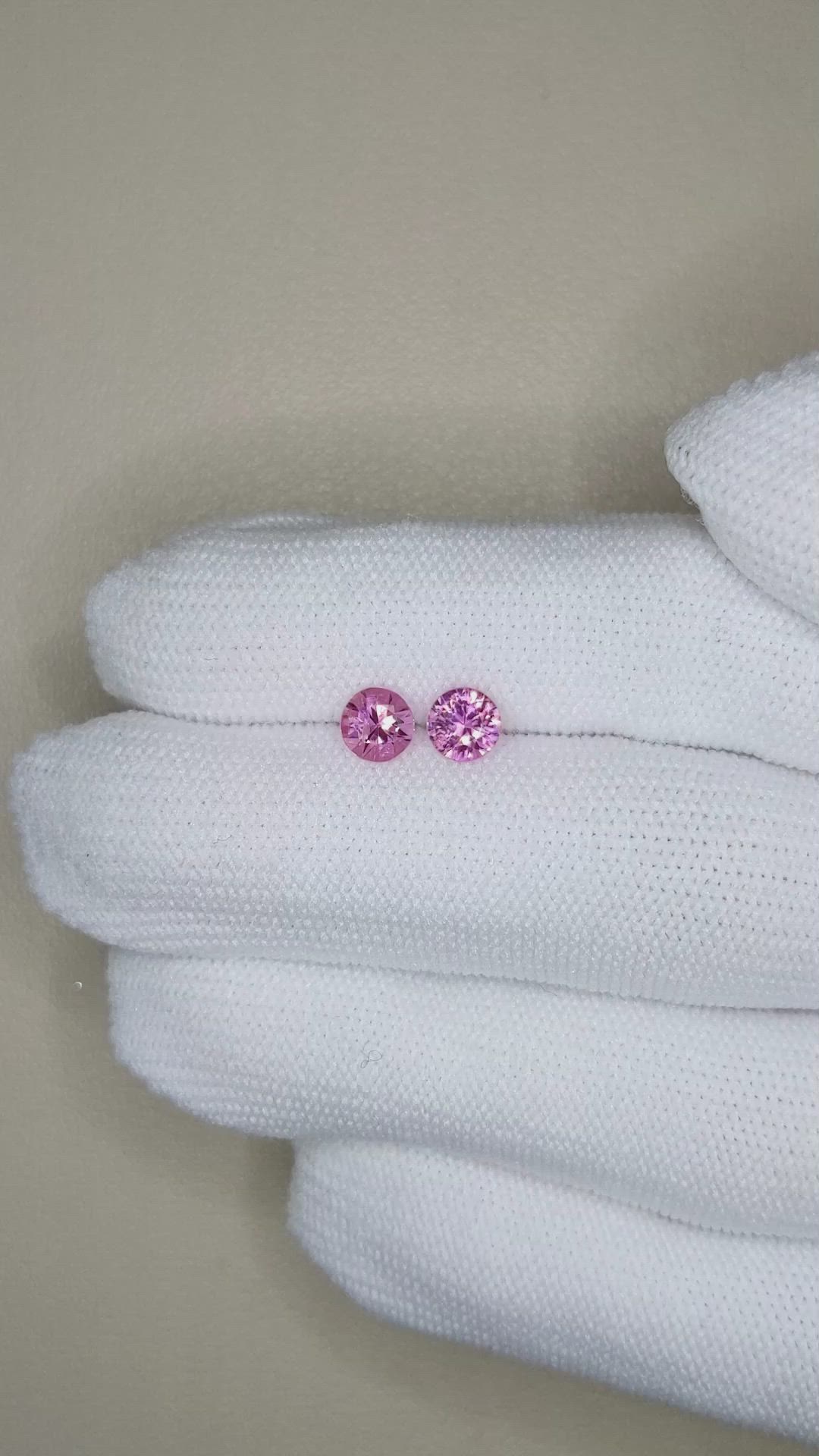
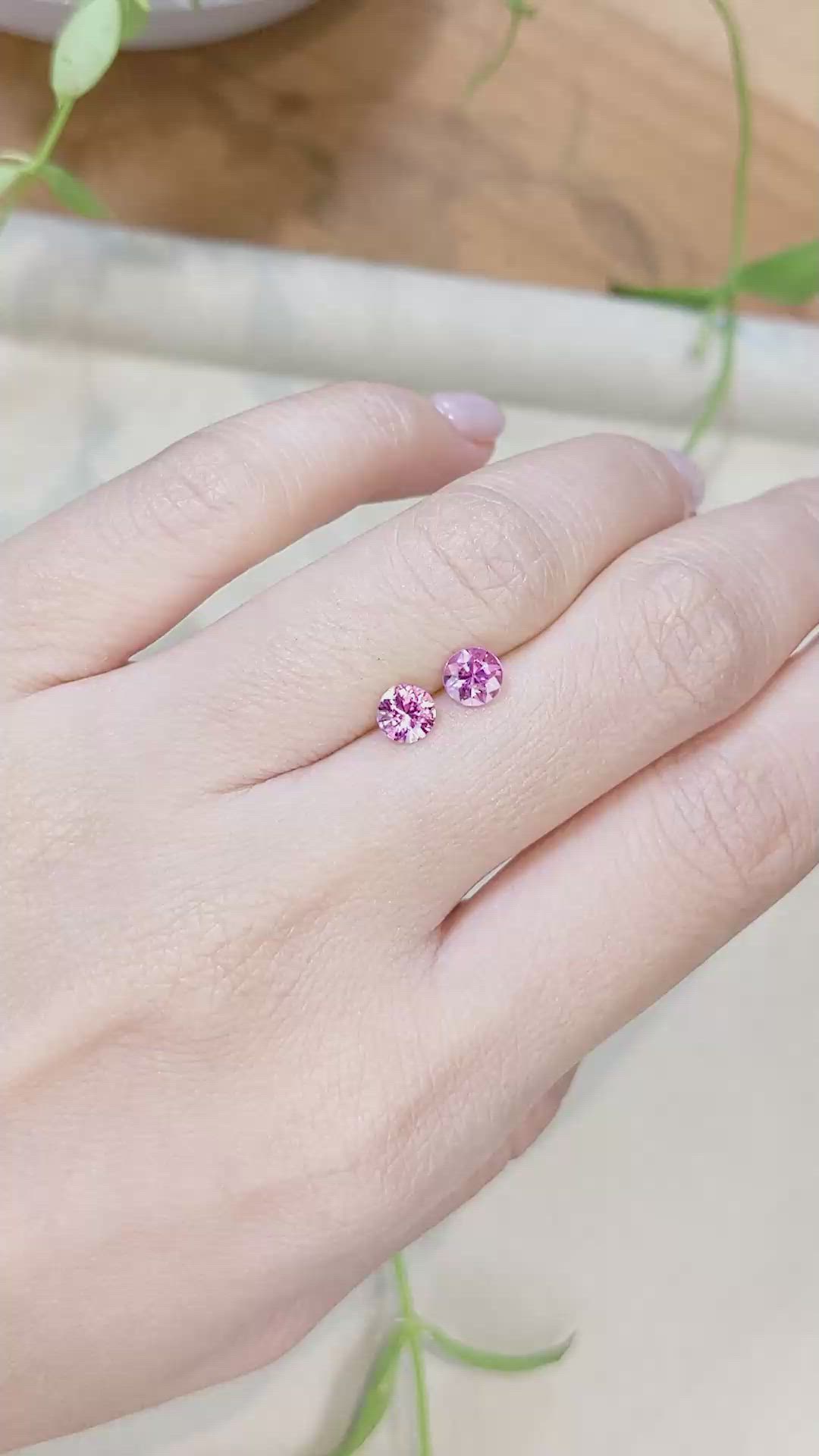
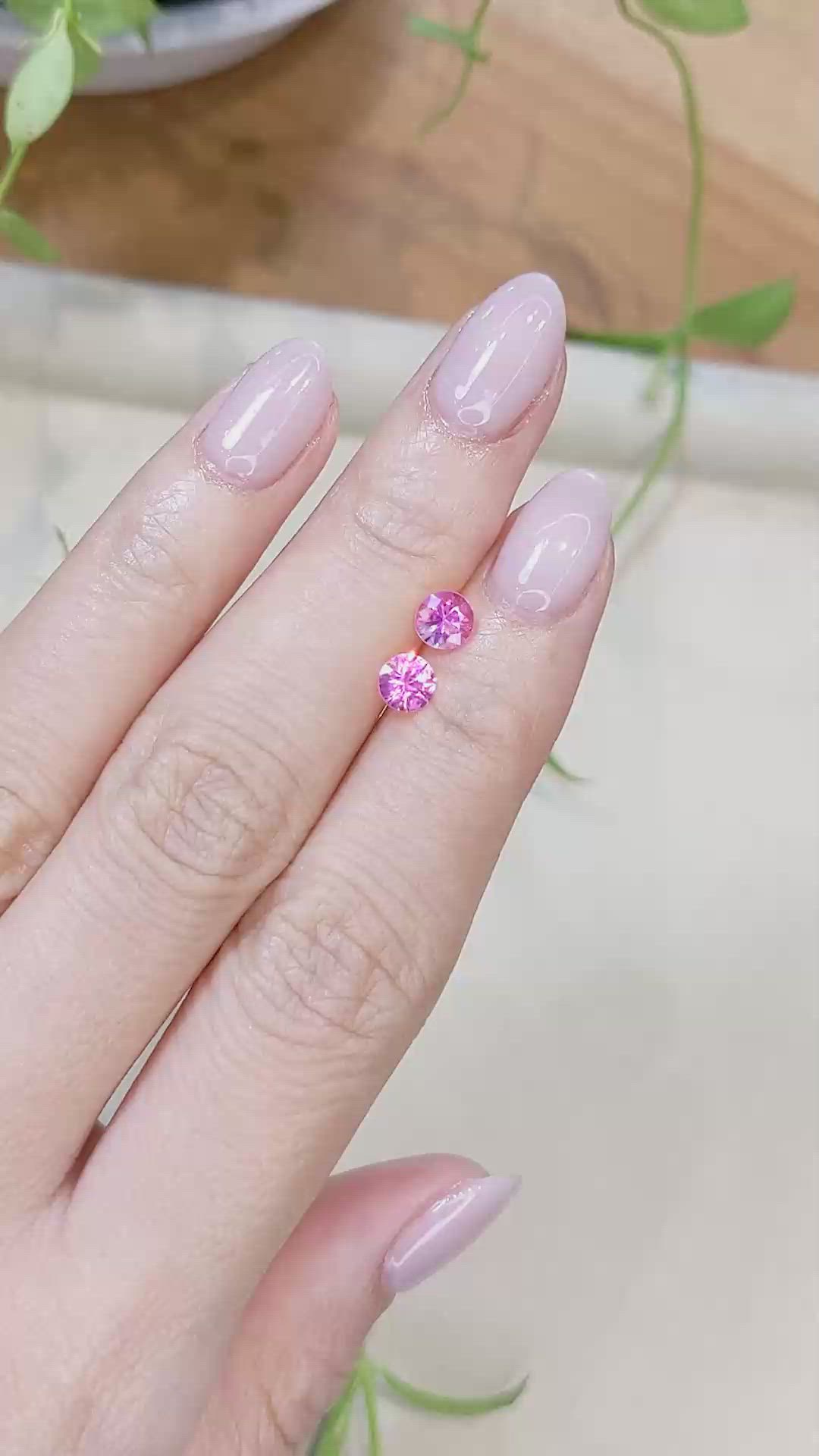
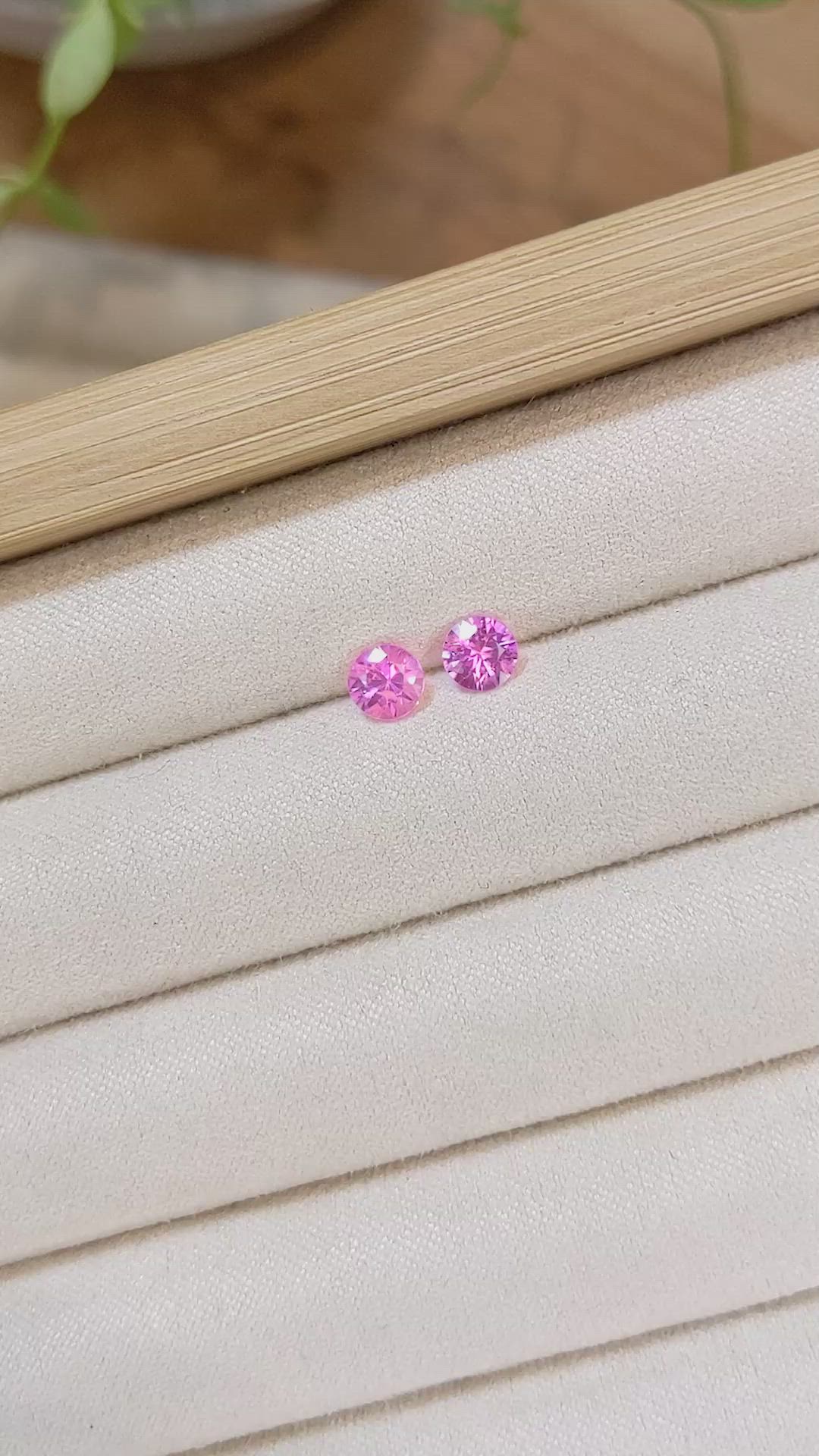




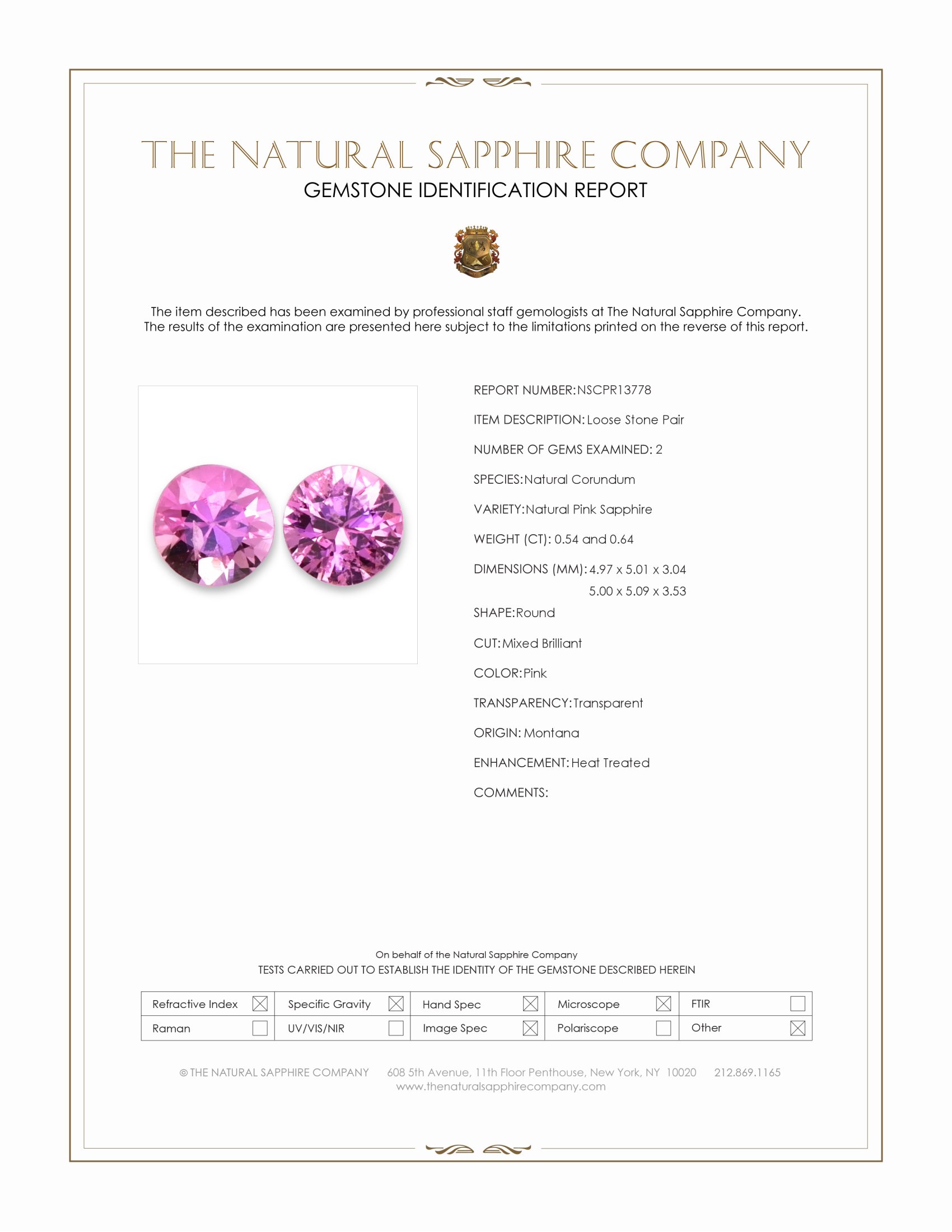
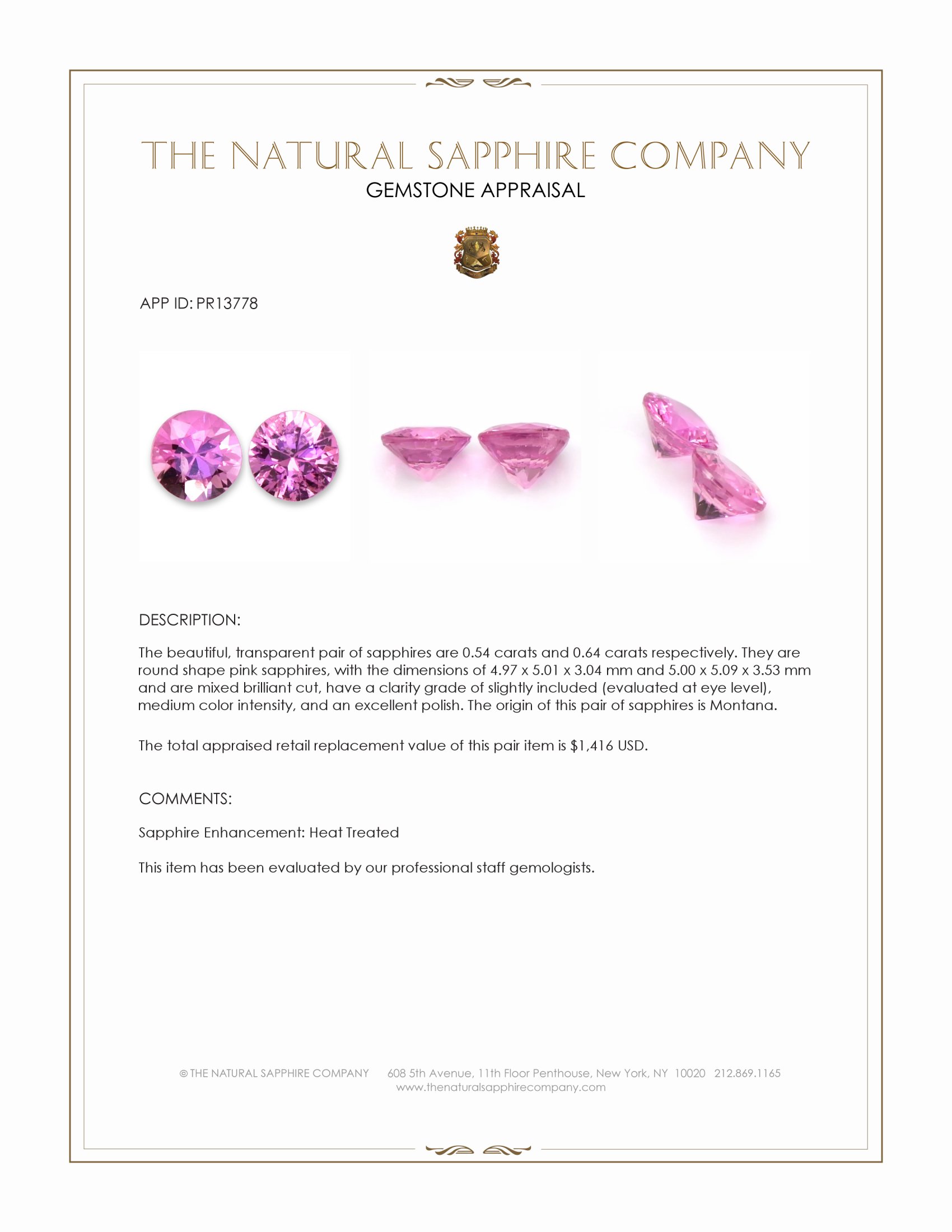
1.18 Ct.Tw.Total Carat Weight Pink Sapphire Pair from Montana
This pair of stones is available to ship now
Stone type: | Sapphire | Sapphire |
|---|---|---|
Item ID: | PR13778 | PR13778 |
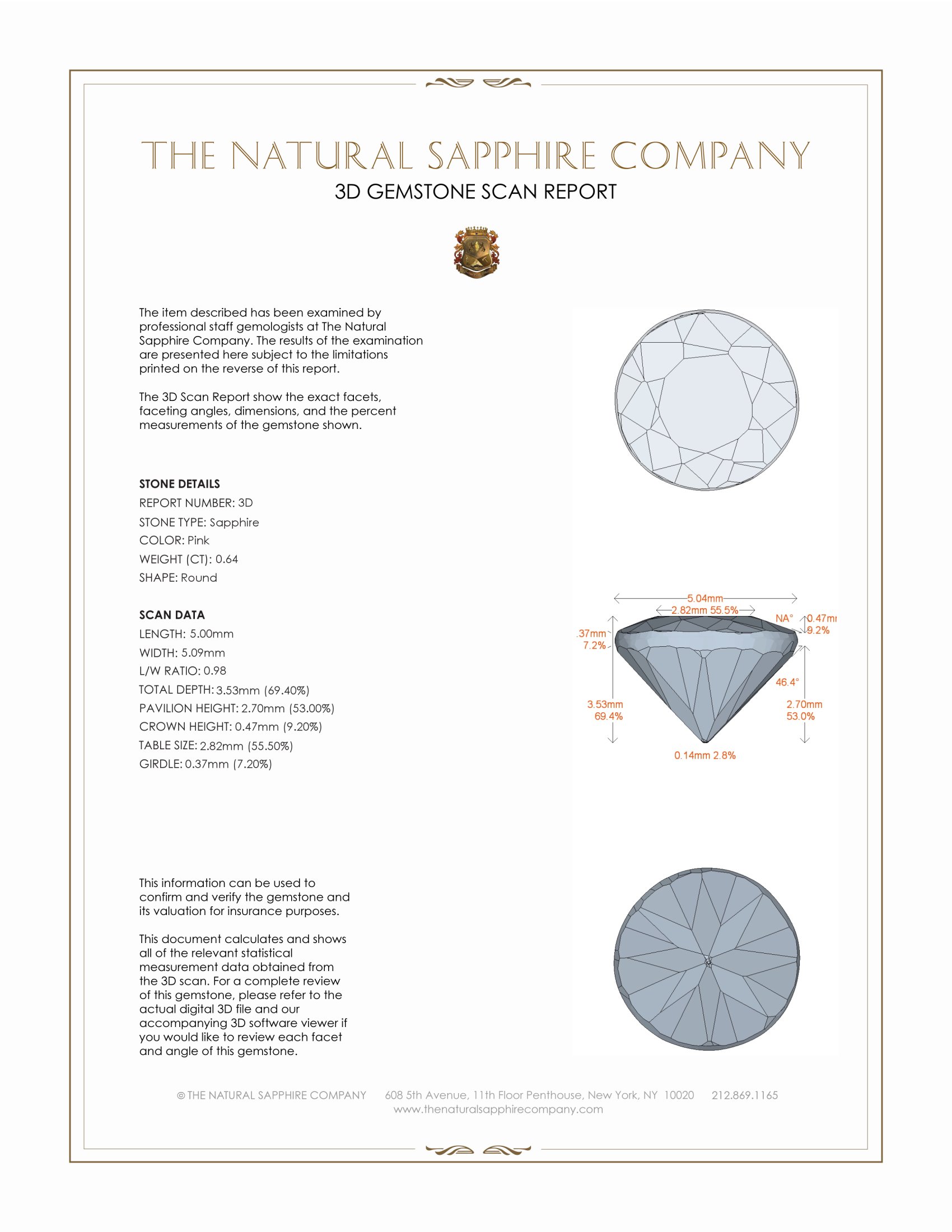
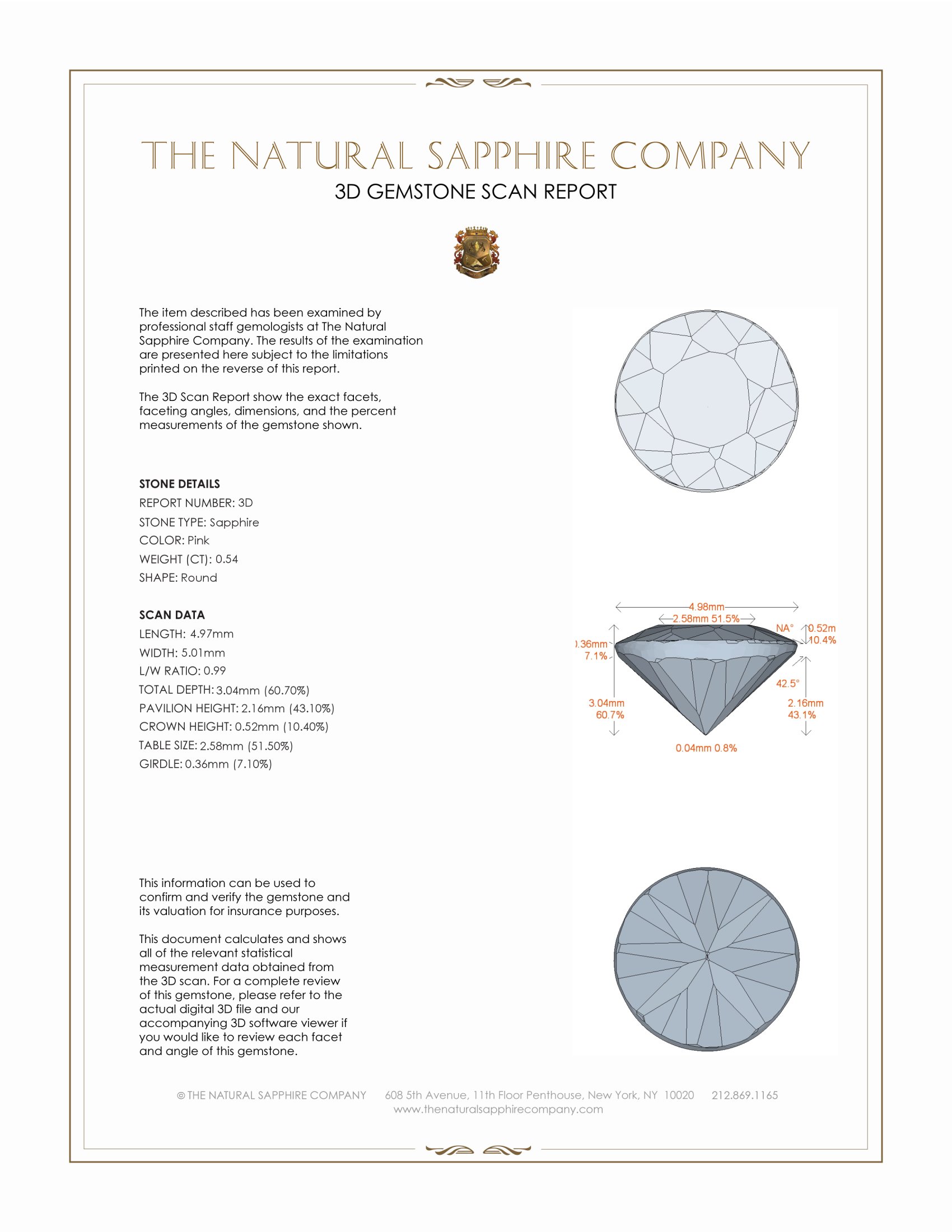
Dimensions (MM): help | Length: 4.97 Width: 5.01 Height: 3.04 | Length: 5 Width: 5.09 Height: 3.53 |
Weight: | 0.54 Ct. | 0.64 Ct. |
Color: help | Pink | Pink |
Color intensity: help | Medium | Medium |
Clarity: help | Slightly Included | Slightly Included |
Shape: help | Round | Round |
Cut: | Mixed Brilliant Cut | Mixed Brilliant Cut |
Cutting style: | Faceted | Faceted |
Enhancements: help | Heat Treated | Heat Treated |
Origin: help | Montana | Montana |
Per carat price: help | $1,200 | $1,200 |
This pair of Montana pink sapphires offered by The Natural Sapphire Company presents a compact and technically interesting combination of optical and material characteristics. Individually the stones weigh 0.54 carats and 0.64 carats, with measured diameters of 4.97 by 5.01 by 3.04 millimeters for the smaller stone, and 5.00 by 5.09 by 3.53 millimeters for the larger stone. Both are fashioned as round shapes with a mixed brilliant cut, carrying a clarity grade described as slightly included when evaluated at eye level, a medium color intensity, and an excellent polish. The pair has been heat treated, a conventional enhancement used to refine the pink hue and improve apparent clarity, and their documented origin is Montana. These specific metrics establish the pair as a near matched set in tone and hue, while retaining measurable differences in depth and face up proportion that will influence their optical behavior when set.
The mixed brilliant cut specification indicates a combination of brilliant style facetting on the crown and a more step oriented or modified pavilion geometry beneath the girdle, a design choice intended to balance scintillation with preservation of body color. The smaller stone presents an overall depth that converts to about sixty one percent of its average diameter, a proportion that aligns well with efficient light return in round faceted stones cut for brightness. The larger stone is markedly deeper, with an effective depth of roughly seventy percent of its average diameter, a geometry that tends to concentrate color and can increase apparent saturation when viewed face up, at the expense of some light return and table scintillation. The excellent polish across both stones optimizes internal reflection and minimizes surface scattering, so the larger stone will read with greater color saturation while the smaller stone will display relatively stronger scintillation and crisp facet separation. These differences are fundamental to how mixed cut sapphires perform, since pavilion depth and facet angles control the balance between brilliance, fire, and color concentration, and they are especially relevant when matching a pair for symmetrical earring use or for deliberate asymmetric design.
Clarity described as slightly included at eye level implies small natural inclusions that are visible to a trained or attentive viewer without magnification, but that do not materially weaken the gem or its durability. Montana sapphires commonly exhibit inclusions such as fine rutile needles, small negative crystals, and localized growth zoning, and those inclusion types can act as internal markers of natural origin while also interacting with facet geometry to create subtle silk induced velvety effects when present. The heat treatment applied to these stones is the industry standard thermal enhancement used to reduce silk, homogenize color distribution, and enhance the pink saturation. Heat treatment in sapphire is stable under normal wear and light exposure, and it typically opens up the color hue range that is desirable for jewelry. Comparing these characteristics to untreated Montana stones, an untreated example would more likely show distinct color zoning and potentially a more pastel or velvety appearance, which some collectors prize, while the heat treated pair here favors consistent medium intensity and cleaner face up appearance. The excellent polish further complements the treatment by ensuring facet junctions are crisp, which improves overall light return and the perceived cleanliness of the stones.
When contrasted with similar non matching gemstones from other sources or with different cutting choices, the pair exhibits clear tradeoffs that a knowledgeable buyer will appreciate. Paired pink sapphires of exact matching bench weight, pavilion depth, and crown height will register as a visually identical set with virtually indistinguishable face up brightness and color, but that degree of matching often requires sacrificing individual material yield. Sapphires from Sri Lanka or Madagascar with similar weights can display higher saturation or a more orange leaning pink hue, and those stones are frequently cut shallower to favor maximum apparent diameter and brilliance. By contrast, spinel in comparable pink tones will generally present with more uniform saturation and fewer inclusions, because spinel lacks the characteristic pleochroism and silk structures of corundum, and its lower refractive index produces a different quality of brilliance and dispersion. Synthetic or laboratory grown sapphires can be produced with flawless clarity and ideal proportions, resulting in extremely lively scintillation and matched pairs with perfect symmetry, but they differ materially in inclusion character and provenance. Practically, the slight size and depth variance between the two Montana stones in this offering provides design flexibility. For symmetrical earring applications, a setting strategy that compensates for the deeper pavilion of the larger stone can equalize face up appearance, such as using individualized bezel heights or a crown oriented mounting that controls crown tilt, while an asymmetrical or offset design can use the intrinsic differences as a deliberate stylistic choice to emphasize color contrast.
For setting and wear considerations, these sapphires will benefit from mounting choices that enhance both color and light return. Open back settings or low profile bezels allow more light to enter through the pavilion and support the face up presence of the stones, while white metal reflectors can increase perceived brightness without altering the stones color. Given the mixed brilliant cut and the deeper pavilion of the larger stone, orienting the larger stone with a slightly elevated crown in a bezel or prong assembly will reduce the disparity in apparent size and brightness when paired. Routine care for heat treated sapphires is straightforward, avoid prolonged exposure to harsh chemicals and extreme thermal shock, use warm soapy water and a soft brush for cleaning, and professional ultrasonic cleaning is generally acceptable for well mounted, stable sapphires. This pair from The Natural Sapphire Company represents a technically interesting and origin specific offering, combining Montana provenance, mixed brilliant craftsmanship, and stable thermal enhancement to deliver a balanced combination of medium pink saturation, durable material properties, and a natural inclusion profile that will satisfy buyers seeking both technical character and aesthetic appeal.


