- Stone11
- Reports5






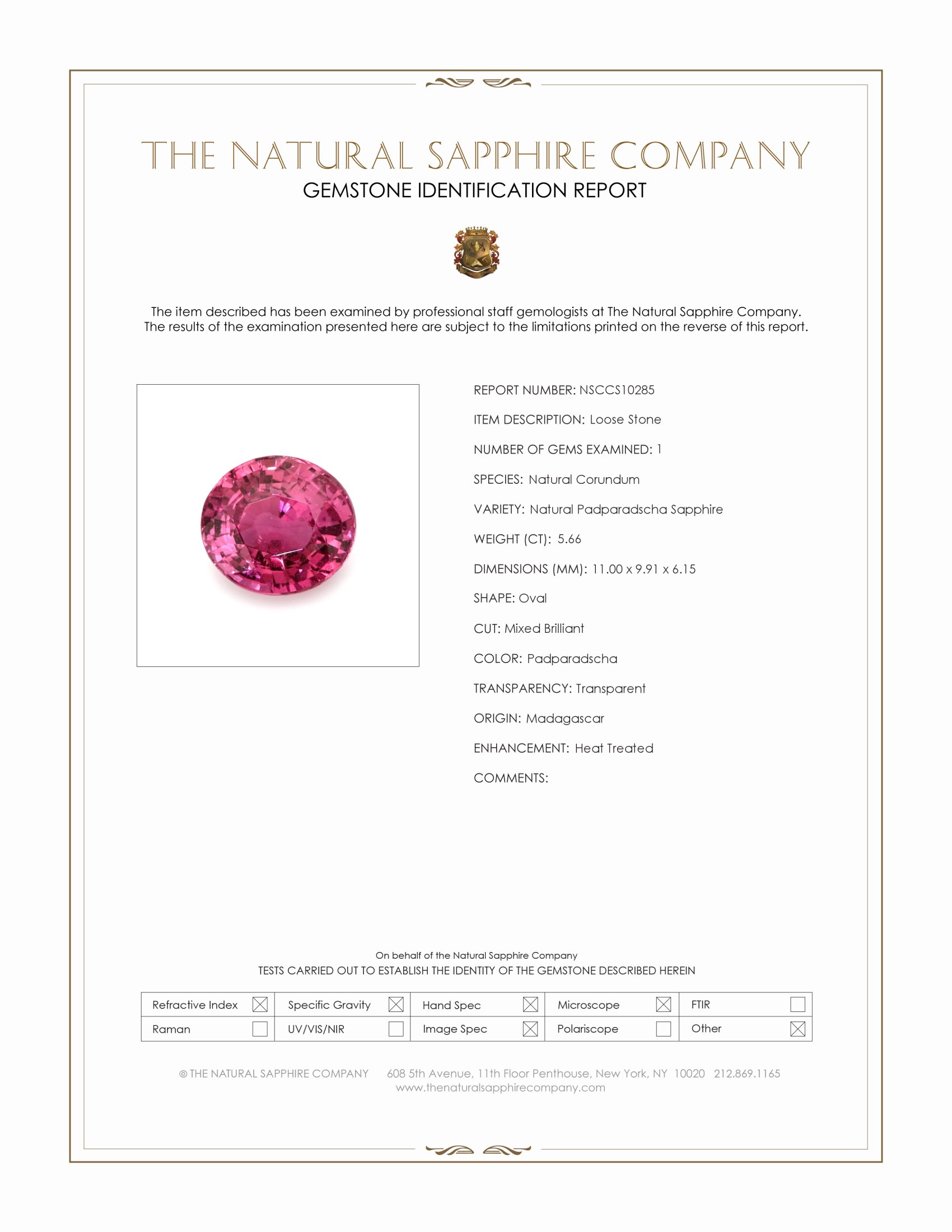
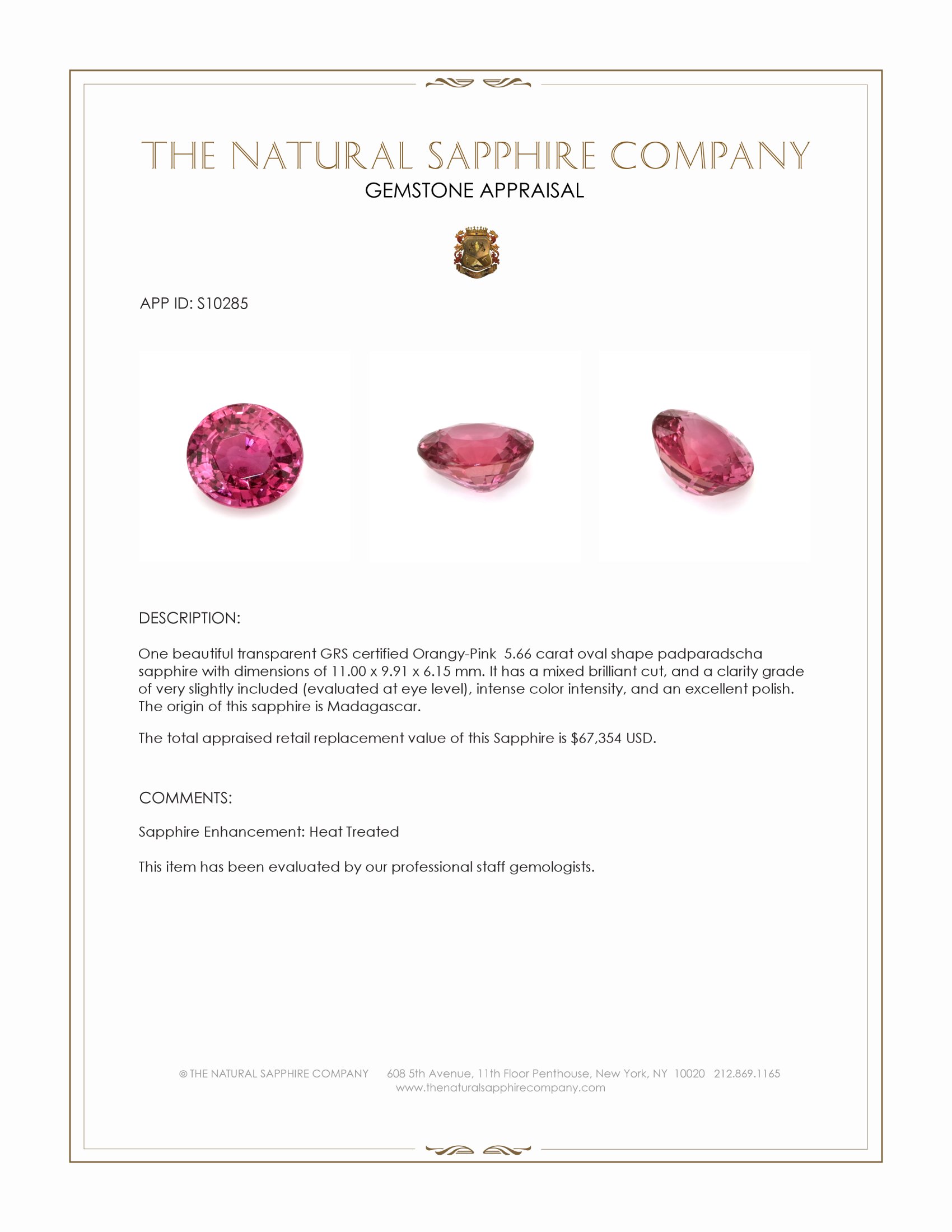
5.66 Ct. Padparadscha Sapphire from Madagascar
This loose stone is available to ship now
Item ID: | S10285 |
|---|---|
Dimensions (MM): help | Length: 11 Width: 9.91 Height: 6.15 |
Weight: | 5.66 Ct. |
Color: help | Padparadscha |
Color intensity: help | Intense |
Clarity: help | Very Slightly Included |
Shape: help | Oval |
Cut: | Mixed Brilliant Cut |
Cutting style: | Faceted |
Enhancements: help | Heat Treated |
Origin: help | Madagascar |
Per carat price: help | $11,900 |
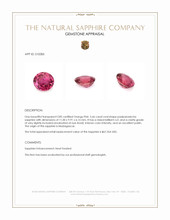
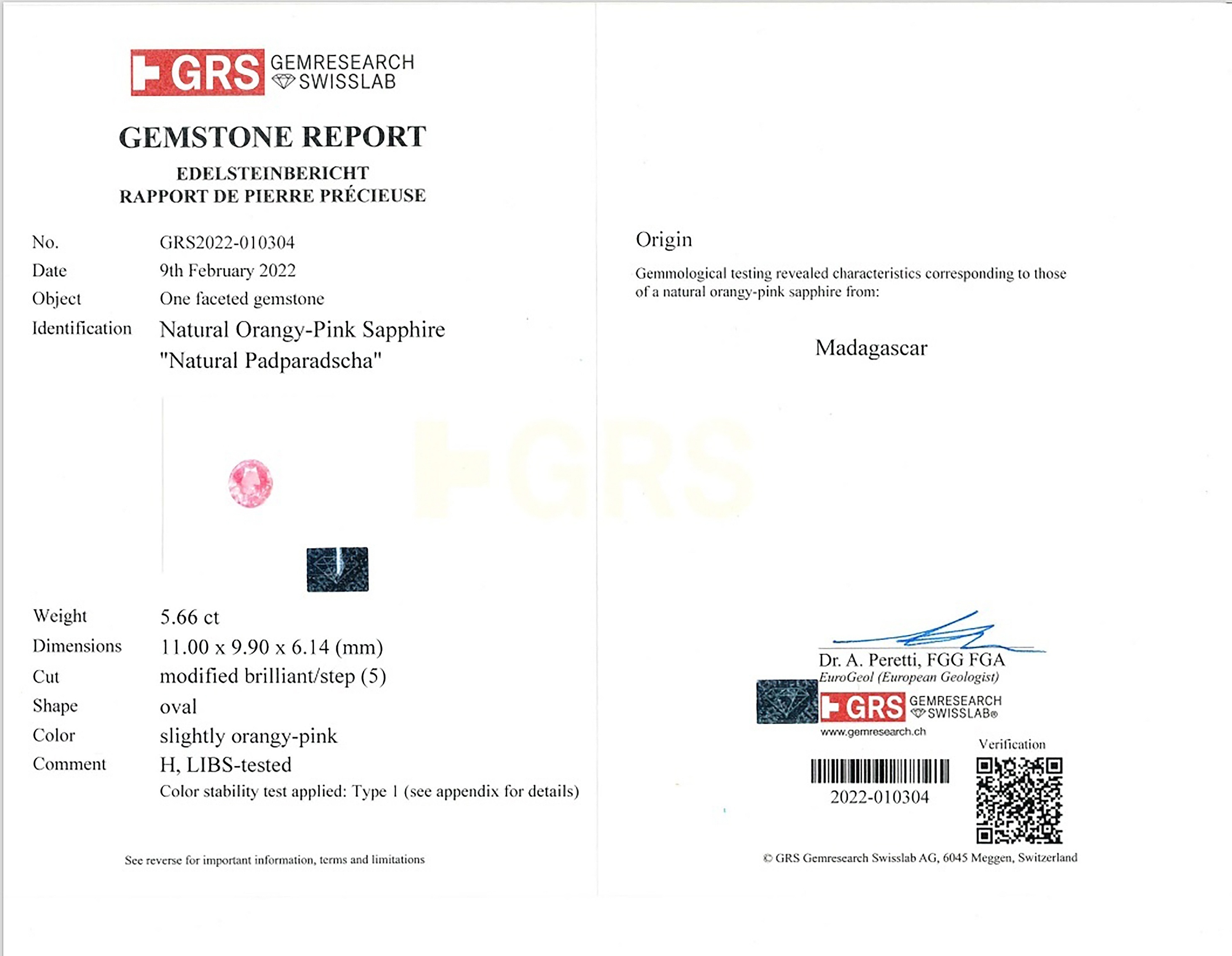
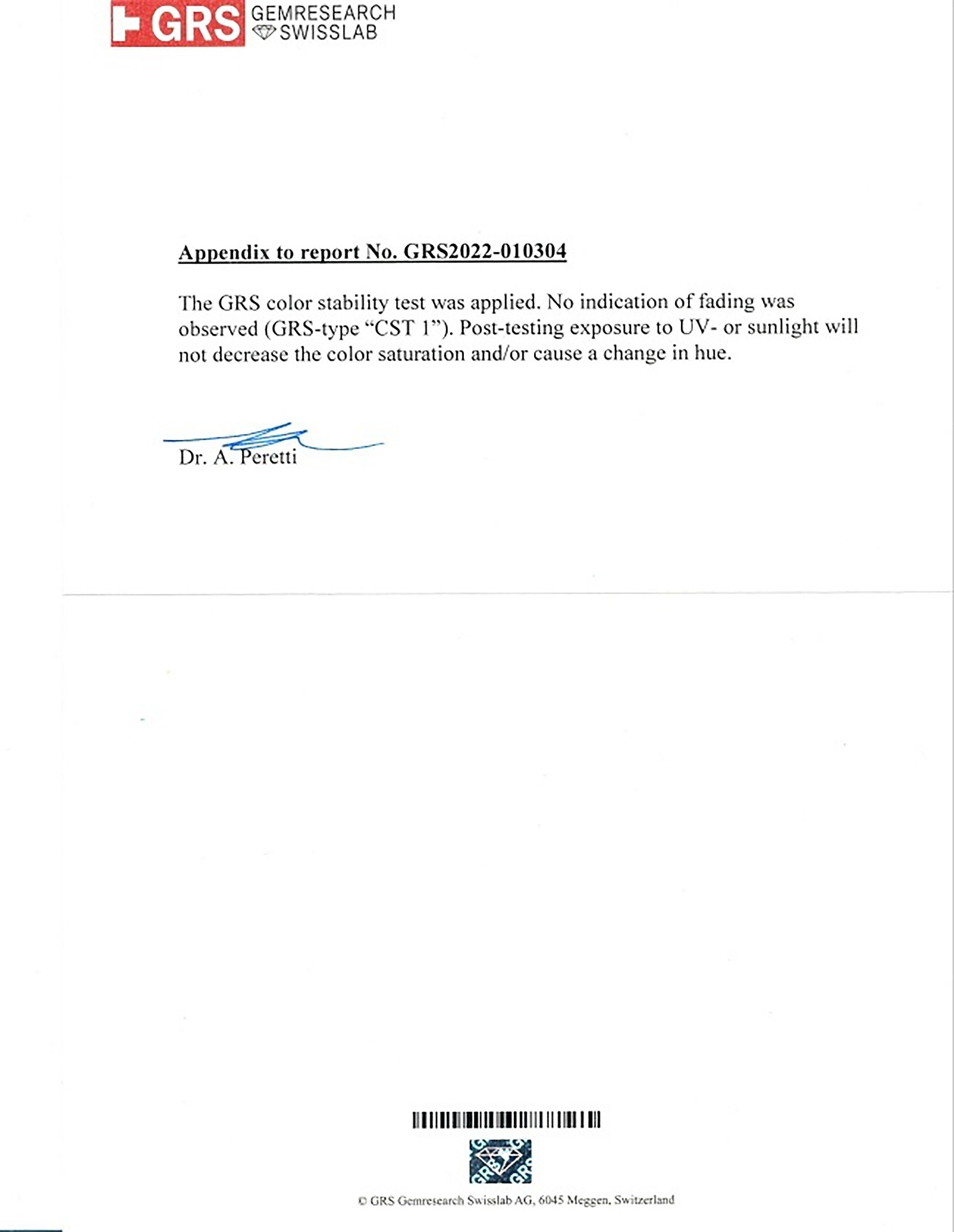
This GRS certified padparadscha sapphire weighs 5.66 carat, and it presents in an oval silhouette measuring 11.00 by 9.91 by 6.15 millimeters. The material is transparent, and the hue is best described as orangy pink with intense color saturation. The stone originates from Madagascar, and the report notes heat treatment as a standard enhancement to optimize the padparadscha range of tones. Clarity was evaluated as very slightly included at eye level, and the gem was graded with excellent polish. These objective parameters combine to produce a gem that reads as a classic padparadscha in color while offering the structural integrity and light performance expected from a well executed, natural sapphire. The Natural Sapphire Company offers this stone with full GRS documentation, which confirms the reported origin and enhancement status, and which provides the client with laboratory validated provenance and treatment disclosure.
The cutting style is faceted, executed as a mixed brilliant cut, and the cutter has balanced crown and pavilion facet systems to reconcile color distribution with brilliance. The oval outline gives the cutter the latitude to combine modified brilliant crown facets with step element facets near the girdle and lower pavilion. The stone measures a depth ratio of approximately 58.9 percent, a proportion that supports strong return of light without sacrificing the saturation of the orangy pink tone. The mixed brilliant approach places smaller star and bezel facets on the crown to fracture incoming light, while pavilion mains are arranged to provide controlled internal reflection and scintillation. Table size has been adjusted relative to the length and width to avoid washout of the padparadscha tone, and facet junctions show precise alignment and tight facet meet points, contributing to the excellent polish grade. This balance of proportion and faceting makes the gem appear lively in movement, while its intense color remains stable when the stone is viewed face up or at oblique angles.
The stone s internal features are particularly noteworthy as a signature characteristic, and they provide both diagnostic information and aesthetic nuance. Under magnification the sapphire exhibits a network of oriented needle type inclusions aligned along growth directions, consistent with fine rutile needles. These needles occur in discrete clusters and in sparse linear arrays, producing a subtle silky diffusion in localized areas, most notably near the girdle and lower pavilion. In addition to needles there are small negative crystals and minute crystal platelets that manifest as reflective pinpoints and tiny angular windows. A shallow healed fingerprint is present near the pavilion, its morphology indicating natural growth and subsequent internal healing rather than external fracture filling. The combination of oriented needles, negative crystals, and healed planar features yields a microstructure that scatters light in a way that enhances body color while avoiding opacity. These inclusions are stable through the disclosed heat treatment, they do not compromise durability, and they serve as a natural fingerprint that distinguishes this particular Madagascar padparadscha from synthetics or from material from other localities. At the eye level the stone is very slightly included, and to an unaided observer the gem reads as clean and vivid, while a trained loupe study reveals the inclusion network that collectors and gemmologists value as evidence of natural formation.
For the connoisseur considering this sapphire as an investment or as the centerpiece of fine jewelry, the gem s technical attributes merit careful consideration. The weight of 5.66 carat in an oval of these proportions offers significant presence without the deep profile that can mute color. The intense orangy pink hue, combined with the mixed brilliant faceting, ensures lively light return and a color that reads consistently under both daylight and artificial illumination. The excellent polish maximizes facet crispness and reduces light leakage, while the documented heat treatment is a standard, stable enhancement that enhances the padparadscha hue without introducing surface residues or unstable fills. The inclusion suite is diagnostically useful, and The Natural Sapphire Company provides the GRS report to document the natural origin and treatment. When setting this sapphire, mounted designs that expose the pavilion to light will increase scintillation, while closed bezel settings may intensify perceived color by reducing background light. For appraisal and insurance, the GRS certificate and the gem s measurements and grades supply the necessary technical detail. Routine care involves avoiding prolonged exposure to strong acids and abrasives, using warm soapy water and a soft brush for cleaning, and avoiding thermal shock even though the stone has been heat treated. This padparadscha sapphire represents a technically interesting specimen, combining measured proportions, a considered mixed brilliant cut, and a distinctive inclusion pattern that gives it an unmistakable signature within the market.


