
- Stone12
- Reports4
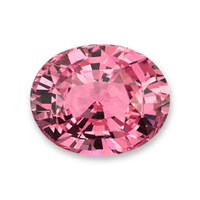
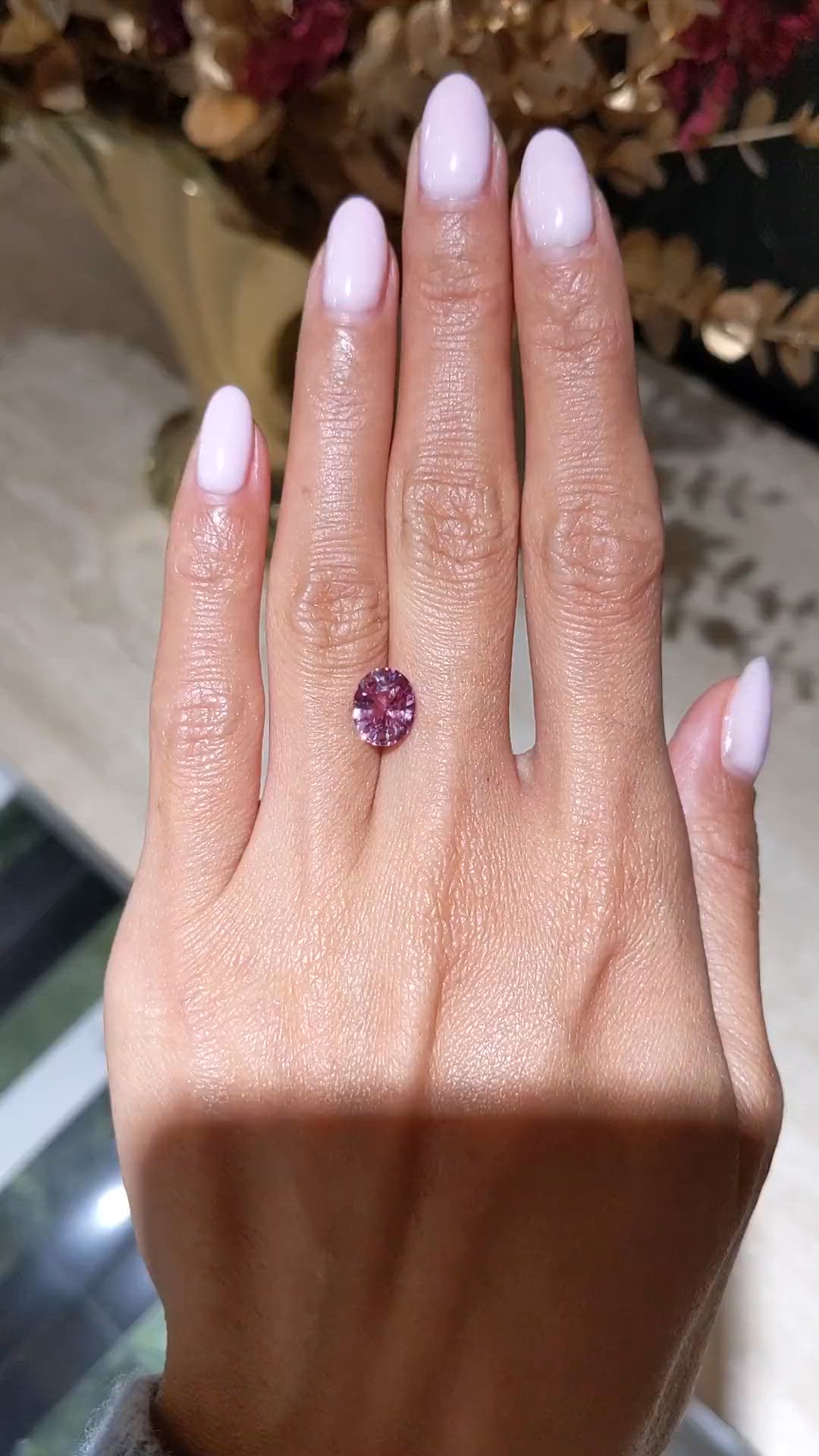
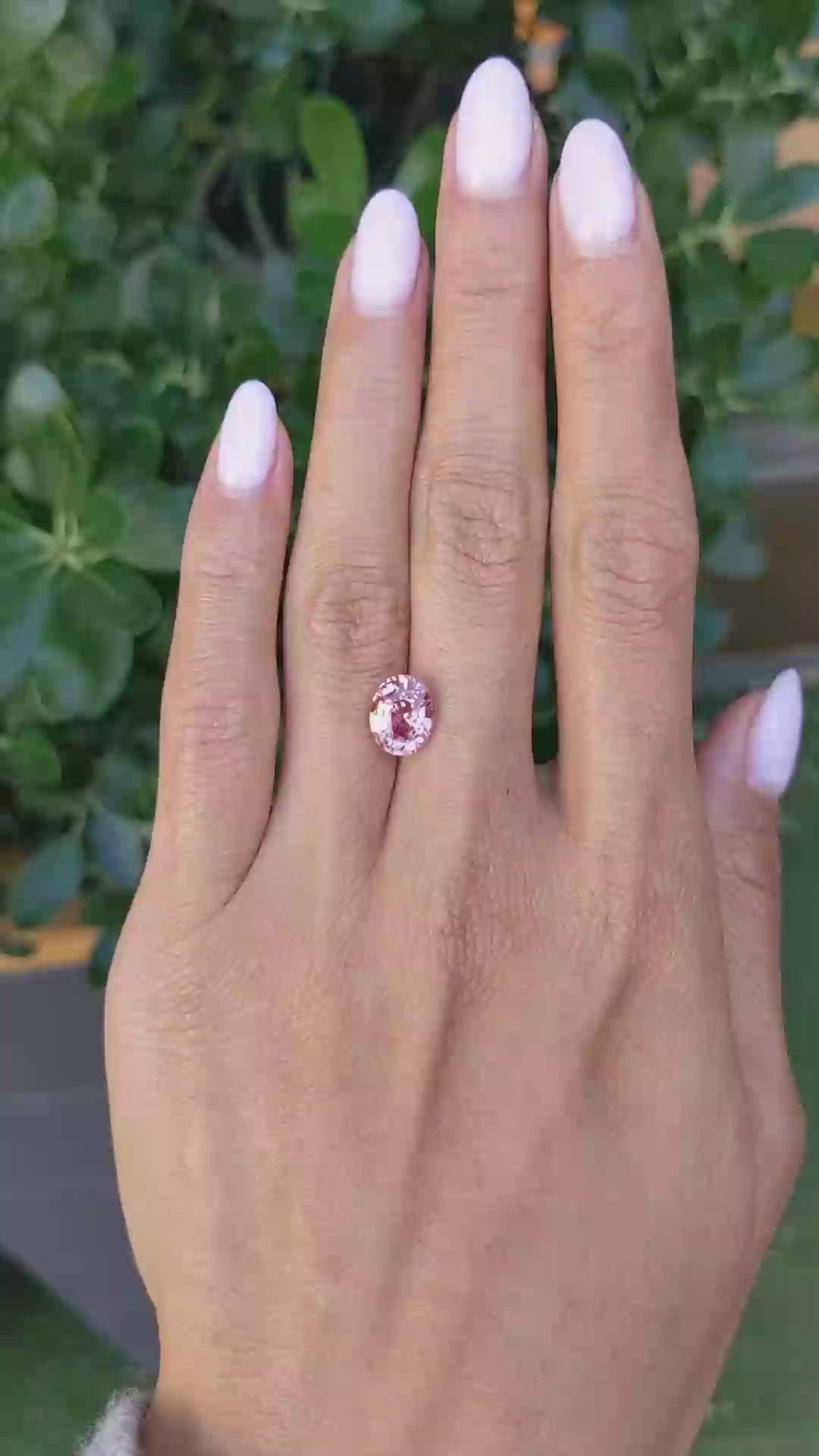
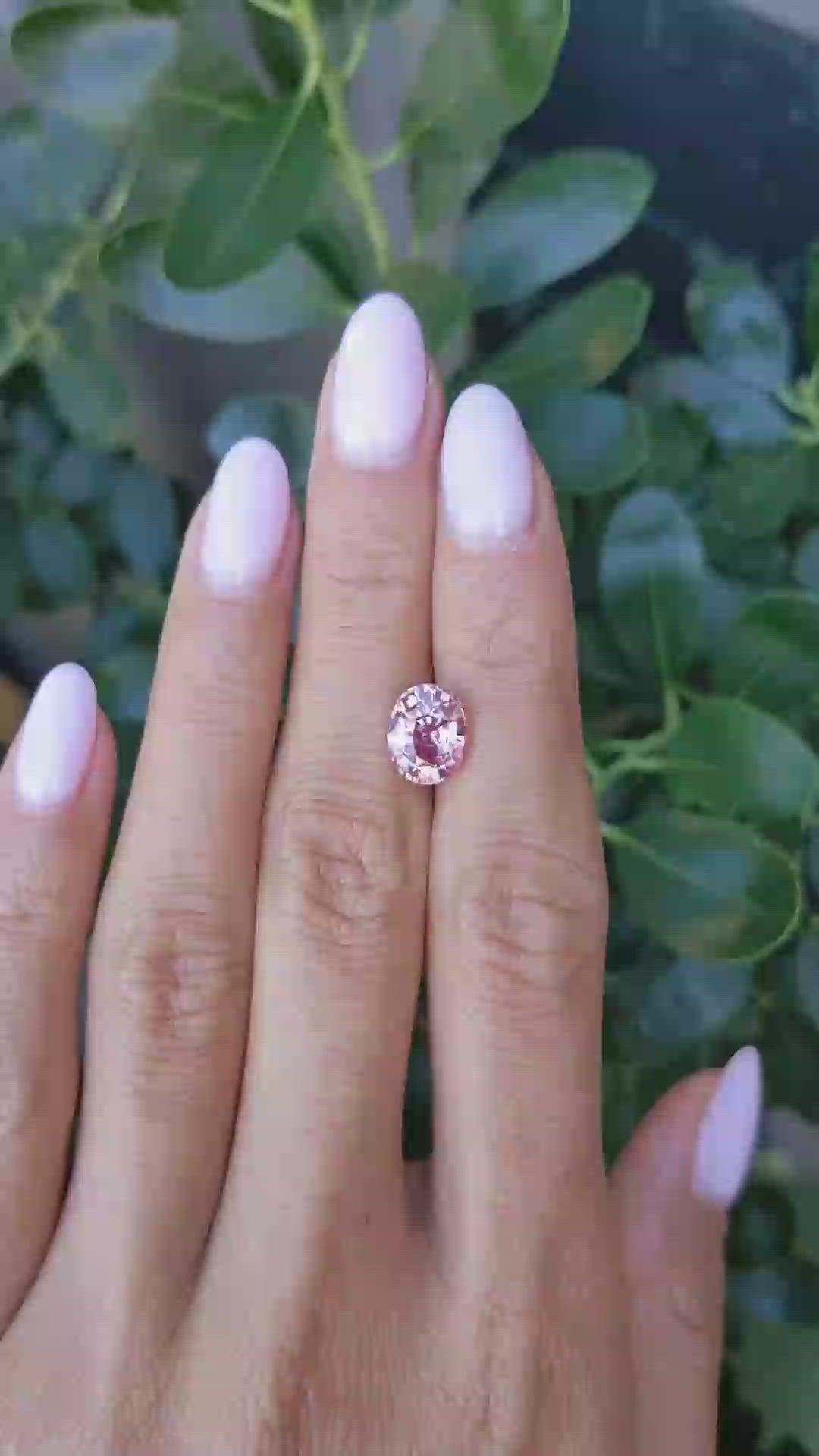
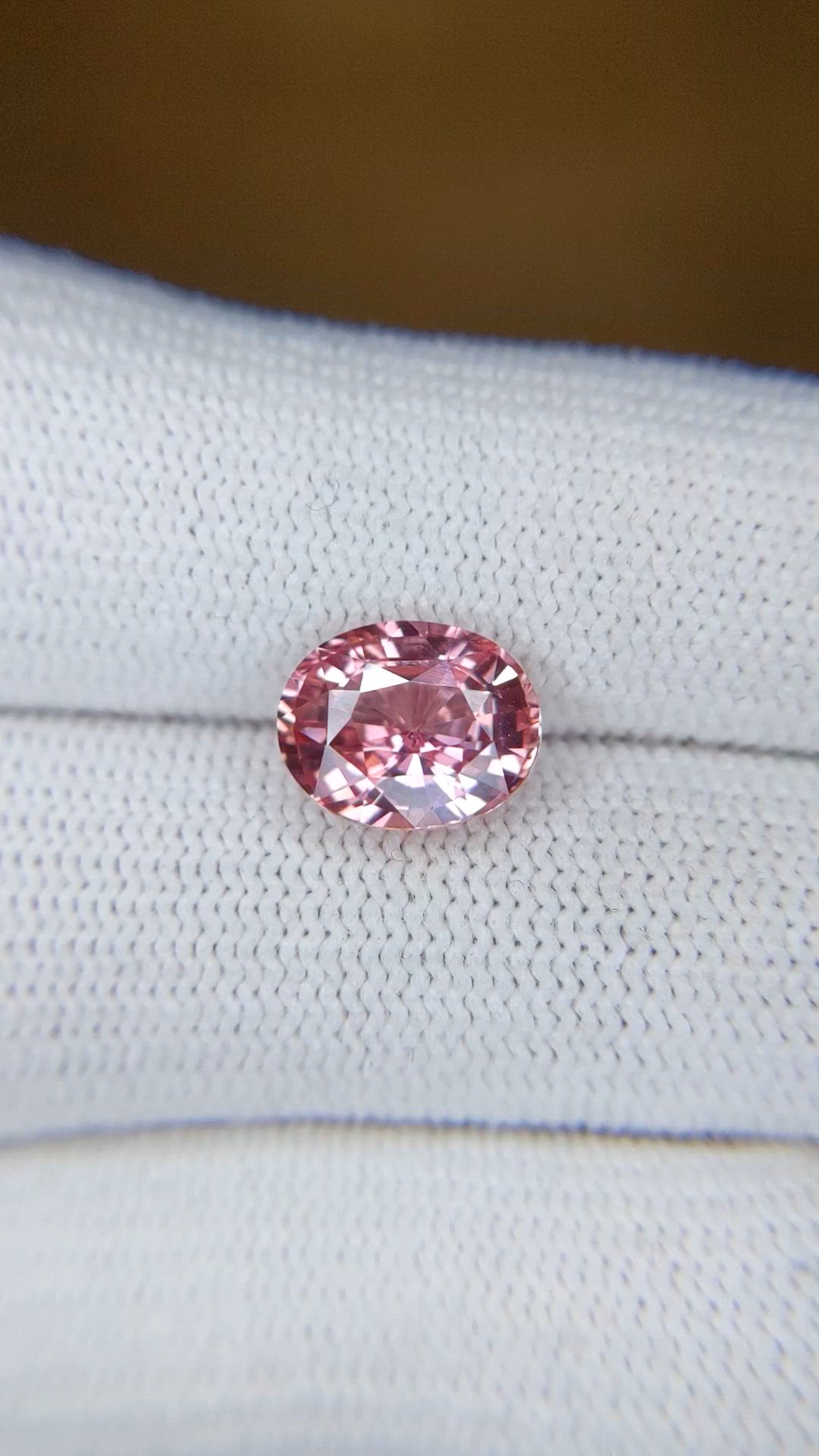
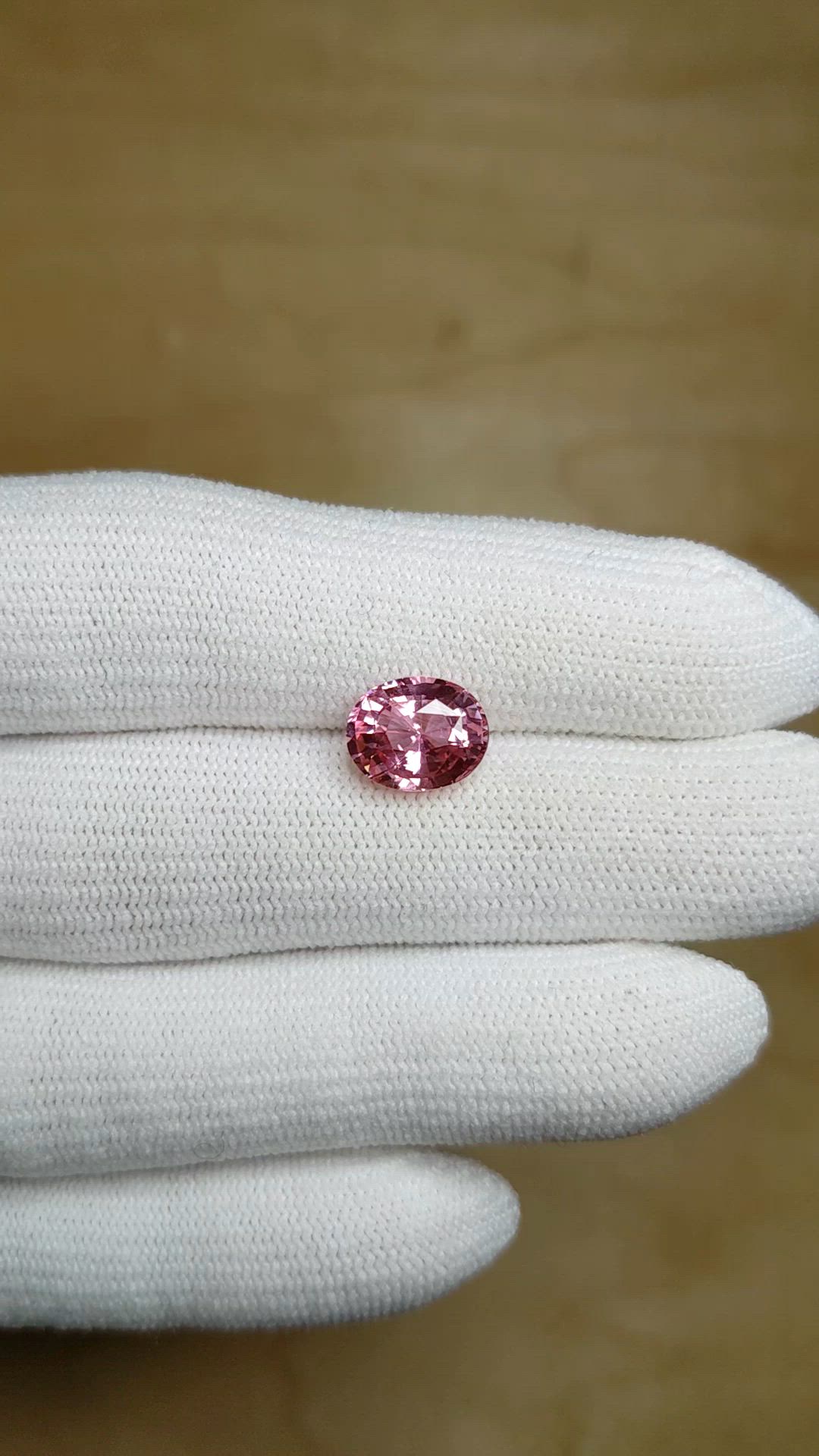


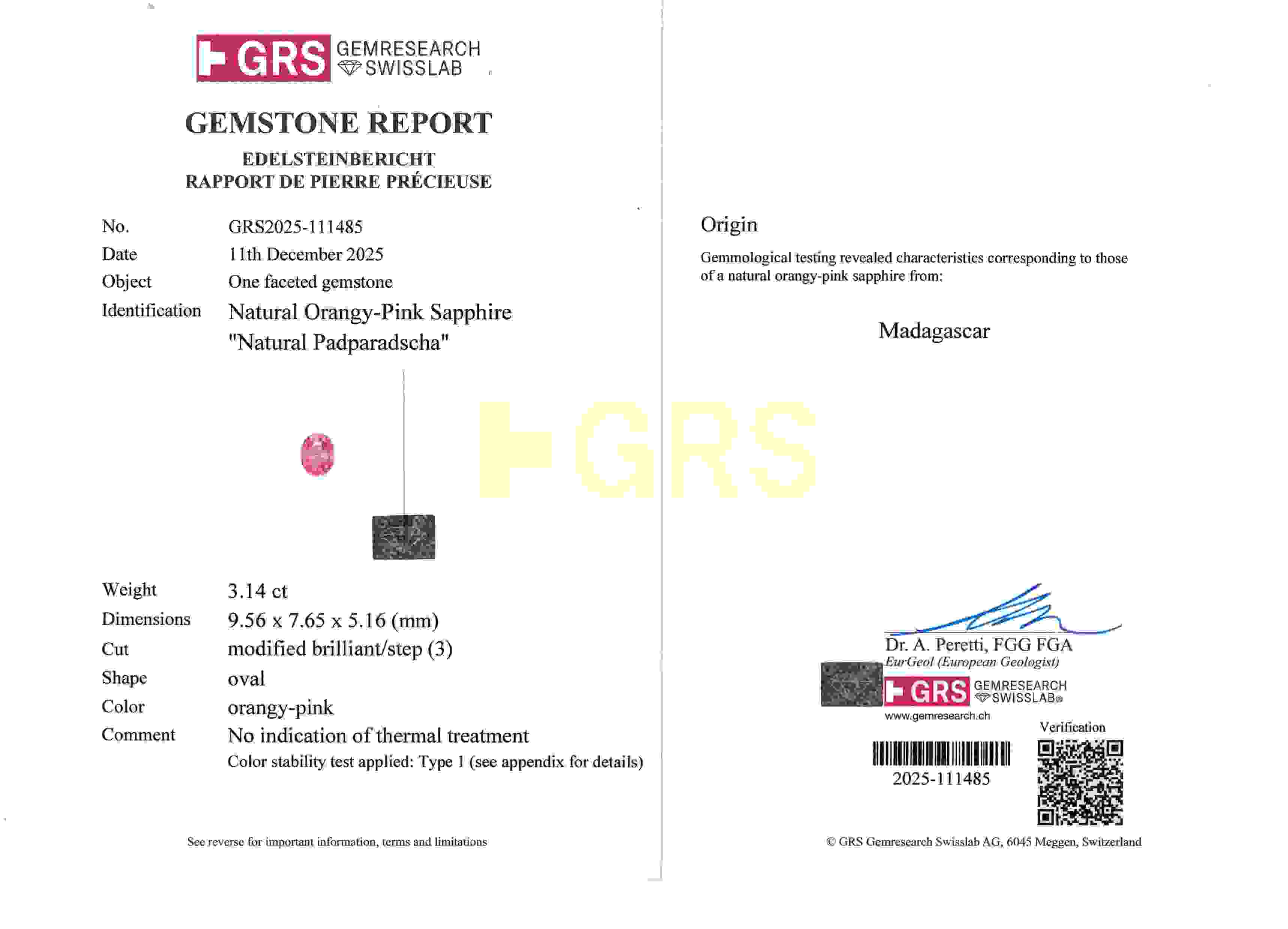
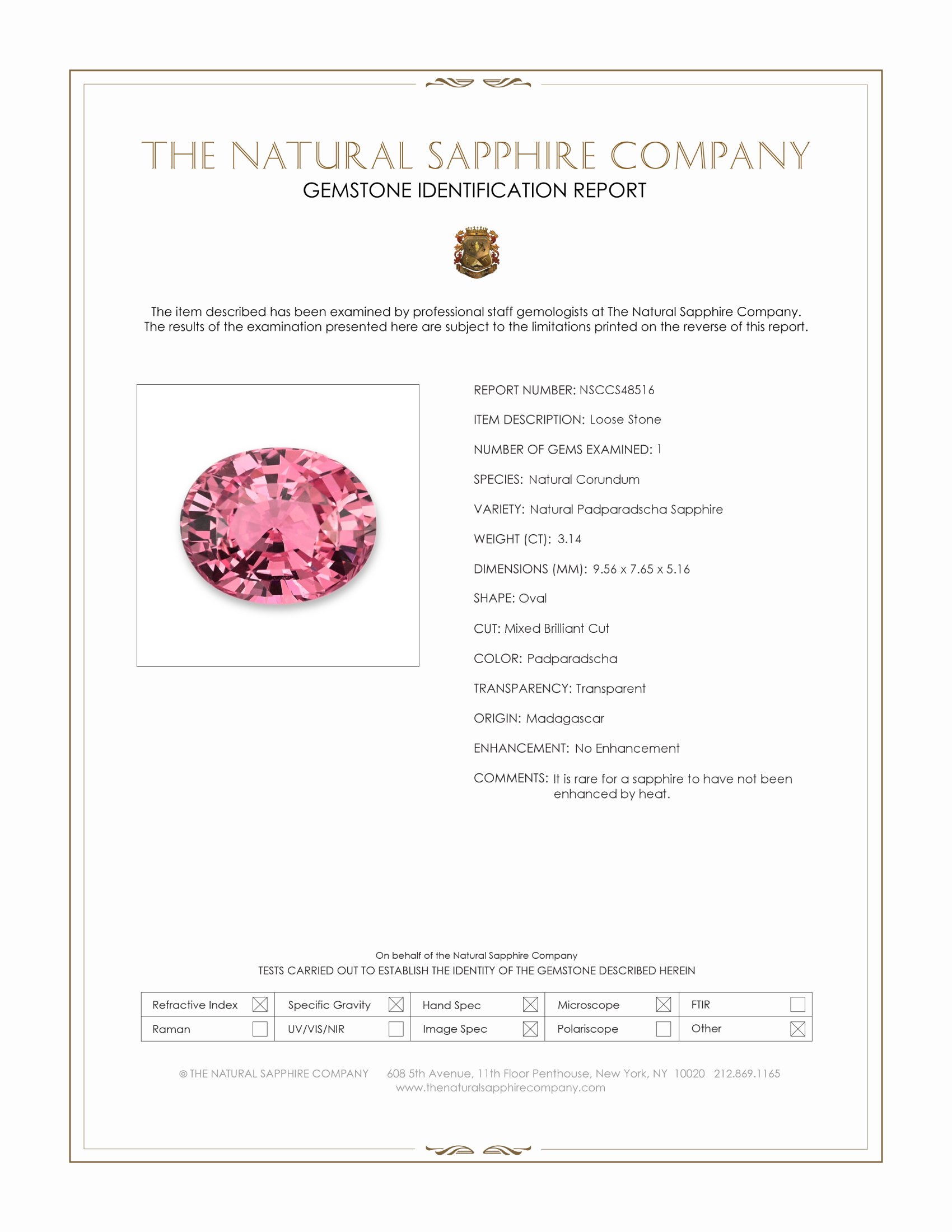
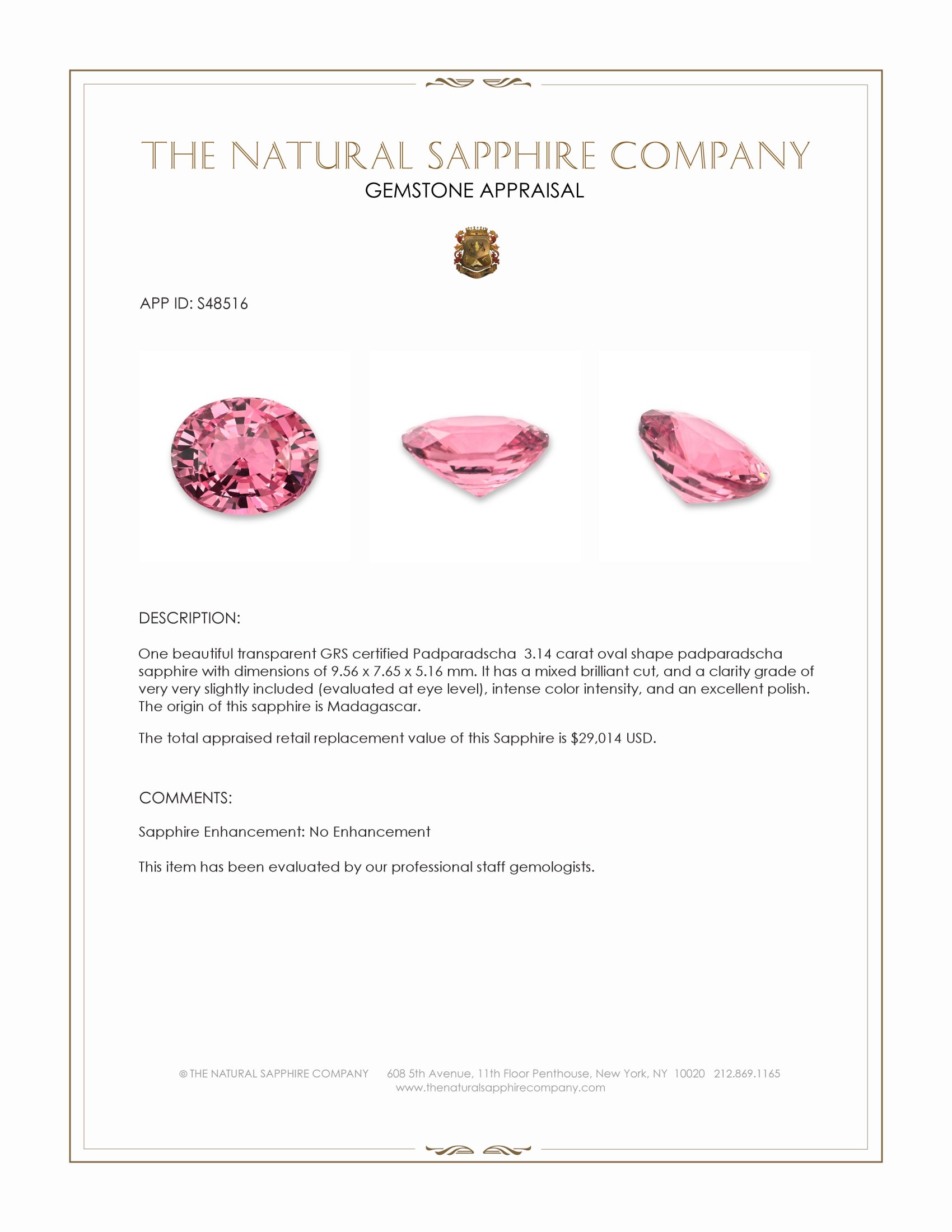
3.14 Ct. Padparadscha Sapphire from Madagascar
This loose stone is available to ship now
Item ID: | S48516 |
|---|---|
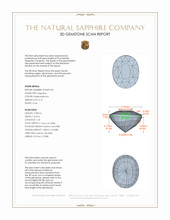
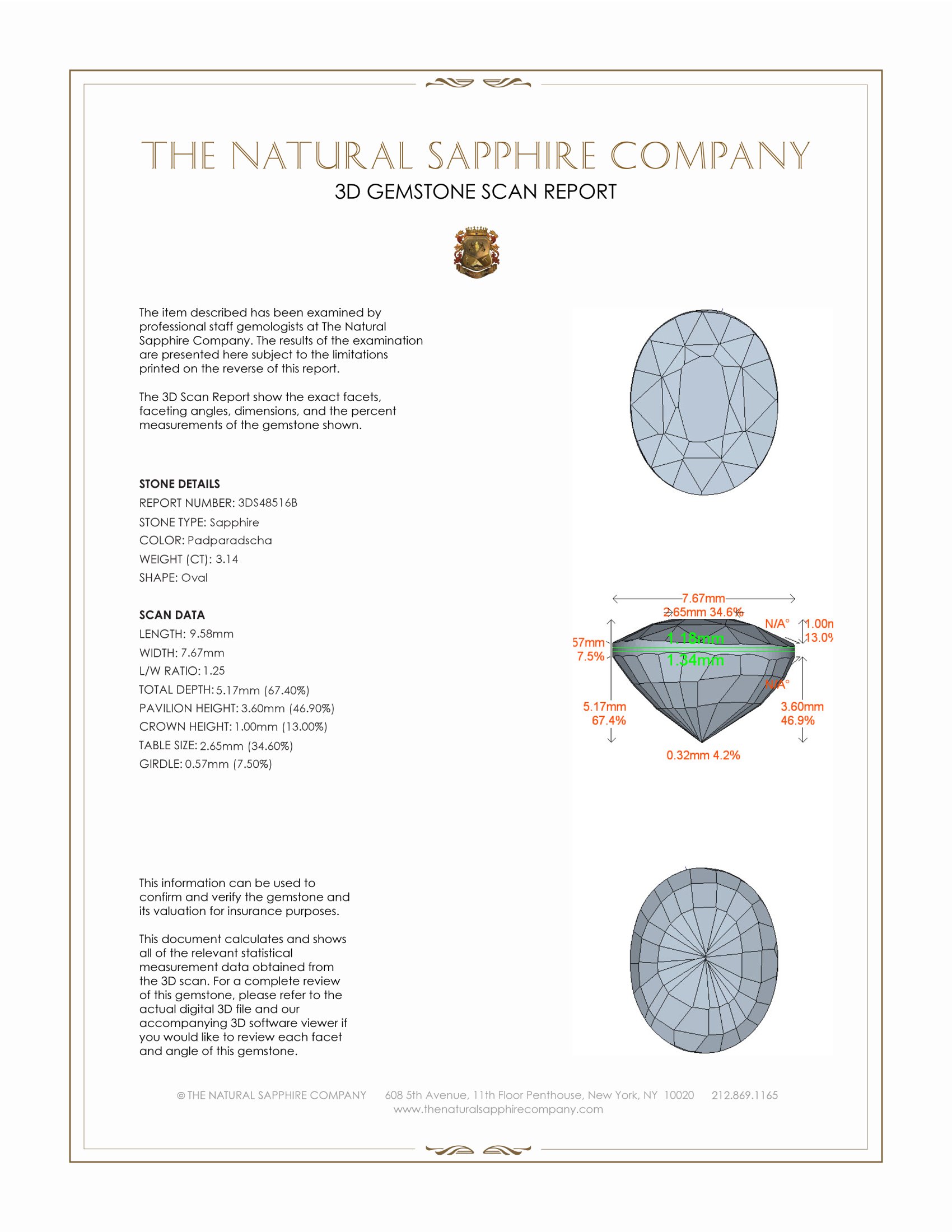
Dimensions (MM): help | Length: 9.56 Width: 7.65 Height: 5.16 |
Weight: | 3.14 Ct. |
Color: help | Padparadscha |
Color intensity: help | Intense |
Clarity: help | Very Very Slightly Included |
Shape: help | Oval |
Cut: | Mixed Brilliant Cut |
Cutting style: | Faceted |
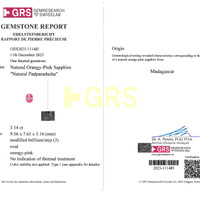
Enhancements: help | No Enhancement |
Origin: help | Madagascar |
Per carat price: help | $9,240 |
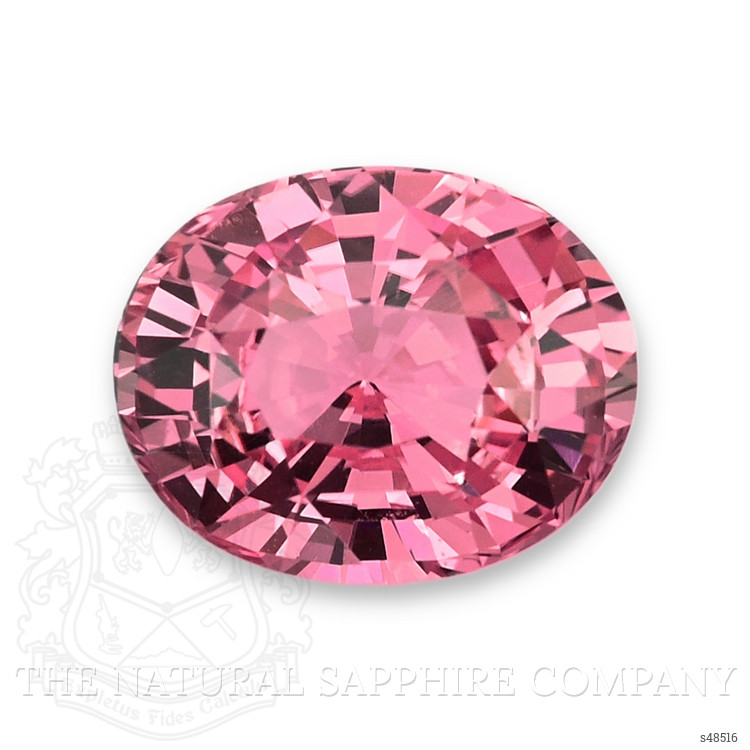
This padparadscha sapphire from Madagascar presented by The Natural Sapphire Company is a refined and rare example of this highly prized color variety, weighing 3.14 carats and cut into a classic oval shape with dimensions of 9.56 by 7.65 by 5.16 millimeters, faceted with a mixed brilliant cut to optimize light return, transparent and finished with an excellent polish, clarity evaluated at eye level as very very slightly included which renders the stone effectively eye clean to the unaided vision, and notable for an intense color intensity and the important attribute of no enhancement, which affirms that the color and clarity are wholly natural and untreated. The combination of carat weight, clean appearance, and expert cutting produces a gemstone that reads as both elegant and substantial when set, with the oval outline providing a flattering visual spread on the finger or in a pendant. For the educated buyer who values provenance and natural state, this Madagascar padparadscha delivers on all the prime criteria that drive collector interest, namely origin, untreated status, exemplary cutting and polish, and a compelling color that sits squarely within the coveted padparadscha field.
From a gemological perspective, the hue of this sapphire falls within the pink to orange spectrum that defines padparadscha, with a distinct leaning toward a warm pink salmon, balanced by a subtle orange undertone that gives the stone its characteristic sunset quality. The term padparadscha is reserved for sapphires that exhibit this unique blend of pink and orange hues rather than pure pink or pure orange, and achieving that balance while maintaining intense saturation is uncommon, which enhances the gemological and market value. The tone of this example is medium to medium strong, allowing the color to read vividly without appearing dark or muted, and the intensity is labeled as intense which in practical terms means strong saturation across the table and crown facets, creating lively color under a range of lighting conditions. Very very slightly included clarity at eye level indicates that inclusions are minimal and do not interfere with the transmission of light, so the mixed brilliant cut can maximize sparkle and fire, creating excellent scintillation and color dispersion that appeal to both connoisseurs and design oriented buyers.
When comparing hue and tone to padparadscha and other sapphires from famous localities, clear distinctions emerge that are useful for comparative valuation and aesthetic selection. Sri Lanka, the classic home of padparadscha, produces stones that often exhibit a warmer, more orange leaning salmon hue, with a silkier tone that can read as softer and more pastel in some pieces, especially in larger stones that are highly sought after by traditional collectors. Madagascar stones like this one frequently show a slightly brighter pink emphasis while retaining the essential orange component, resulting in a fresher, more vivacious appearance that can be particularly appealing in contemporary jewelry design. Tanzanian padparadscha from the Umba valley can swing either way but often displays a more pronounced orange overtone, sometimes approaching true orange sapphire territory, which makes Madagascar examples notable for their clarity and pink sensibility in comparison. For contrast with other famous sapphire locales outside the padparadscha category, Kashmir sapphires are renowned for a velvety cornflower blue with a soft tone and exceptional silk that is wholly different from any pink orange interplay, while classic Ceylon blues offer lively, light tones that are brighter and cooler in hue, and Burmese rubies manifest as saturated red which is a different portion of the color spectrum altogether.
Comparing this padparadscha affectionately to other pink gemstones clarifies its unique market position for the informed buyer. Pink spinel, particularly from Myanmar, can produce vivid pure pinks that command high prices, however spinel typically lacks the orange nuance that defines padparadscha and displays different optical properties with a lower refractive index which affects brilliance and face up brightness. Rubellite tourmaline from Mozambique or Brazil offers strong pink to reddish pink hues, but tourmaline tends to be dichroic and can show color zoning, whereas a well cut padparadscha sapphire like this offers consistent tone and excellent durability for everyday wear, given sapphire hardness. Padparadscha is prized precisely because it occupies a narrow and memorable portion of the color spectrum, where pink meets orange in balanced harmony, and this Madagascar specimen demonstrates that balance with an intense color that will read as pink salmon in most lighting but with that critical orange warmth when viewed at oblique angles, a feature that distinguishes genuine padparadscha from mere pink sapphires or orangy sapphires.
From the perspective of investment, jewelry design and responsible collecting, this untreated Madagascar padparadscha offers several compelling attributes that justify focused consideration. Its natural, unenhanced state is materially important to value conscious buyers because treatment history can substantially affect market pricing and long term desirability, and gemstones with eye clean clarity and intense color command premium value in the secondary market as well as in bespoke jewelry. The mixed brilliant cut and excellent polish mean the stone will perform exceptionally when set in light capturing settings such as open prongs or halo mounts, and the oval proportions lend themselves to both classic and modern design languages, creating visual elongation on the finger and a strong color presence in pendants. For due diligence, clients who are considering this gem are encouraged to request a detailed report from a respected gemological laboratory, and The Natural Sapphire Company can assist in arranging independent certification, appraisal and custom setting services. Care for the stone is straightforward given sapphire durability, using gentle soap, warm water and a soft brush for cleaning, and avoiding harsh chemicals during routine wear will preserve the polish and brilliance for generations, making this Madagascar padparadscha a gemstone that is both beautiful to behold and robust enough for lifelong enjoyment.


