
- Stone11
- Reports3
-pear-padparadscha-sapphire-1.6700-cts-s48478-1.jpg?d=200x200&v=20260911114747)
-pear-padparadscha-sapphire-1.6700-cts-s48478-lifestyleimage-1.jpg?d=200x200&v=20260916060540)
-pear-padparadscha-sapphire-1.6700-cts-s48478-lifestyleimage-2.jpg?d=200x200&v=20260916060540)

-pear-padparadscha-sapphire-1.6700-cts-s48478-1.jpg?d=750x750&s=nsc&v=20260911114747)
-pear-padparadscha-sapphire-1.6700-cts-s48478-lifestyleimage-1.jpg?d=750x750&s=nsc&v=20260916060540)
-pear-padparadscha-sapphire-1.6700-cts-s48478-lifestyleimage-2.jpg?d=750x750&s=nsc&v=20260916060540)


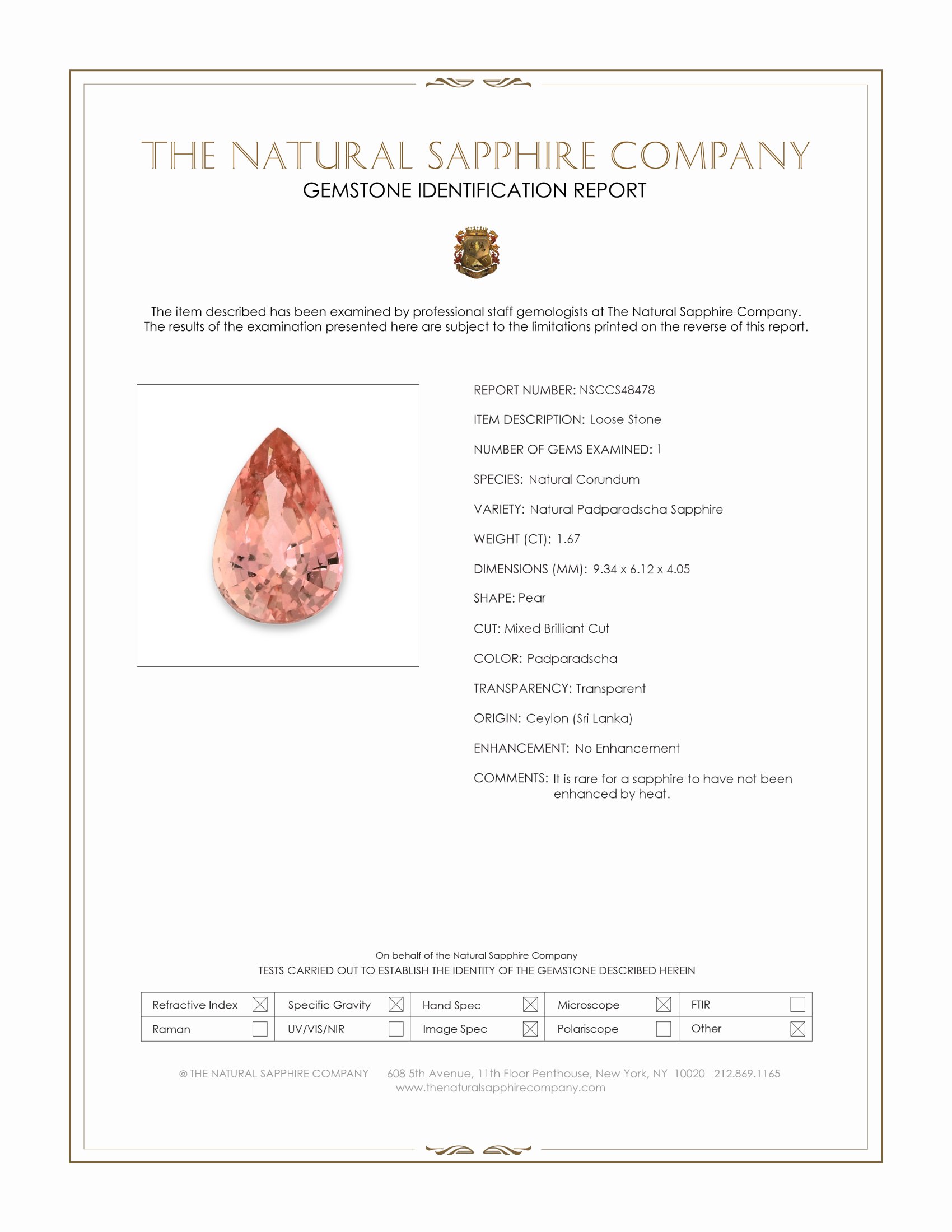
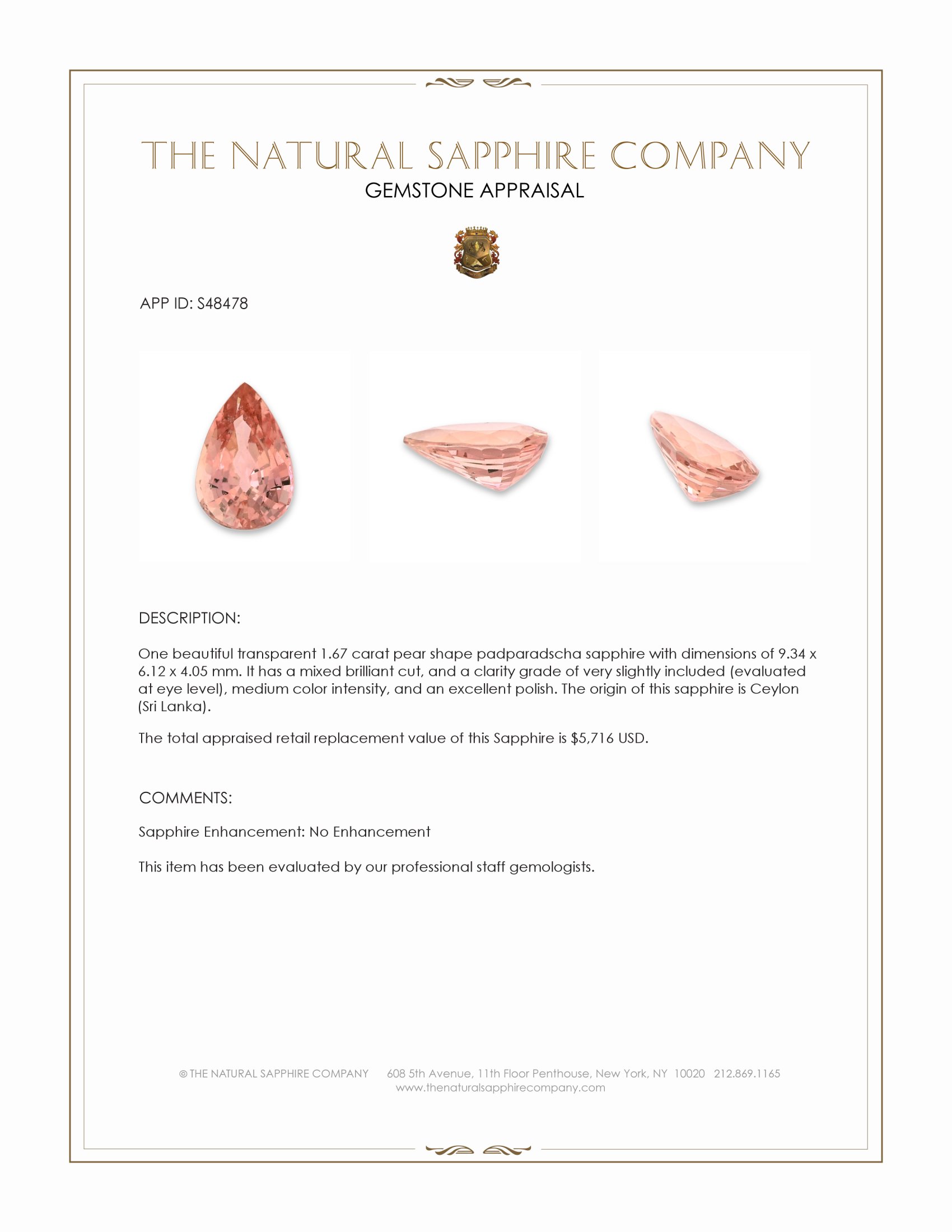
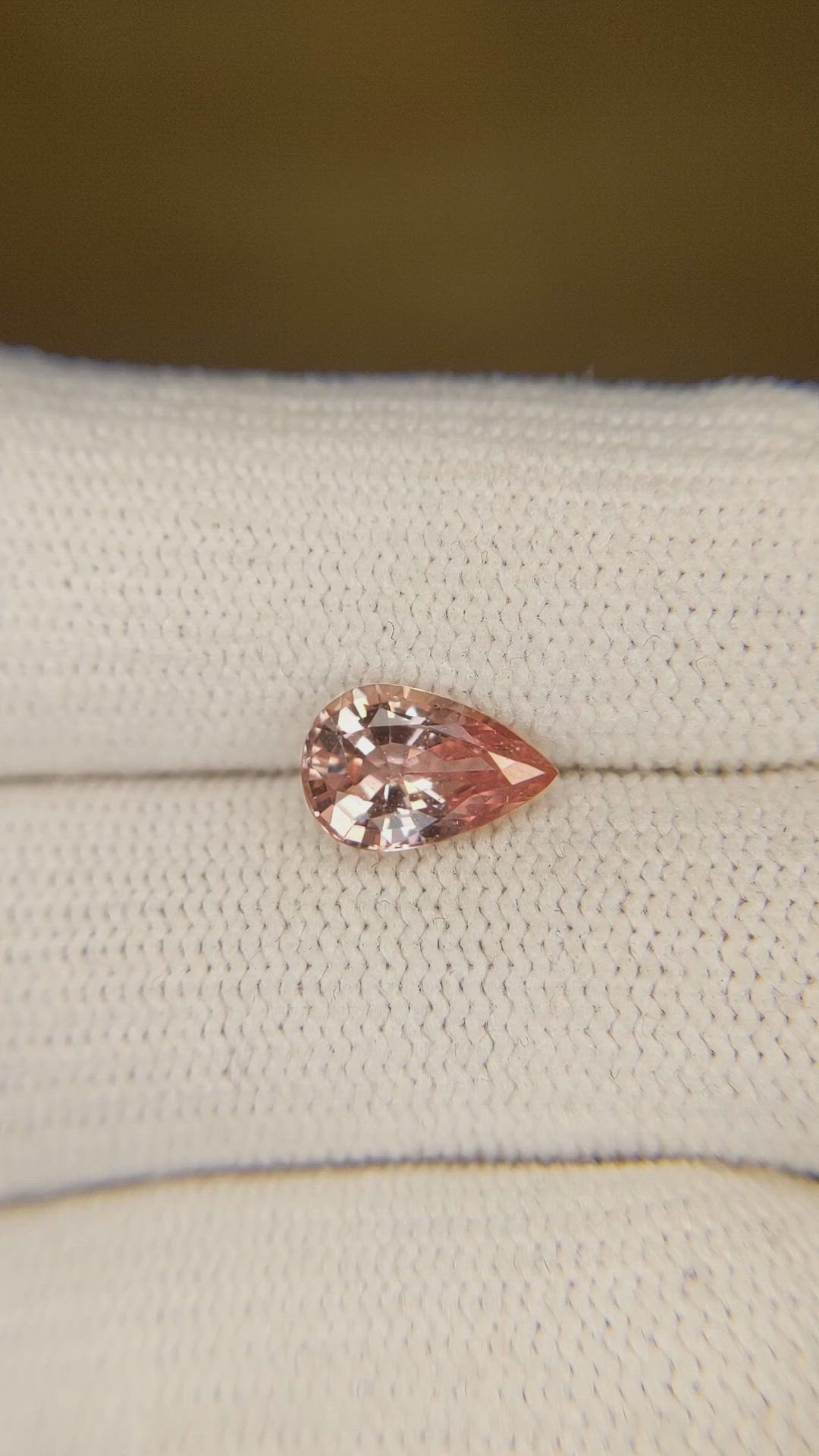
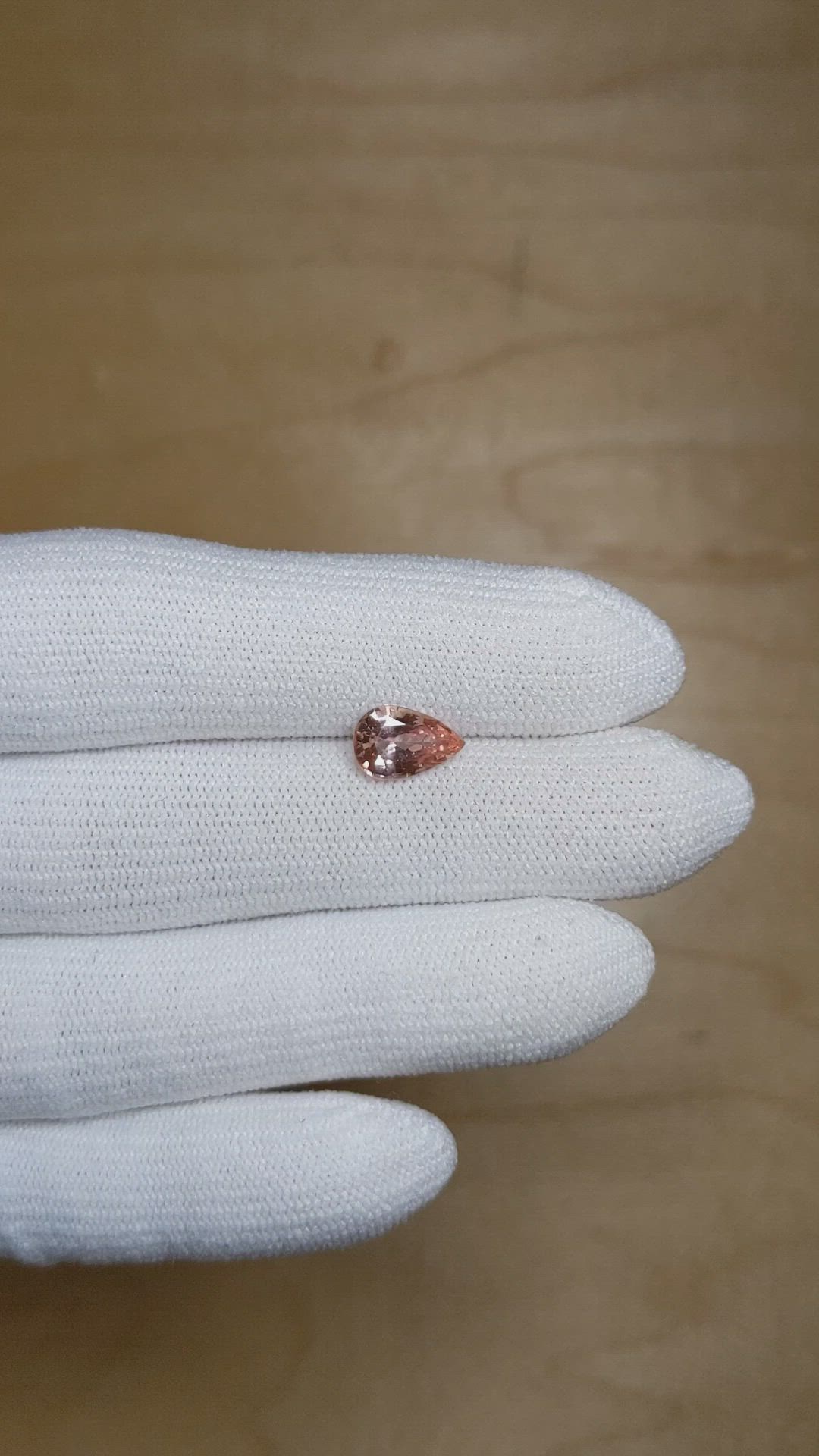
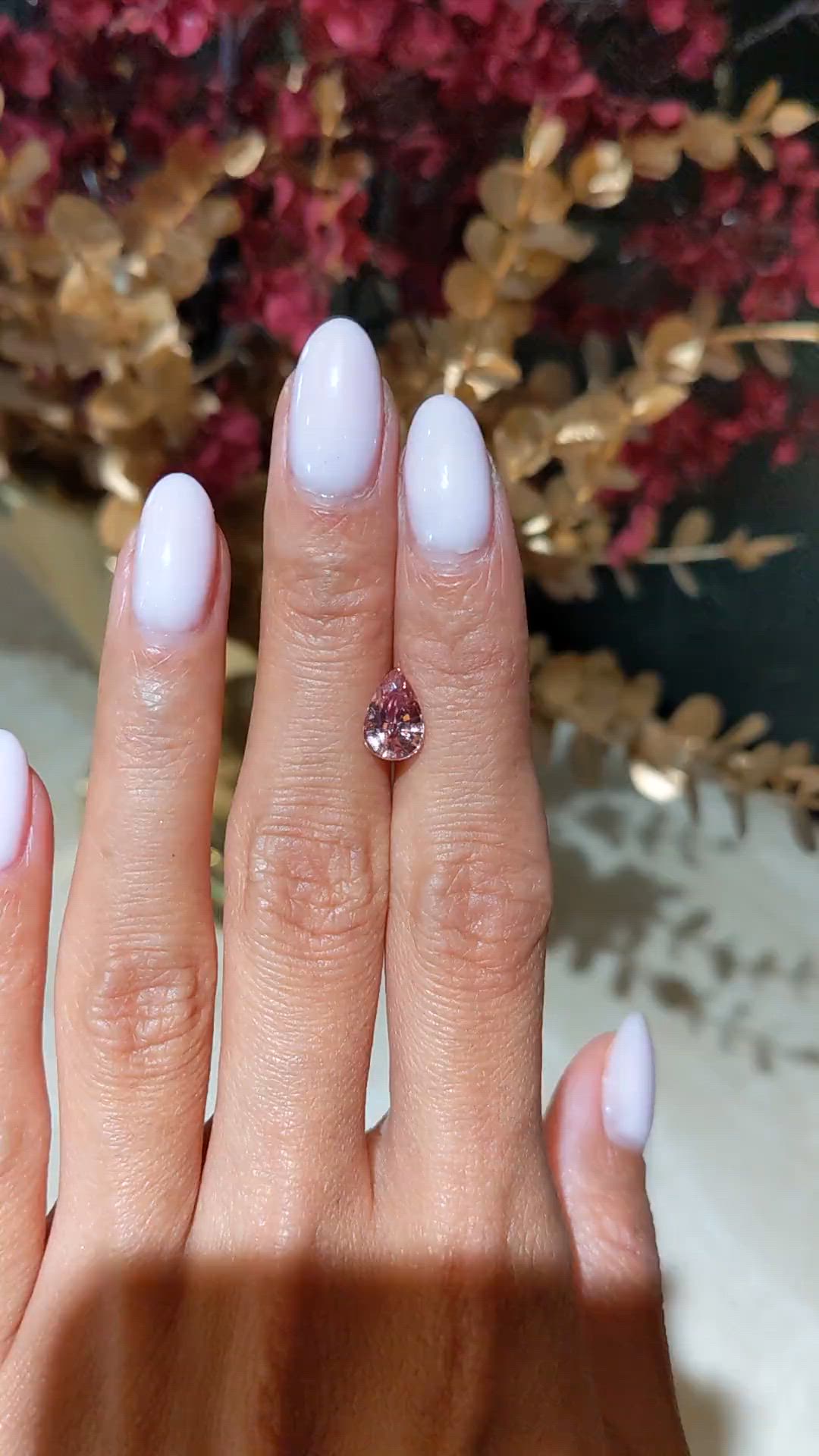
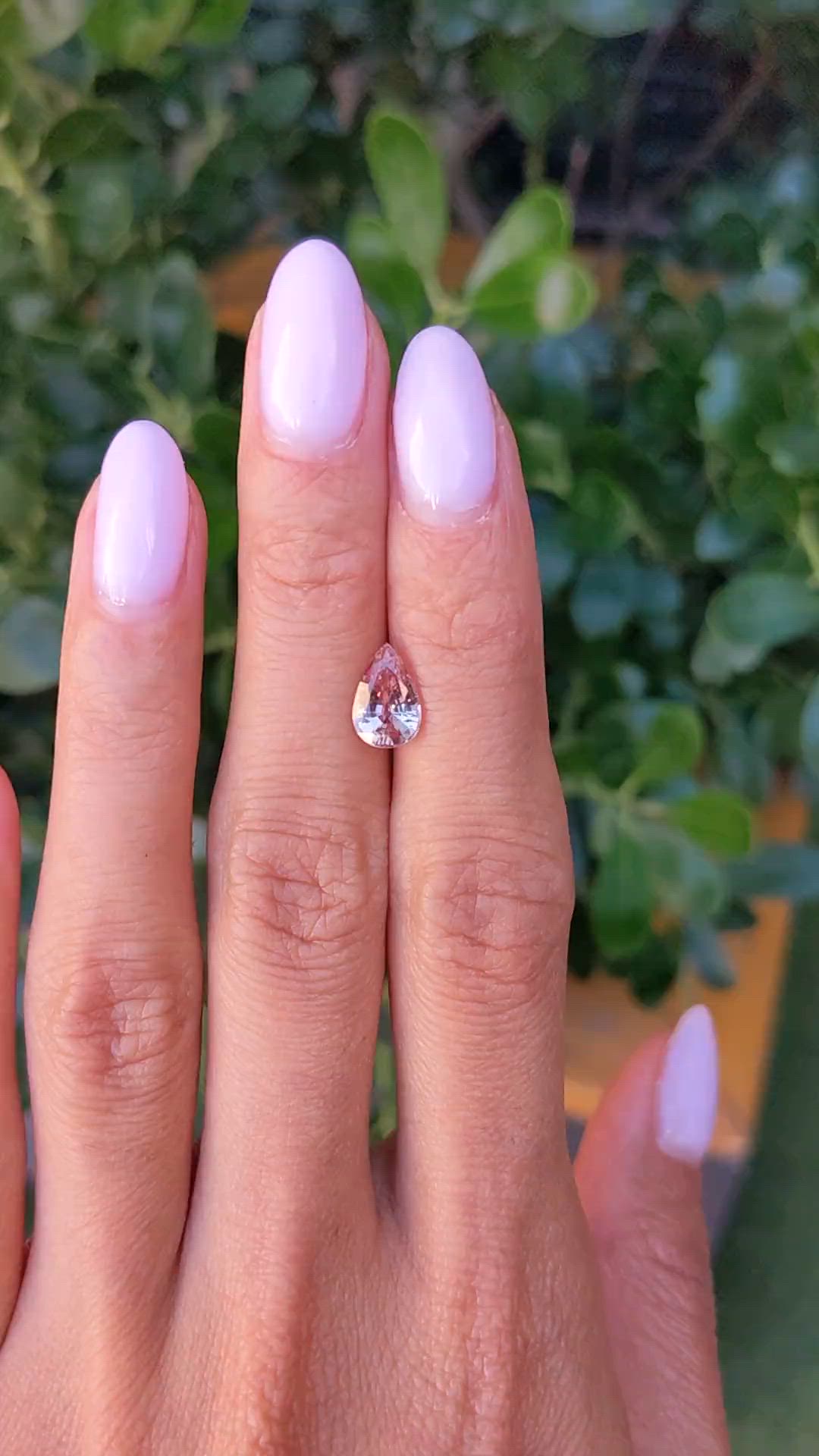
1.67 Ct. Padparadscha Sapphire from Ceylon (Sri Lanka)
This loose stone is available to ship now
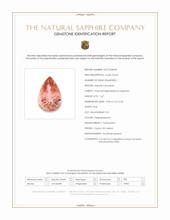
Item ID: | S48478 |
|---|---|
Dimensions (MM): help | Length: 9.34 Width: 6.12 Height: 4.05 |
Weight: | 1.67 Ct. |
Color: help | Padparadscha |
Color intensity: help | Medium |
Clarity: help | Very Slightly Included |
Shape: help | Pear |
Cut: | Mixed Brilliant Cut |
Cutting style: | Faceted |
Enhancements: help | No Enhancement |
Origin: help | Ceylon (Sri Lanka) |
Per carat price: help | $3,423 |
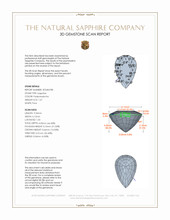
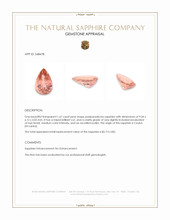
This padparadscha sapphire is a technically precise example of natural Ceylon material, weighing 1.67 carat, stabilized in a pear shape with dimensions 9.34 by 6.12 by 4.05 mm, faceted with a mixed brilliant cut, clarity grade very slightly included evaluated at eye level, medium color intensity, and excellent polish, enhancement no enhancement. The mixed brilliant style combines a brilliant facet pattern on the crown with a more step oriented pavilion arrangement, allowing interplay between intense light return and controlled color dispersion. The pavilion depth relative to the average diameter is approximately 52.4 percent, a proportion that supports strong scintillation while preserving the padparadscha hue rather than deepening it to orange or diluting it toward pink. Origin is Ceylon Sri Lanka, a provenance that is consistent with the delicate lotus to salmon tone and the natural zoning that creates visual complexity under directional lighting.
From a cutting and finishing perspective this gem demonstrates deliberate trade offs between brilliance and color saturation. The table and crown facets follow a mixed brilliant schema, with crown facet angles calculated to disperse light across the pink orange spectrum typical of padparadscha stones, while the pavilion is faceted to return light efficiently to the viewer and to moderate the bow tie effect common in elongated pear shapes. The girdle appears proportioned to permit secure setting without excessive material removal, and the excellent polish enhances facet junction definition, minimizing light leakage at facet edges. Clarity features are minor, very slightly included at eye level, and they act as fingerprint characteristics that confirm natural formation, rather than detracting from overall transparency and light performance. The absence of enhancement preserves the original lattice chemistry and the natural interplay of chromium iron and titanium within the corundum matrix.
When compared to lab grown padparadscha simulants or synthetic sapphires, several technical advantages favor this natural stone. Natural growth produces complex, non uniform trace element distributions and growth zoning that manifest as subtle pleochroism and color flash, features difficult to replicate in controlled hydrothermal or flux synthesis. Natural inclusions and growth features serve as a microscopic record of the gem environment, and they provide diagnostic markers for gemmologists and long term collectors. Unenhanced natural sapphires from established origins such as Ceylon carry provenance based attributes, chemical fingerprints, and optical habits that are stable under routine wear and standard jewelry maintenance. Lab grown sapphires can offer uniform color and clarity at lower cost, however they lack the same geological rarity and often present a homogeneity that is detectable under magnification and spectroscopy. For buyers who prioritize long term value retention and the singular character derived from natural formation, an unenhanced Ceylon padparadscha like this offers both aesthetic and investment oriented advantages.
Selecting this pear shape padparadscha for a bespoke setting requires attention to symmetry, point orientation, and seat depth to maximize optical performance. A setting that protects the pointed end while allowing light to enter the crown will preserve brilliance and prevent stress concentration at the tip. Consideration for orientation of the stone in the mounting can emphasize the pinker side or the slightly orange side of the tone, depending on design intent, because medium color intensity stones are responsive to subtle changes in light direction and surrounding metal color. The Natural Sapphire Company documents origin and enhancement status for each stone, and our lapidary partners calibrate facet arrays to present natural color without resorting to post cutting treatments. For connoisseurs and technical buyers who value provenance, measurable proportions, and authentic geological character, this 1.67 carat pear padparadscha from Ceylon represents a carefully conserved natural specimen that performs reliably in both visual assessment and scientific evaluation.


