
- Stone14
- Reports3


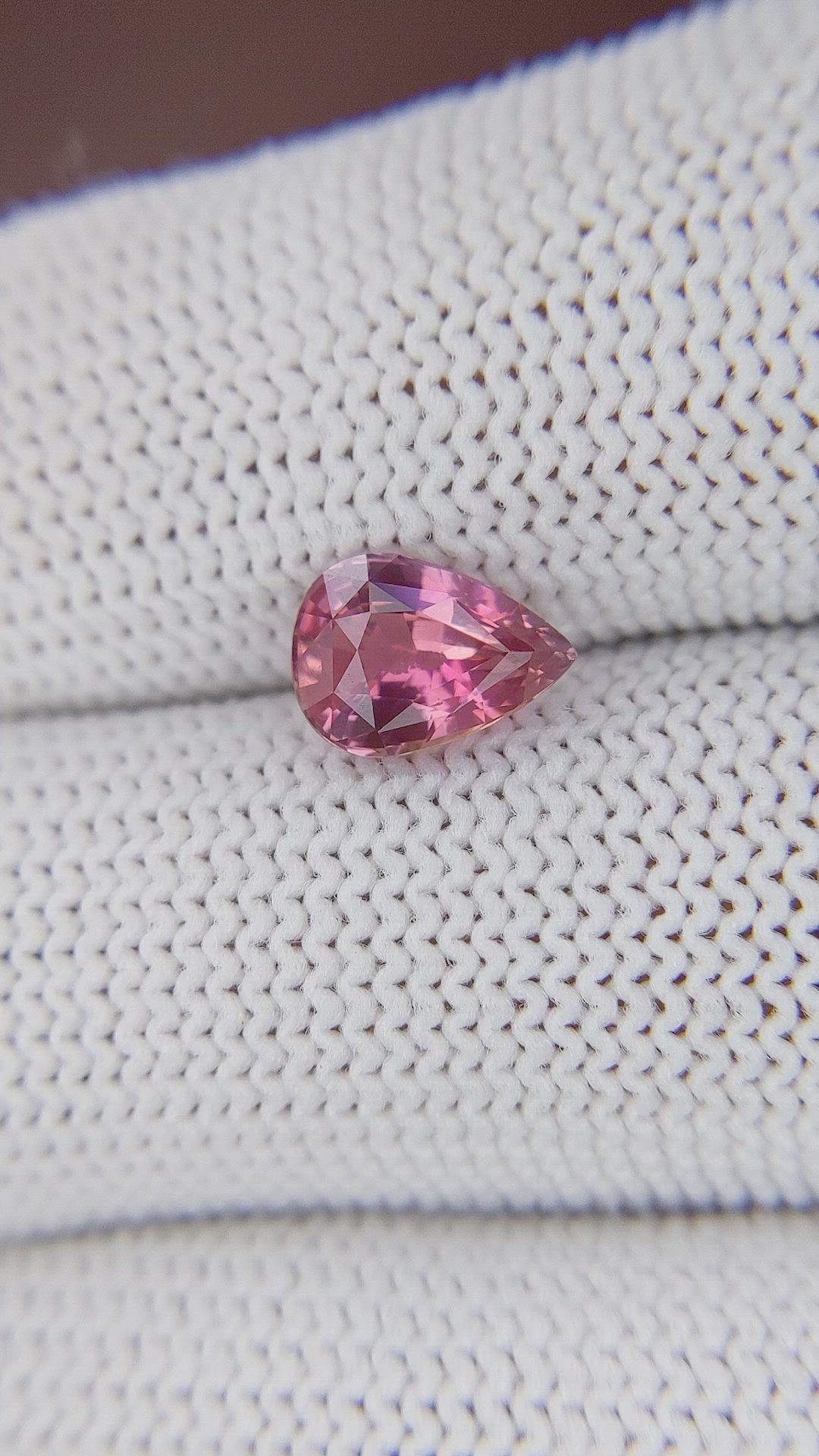
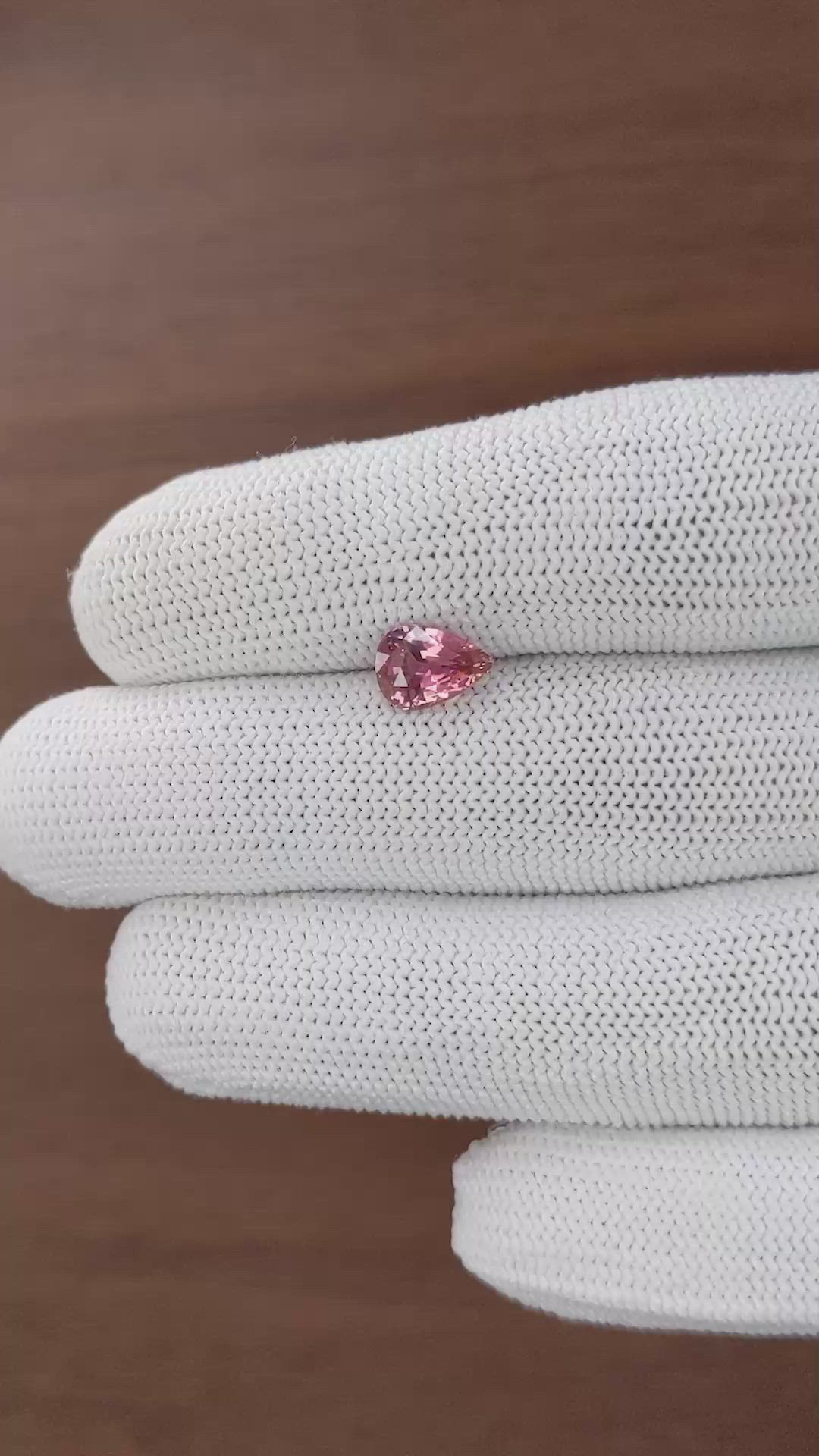
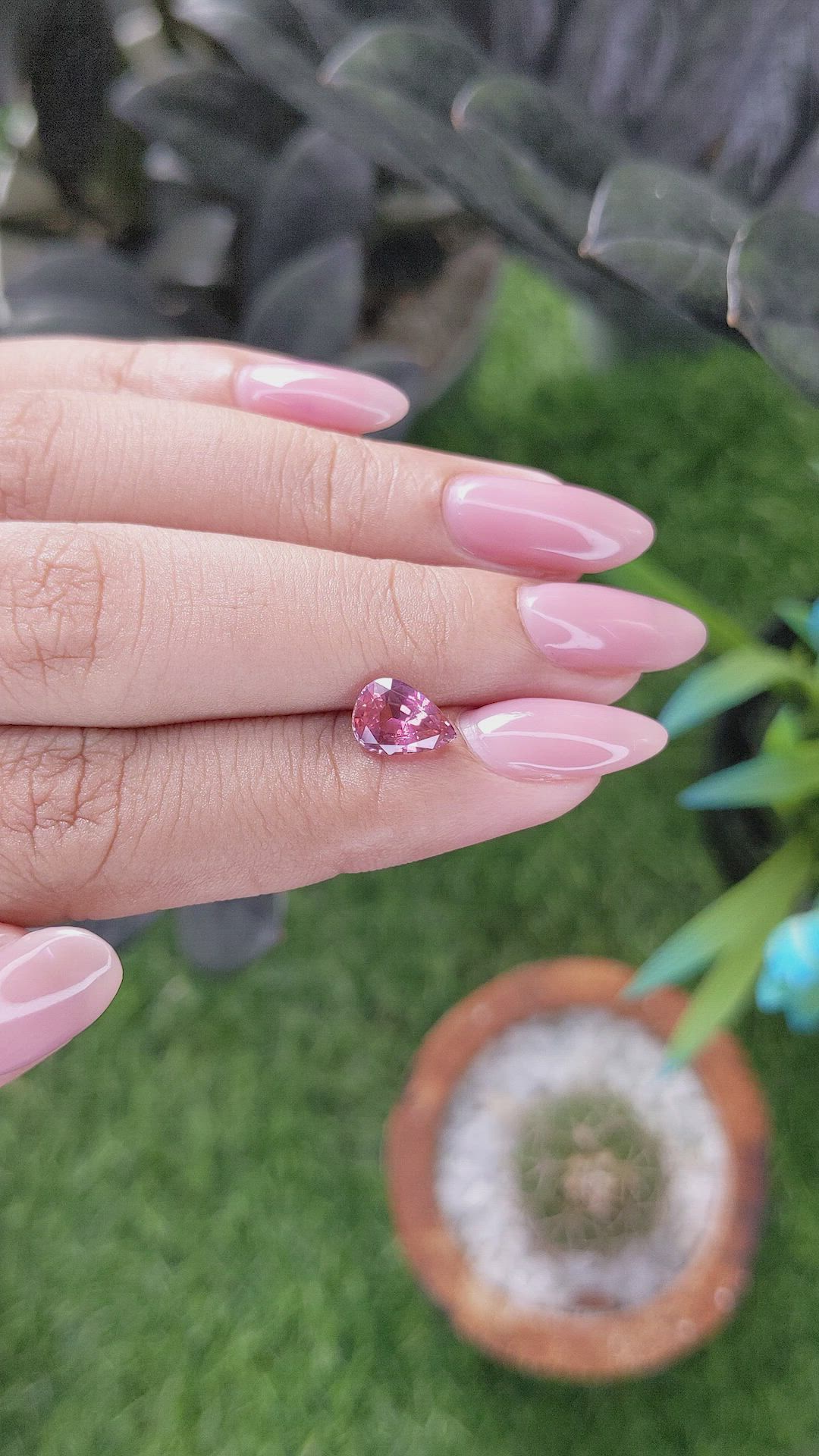
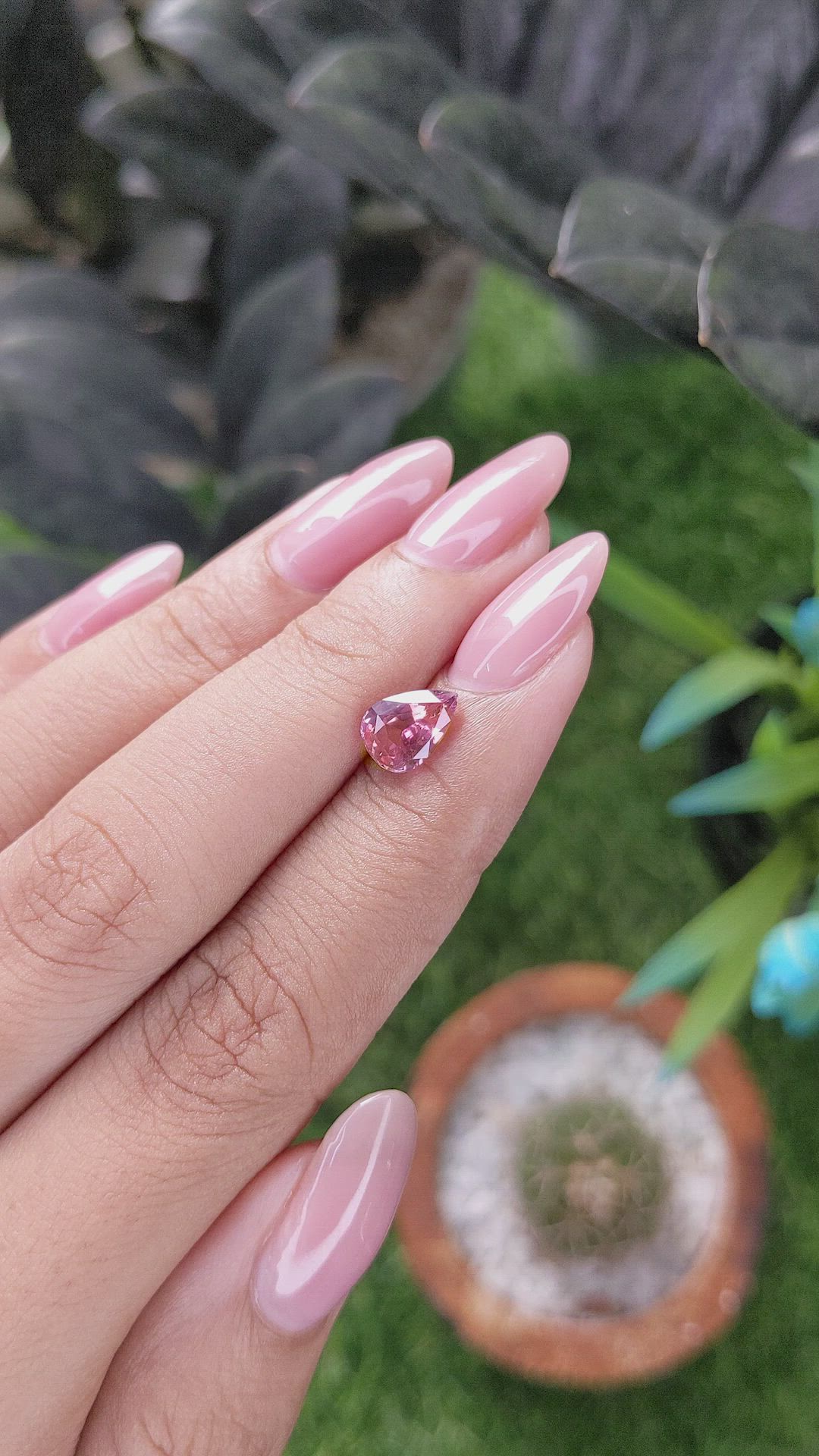
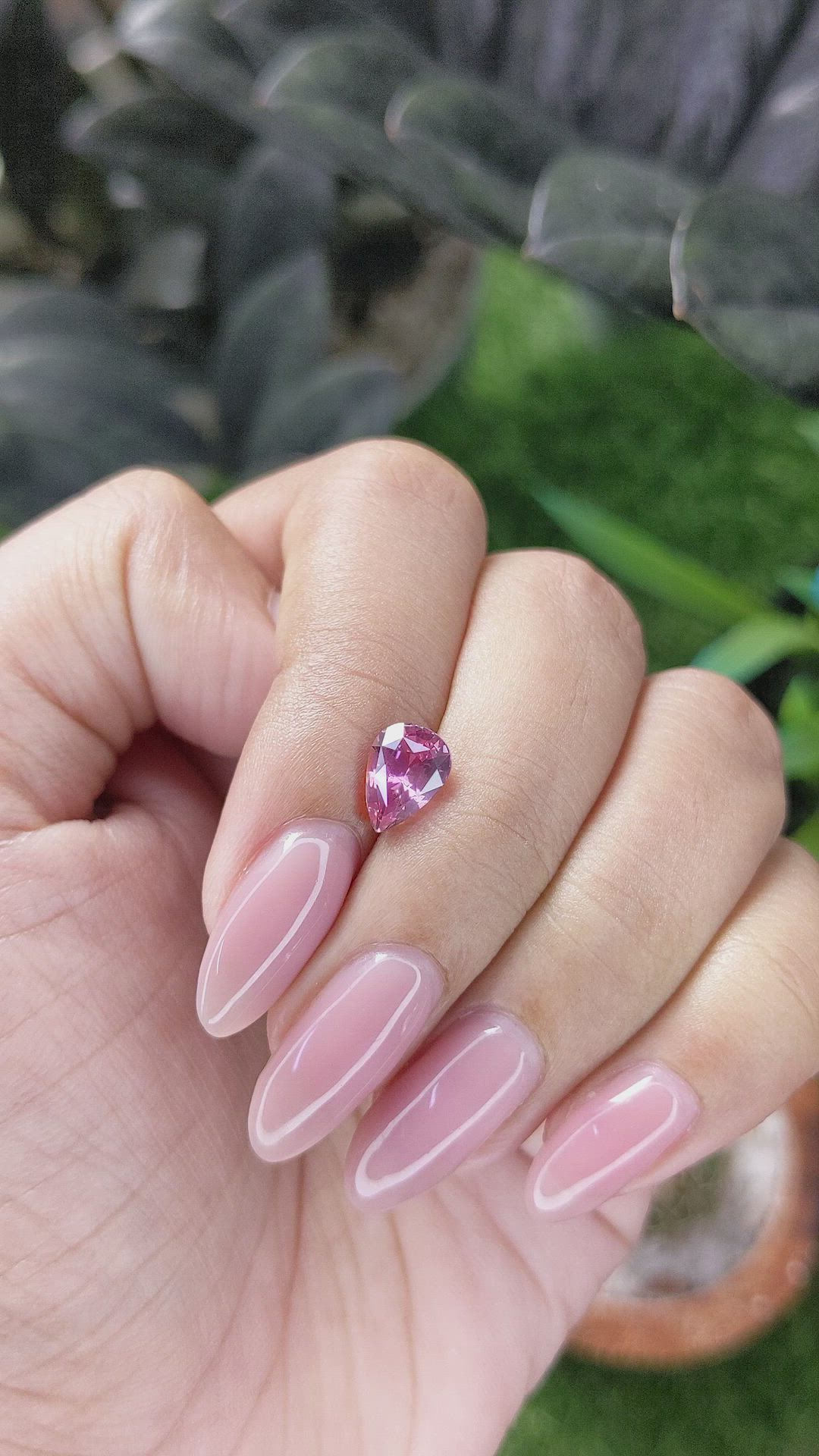



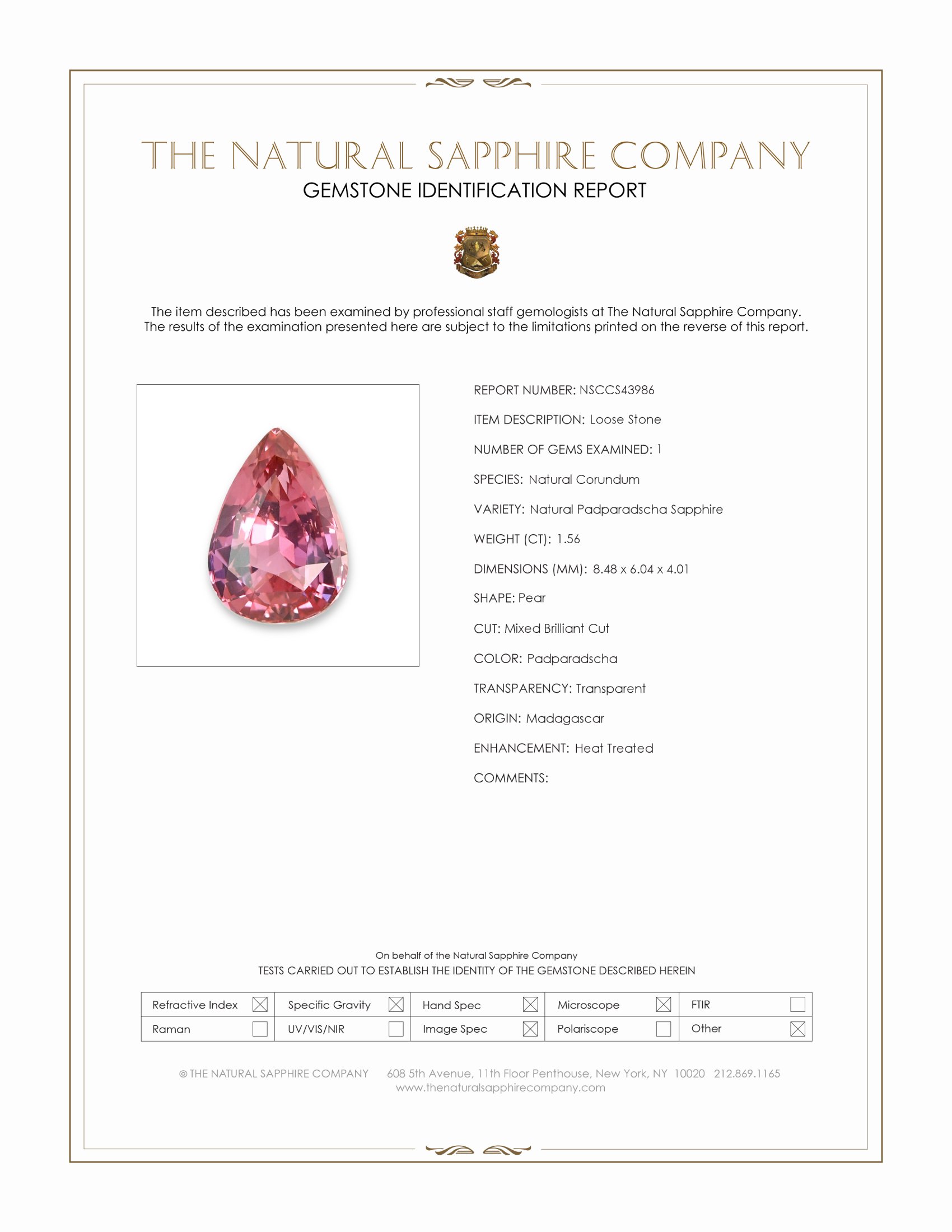

1.56 Ct. Padparadscha Sapphire from Madagascar
This loose stone ships by Oct 16
Item ID: | S43986 |
|---|---|
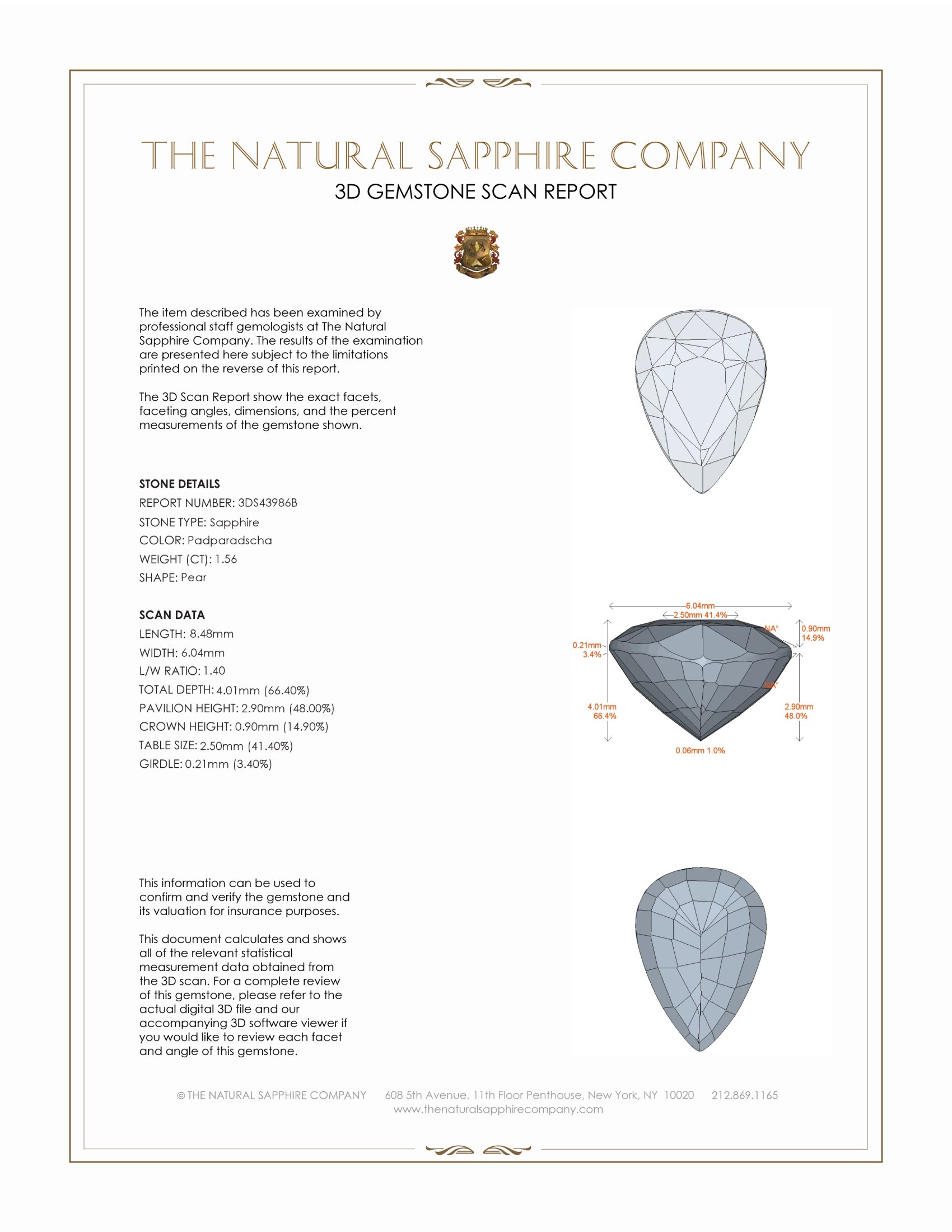
Dimensions (MM): help | Length: 8.48 Width: 6.04 Height: 4.01 |
Weight: | 1.56 Ct. |
Color: help | Padparadscha |
Color intensity: help | Vivid |
Clarity: help | Very Slightly Included |
Shape: help | Pear |
Cut: | Mixed Brilliant Cut |
Cutting style: | Faceted |
Enhancements: help | Heat Treated |
Origin: help | Madagascar |
Per carat price: help | $1,538 |
This padparadscha sapphire is a transparent 1.56 carat pear shape, with precise dimensions of 8.48 x 6.04 x 4.01 millimeters, presented by The Natural Sapphire Company. The gem displays a vivid color intensity that sits squarely in the characteristic padparadscha range, a delicate balance between pink and orange hues that reads warmer in direct light and more pink under diffused illumination. The cutting style is a mixed brilliant cut, executed to emphasize both color saturation and light return, and the overall finish is noted as having an excellent polish. Clarity is graded as very slightly included when evaluated at eye level, which means the stone offers a high level of transparency and visual purity while retaining natural internal character that does not affect its brilliance. The sapphire is heat treated, a standard and stable enhancement for color and clarity optimization, and its origin is Madagascar, a source known for producing padparadscha material with distinct pastel to vivid tones.
From a technical cutting perspective, the mixed brilliant approach on this pear shape combines a well proportioned brilliant facet arrangement on the crown with a modified pavilion architecture that balances scintillation and depth of color. The crown facets have been sized to allow a moderate table that maximizes the stone face up impact without sacrificing light dispersion, while the pavilion facet geometry has been adjusted to complement the shallow to medium pavilion depth inferred from the millimeter proportions. The pear outline is symmetric with a smooth convergence at the apex and a gently rounded girdle profile, which together contribute to uniform light return across the length of the stone. Excellent polish ensures crisp facet junctions and minimal surface abrasion, and the facet execution has been controlled to reduce windowing and to enhance the visual mixing of pink and orange components. In practical terms, this means the gem will exhibit dynamic flashes and stable body color across common lighting environments, attributes particularly desirable for a padparadscha where color nuance is the primary value driver.
The pear shape and the stone proportions make this sapphire highly adaptable to a variety of jewelry settings, and there are specific design choices that will influence the final appearance and performance. For an engagement ring, a classic three prong or five prong head that secures the pointed tip is recommended to protect the vulnerable apex, while a low profile bezel can be employed for everyday wear to shield the girdle and tip, at the cost of slightly reducing face up brilliance. A cathedral prong setting or tapered basket will elevate the stone and allow more light access to the pavilion, enhancing scintillation and emphasizing the vivid color. For a more contemporary presentation, an east west orientation in a bezel or bar setting will accentuate the length of the finger and create a different color play, with the long axis aligned parallel to the finger. Paired designs such as drops or studs with matching melee sapphires or diamonds can be calibrated by selecting small accent stones that pick up the pink component or the orange component, depending on whether the design intent is complementary contrast or monochromatic unity. The dimensions of 8.48 by 6.04 by 4.01 millimeters are well suited to a solitaire pendant, a halo engagement center, or a three stone composition, and the mixed brilliant cut integrates well with pavé or micro pavé accents because the light performance of the center stone will not be overwhelmed by smaller reflectors.
Craftsmanship considerations for mounting this padparadscha from The Natural Sapphire Company include attention to seat geometry, prong placement, and metal choice to properly showcase and protect the gem. Platinum and 18 karat yellow gold will warm the appearance and enhance the orange undertones, while 18 karat rose gold can subtly harmonize with the pink facet flashes, and 18 karat white gold or platinum will impart a cooler backdrop that emphasizes pinkness and contrast. The setting should be designed with a precise seat to match the pear outline and to avoid stress concentrations at the tip, using a tapered prong or protective v end to maintain security without obscuring the girdle. For bespoke work, the pavilion depth and table size can be discussed with the lapidary team if minor recutting is desired to alter face up color or to adjust symmetry, although the current facet proportions are optimized for balanced color and brilliance as cut. We provide technical consultation on metal thickness, prong profile, and gallery design to ensure long term wearability, and we can recommend finishing tolerances based on the very slightly included clarity grade to avoid exposing inclusions when set. For care and maintenance, routine cleaning in warm soapy water and soft brush is appropriate, and we will advise on ultrasonic cleaning or steam treatments on a case by case basis given the heat treated nature of the sapphire.
If you would like to proceed with a bespoke design, The Natural Sapphire Company offers direct collaboration between our gemologists and design specialists to translate the technical qualities of this padparadscha into a finished piece that meets your functional and aesthetic requirements. We can produce CAD renderings that demonstrate prong placement, halo proportions, and metal finishing options, and we can supply exact measurements and mounting templates to your jeweler to ensure a precise fit. Our production standards take into account securing the apex of the pear, maintaining optimal light access to the pavilion, and selecting complementary accent stones that will not overpower the vivid color intensity. For collectors and clients who prioritize provenance, the Madagascar origin and documented heat treatment are included in the consultation and paperwork. To schedule a consultation or to request further technical imagery and facet analysis, please contact The Natural Sapphire Company and we will arrange a personalized review of how this 1.56 carat padparadscha can be transformed into the custom piece you envision.


