
- Stone14
- Reports3


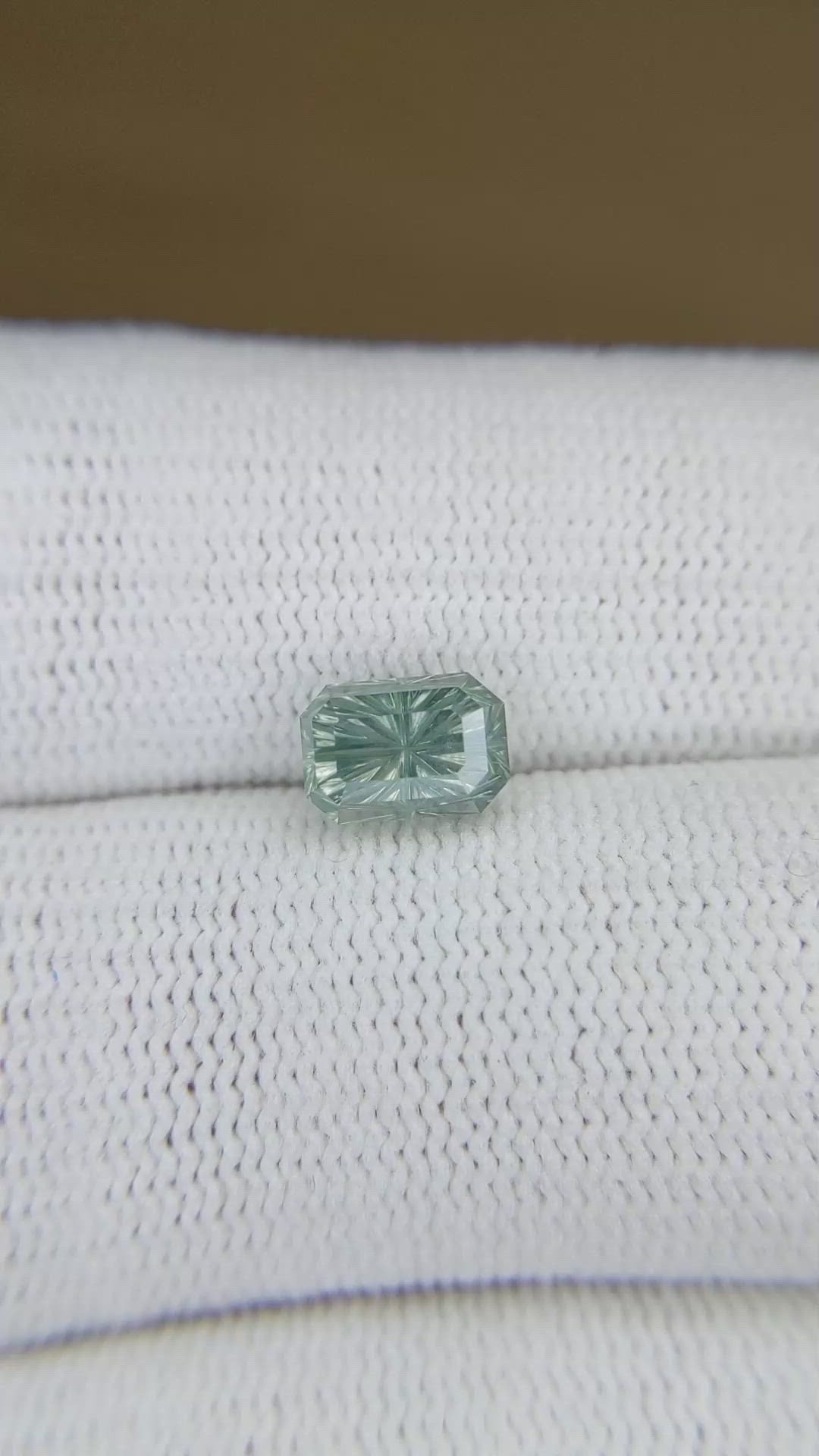
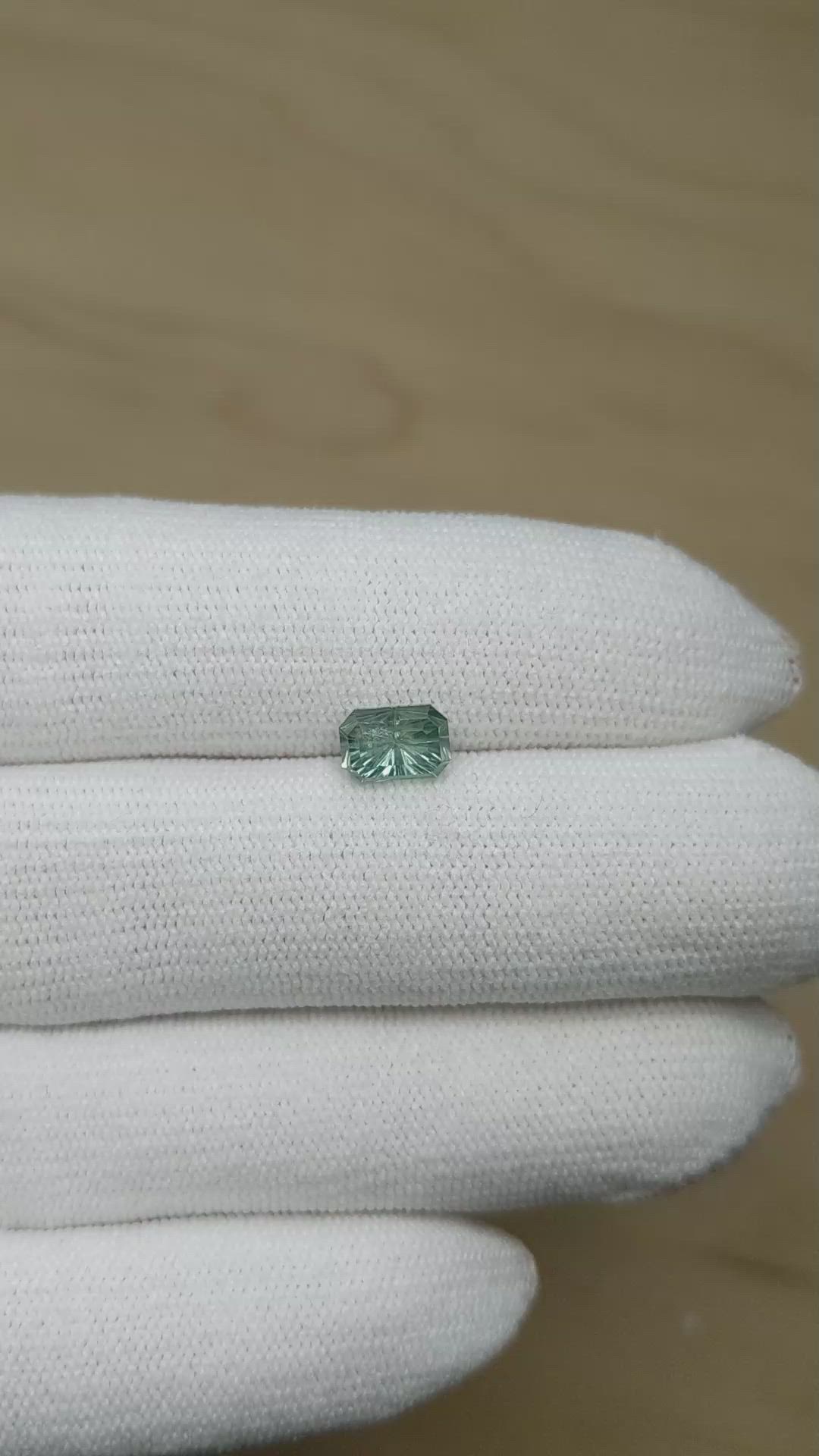
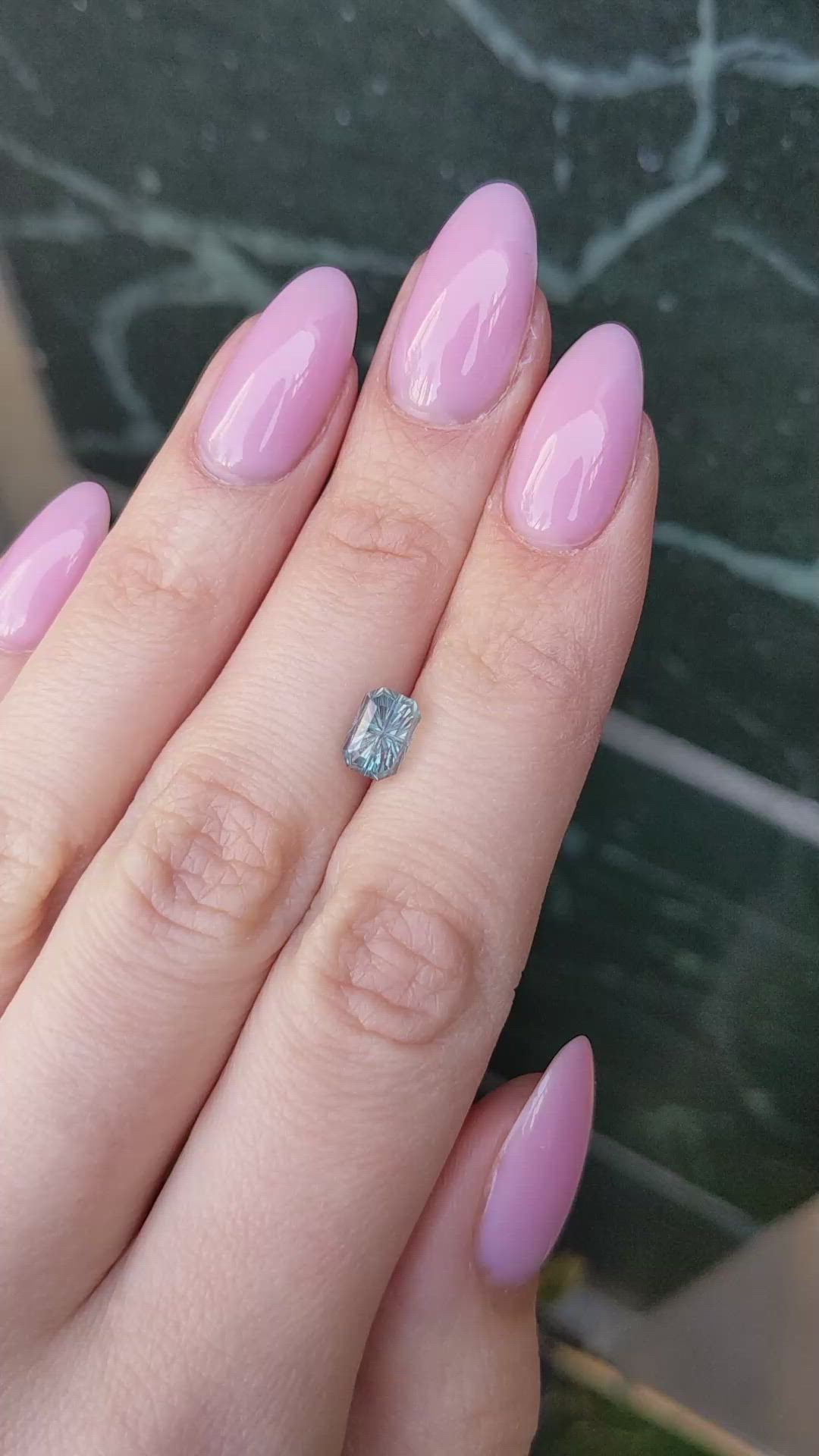
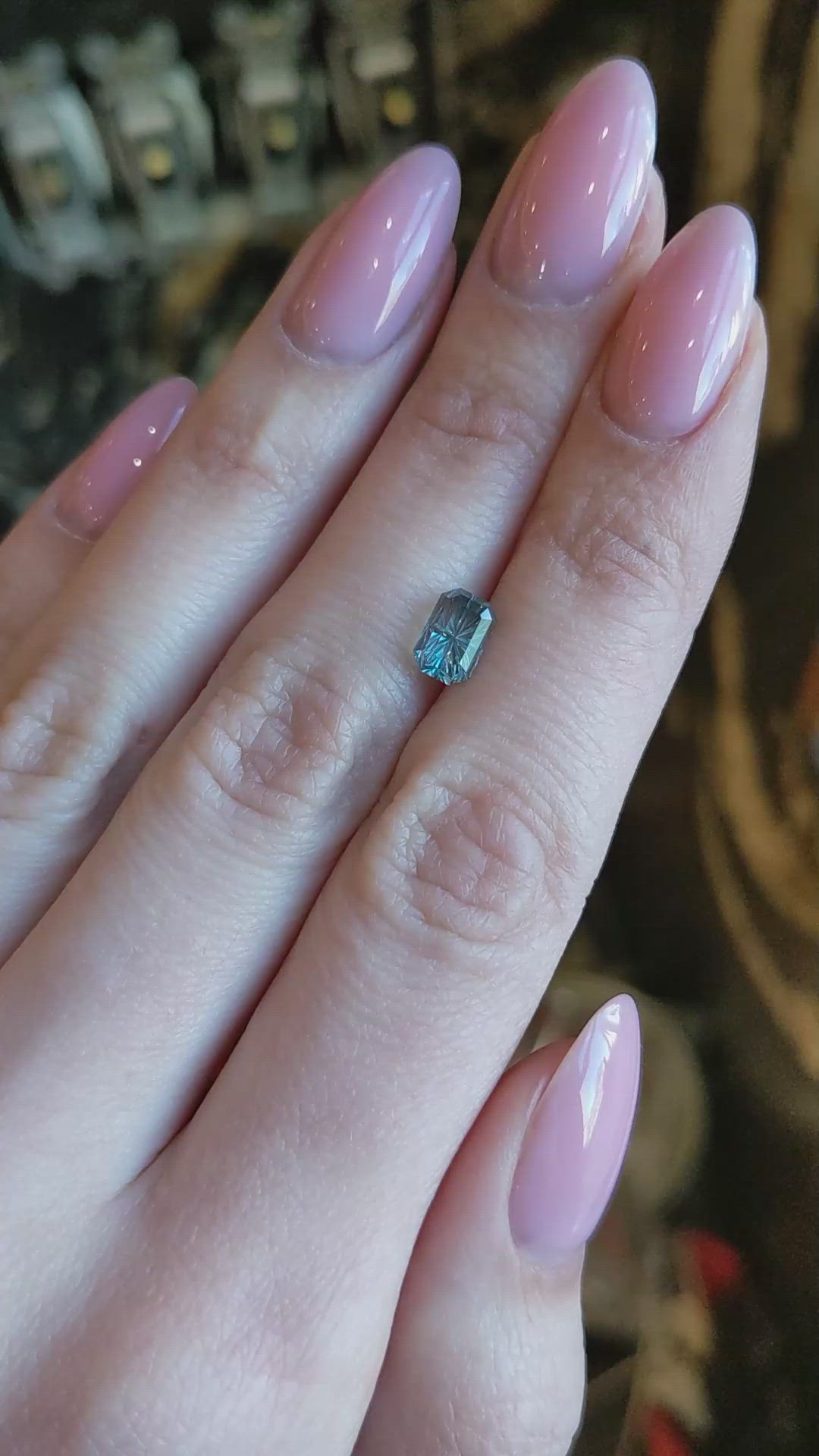



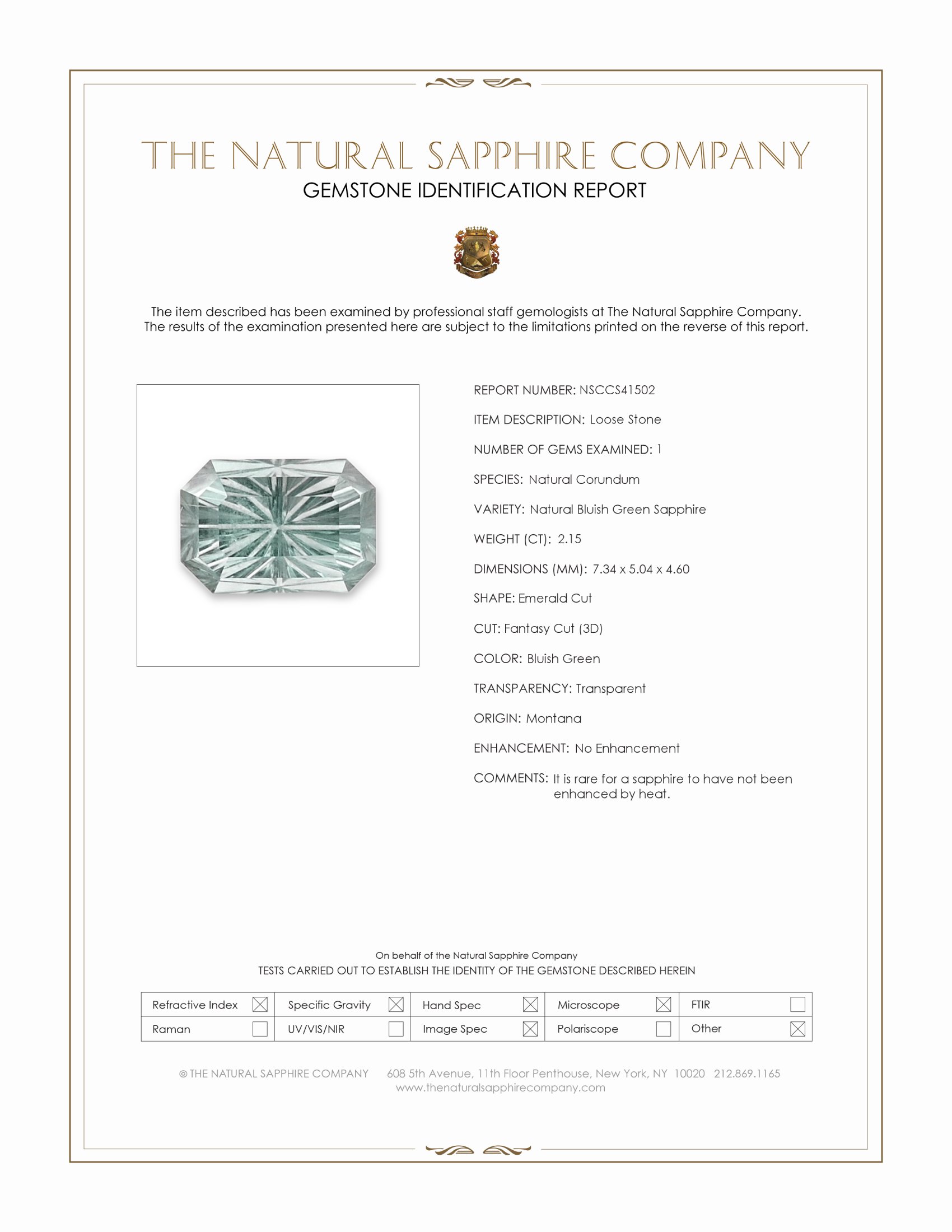
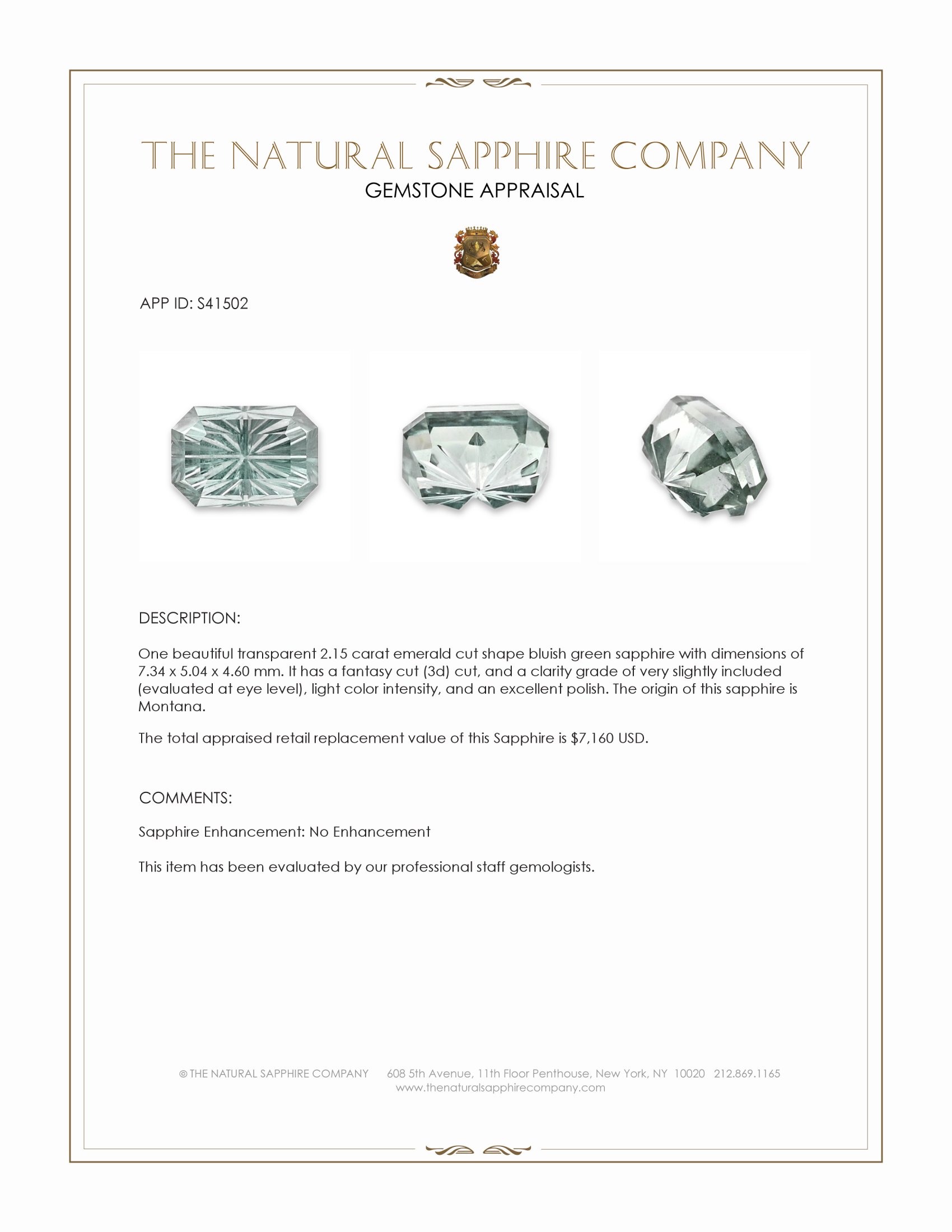
2.15 Ct. Bluish Green Sapphire from Montana
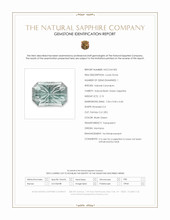
Item ID: | S41502 |
|---|---|
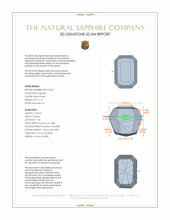
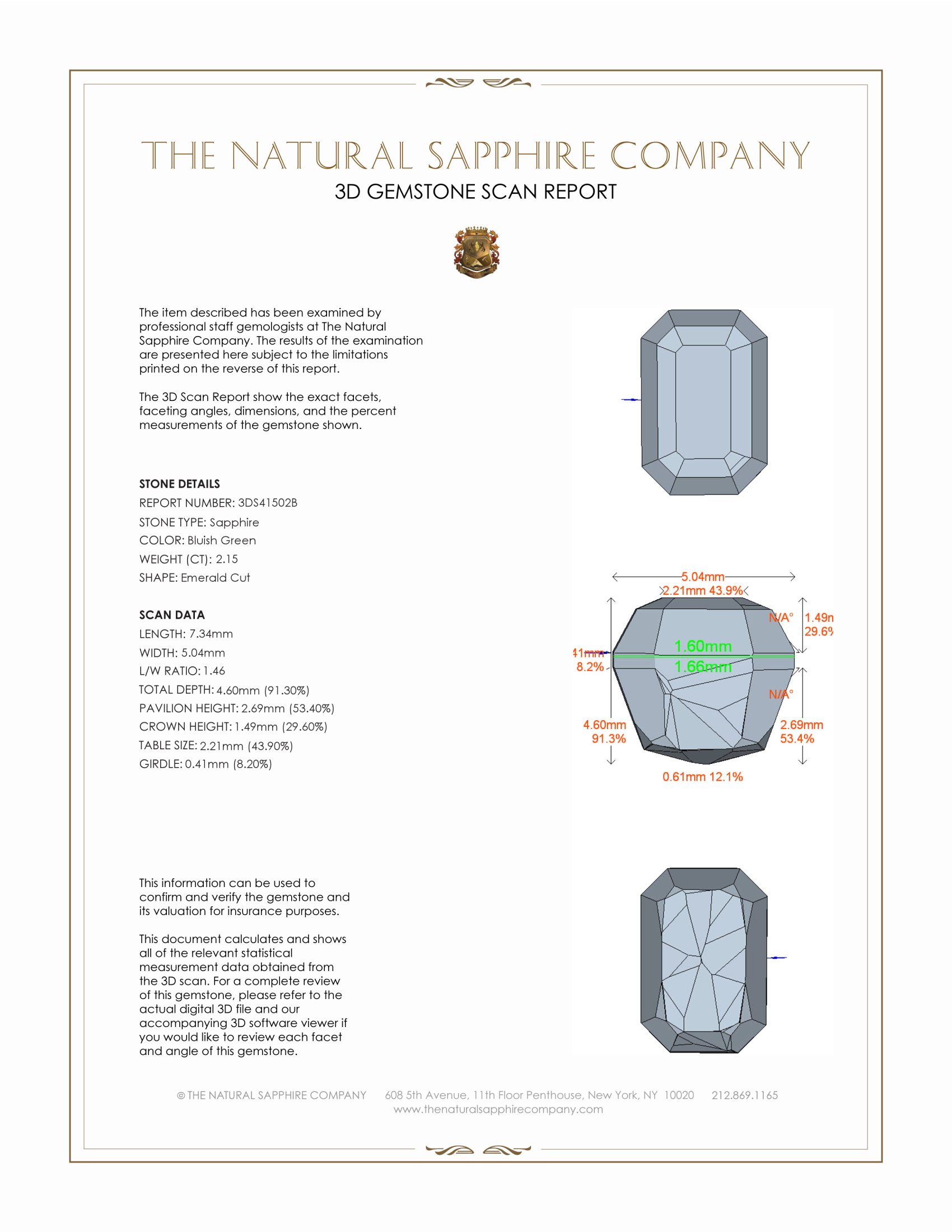
Dimensions (MM): help | Length: 7.34 Width: 5.04 Height: 4.6 |
Weight: | 2.15 Ct. |
Color: help | Bluish Green |
Color intensity: help | Light |
Clarity: help | Very Slightly Included |
Shape: help | Emerald Cut |
Cut: | Fantasy Cut (3D) |
Cutting style: | Faceted |
Enhancements: help | No Enhancement |
Origin: help | Montana |
Per carat price: help | $3,330 |
This 2.15 carat Montana sapphire from The Natural Sapphire Company is presented in an emerald cut outline, with overall dimensions of 7.34 by 5.04 by 4.60 millimeters, and a length to width ratio of approximately 1.46. The stone exhibits a bluish green hue with light color intensity, and it is transparent with a clarity grade described as very slightly included when evaluated at eye level. The cutting style is faceted, executed as a fantasy cut 3D, which departs from the traditional step plate of a classic emerald cut by introducing a complex array of additional plane facets across the pavilion and crown. The result is an engineering of light that combines the directional depth and architectural presence of an emerald outline with the dynamic scintillation typically associated with modified brilliant faceting. The excellent polish further refines each facet junction, minimizing surface diffusion and permitting maximal internal reflection and return, while the lack of enhancement affirms that this optical behavior is wholly natural.
From a lapidary and setting perspective, the measured depth of 4.60 millimeters relative to the averaged face dimensions produces a depth ratio that is approximately 74 percent when referenced to the mean of length and width. This depth yields a strong pavilion volume, which contributes to the stone s visual weight and light return, and allows the 2.15 carat mass to read larger face up than stones with shallower profiles. The emerald cut framework maintains a pronounced girdle perimeter, making the stone readily compatible with common bezel and prong mounting techniques, while the fantasy 3D pavilion requires careful seat geometry to preserve the engineered facet interplay. Setters should match the seat angle to the pavilion crown junction and avoid excessive pressure along facet junctions, because localized force can distort the fine facet planes of a fantasy pavilion. For bezel mounts the depth also affords an attractive visible profile, and for four or six prong settings the elongated octagonal silhouette provides secure engagement points without obstructing the starburst facets.
Color and clarity characteristics render this sapphire particularly adaptable to bespoke design treatments, because the light bluish green tone reads as neutral enough to partner with both warm and cool metal choices while retaining individuality in close color matching applications. The light color intensity allows for creative metal framing to influence perceived saturation, with white metals enhancing brightness, and warm alloys subtly enriching the green component. The very slightly included clarity at eye level indicates inclusions are minor and do not interfere with the engineered internal reflections created by the fantasy cut, therefore the stone will present strong brilliance in open backed or gallery open settings where light can enter the pavilion unobstructed. The natural, untreated origin in Montana also appeals to clients who prioritize provenance, and these internal characteristics can aid gemological confirmation during custom design documentation and appraisal processes.
For custom jewelry applications this sapphire s size and form are technically advantageous, because the 7.34 by 5.04 millimeter table and crown layout fit readily into existing pattern seat templates with minor modification, and the 1.46 ratio is well suited to classic solitaire, halo, and three stone configurations. The fantasy cut 3D pavilion produces a unique optical signature that benefits from design decisions which maximize face up interaction with light, therefore settings that reveal the crown and preserve gallery light flow will accentuate the starburst facet architecture. Fabrication notes for designers and bench jewelers include allowance for the deeper pavilion during seat cutting, gentle pressure distribution across the girdle when tightening prongs or forming bezels, and consideration of protective settings for daily wear if the client desires high exposure. In all cases The Natural Sapphire Company recommends collaboration between the client, designer, and setter to translate the sapphire s precise technical attributes into a finished piece that showcases its engineered faceting, natural Montana provenance, and intrinsic optical performance.


