
- Stone11
- Reports3
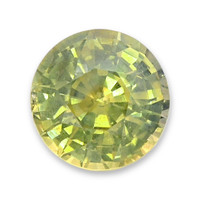


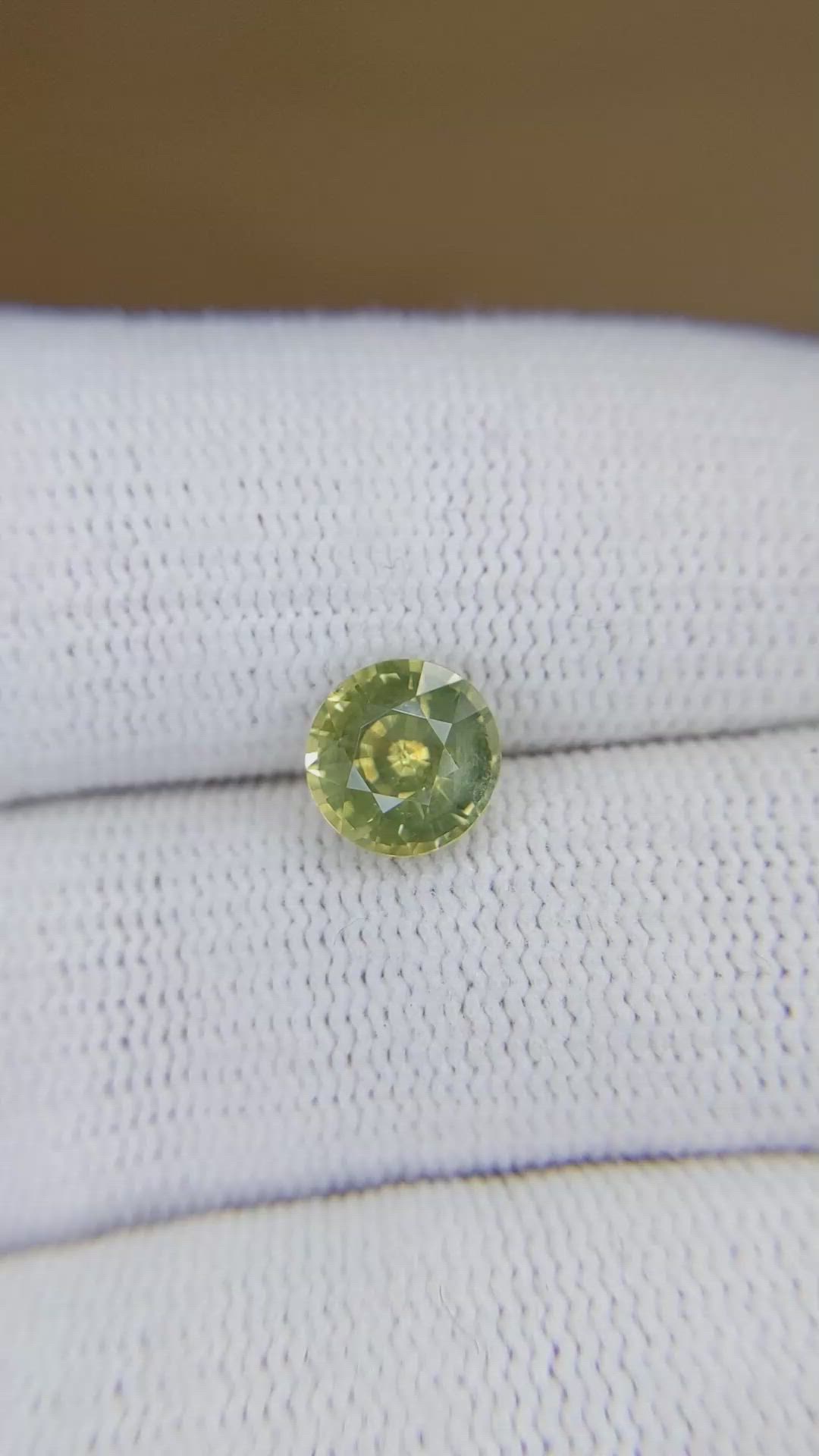
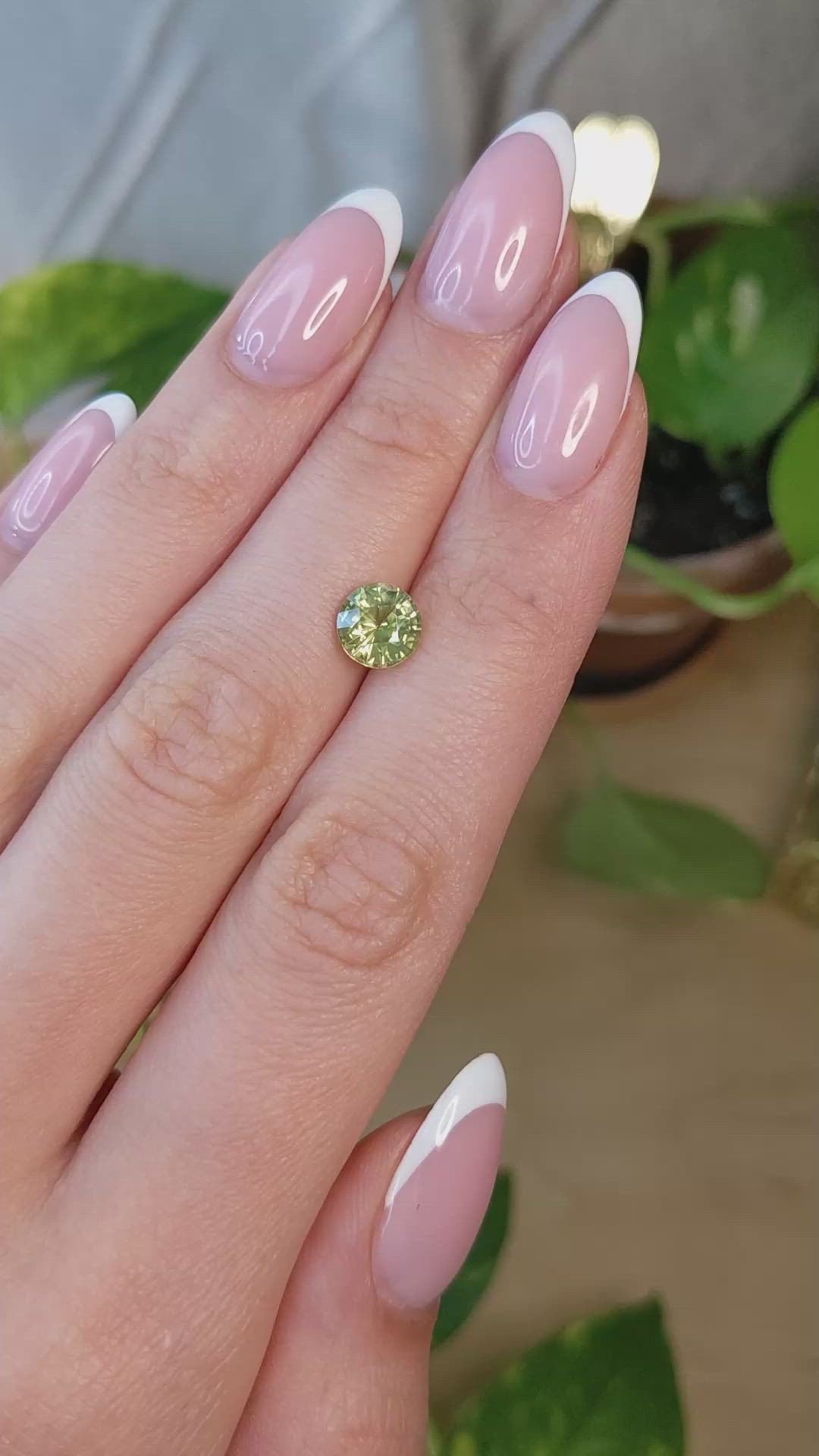
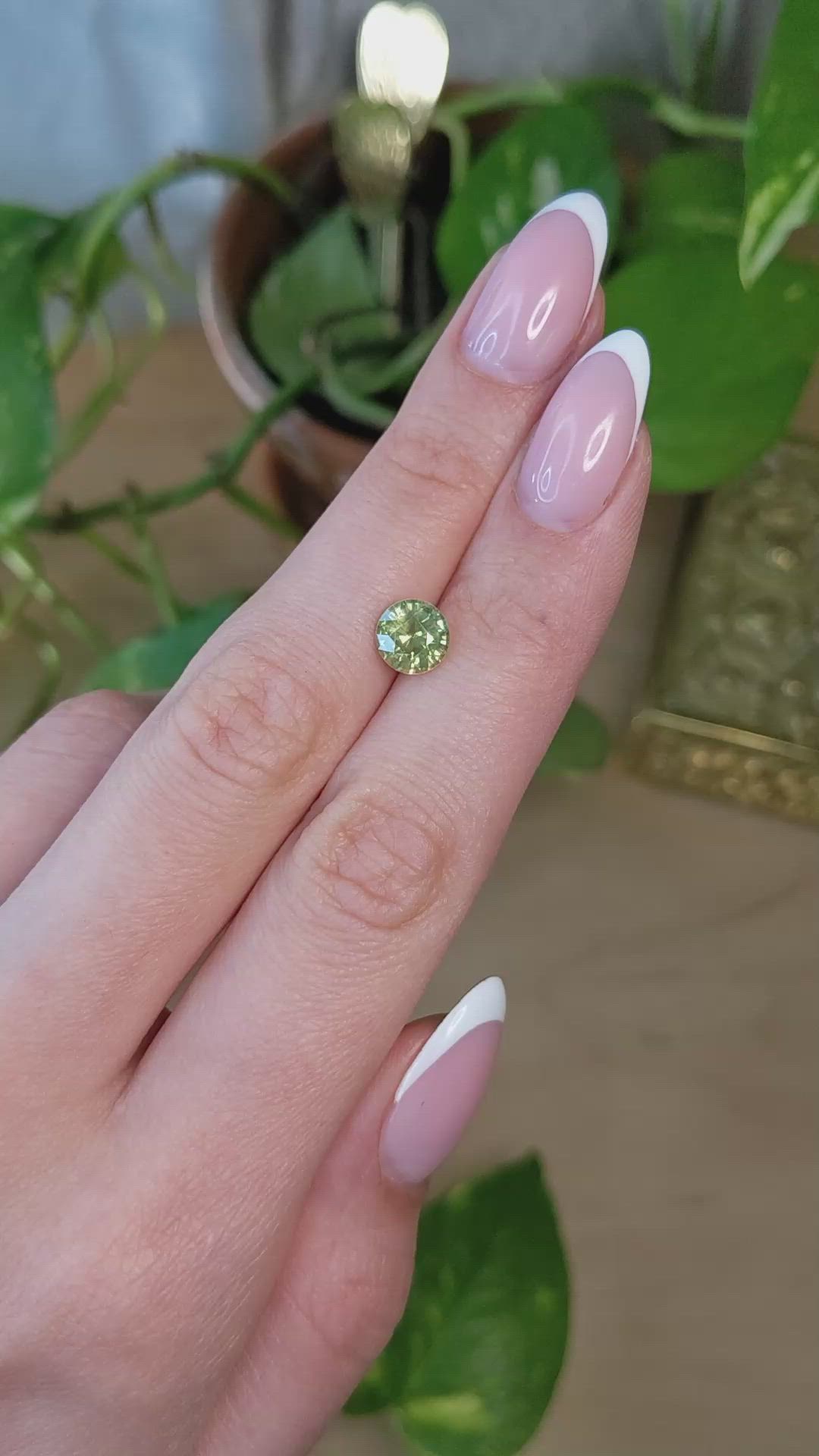





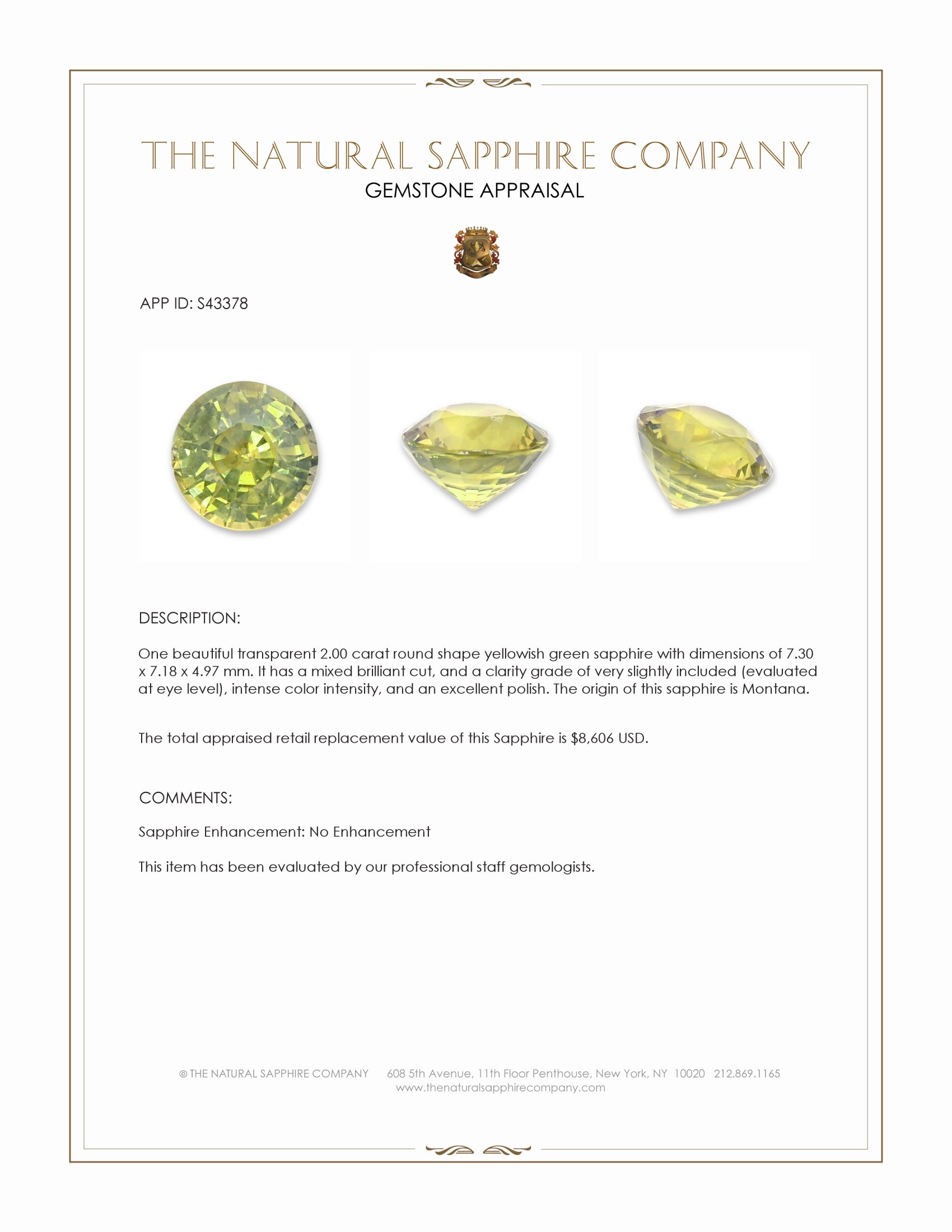
2.00 Ct. Yellowish Green Sapphire from Montana
This loose stone ships by Jul 4
Item ID: | S43378 |
|---|---|
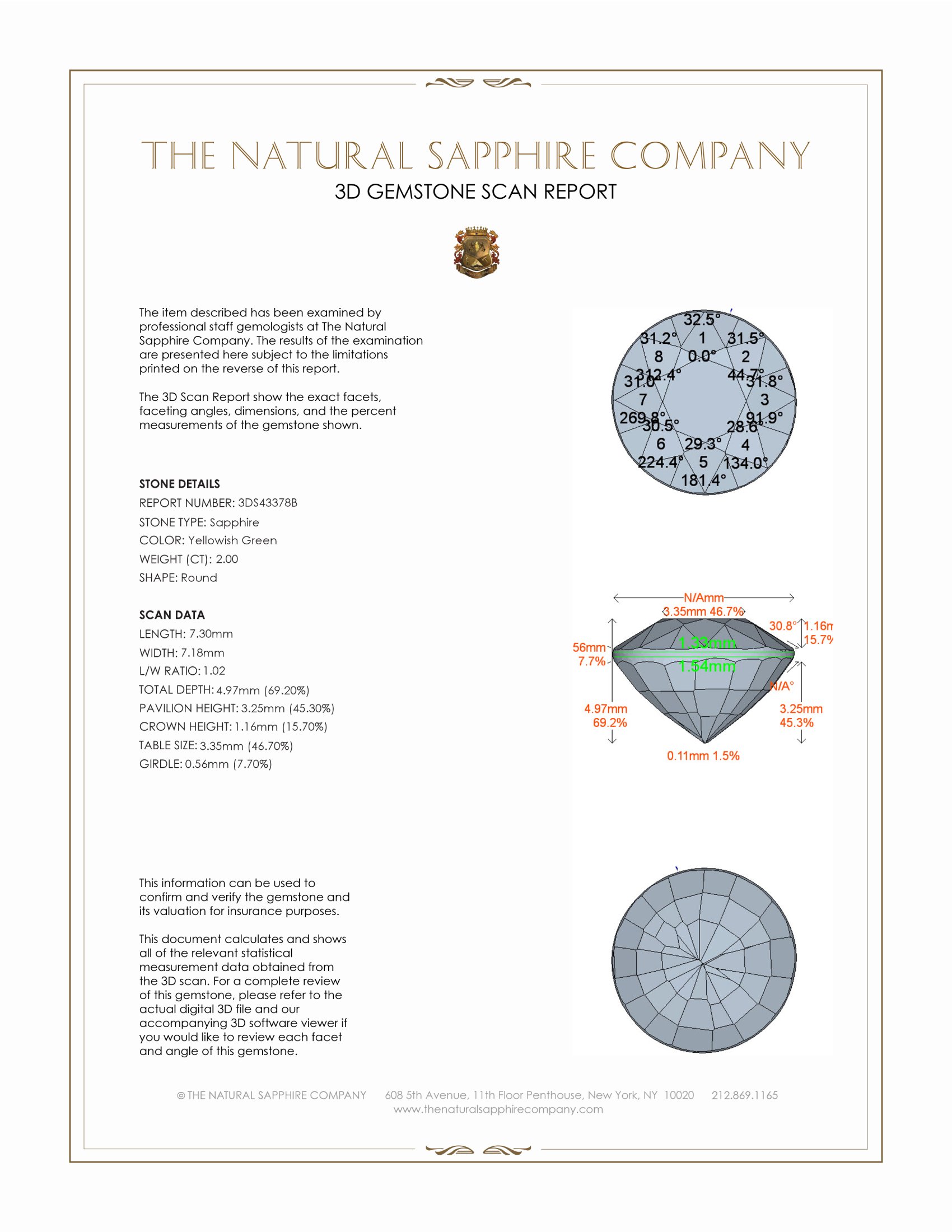
Dimensions (MM): help | Length: 7.3 Width: 7.18 Height: 4.97 |
Weight: | 2.00 Ct. |
Color: help | Yellowish Green |
Color intensity: help | Intense |
Clarity: help | Very Slightly Included |
Shape: help | Round |
Cut: | Mixed Brilliant Cut |
Cutting style: | Faceted |
Enhancements: help | No Enhancement |
Origin: help | Montana |
Per carat price: help | $4,303 |
This transparent yellowish green sapphire presents as a precisely faceted round, weighing 2.00 carats, with dimensions of 7.30 x 7.18 x 4.97 mm, a mixed brilliant cut, and an excellent polish. The gem displays an intense color intensity that reads as a lively blend of lemon and green tones, offering a distinctly fresh and bright face up appearance. Clarity is graded as very slightly included when evaluated at eye level, a grade that indicates minor internal characteristics that do not significantly interrupt the gem's brilliance or visual appeal. This sapphire is reported as having no enhancement, retaining its natural state from origin to finished gemstone, and it is accompanied by the provenance of Montana. The Natural Sapphire Company presents this stone as an example of careful selection and cutting, where proportions and finish have been executed to maximize optical performance while preserving the inherent qualities of the rough material.
The narrative of this sapphire begins deep within the earth, during episodes of mountain building and regional metamorphism that took place millions of years ago. Under sustained pressure and elevated temperatures, aluminum rich rocks underwent recrystallization, and corundum crystals formed through the slow aggregation of aluminum oxide. Trace amounts of iron, and in some cases vanadium, were incorporated into the crystal lattice during growth, imparting the yellowish green hue that characterizes this piece. Over geologic time, tectonic uplift and erosion exposed these corundum crystals to surface processes, where repeated weathering and fluvial transport concentrated durable sapphire crystals within stream gravels and alluvial deposits. In the setting that would become Montana, regional geology provided both the source rocks and the erosional pathways that delivered crystalized corundum from its primary formation environment to secondary depositional environments. The slow cooling and protracted crystallization history allowed for the development of well formed crystals, yielding the transparency and crystalline integrity seen in this finished gem. The absence of treatment confirms that the color and clarity visible today are the result of natural geologic processes and the stone's intrinsic chemistry, rather than human modification.
The mixed brilliant cut applied to this round sapphire blends the scintillation performance of a brilliant pattern with pavilion facets designed to return light efficiently, creating a balance between flash and color. The table and crown facets have been arranged to enhance face up color without sacrificing brilliance, and the excellent polish ensures that light passes through and reflects cleanly from facet junctions. At 4.97 mm depth, the pavilion and crown proportions support a pleasing table surface and a lively return of light, with the 7.30 x 7.18 mm outline offering a generous visual size for a 2.00 carat gem. Clarity described as very slightly included at eye level denotes that any internal features are minimal when the stone is viewed unaided, and that the inclusions do not disrupt the overall light performance. Under magnification minor pinpoint or needle like features may be noted, consistent with natural crystal growth and the geologic conditions of formation. The intense color intensity yields saturated tones that remain distinct even when the gem is set, and the relatively even distribution of color minimizes zoning, allowing for consistent color presence across the crown. The combination of weight, dimensions, cut style, and polish have been selected to showcase the sapphire in a way that respects the original rough and optimizes everyday wearability.
Provenance and care are important considerations for a natural sapphire, and this Montana origin gem carries the geological narrative of its source region, known for producing fine, uniquely colored corundum. The declaration of no enhancement assures that the gem arrives in stable, untreated condition, and that its appearance will remain consistent with normal handling and exposure. For setting, this sapphire adapts well to a variety of mounting styles, including bezel, prong, or halo configurations, where the mixed brilliant cut will contribute scintillation and the intense color can be accentuated by surrounding metals and stones. Routine care is straightforward, with warm soapy water and a soft brush suitable for cleaning, and professional inspection recommended periodically to confirm setting security. The Natural Sapphire Company can provide documentation of the stated attributes and provenance, and offers guidance on mounting, insurance, and long term conservation. This sapphire represents a measured combination of geological history, gemological integrity, and finishing craftsmanship, a natural stone that communicates its origin and formation through color and clarity, and that offers reliable performance in jewelry applications.


