
- Stone13
- Reports3




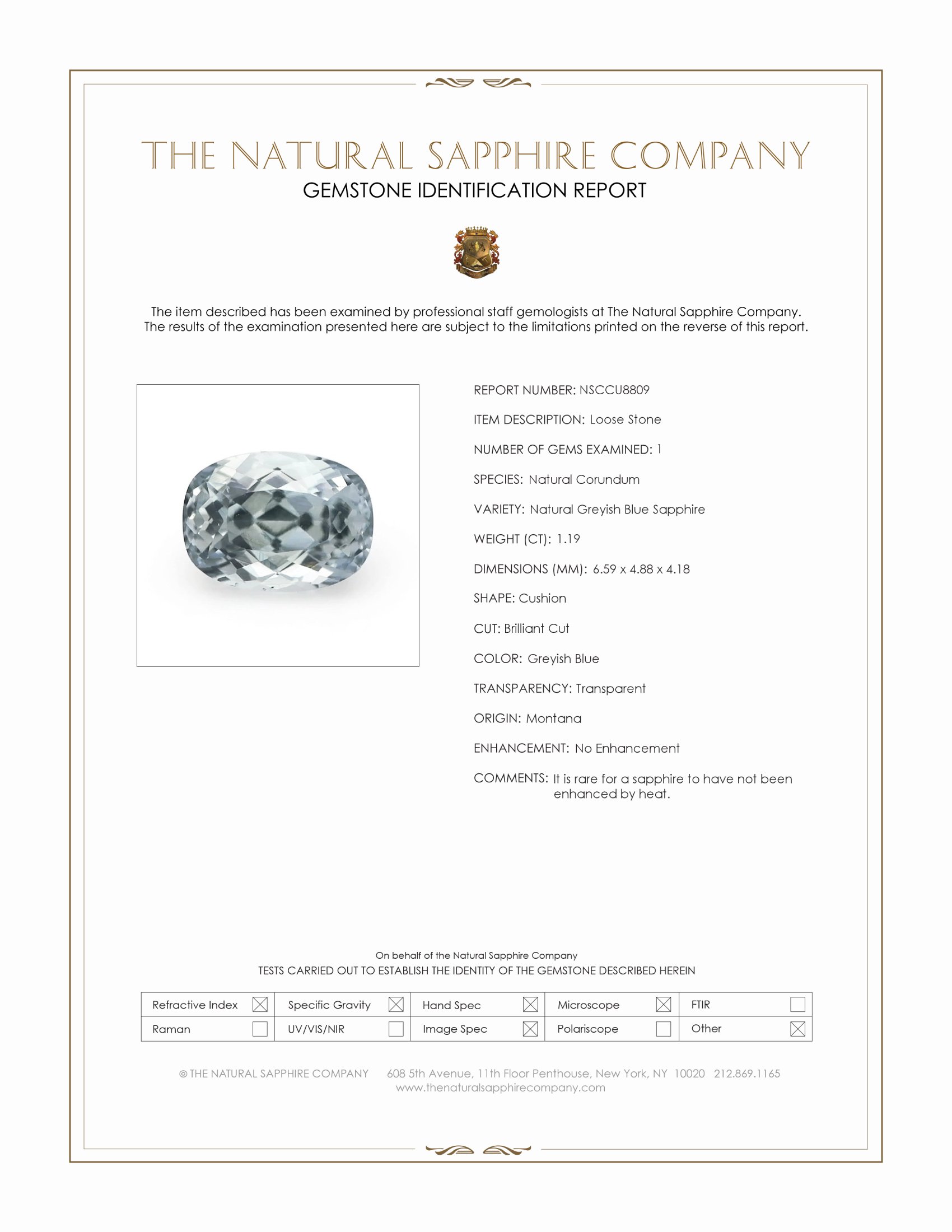
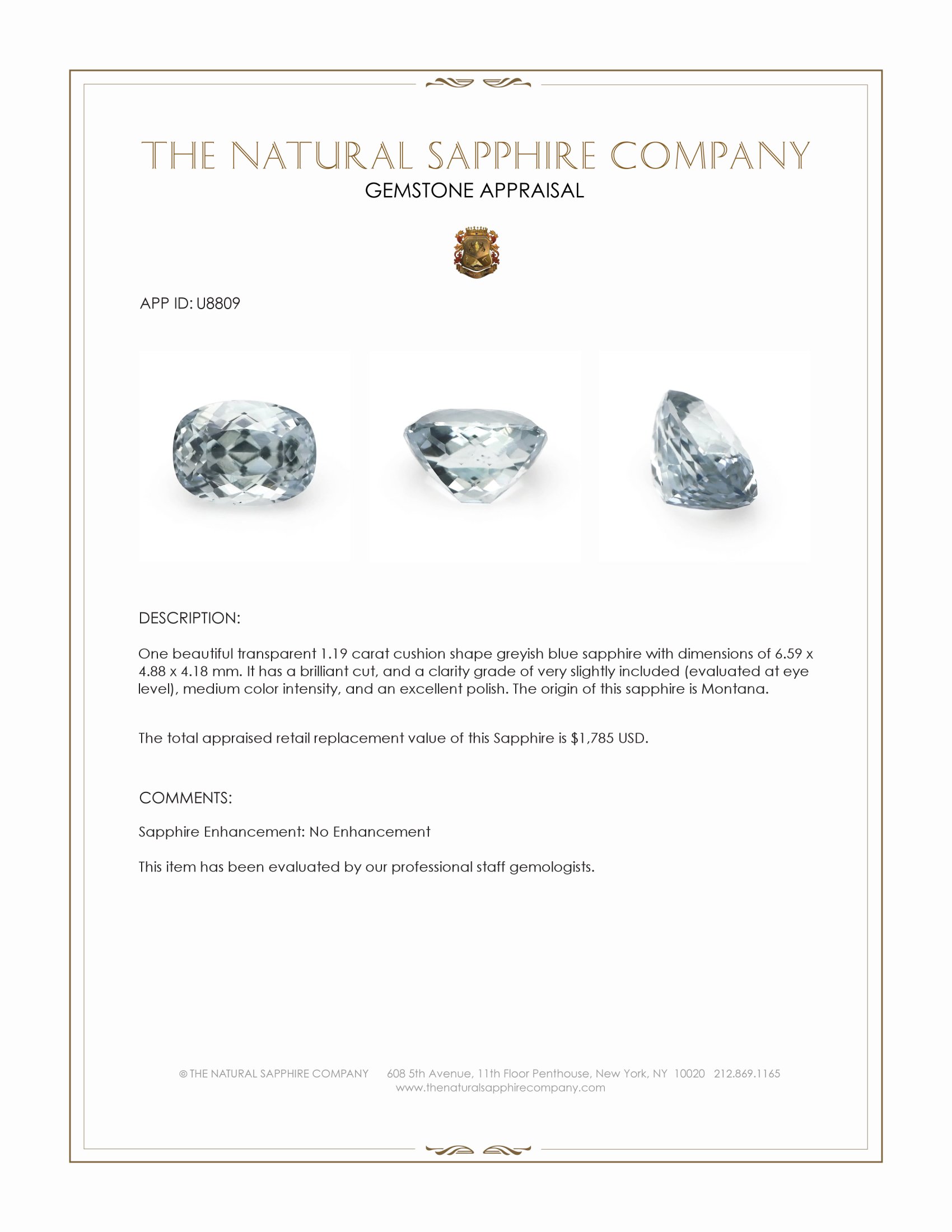
1.19 Ct. Greyish Blue Sapphire from Montana
This loose stone is available to ship now
Item ID: | U8809 |
|---|---|
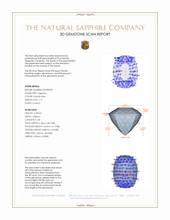
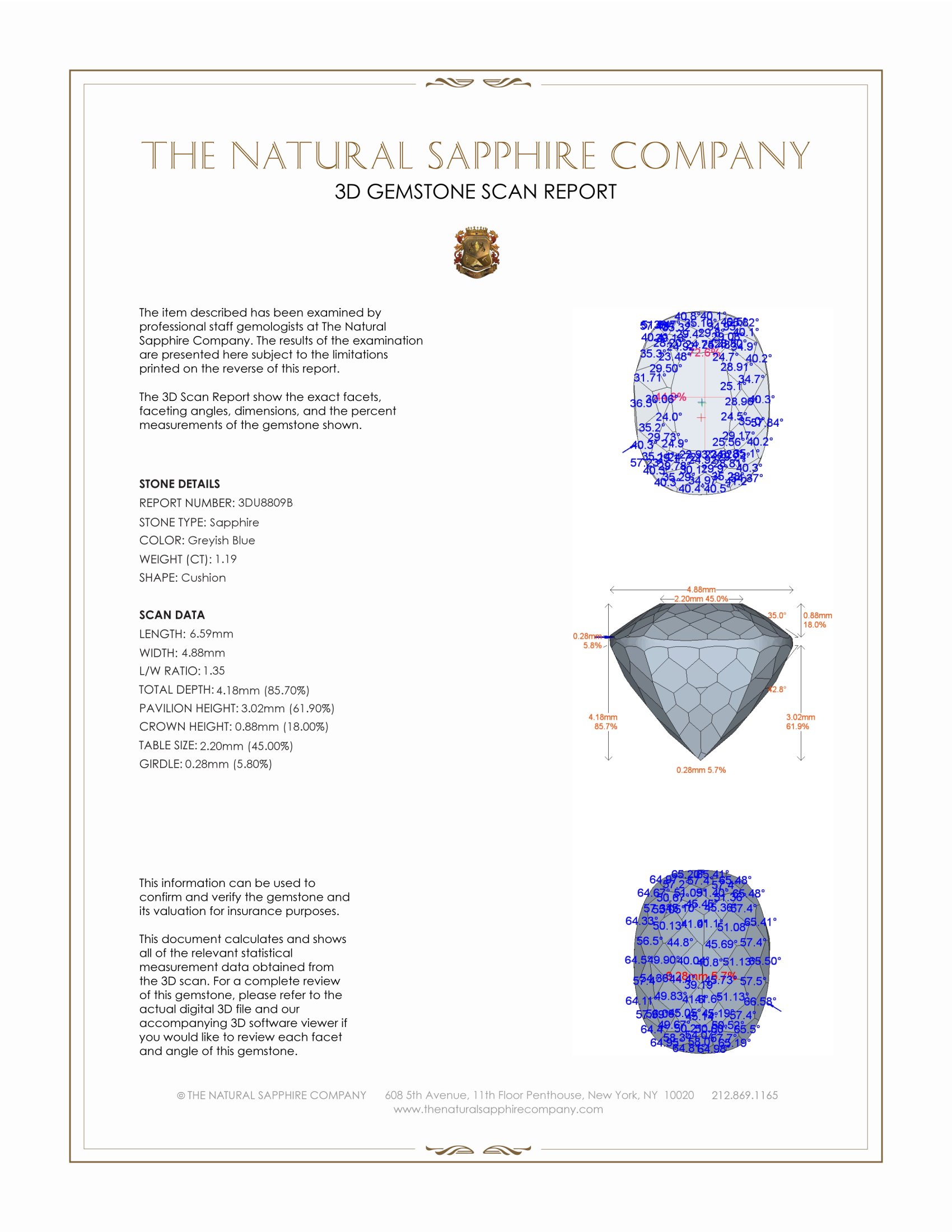
Dimensions (MM): help | Length: 6.59 Width: 4.88 Height: 4.18 |
Weight: | 1.19 Ct. |
Color: help | Greyish Blue |
Color intensity: help | Medium |
Clarity: help | Very Slightly Included |
Shape: help | Cushion |
Cut: | Brilliant Cut |
Cutting style: | Faceted |
Enhancements: help | No Enhancement |
Origin: help | Montana |
Per carat price: help | $1,500 |
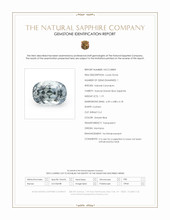
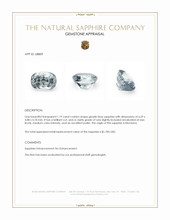
This sapphire is a transparent, cushion shape specimen weighing 1.19 carats, with precise dimensions of 6.59 x 4.88 x 4.18 mm, cut in a faceted, brilliant style. The gem presents a greyish blue hue with medium color intensity, and an even distribution of tone across the table and crown. Clarity is graded as very slightly included, evaluated at eye level, indicating that inclusions are minimal and generally not visible without magnification under normal viewing conditions. The polish is excellent, producing crisp facet junctions and strong light return, and there has been no enhancement applied to this material, confirming its natural state. The documented origin of this sapphire is Montana, a source known for producing subdued blue and grey blue sapphires with distinct regional character, and this specimen embodies that geological signature.
Optical and structural attributes of this sapphire inform both its appearance and suitability for wear. The brilliant faceting pattern maximizes return of light from the pavilion and crown, creating scintillation appropriate to the stone size and proportions. The medium color intensity places the gem between pale and deeply saturated tones, making it versatile for a range of settings and metal choices, and the greyish blue balance gives a cool, muted presentation that can read as contemporary or classic depending on the mounting. Clarity described as very slightly included at eye level implies internal features that are consistent with natural formation, without compromising durability. As a corundum species gemstone, the sapphire benefits from high hardness and resistance to everyday wear, and the excellent polish enhances the perception of surface smoothness and optical performance.
When compared to lab grown sapphires, the differences are primarily in genesis and rarity rather than basic chemistry. Lab grown sapphires replicate the corundum structure and can exhibit very uniform color and high clarity because growth parameters are controlled to limit inclusions and color zoning. Those characteristics make lab grown material consistent and often more affordable for purchasers prioritizing uniform appearance. Natural sapphires, such as this Montana specimen offered by The Natural Sapphire Company, retain features that are intrinsic to their geological formation, including natural inclusions, subtle color zoning, and trace element signatures that reflect the specific growth environment. Those natural markers serve as a fingerprint of origin, and they contribute to the individuality of each stone. The absence of enhancement in this piece increases its appeal to buyers who prioritize untreated material, because treatment free status is a clear differentiator from many natural stones that undergo thermal or other enhancements to modify color or clarity. From an investment and heirloom perspective, natural, untreated stones with documented origin are often regarded as more collectible, because their rarity and provenance are verifiable in a way that does not apply to mass produced lab grown material.
Practical considerations for use and selection are straightforward. The cushion shape with brilliant faceting is adaptable to solitaire rings, three stone compositions, pendant settings, and bespoke designs where the greyish blue tone can be paired with warm or cool metals for different effects. The size and cut deliver a balanced spread relative to the 1.19 carat weight, and the excellent polish supports skilled mounting without risk of obscuring the stone surface. For clients who value traceability and natural origin, The Natural Sapphire Company presents this gem with clear specification of weight, dimensions, clarity grade, color intensity, cut style, polish, enhancement status, and origin, enabling informed comparison against both other natural stones and lab grown alternatives. In summary, this Montana sapphire offers a combination of measurable gemological attributes and natural provenance, delivering a piece that is durable, visually restrained in a greyish blue palette, and characterful due to its untreated state and minimal internal features.


