
- Stone12
- Reports3
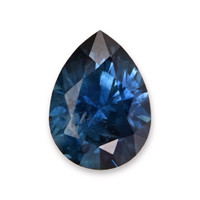
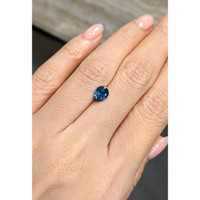
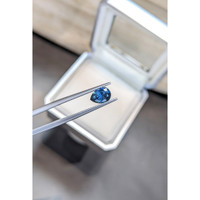
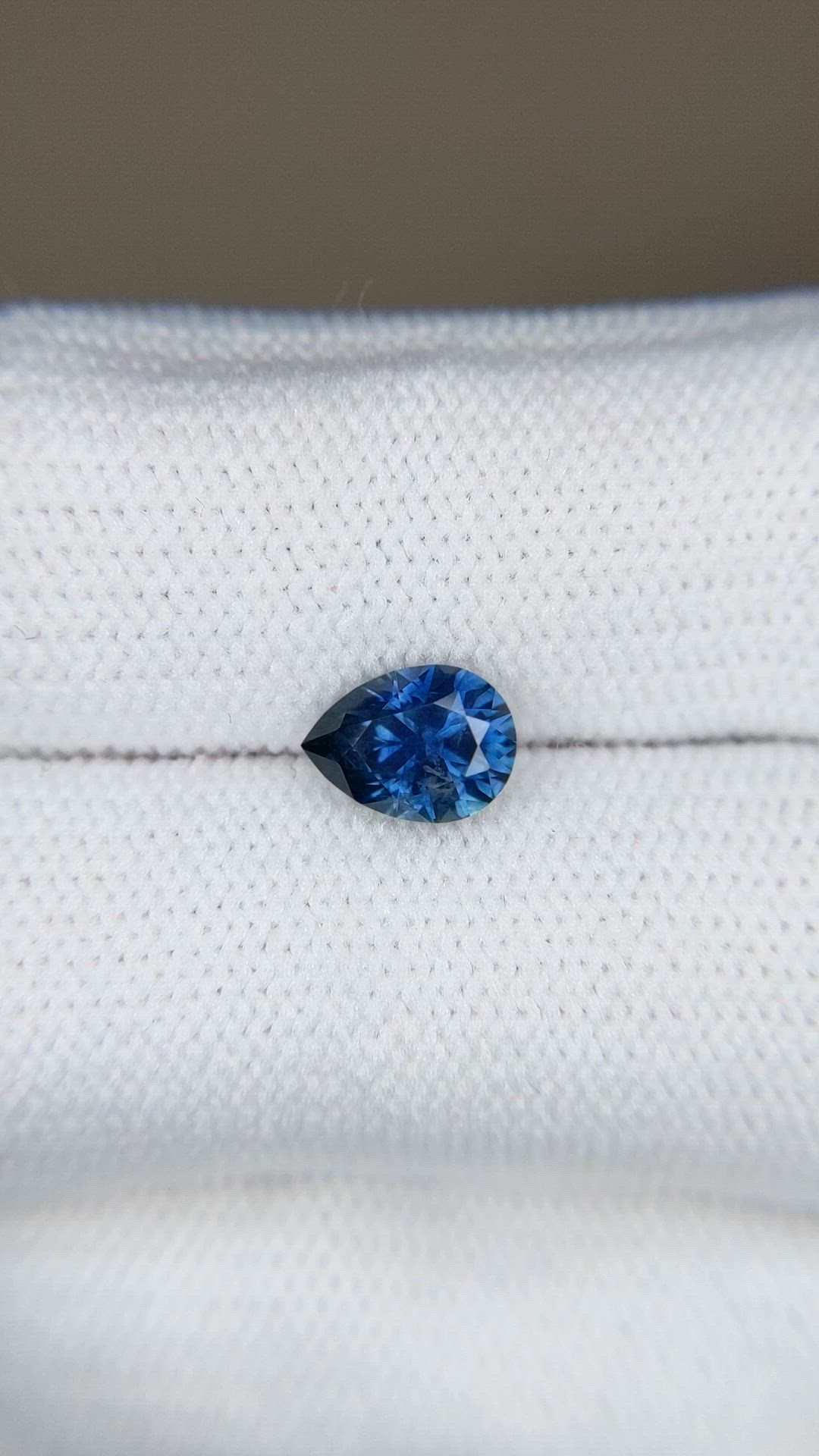
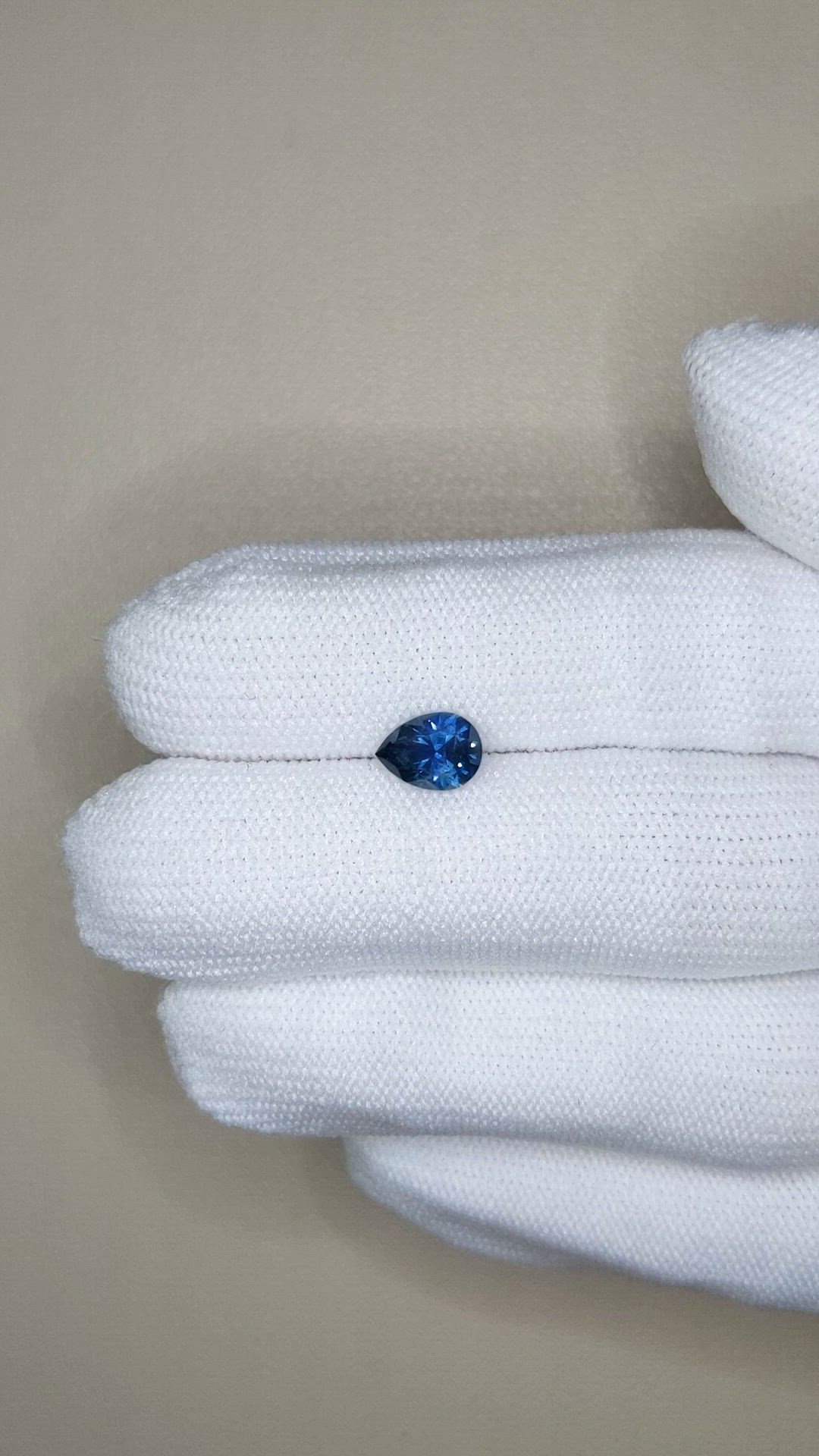
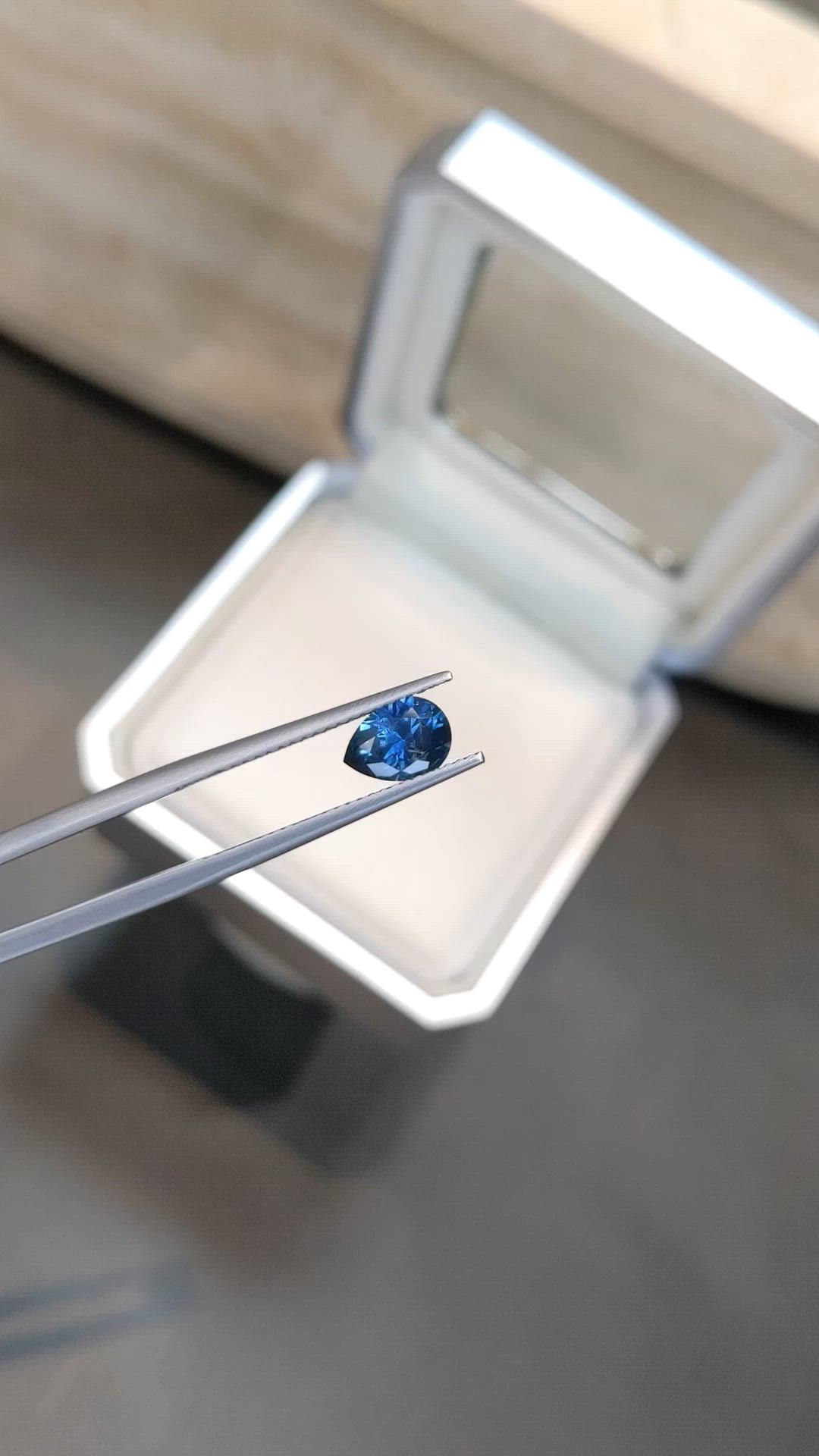
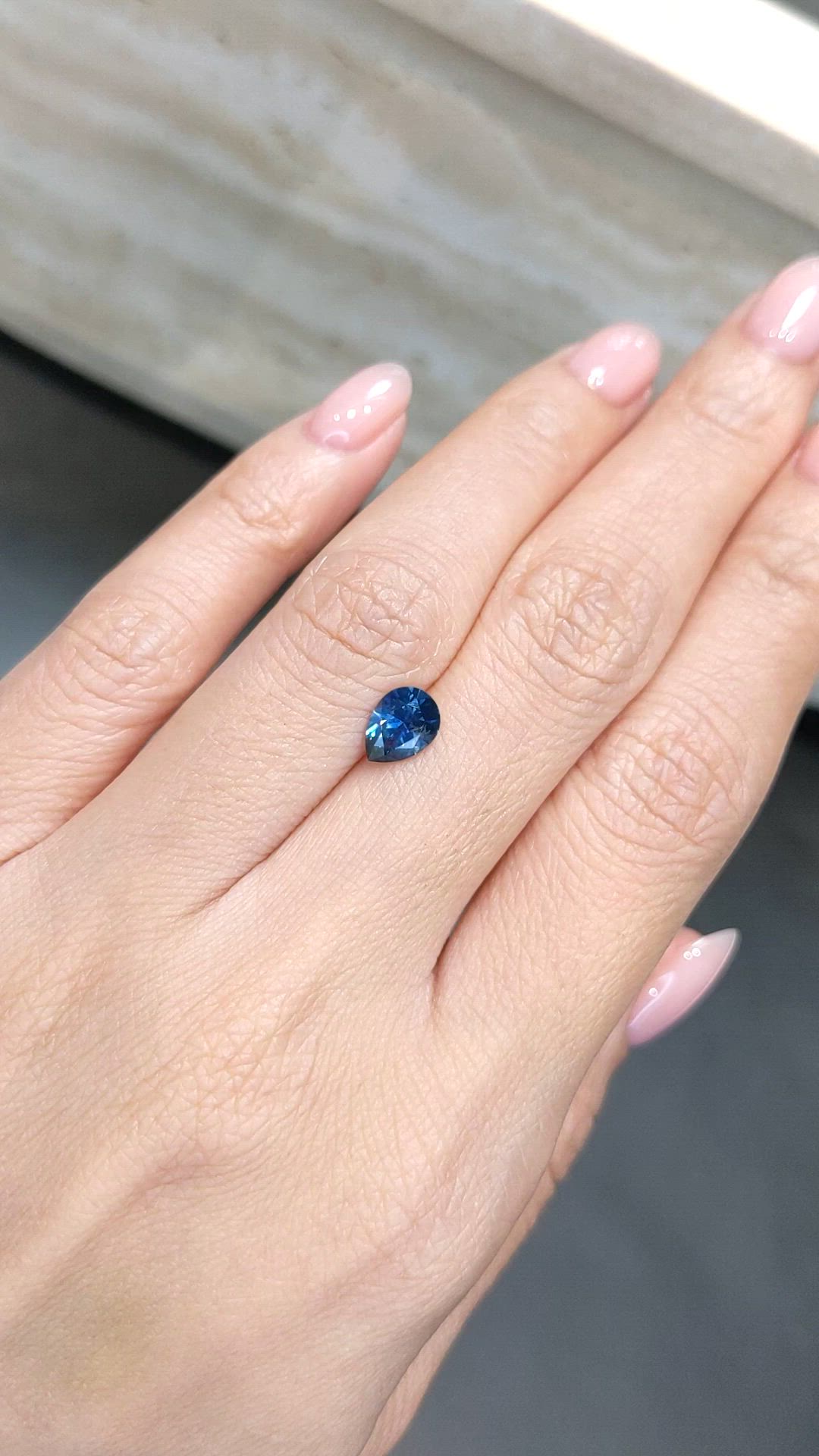

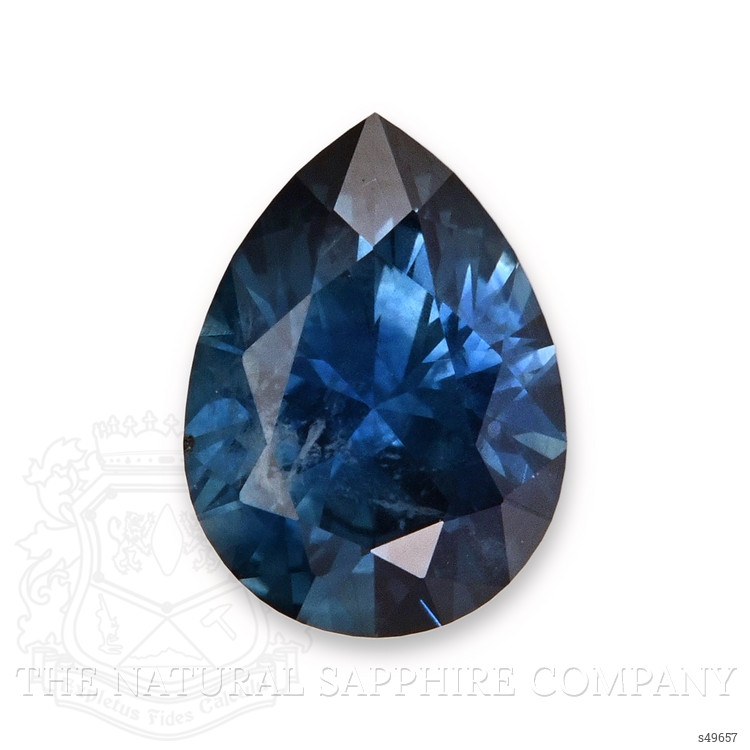
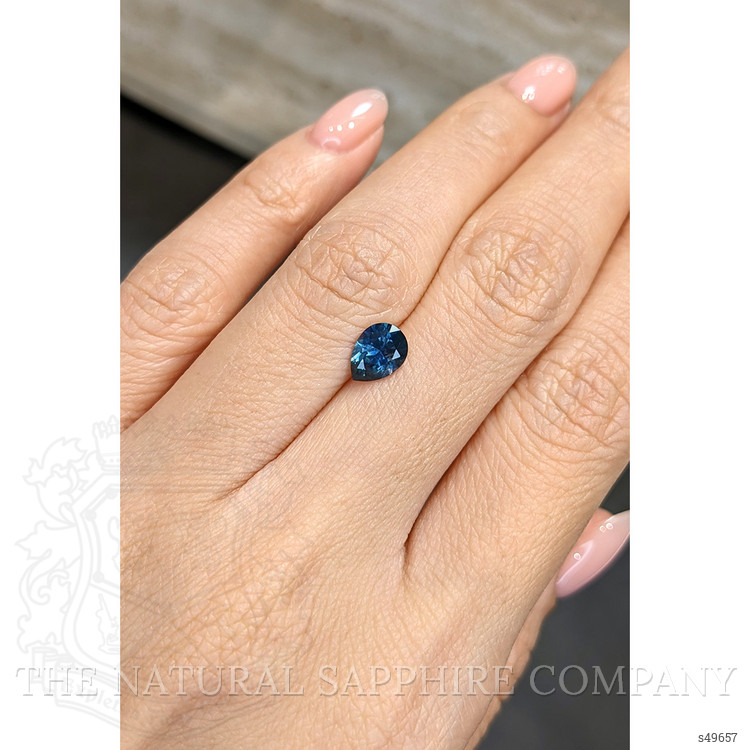
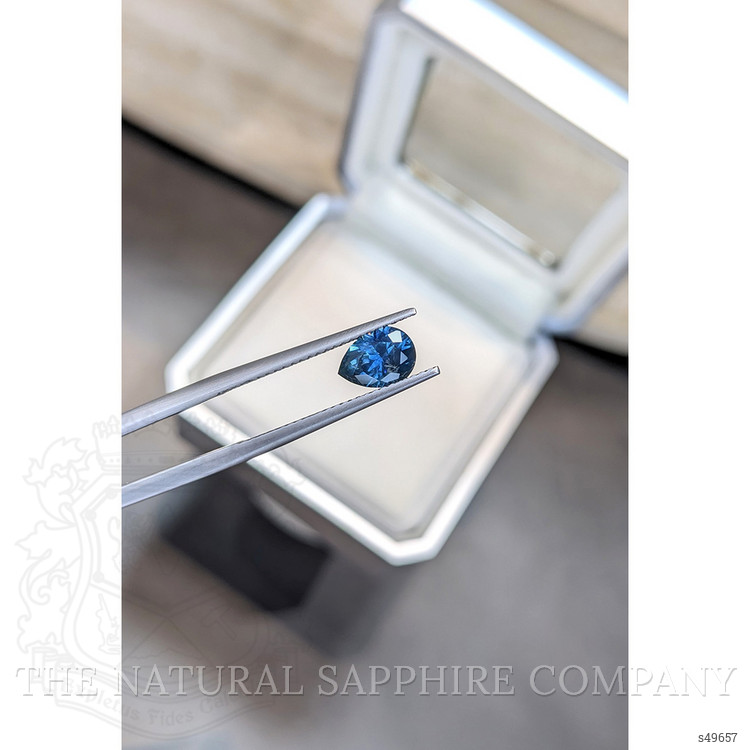


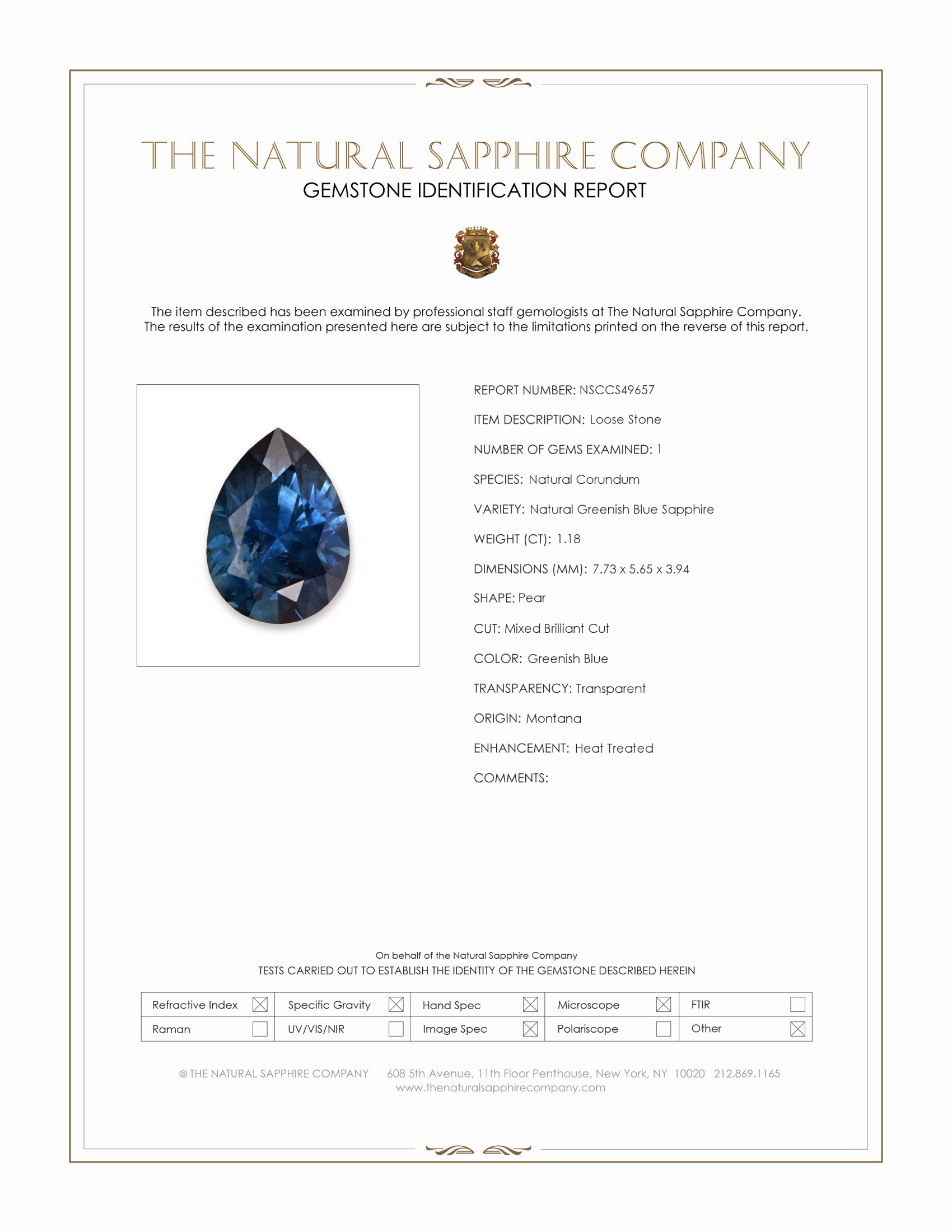
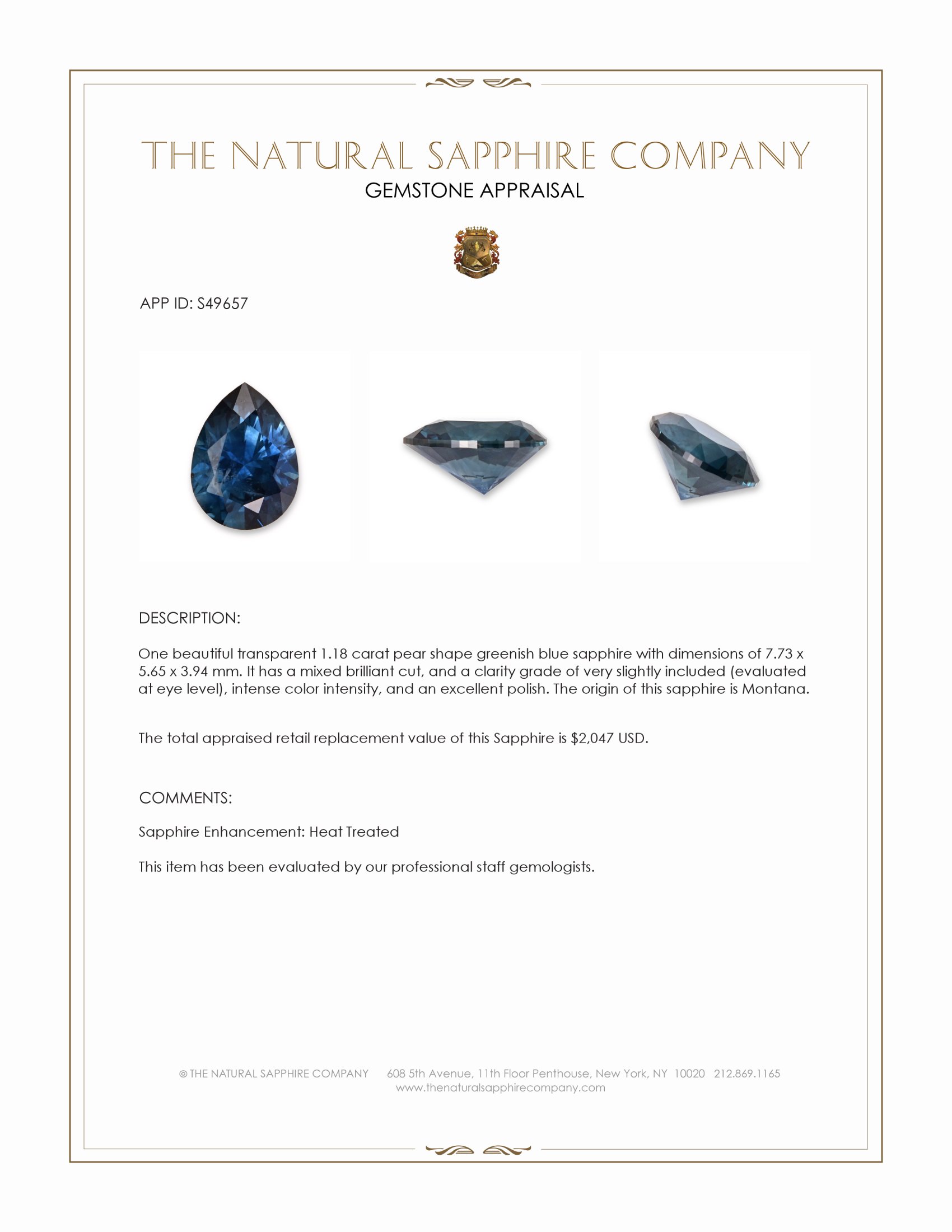
1.18 Ct. Greenish Blue Sapphire from Montana
This loose stone is available to ship now
Item ID: | S49657 |
|---|---|
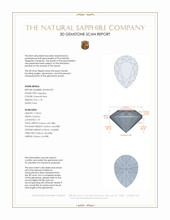
Dimensions (MM): help | Length: 7.73 Width: 5.65 Height: 3.94 |
Weight: | 1.18 Ct. |
Color: help | Greenish Blue |
Color intensity: help | Intense |
Clarity: help | Very Slightly Included |
Shape: help | Pear |
Cut: | Mixed Brilliant Cut |
Cutting style: | Faceted |
Enhancements: help | Heat Treated |
Origin: help | Montana |
Per carat price: help | $1,735 |
This loose sapphire is a transparent, pear shaped gem weighing 1.18 carat, with measured dimensions of 7.73 x 5.65 x 3.94 mm. The cutting style is faceted, with a mixed brilliant cut that combines a faceted pavilion with a modified faceted crown, providing controlled light return and a lively face up appearance. Clarity is graded as very slightly included when evaluated at eye level, indicating minor internal characteristics that are not distracting to the naked eye. Color presents as greenish blue with intense color intensity, and the polish is excellent, producing crisp facet junctions and a smooth reflective surface. The sapphire has been heat treated, a stable and commonly accepted enhancement for sapphires that improves color and clarity, and its reported origin is Montana, a source known for a spectrum of blue and teal sapphire hues. These technical attributes together define a gem that is well suited to precision settings, and that responds predictably to careful design and metal selection.
Optical behavior of this stone is influenced by its mixed brilliant cut and its intense greenish blue hue. The mixed brilliant pavilion concentrates light into a central flash, while the faceted crown disperses that light across the table and upper facets, producing both scintillation and depth. The greenish component shifts the perceived blue toward a teal or deep sea tone in certain lighting environments, especially under daylight or cool white illumination. At warmer light temperatures, the blue component remains prominent, while the greenish bias subtly softens the stone, reducing pure royal blue intensity and introducing a slightly organic, muted quality. Because polish is excellent, the stone exhibits clean reflections and defined facet patterns, which enhances apparent saturation and brightness. The overall transparency and very slightly included clarity grade ensure that internal features do not significantly interrupt light performance, allowing the color to read as consistent and enveloping across the pear shaped outline.
When set into jewelry, the greenish blue tone of this Montana sapphire complements a wide range of skin tones. On fair skin, the stone provides a striking contrast that is nevertheless refined, the depth of color creating visual richness without overpowering lighter complexions. The greenish element can reduce stark coolness, allowing the gem to sit gracefully against porcelain and light ivory tones. On warm or medium skin tones, the teal leaning hue harmonizes with natural warm undertones, offering a balanced interplay where neither metal nor skin competes with the stone. The sapphire can read as part of a cohesive palette, particularly when paired with warm yellow metals for additional warmth, or with white metals to highlight the blue clarity. For olive skin tones, the green aspect of the gem can resonate with subtle olive undertones, producing a complementary effect that enhances both the sapphire and the complexion. On deeper skin tones, the intense saturation allows the stone to remain vivid and legible, the greenish blue providing a luminous pop that is both elegant and resilient in presence. Across skin tones, the pear shape also influences perception, the tapered silhouette creating a lengthening visual line on the finger or neckline, which often flatters varied hand and neck proportions.
Design and setting considerations maximize both the aesthetic potential and the practical strengths of this gem. The pear shape and the mixed brilliant cut respond well to settings that allow light to enter from the pavilion and reflect through the crown, so prong settings with minimal metal obscuring the girdle are effective for brightness and scintillation. A three prong head for the curved side and a secure prong at the point can protect the tip while showcasing the stone. Halo settings with smaller round melee can increase perceived size and introduce contrast, with white melee enhancing the blue component and yellow or rose melee bringing warmth to the greenish nuance. Bezel settings provide robust security, and when executed with a thin bezel wall they can maintain good light return while offering a modern silhouette. Metal choice alters the perceived color balance, with platinum or white gold emphasizing the blue clarity, and yellow or rose gold softening the overall tone toward teal or greenish warmth. For necklaces or drop earrings, the pear shape naturally faces down, creating a focal point that moves with the wearer, while for rings an orientation that points toward or away from the hand changes perceived length. The Natural Sapphire Company stands behind the gemological attributes stated here, including weight, dimensions, cut description, clarity assessment, and heat treatment disclosure, and recommends professional setting and mounting by experienced jewelers to retain both beauty and security.
Care and practical considerations are straightforward given the conventional heat treatment and the inherent durability of sapphire. Routine cleaning with warm water, gentle detergent, and a soft brush will maintain surface luster, and ultrasonic cleaning is generally acceptable for heat treated sapphires, though individual settings should be tested for compatibility. Avoiding exposure to strong acids and prolonged extreme heat preserves polish and any mounting integrity. When considering custom design work, the 7.73 x 5.65 x 3.94 mm proportions should be communicated to the bench jeweler to ensure correct seat and secure prong placement, and the very slightly included clarity should inform decisions about pavilion exposure if a closed back or open back was under consideration. As a Montana sapphire, this stone brings a specific regional character that sits between classic cornflower blue and greenish teal, offering versatility across jewelry types and design languages. The combination of precise measurements, intense color, and excellent polish makes this pear shaped sapphire a practical, enduring, and visually engaging choice for clients seeking a refined and adaptable colored gemstone.


