
- Stone12
- Reports3


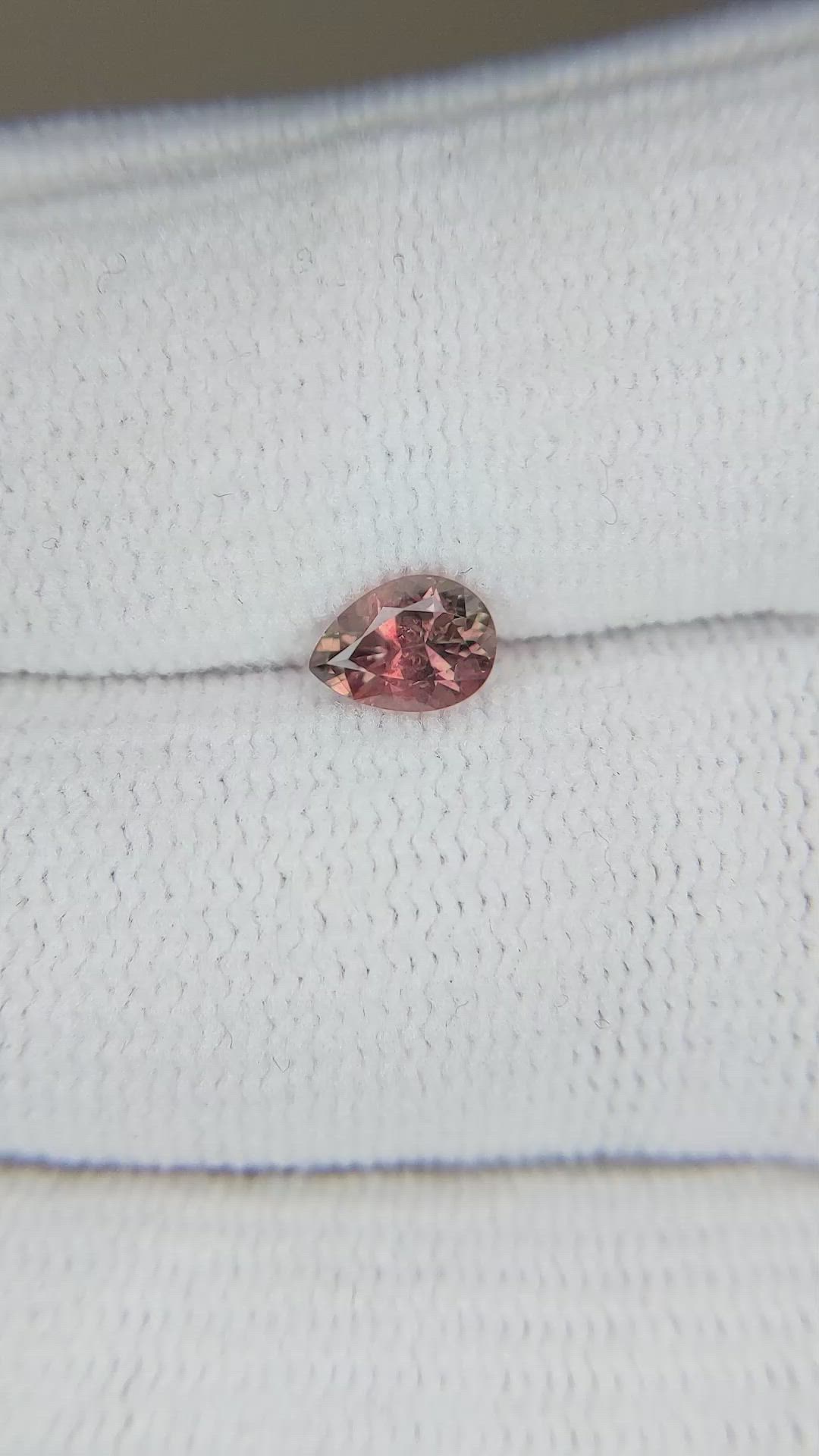
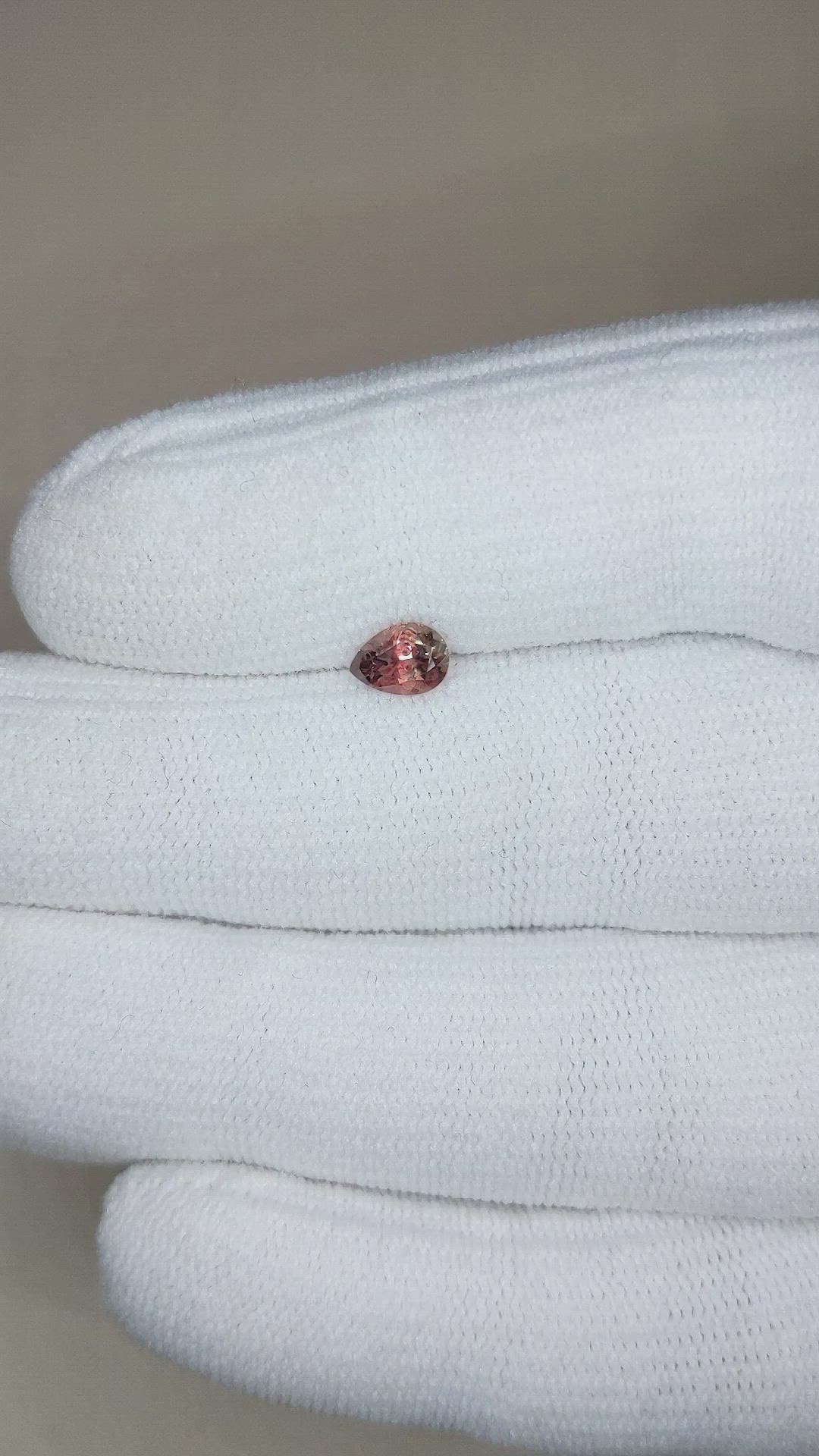
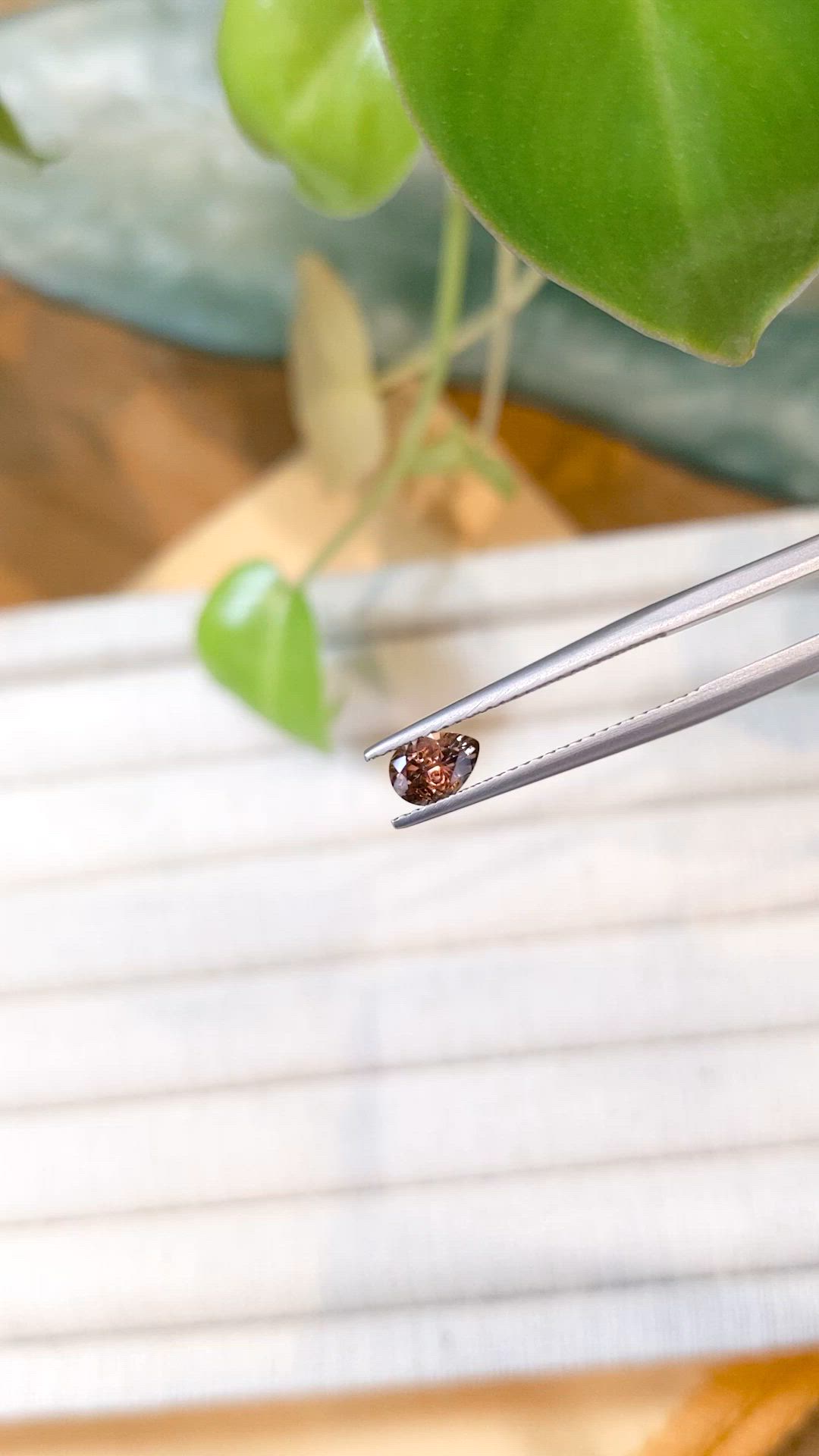
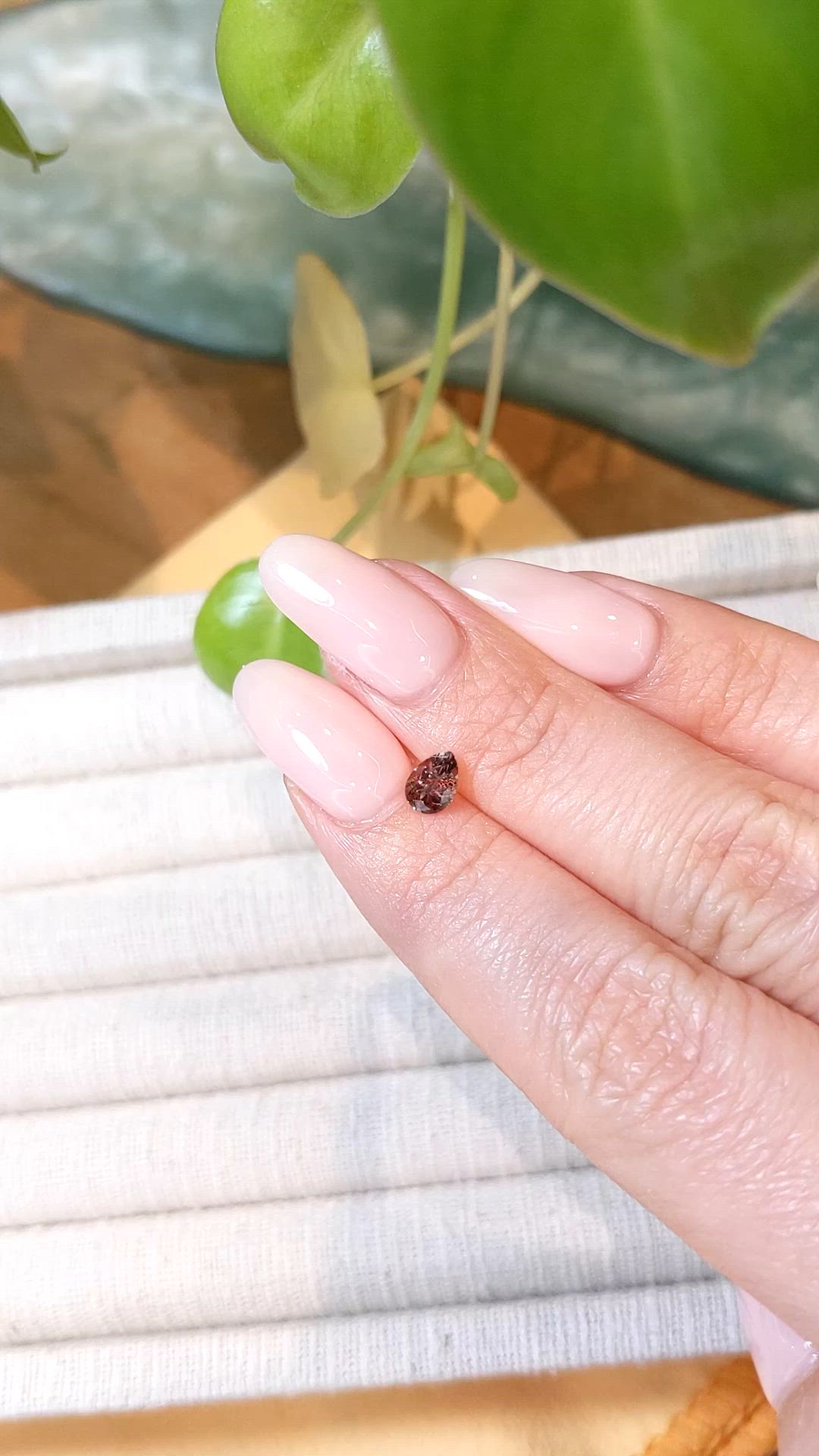




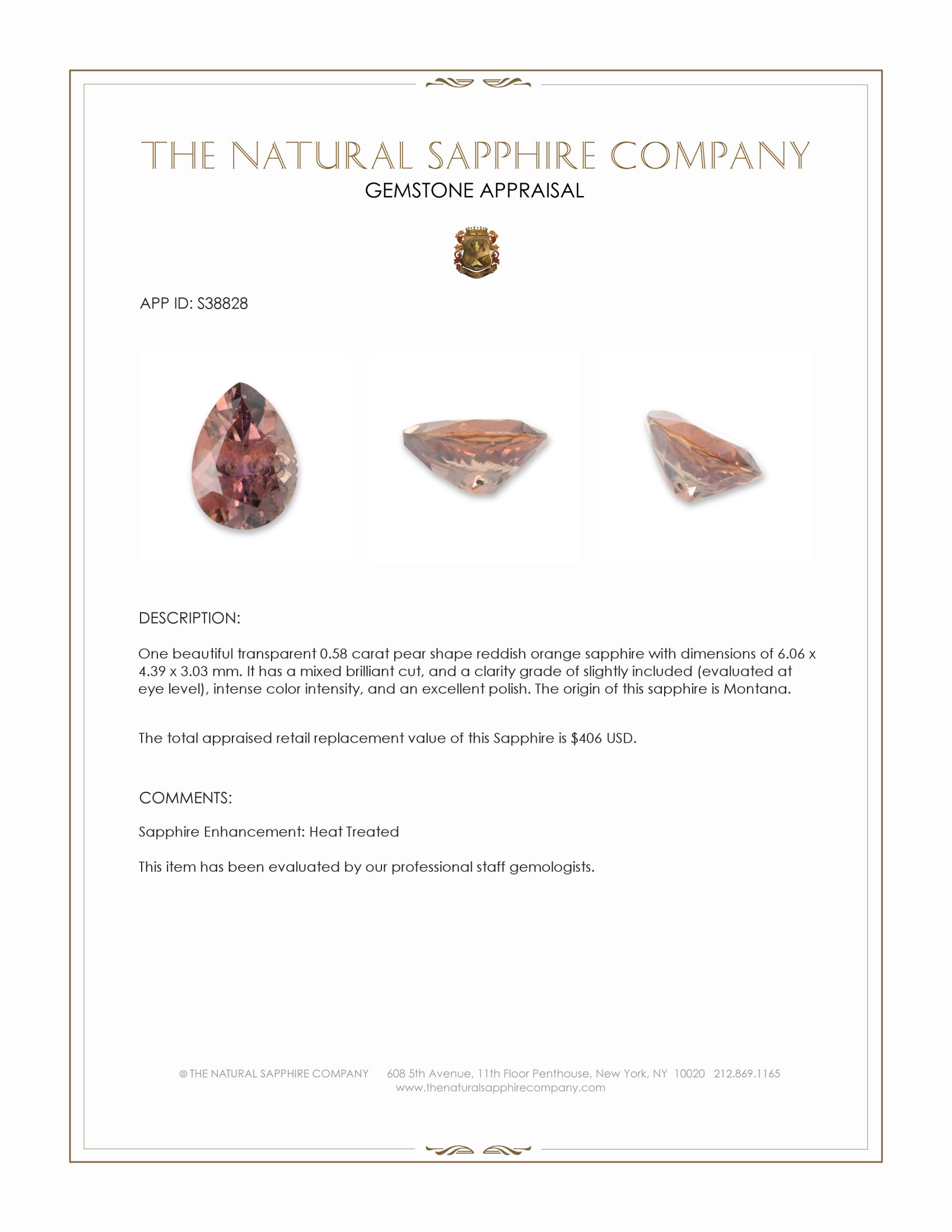
0.58 Ct. Reddish Orange Sapphire from Montana
This loose stone is available to ship now
Item ID: | S38828 |
|---|---|
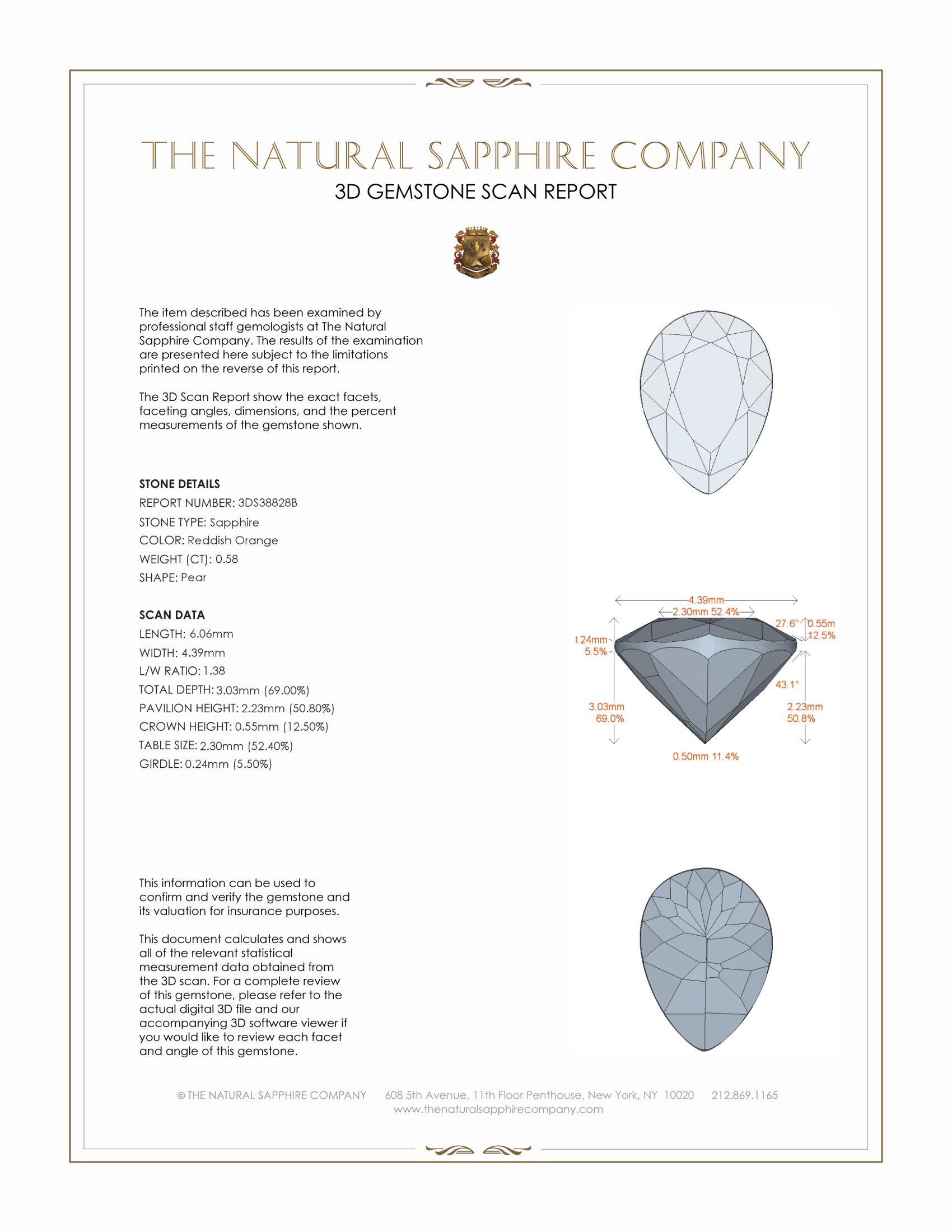
Dimensions (MM): help | Length: 6.06 Width: 4.39 Height: 3.03 |
Weight: | 0.58 Ct. |
Color: help | Reddish Orange |
Color intensity: help | Intense |
Clarity: help | Slightly Included |
Shape: help | Pear |
Cut: | Mixed Brilliant Cut |
Cutting style: | Faceted |
Enhancements: help | Heat Treated |
Origin: help | Montana |
Per carat price: help | $700 |
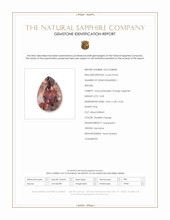
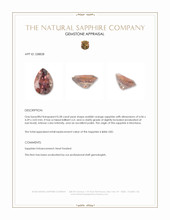
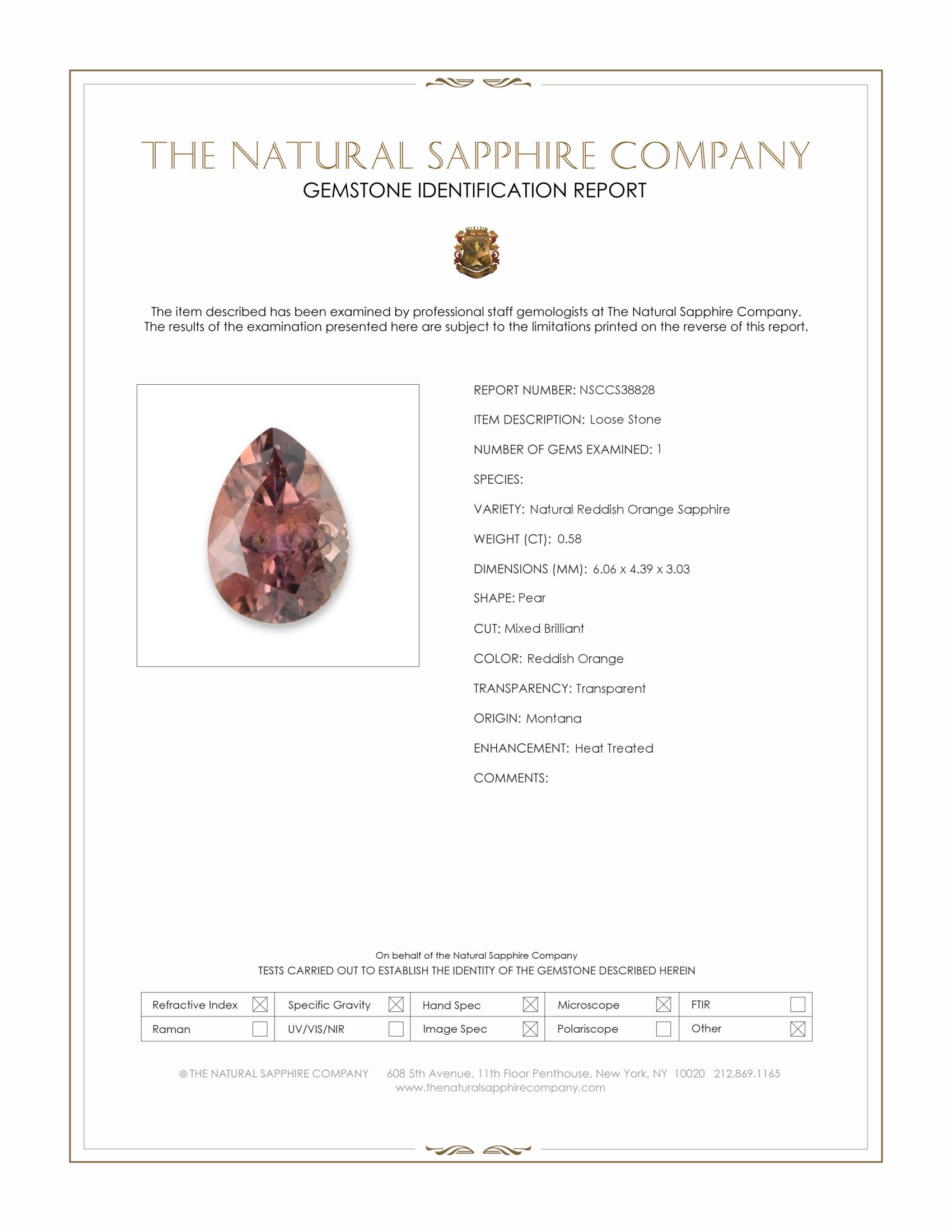
This gemstone is a transparent 0.58 carat pear shaped sapphire, with exact dimensions of 6.06 x 4.39 x 3.03 mm, presented by The Natural Sapphire Company, and originating from Montana. The gem has been heat treated, a standard enhancement for color optimization in sapphire, and it displays an intense reddish orange body color that remains saturated across the face up view. The cut is a mixed brilliant style, combining a brilliant faceted crown with a modified pavilion that preserves weight while promoting light return. Clarity is graded slightly included at eye level, with inclusions confined to discrete areas that do not materially diminish transparency. The polish is excellent, resulting in crisp facet junctions and a smooth table, which together enhance optical performance. As corundum, this sapphire benefits from inherent durability with a hardness of 9 on the Mohs scale, making it suitable for daily wear when set appropriately, and the heat treatment applied is stable under normal wearing conditions.
The mixed brilliant execution of this pear shape is deliberate, with a proportion set that yields an overall depth that measures at approximately 58 percent of the average dimension, a balance that favors favorable light return without sacrificing apparent size. The crown adopts a conventional brilliant faceting pattern to generate a network of small, high angle facets that act as primary agents for scintillation and face up brilliance, while the pavilion retains a stepped or modified facet structure to control color saturation and internal light distribution. The pear outline introduces a directional light performance, with the wider shoulder region returning larger flashes of light and the tapered tip concentrating light back into the crown, creating contrast and visual motion during wear. Excellent polish minimizes light scatter at facet boundaries, maximizing both specular reflection and the perception of depth, and the slightly included clarity grade means that inclusions are typically visible only under certain viewing angles or when backlit, allowing the gem to present as predominantly clean in standard face up inspection.
Under natural daylight, especially the cool spectrum of northern light, the sapphire exhibits its truest balance of red and orange components, revealing the full saturation described as intense, with a lively distribution of small, bright scintillation flashes from the crown facets. In direct sunlight the gem shows stronger contrast, with sharper white flashes and discrete pinfire scintillation, while the underlying orange components warm subtly, producing an attractive play between fire and body color. Under incandescent light the warm red and orange tones intensify substantially, producing a richer, more garnet like appearance as the lower energy red wavelengths dominate, and this lighting often accentuates the stone as more orange red. Modern white LED lighting, depending on the color temperature, will tend to emphasize brilliance and cooler pinkish undertones if present, creating a cleaner, more gemmy presentation with crisp facet definition. Candlelight and other low temperature light sources will deepen the red facet reflections and reduce the perception of yellowish orange, producing a more saturated, almost velvety visual effect, while halogen and full spectrum sources bring out both the orange warmth and the lively scintillation, because the broader spectral output excites both the color centers and surface reflections. When the stone is backlit or viewed against white light, slight inclusions and localized zoning may become apparent as areas of internal feathering or reflective pockets, however these features can add character without undermining the overall face up appeal.
For mounting and long term presentation, consider a setting that protects the pointed end of the pear, because although corundum is hard it is susceptible to cleaving on sharp impact, and a bezel or a prong with a tip guard is recommended to shelter the apex. The directional nature of the pear shape allows for design choices that emphasize either the width for prominence or the length for elegance, and setting the gem with the point oriented toward the hand will enhance perceived size and draw attention to the intense color at the shoulder. Metal choice will influence perceived color, with warm yellow gold amplifying the orange component and creating a more vintage aesthetic, while white metals such as platinum or white gold will increase contrast and allow the brilliant faceting to read as whiter flashes, ideal for a contemporary look. Cleaning can be performed with warm soapy water and a soft brush, and professional ultrasonic cleaning is generally acceptable for heat treated sapphires, but caution is advised if inclusions reach the surface or are fracture related, in which case manual cleaning is preferred. The Natural Sapphire Company provides detailed provenance information for this Montana stone, ensuring traceability and craftsmanship documentation, and our gem specialists can advise on the most effective mounting to showcase the intense color and mixed brilliant cutting, while minimizing the visibility of inclusions and maximizing the dynamic play of light across different lighting environments.


