
- Stone12
- Reports3
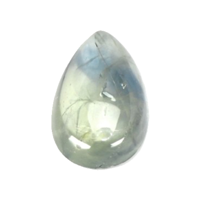
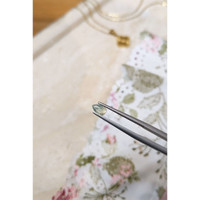
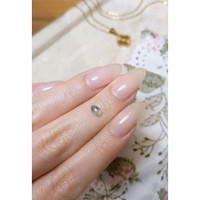
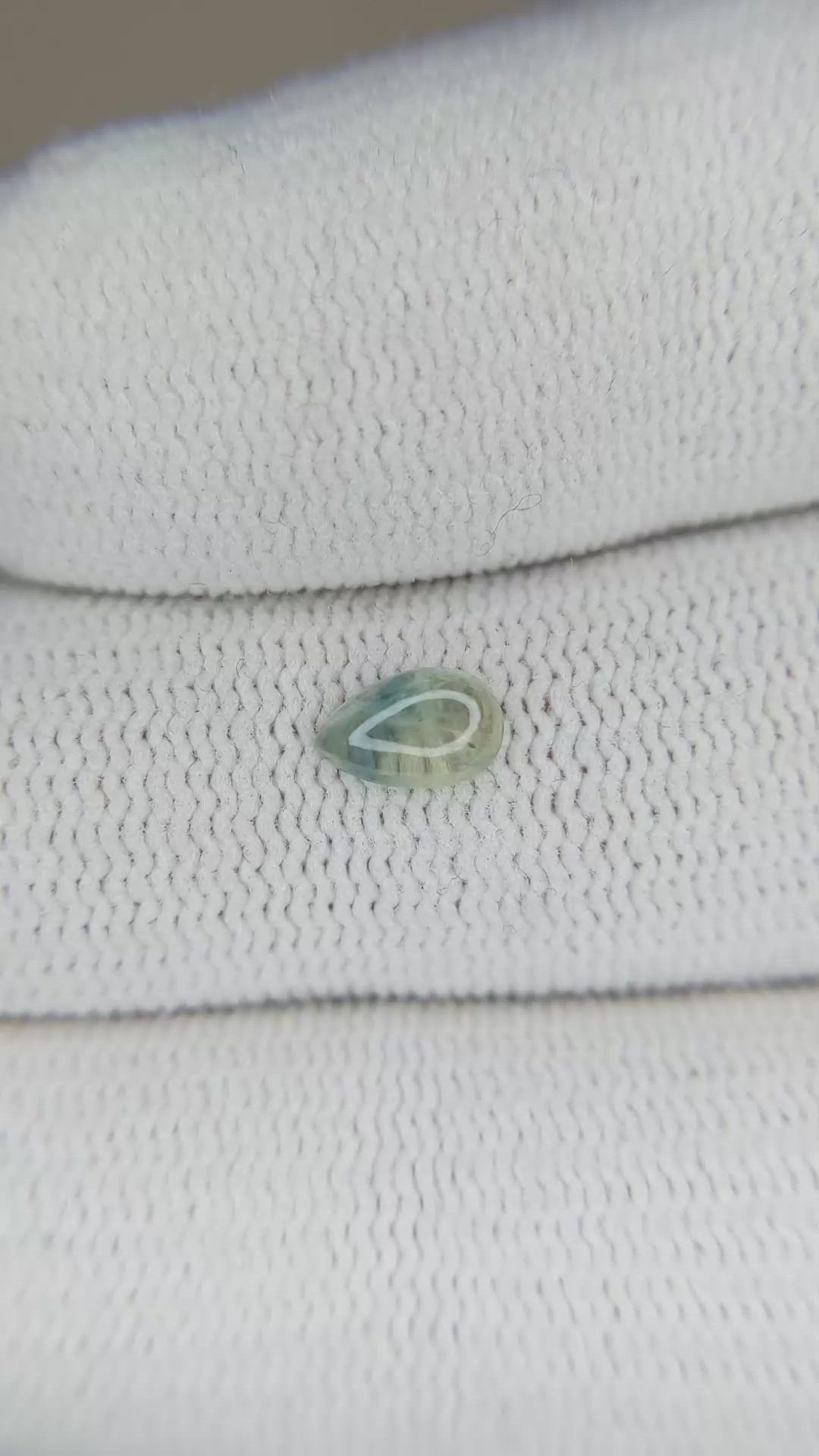
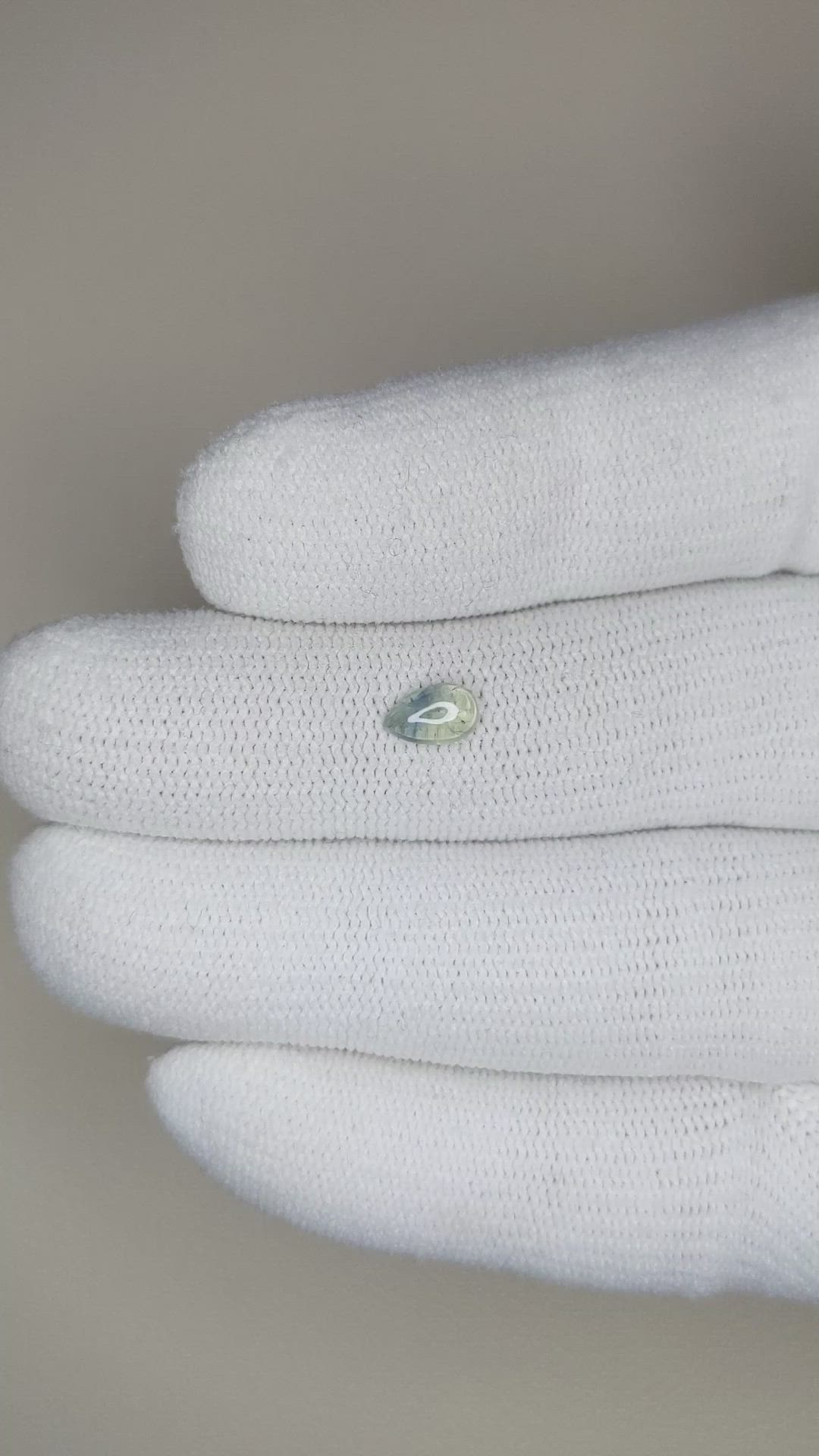
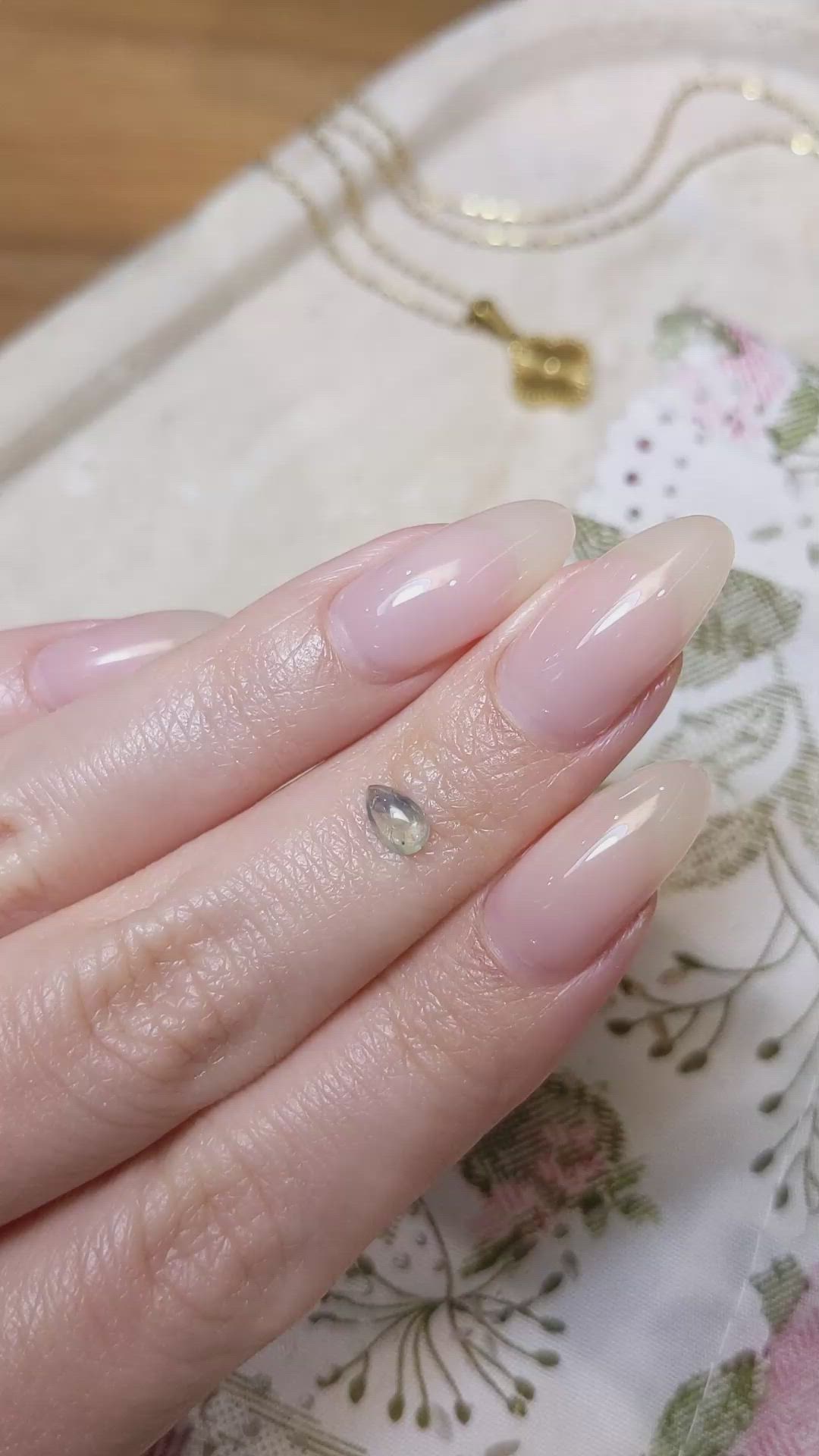
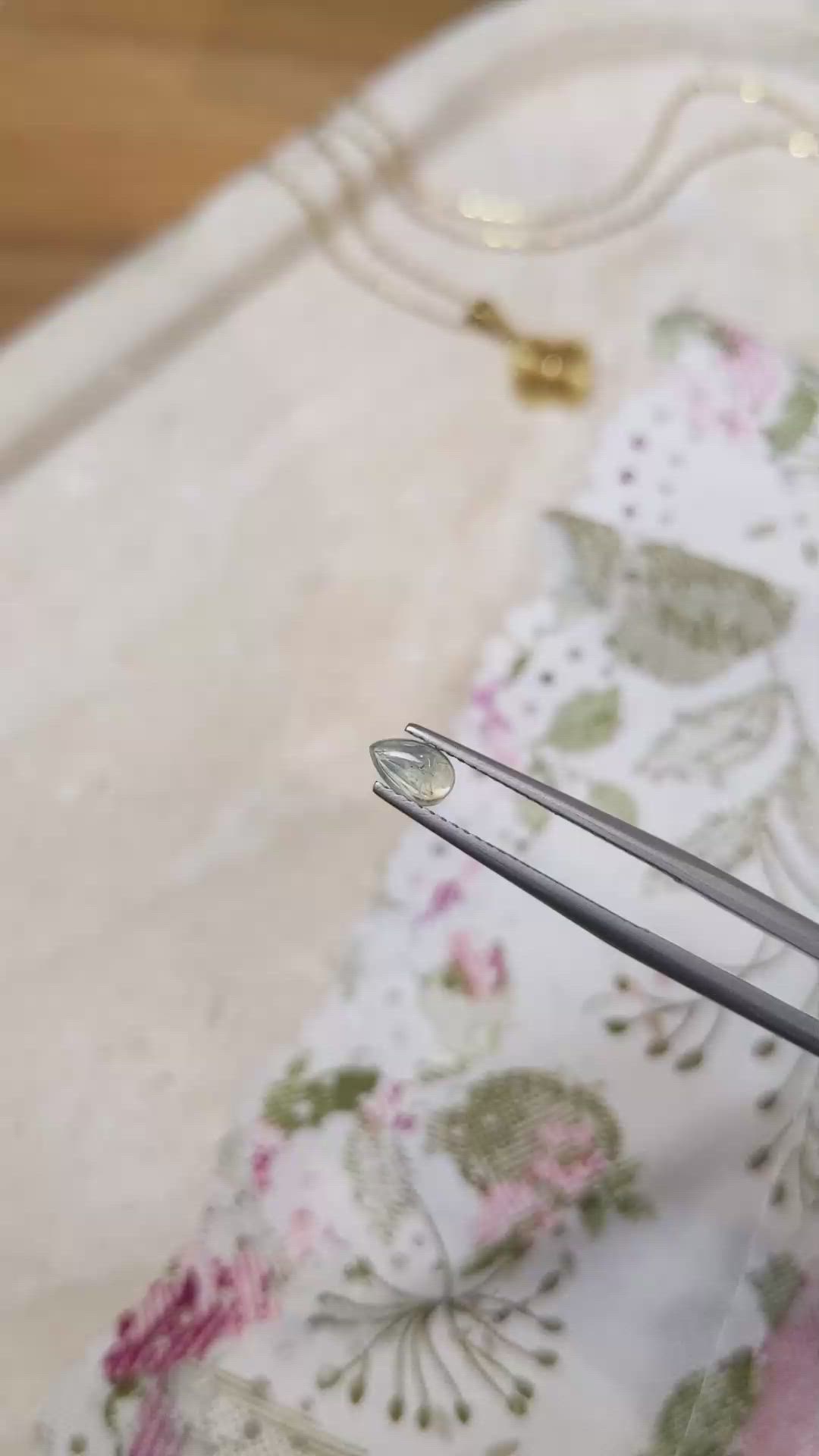



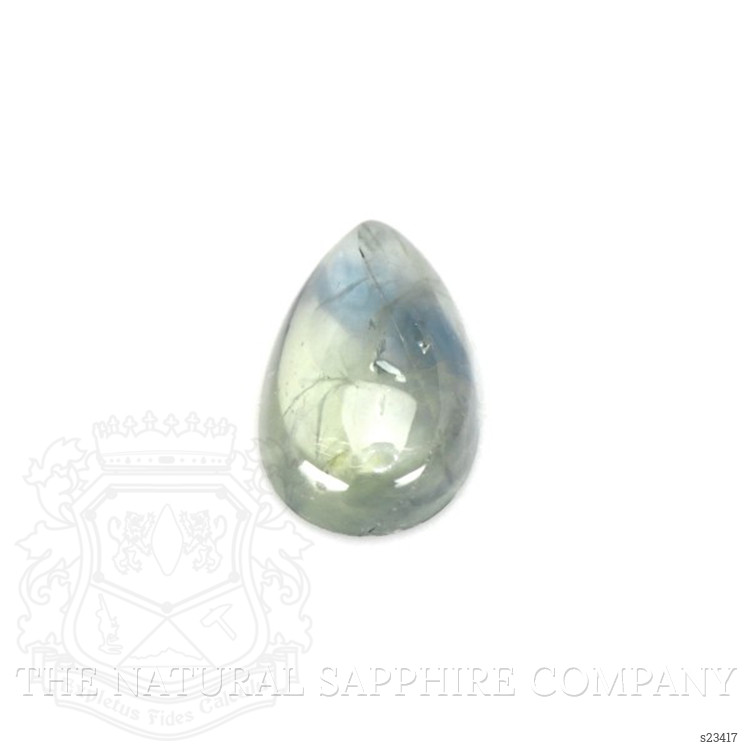
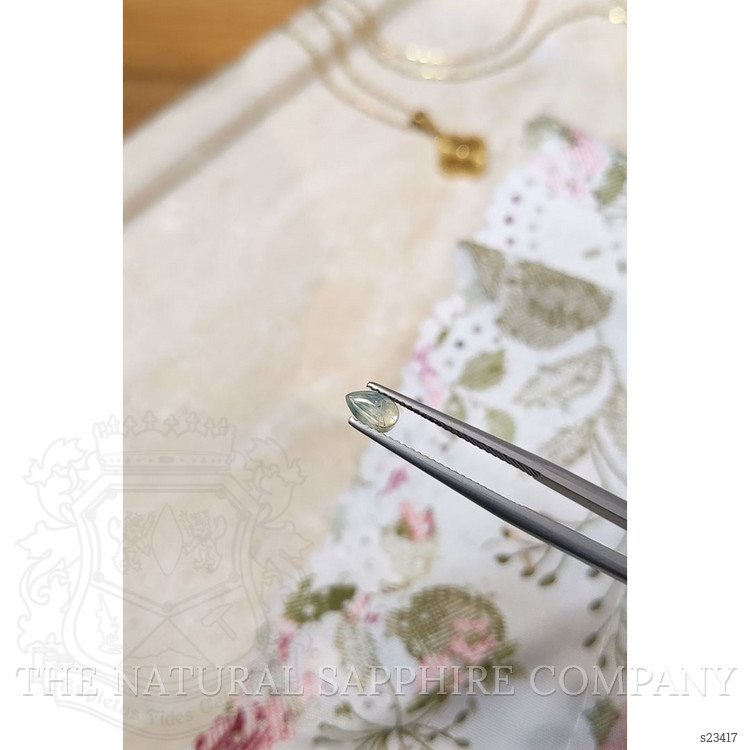
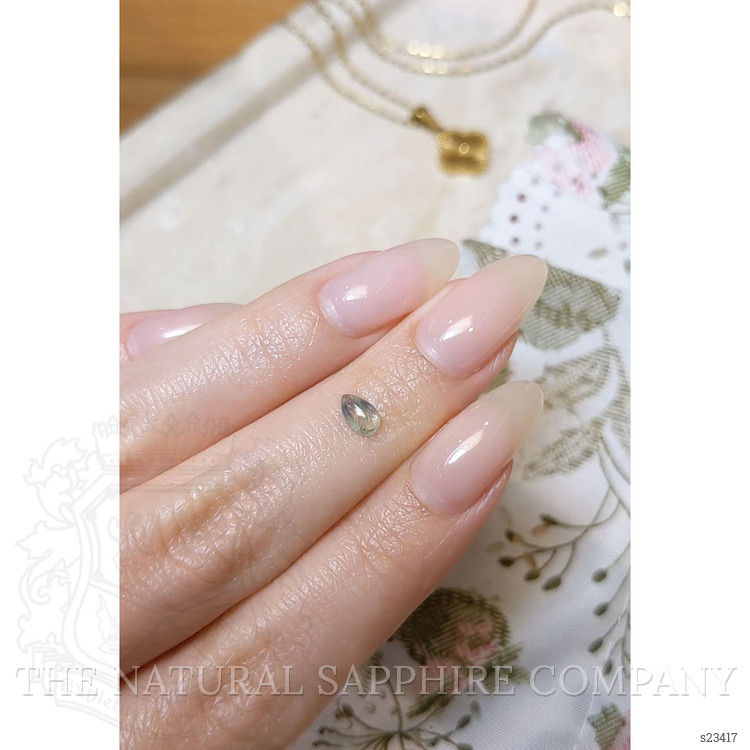



0.50 Ct. Bluish Green Cabochon Sapphire from Montana
This loose stone is available to ship now
Item ID: | S23417 |
|---|---|
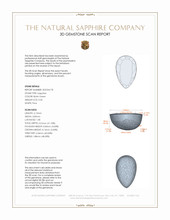
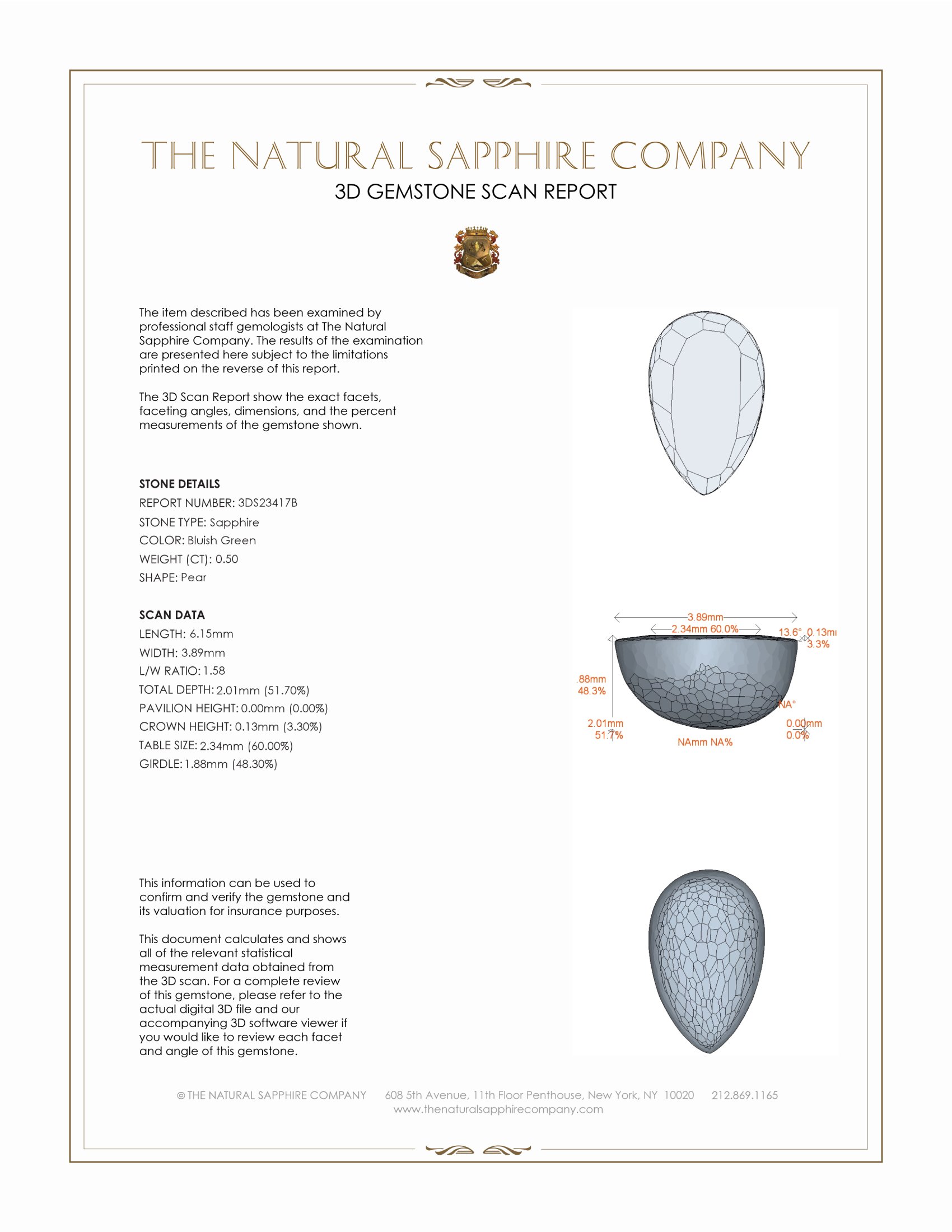
Dimensions (MM): help | Length: 6.15 Width: 3.89 Height: 2.01 |
Weight: | 0.50 Ct. |
Color: help | Bluish Green |
Color intensity: help | Light |
Clarity: help | Slightly Included |
Shape: help | Pear |
Cut: | Cabochon |
Cutting style: | Cabochon |
Enhancements: help | Heat Treated |
Origin: help | Montana |
Per carat price: help | $400 |
This transparent pear shaped bluish green sapphire, presented by The Natural Sapphire Company, weighs 0.50 carat and measures 6.15 x 3.89 x 2.01 millimeters, a proportion that preserves a refined elongated silhouette while maintaining optical balance. The stone is executed as a cabochon, a deliberate cutter decision that emphasizes internal color and controlled light transmission. Clarity is graded as slightly included at eye level, a condition that in this material tends to manifest as discrete pinpoint and wispy needle structures rather than pervasive clouding, and these features interact predictably with the lens like dome. Color is described as light in intensity, with a bluish green hue typical of Montana origin, and the piece has undergone standard heat treatment to stabilize and enhance chroma and minimize silk, resulting in a clean, consistent tone. The polish is excellent, which is critical for a cabochon, because a high quality surface finish governs specular reflection and the quality of transmitted light observed by the viewer.
Although this gem is finished as a cabochon rather than a traditional faceted stone, the cutter applied geometric principles commonly associated with faceting to achieve maximum light play. The pear outline is defined by precise bilateral symmetry, and the convex dome is calibrated to an optimum height relative to the stone width, creating predictable optical paths within the material. Careful shaping of the dome and the subtle transition at the girdle act as engineered planes, they control internal reflection, lensing and the distribution of incident light across the body color. The corundum family has a refractive index in the range 1.762 to 1.770 and a low birefringence around 0.008 to 0.010, parameters that the cutter accounted for when determining dome curvature and thickness, so that the cabochon returns color and brightness efficiently rather than dispersing it. The result is a piece that, while not exhibiting brilliant facet scintillation, offers lively internal reflection and even color washing that reads as dynamic in hand.
From a color grading and clarity perspective, the light bluish green tone benefits from the cabochon format, because the domed geometry functions as a shallow optical lens, concentrating and saturating color toward the table area without producing abrupt hotspots. Pleochroic behavior in many sapphires can be subdued with cabochon cutting, but in this Montana material the subtle color separation contributes to perceived vitality as the stone is tilted, the cutter having oriented the long axis to favor the most attractive color plane. Slight inclusions remain visible at eye level under close inspection, they are not structural flaws and they do not significantly impair the gem’s face up appearance, especially given the heat treatment that reduces silk and minor inclusions. The light intensity classification is a deliberate market position for collectors who seek a soft, vintage like palette, and the thermal enhancement applied here is stable and industry standard, improving hue purity while preserving internal character.
Craftsmanship details extend beyond the visible dome to include a consistent girdle profile and an expertly finished pavilion interface, both of which influence setting compatibility and wearability. The girdle is proportioned to allow secure bezel or prong engagement, and the polished pavilion junction minimizes stress concentrations that can lead to chipping during setting. Given its dimensions and optical behavior, this pear shaped cabochon is well suited to designs that exploit directional light, for example pendant or drop earrings where the stone can move and present changing planes to the viewer. When evaluated in context of its origin, treatment, and finishing, this 0.50 carat Montana sapphire represents a technically considered example of cabochon cutting informed by faceting geometry, a piece that will appeal to connoisseurs who value the interplay between precise cutting theory and the organic character of natural inclusion structures.


