
- Stone14
- Reports3
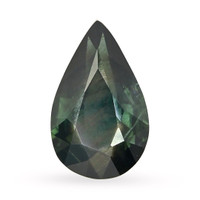
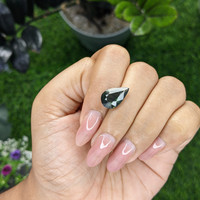
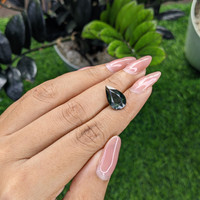
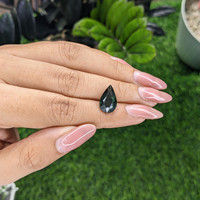
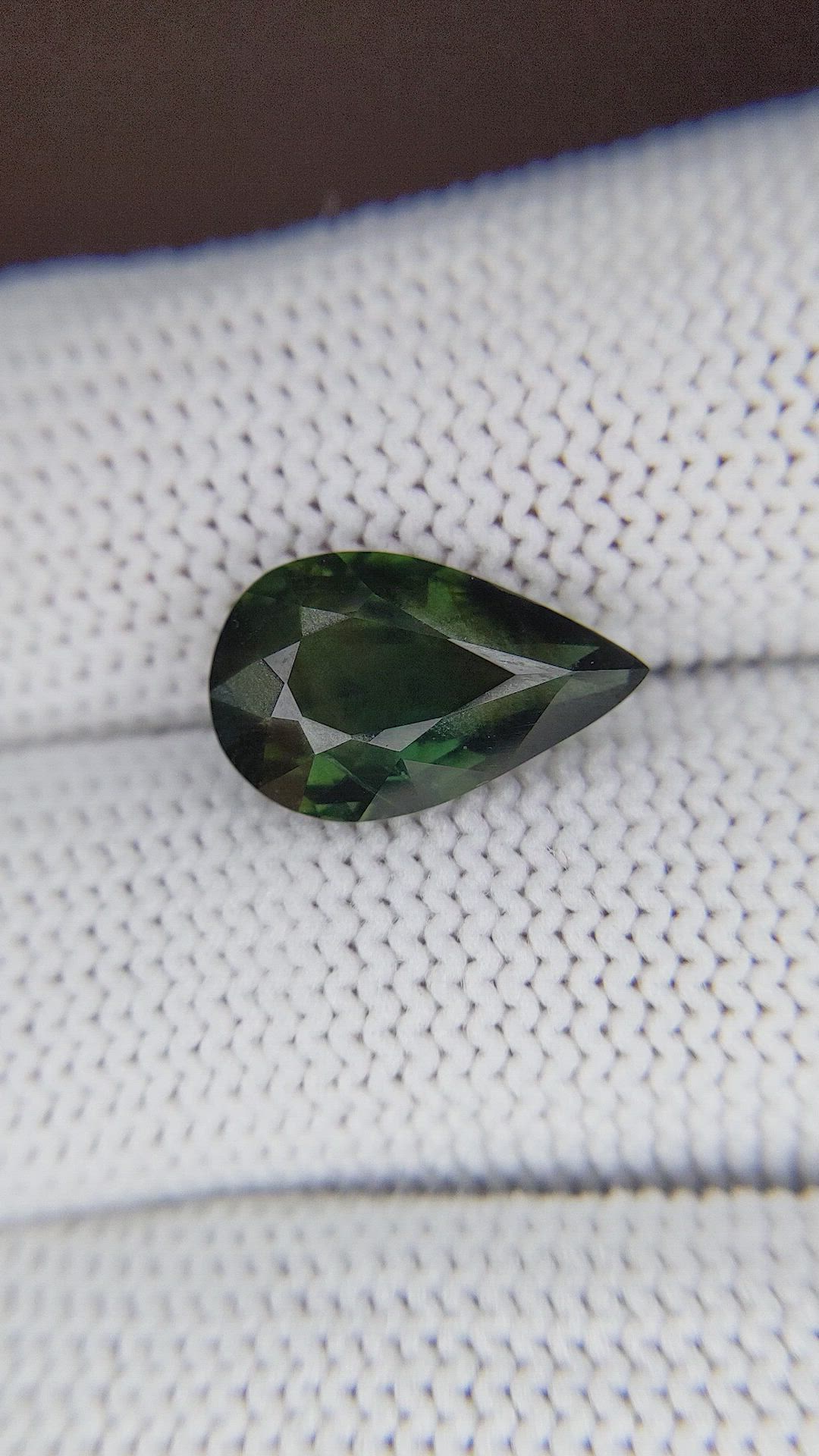
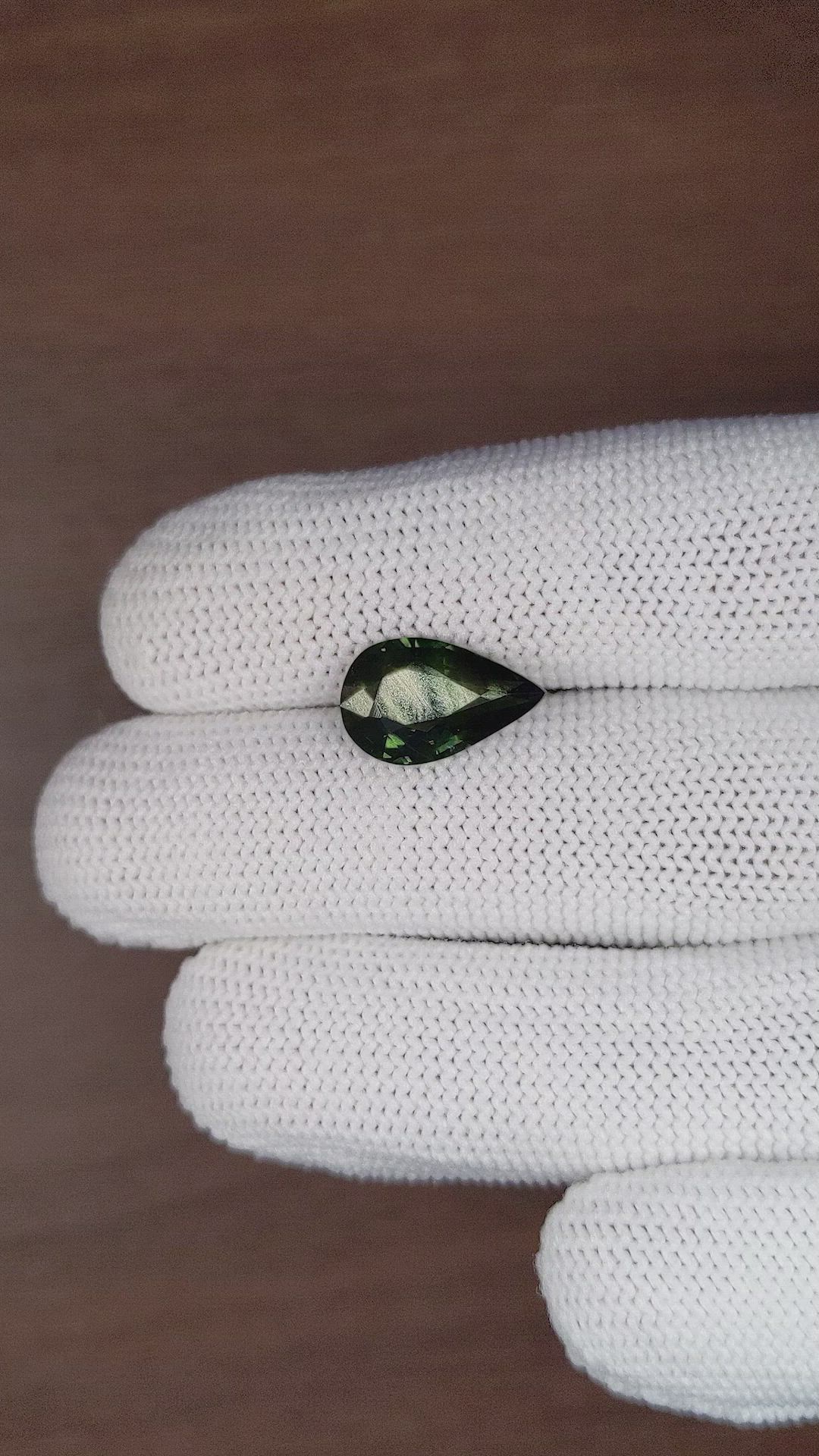
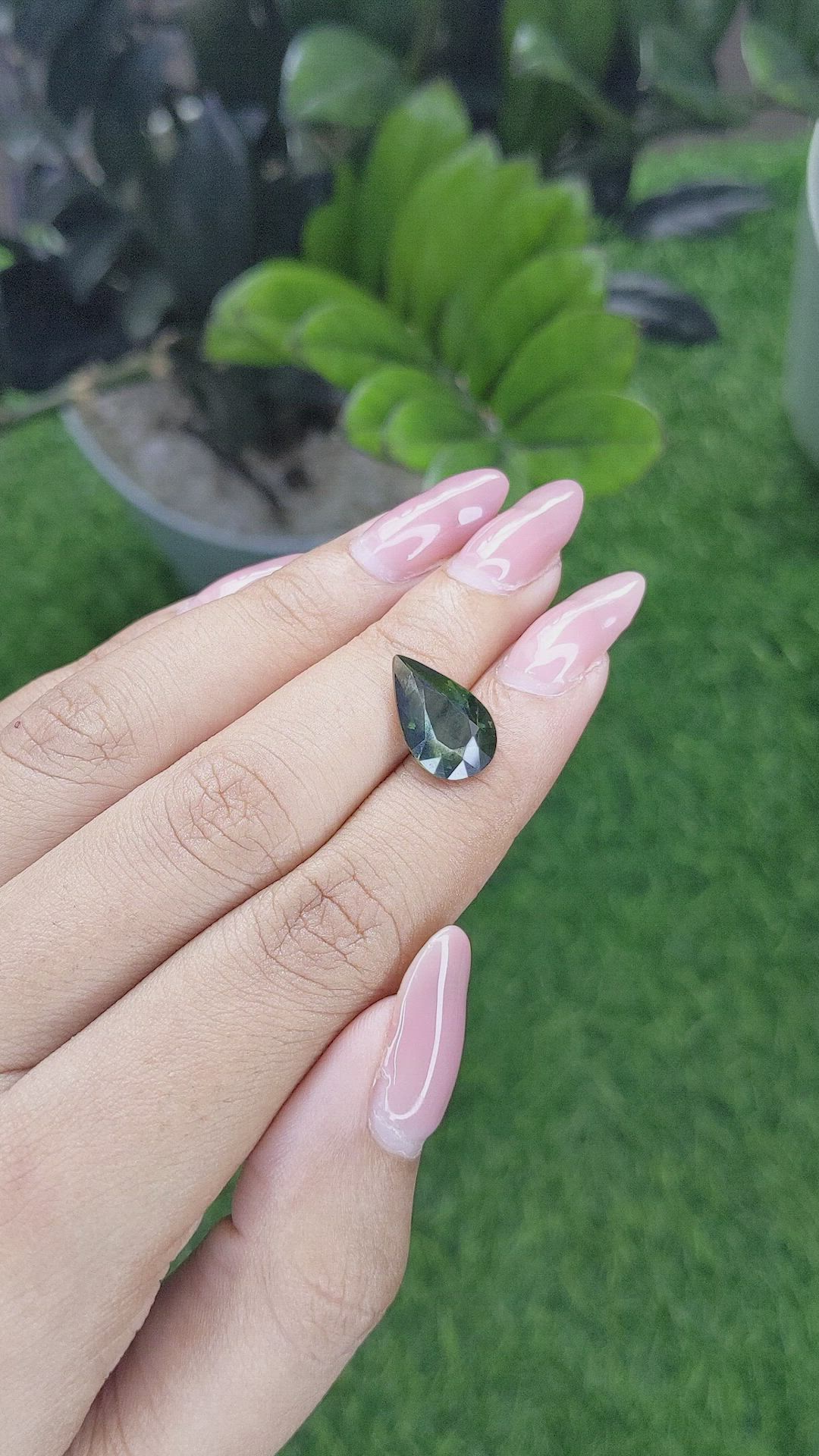
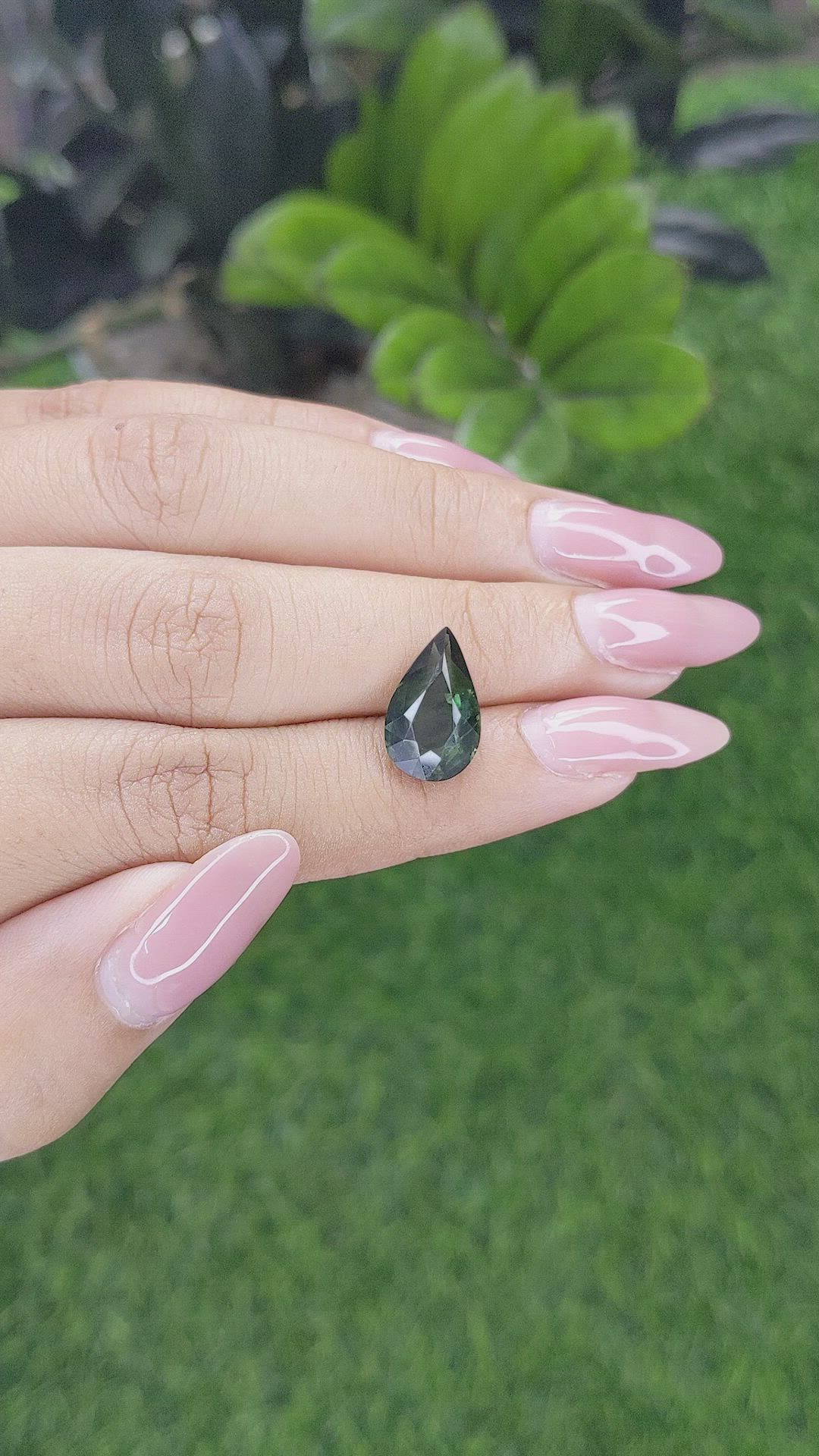

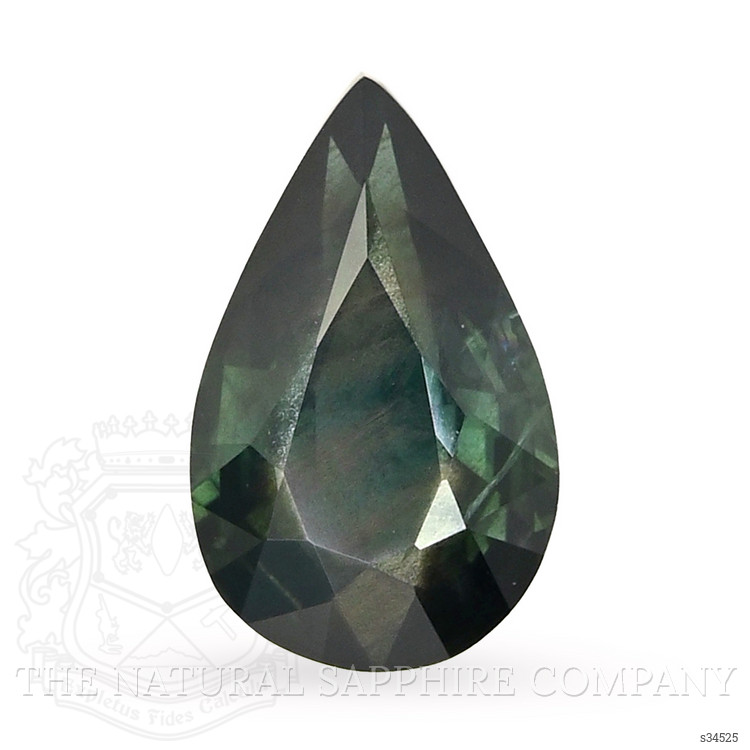
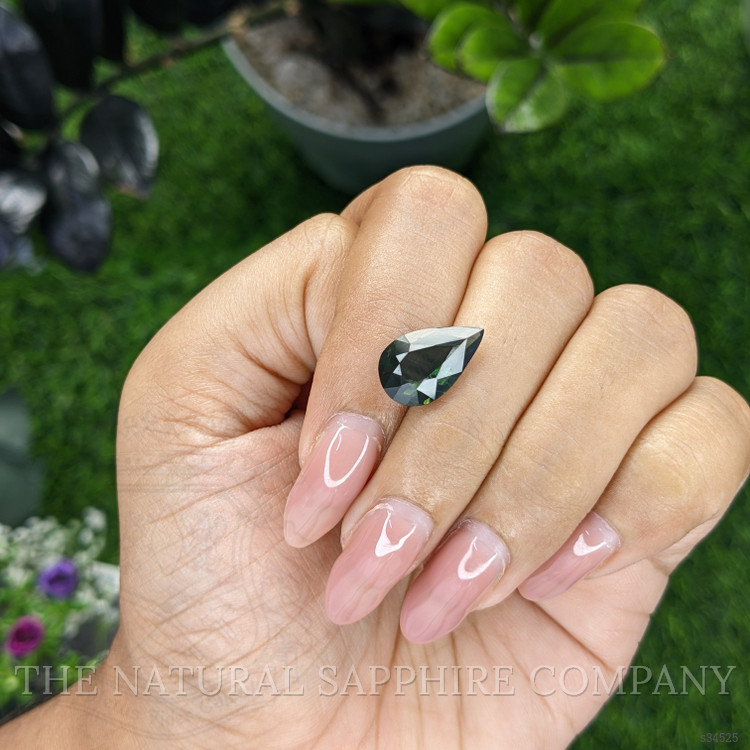
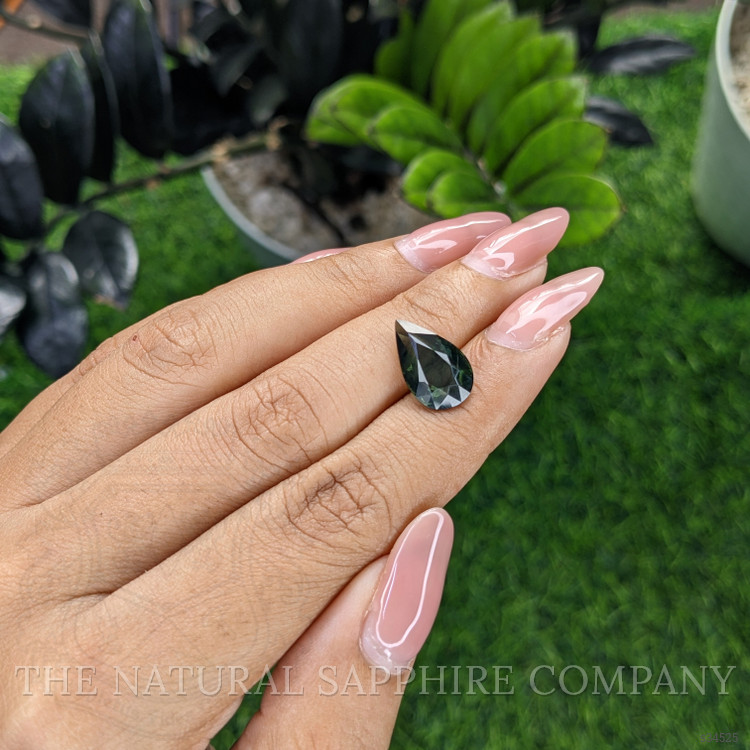
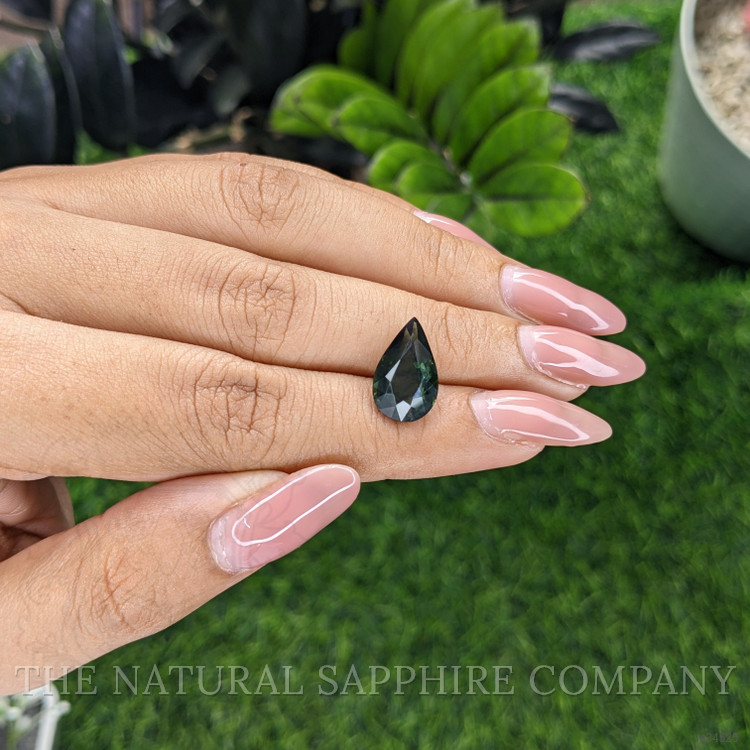

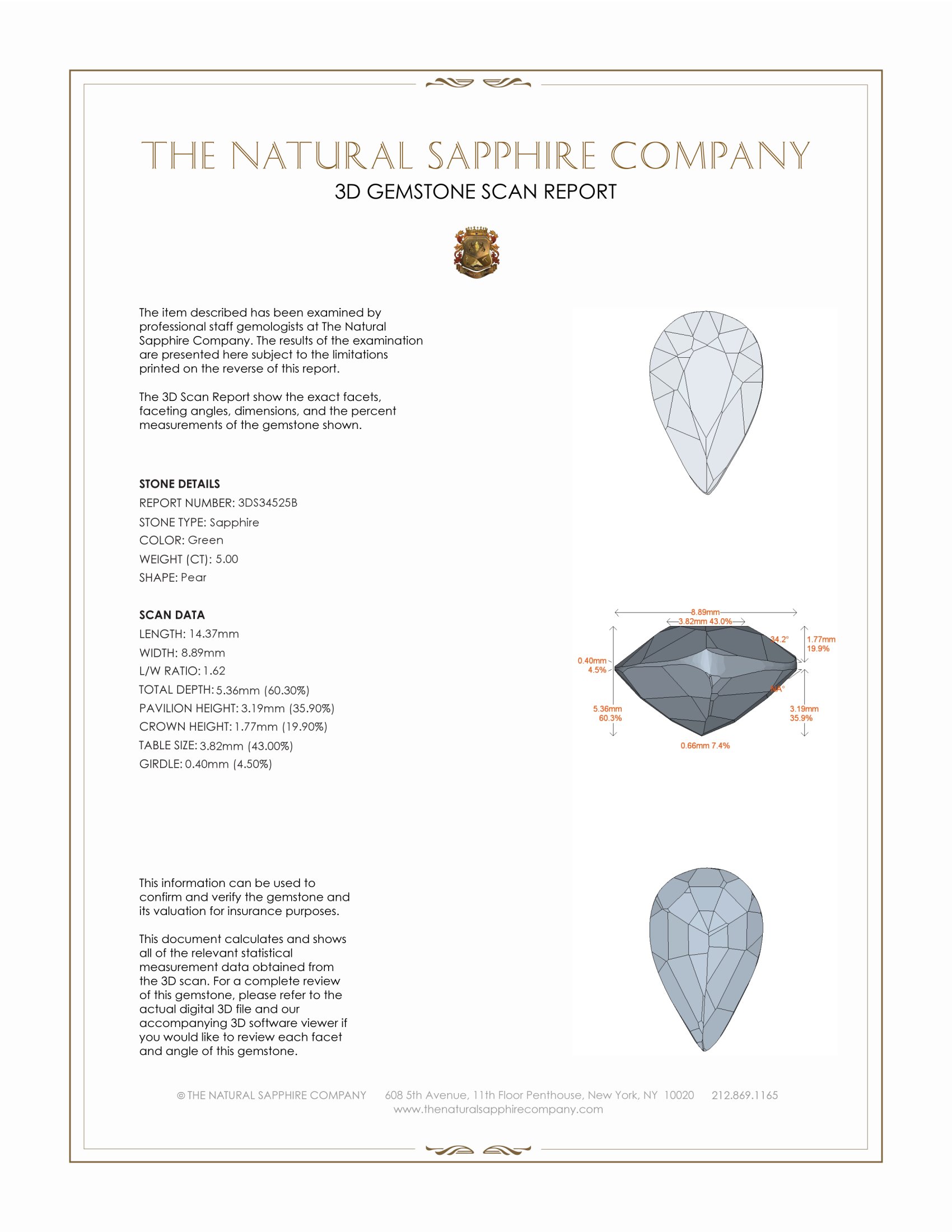
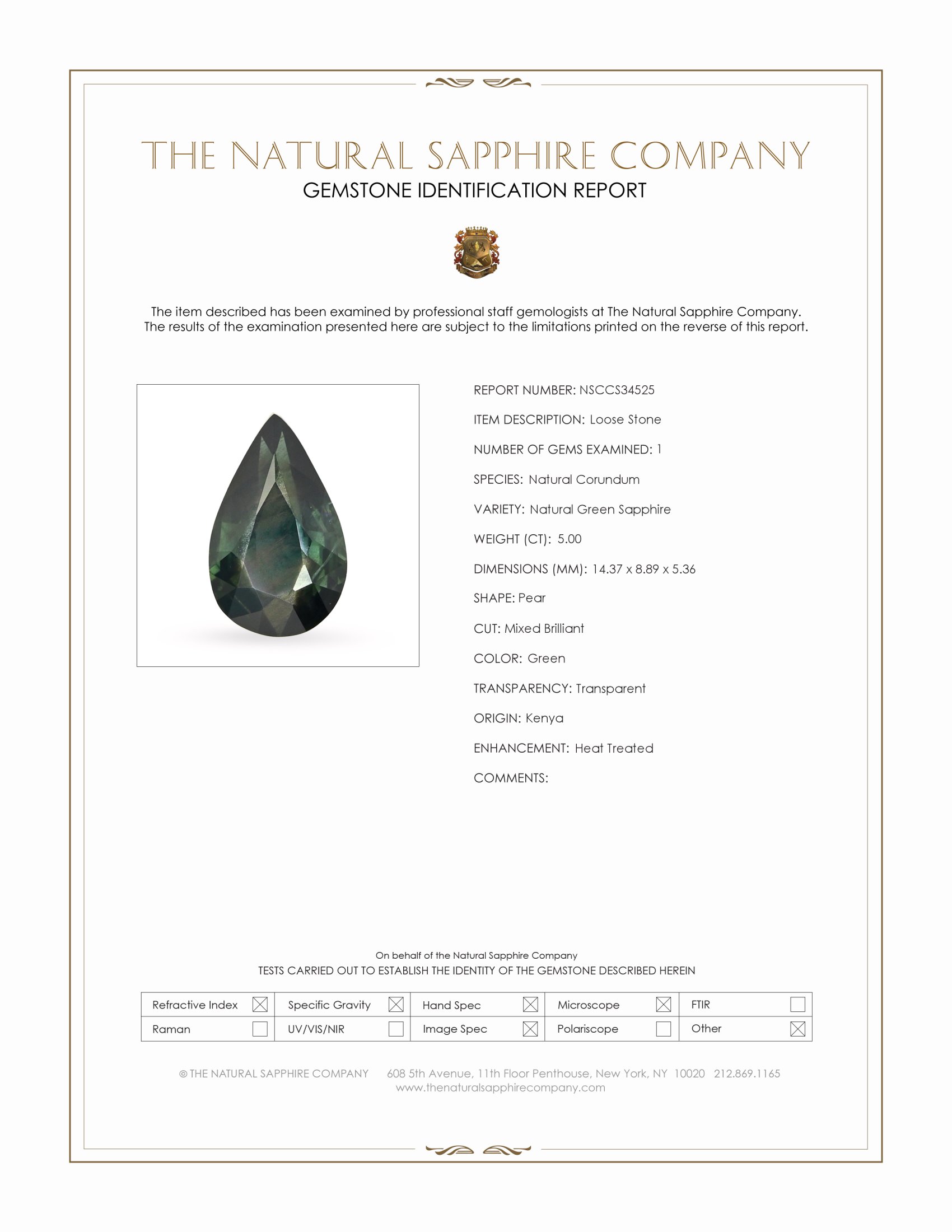
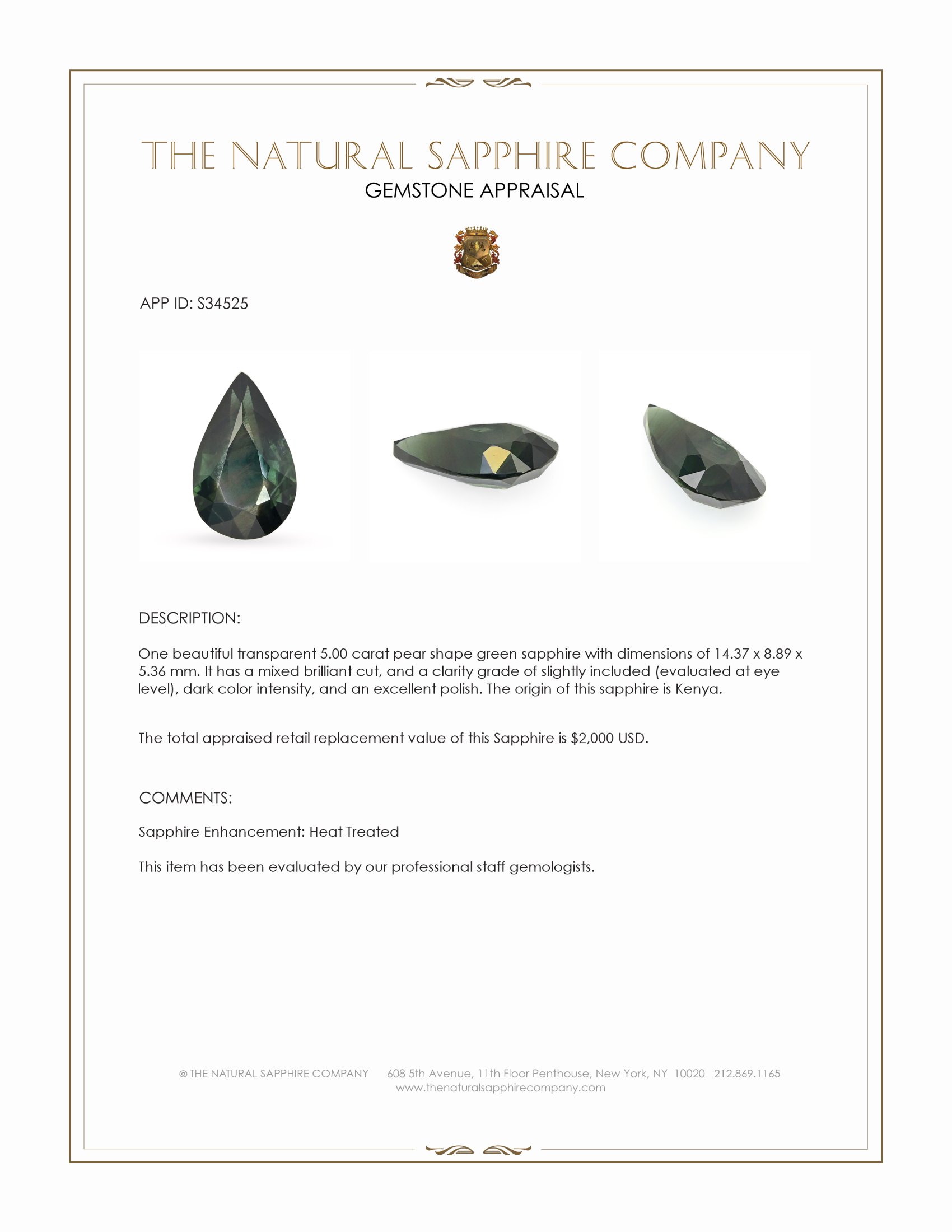
5.00 Ct. Green Sapphire from Kenya
This loose stone ships by Nov 2
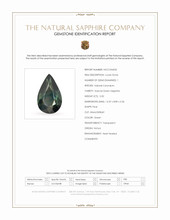
Item ID: | S34525 |
|---|---|
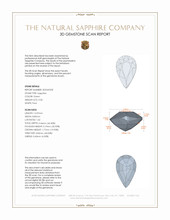
Dimensions (MM): help | Length: 14.37 Width: 8.89 Height: 5.36 |
Weight: | 5.00 Ct. |
Color: help | Green |
Color intensity: help | Dark |
Clarity: help | Slightly Included |
Shape: help | Pear |
Cut: | Mixed Brilliant Cut |
Cutting style: | Faceted |
Enhancements: help | Heat Treated |
Origin: help | Kenya |
Per carat price: help | $400 |
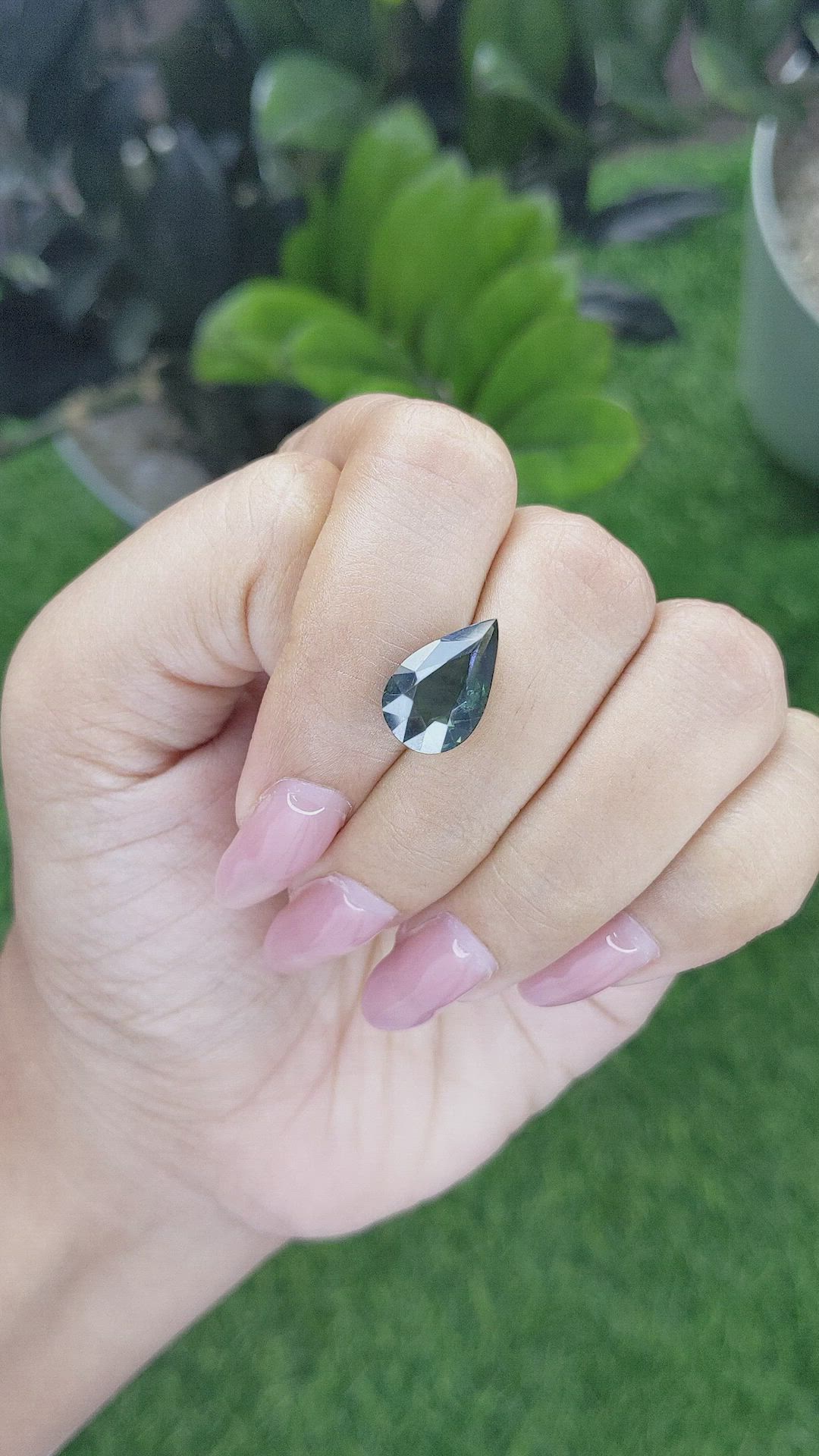
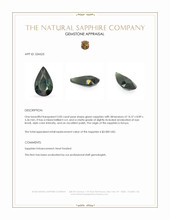
This pear shaped green sapphire weighs 5.00 carats, with calibrated dimensions of 14.37 x 8.89 x 5.36 mm, presenting a transparent body and a mixed brilliant cut engineered to balance scintillation with color saturation. The mixed brilliant faceting combines a modified brilliant crown with a pavilion that retains facets optimized for light return in darker tone stones, ensuring that the stone disperses light while maintaining its deep green presence. Clarity is graded slightly included at eye level, consistent with minor internal features that are typical of natural corundum, and the finish achieves an excellent polish that produces crisp facet junctions and mirror like facet surfaces. Heat treatment has been applied to stabilize and deepen the color, a conventional and well documented enhancement in sapphire processing, and the stone is sourced from Kenya, a region known for producing attractive green and teal corundums. At The Natural Sapphire Company we examine each facet junction and crown angle during cutting to ensure that the pavilion depth and crown height deliver a controlled windowing effect, minimizing death zones and preserving the apparent weight and table dispersion commensurate with the pear shape geometry.
Color evaluation indicates a dark intensity, with a primary green hue that shifts subtly across the stone when viewed under varied lighting, a behavior attributable to pleochroic response inherent to corundum, and to the specific balance of iron and trace elements within this Kenyan specimen. The mixed brilliant cut has been chosen deliberately for this material, where deeper pavilion angles and proportioned crown facets reduce light leakage in a stone of darker saturation, producing uniform face up color while allowing scintillation along the perimeter. The slight inclusions present at loupe to eye level perform a dual function, confirming natural crystallization history and interacting with facet reflections to impart a soft internal depth, without compromising transparency under normal viewing. The heat treatment applied is controlled to enhance chromophore activation and improve clarity, rather than to mask structural inconsistencies, and it is disclosed to maintain full transparency in provenance and enhancement history. Craftsmanship techniques include precision girdle symmetry, careful placement of pavilion mains to align with the pear outline, and final hand polishing on diamond laps to create an excellent polish that minimizes luster loss and enhances durability during setting.
The narrative of formation for this sapphire begins millions of years ago within high temperature, high pressure environments where aluminium rich melts or metamorphic fluids interacted with surrounding host rocks to nucleate corundum crystals. As corundum formed, trace concentrations of iron and other transition elements became incorporated into the crystal lattice, defining the eventual green hue through light absorption mechanisms specific to the corundum system. Over geological time scales tectonic activity and episodes of metamorphism provided the thermal stability necessary for slow crystal growth, and subsequent uplift and erosion liberated these primary crystals from their host matrix. Fluvial transport and alluvial concentration processes then sorted and deposited gem quality material into secondary gravels, where individual crystals experienced rounding and surface modification before final recovery. The recovered rough was assessed for crystal habit, inclusion pattern, and color zoning, and then selectively cut by The Natural Sapphire Company to preserve maximum weight while optimizing optical performance. The cutter chose a pear outline to accentuate the directional color shift, and employed a mixed brilliant pavilion to produce a balance between fire and color retention, culminating in a finished gem that reflects both its deep geological history and contemporary lapidary precision, a piece that invites display in a setting that respects its dark color intensity and transparency.


