
- Stone12
- Reports4
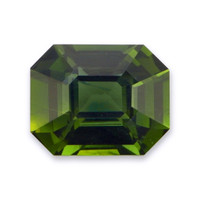


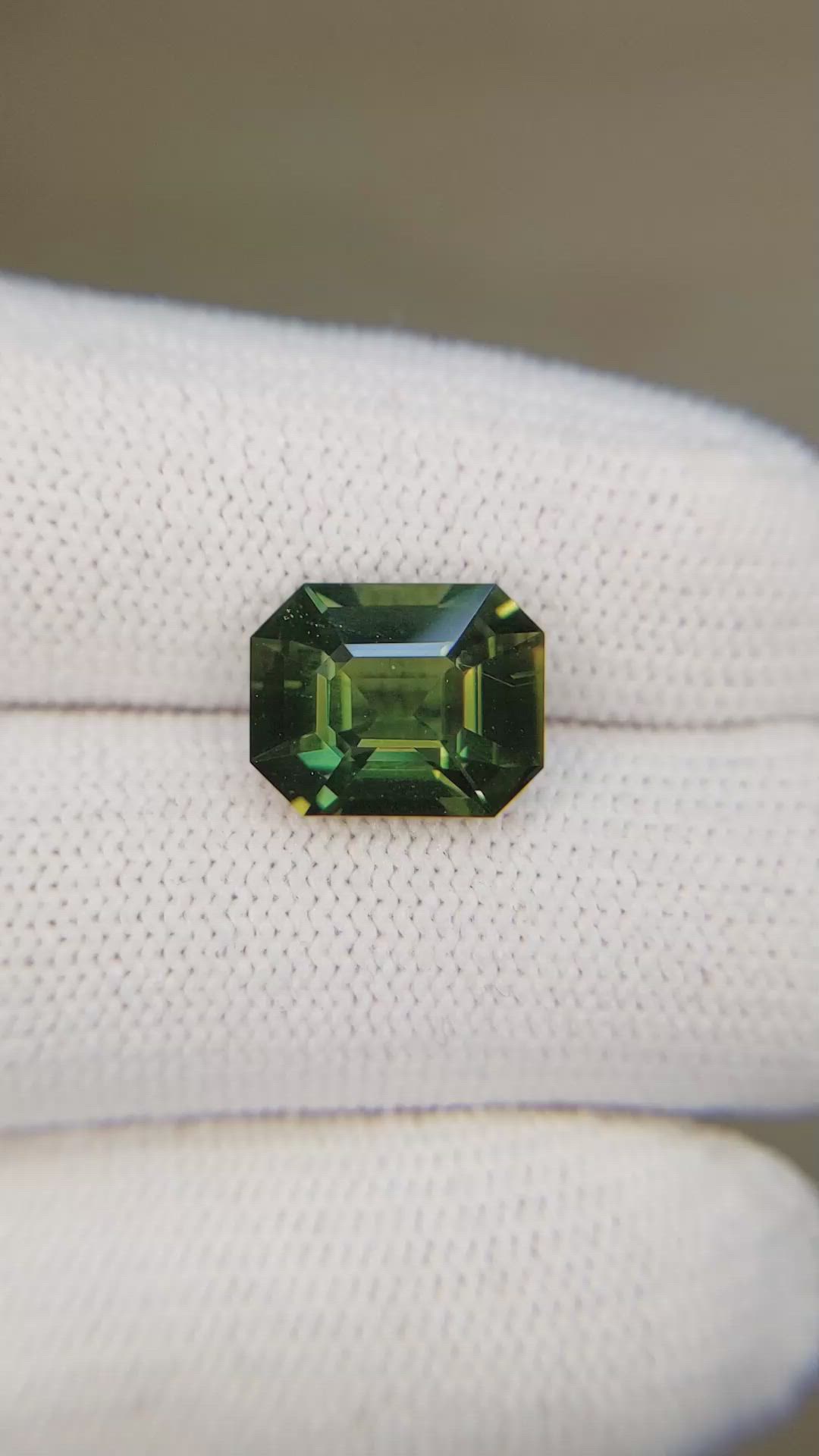
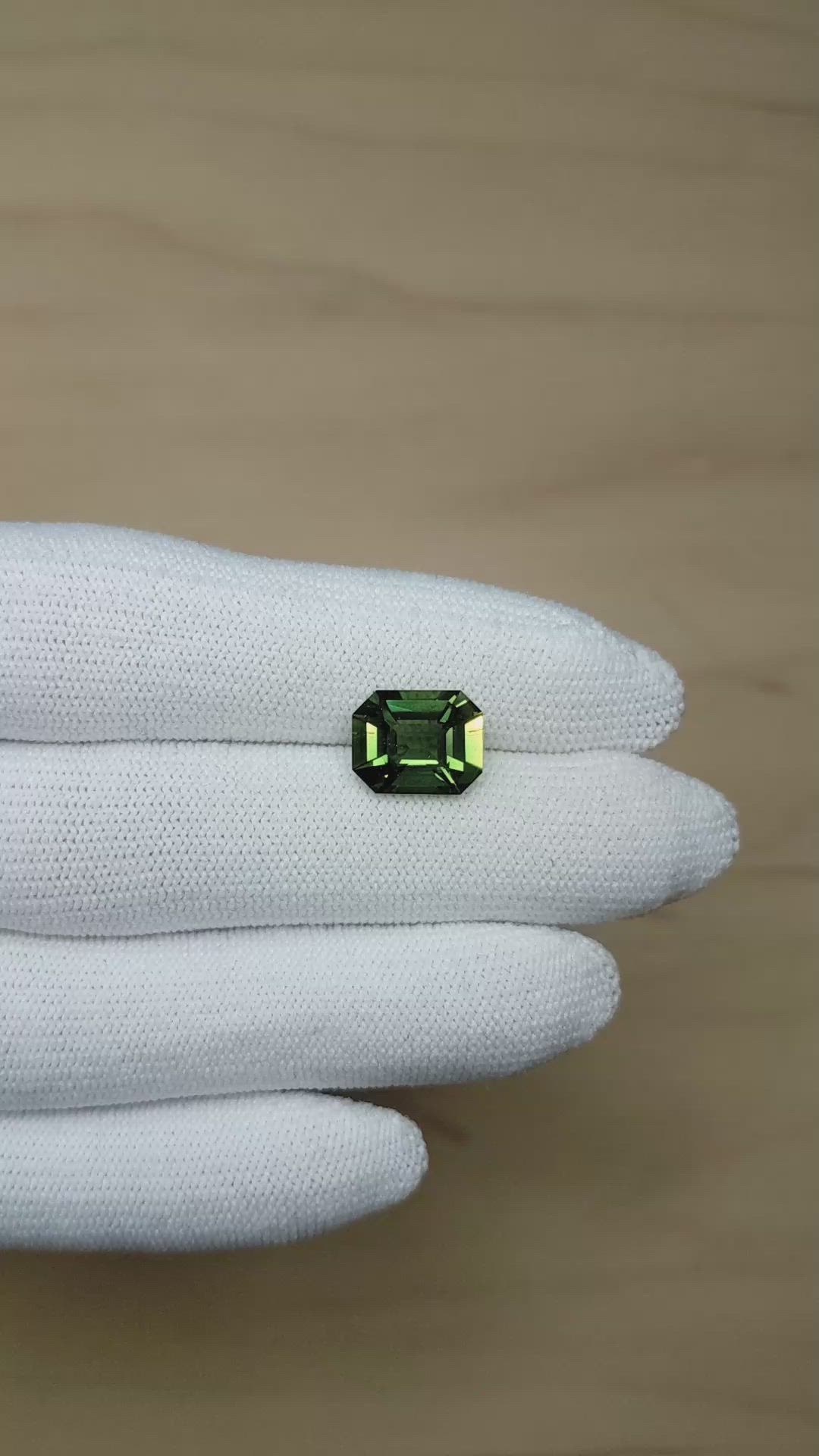
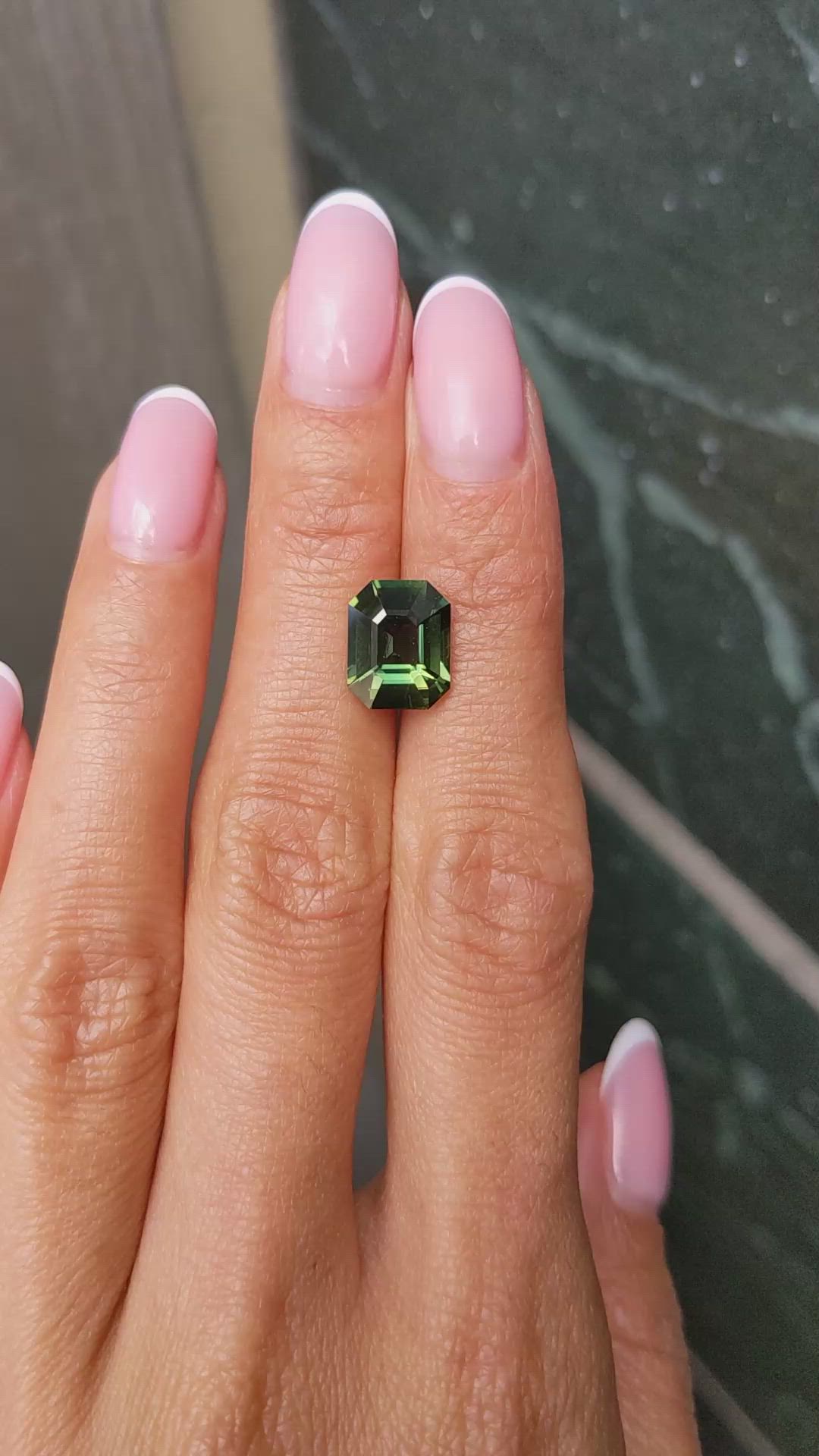





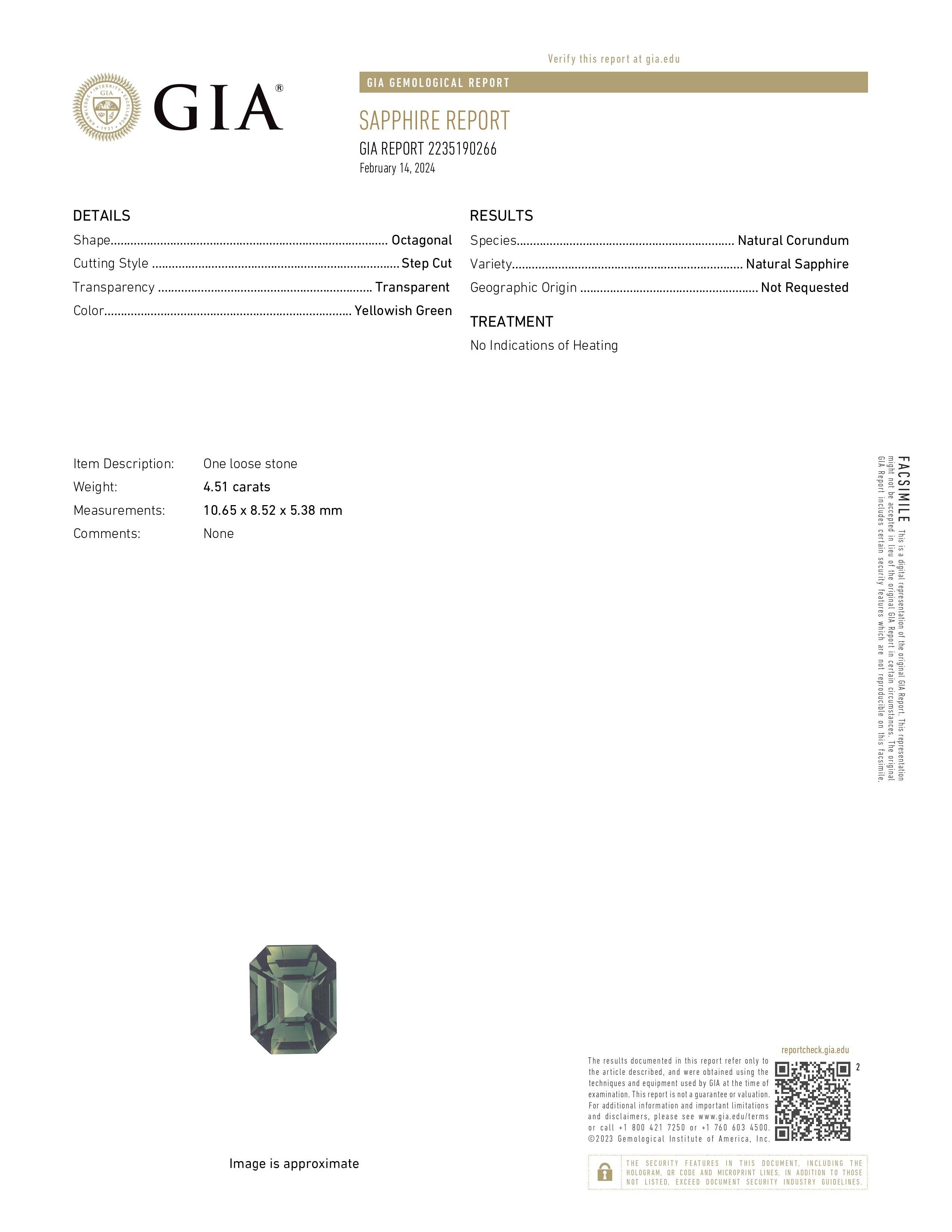
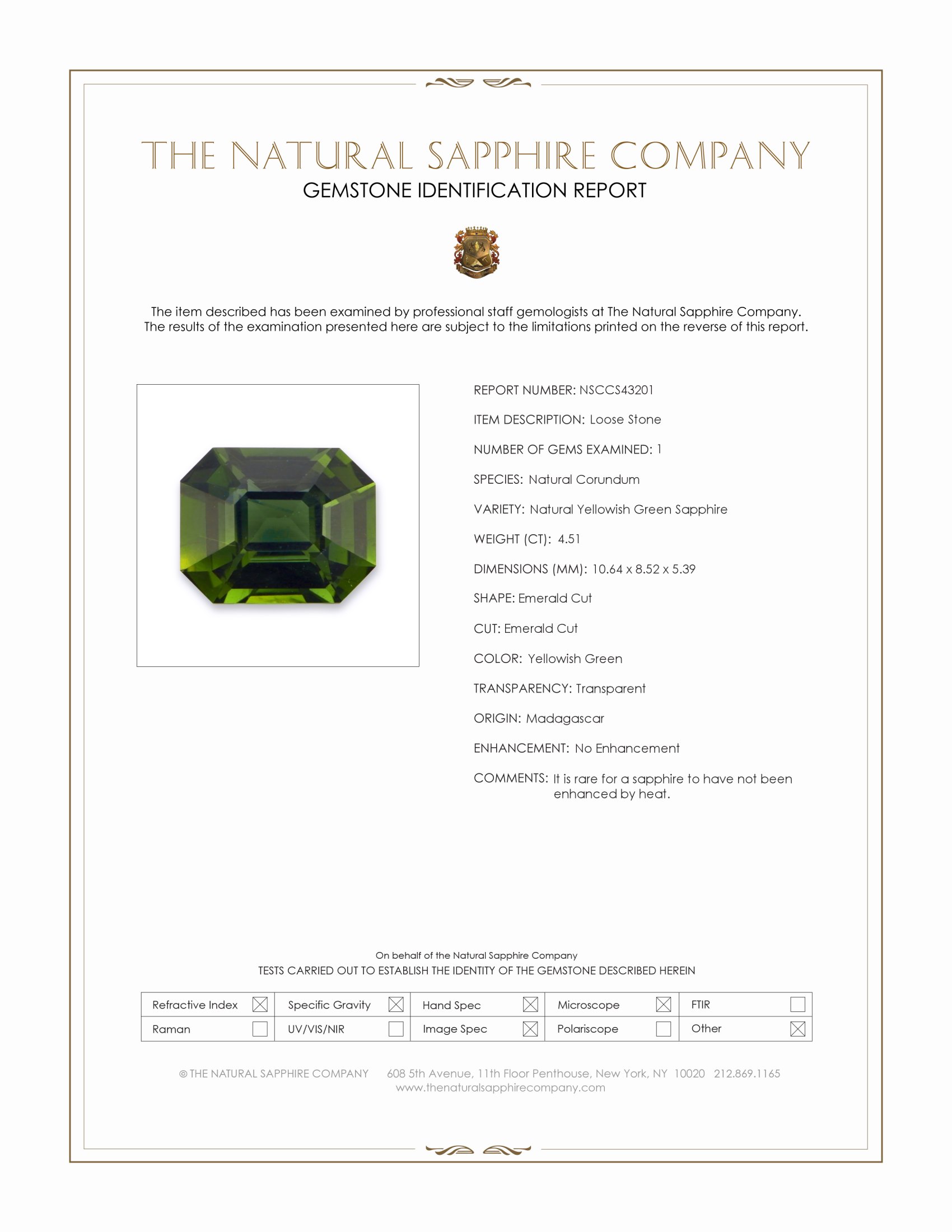
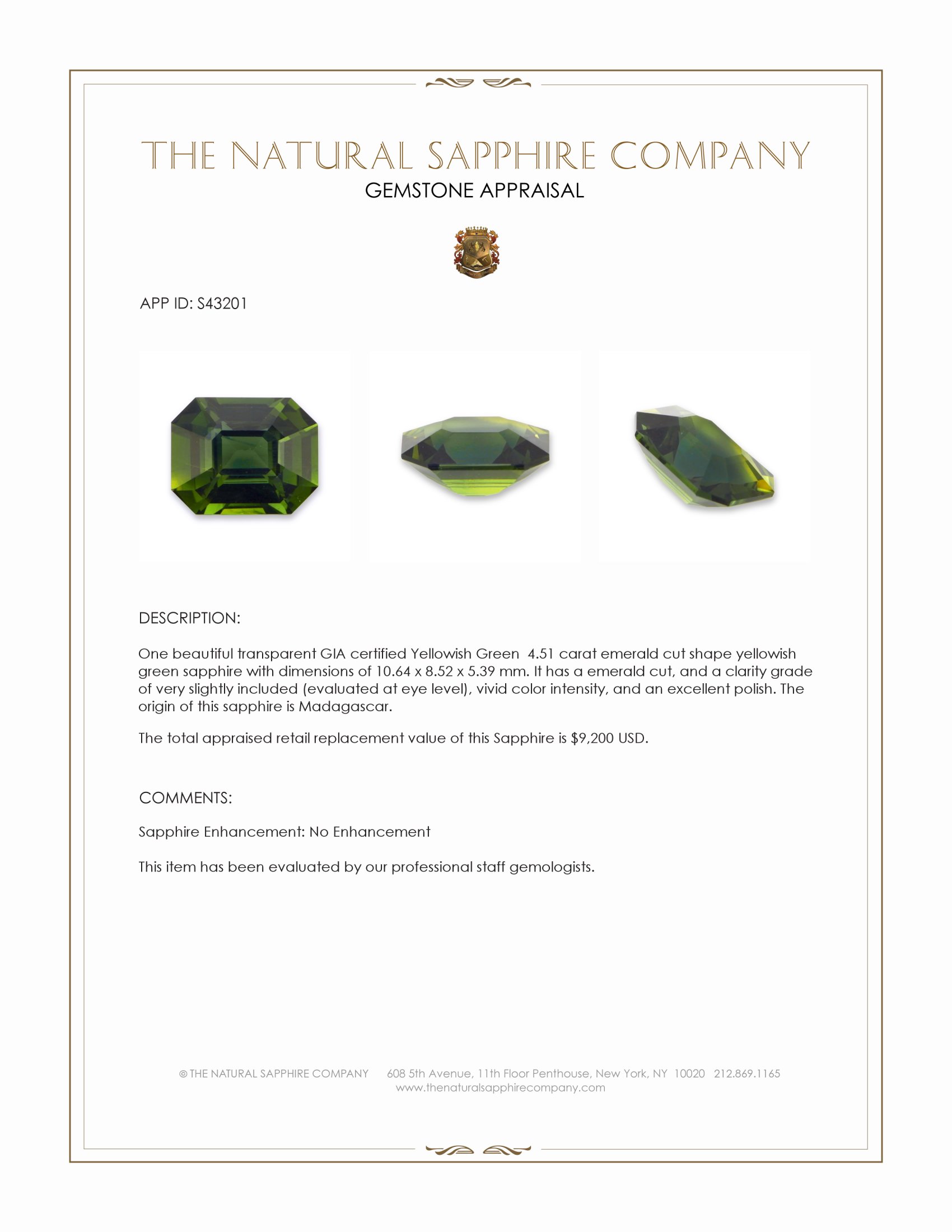
4.51 Ct. Yellowish Green Sapphire from Madagascar
This loose stone is available to ship now
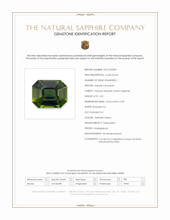
Item ID: | S43201 |
|---|---|
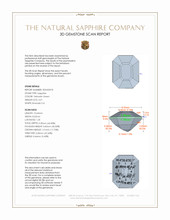
Dimensions (MM): help | Length: 10.64 Width: 8.52 Height: 5.39 |
Weight: | 4.51 Ct. |
Color: help | Yellowish Green |
Color intensity: help | Vivid |
Clarity: help | Very Slightly Included |
Shape: help | Emerald Cut |
Cut: | Emerald Cut |
Cutting style: | Faceted |
Enhancements: help | No Enhancement |
Origin: help | Madagascar |
Per carat price: help | $2,040 |
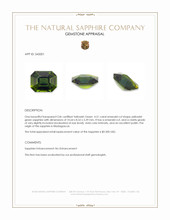
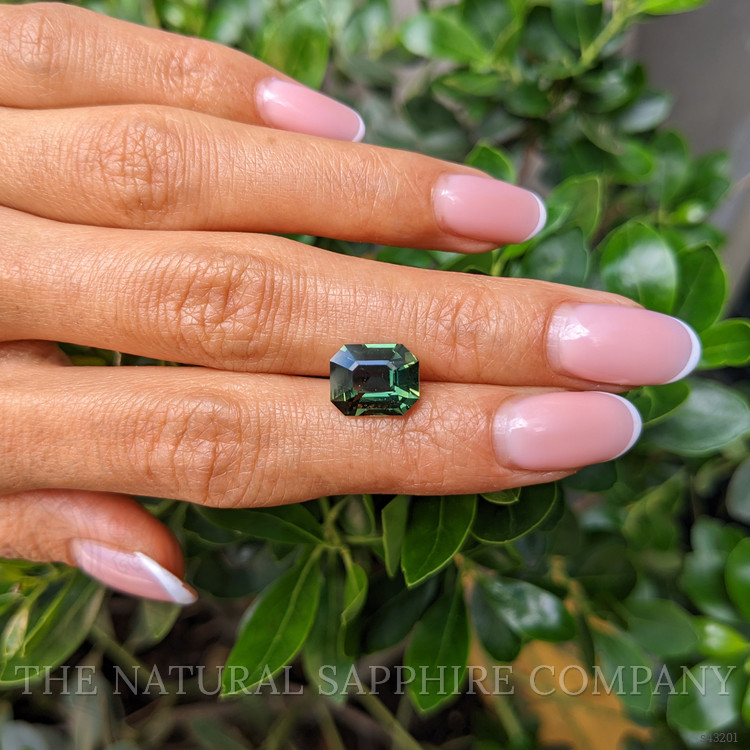
This 4.51 carat yellowish green sapphire presents in an emerald cut, with precise dimensions of 10.64 by 8.52 by 5.39 millimeters, offering a balanced table and a depth that yields excellent light performance. The emerald cut here is executed as a classic step cut, with broad bezel facets on the crown, a generous flat table, and a series of graduated pavilion steps that terminate at neatly truncated corners. These proportions produce a controlled light return, limiting excessive brilliance while enhancing color saturation through the stone rather than dispersing it as excessive flash. Clarity is evaluated as very slightly included at eye level, meaning inclusions are minimal and do not interrupt the clean transmission of light through the pavilion, and the polish is assessed as excellent, with crisp facet junctions and smooth facet planes that maximize facet contrast and internal reflection. The stone is natural, untreated, and originates from Madagascar, which in this specimen yields a vivid color intensity without the need for any enhancement.
Color in this sapphire is best described in precise terms as a yellowish green hue with vivid saturation and a medium to medium dark tone, a combination that produces strong chroma and a luminous presence in hand. The emerald cut in this instance concentrates the color across the broad table and along the step facets, producing zones of concentrated green at the center and brighter yellow green flashes toward the edges as light interacts with the pavilion steps. Like many corundums that display green tones, this sapphire exhibits notable dichroism, showing shifts between a warmer yellow green axis and a cooler blue green axis when rotated under directional light. The vivid color intensity carries through to the edges without appearing overly dark, which indicates optimized depth and well judged facet geometry. The excellent polish enhances the stone’s apparent transparency, allowing the vivid hue to appear clean and lively rather than muffled, and the very slight inclusions present are typical fine silk or rutile needles that do not affect durability or wearability.
Comparative analysis against notable sources illustrates distinct regional signatures that clarify the appeal of this Madagascar stone. Compared with Ceylon, or Sri Lankan, greenish sapphires, which often present a lighter, more pastel grassy green with a brighter, more open tone, this Madagascar example is deeper and more saturated, offering a presence that reads as vivid rather than delicate. Against Australian green sapphires, which historically trend toward darker, inky blue green tones with lower brilliance and more forest green or teal tendencies, this stone is noticeably clearer and more luminous, with a warmer yellow component that lifts the overall tone. When compared to Montana sapphires that can display olive or khaki leaning greens with a subdued saturation and slightly brownish undertone, this Madagascar sapphire is cleaner in hue and stronger in chroma, producing a more lively, gemlike appearance. The lack of enhancement in this crystal further distinguishes it from many market examples, since heat treatment to adjust tone or remove unwanted brown is common in some origins, whereas this stone’s color is intrinsic, displaying the natural interplay of iron related color centers typical of Madagascan corundum.
For practical design and setting considerations, the emerald cut’s step facet arrangement and the stone’s very slightly included clarity favor settings that emphasize the broad table and protect the corners, such as a bezel with softened corner coverage or a four corner prong arrangement with additional shoulder protection. The yellowish green hue responds particularly well to choices in metal color, with warm yellow gold tending to harmonize with the yellow component and intensify perceived warmth, while white gold or platinum will emphasize the green axis, making the stone read slightly cooler and more forest green in contrast. Because the hue is vivid, settings that allow significant light from the crown and pavilion to reach the stone are preferable to heavily closed or haloed designs that could clip the visual impact of the broad table. The proportions and polish of this gem make it suitable for a fine solitaire or for a central stone in a bespoke design, where the step facets will create elegant flashes and the eye clean clarity will allow detailed metal work to be visible beneath and around the pavilion. The Natural Sapphire Company provides this Madagascar sapphire with detailed provenance and a guarantee of no enhancement, offering collectors and designers a technically interesting, naturally vivid yellowish green sapphire that combines thoughtful cutting, robust color, and reliable clarity for precision settings and refined jewellery applications.


