- Stone14
- Reports3

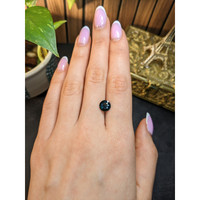
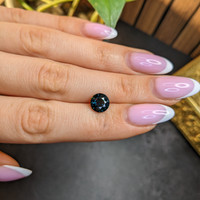
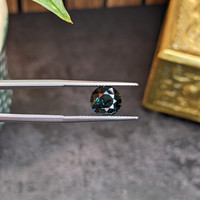
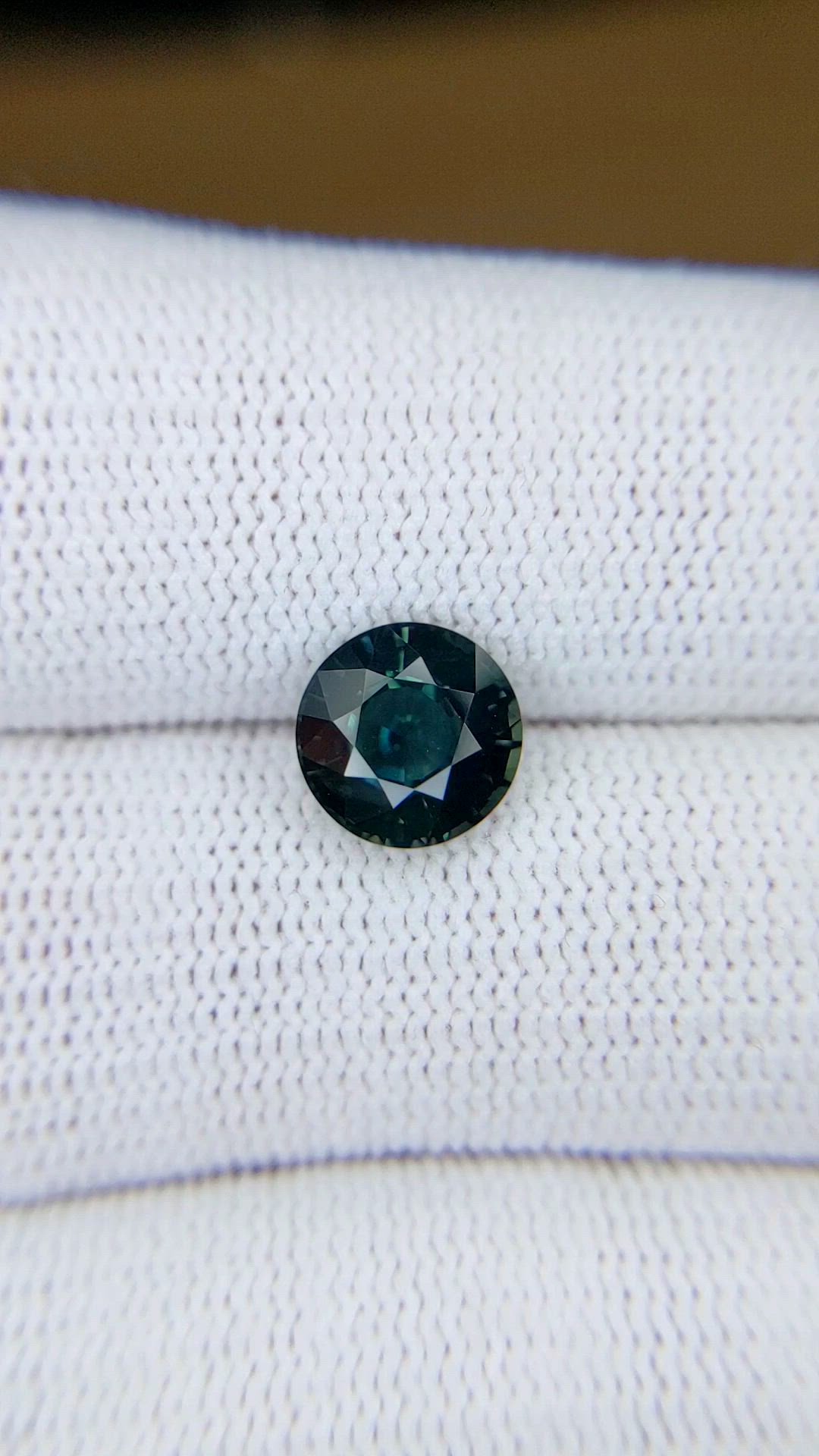
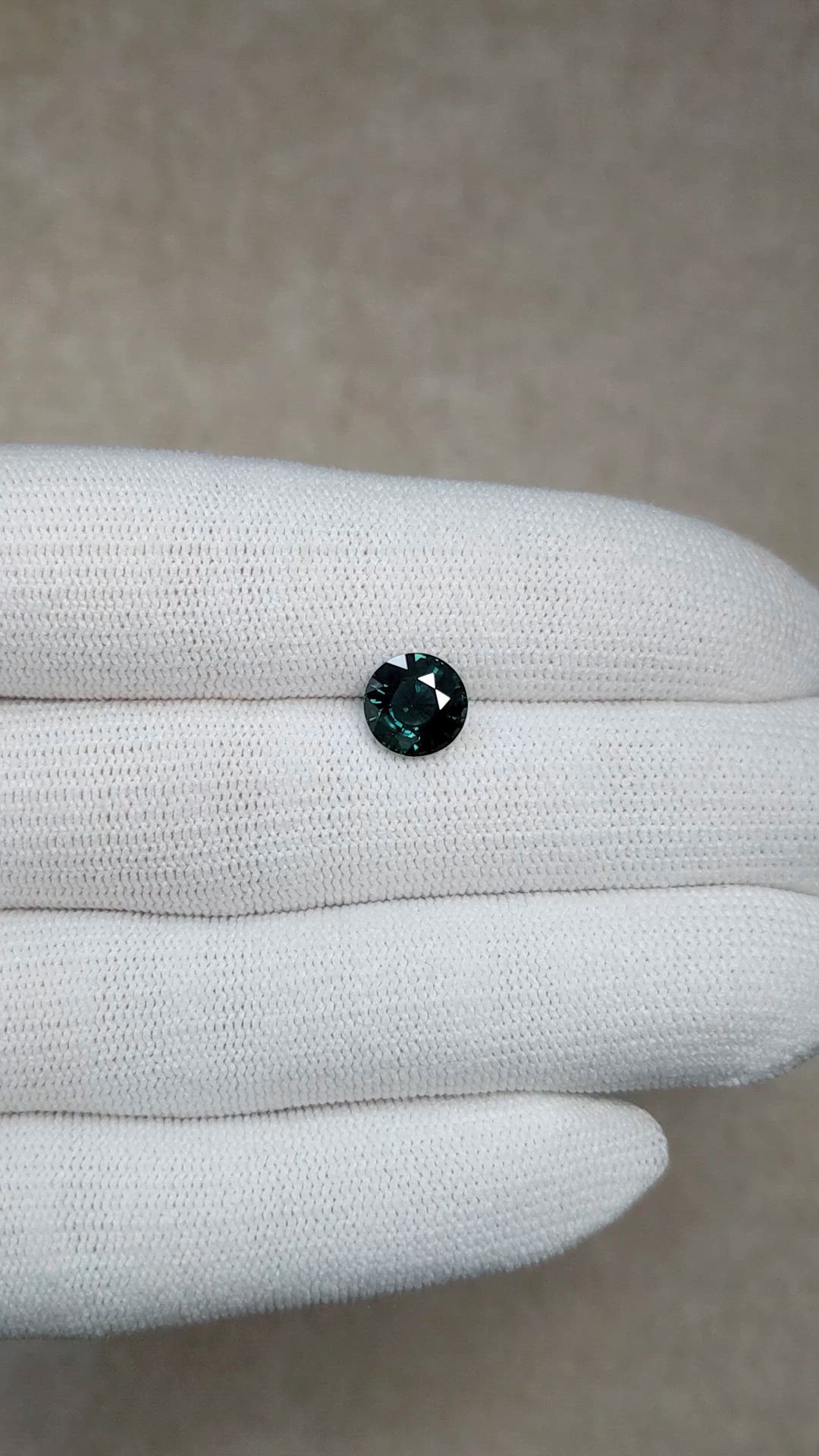
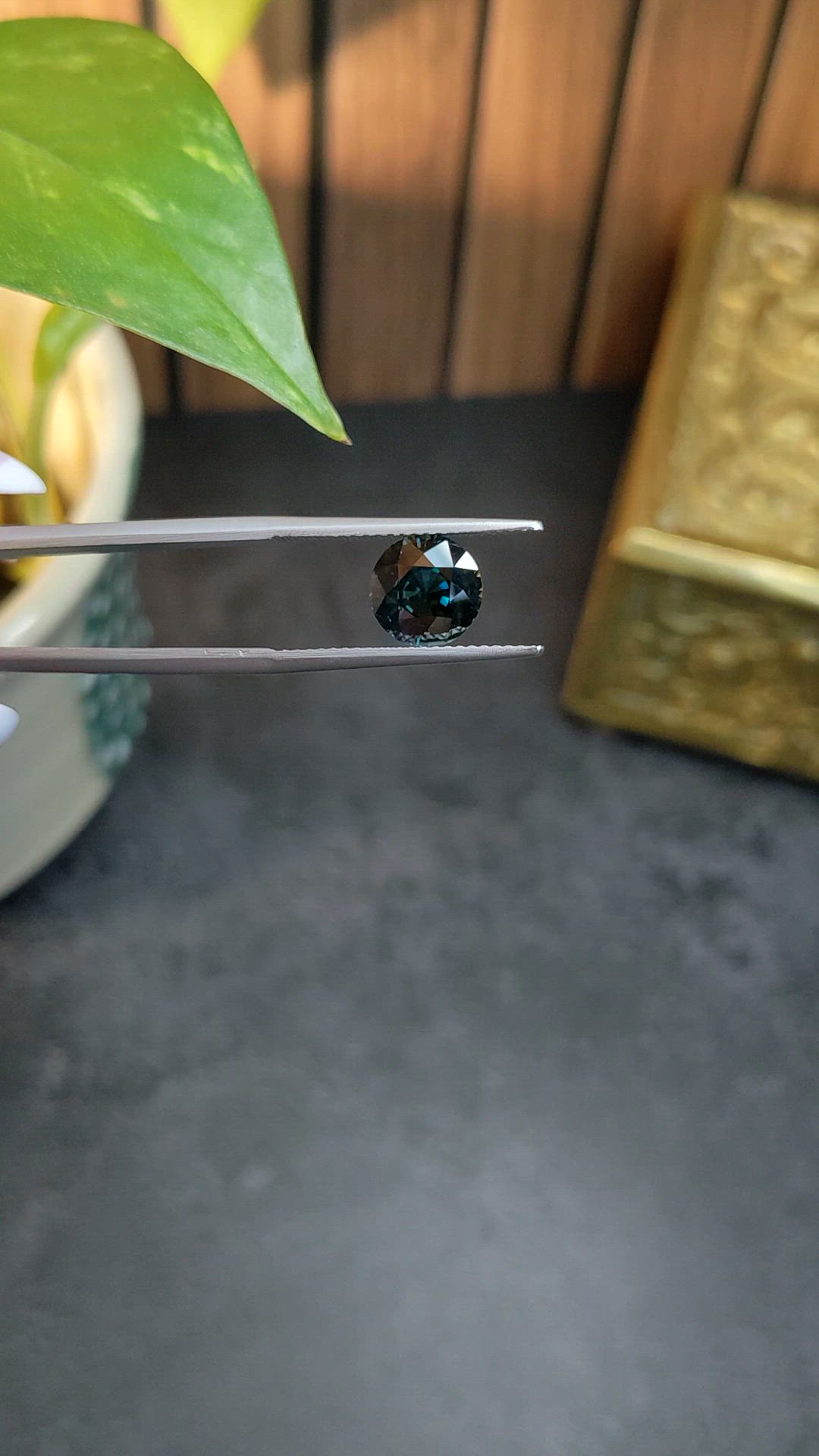
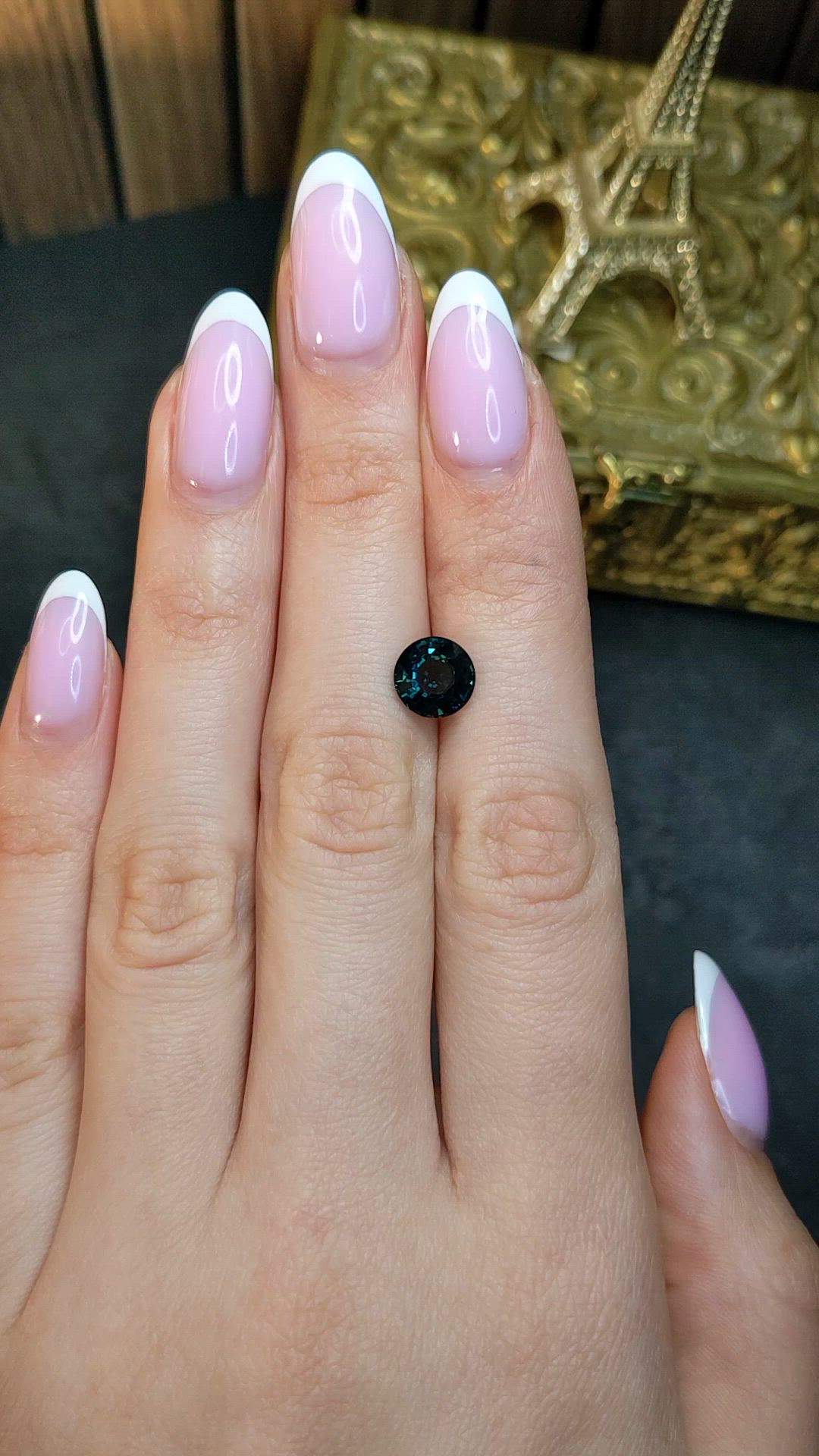
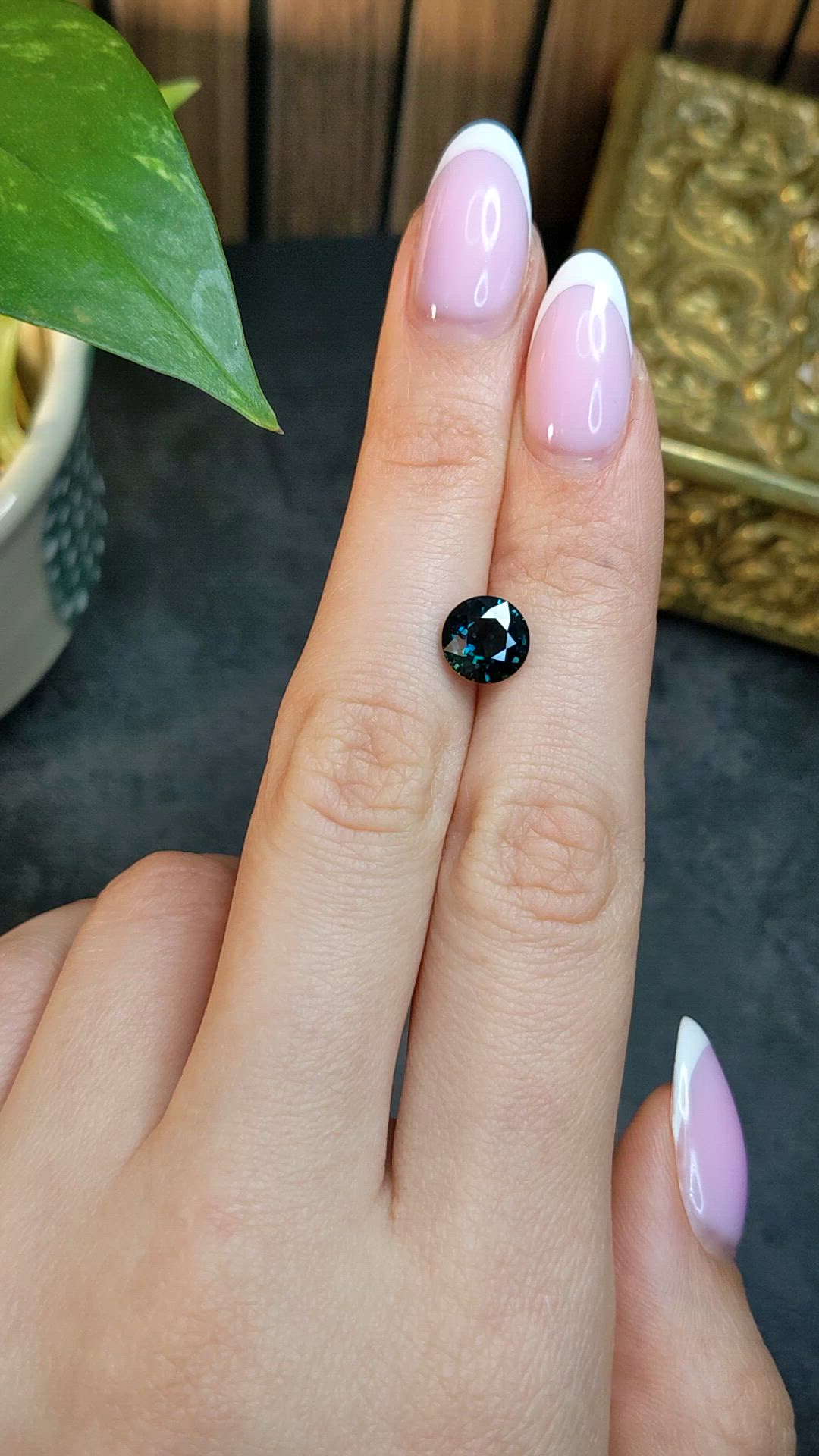



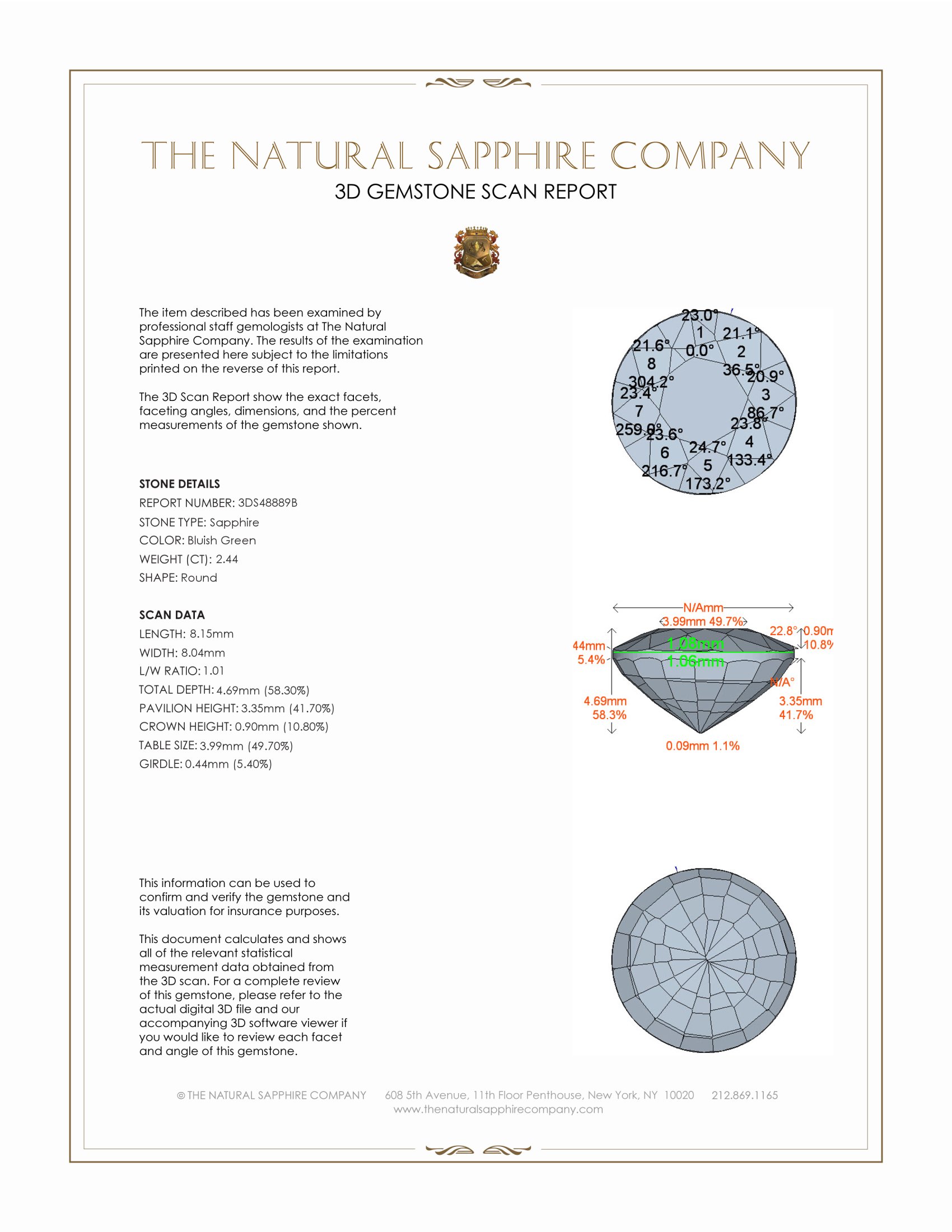
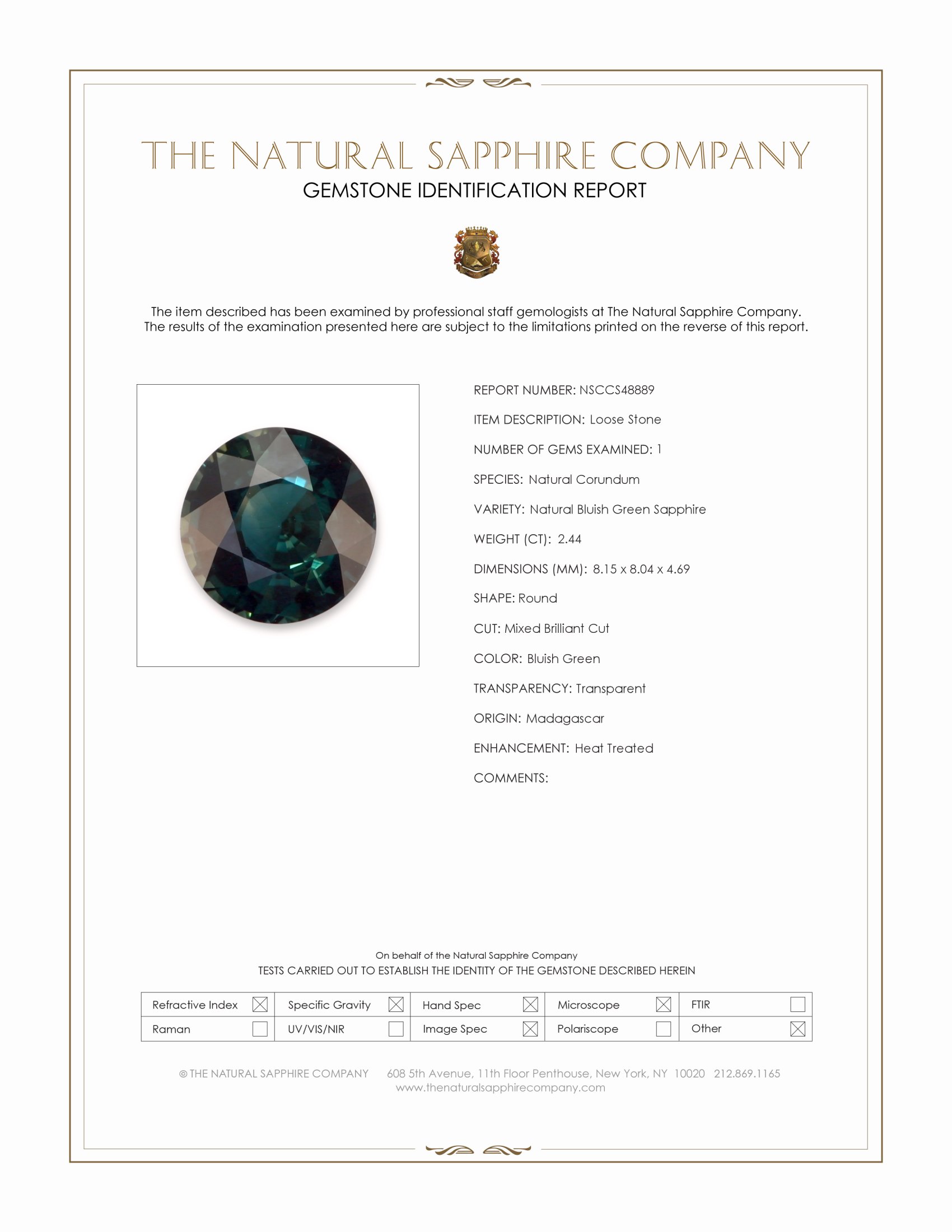
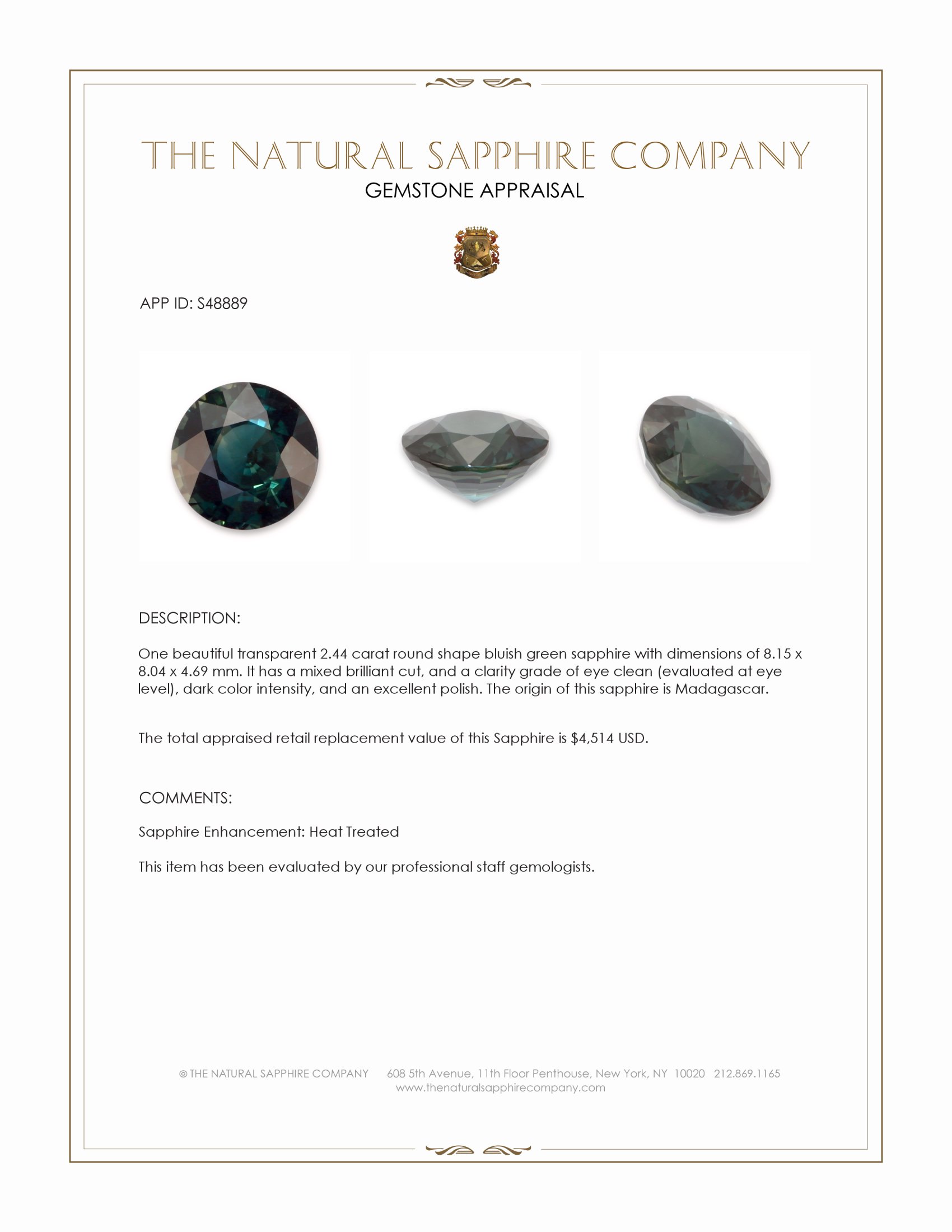
2.44 Ct. Bluish Green Sapphire from Madagascar
Item ID: | S48889 |
|---|---|
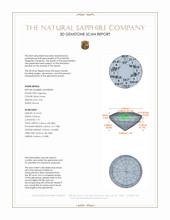
Dimensions (MM): help | Length: 8.15 Width: 8.04 Height: 4.69 |
Weight: | 2.44 Ct. |
Color: help | Bluish Green |
Color intensity: help | Dark |
Clarity: help | Eye Clean |
Shape: help | Round |
Cut: | Mixed Brilliant Cut |
Cutting style: | Faceted |
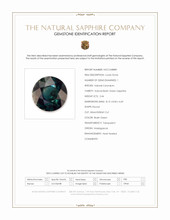
Enhancements: help | Heat Treated |
Origin: help | Madagascar |
Per carat price: help | $1,850 |
This 2.44 carat round bluish green sapphire from Madagascar presents a balanced combination of weight, proportion, and optical depth that will satisfy demanding connoisseurs. The gem measures 8.15 x 8.04 x 4.69 mm, yielding an approximate depth to diameter ratio of approximately 58 percent, a proportion that supports saturated color while still enabling appreciable light return. The material is transparent, the clarity grade is eye clean when evaluated at normal viewing distance, and the surface finish is described as excellent polish. This sapphire has been heat treated, a stable and widely accepted enhancement for corundum that refines tone and reduces visible inclusions without compromising the crystal structure. At the gemological level, this specimen displays the classic physical properties of corundum, including a refractive index in the range typical for sapphire, a hardness of nine on the Mohs scale, and noticeable pleochroism, which in this stone manifests as shifting blue and green tones depending on the viewing angle, a characteristic that adds life to the gem in motion.
The cutting style is faceted, executed in a mixed brilliant design that combines a brilliant faceted crown with a modified pavilion faceting scheme to balance scintillation and color saturation. The round outline and the mixed brilliant arrangement are chosen deliberately for darker tone material, because the brilliant crown facets break up broad color fields and introduce lively flashes, while the pavilion facets are cut to retain internal color concentration rather than permit excessive leakage of light. The table to diameter relationship and facet symmetry are tuned so that the table presents an even field when viewed face up, while the pavilion depth preserves color intensity. With eye clean clarity, inclusions do not interfere with facet junctions or light paths, enabling clean flashes and a consistent window through the crown. The excellent polish contributes to crisp facet reflections and minimal surface diffusion, which is especially important in darker sapphires where surface quality directly influences apparent brightness.
When compared to famous historical gemstones, this sapphire offers a distinct and collectible proposition rather than a simple reproduction of a well known tone. Where Kashmir sapphires and the celebrated Logan Sapphire are prized for their velvety cornflower blue and uniform medium dark tone, this Madagascar stone occupies a different color space, leaning toward a bluish green that recalls maritime teal hues rather than pure blue. The Star of India and other historic star sapphires are notable for large size and asterism, attributes not relevant to this faceted stone, yet they illustrate how provenance and treatment history shape the narrative of a gem. Unlike the intensely saturated blue of some Burmese or Ceylon pieces, this gem’s darker color intensity and mixed hue create a versatile visual effect, capable of appearing blue under cool light and green under warm light, an effect that collectors often prize for uniqueness. The technical merit here is in the balance of saturation, clarity, and precision cutting, qualities that have historically defined the most desirable museum pieces, while the bluish green identity provides a fresh alternative for those seeking distinction without sacrificing classical gemological standards.
From the perspective of design integration and long term value, this 2.44 carat round sapphire is highly adaptable. The modest size yet substantial carat weight for a well cut round stone makes it ideal for a solitaire ring that emphasizes color, for a three stone composition where hue contrast is desired, or for bespoke settings that capitalize on its pleochroic behavior. Heat treatment is fully disclosed, consistent with best practices in the trade, and in this material the treatment enhances stability and color uniformity with minimal effect on durability. Origin from Madagascar is significant, as Madagascar has become an important source of a broad palette of corundum colors in recent decades, supplying stones with both attractive natural color and clean crystal structures conducive to precision cutting. The Natural Sapphire Company stands behind the technical description and offers documentation and imaging to assist setting and appraisal decisions, including recommended mounting practices to balance exposure and protection. For buyers who value meticulous faceting, exacting polish, and a rare bluish green presence that shifts with environment, this sapphire offers a combination of craftsmanship and natural character that aligns with both historical standards and contemporary collector preferences.


