- Stone12
- Reports3

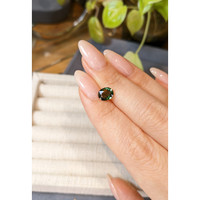
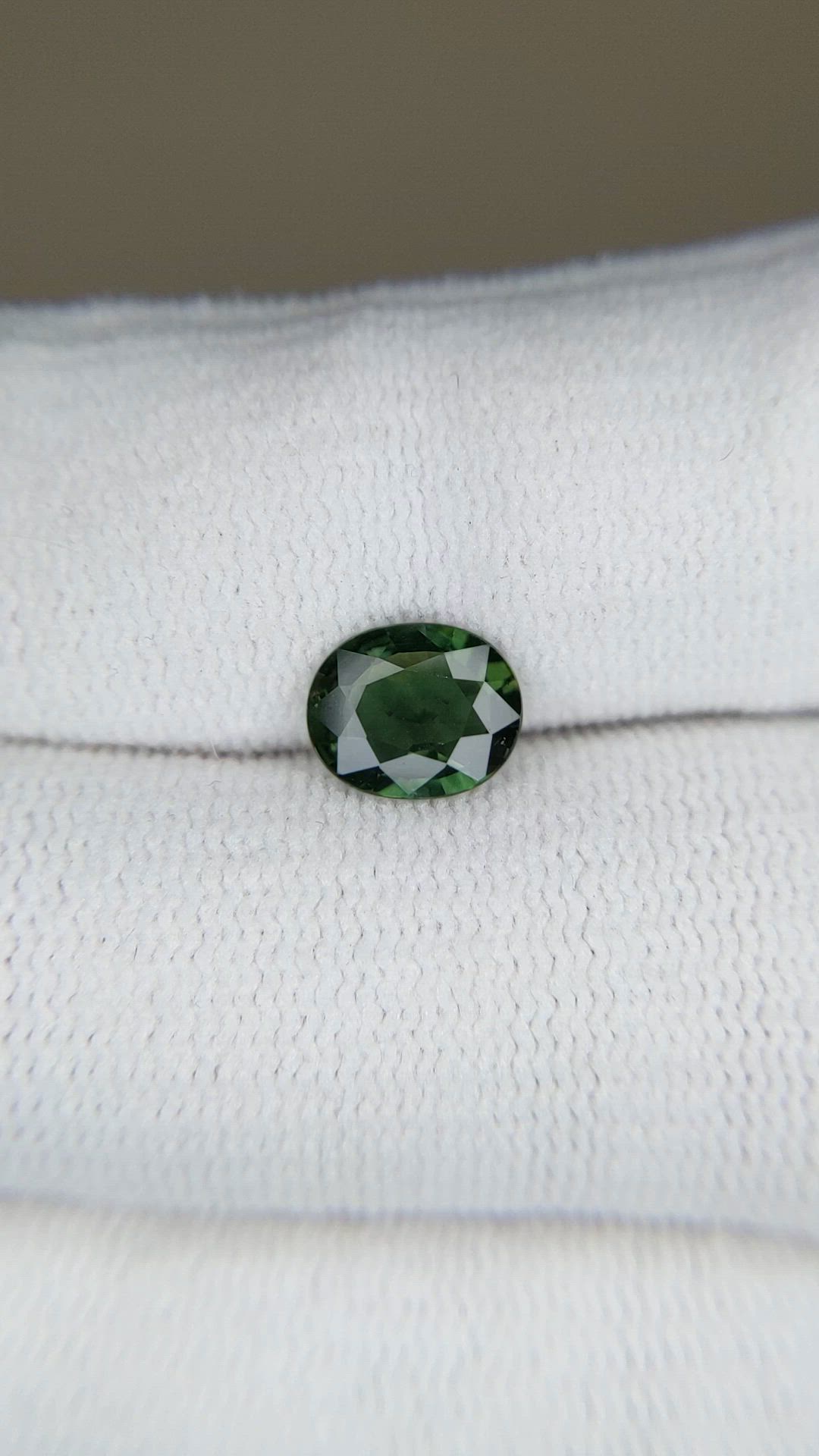
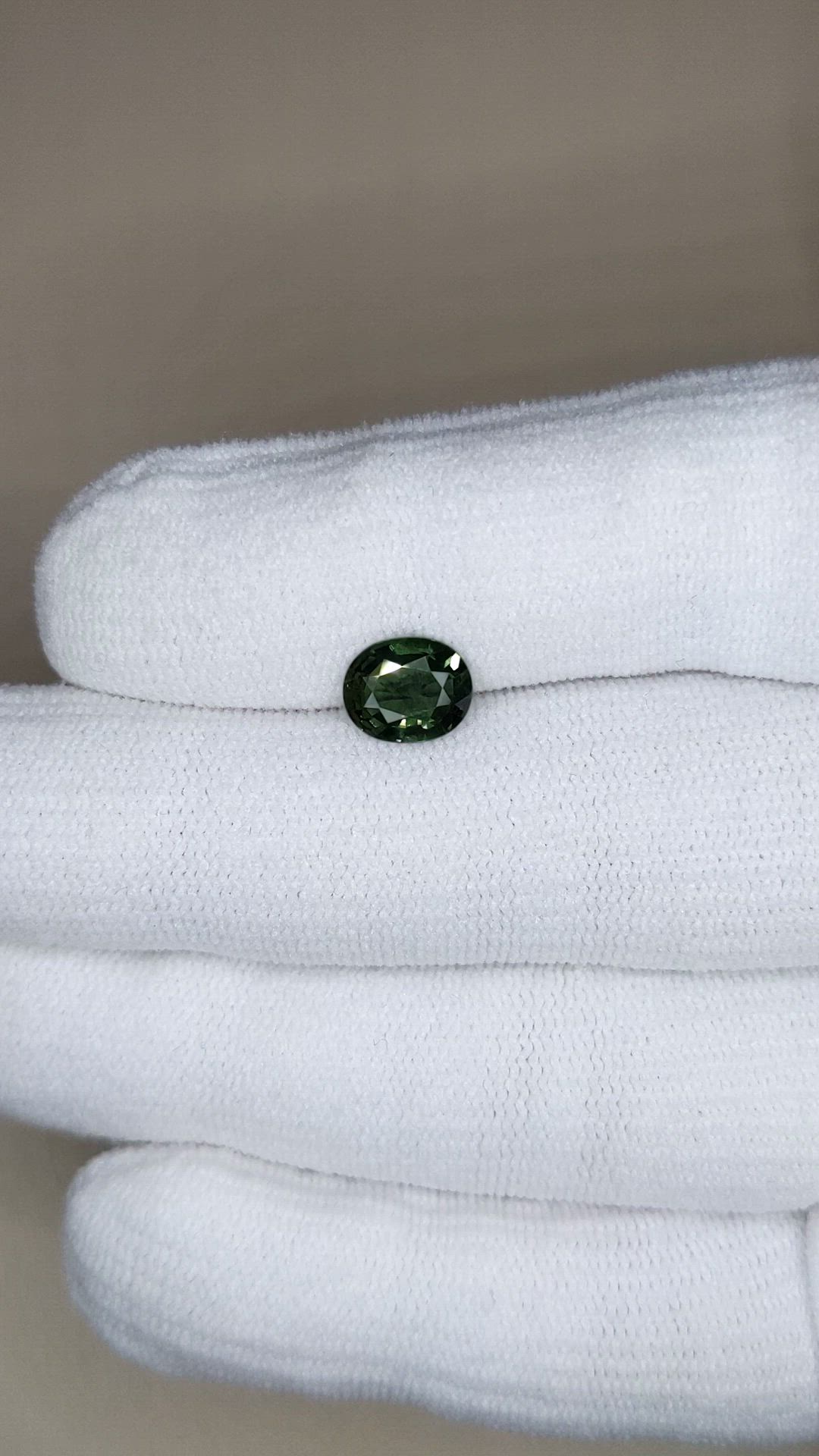
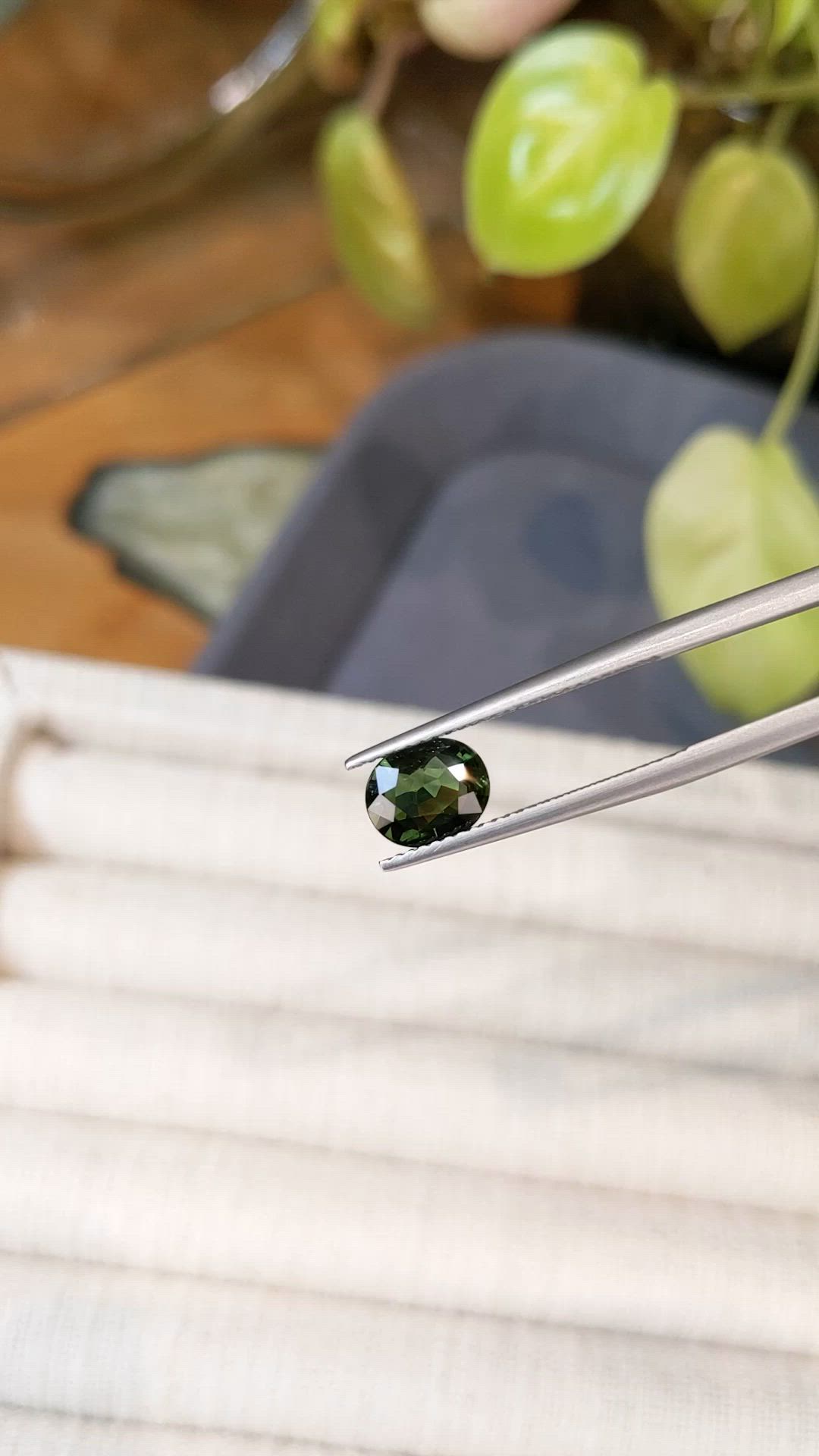
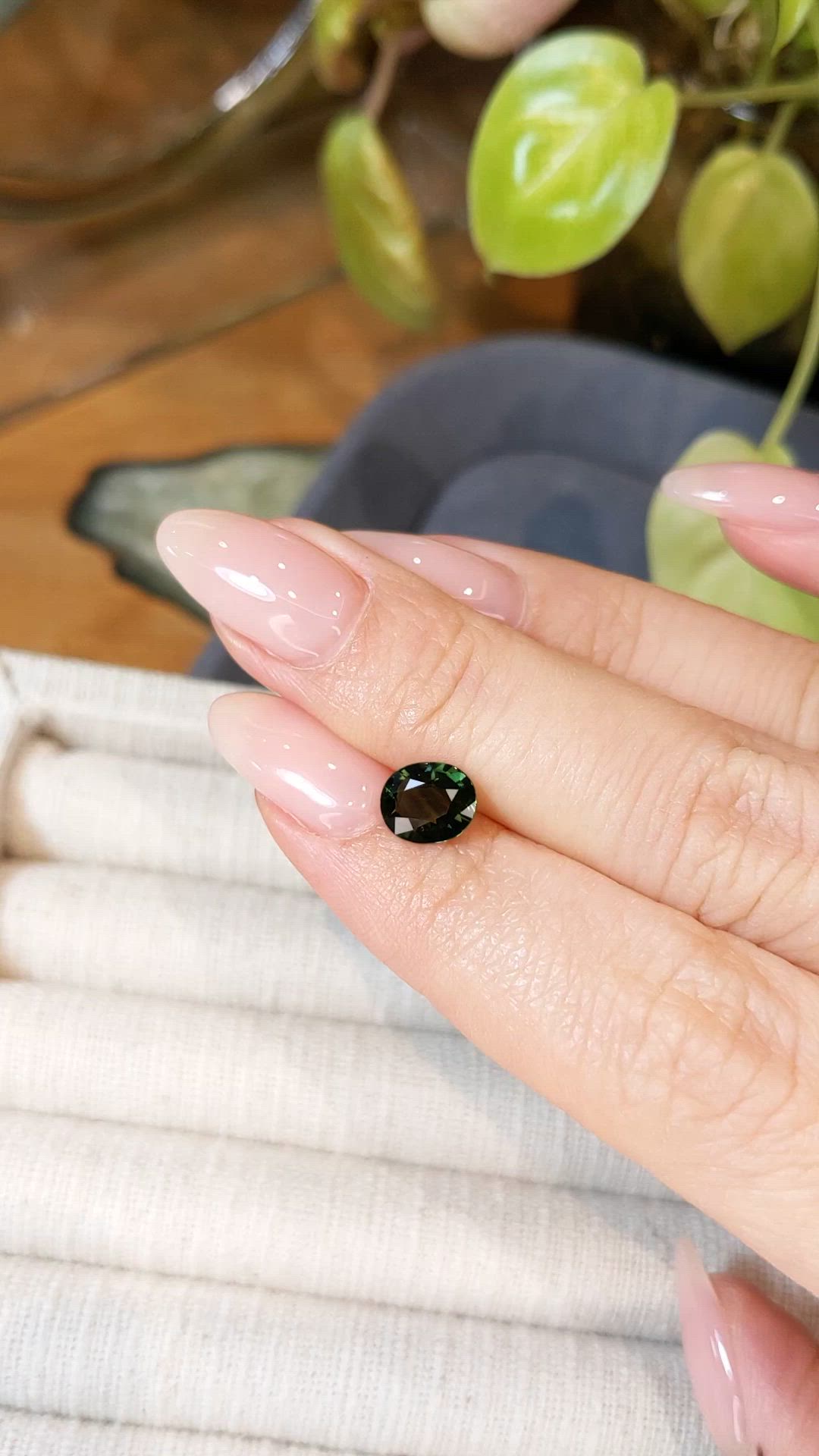

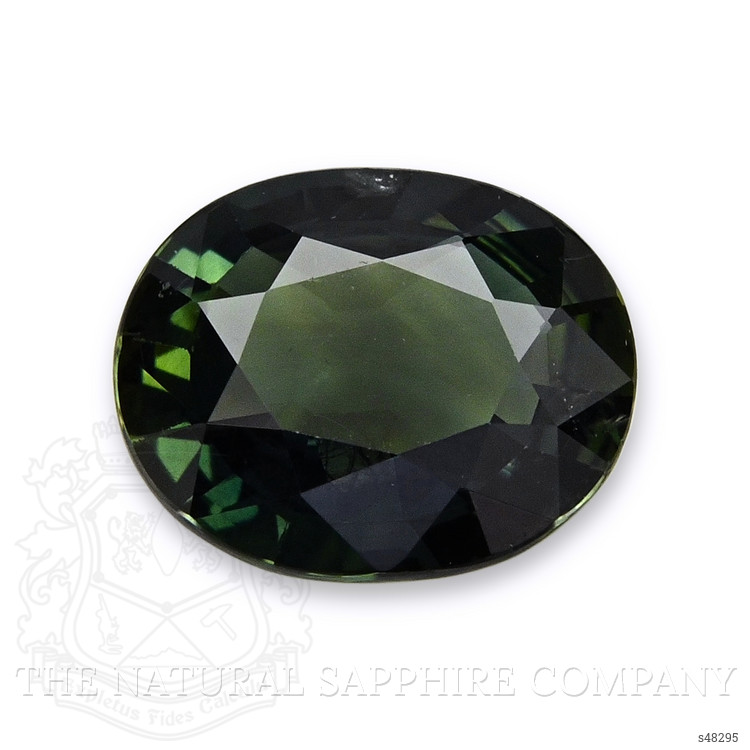


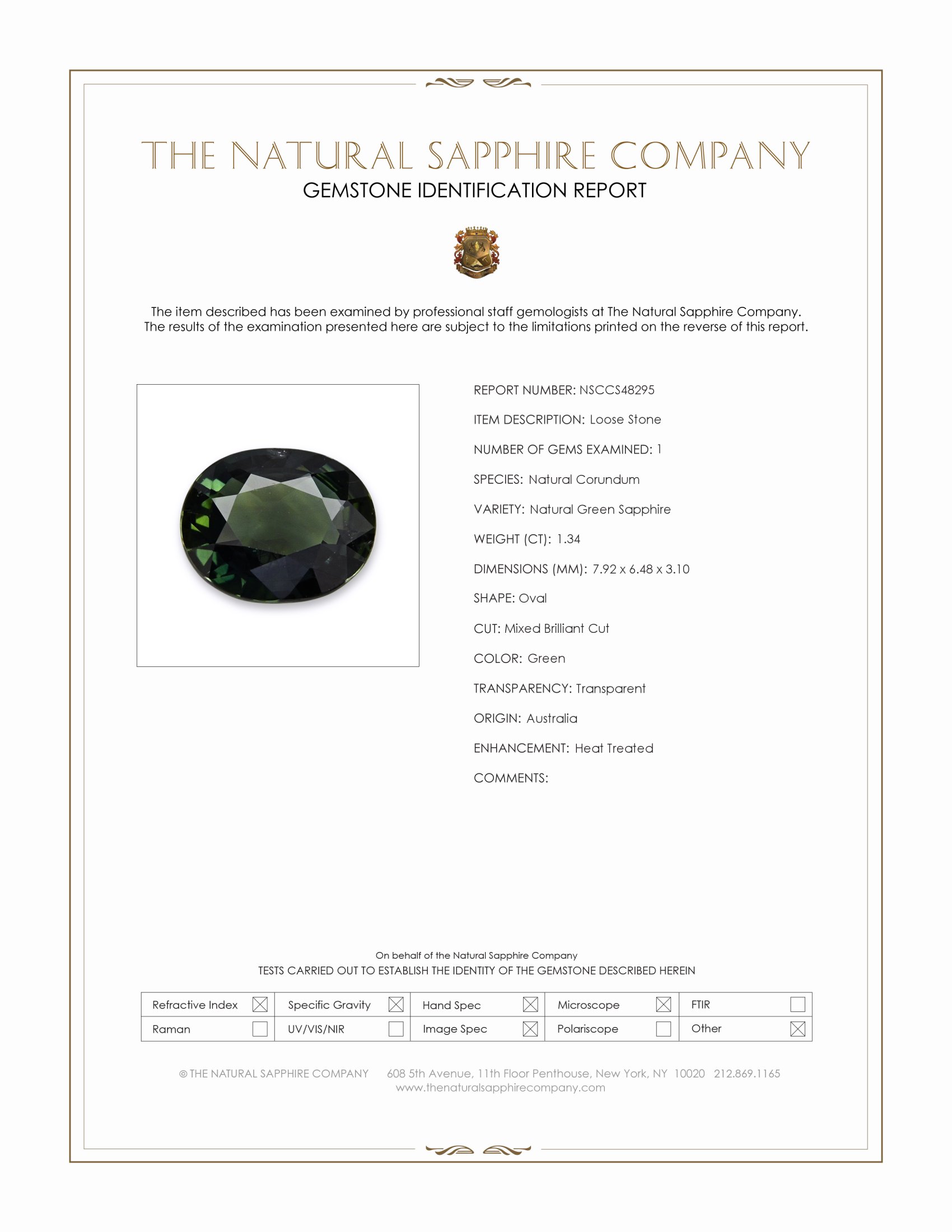
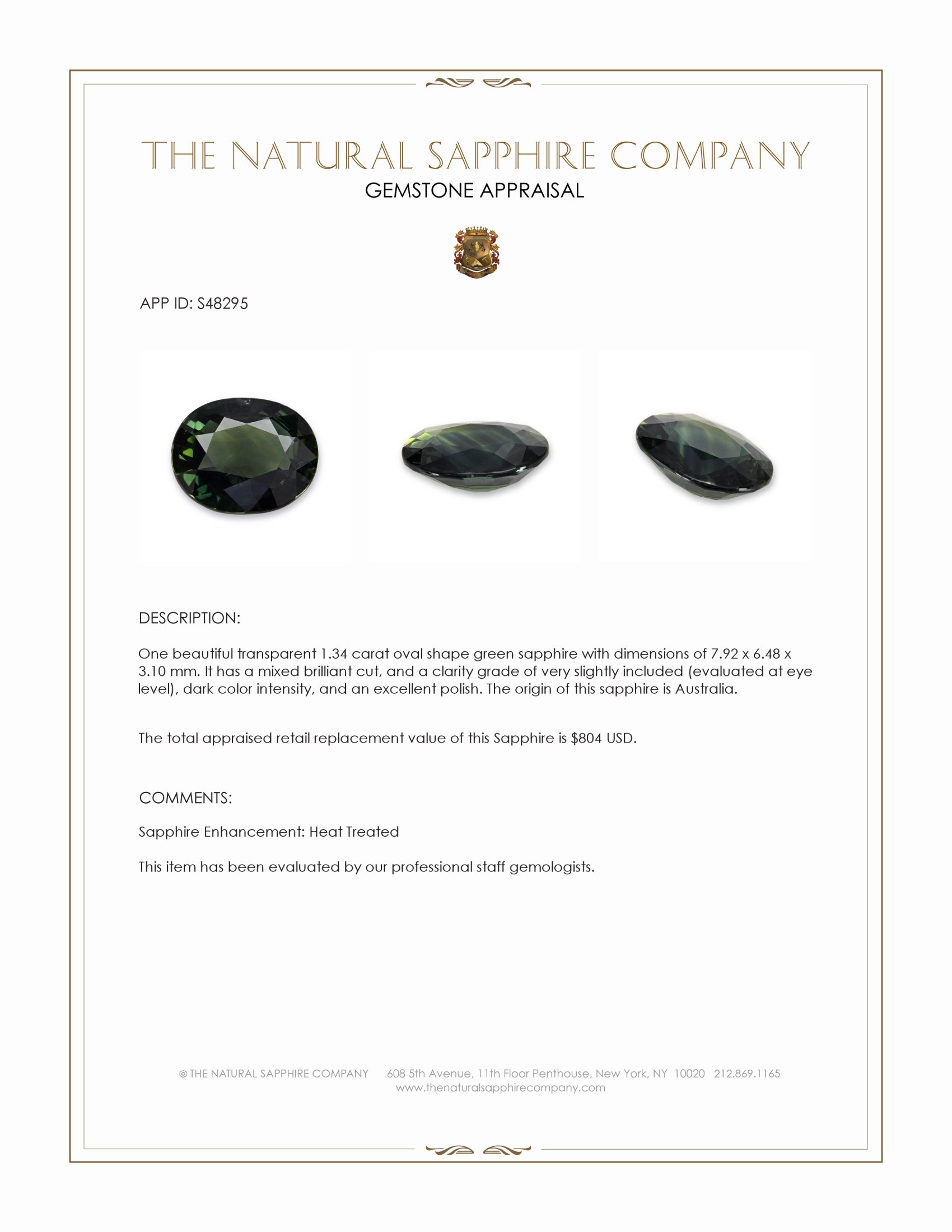
1.34 Ct. Green Sapphire from Australia
Item ID: | S48295 |
|---|---|
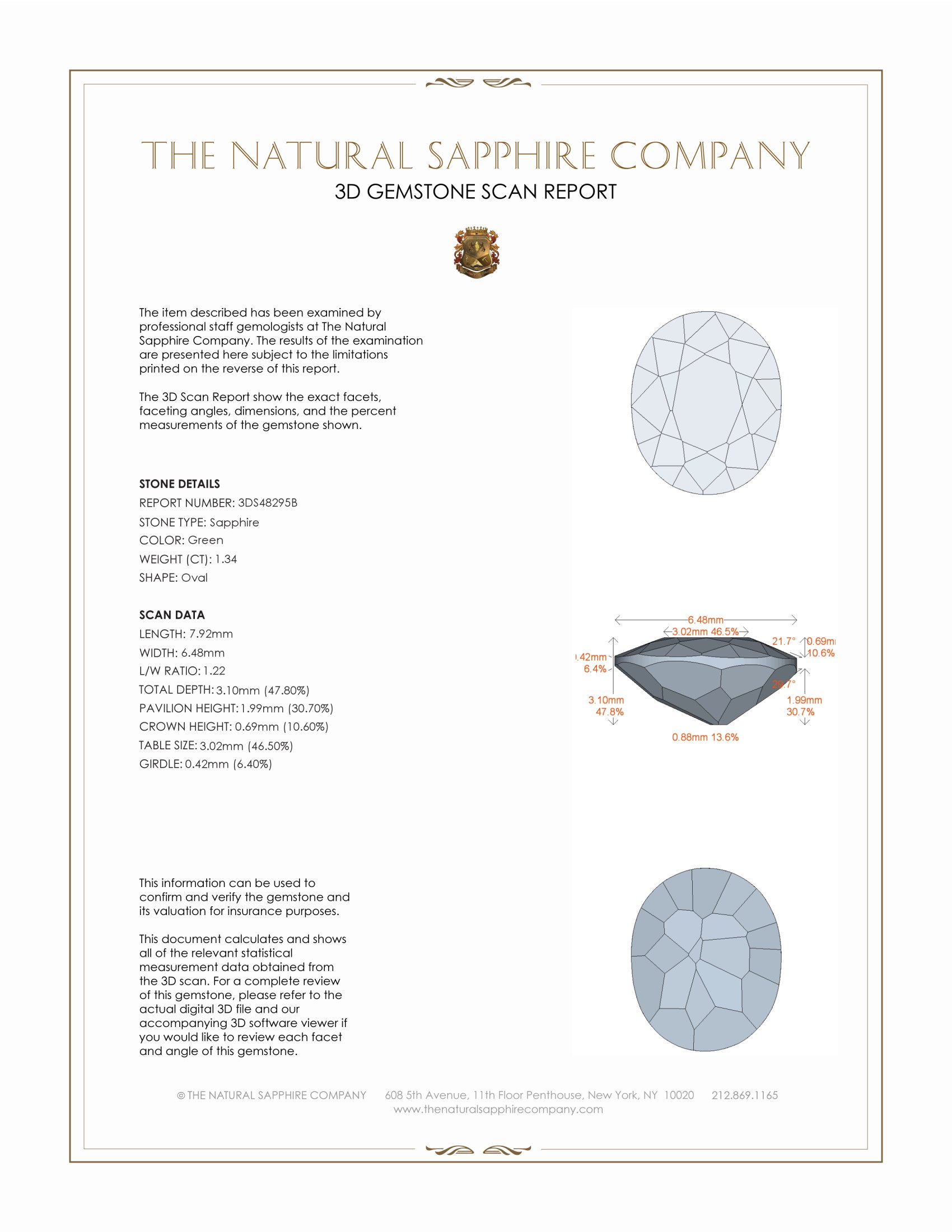
Dimensions (MM): help | Length: 7.92 Width: 6.48 Height: 3.1 |
Weight: | 1.34 Ct. |
Color: help | Green |
Color intensity: help | Dark |
Clarity: help | Very Slightly Included |
Shape: help | Oval |
Cut: | Mixed Brilliant Cut |
Cutting style: | Faceted |
Enhancements: help | Heat Treated |
Origin: help | Australia |
Per carat price: help | $600 |
This transparent oval green sapphire weighs 1.34 carats, and measures 7.92 by 6.48 by 3.10 millimeters. The stone has been faceted in a mixed brilliant style with a brilliant facet arrangement on the pavilion and a modified brilliant crown, producing a balance between scintillation and color saturation. The table plane is proportioned to the oval outline, and the girdle appears consistent, yielding an approximate total depth of 43 percent based on the average diameter. These proportions generate a lower to medium profile that emphasizes the stone face up, while the mixed brilliant pavilion returns optimized light to the observer, compensating for the stone s naturally darker color intensity. The Natural Sapphire Company presents this gem as a workmanlike combination of weight retention and optical performance, where the cutter preserved size while establishing lively facet interplay.
Clarity evaluation at eye level registers as very slightly included, indicating a small number of minute internal features that do not materially interfere with transparency or brilliance under typical viewing. Examination with a loupe will likely reveal faint needle like or pinpoint features consistent with natural sapphire crystallography, yet these inclusions are positioned and sized so as not to create significant light leakage. The polish is graded excellent, with facet junctions and facet planes demonstrating careful execution and crisp facet edges, which enhances contrast and minimizes surface diffusion. The cutting emphasis is clearly on maintaining a high level of facet symmetry and table alignment to maximize return of the deeper green tones; the heat treatment disclosed for this sapphire is a standard thermal enhancement applied to refine color and clarity, while remaining stable under normal wear conditions.
Color description requires attention to hue, tone, and saturation, because this Australian stone reads as a primary green hue with a distinct blue bias, and a dark tone with strong color intensity. Face up the gem exhibits an inky green that leans toward a teal or forest green in stronger light, while in shallower viewing angles and under bright lighting it reveals slightly brighter, more saturated green flashes. Pleochroism is present, with the dominant green shifting toward blue green on alternate axes, a behavior typical of corundum with chromium and iron titanium trace element chemistry. Compared to sapphires from other notable localities, this Australian example differs in predictable ways. Sri Lankan, or Ceylon, green sapphires tend to present a lighter, more yellow green or grassy hue with higher apparent brightness, whereas Madagascar green sapphires often deliver more vivid, medium tone greens or turquoise leaning hues. Montana sapphires from the United States characteristically show a paler, more transparent grassy green, frequently with excellent clarity and a livelier face up appearance because of generally lighter tone. By contrast, Australian material more commonly registers a deeper, more saturated and darker green, sometimes approaching greenish black in low light, which is precisely the tonal zone this 1.34 carat stone occupies. For a historical contrast, Kashmir sapphires are known for a distinct velvety medium blue and should be considered a different color family entirely, but the point of comparison underscores how locality influences both hue and tonal balance.
For practical jewelry use and design, the combination of dark tone and mixed brilliant cutting suggests specific mounting strategies to optimize optical performance. A setting that allows light to enter through the pavilion as much as possible will maximize scintillation and reveal the subtle blue green pleochroic shifts, therefore prong settings with minimal bezel coverage or semi open bezels are recommended to avoid darkening the face up color. The oval outline and the measured proportions will work well in rings, pendants, or custom pieces where the depth percentage and pavilion construction create a pleasing low profile, offering comfort in daily wear. The dark tone also makes the gem an excellent candidate for contrast with warm metals such as rose gold, which can enhance the green s warmer undertones, or with platinum when a more modern, inky presentation is desired. Because the stone has been heat treated, routine care should avoid extreme thermal shocks, although normal cleaning with warm soapy water and a soft brush is appropriate. The Natural Sapphire Company stands behind the description and sourcing information provided, and this Australian green sapphire will appeal to buyers who prioritize a deep, saturated green, excellent polish, and a skilled mixed brilliant cut that balances color retention with lively facet performance.


