
- Stone12
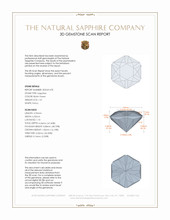
- Reports3
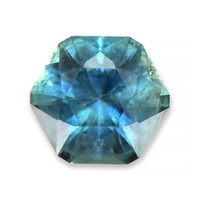
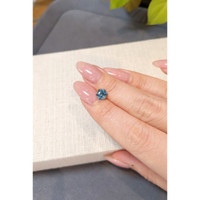
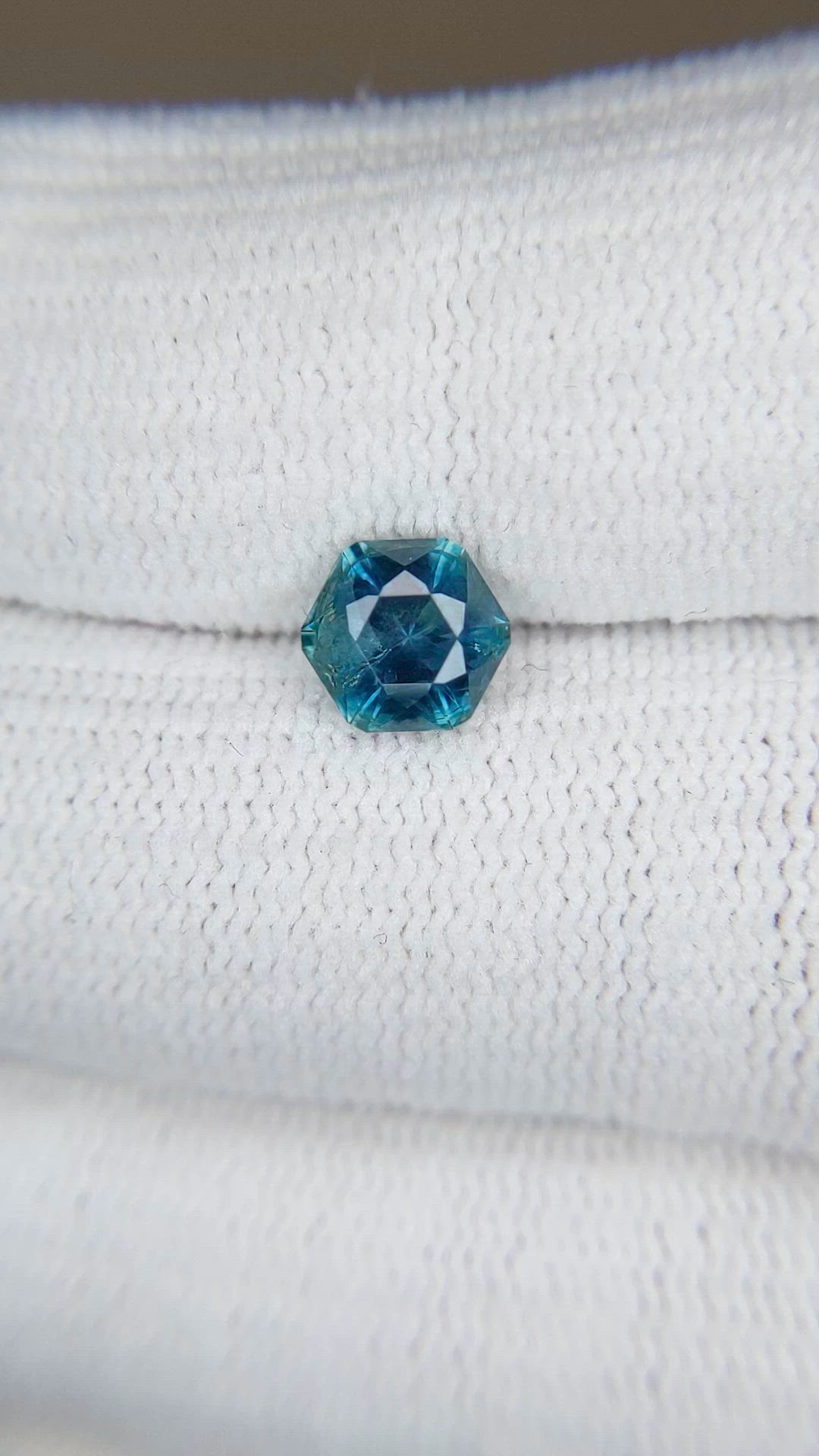
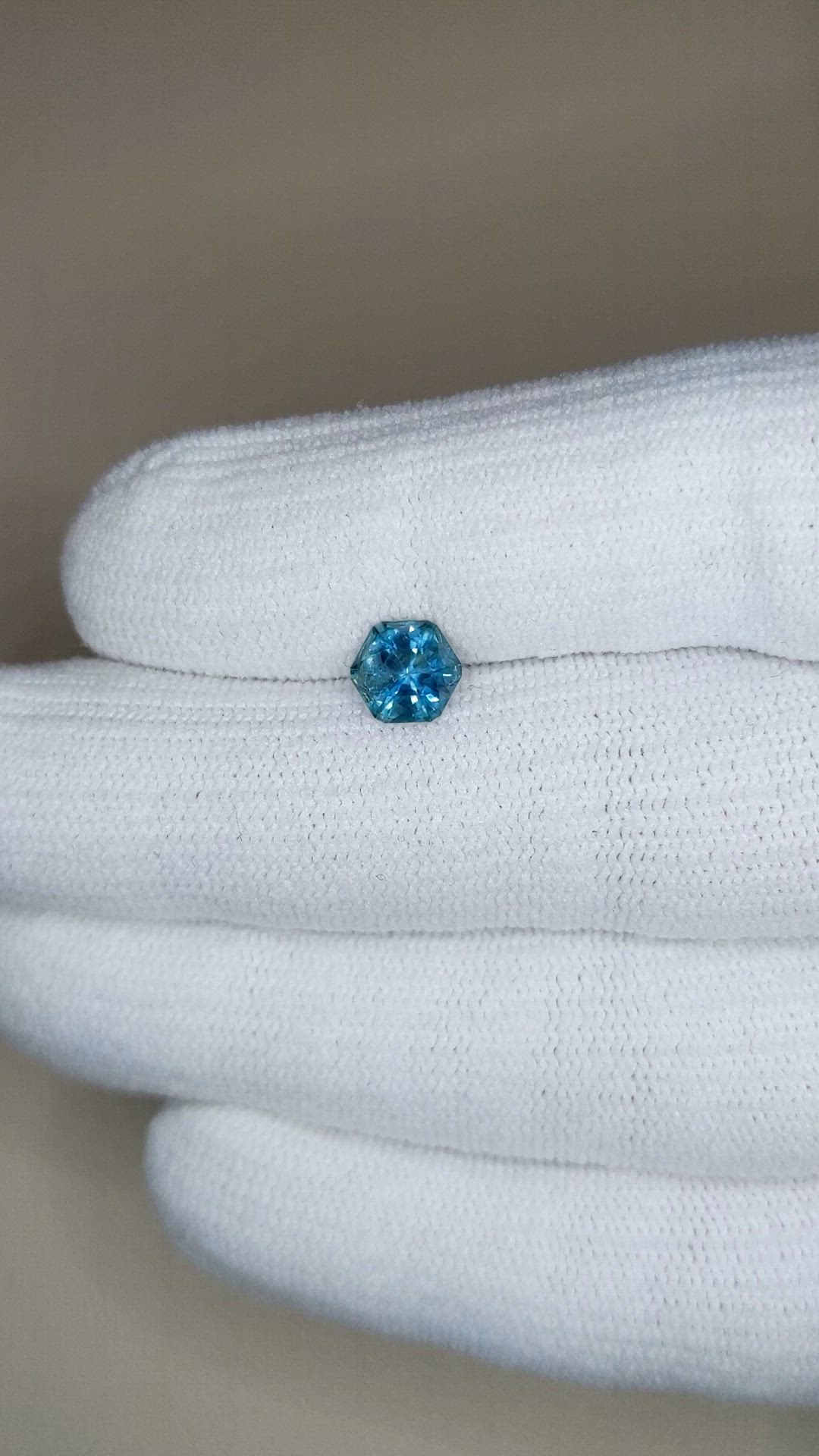
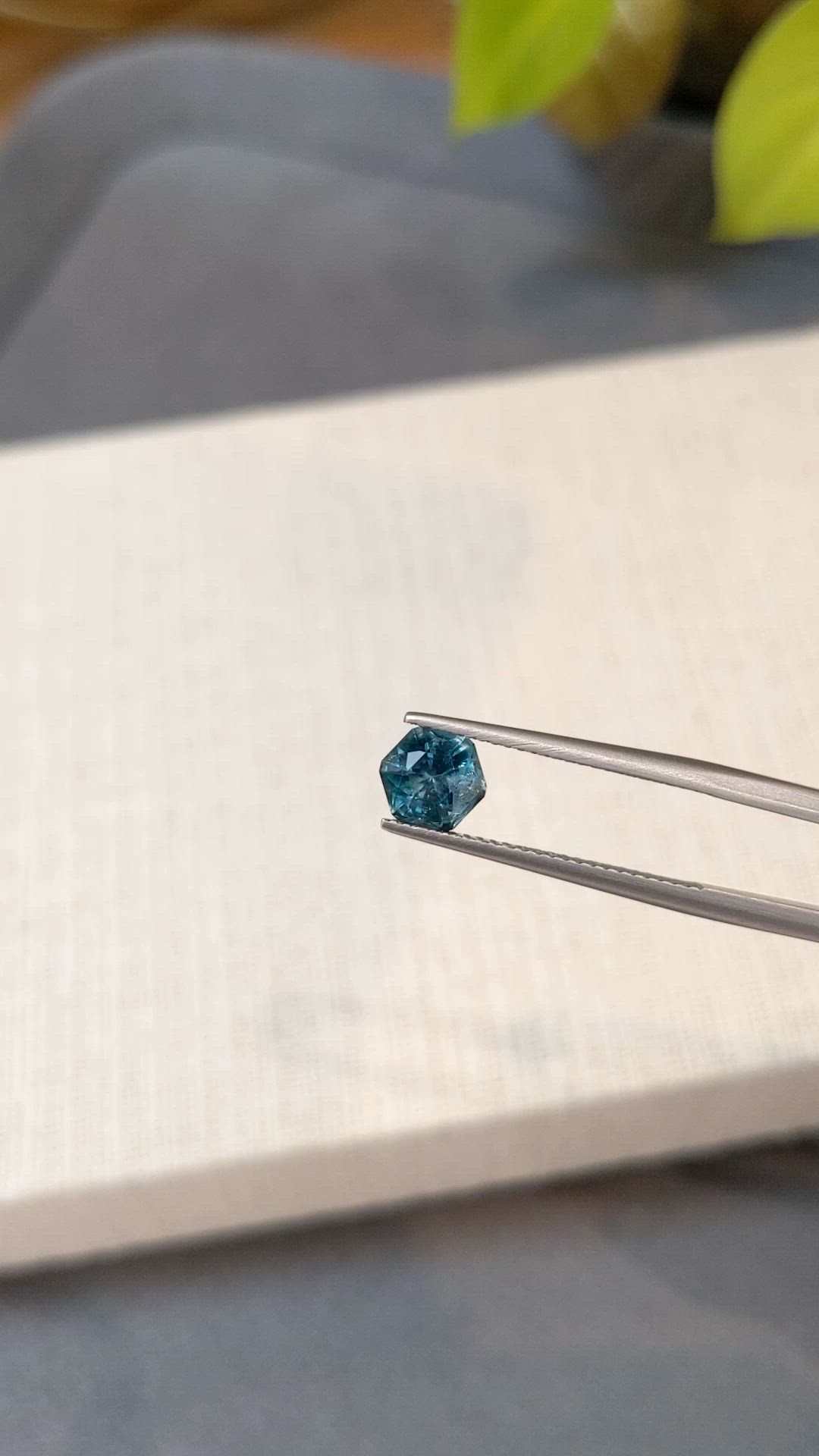
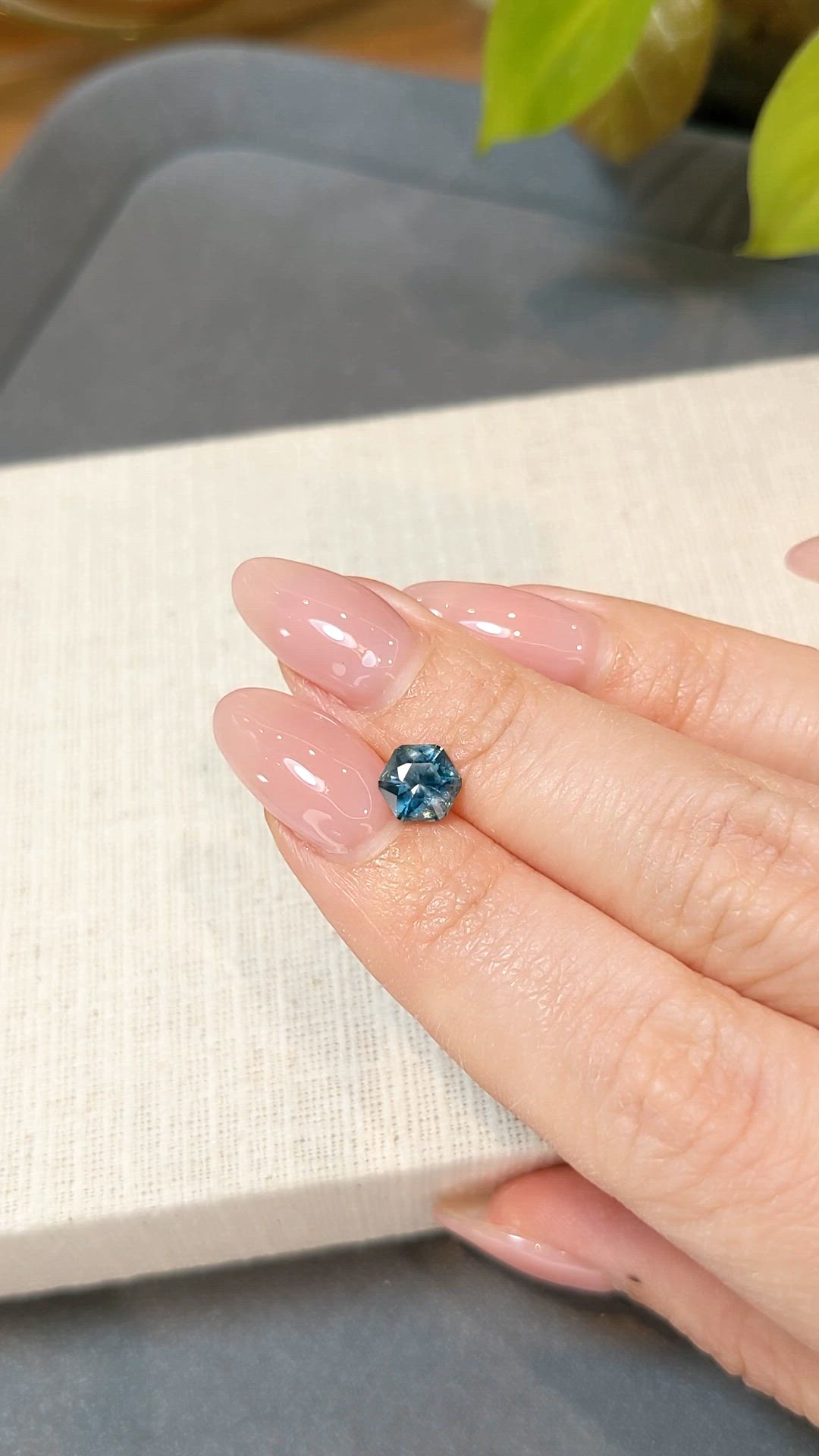

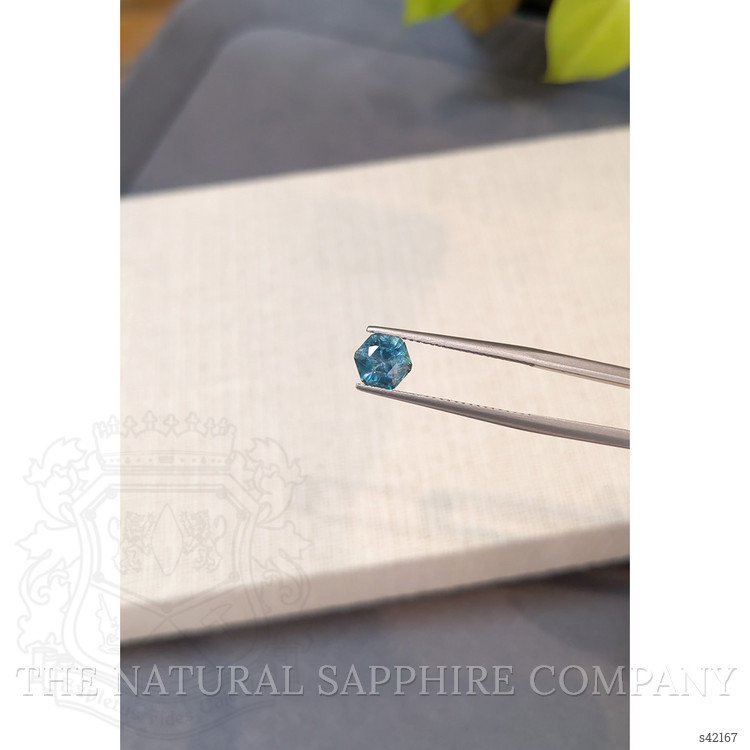

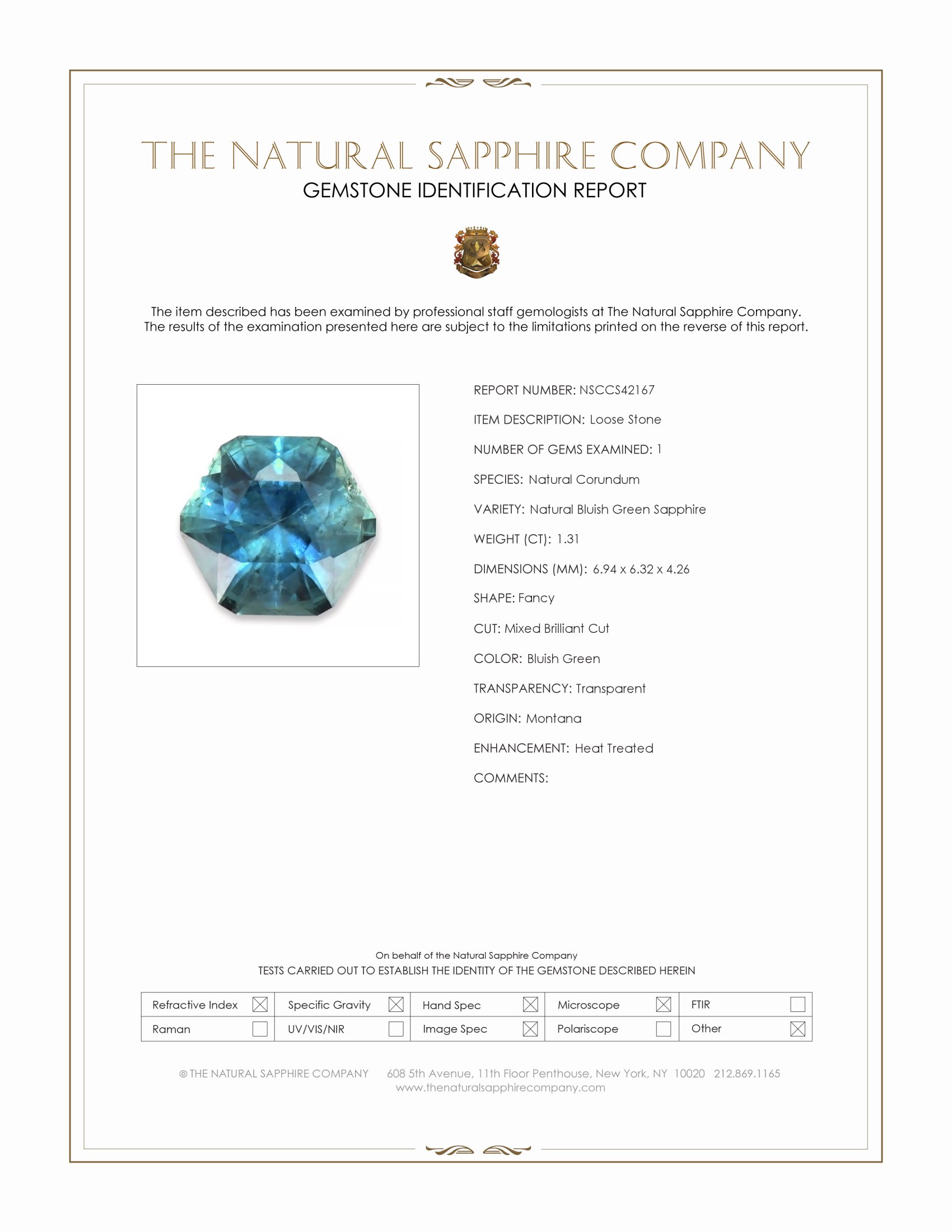
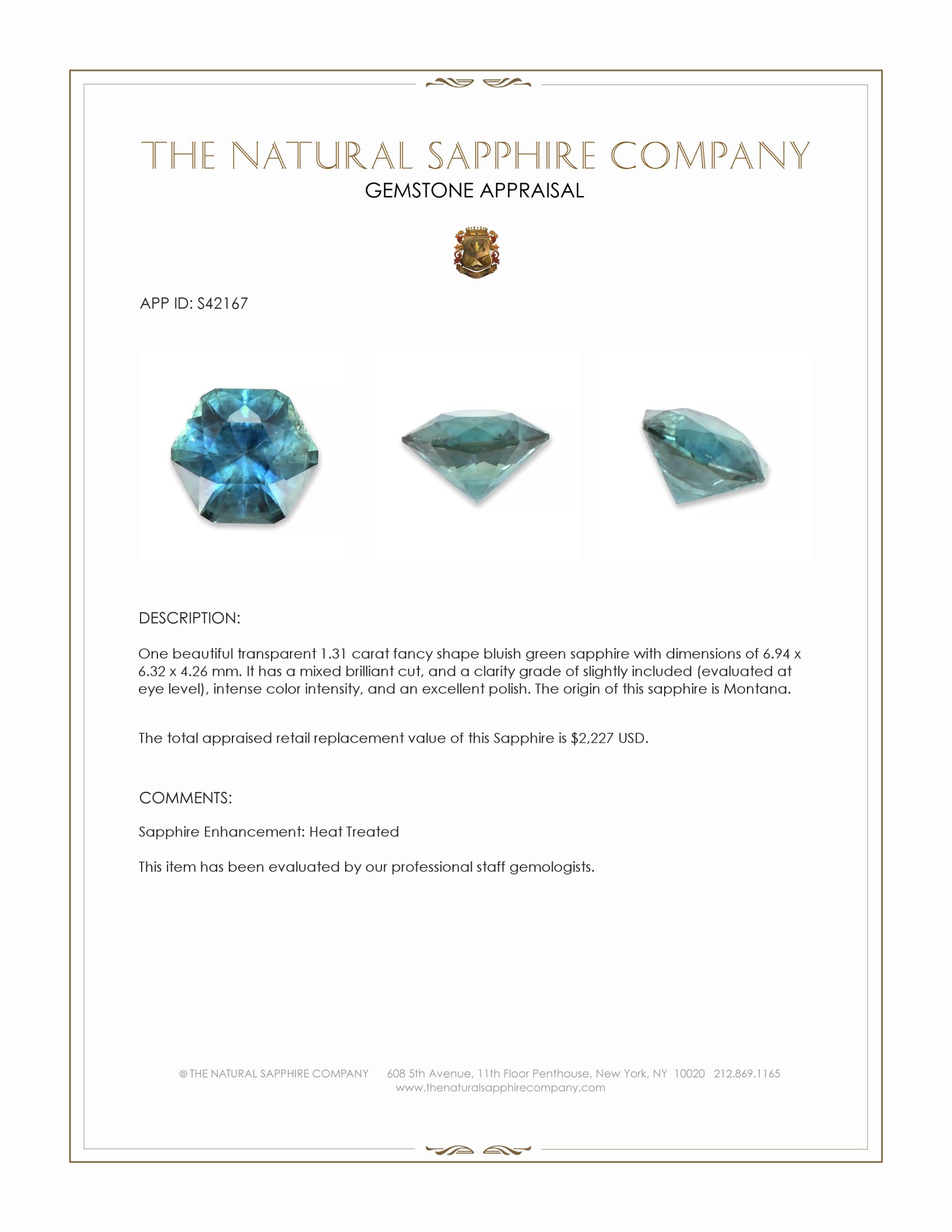
1.31 Ct. Bluish Green Sapphire from Montana
This loose stone is available to ship now
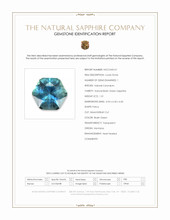
Item ID: | S42167 |
|---|---|
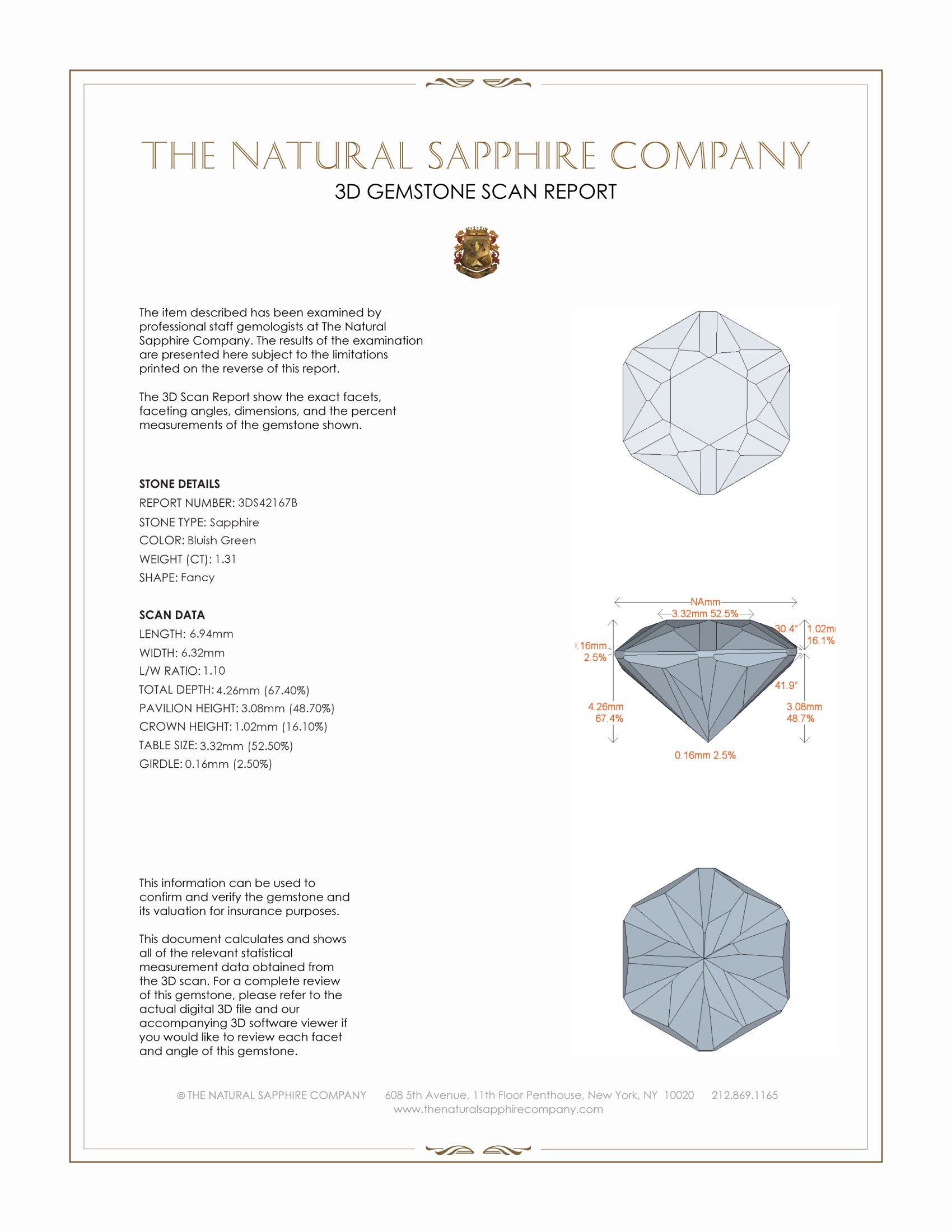
Dimensions (MM): help | Length: 6.94 Width: 6.32 Height: 4.26 |
Weight: | 1.31 Ct. |
Color: help | Bluish Green |
Color intensity: help | Intense |
Clarity: help | Slightly Included |
Shape: help | Fancy |
Cut: | Mixed Brilliant Cut |
Cutting style: | Faceted |
Enhancements: help | Heat Treated |
Origin: help | Montana |
Per carat price: help | $1,700 |
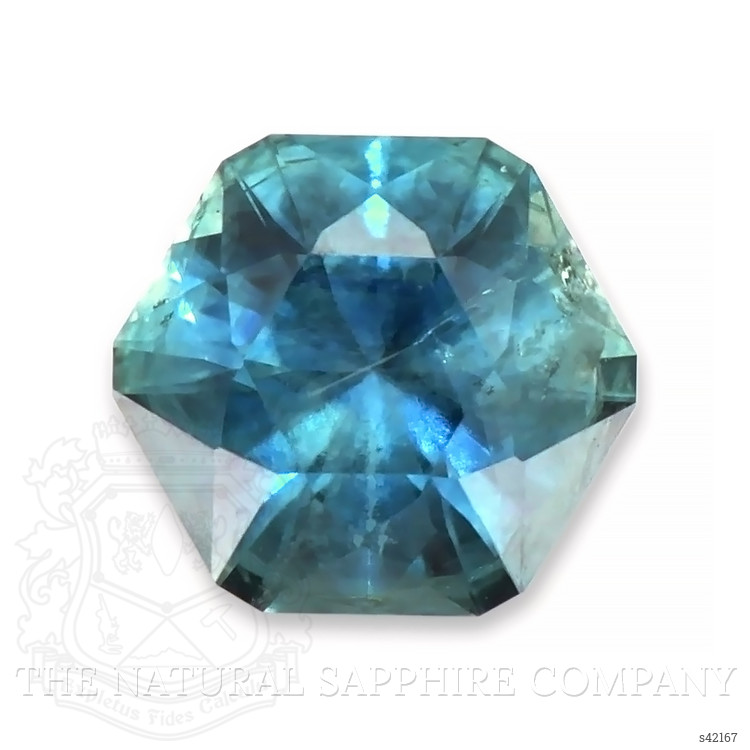
This 1.31 carat fancy shape bluish green sapphire measures 6.94 by 6.32 by 4.26 millimeters and exhibits a mixed brilliant cut executed to emphasize both color saturation and scintillation. The cutter combined a brilliant-style crown with a modified pavilion geometry, producing a network of pavilion facets that returns light as lively flashes while maintaining large, evenly proportioned crown facets to present the intense body color without over-dispersing it. Symmetry is consistent for a fancy shape, with well-aligned facet junctions and a uniformly executed girdle, and polish has been graded excellent, yielding sharp facet intersections and minimal surface haze. Clarity is slightly included when viewed at eye level, with small needle and crystal inclusions that do not significantly interfere with light return but do provide internal character and a degree of natural origin verification. The sapphire has been heat treated, a standard and stable enhancement that improves color uniformity and reduces the visibility of some internal features while leaving the crystal structure intact. Origin is Montana, a source recognized for producing sapphires with distinct bluish green tones and a tendency toward attractive pleochroic behavior, attributes that are consistent with this specimen. The Natural Sapphire Company presentation emphasizes the cutter s intention to balance hue, tone, and brilliance, resulting in a gem that reads as intense in color intensity yet lively in facet performance.
Optically this sapphire demonstrates a bluish green hue with an intense color intensity that shifts subtly with viewing angle and lighting, consistent with pleochroism typical of corundum types containing chromium and iron titanium chromophores. Under cool daylight the stone tends toward a cleaner blue component with green undertones visible in the pavilion reflections, while incandescent or warmer lighting brings out the green axis more strongly, increasing the perception of teal. The mixed brilliant cut mitigates potential color zoning by using crown facet sizes that present an even table view, while the modified pavilion facets concentrate zones of saturation into scintillating flashes, enhancing perceived depth without overly darkening the stone. Slight inclusions are internal to the crystal and do not compromise structural integrity, however they can influence light scattering locally, producing subtle character in the stone s flash pattern. Heat treatment has improved the homogeneity of the bluish green tone and closed some small needle tunnels, delivering a stable, market-appropriate saturation. For clients seeking precise color control in finished jewelry, the pavilion orientation and crown table can be directed during mounting to favor either the bluer or greener axis, and the cutter s quality of facet polish supports fine-tuning that will be perceptible in any mounting.
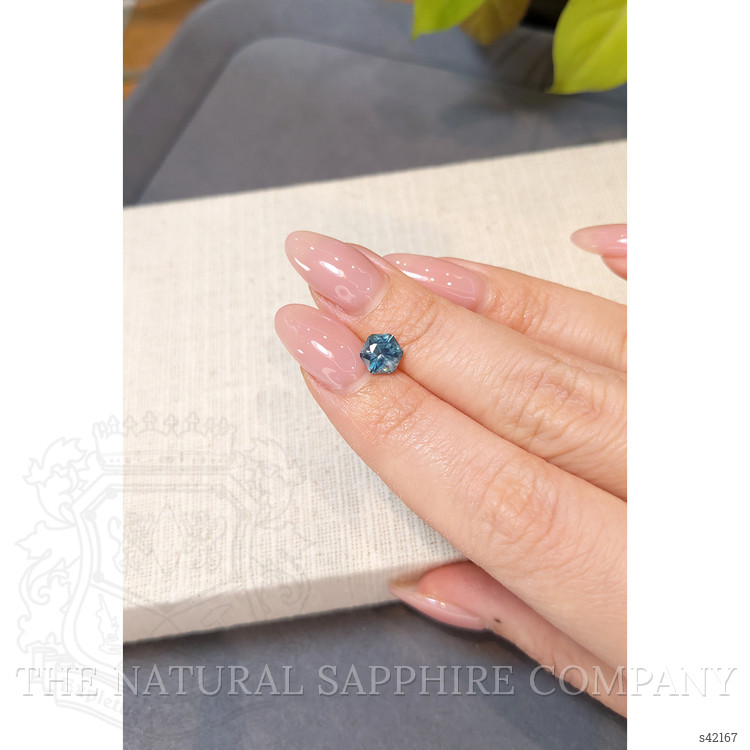
When set in jewelry this sapphire s bluish green palette is versatile across a wide range of skin tones, and careful choice of metal, setting type, and surrounding accents will optimize its visual interaction with the wearer. On fair skin with cool undertones the stone s blue component will be most prominent, producing a crisp, oceanic appearance that is enhanced by white metals such as platinum or white gold which increase perceived coolness and contrast. For warm or golden undertones, yellow or rose gold will introduce a complementary warm contrast that draws out the green axis and creates a richer teal effect, the warm metal reflecting into the girdle facets and subtly tipping the stone toward green without altering its intrinsic chromophore balance. On olive or neutral complexions, the sapphire often reads as a true teal, with both blue and green axes visible and well balanced, and here a mixed metal treatment or a thin bezel with a diamond halo can create visual separation from skin tones and intensify perceived saturation. Deeper skin tones provide strong contrast and make the sapphire appear more saturated and jewel-like, a benefit of higher tone contrast where the intense color intensity reads as vivid and deep. Because the sapphire is slightly included, protective settings such as a low bezel or secure prong architecture are recommended for daily-wear pieces to minimize exposure of vulnerable facet edges, while an open-back setting will maximize light penetration and emphasize the stone s pleochroic shifts. For bespoke commissions our team at The Natural Sapphire Company can advise on metal selection, halo options, and pavilion orientation to ensure the sapphire s bluish green character complements the wearer s skin tone and desired aesthetic, preserving both beauty and durability.


