
- Stone14
- Reports3


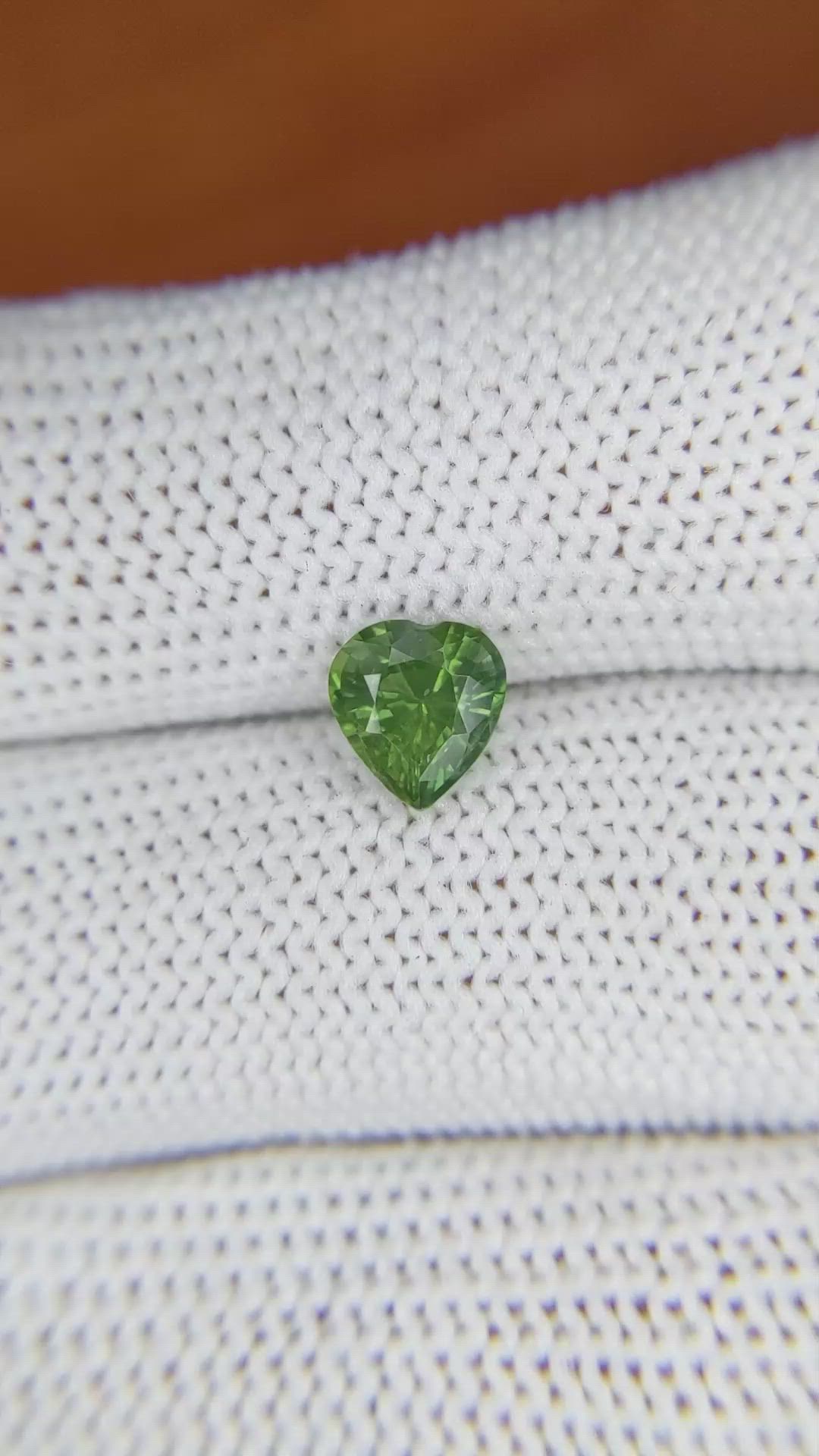
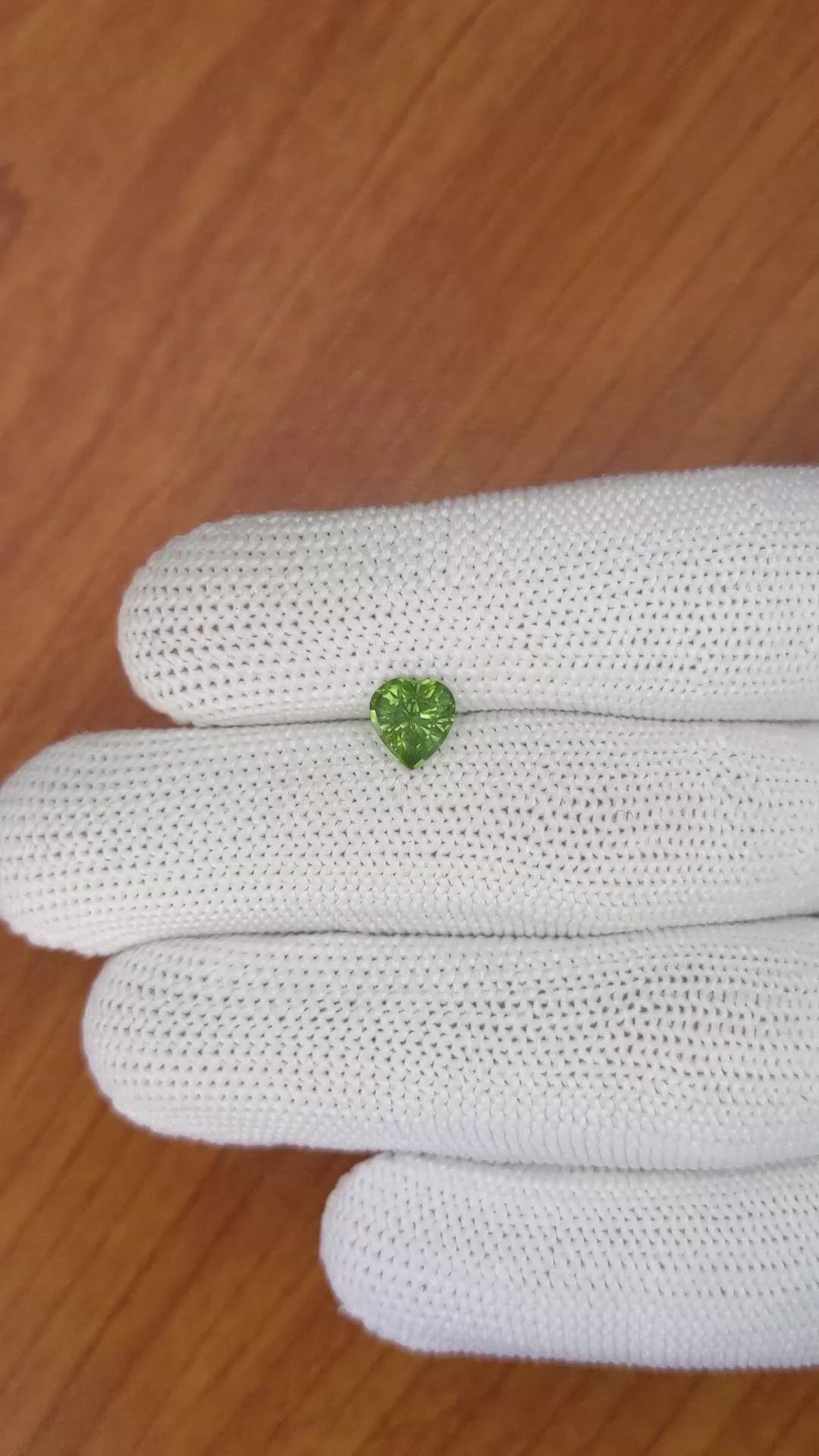
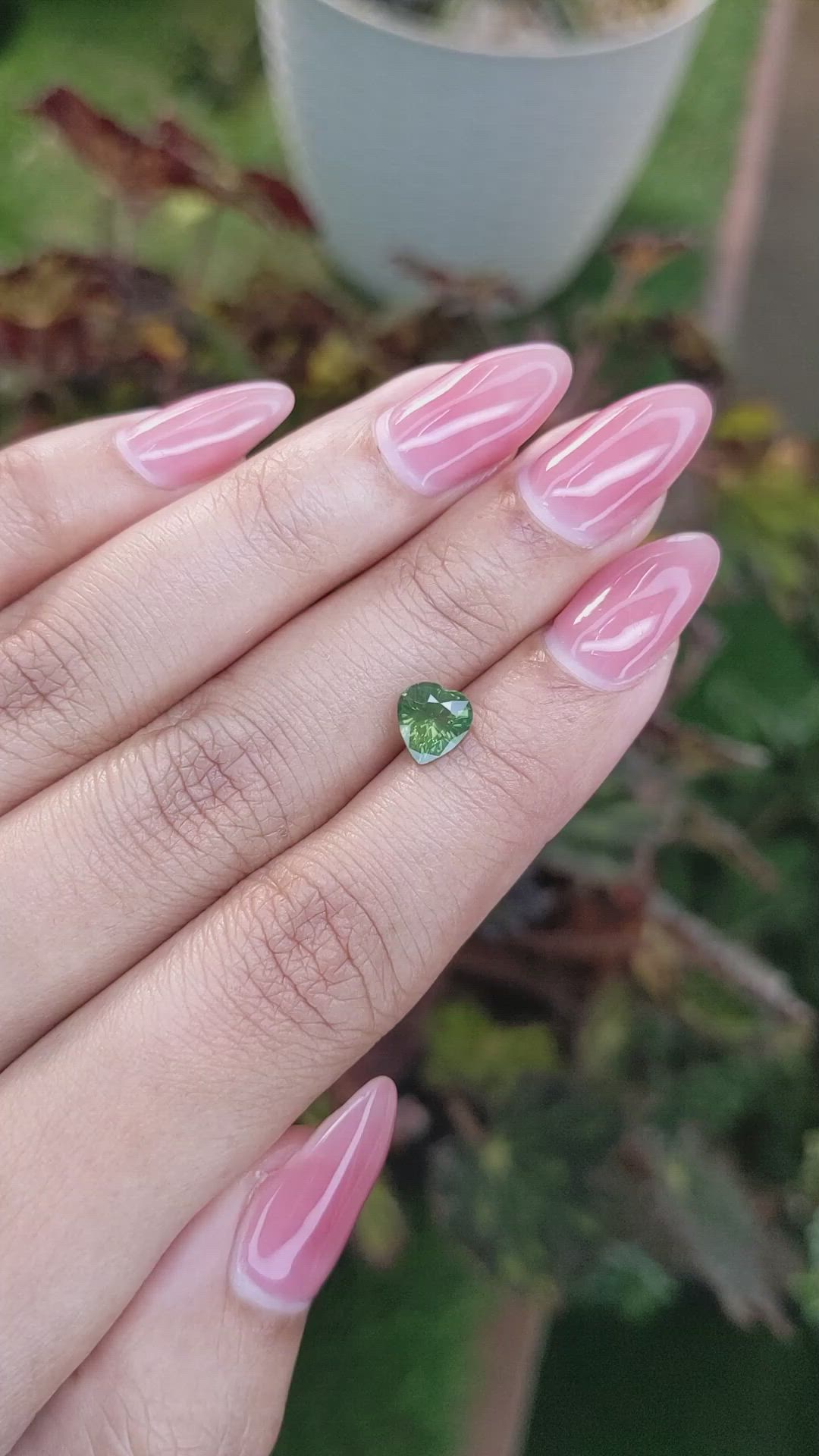
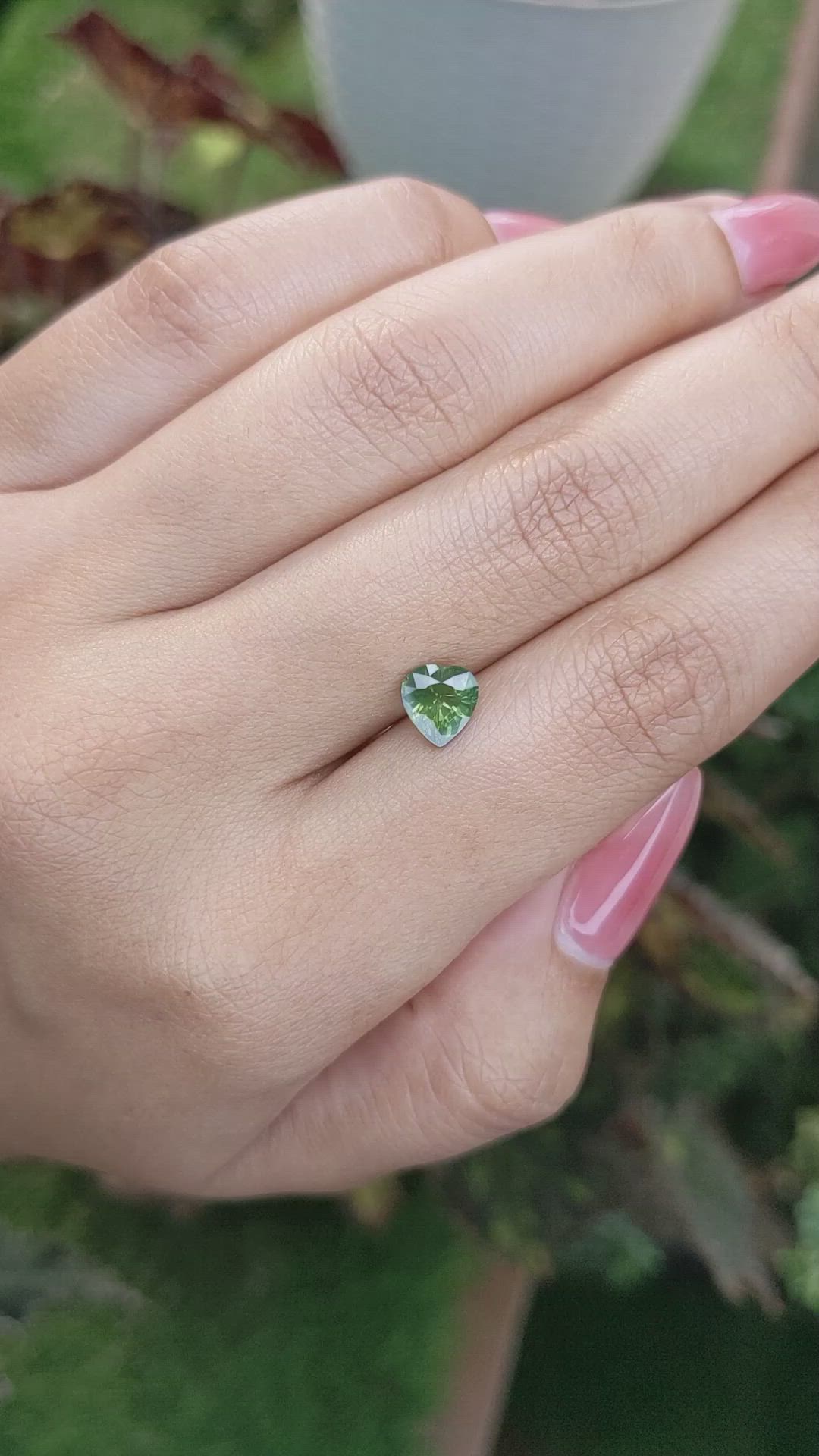
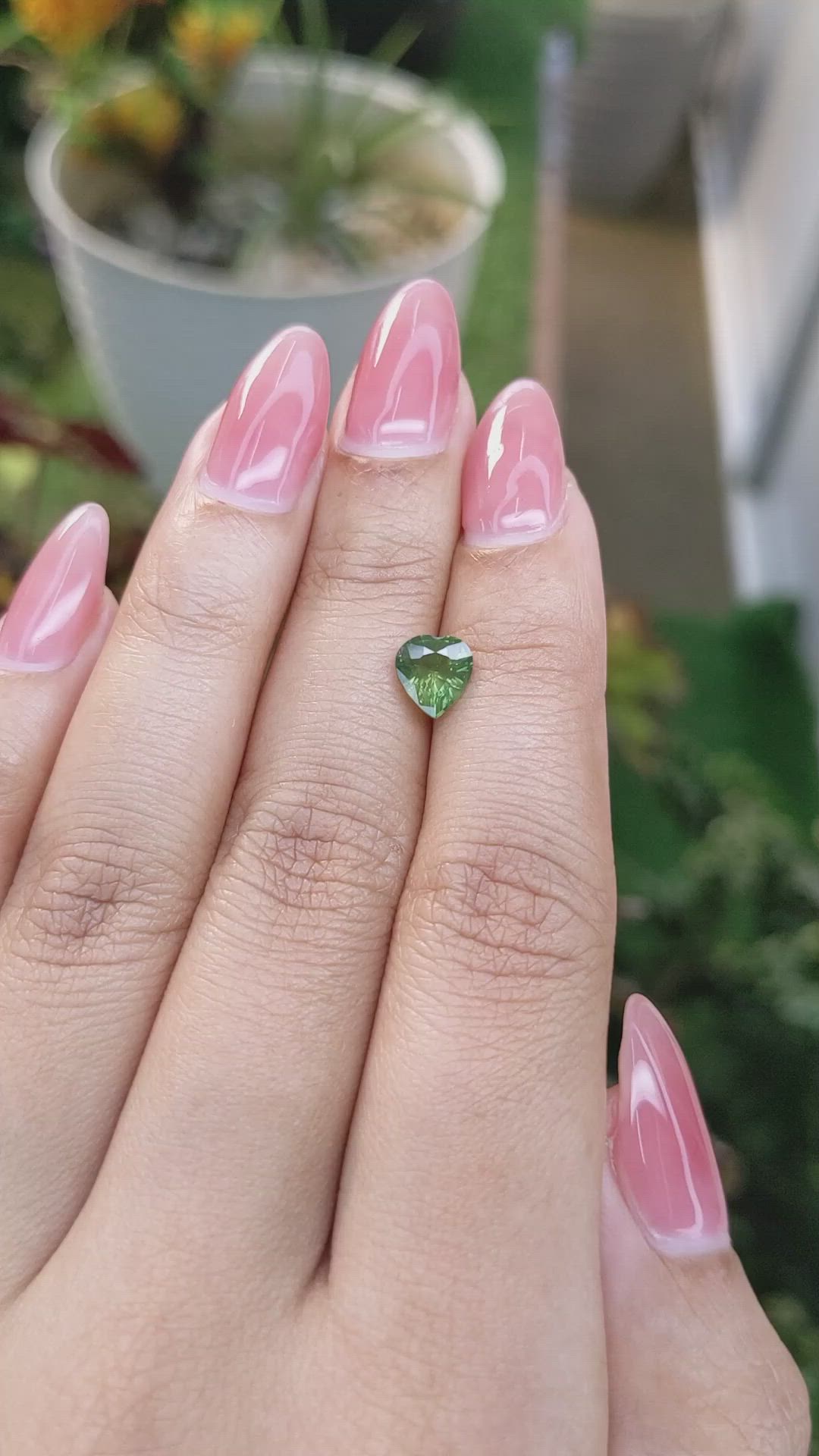


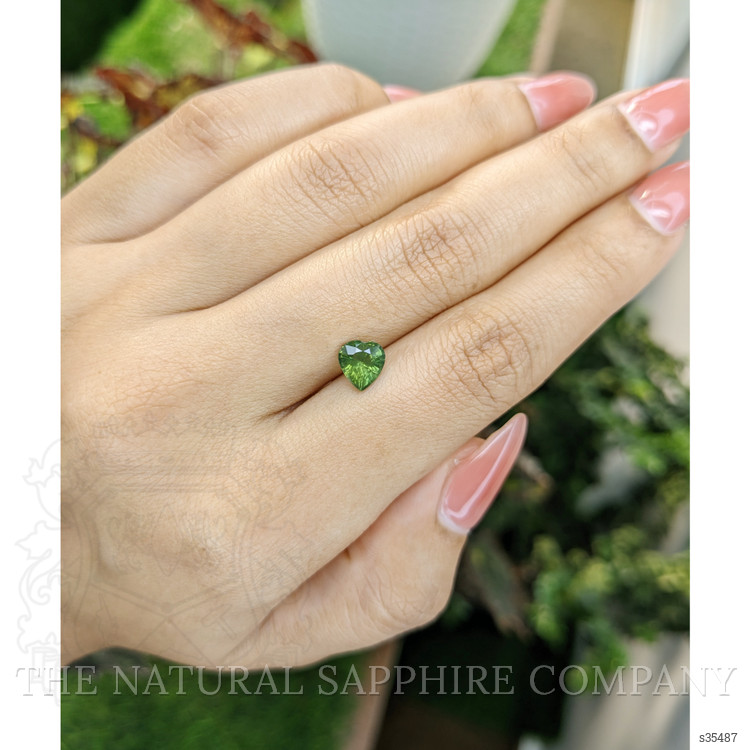


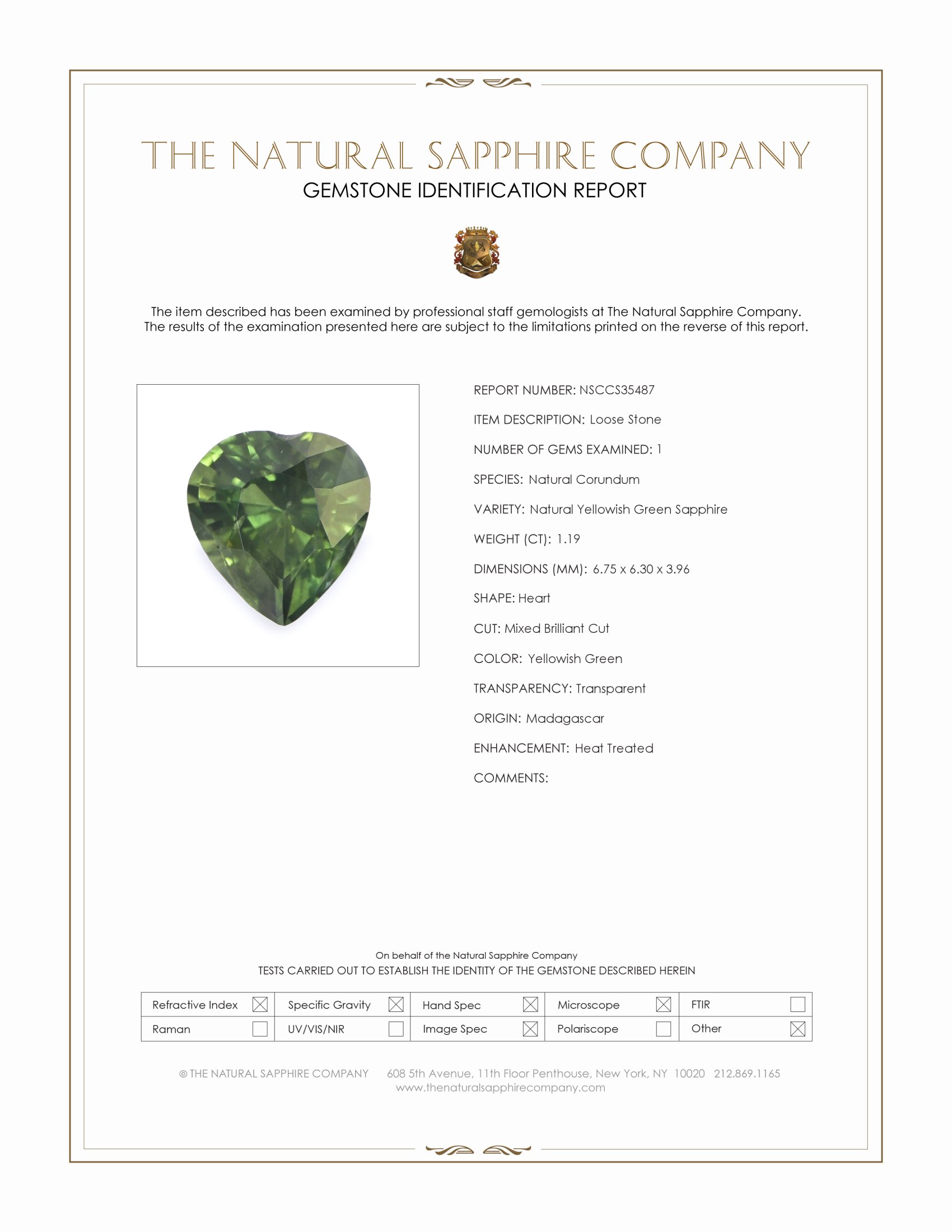
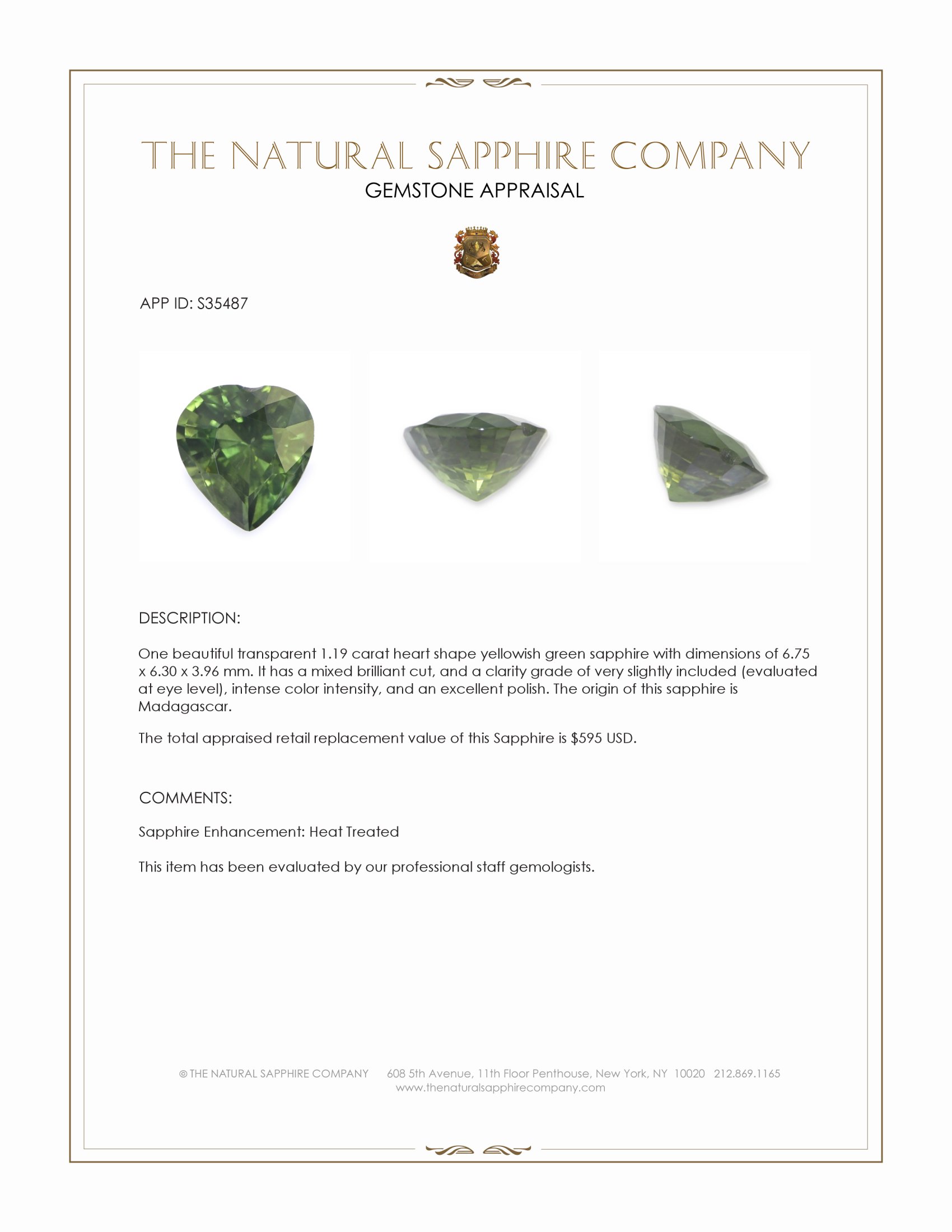
1.19 Ct. Yellowish Green Sapphire from Madagascar
This loose stone ships by Aug 22
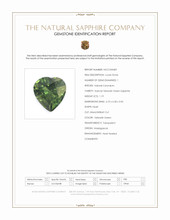
Item ID: | S35487 |
|---|---|
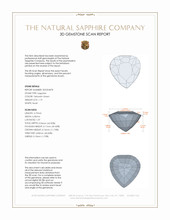
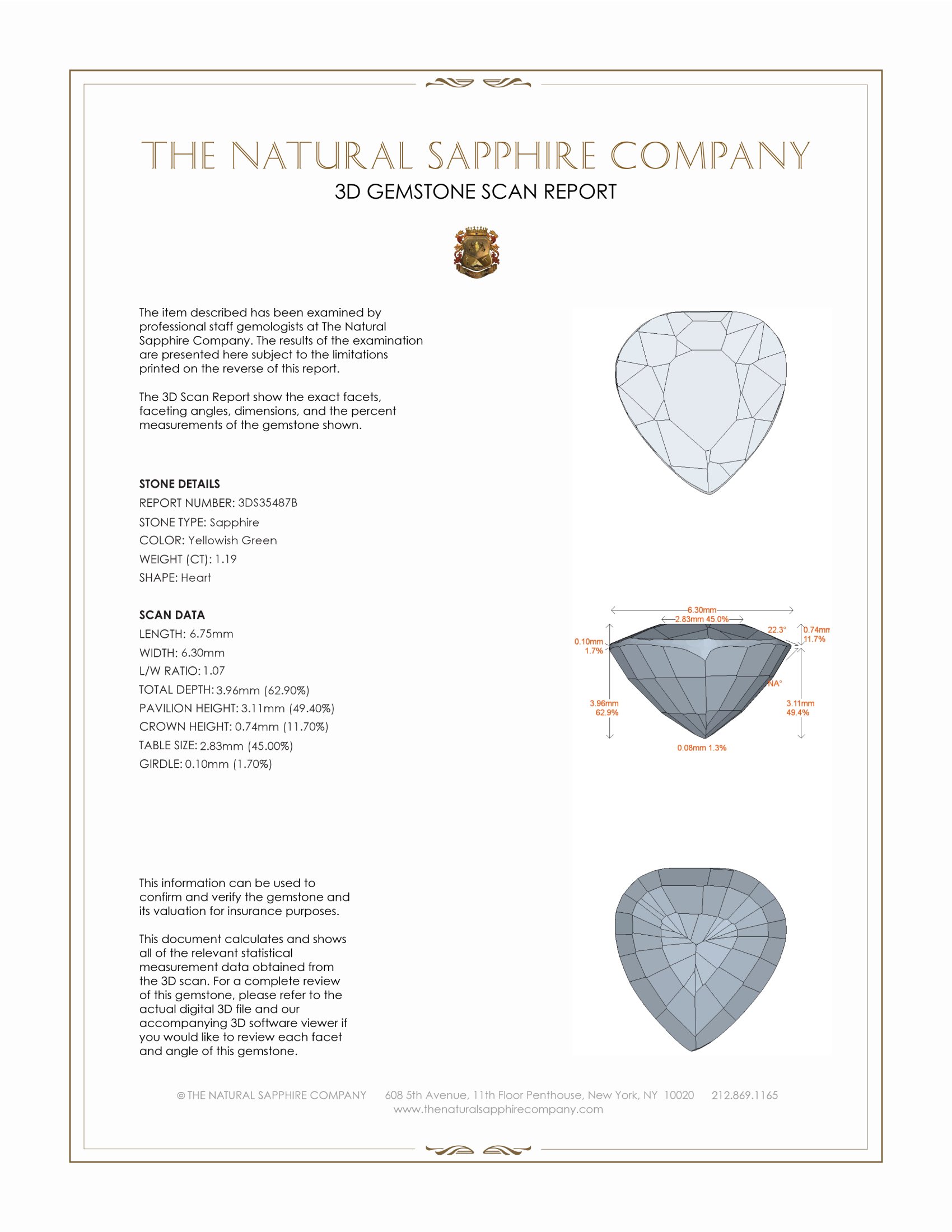
Dimensions (MM): help | Length: 6.75 Width: 6.3 Height: 3.96 |
Weight: | 1.19 Ct. |
Color: help | Yellowish Green |
Color intensity: help | Intense |
Clarity: help | Very Slightly Included |
Shape: help | Heart |
Cut: | Mixed Brilliant Cut |
Cutting style: | Faceted |
Enhancements: help | Heat Treated |
Origin: help | Madagascar |
Per carat price: help | $500 |
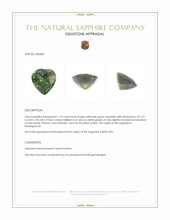
This 1.19 carat heart shape yellowish green sapphire presents a precise combination of dimensions and cutting discipline, 6.75 by 6.30 by 3.96 millimeters, executed in a mixed brilliant cut that balances pavilion brilliance and crown fire. The mixed brilliant approach employed here uses a faceted crown with a classic brilliant facet arrangement paired with a step style girdle and pavilion that terminate in a finely executed culet area, the overall design calibrated to deliver strong return of light while preserving the heart silhouette. Proportions yield a depth to average diameter ratio of approximately 60.7 percent, a range that supports both saturation retention and return of white light, contributing to the intense color intensity documented. Clarity is graded very slightly included evaluated at eye level, the inclusions being minor and positioned such that they do not interrupt the primary sightline when the gem is set, and the polish is excellent with crisp facet junctions and minimal surface abrasion, ensuring ideal facet contrast. The material has undergone controlled heat enhancement to stabilize and intensify hue and saturation, and provenance is Madagascar, a source known for well crystallized sapphire material and lively color ranges. This stone is offered and described by The Natural Sapphire Company, with full disclosure of treatment and origin for transparency in acquisition.
Color in this heart shaped sapphire reads as yellowish green with an intense saturation that is both vivid and nuanced, the hue positioned where green dominance meets a warm yellow modifier resulting in a lively, slightly citrus leaning green. Under natural daylight the stone displays its full chroma and even saturation across the table and crown facets, while under incandescent or warm light sources the yellow modifier becomes more perceptible, softening the perceived green and increasing the warmth. The mixed brilliant faceting enhances internal light play, producing small flashes of white brilliance interspersed with green and yellow spectral scintillation, a characteristic that both masks and minimizes visibility of the very slight inclusions. Heat treatment in this material primarily refines iron related chromophores and reduces silk and rutile clouds that can dilute saturation, the result being a cleaner window into the core hue without creating artifice, the enhancement stable under normal wear conditions. The excellent polish supports maximal facet reflection and precise optic transmission, preserving color and minimizing detracting surface disturbances that would otherwise scatter light and mute the intense color.
When set in jewelry the yellowish green tone of this sapphire complements a wide spectrum of skin tones through a combination of warming and contrast strategies, the stone’s intense saturation allowing it to read distinctly even at a modest table diameter. Against fair skin with cool undertones the yellowish component provides counterbalance, introducing a warm note that reduces any washed effect and creates a flattering juxtaposition, particularly when set in white metals that emphasize brilliance and make the green element vivid. For fair skin with warm undertones the stone harmonizes with the wearer’s natural warmth, and a yellow gold or rose gold mounting will enhance the yellow modifier, increasing perceived saturation and giving the piece a cohesive tonal unity. On medium and olive complexions the sapphire’s green axis resonates with underlying skin pigments, producing an integrated appearance that amplifies the green quality without appearing overly bright, a prong setting that exposes the pavilion will allow skin undertones to interact with the stone and fine tune perceived hue. Against deep skin tones the intense color is highly legible, offering vivid contrast and a luxurious presence, in these cases both platinum and yellow gold frames can work, platinum increasing perceived brilliance and color pop, yellow gold adding an embracing warmth that complements the stone’s yellow modifier and yields a jewel that reads as richly saturated.
From a craftsmanship and deployment perspective this heart shape sapphire benefits from considered setting choices and routine care to maintain optical performance and structural integrity, the mixed brilliant faceting and excellent polish call for settings that protect the pointed cleft and the lobes of the heart while allowing crown facets to catch light. Prong settings with well placed and polished prongs preserve facet visibility and minimize metal wash across the crown, while bezel mounts provide increased protection at the cost of some face up brilliance, a partial bezel or hybrid setting can offer compromise. When designing a ring or pendant incorporating single stone or halo treatments, white diamonds set around the table and crown will increase localized contrast and uplift perceived color by providing neutral bright points, while colored accents in yellow gold or warm toned gemstones will reinforce the yellow modifier and shift overall perception toward a warmer green. Heat treatment disclosure is provided in keeping with best practice, this treatment is conventional and stable, and the Madagascar origin contributes to a predictable pattern of inclusions and crystal habit that is consistent with the documented clarity. For long term care avoid sudden temperature shocks and prolonged exposure to harsh chemicals, routine cleaning with a soft brush, mild detergent, and warm water will preserve polish and remove residues that reduce brilliance. The Natural Sapphire Company stands behind the description and provenance of this sapphire, and we can provide guidance on mounting geometry, recommended setting profiles to protect the heart point and cleft, and certification options to document weight, dimensions, cut style, clarity grade, treatment, and origin for secure acquisition and insurance purposes.


