
- Stone13
- Reports3
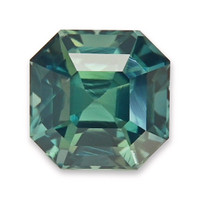


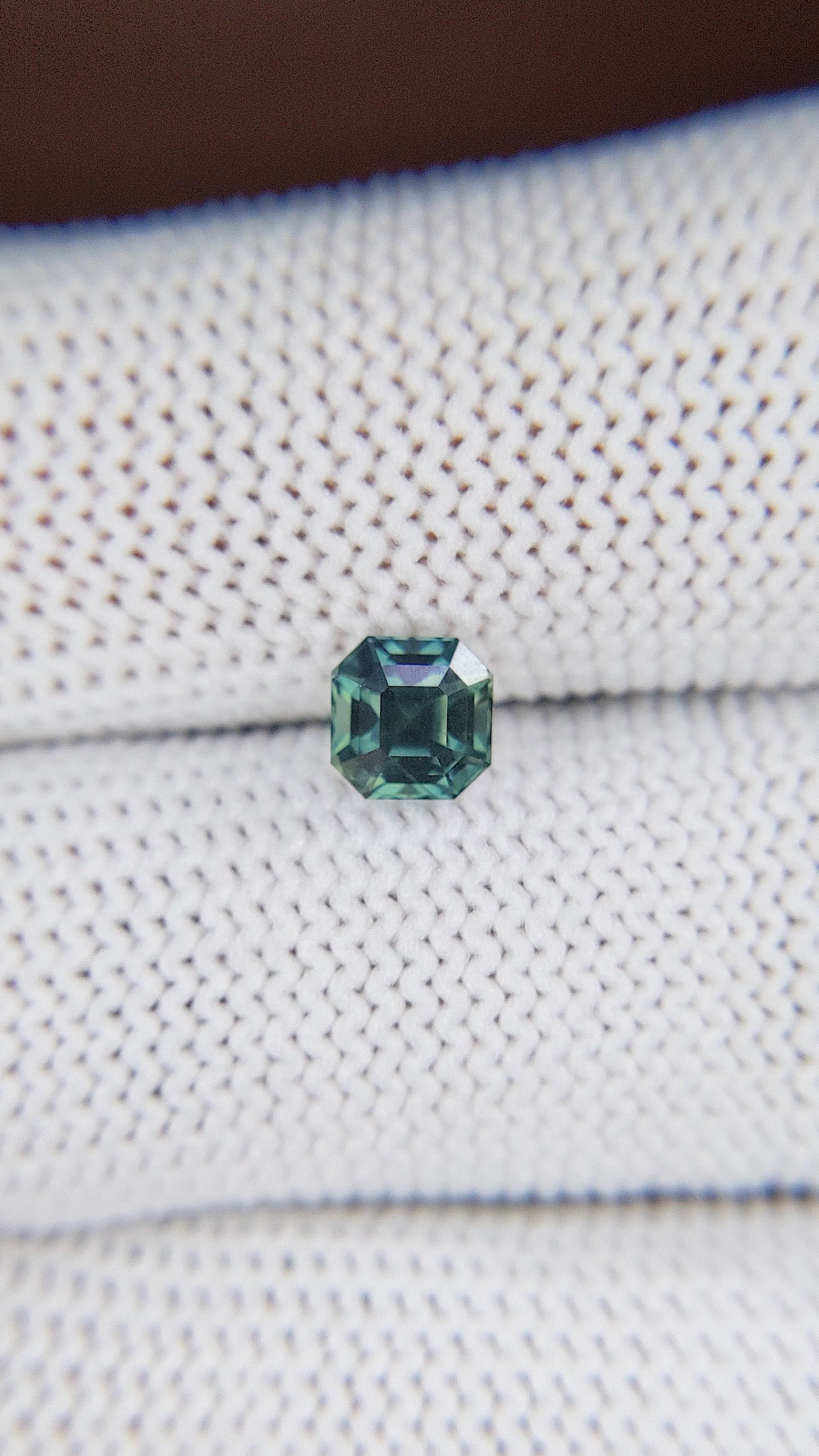
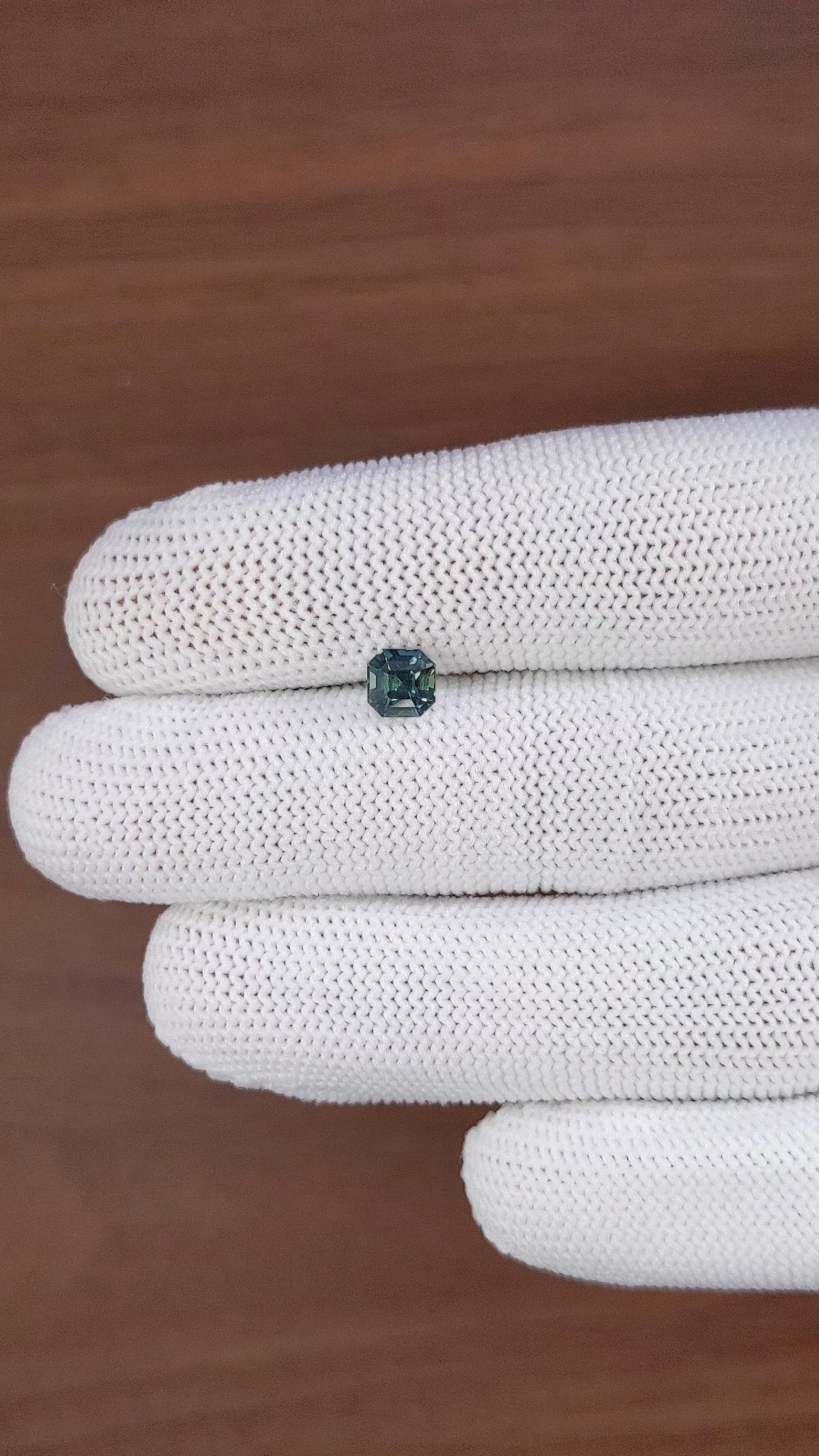
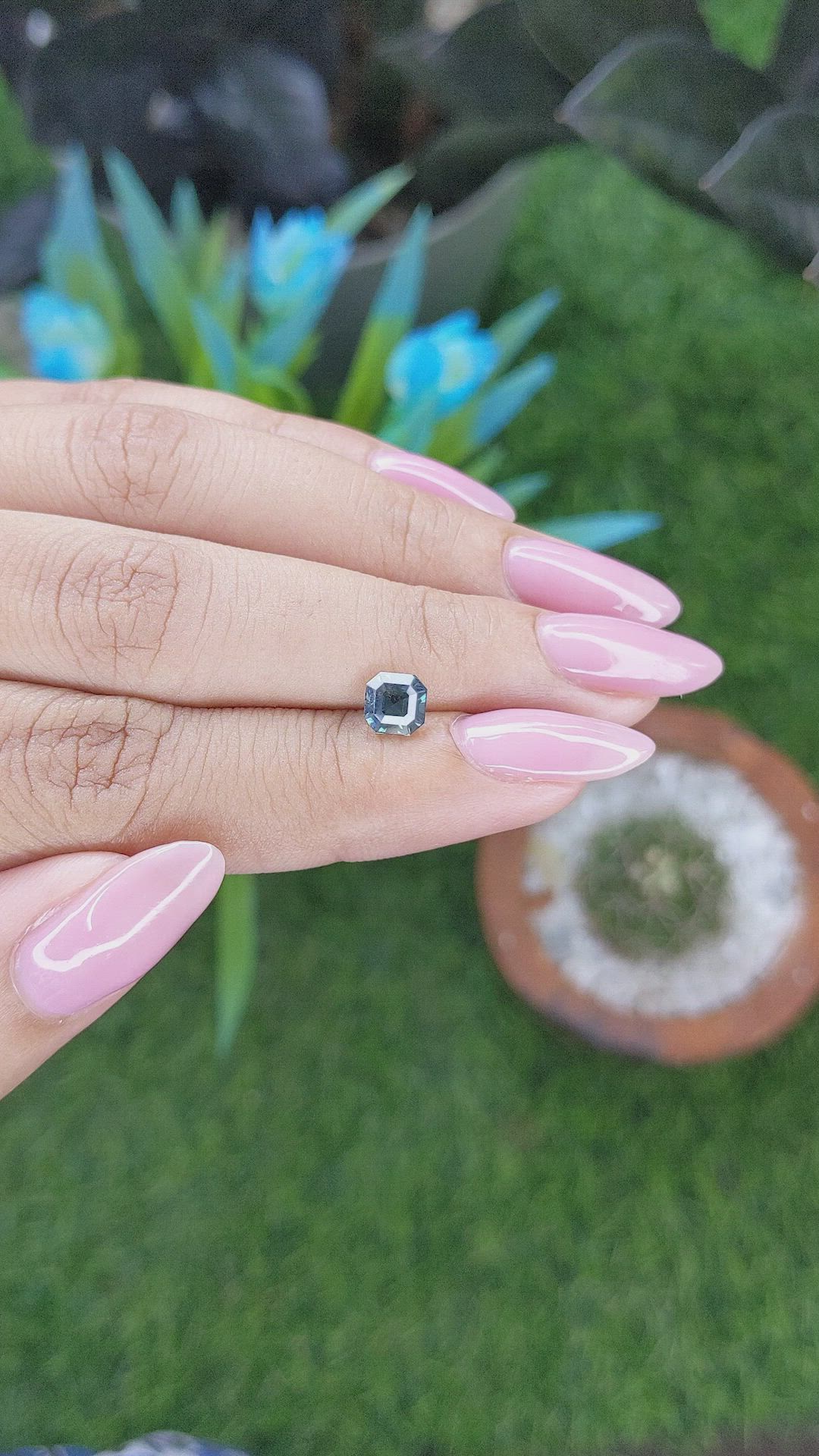
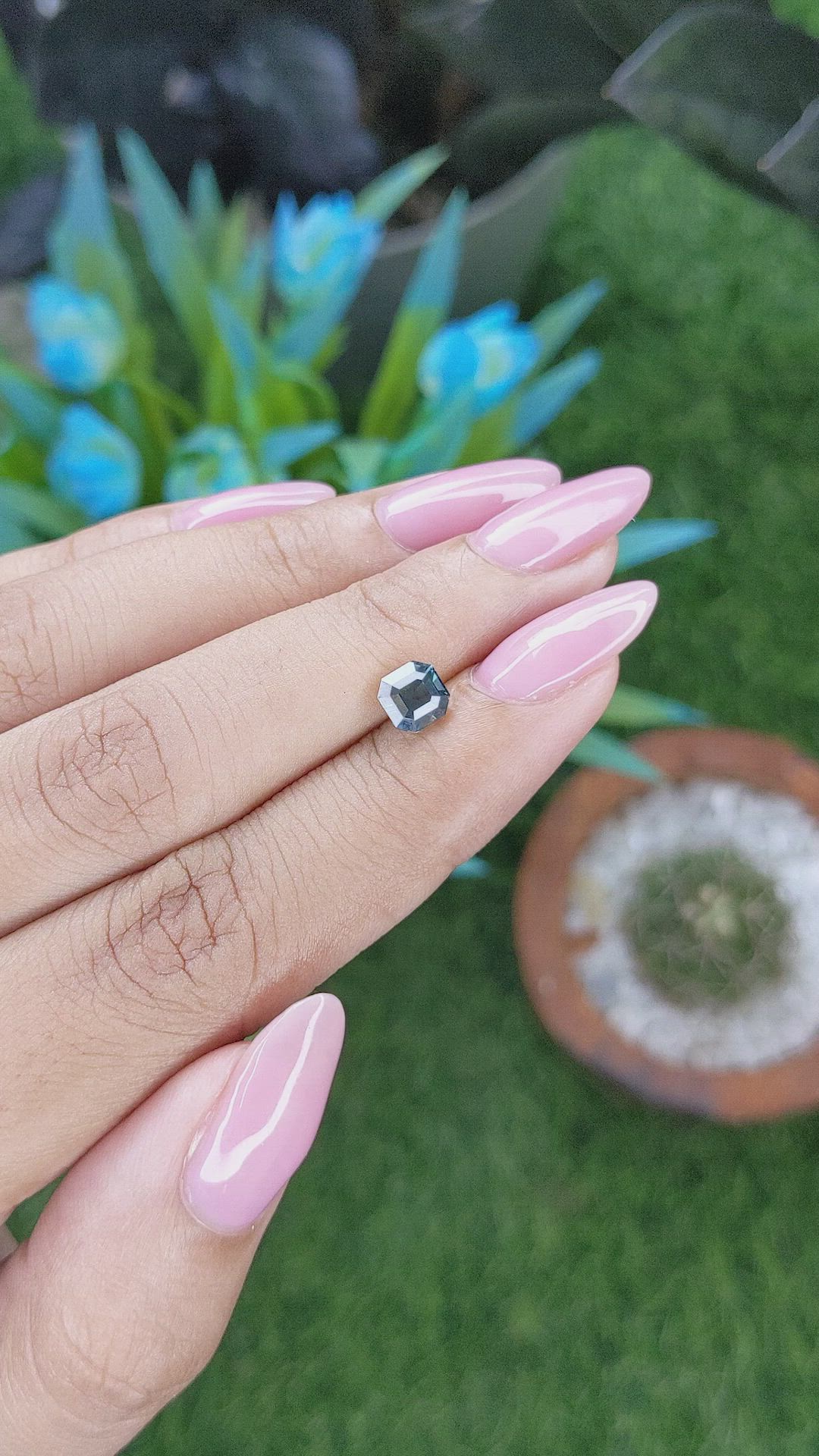


1.17 Ct. Bluish Green Sapphire from Nigeria
This loose stone ships by Sep 16
Item ID: | S39655 |
|---|---|
Dimensions (MM): help | Length: 5.44 Width: 5.4 Height: 4.35 |
Weight: | 1.17 Ct. |
Color: help | Bluish Green |
Color intensity: help | Intense |
Clarity: help | Eye Clean |
Shape: help | Asscher - Octagon |
Cut: | Asscher Cut |
Cutting style: | Faceted |
Enhancements: help | No Enhancement |
Origin: help | Nigeria |
Per carat price: help | $1,600 |
This transparent 1.17 carat asscher octagon sapphire presents a bluish green hue with an intense color intensity, originating from Nigeria. The stone measures 5.44 x 5.40 x 4.35 mm, and the asscher cut emphasizes the gem geometry with stepped facets and a square to octagonal outline. Clarity is graded as eye clean when evaluated at normal viewing distance, and the polish is excellent across all facets. There has been no enhancement applied to this material, making the natural color and clarity inherent characteristics of the stone. The Natural Sapphire Company provides this description to assist in objective evaluation of the sapphire, without embellishment, and with full disclosure of the gemological attributes.
The asscher cut influences the perception of hue and tone by creating a series of reflective planes that interact with light in a way that both concentrates and subtly layers color. In a faceted asscher of 5.44 x 5.40 x 4.35 mm and with a depth that supports brilliance, the bluish green hue reads as a balanced combination of primary blue with a green secondary, the overall impression leaning toward a cool teal when viewed in standard daylight conditions. Compared with classical Kashmir sapphires, which are celebrated for a saturated cornflower blue with a velvety diffusion and medium to medium deep tone, this Nigerian example presents a stronger green component and a more crystalline transparency. Against typical Sri Lankan, or Ceylon, sapphires, which often exhibit lighter, more pastel blue or blue green tones with medium light to medium tone and a bright, airy character, the present stone is noticeably more intense and concentrated in color, with a deeper presence and less of the pale, open quality often associated with Ceylon material.
Extending the comparison to other notable sources provides additional context for hue and tone. Madagascar sapphires commonly display vivid blue and bluish green hues with high saturation, and many specimens share the vibrant, slightly electric quality seen here, however Madagascar material can vary widely and often includes both lighter and deeper tones. Burmese, or Myanmar, sapphires tend to favor a strong, royal blue with violet undertones and a medium to medium deep tone, which makes the Nigerian bluish green distinct by virtue of its greener secondary and cooler teal character rather than the warmer violet bias seen in many Burmese stones. Australian sapphires are frequently darker and more inky, with greenish blue tones that carry a deep tone and sometimes low lightness, making them appear almost forest like in certain lights. Compared to those, the Nigerian asscher offers a lighter, more transparent expression despite its intense saturation, allowing facets to reveal internal fire and reflection rather than the uniform inky appearance typical of some Australian pieces. Montana sapphires from the United States commonly show a wide range of teal to greenish blue hues, often with a medium light to medium tone and a distinctive earthy clarity. The present stone shares the teal direction of Montana material, yet distinguishes itself by combining Montana like hue tendencies with Madagascar like saturation and a notably high transparency and eye clean clarity.
From a practical and gemological standpoint, the combination of an asscher cut, eye clean clarity, intense color intensity, and the absence of enhancement indicates a gem that will present a vivid, stable color in a variety of mounting contexts. The asscher cut emphasizes symmetry and step facets, so the bluish green hue will be experienced as a series of color flashes and planes, offering a refined, architectural visual rather than a single uniform field of color. In jewelry settings where controlled light entry and facet reflection are important, such as closed halo or bezel designs, the gemstone will retain its intense presence. In open prong or solitaire settings that allow maximum light, the gem will demonstrate its transparency and the layered interaction of blue and green tones. For those assessing provenance impacts on market perception, Nigerian sapphires are less familiar to many buyers than Kashmir, Sri Lanka, Madagascar, Myanmar, or Australian material, yet when judged by hue, tone, transparency, and lack of enhancement, this specimen aligns with high quality, uncompromised natural sapphires that appeal to informed collectors and designers.
The Natural Sapphire Company affirms the documented attributes of this gem to support transparent comparison and informed selection. The unenhanced nature of the stone is a critical attribute for clients prioritizing untreated natural material, as it preserves the original color state and can influence both long term value and collector interest. When considering complementary metals, the bluish green to teal direction of the hue tends to perform well against both white and yellow metal, white metal offering crisp, contemporary contrast, and yellow metal creating a warmer visual interaction that can temper the green component. The asscher octagon shape and its measured proportions will accommodate a range of mounting styles while maintaining optical balance. Prospective purchasers and professionals should consider the interplay of cut, dimension, and intensity when visualizing the gem in final settings, with the knowledge that this 1.17 carat Nigerian asscher sapphire delivers a distinctive bluish green character, excellent polish, and eye clean clarity without enhancement, as represented by The Natural Sapphire Company.


