
- Stone14
- Reports3


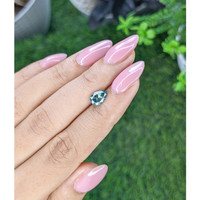

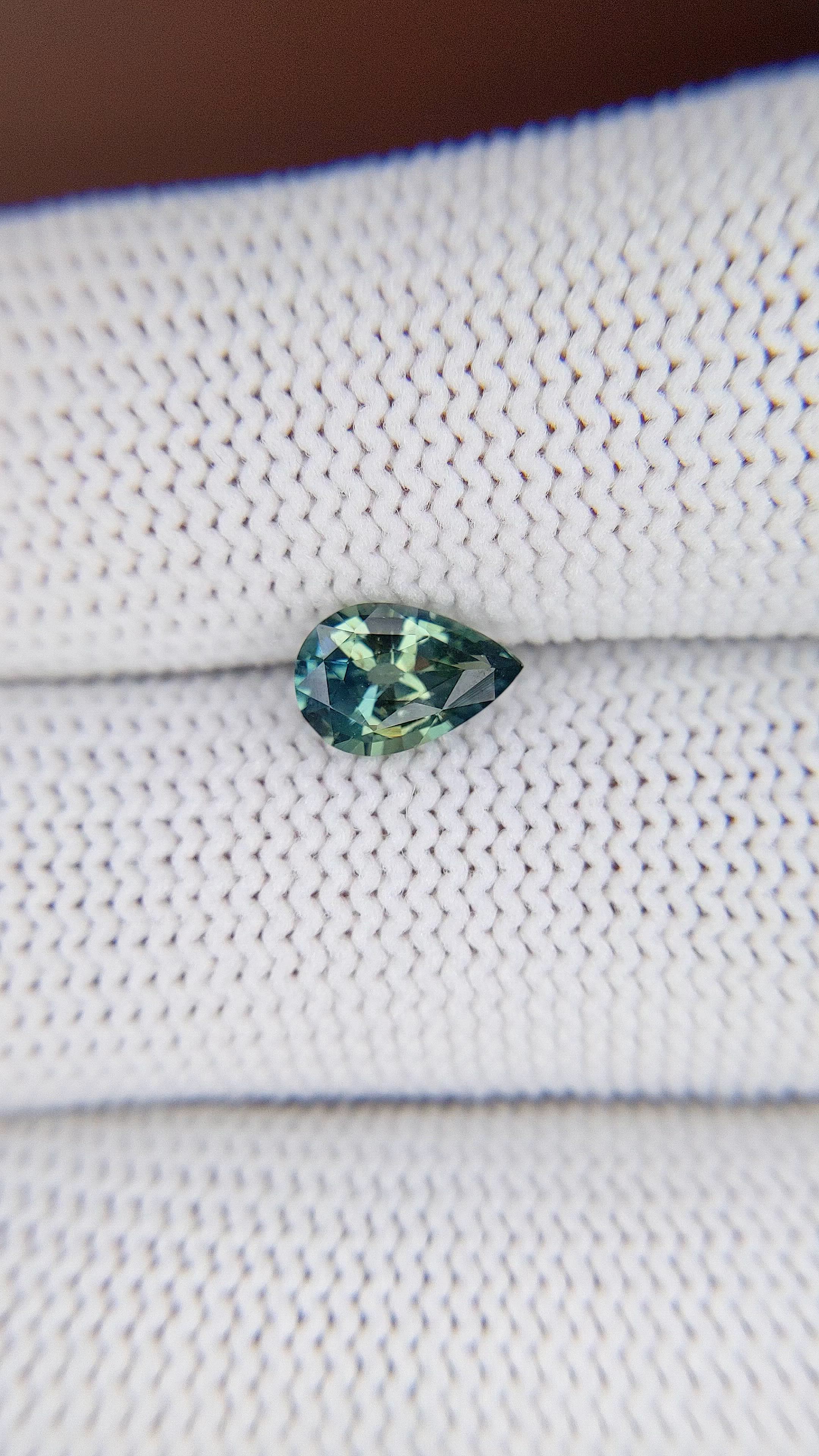
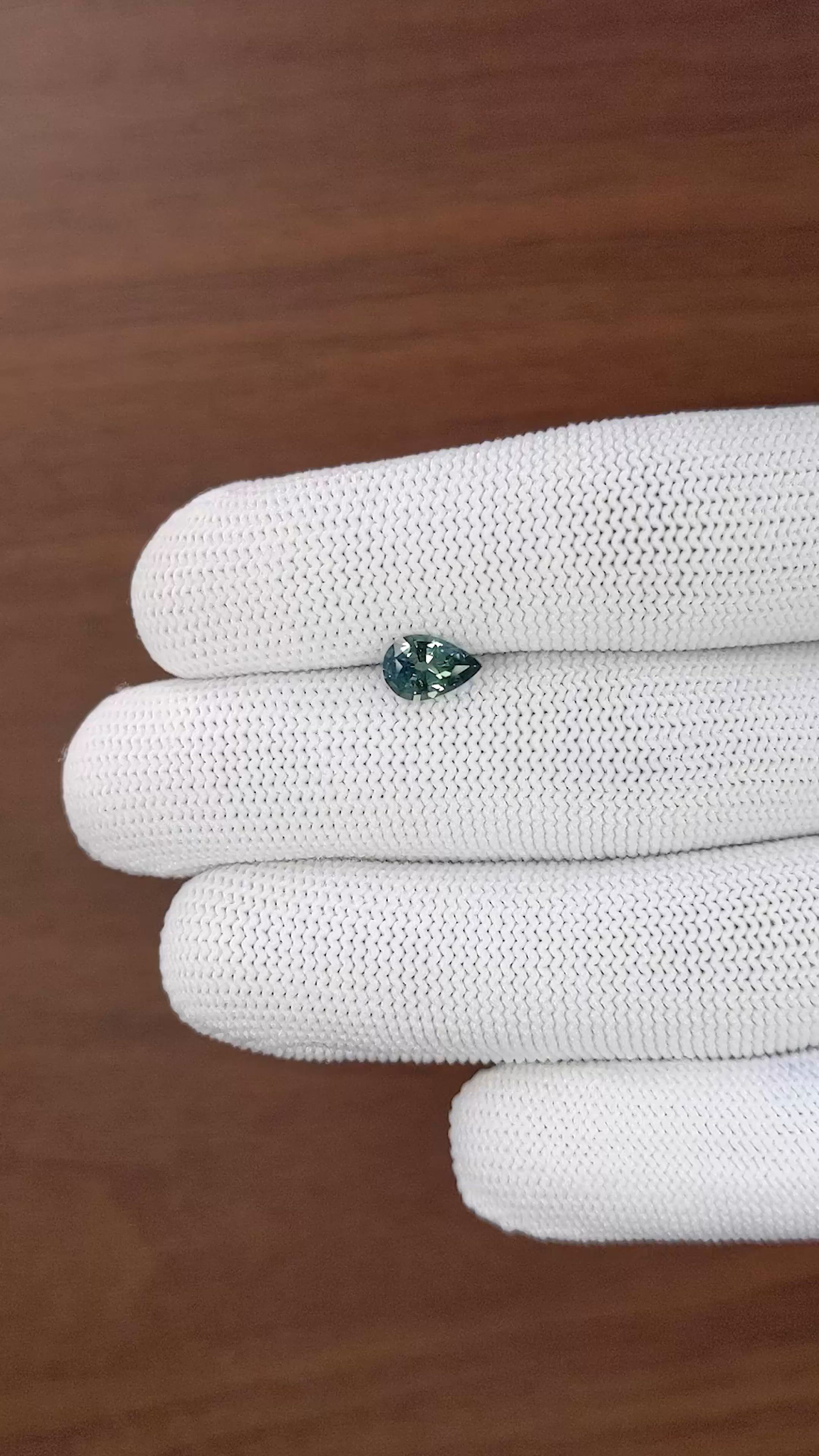
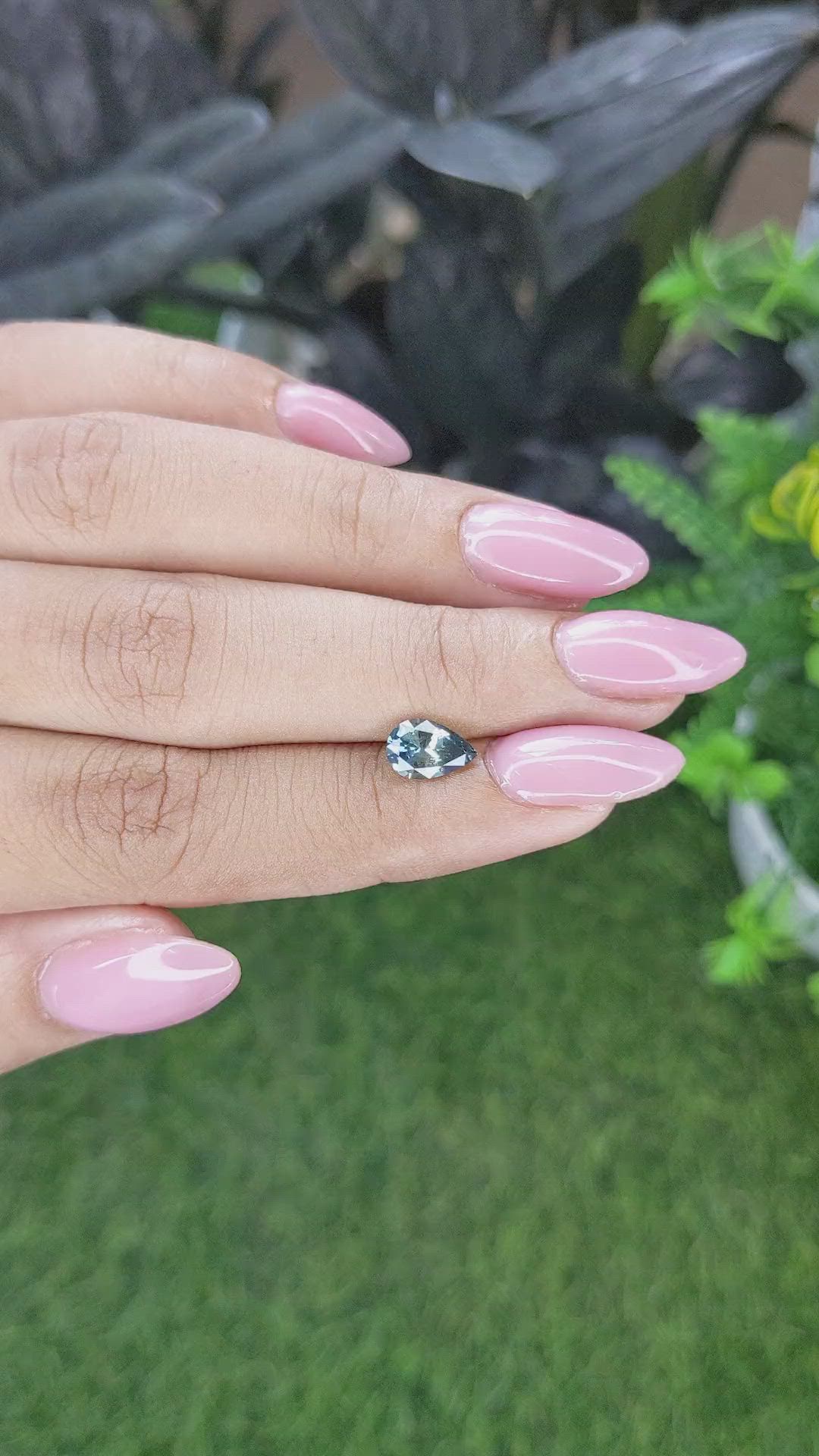
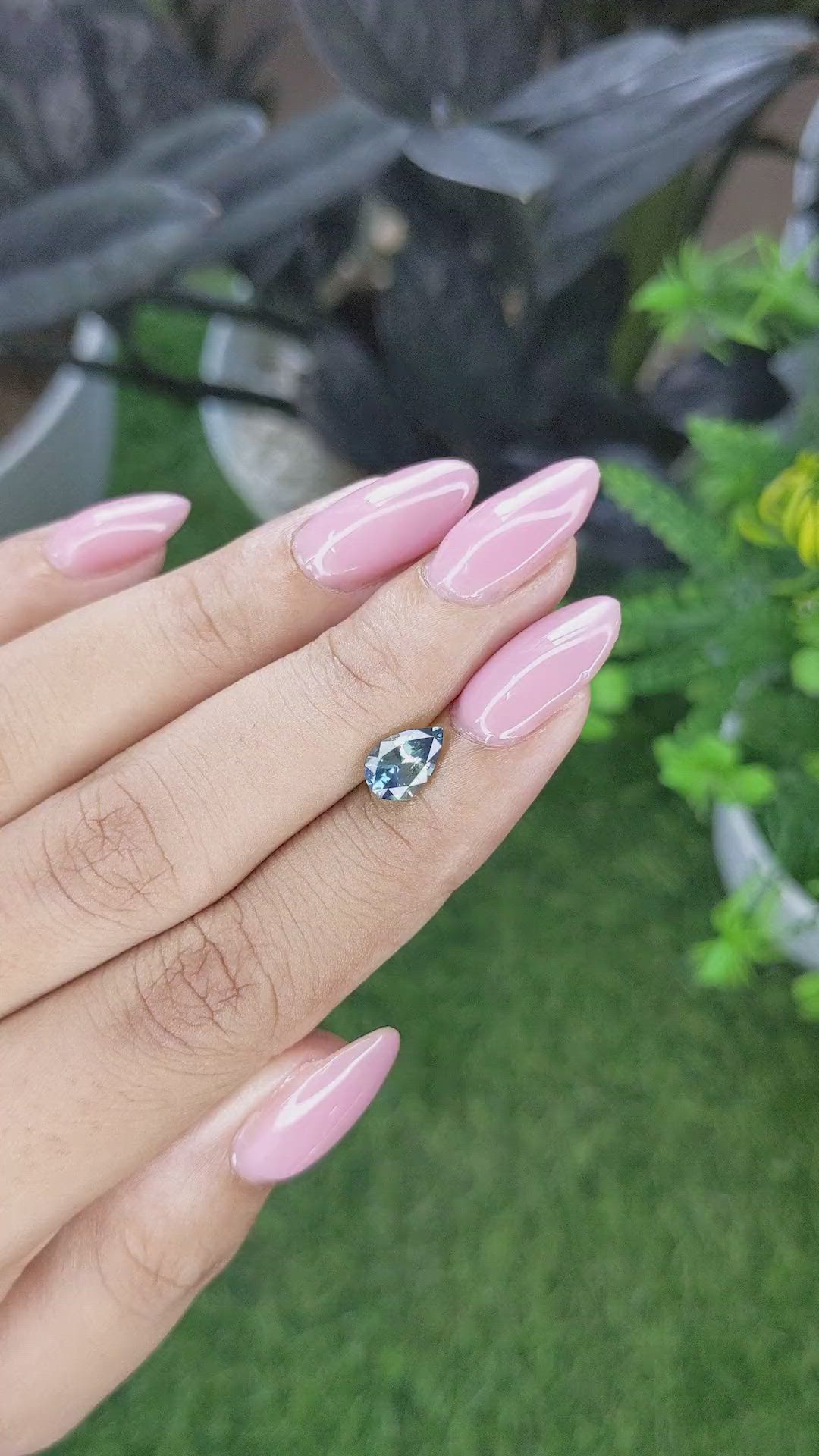
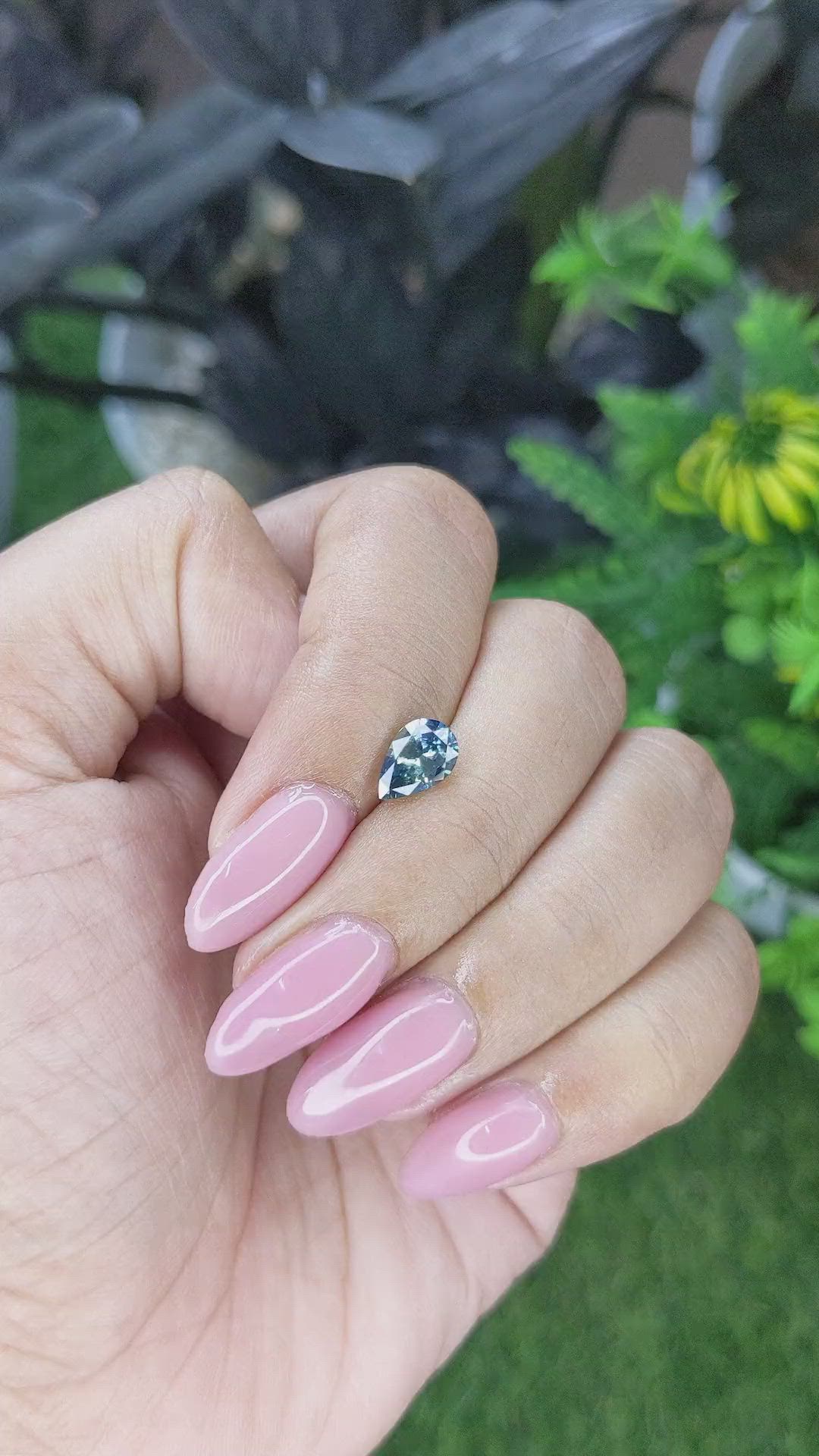



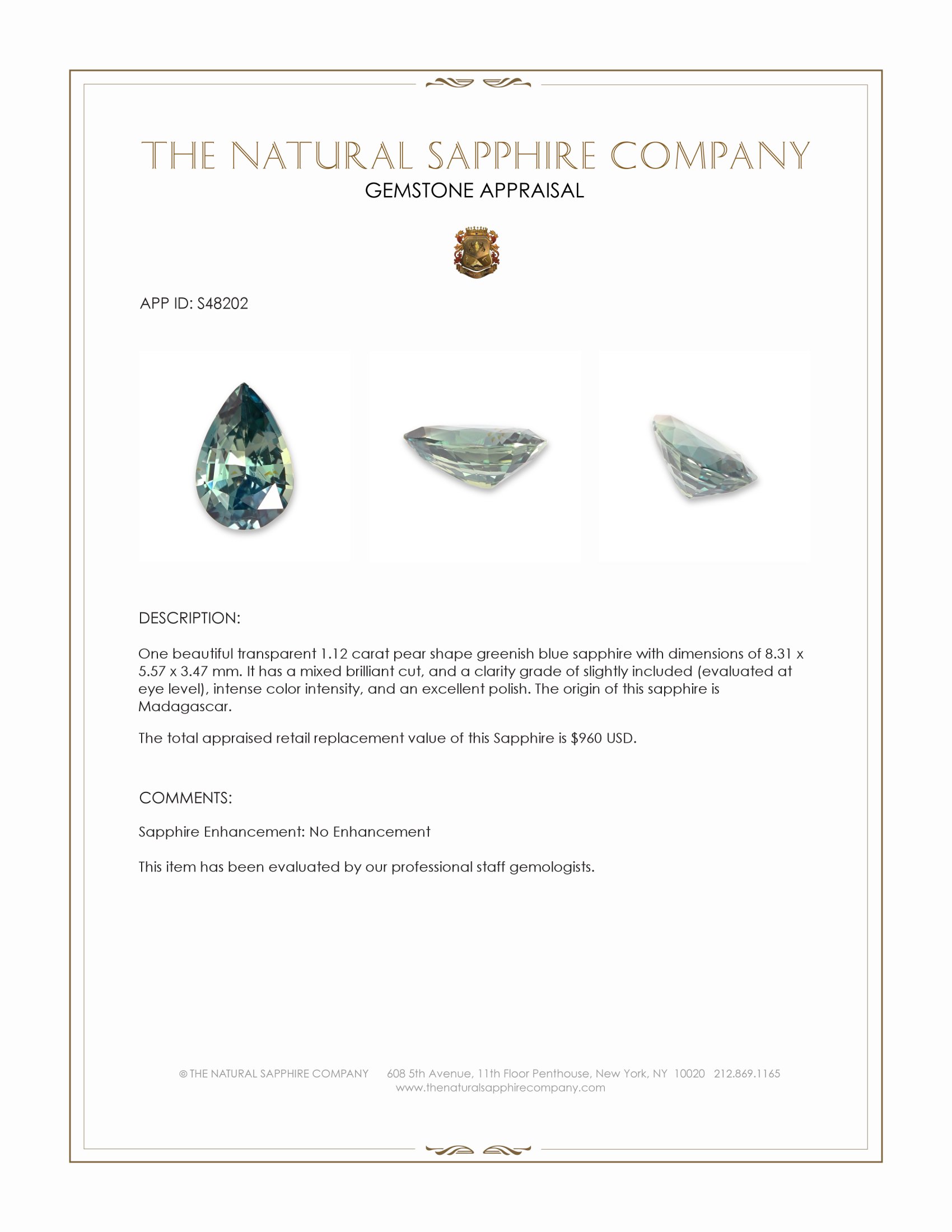
1.12 Ct. Greenish Blue Sapphire from Madagascar
This loose stone ships by Nov 1
Item ID: | S48202 |
|---|---|
Dimensions (MM): help | Length: 8.31 Width: 5.57 Height: 3.47 |
Weight: | 1.12 Ct. |
Color: help | Greenish Blue |
Color intensity: help | Intense |
Clarity: help | Slightly Included |
Shape: help | Pear |
Cut: | Mixed Brilliant Cut |
Cutting style: | Faceted |
Enhancements: help | No Enhancement |
Origin: help | Madagascar |
Per carat price: help | $857 |
This offering is a natural, transparent, 1.12 carat pear shape greenish blue sapphire, with precise dimensions of 8.31 x 5.57 x 3.47 mm. The gem is faceted and executed in a mixed brilliant cut, which combines pavilion and crown facets designed to maximize light return and scintillation. Color is described as greenish blue with intense color intensity, producing a rich, saturated appearance that displays subtle shifts in different lighting conditions. Clarity has been evaluated as slightly included at eye level, which is consistent with natural crystal growth and imparts character without materially diminishing brilliance. Polish is excellent, yielding sharp facet junctions and clean reflections. Importantly, this sapphire is natural and unenhanced, with no heat treatment or other modifications, and its origin is Madagascar, a source known for producing sapphires with vivid color and attractive zoning. The Natural Sapphire Company provides this gem with full documentation of its natural, untreated status, and with measured specifications to support accurate setting and design decisions.
When comparing this natural sapphire to lab grown alternatives, several technical and qualitative distinctions are relevant. Lab grown sapphires offer predictable color, often fewer inclusions, and typically a lower price point for a comparable appearance. These attributes make lab grown stones attractive for certain applications. Natural sapphires, however, exhibit a complexity of color and internal structure that is a direct result of geologic processes over millions of years. Trace element distributions, microscopic growth zoning, and characteristic inclusions create unique optical effects and depth of color that are difficult to replicate in an identical manner in a laboratory environment. Because this particular sapphire has not been subjected to enhancement, its color, clarity, and optical properties are the result of its natural formation, offering provenance and rarity that many collectors and connoisseurs prioritize. From an investment and long term value perspective, untreated natural stones commonly retain or appreciate in value more consistently than their synthetic counterparts, owing to scarcity and desirability of natural origin. Additionally, the presence of natural inclusions can serve as an identifying fingerprint in certification and can add to the gemological story of the stone, which is an important consideration for purchasers seeking authenticity and traceability.
This pear shaped sapphire is well suited to a variety of jewelry applications, including engagement rings, pendant settings, and bespoke designs where the pointed end can be oriented for a lengthening visual effect. The measured dimensions of 8.31 x 5.57 x 3.47 mm correspond to a size that balances finger presence with wearability, and the mixed brilliant cut enhances both fire and brilliance while maintaining a pleasing outline. Given the slightly included clarity grade, setting choices can be made to both protect and showcase the stone, for example by employing secure prongs around the girdle and providing reinforcement at the tip, or by using a bezel design if additional protection is desired for everyday wear. Care and maintenance are straightforward, clean the sapphire periodically with warm water, mild detergent, and a soft brush, avoid exposure to harsh chemicals or prolonged high heat, and have settings inspected professionally at regular intervals to ensure secure mounting. The Natural Sapphire Company can assist with design consultation, provide certification of the untreated origin, and offer guidance on setting and care to preserve the stone for generations, emphasizing the combination of technical quality and natural provenance that defines this specimen.


