
- Stone8
- Reports3
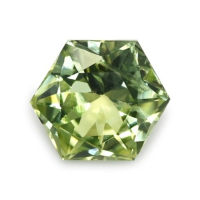
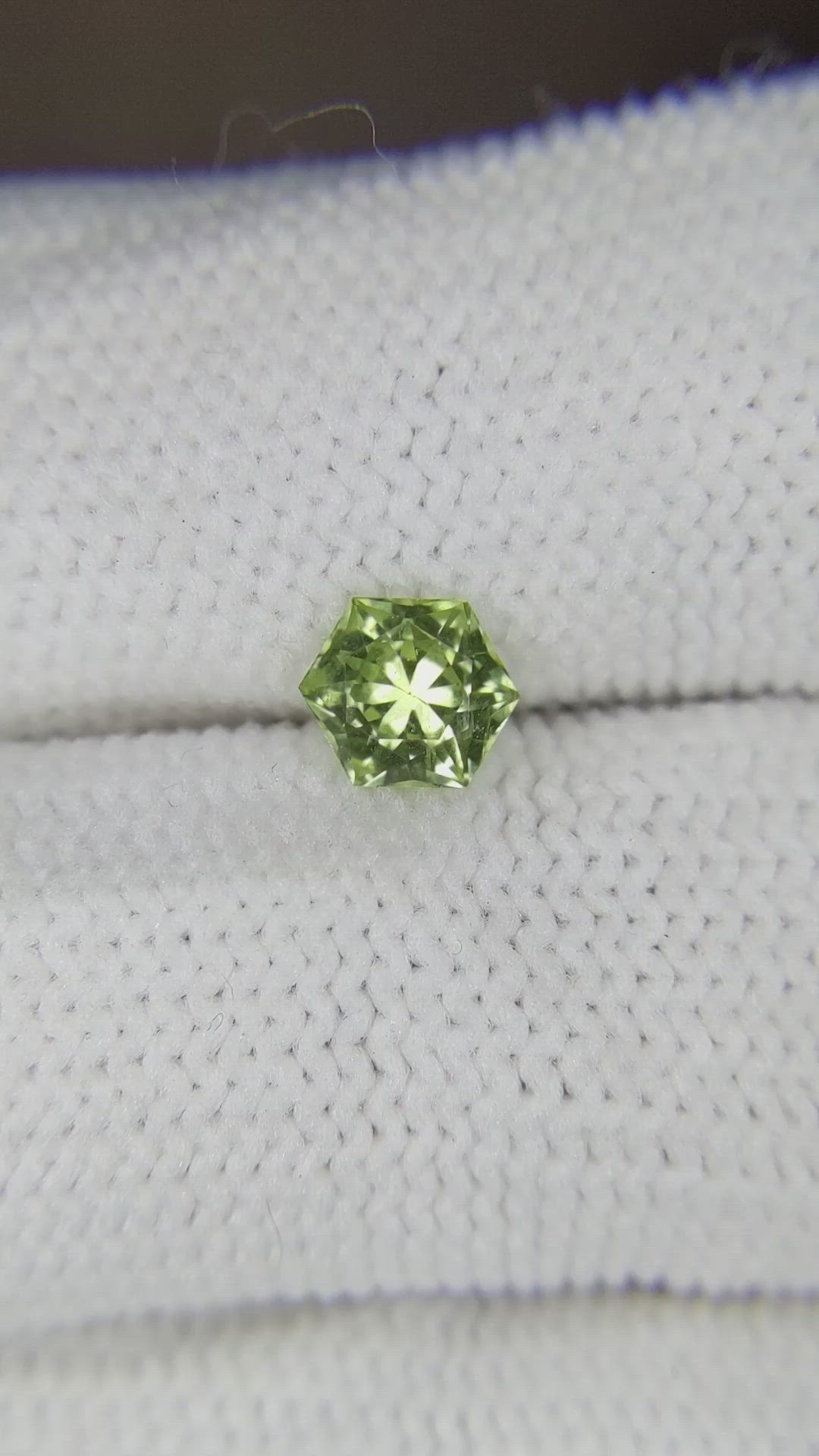


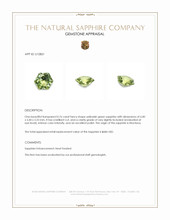


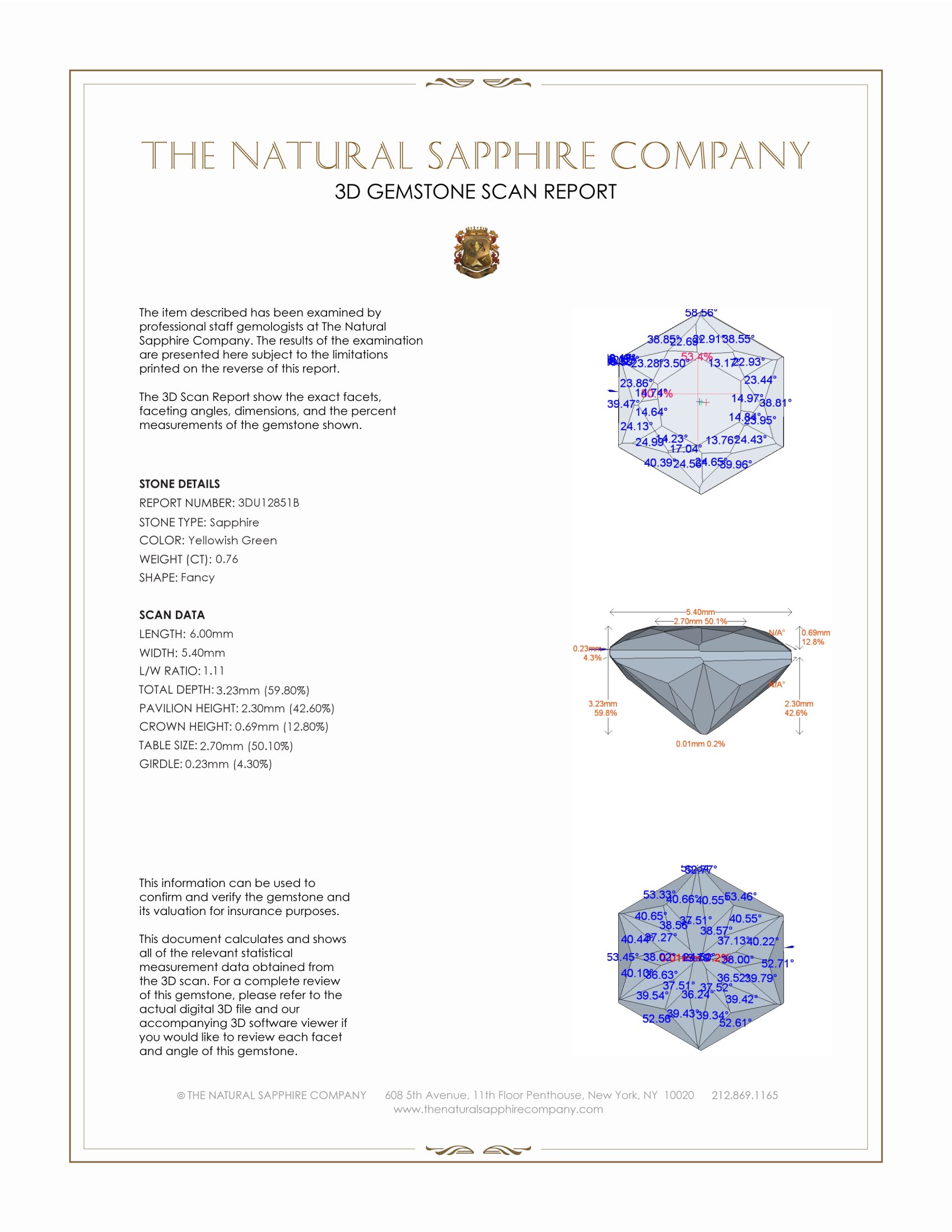
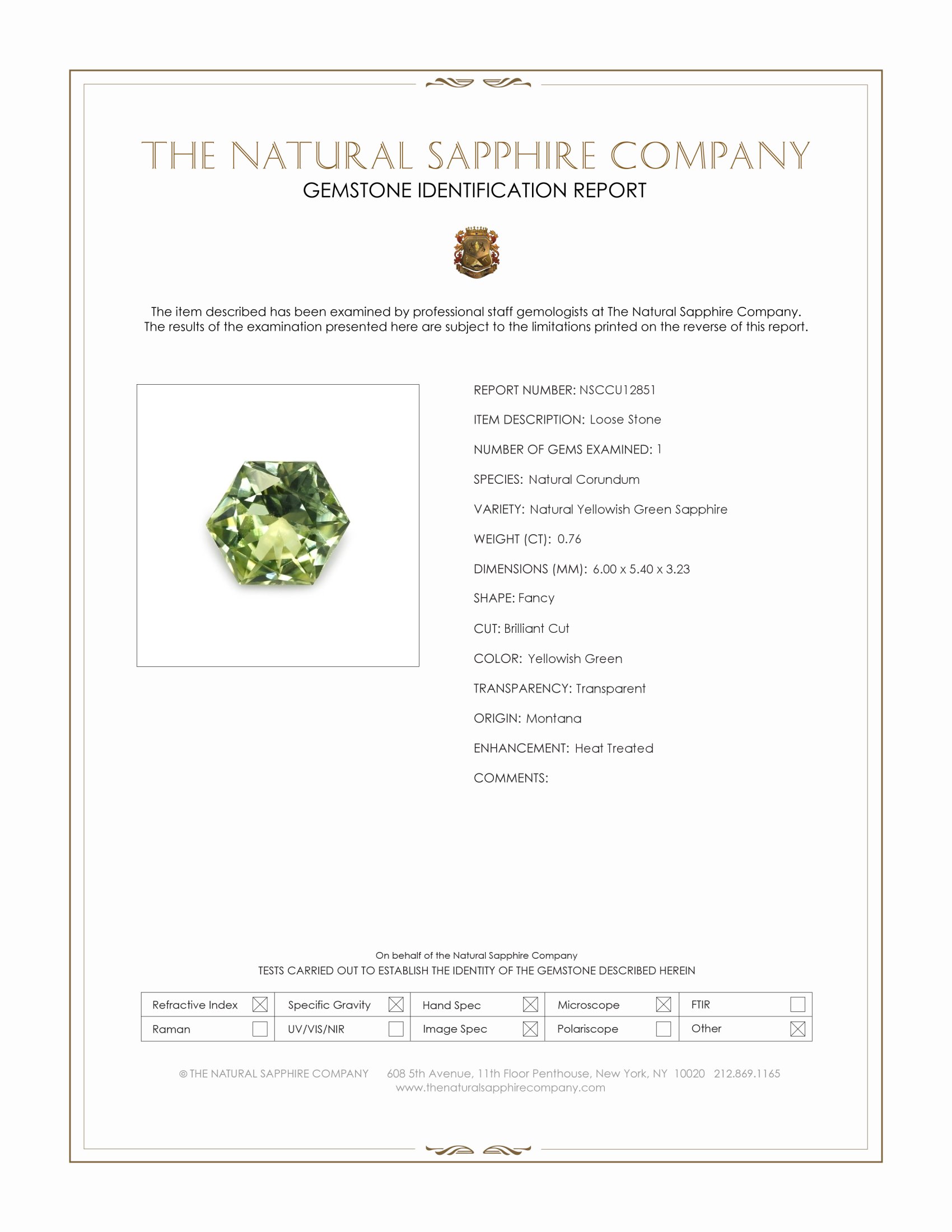
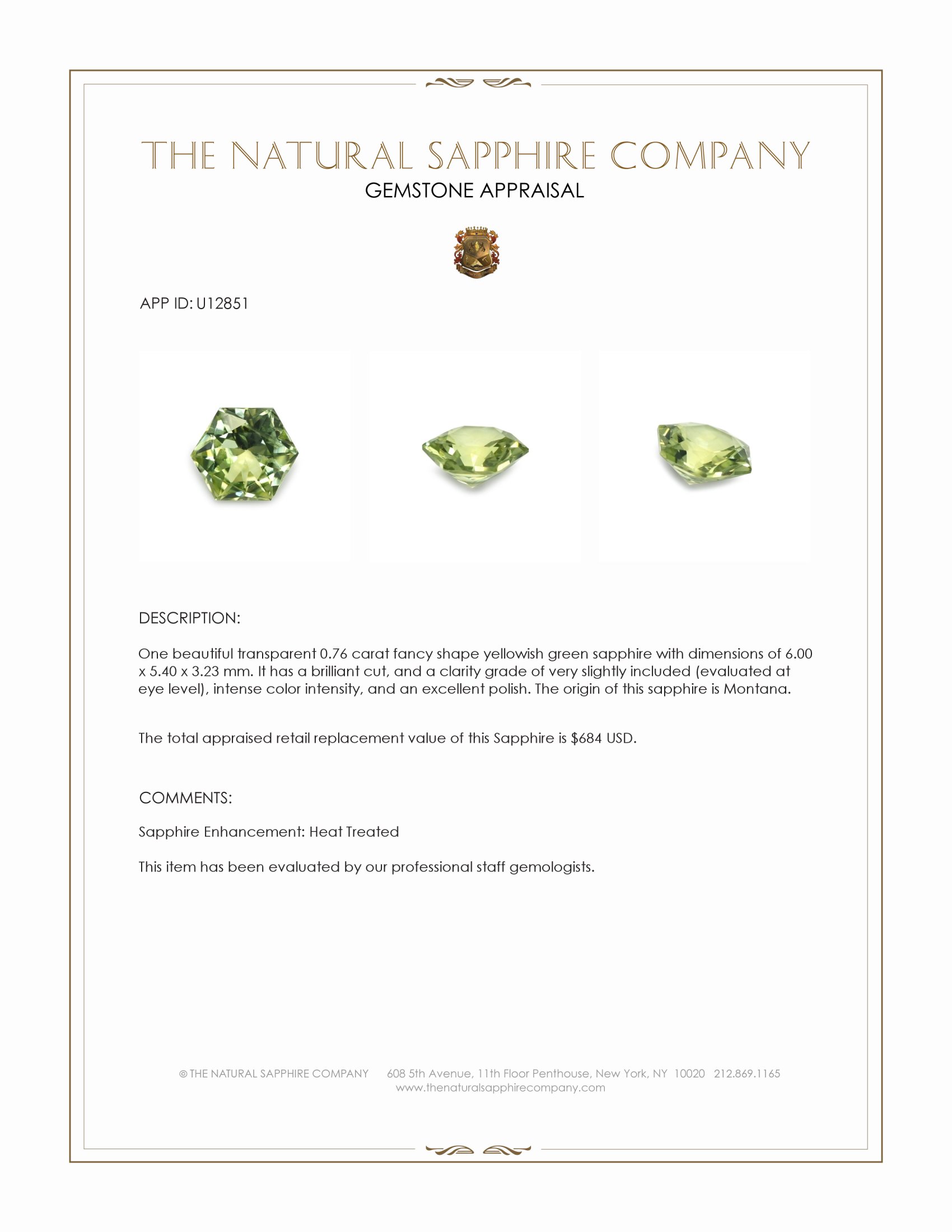
0.76 Ct. Yellowish Green Sapphire from Montana
This loose stone is available to ship now
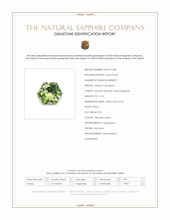
Item ID: | U12851 |
|---|---|
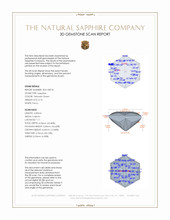
Dimensions (MM): help | Length: 6 Width: 5.4 Height: 3.23 |
Weight: | 0.76 Ct. |
Color: help | Yellowish Green |
Color intensity: help | Intense |
Clarity: help | Very Slightly Included |
Shape: help | Fancy |
Cut: | Brilliant Cut |
Cutting style: | Faceted |
Enhancements: help | Heat Treated |
Origin: help | Montana |
Per carat price: help | $900 |
This transparency grade yellowish green sapphire weighs 0.76 carat and presents in a pleasing fancy shape, with measured dimensions of 6.00 by 5.40 by 3.23 millimeters. The stone is faceted in a brilliant style, which is intended to maximize light return and scintillation across the crown and pavilion. Clarity is graded as very slightly included, evaluated at eye level, and the gem exhibits an intense color intensity that is evenly distributed across the table and girdle. The finish quality is excellent, with well defined facet junctions and a mirror like polish that enhances surface reflections. This sapphire originates in Montana and has been heat treated, a standard and stable enhancement that improves color saturation and clarity while preserving the natural character of the material. The Natural Sapphire Company identifies and presents this piece with its measured proportions and treatment clearly documented.
Optical performance in this sapphire is governed by the inherent properties of corundum and by the cutter choices applied to this particular material. Corundum typically has a refractive index in the range of about 1.76 to 1.77, and a relatively low dispersion value, which means that color flash or fire is modest compared with gemstones that have higher dispersion. The brilliant faceting chosen for this stone accentuates brightness and contrast, producing lively facet reflections and a defined pattern of scintillation when the gem is moved in light. Because the stone is transparent and the color is intense without being overly dark, light penetrates the crown, interacts with the pavilion facets, and returns with a balanced mix of white light and green yellow hue, resulting in a lively but controlled visual effect. The excellent polish contributes to crisp, sharp reflections, reducing light leakage and enhancing perceived brightness.
When compared with other sapphires and like colored gemstones, this Montana yellowish green sapphire demonstrates reflective qualities that are typical of well cut corundum while also demonstrating distinctions linked to its color and provenance. Among sapphires, refractive properties are essentially the same, so the perceived brilliance is primarily a function of cut quality, clarity, and color tone. In lighter to medium toned sapphires, including many Montana stones, flashes of light tend to read as brighter due to greater light transmission, whereas deeper or more saturated stones can appear more velvety and less visibly brilliant. Relative to commonly compared species such as spinel, tourmaline, or peridot, this sapphire will exhibit stronger reflective contrast than tourmaline because of the higher refractive index of corundum. Compared with spinel, which has a slightly lower refractive index, this sapphire may show marginally stronger facet contrast and a sharper return of light. In comparison to diamond, which has a much higher refractive index and greater dispersion, corundum will not display the same level of white light brilliance or colored fire, but a well cut sapphire offers a distinct, rich brilliance that emphasizes hue and saturation rather than spectral fire.
The specific cutting and proportion profile of this stone support an efficient light return, and the measured depth of 3.23 millimeters relative to the length indicates a proportion that preserves surface area while maintaining enough pavilion depth for internal reflection. The fancy shape yields a geometric outline that disperses reflections across multiple planes, producing a complex pattern of sparkle that reads differently from traditional round brilliants but remains highly effective at returning light to the observer. Clarity that is described as very slightly included at eye level indicates that inclusions are present but do not significantly interrupt light pathways or the overall transparency of the gem. This contributes to consistent face up brightness and minimizes areas of light absorption or diffusion. The heat treatment reported for this stone is used to stabilize and intensify the natural hue, and when combined with excellent polish and precise faceting, the treatment results in improved visual performance without compromising stability under normal wear.
In practical terms for jewelry design and daily wear, this sapphire offers an appealing balance of color, brightness, and durability. The intense yellowish green tone is distinctive among Montana sapphires and will present as a consistent, vivid color in ring, pendant, or stud settings where the brilliant faceting can interact with ambient light. The combination of transparent body color, very slight inclusions, and excellent polish means the gem is likely to show a lively play of light in both indoor and outdoor lighting conditions, with reflections that emphasize the green yellow hue rather than diffuse or mute it. For those comparing reflective performance within the family of colored gemstones, this example stands out for its clean face up appearance, controlled but energetic scintillation, and the pleasing balance between color saturation and light return. The Natural Sapphire Company provides this information to allow informed consideration of how this sapphire will perform visually and practically in finished jewelry.


