
- Stone8
- Reports3
-princess-blue-sapphire-1.5700-cts-b9800-1.jpg?d=200x200&v=20250421064221)




-princess-blue-sapphire-1.5700-cts-b9800-1.jpg?d=750x750&s=nsc&v=20250421064221)


1.57 Ct. Blue Sapphire from Ceylon (Sri Lanka)
This loose stone is available to ship now
Item ID: | B9800 |
|---|---|
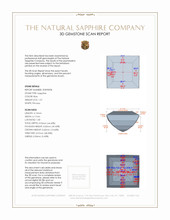
Dimensions (MM): help | Length: 6.14 Width: 6.11 Height: 3.92 |
Weight: | 1.57 Ct. |
Color: help | Blue |
Color intensity: help | Vivid |
Clarity: help | Eye Clean |
Shape: help | Princess |
Cut: | Princess Cut |
Cutting style: | Faceted |
Enhancements: help | Heat Treated |
Origin: help | Ceylon (Sri Lanka) |
Per carat price: help | $3,200 |
This natural blue sapphire, presented by The Natural Sapphire Company, is a transparent, faceted princess shape weighing 1.57 carat, with carefully measured dimensions of 6.14 by 6.11 by 3.92 millimeters. The cutting style is faceted with a princess cut geometry, and the stone exhibits an eye clean clarity when evaluated at typical viewing distances, meaning no inclusions are visible to the unaided eye. The color is described as vivid in intensity, and the surface shows an excellent polish that contributes to lively light return and an appealing face up appearance. The stone has been heat treated, a standard and stable enhancement in sapphire trade practice, and its geological origin is Ceylon, Sri Lanka, a source known for producing sapphires with refined, saturated blues and consistent clarity.
The physical proportions of this princess cut are balanced to retain both color saturation and optical performance, with a depth of 3.92 millimeters relative to the average of the length and width yielding a depth ratio in the region of approximately 64 percent, a dimension that favors a strong face up color without sacrificing brilliance. The princess cut is characterized by a square outline with trimmed corners, and a faceting scheme that combines elements of step and brilliant cutting to produce both scintillation and internal sparkle. The excellent polish preserves crisp facet junctions and smooth facet planes, which enhances light transmission and minimizes surface light leakage. As a result, the gem presents as a lively, well finished stone that reads bright and vivid in typical indoor lighting, and maintains attractive sparkle in natural daylight.
Regarding enhancement and provenance, the heat treatment applied to this sapphire is a widely accepted process used to improve color and clarity while maintaining the stone as a natural product. Heat treated sapphires retain their natural origin and the geological history that defines them, and treatment disclosure is standard practice in reputable trade. The Ceylon origin contributes a particular character to the color profile, often leaning toward a vivid yet slightly lighter blue that is valued for its vibrancy and elegance. Natural sapphires form over geological time under specific pressure and temperature regimes, yielding internal growth structures, mineral inclusions, and color zoning that function as a natural fingerprint. These features support gemological origin determinations, contribute to provenance, and are part of the reason many collectors and connoisseurs prefer natural stones.
When compared to lab grown sapphires, natural stones such as this Ceylon sapphire offer distinct advantages that are factual and demonstrable. Both natural and laboratory created sapphires share the same chemical composition and fundamental optical properties, and both can exhibit excellent color and clarity. The differences lie in rarity, provenance, and the presence of natural growth features. Natural sapphires are singular products of unique geological events, and their internal signatures tell a story of natural formation, which can be verified by gemological examination and origin reporting. This provenance supports long term value retention and collectible interest in a way that synthetic material, which can be produced in consistent batches, typically does not. Natural stones are also inherently finite in supply, particularly those from well regarded sources such as Ceylon, Sri Lanka, which can be an important consideration for those focused on long term desirability. For buyers who place priority on the geological origin, the individuality of internal features, and established market perception, this 1.57 carat princess blue sapphire offers qualities that are distinct from laboratory grown alternatives.


