
- Stone14
- Reports3


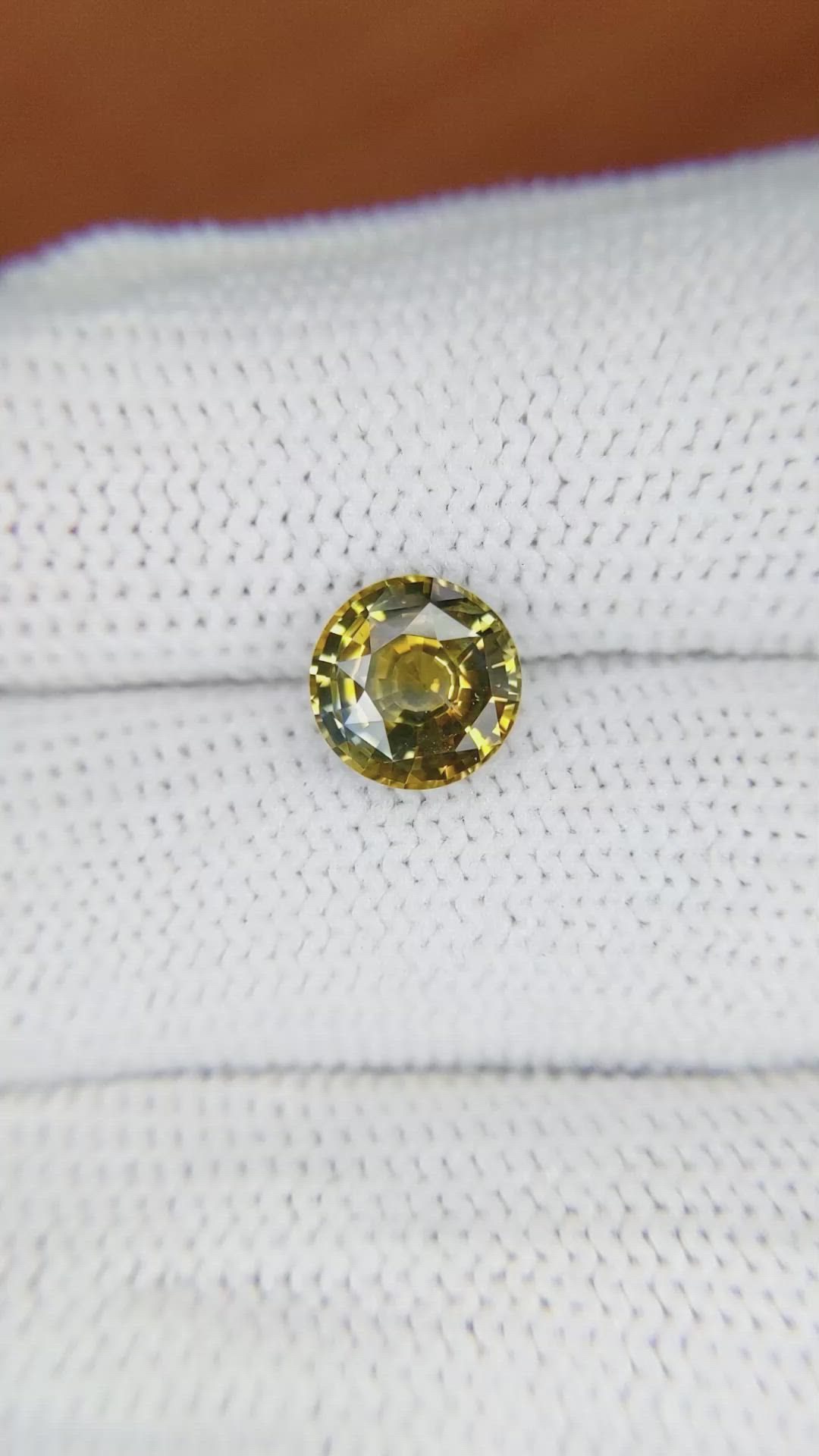
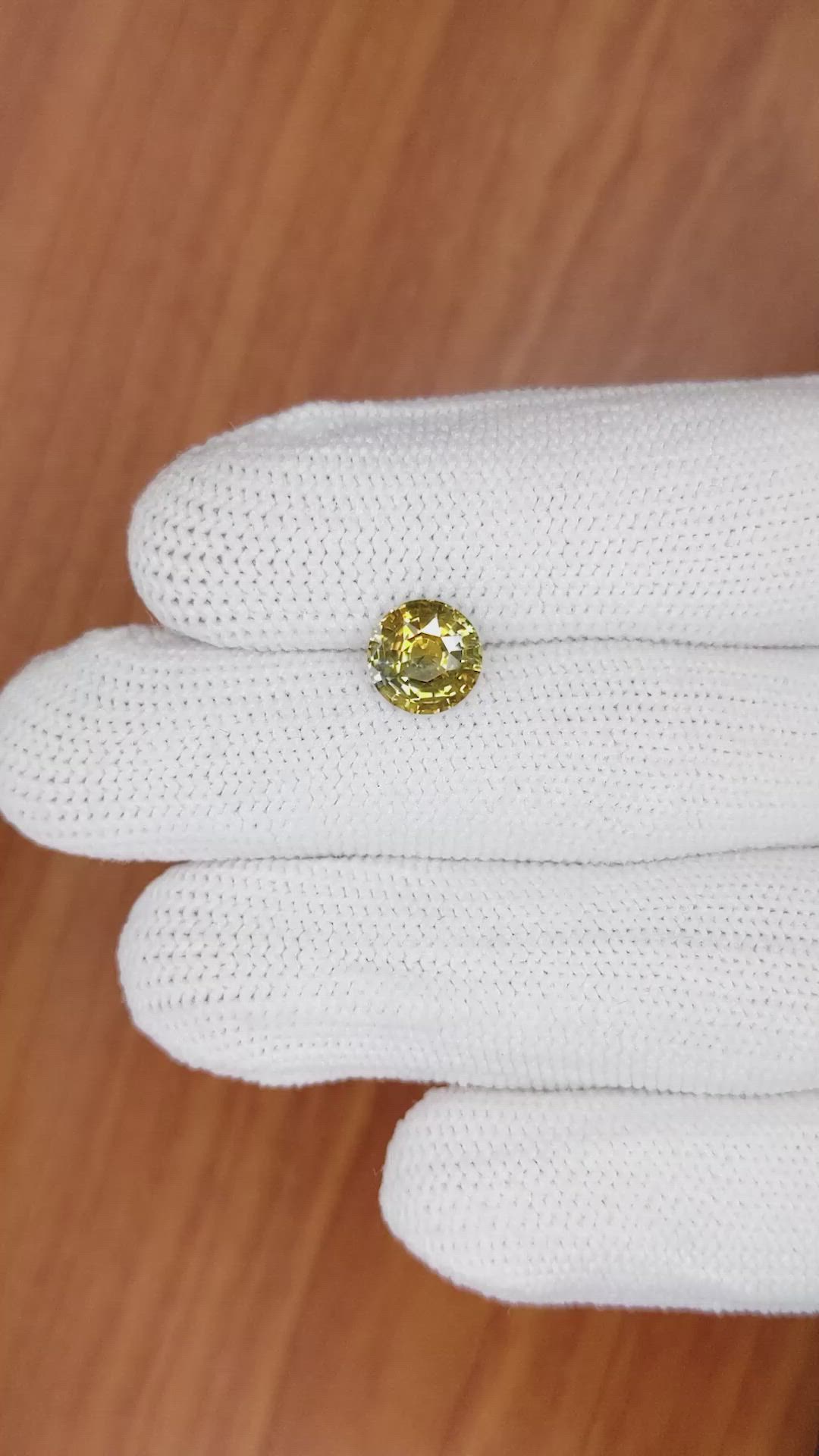
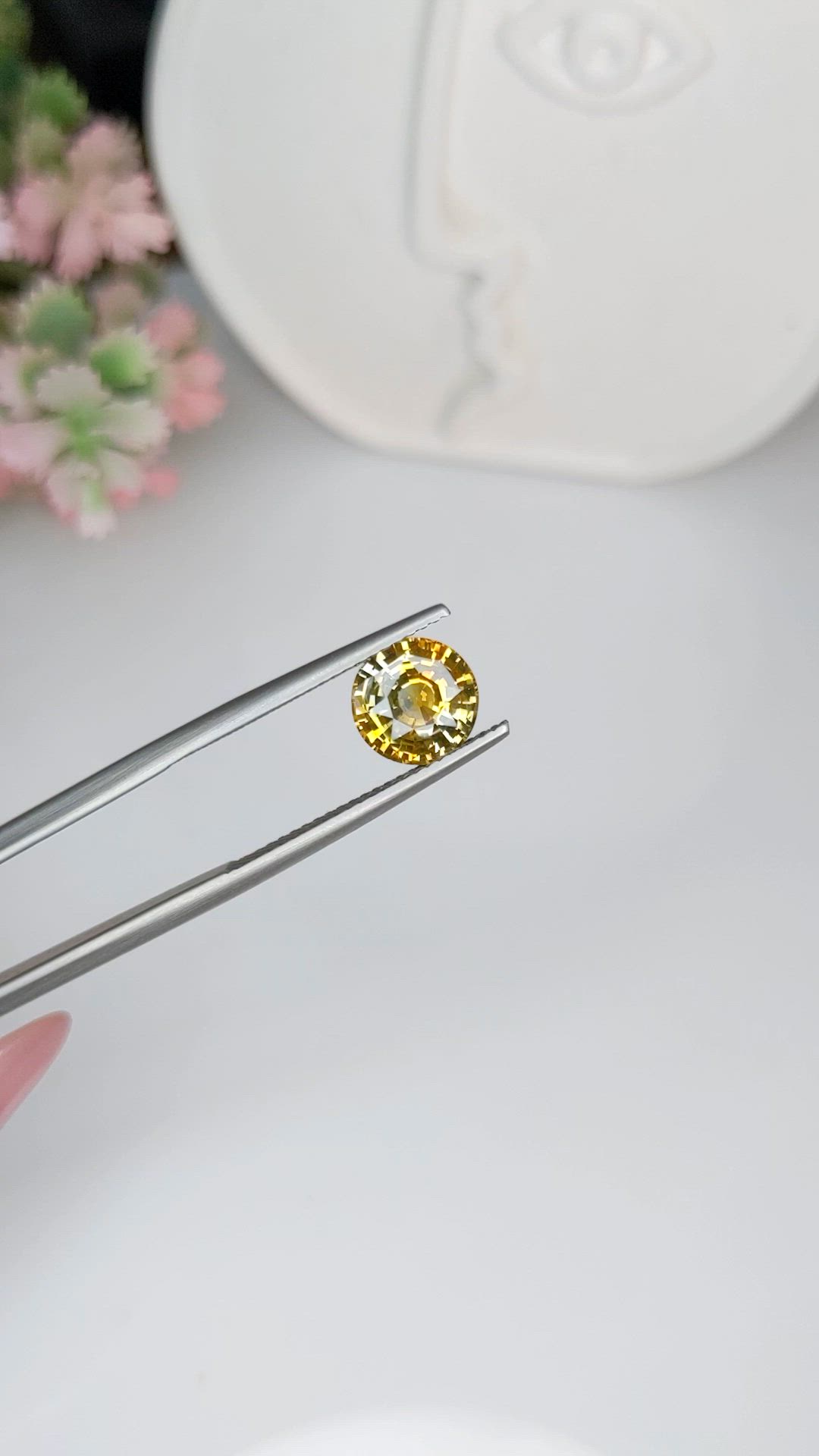
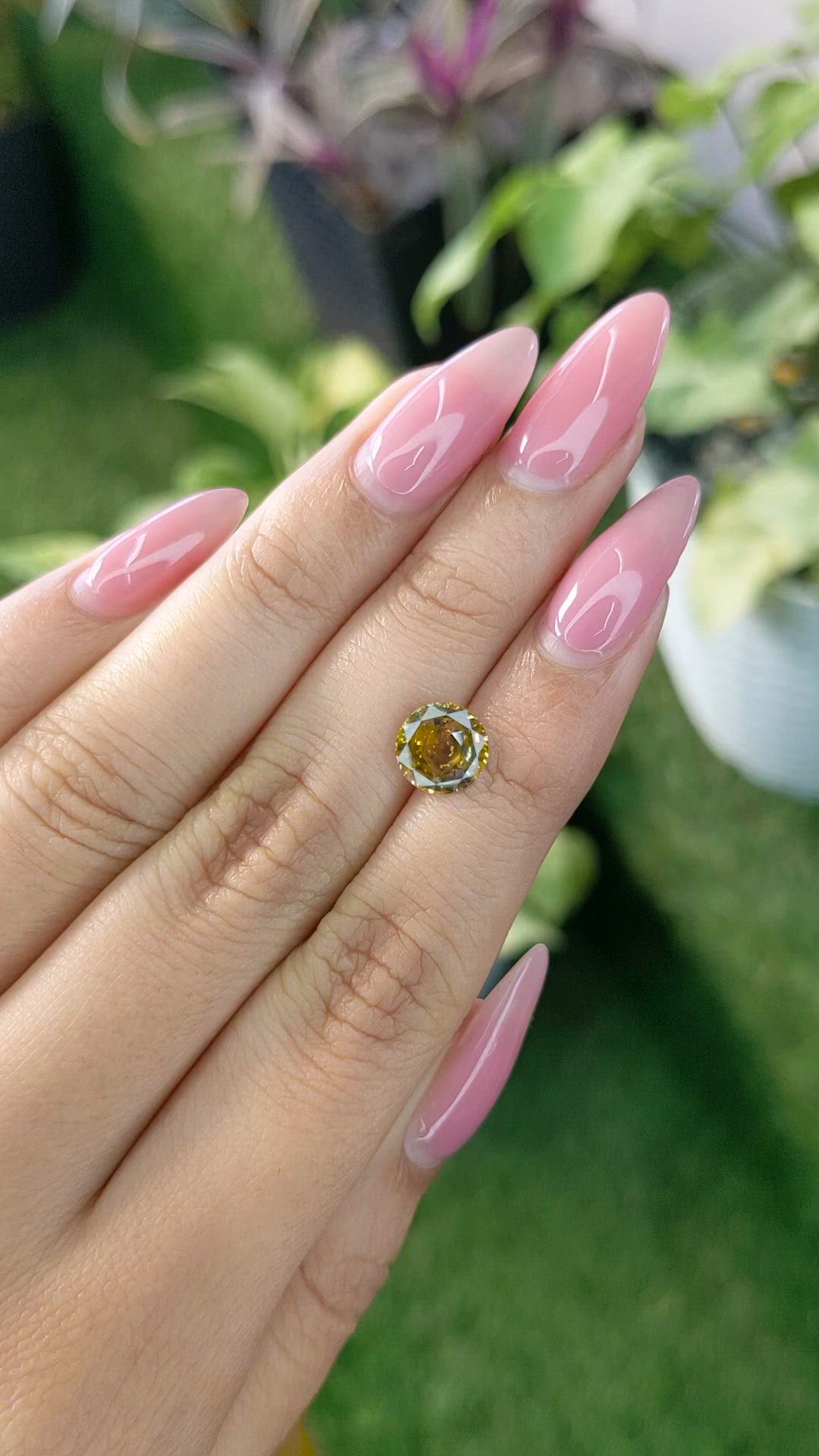
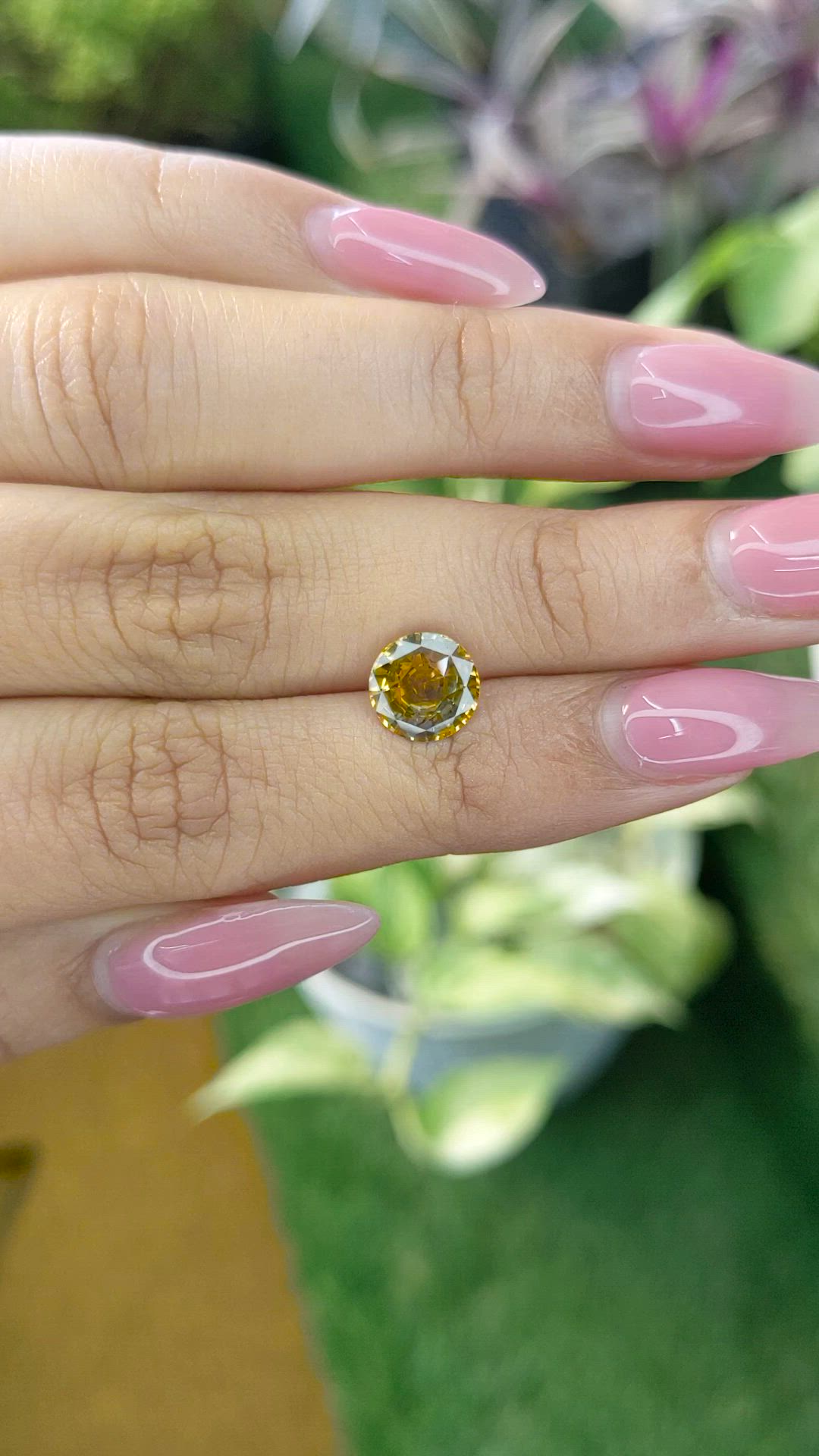


2.23 Ct. Bi Color / Parti Sapphire from Ceylon (Sri Lanka)
This loose stone is available to ship now
Item ID: | S19029 |
|---|---|
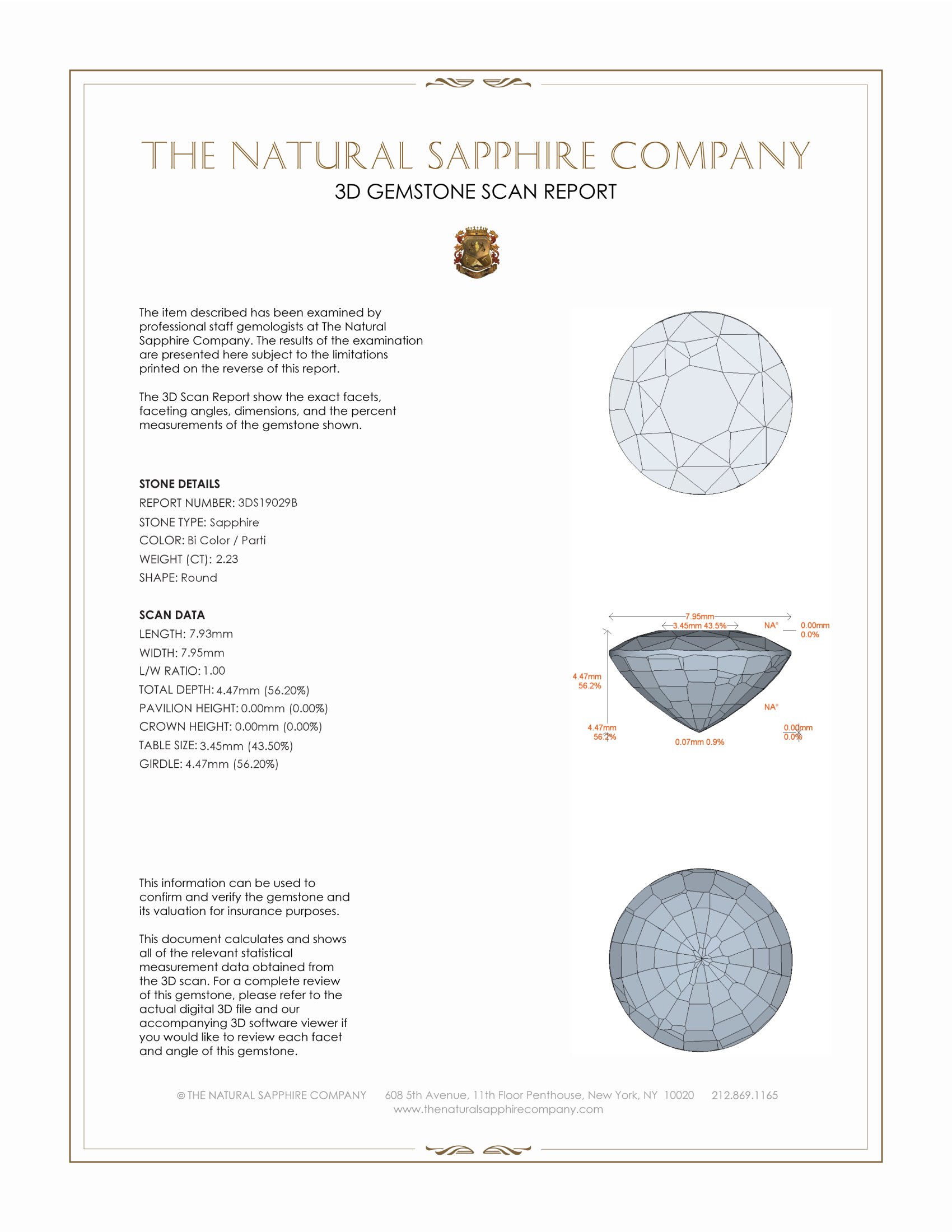
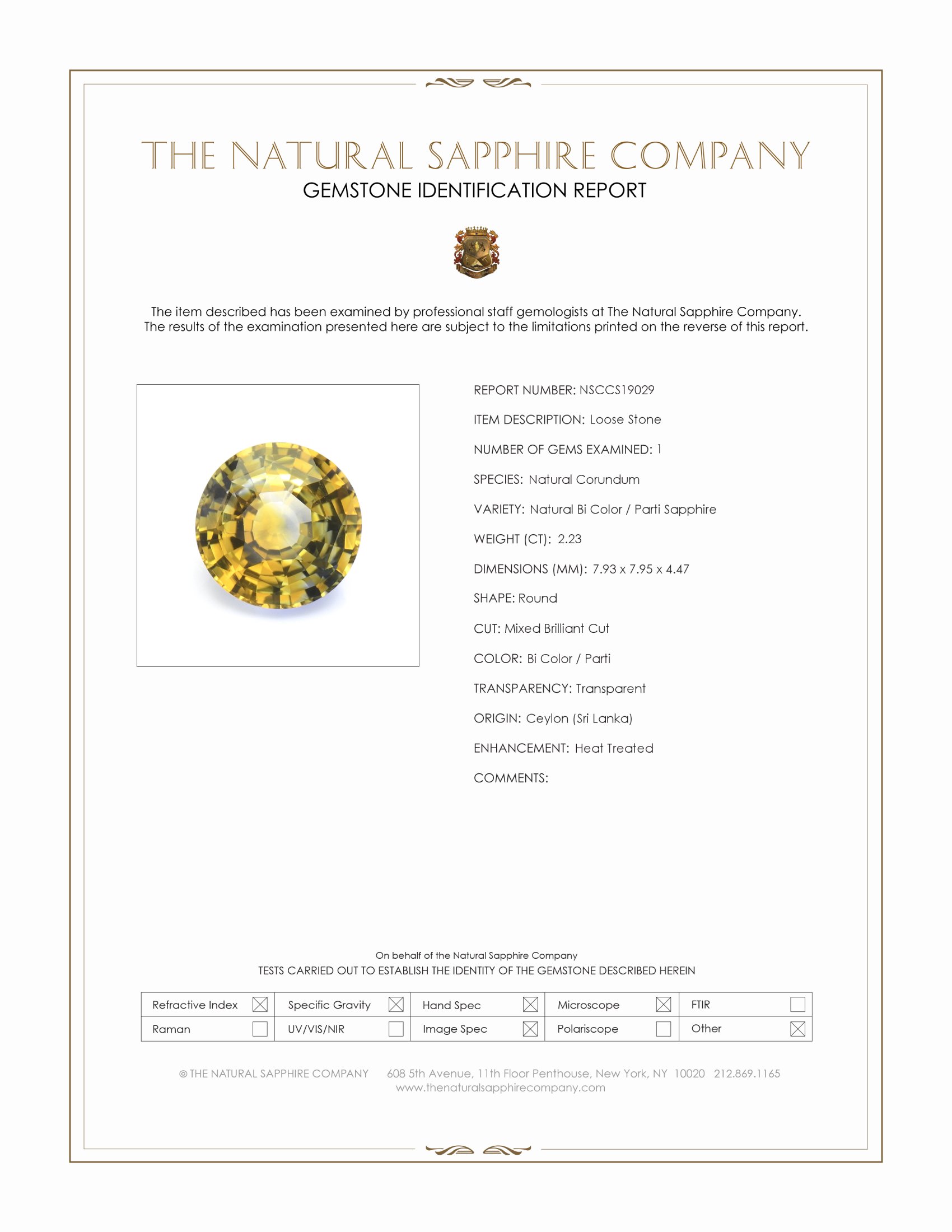
Dimensions (MM): help | Length: 7.93 Width: 7.95 Height: 4.47 |
Weight: | 2.23 Ct. |
Color: help | Bi Color / Parti |
Color intensity: help | Intense |
Clarity: help | Very Slightly Included |
Shape: help | Round |
Cut: | Mixed Brilliant Cut |
Cutting style: | Faceted |
Enhancements: help | Heat Treated |
Origin: help | Ceylon (Sri Lanka) |
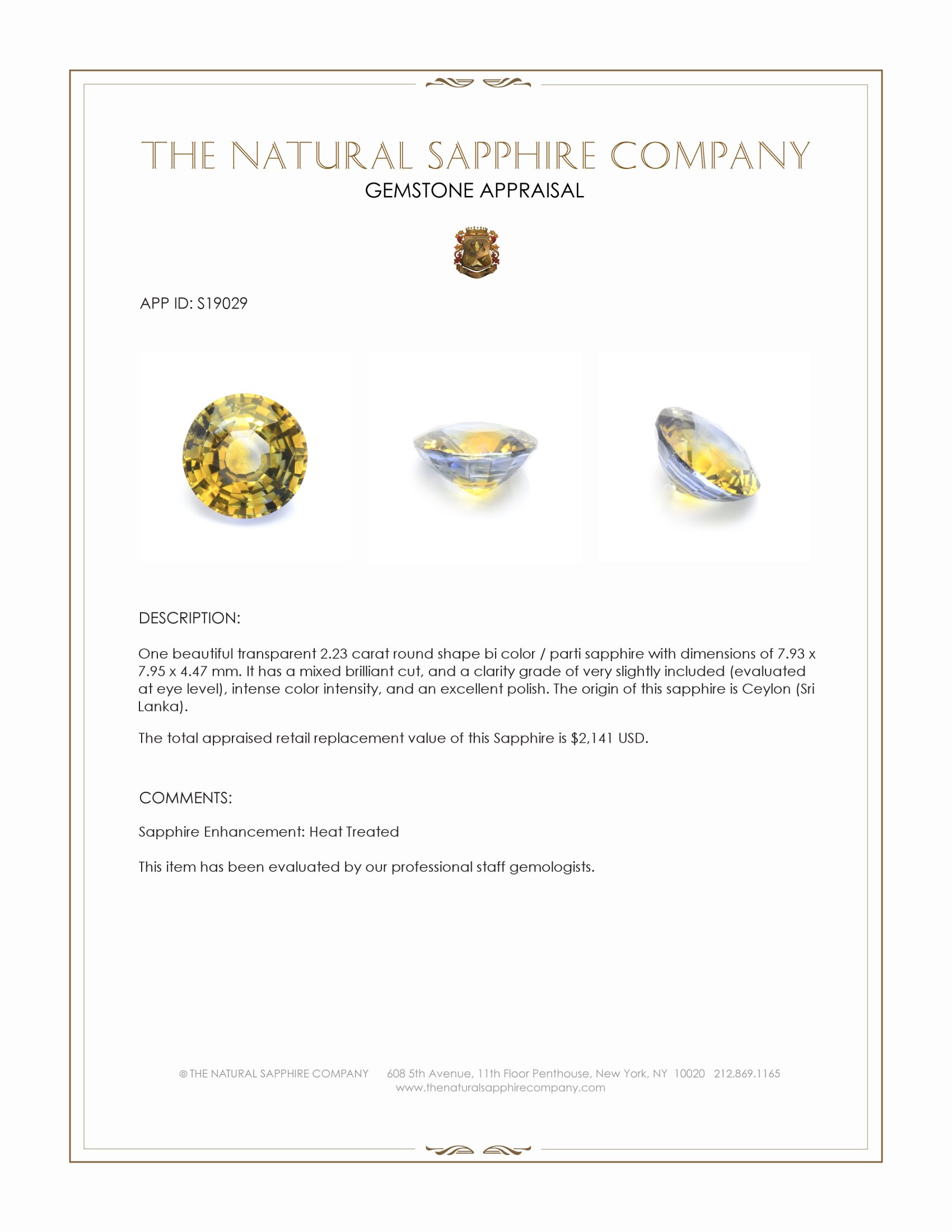
Per carat price: help | $960 |
This exceptional transparent 2.23 carat round shape bi color sapphire measures seven point nine three by seven point nine five by four point four seven millimeters, a proportion that yields a pavilion depth of approximately fifty six percent, a range that optimizes light return and face up brilliance. The gem is faceted in a mixed brilliant cut, combining the scintillation benefits of brilliant style facets on the crown with a carefully faceted pavilion to maximize flash and depth. The mixed brilliant approach is particularly effective for parti and bi color sapphires, because it balances the need to show off color zoning with the demand for overall sparkle. The stone presents intense color intensity, with a vivid interplay of golden yellow and cool blue tones that is characteristic of high quality parti sapphires. The excellent polish enhances the gem’s luster and ensures clean facet junctions that contribute to crisp light performance, while the round outline and even girdle present a symmetrical, gem cutting standard that allows jewelers to place the stone into a wide variety of fine settings with confidence.
From a clarity and grading perspective this sapphire is noted as very slightly included evaluated at eye level, which for an educated buyer means that at normal viewing distance the gem reads as transparent and clean, while minor natural inclusions are present but do not interrupt the passage of light or compromise the stone’s structural integrity. In practical terms these inclusions are typical of natural sapphires and serve as a fingerprint of natural origin, distinguishing the piece from synthetic material. The clarity grade combined with the intense color creates an advantageous balance, because in parti and bi color stones it is often color distribution and saturation rather than absolute clarity that dominate visual value. The cutting quality further mitigates the visibility of inclusions by orienting facets to hide or minimize internal characteristics when viewed face up, while the excellent polish ensures that surface conditions will not distract from the color play. For buyers who evaluate gemstones with a loupe or microscope, the very slightly included grade means the gem will show minor internal features under magnification, a detail that supports authenticity without detracting from wearability for daily jewelry.
The origin of this sapphire, Ceylon Sri Lanka, is a critical aspect of its desirability and market value, because provenance influences rarity, historical appeal, and expectations of color quality. Sri Lankan sapphires have a long established reputation for producing stones with lively saturation and a particular clarity of hue that often includes velvety or honeyed tones in yellow and parti material, and collectors recognize Ceylon as a classic source with centuries of gem trade pedigree. Geologically Sri Lankan sapphires form in metamorphic environments where varied trace element chemistry and subtle growth zoning produce multi tonal crystals and pleochroic behavior, which is precisely what creates attractive bi color or parti effects. When a stone is confidently attributed to Sri Lanka, experienced buyers interpret that attribution as confirmation of specific color profiles and cutting potential, which supports both short term desirability and long term collectability. For a sophisticated purchaser, origin adds an extra layer of narrative and authenticity to the gem, and The Natural Sapphire Company provides provenance information because we understand that documented origin increases buyer confidence and contributes to a stone’s investment appeal.
Treatment disclosure is essential to value assessment, and this sapphire has been heat treated, a widely accepted enhancement in the trade that stabilizes and intensifies color while remaining permanent under normal wear. Heat treatment is common for Ceylon stones and is an industry standard when disclosed, because it improves color saturation without materially affecting durability. For a discerning buyer, a heat treated label should be interpreted as responsible disclosure rather than a demerit, provided the treatment is stable and the gem has been properly performed by experienced professionals. Considering the combination of a substantial two point two three carat weight, intense bi color saturation, very slightly included clarity at eye level, excellent polish, and a precise mixed brilliant cut that yields strong light performance, this sapphire represents a rare convergence of factors that collectors and connoisseurs prize. The stone’s dimensions and cut proportions make it versatile for a high quality solitaire setting that showcases the color split, or for a bespoke design that positions the bi color transition to create contrast with accent diamonds or complementary sapphires. Care for the stone follows standard recommendations for corundum, avoiding harsh thermal shock and aggressive chemical exposure, while routine cleaning with warm soapy water or gentle ultrasonic cleaning under cautious conditions is acceptable for heat treated material. The Natural Sapphire Company stands behind our sourcing, grading, and treatment disclosures, and we encourage prospective buyers to request a detailed report or independent laboratory certification if desired, because transparency and accurate grading are central to making an informed acquisition.


