
- Stone11
- Reports3
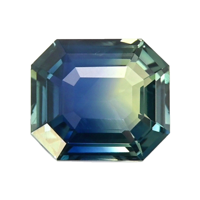
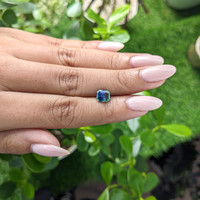
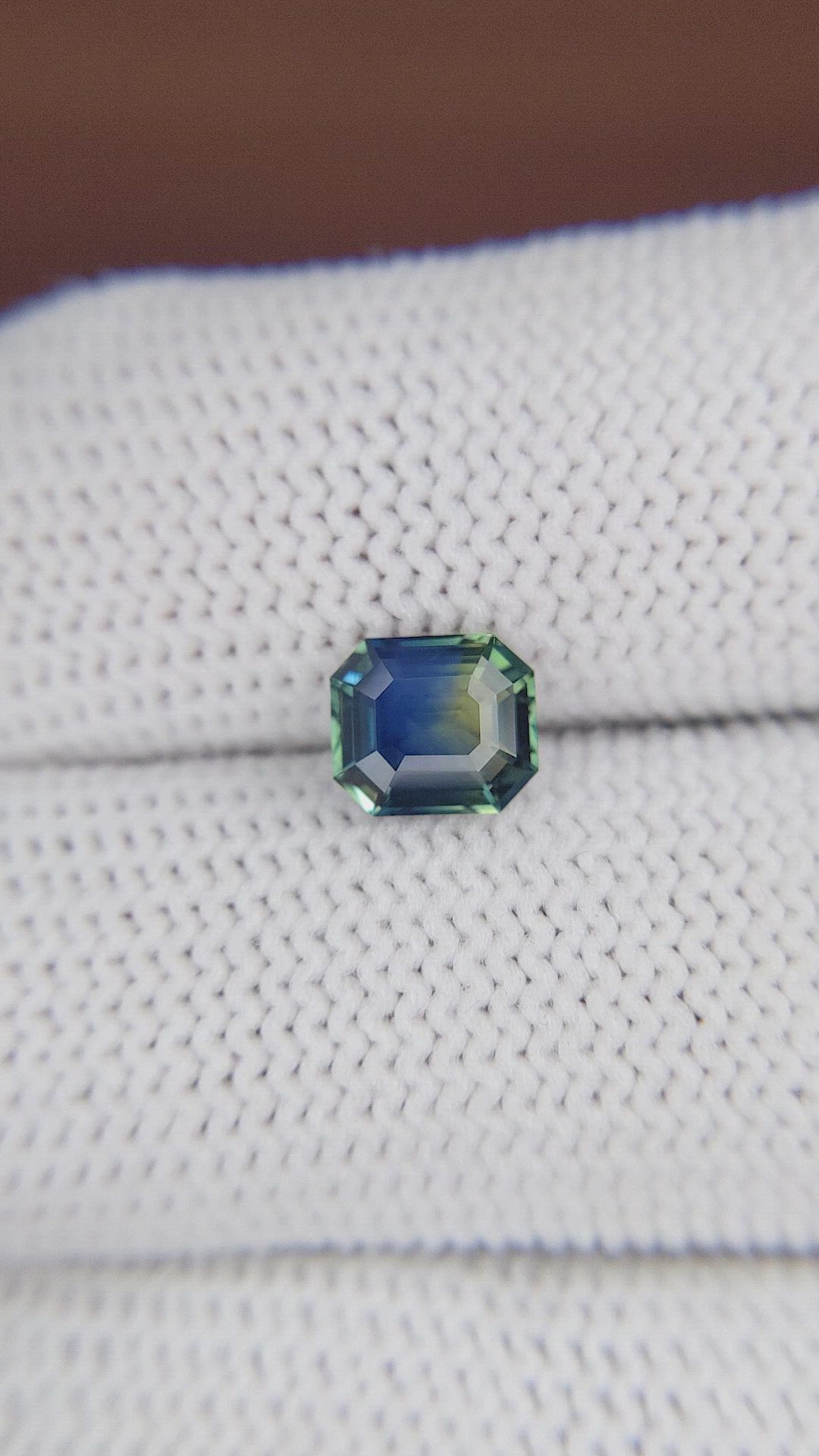
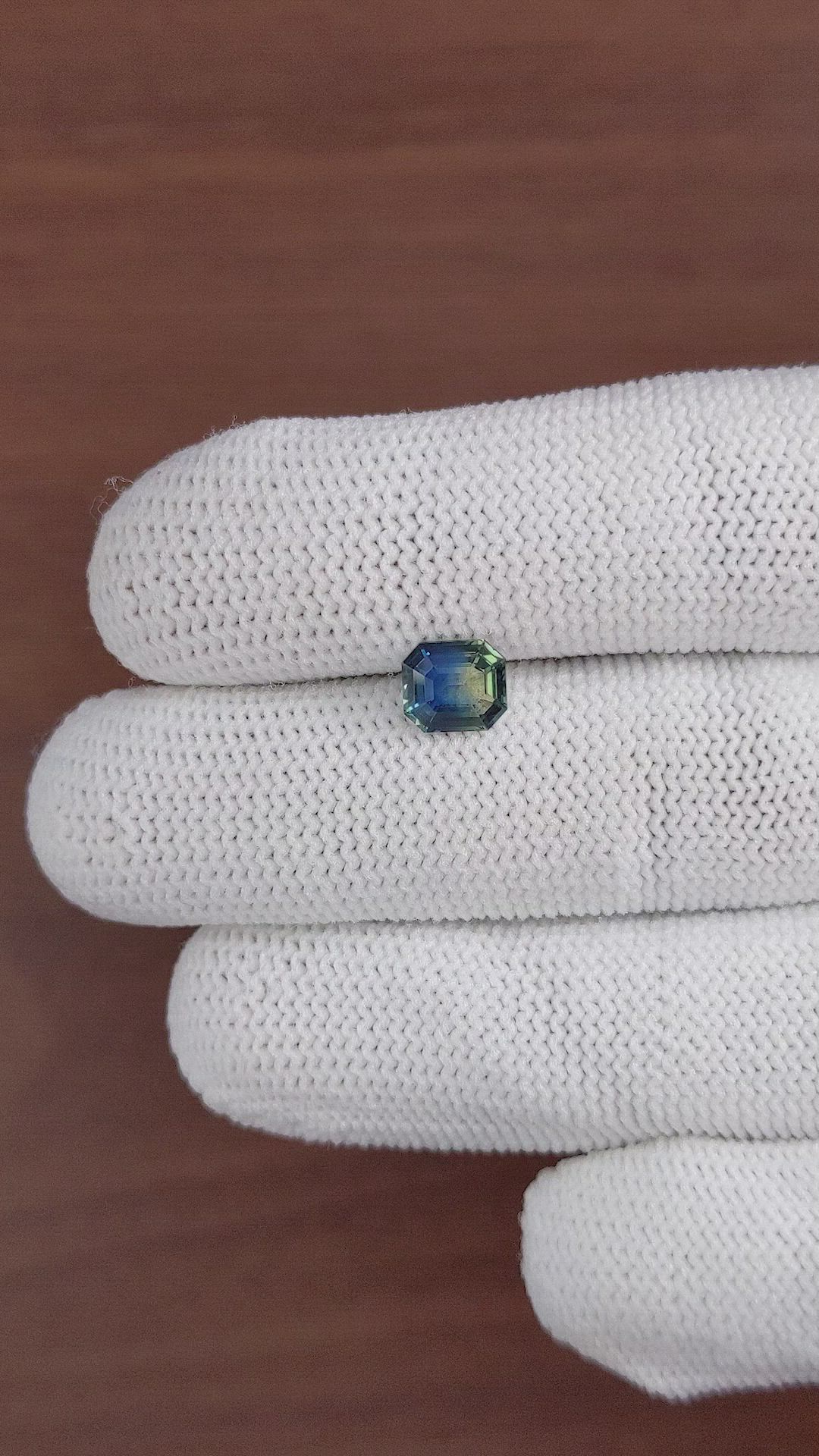
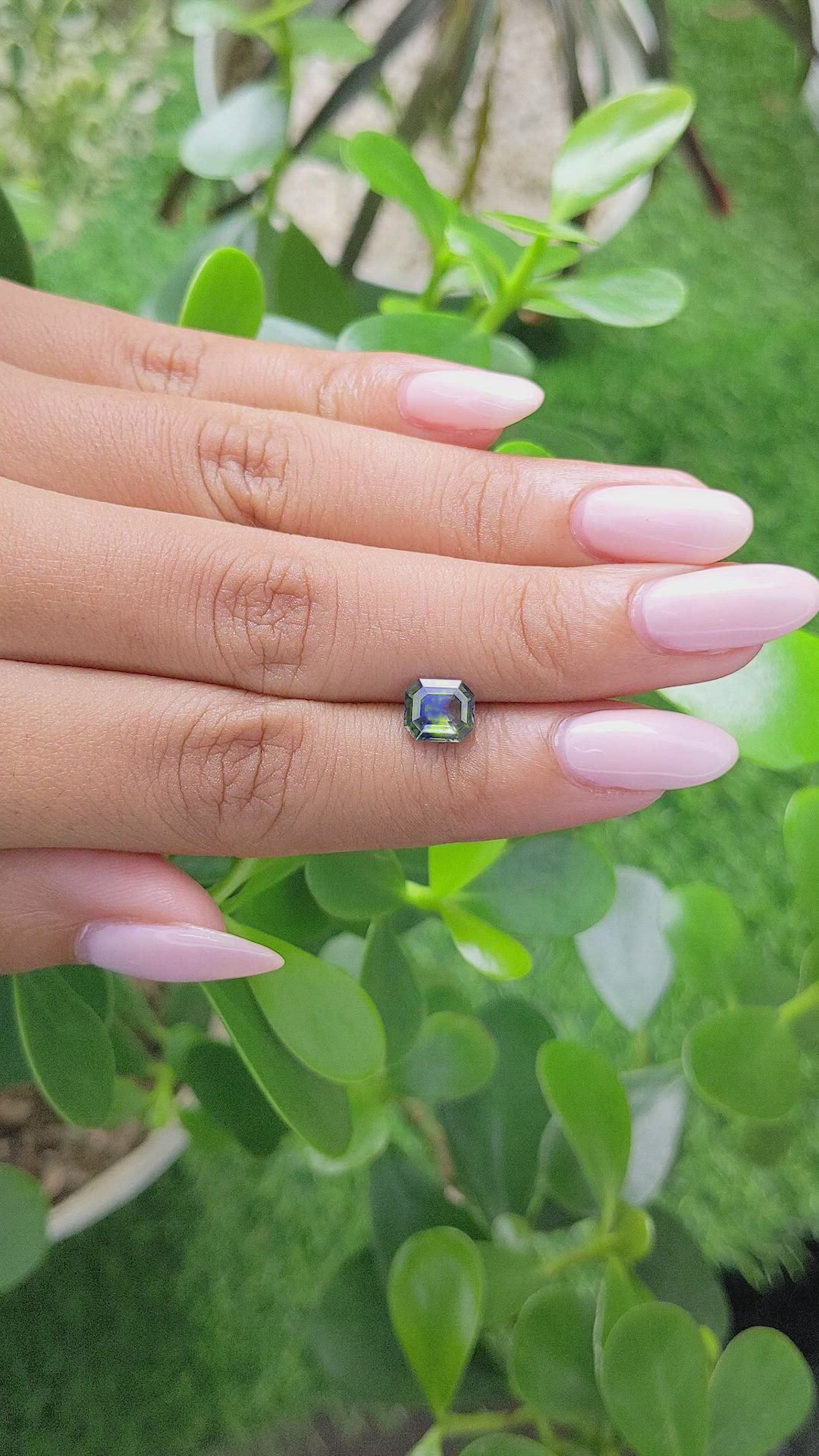
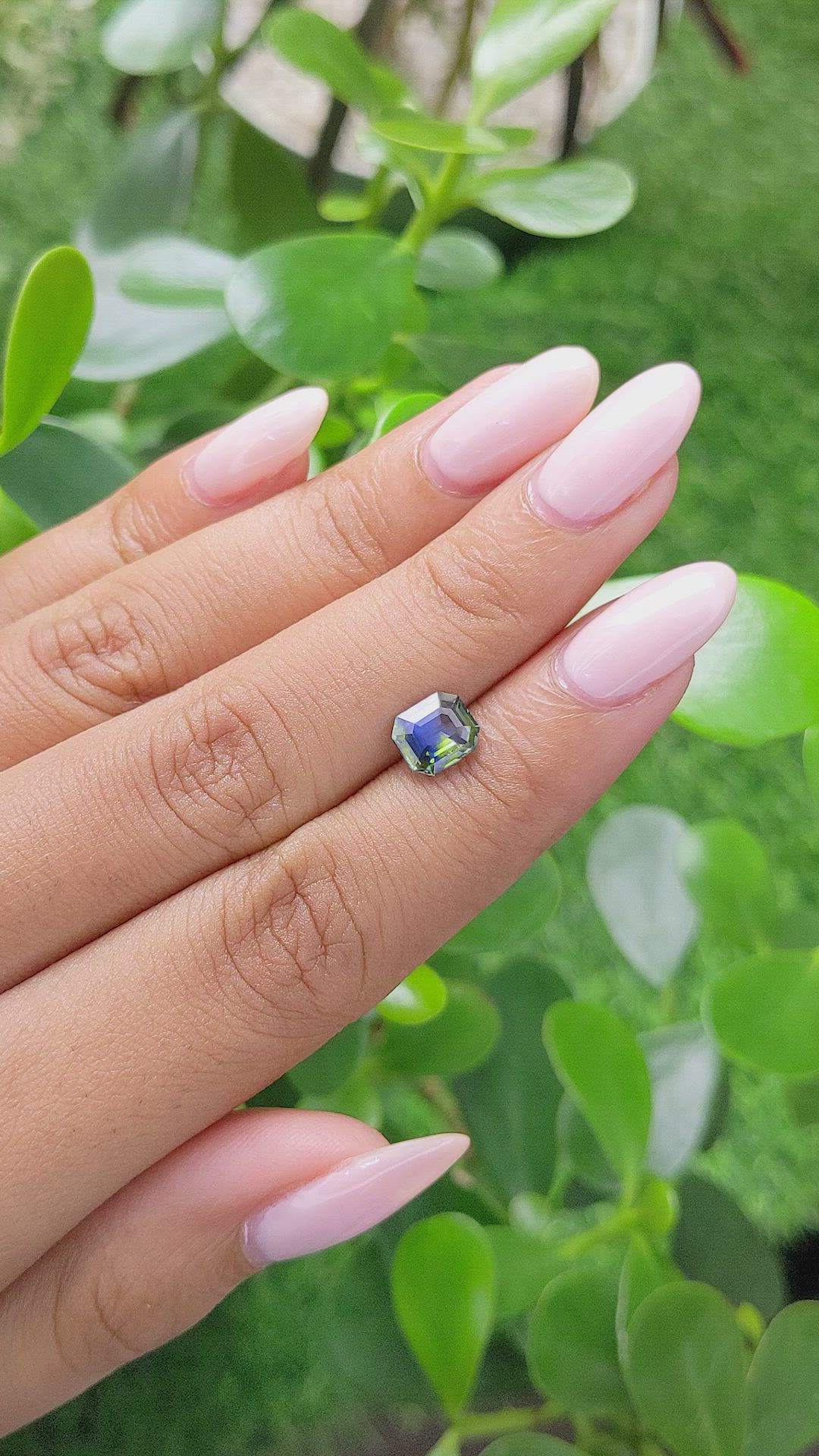


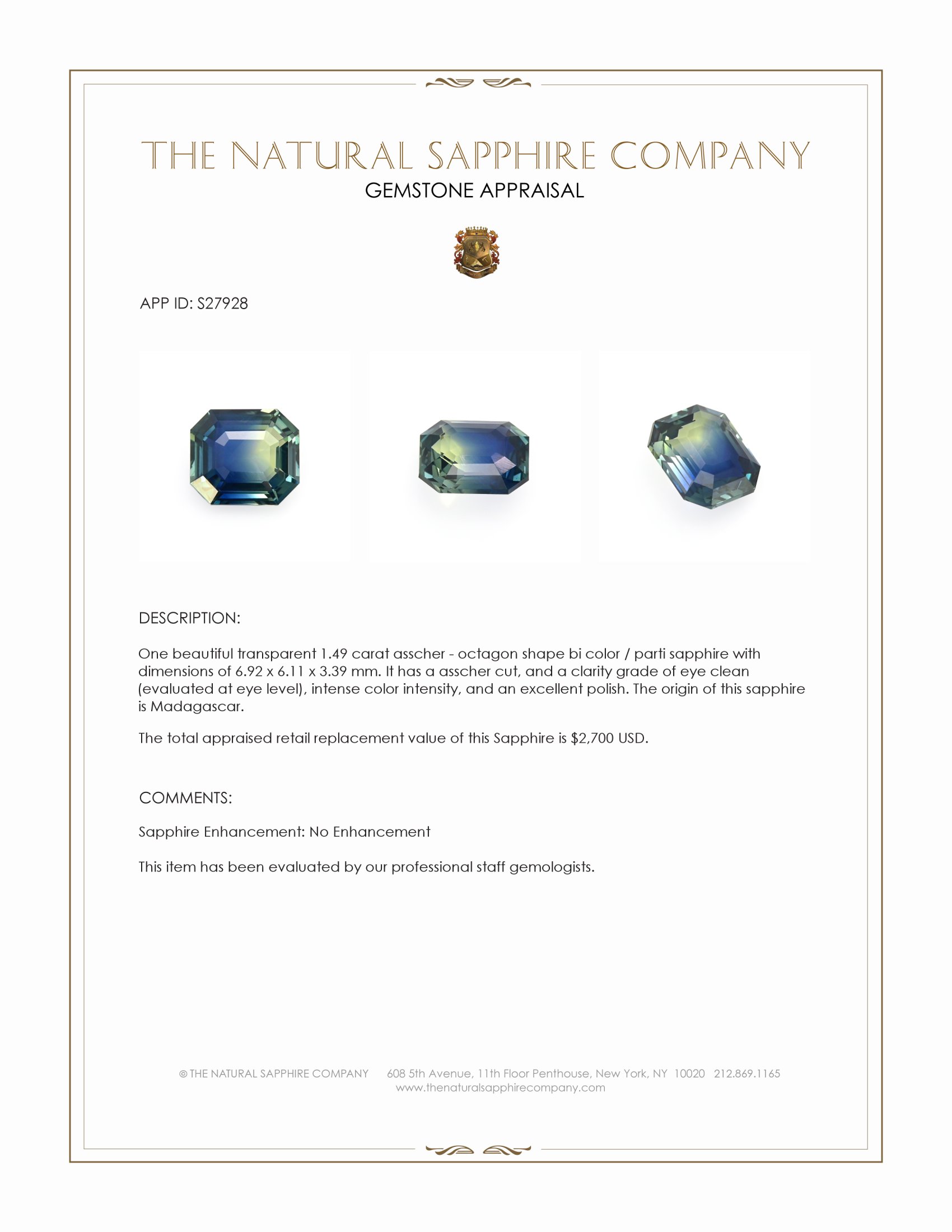
1.49 Ct. Bi Color / Parti Sapphire from Madagascar
Item ID: | S27928 |
|---|---|
Dimensions (MM): help | Length: 6.92 Width: 6.11 Height: 3.39 |
Weight: | 1.49 Ct. |
Color: help | Bi Color / Parti |
Color intensity: help | Intense |
Clarity: help | Eye Clean |
Shape: help | Asscher - Octagon |
Cut: | Asscher Cut |
Cutting style: | Faceted |
Enhancements: help | No Enhancement |
Origin: help | Madagascar |
Per carat price: help | $1,812 |
This transparent 1.49 carat asscher octagon bi color or parti sapphire measures 6.92 x 6.11 x 3.39 mm, and it presents a combination of precise proportions and material integrity that is rare for a naturally occurring, unenhanced stone. The faceted cutting style is executed as a classic asscher cut, with concentric step facets that converge toward a small table and truncated corners that define the octagonal outline. The overall depth of 3.39 mm relative to the average spread produces a depth to width ratio of approximately 52 percent, a proportion that supports both substantial face up presence and efficient light return for a step cut profile. Clarity is graded as eye clean at standard viewing distance, which permits uninterrupted observation of the internal color zoning and facet transitions, and the excellent polish enhances surface crispness and reflective contrast. Origin is Madagascar, and there has been no enhancement, ensuring that the observed color saturation and internal character are natural to the rough and to the cutter decisions.
The asscher cut on this sapphire is executed with disciplined symmetry and attention to facet junctions, producing sharp step facet edges and well aligned pavilion facets that work together to manage light flow. The crown is moderately elevated for an asscher geometry, providing a series of broad, flat crown facets that produce even color windows and defined hall of mirrors effects when viewed along the table axis. The pavilion steps are proportioned to promote balanced reflection and transmission, creating layered flashes rather than scattered brilliance typical of brilliant cuts. The truncated corners are precisely cut to maintain octagonal symmetry and to limit excessive light leakage at the girdle corners. The excellent polish contributes to high specular reflections and clear facet separation, which allows the eye to read the internal pleochroic directions and parti color distribution with minimal surface distortion. These craftsmanship details matter for knowledgeable buyers because they determine how color is presented and how the gem interacts with directional lighting during daily wear.
Color grade is intense in saturation, and the bi color or parti characteristic is expressed as a controlled transition between deep oceanic blue and yellow green, with intermediate teal zones. In natural daylight, which contains a balanced spectrum, the stone reads predominantly blue toward the larger table plane, while peripheral zones and certain pavilion facets reveal green to yellow green at the truncated corner regions, producing a layered, painterly color field. Under cool white LED or fluorescent light, the short wave energy emphasizes the blue channel, making the stone appear cooler and more saturated in the blue range, with green zones receding to provide a more uniform blue face up appearance. Under warm incandescent light and candlelight, the longer wavelengths energize the yellow green component, shifting the apparent balance toward teal and green, and increasing the perception of depth within the step facets. When exposed to a strong point source such as a spotlight or direct sunlight, the asscher steps create discrete flash windows, and the parti zones can appear to move as the stone is rotated, revealing pleochroic variation along different crystallographic axes, a behavior that is especially pronounced because no heat or diffusion treatments have altered the original pleochroic response.
For practical use and setting considerations, the eye clean clarity and excellent polish mean this sapphire performs well in open settings that allow maximum light interaction, and the asscher geometry benefits from a low profile bezel or a four prong setting that exposes the crown and corners. Orienting the stone so that the principal axis of color transition aligns with the wearer facing line will maximize the dynamic parti effect during normal head movements, while mounting with a clear gallery or open back can enhance transmitted color under ambient illumination. The absence of enhancement preserves natural absorption bands and pleochroic axes, which is important for collectors and connoisseurs who require verifiable natural provenance and optical authenticity. At The Natural Sapphire Company we document origin and treatment status, and we recommend consideration of metal color and setting depth as tools to either emphasize the blue component with white gold or platinum, or to warm the overall presentation with yellow gold. The combination of asscher step faceting, intense natural color, eye clean clarity, excellent polish, and Madagascan origin makes this 1.49 carat sapphire a technically interesting and visually compelling option for those who value precise cutting, natural color dynamics, and a superior, unenhanced gemstone.


