
- Stone14
- Reports3


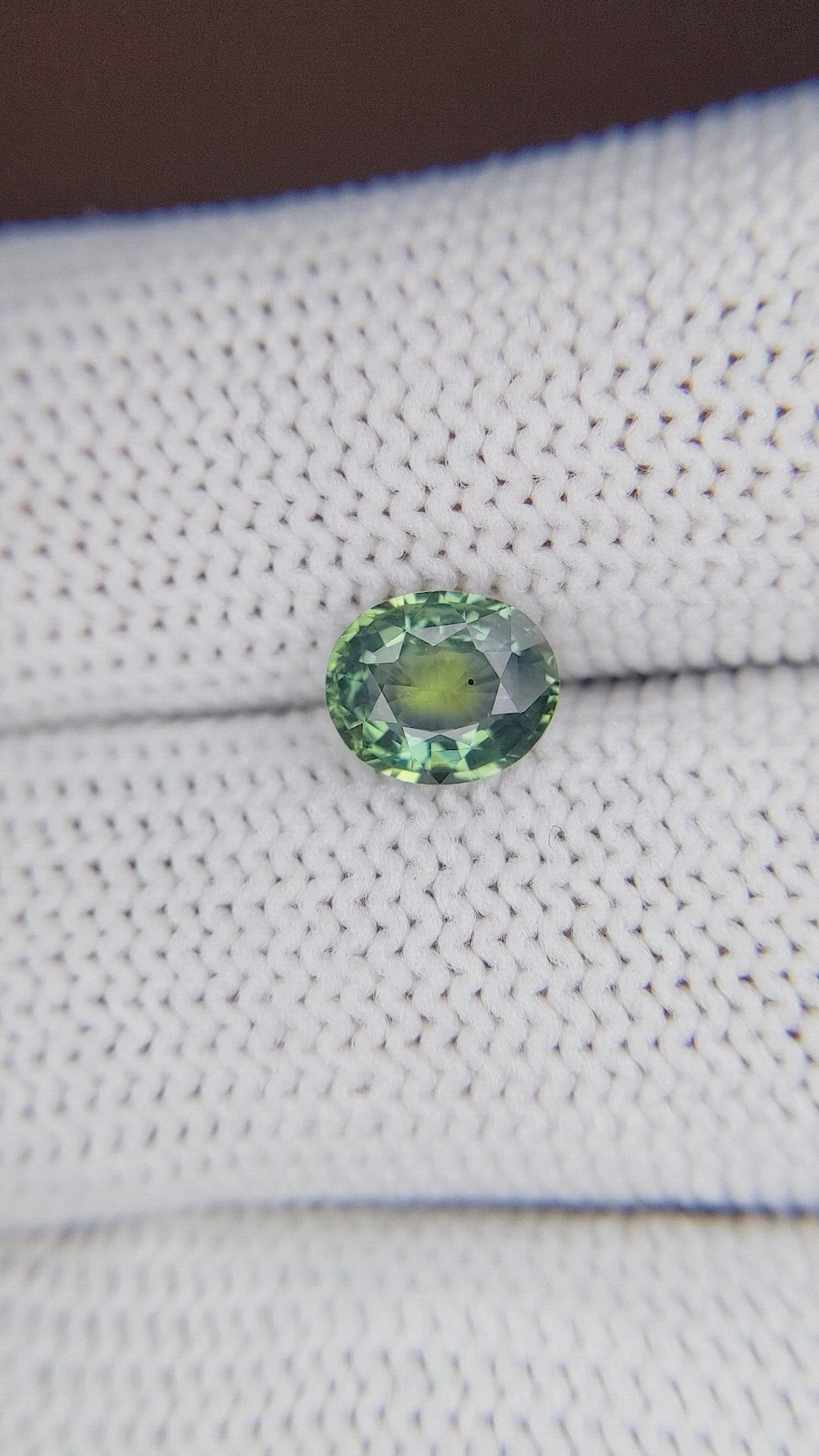
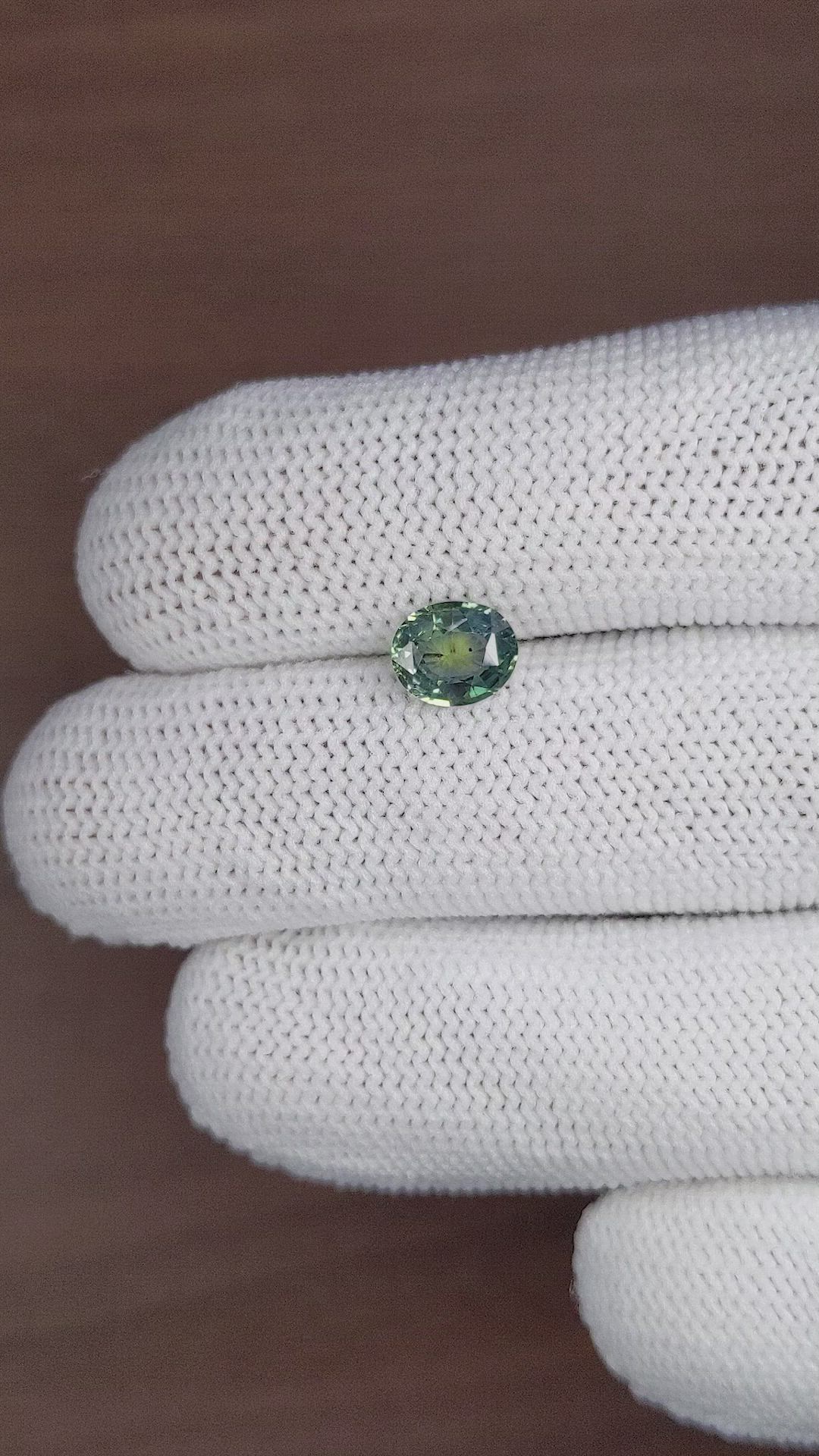
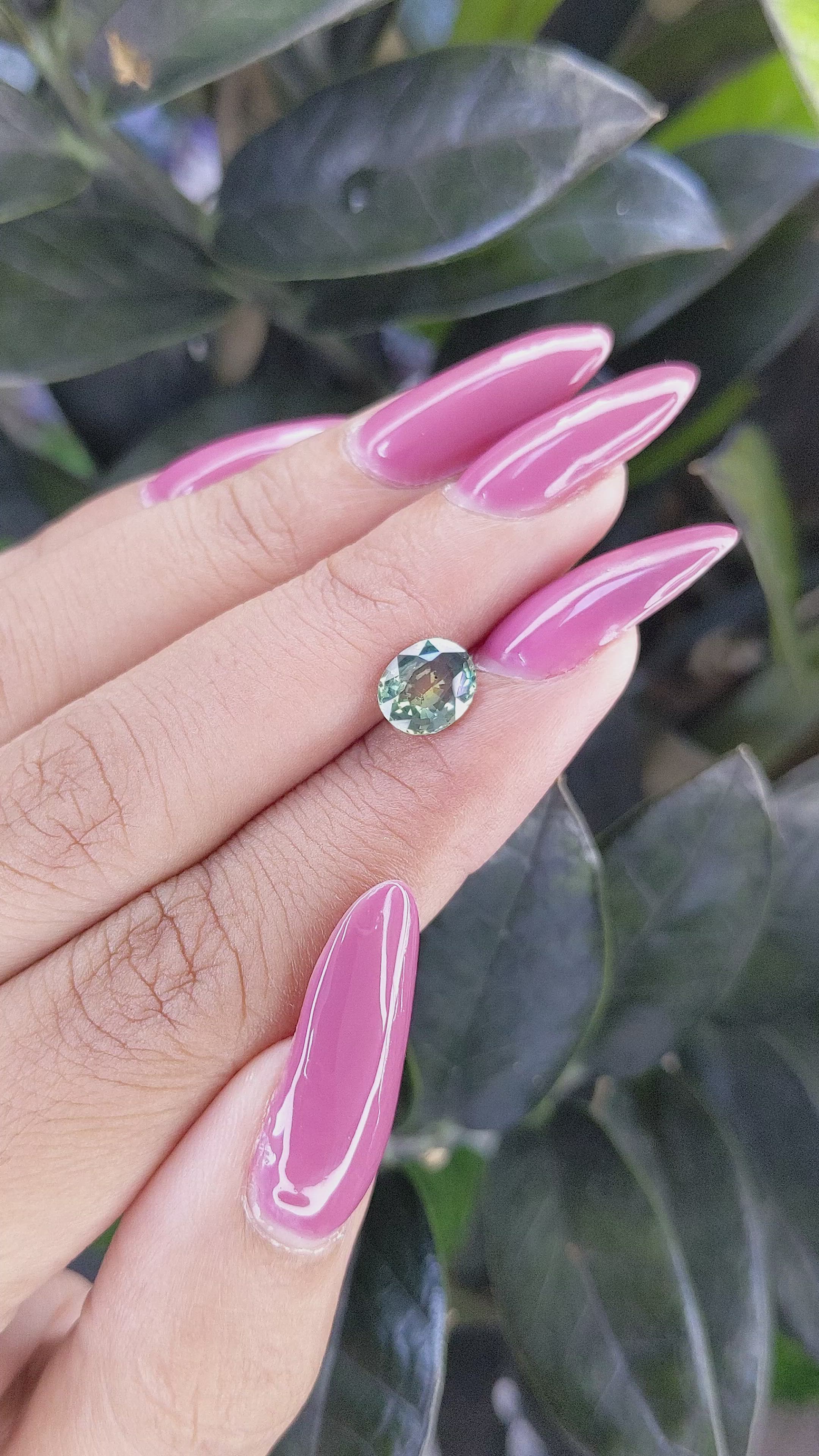
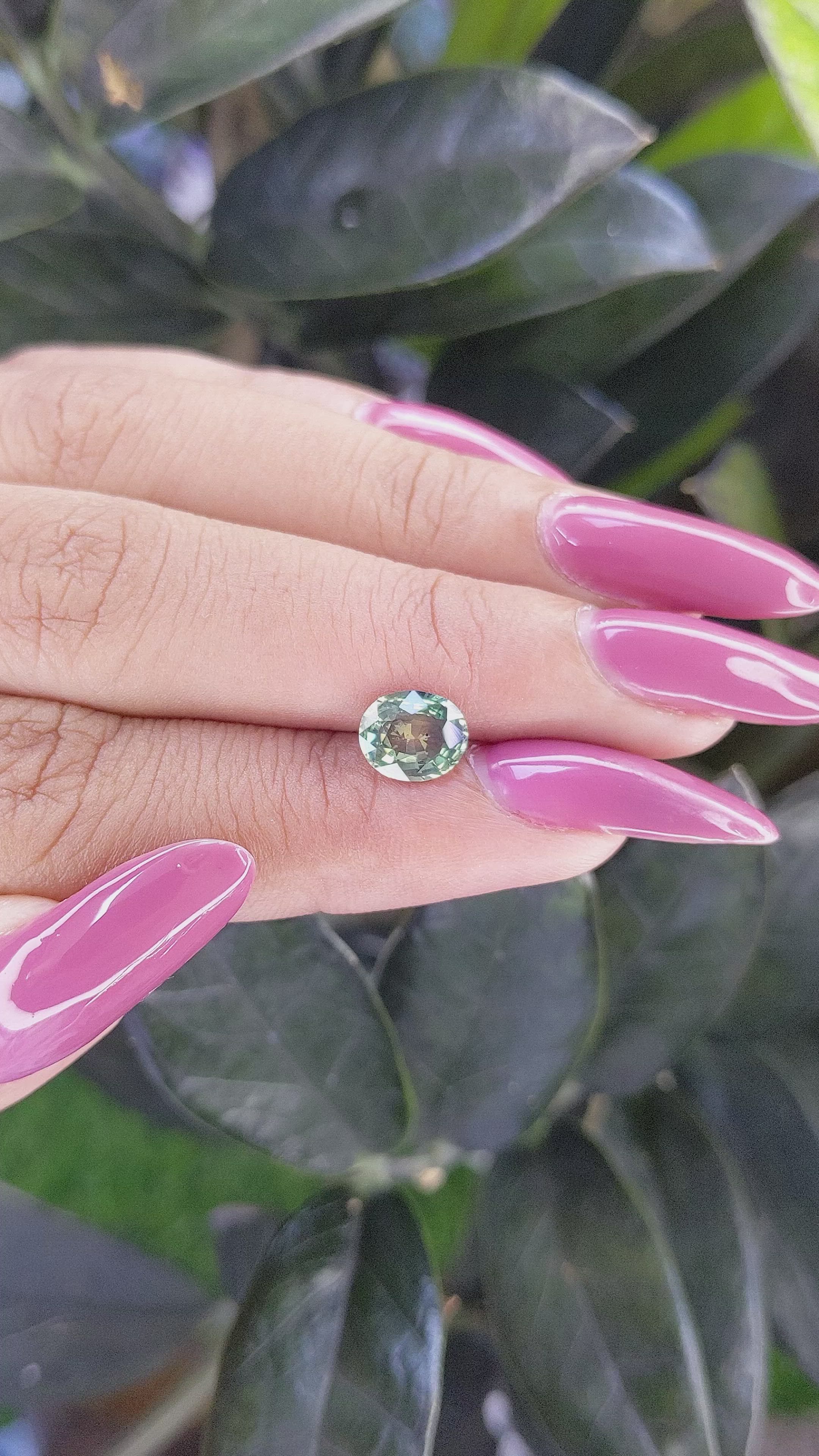


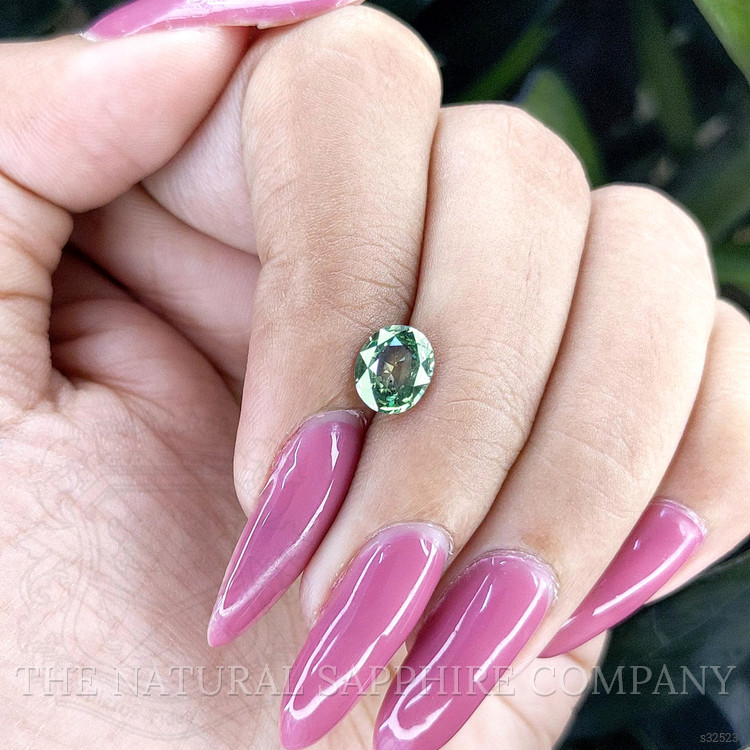


1.38 Ct. Bi Color / Parti Sapphire from Tanzania
This loose stone ships by Oct 18
Item ID: | S32523 |
|---|---|
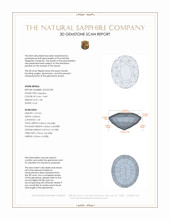
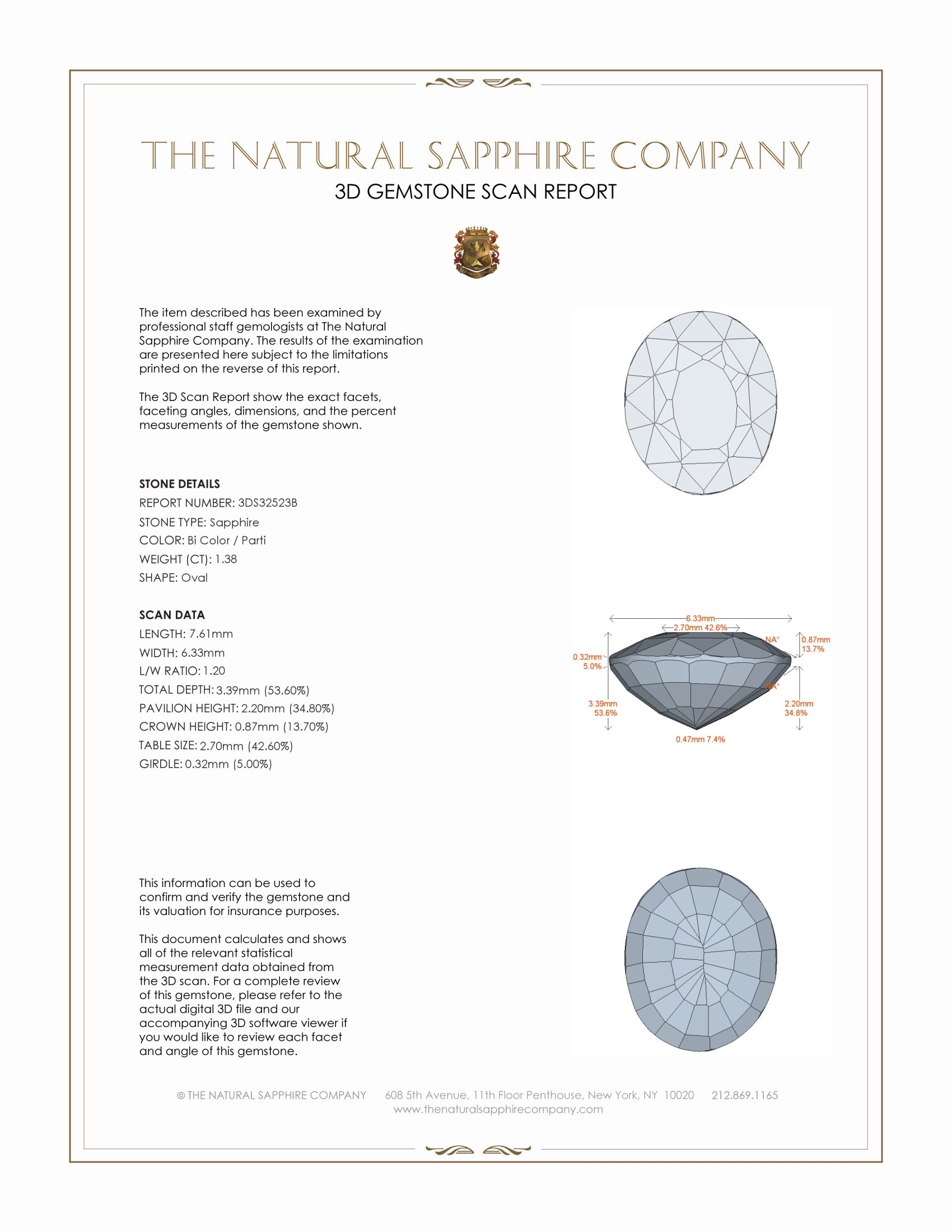
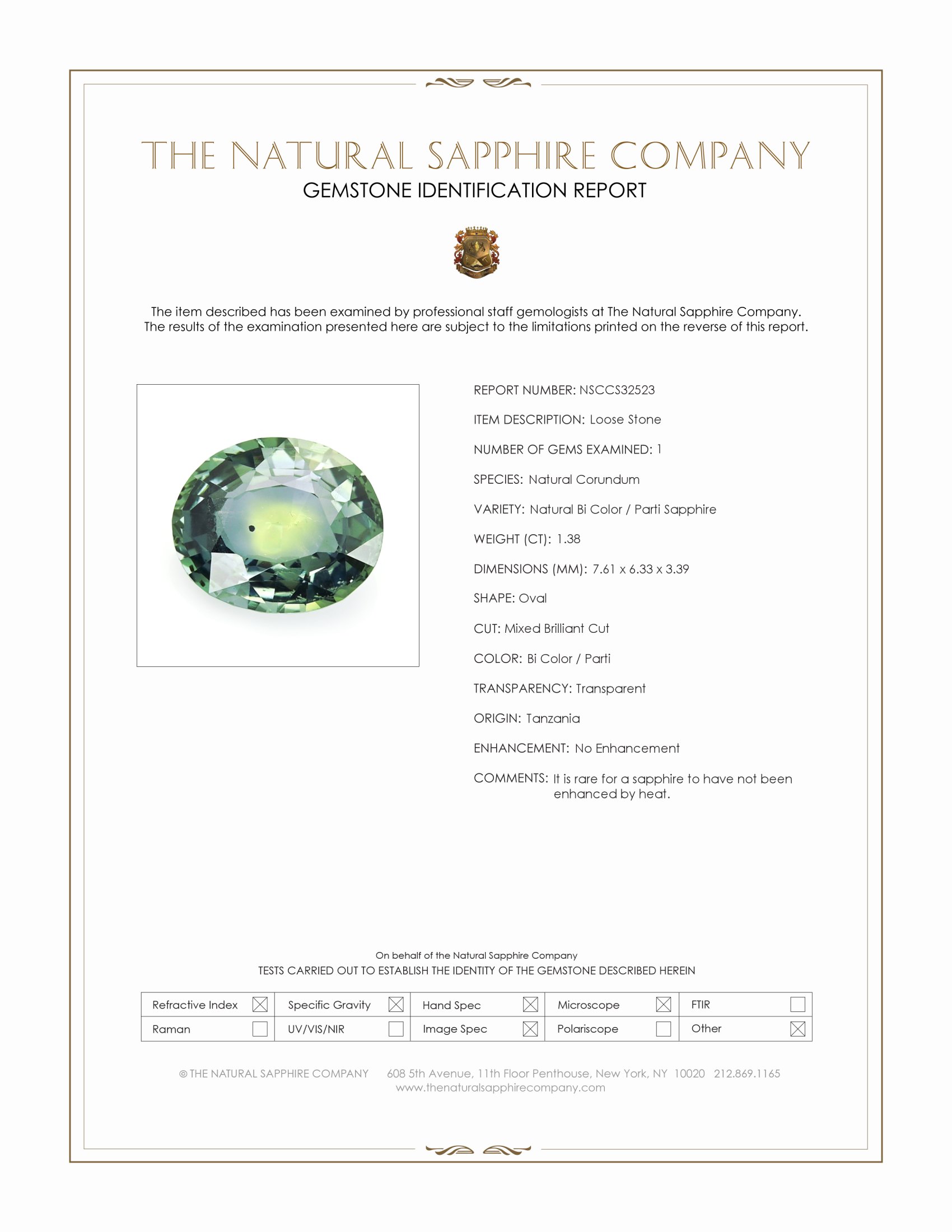
Dimensions (MM): help | Length: 7.61 Width: 6.33 Height: 3.39 |
Weight: | 1.38 Ct. |
Color: help | Bi Color / Parti |
Color intensity: help | Intense |
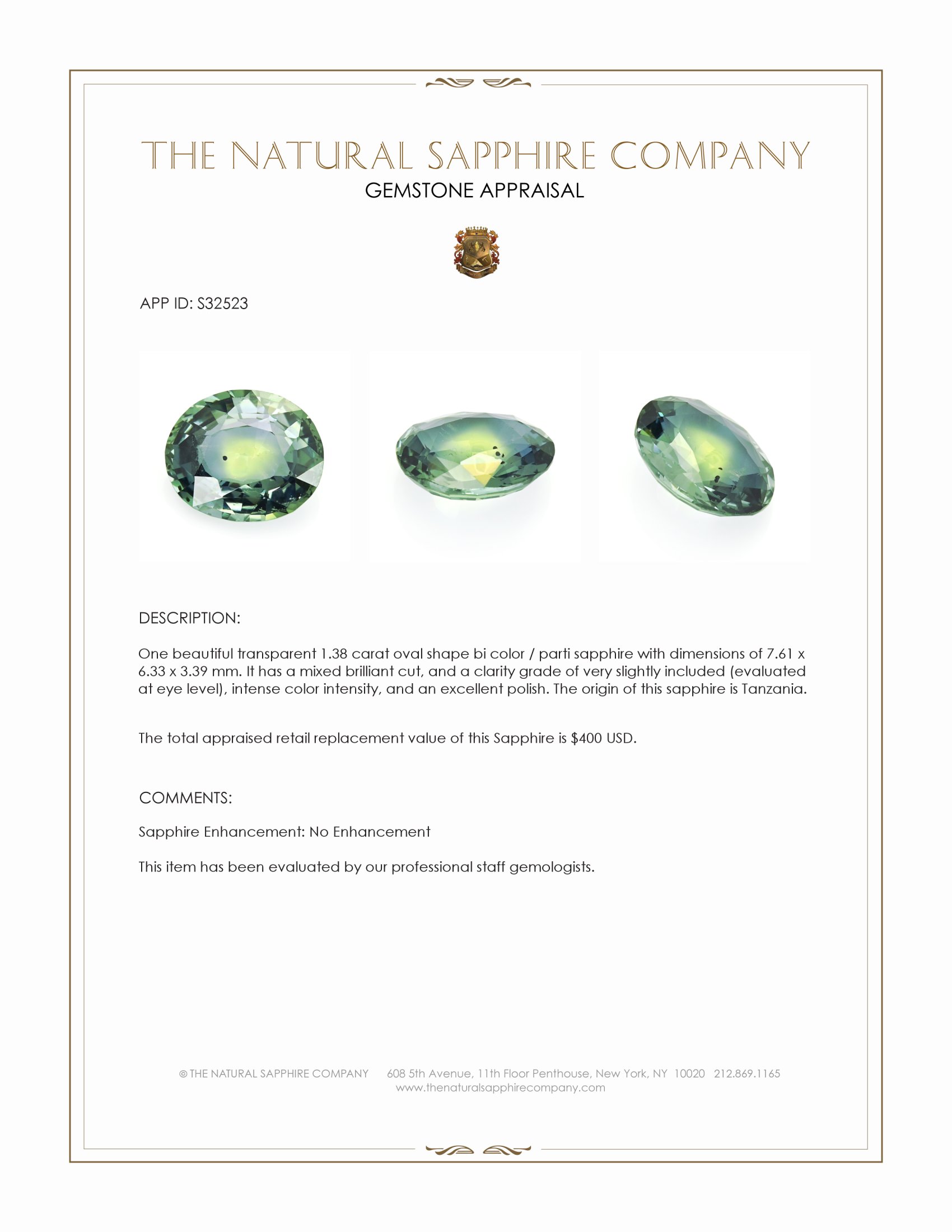
Clarity: help | Very Slightly Included |
Shape: help | Oval |
Cut: | Mixed Brilliant Cut |
Cutting style: | Faceted |
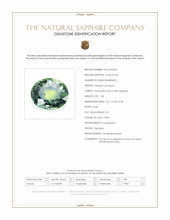
Enhancements: help | No Enhancement |
Origin: help | Tanzania |
Per carat price: help | $290 |
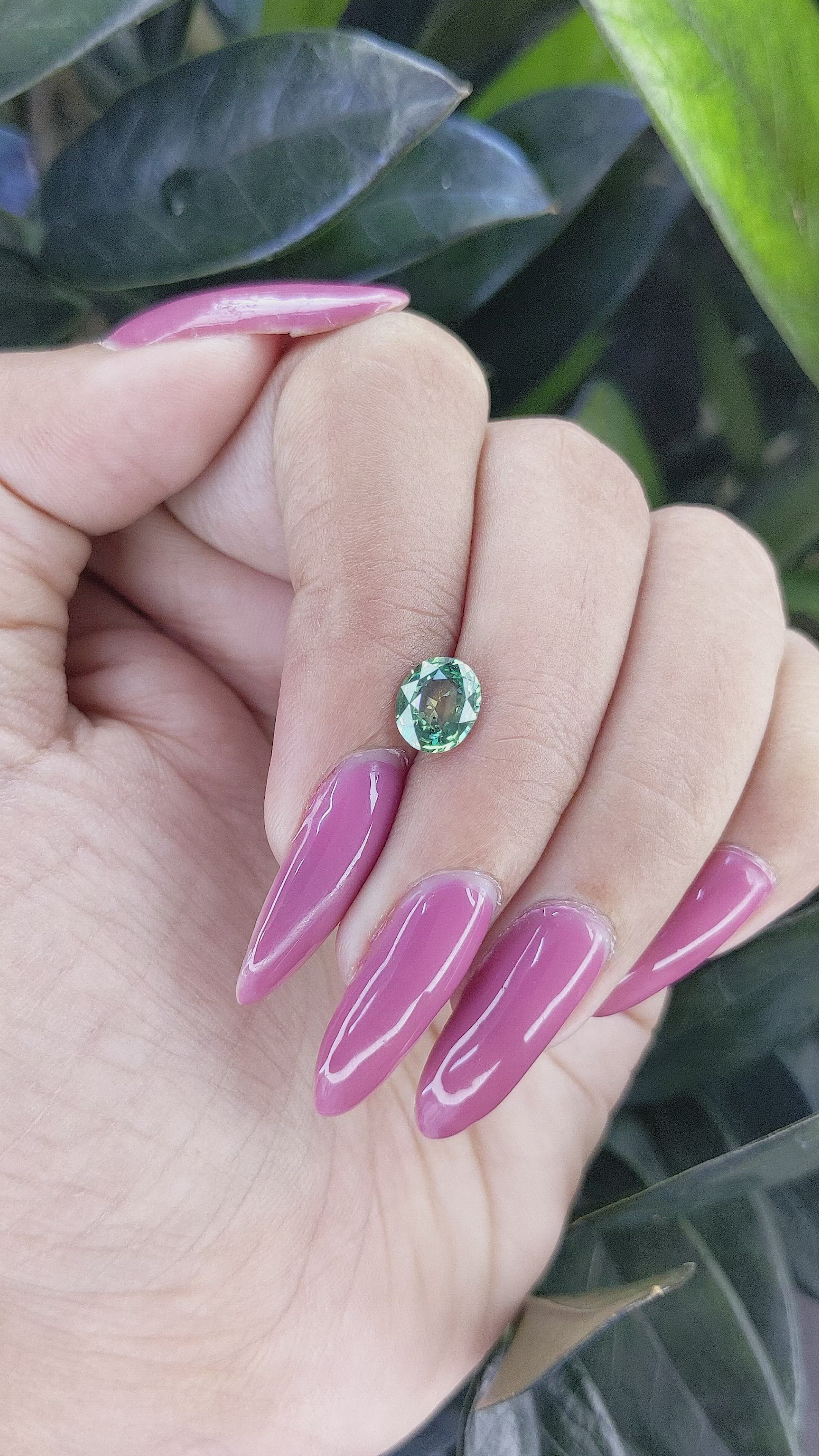
This oval faceted bicolor parti sapphire is a refined example of what makes natural sapphires sought after by collectors and connoisseurs, weighing 1.38 carats with precise dimensions of 7.61 by 6.33 by 3.39 millimeters. Cut in a mixed brilliant style, the stone combines the scintillating crown faceting associated with brilliant cuts and the depth and color retention afforded by step elements in the pavilion. The result is a gemstone that displays lively scintillation, controlled light return, and balanced color saturation across its table and girdle. The cut proportions and excellent polish work together to maximize the optical performance of the sapphire, creating crisp facet junctions and a lively play of light that is readily apparent to the unaided eye.
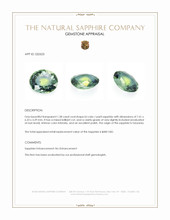
Color is a defining characteristic of this piece, described as an intense bicolor or parti tone with a primary green field and a vibrant yellow flash toward the center. Parti sapphires are prized for their ability to present two or more distinct colors within a single crystal, and this specimen from Tanzania exhibits that phenomenon with strong hue separation and harmonious tonal balance. The intense color intensity indicates that the gem sits well into the saturated range without appearing dark or murky, which means it will translate beautifully into jewelry, retaining its personality under varied lighting conditions. Because the sapphire is untreated, with no enhancement, its colors are entirely natural, and this untreated status contributes substantially to its market value and appeal to educated buyers who prioritize provenance and naturalness.
Clarity is graded as very slightly included when evaluated at eye level, which in practical terms means the stone is essentially eye clean and exhibits only minor inclusions that do not detract from overall beauty. Inclusions are part of a natural sapphire story, often providing fingerprint like confirmation of natural origin and offering unique identifiers that differentiate one crystal from another. The inclusions in this piece are small and positioned such that they have minimal impact on brilliance and transparency. When paired with the mixed brilliant cut, the light pathways within the stone remain efficient, so the gem maintains excellent transparency and internal reflection. The excellent polish enhances surface luster, ensuring that facet reflections are crisp and that the sapphire delivers pleasing face up appearance in a variety of settings.
Comparing brilliance to more common gemstones helps to explain why this sapphire stands out for a knowledgeable buyer. Diamond remains in a class of its own for fire and overall brilliance because of its very high refractive index, however sapphires have a relatively high refractive index compared to many common colored stones, which means they return light more vibrantly than beryl family gems such as aquamarine and emerald, and more than quartz varieties and topaz. With an optimal mixed brilliant cut, this sapphire capitalizes on its refractive properties to show stronger scintillation and contrast than gems with lower refractive indices. Additionally, parti sapphires offer a dynamic visual experience that single hue stones cannot match, because the interplay of two colors across the table can appear to shift with movement and light source, producing a lively and distinctive presence on the finger or in a pendant. The combination of hardness, which makes sapphire suitable for everyday wear, and this dynamic color behavior is an attractive technical and aesthetic advantage over many other popular gemstones.
Provenance and treatment history are important to serious buyers, and this sapphire carries several strong points in those areas. It originates from Tanzania, a source known for producing a range of attractive sapphires including parti stones from regions such as the Umba valley, and the gem is reported to have no enhancement. Untreated sapphires with natural color and excellent polish command a premium in the market because they demonstrate intrinsic quality without human modification. At The Natural Sapphire Company we emphasize transparency and documentation, and this piece aligns with our standards for ethical sourcing and accurate representation. For collectors and designers seeking a natural, finely cut, durable and visually compelling sapphire, this 1.38 carat Tanzanian parti sapphire offers a combination of natural color, excellent cutting and polish, and eye level clarity that makes it a distinguished choice.


