
- Stone12
- Reports3
-oval-blue-sapphire-9.6800-cts-s35867-1.jpg?d=200x200&v=20260115032910)
-oval-blue-sapphire-9.6800-cts-s35867-lifestyleimage-1.jpg?d=200x200&v=20260206102137)
-oval-blue-sapphire-9.6800-cts-s35867-lifestyleimage-2.jpg?d=200x200&v=20260206102137)

-oval-blue-sapphire-9.6800-cts-s35867-1.jpg?d=750x750&s=nsc&v=20260115032910)
-oval-blue-sapphire-9.6800-cts-s35867-lifestyleimage-1.jpg?d=750x750&s=nsc&v=20260206102137)
-oval-blue-sapphire-9.6800-cts-s35867-lifestyleimage-2.jpg?d=750x750&s=nsc&v=20260206102137)

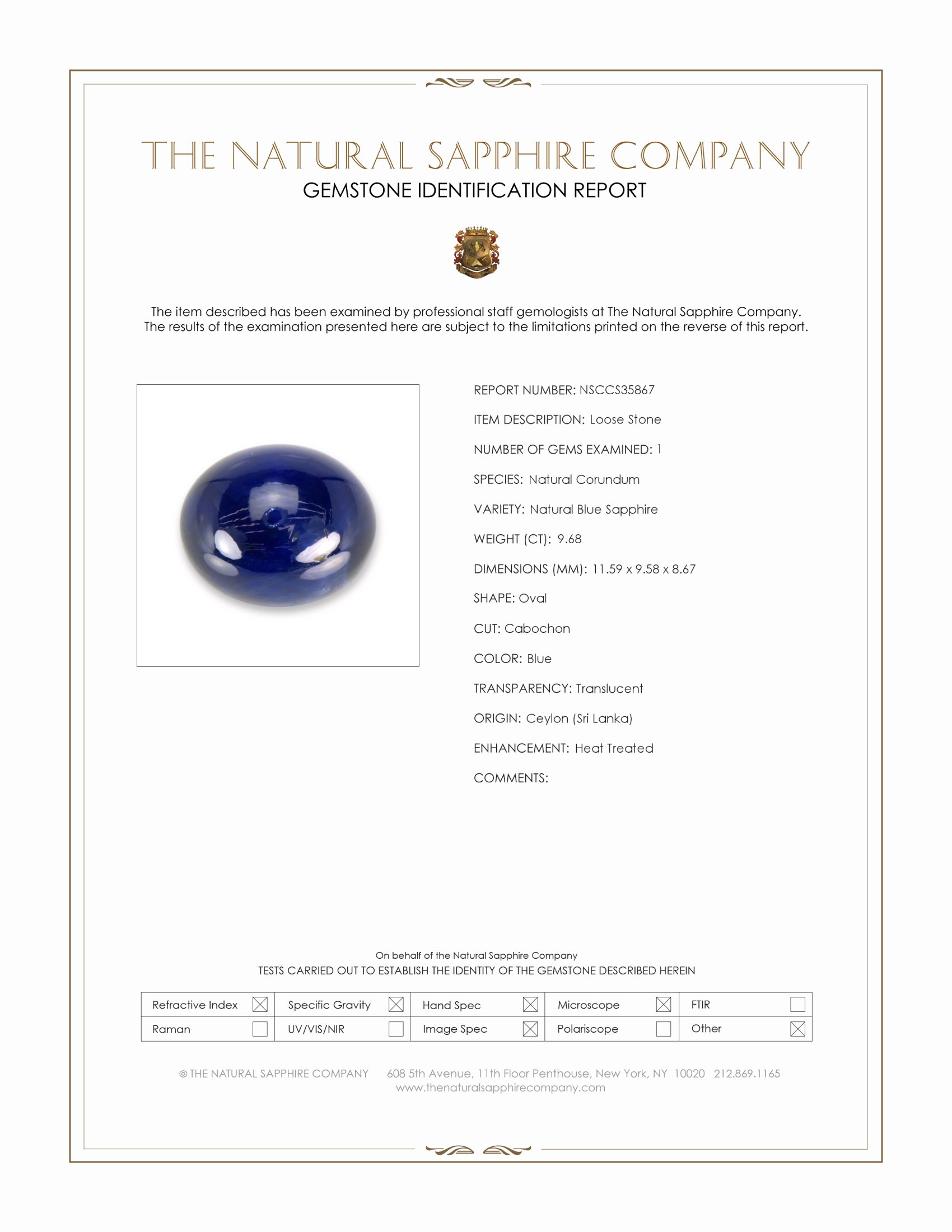
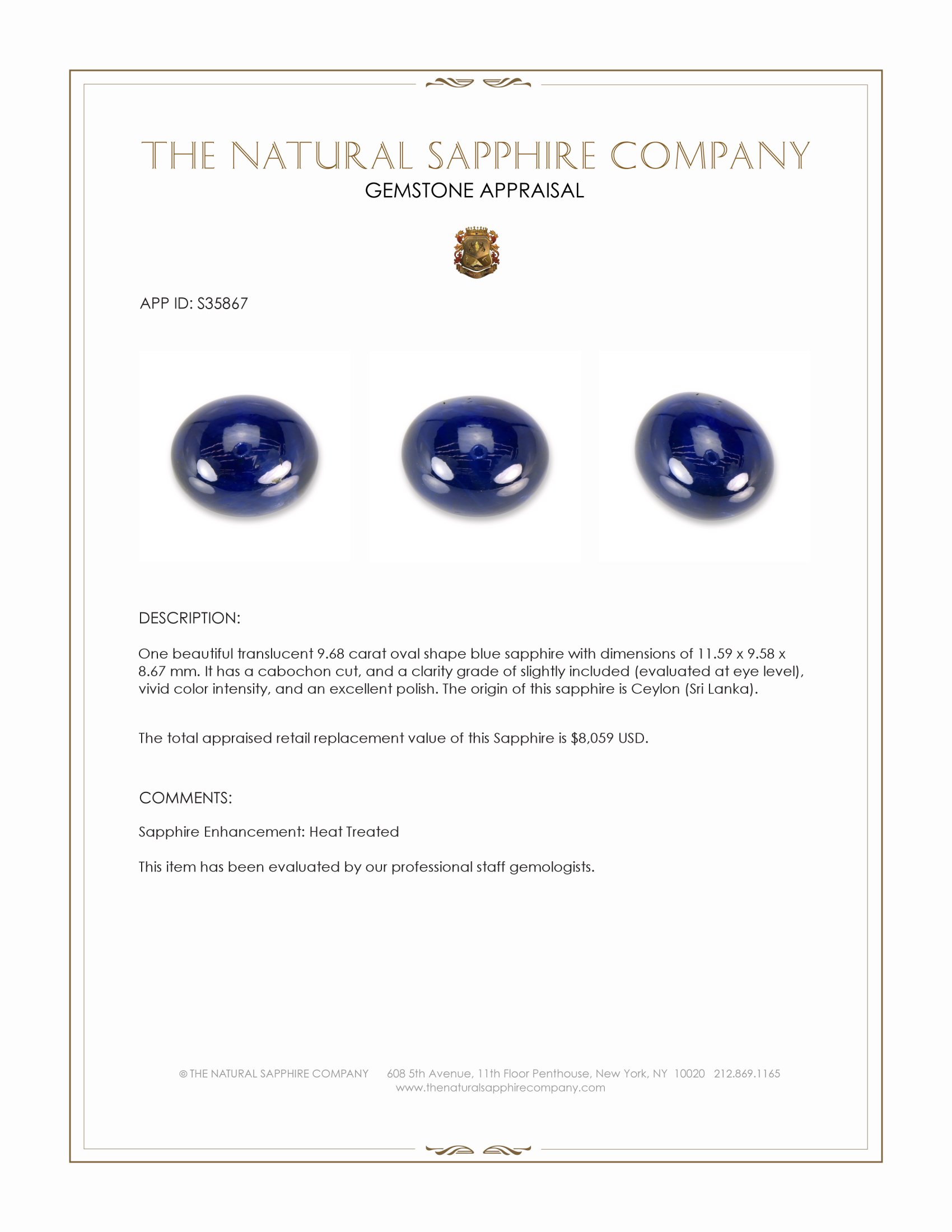
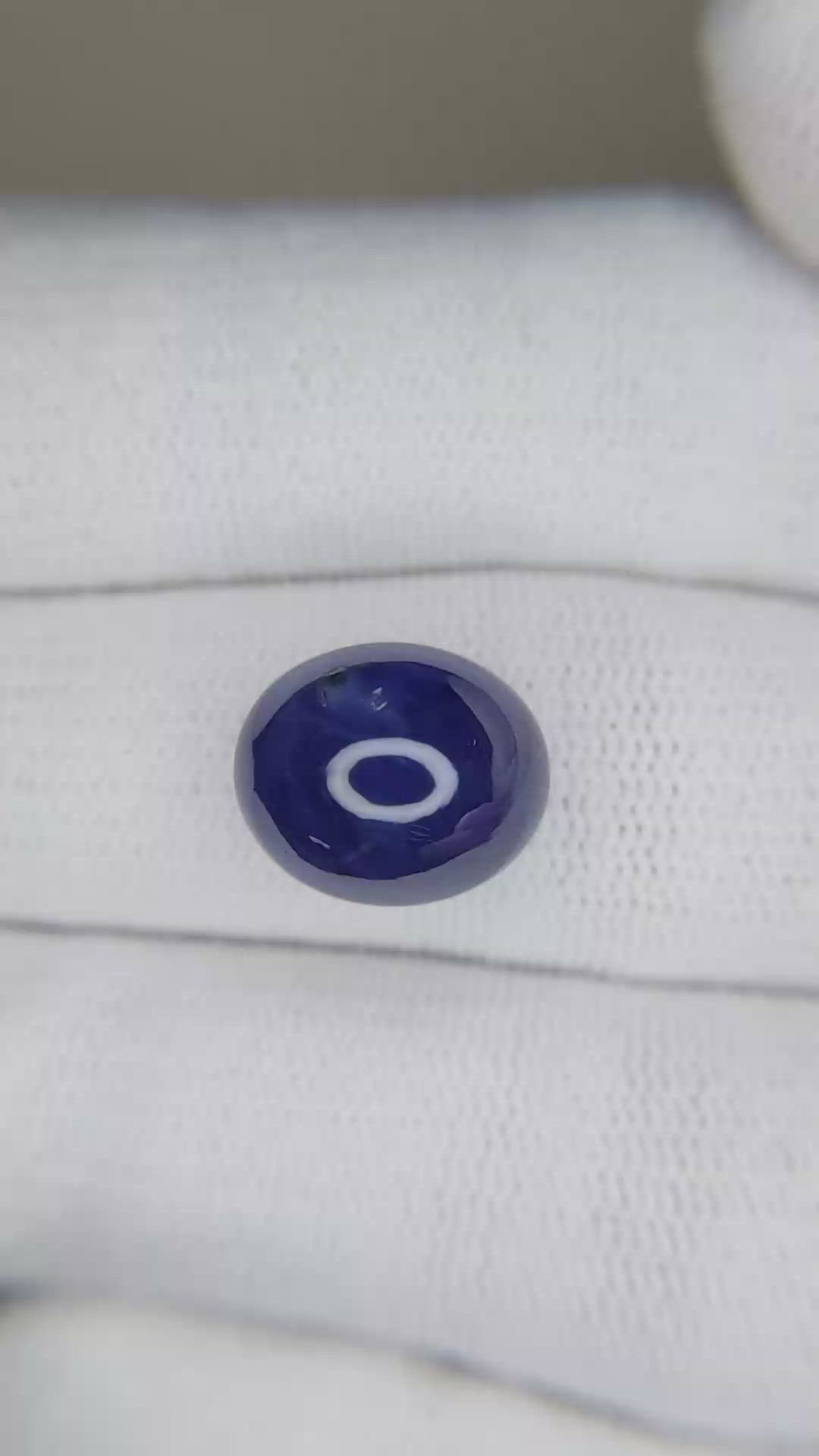
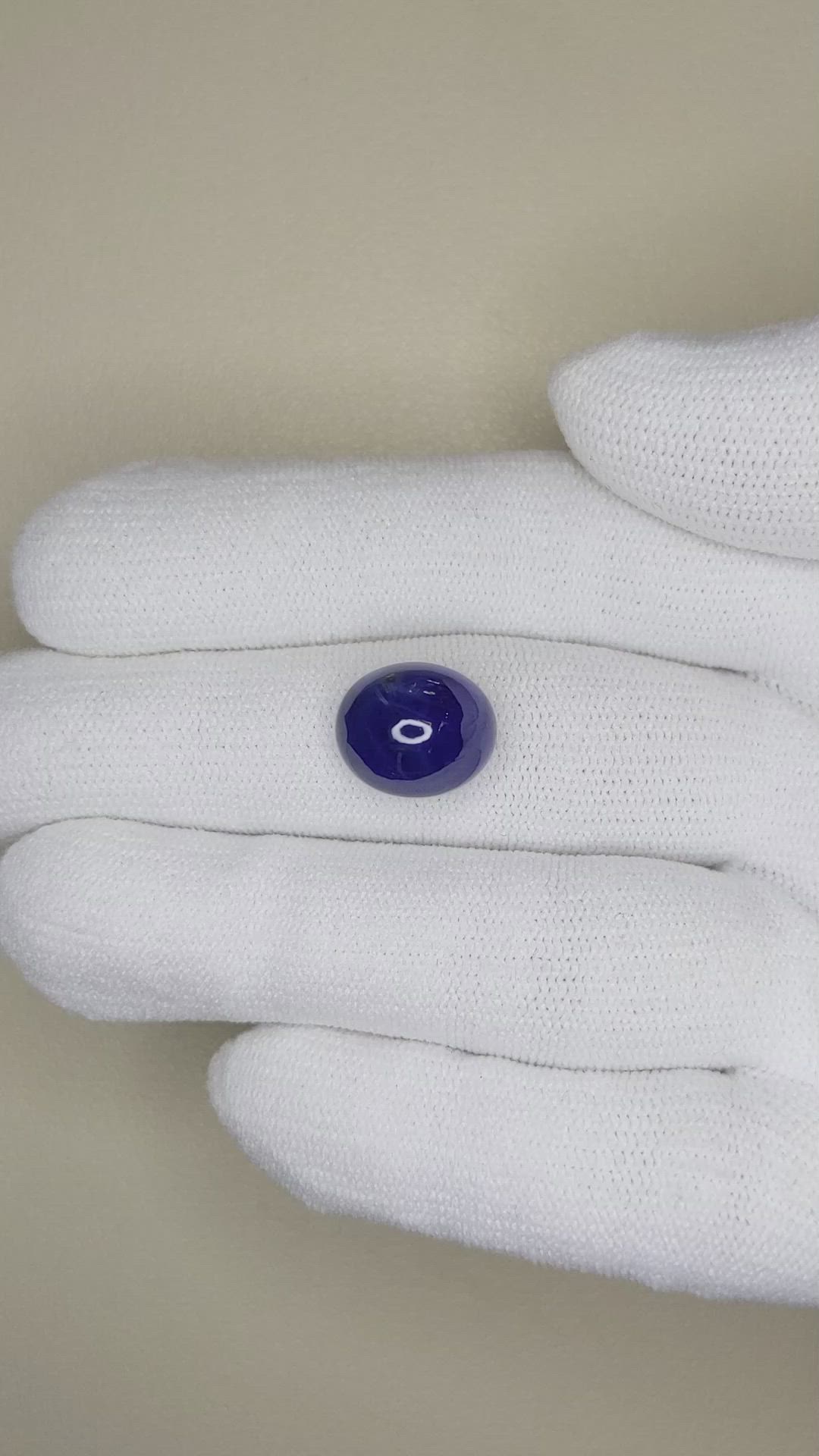
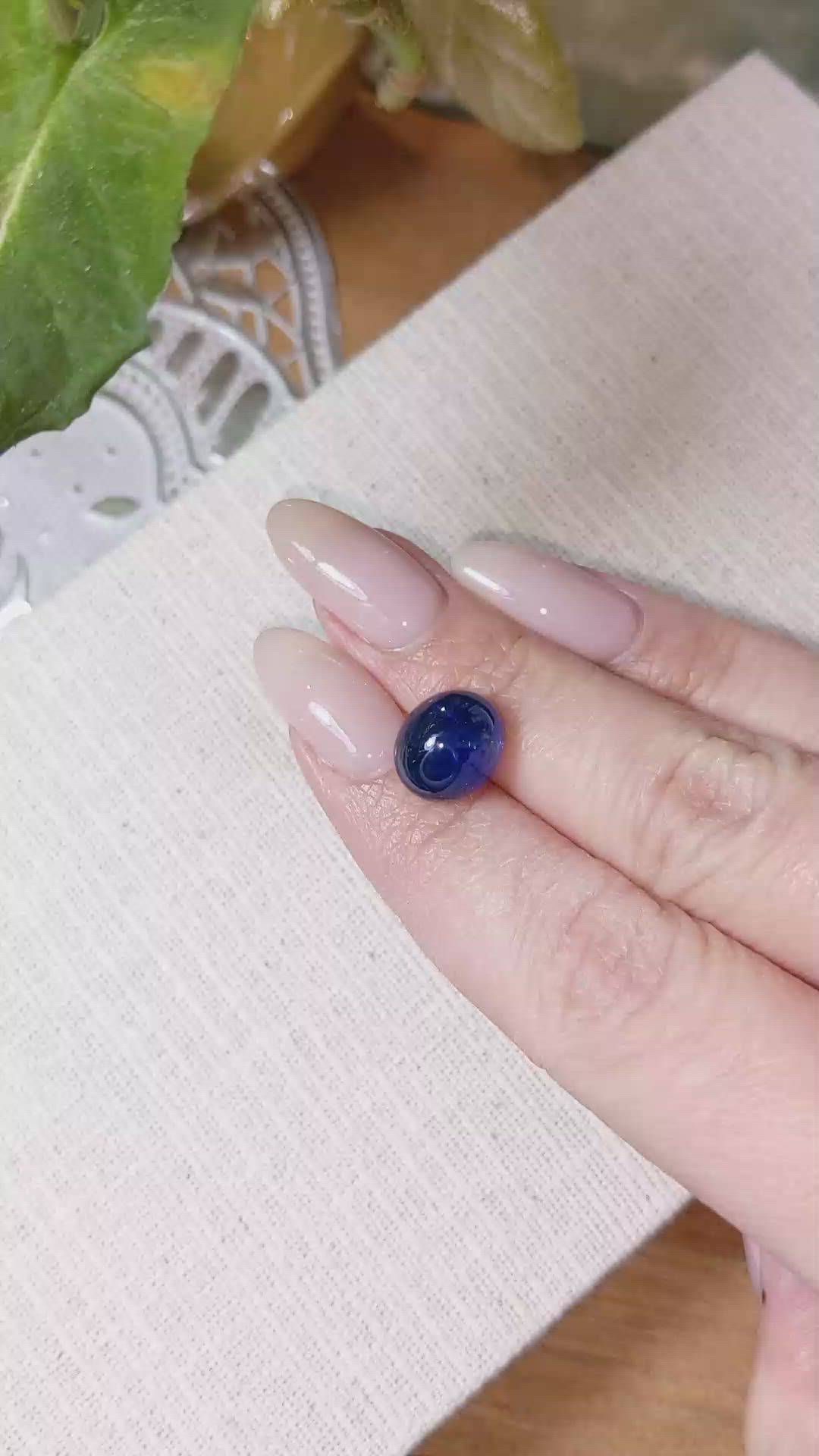
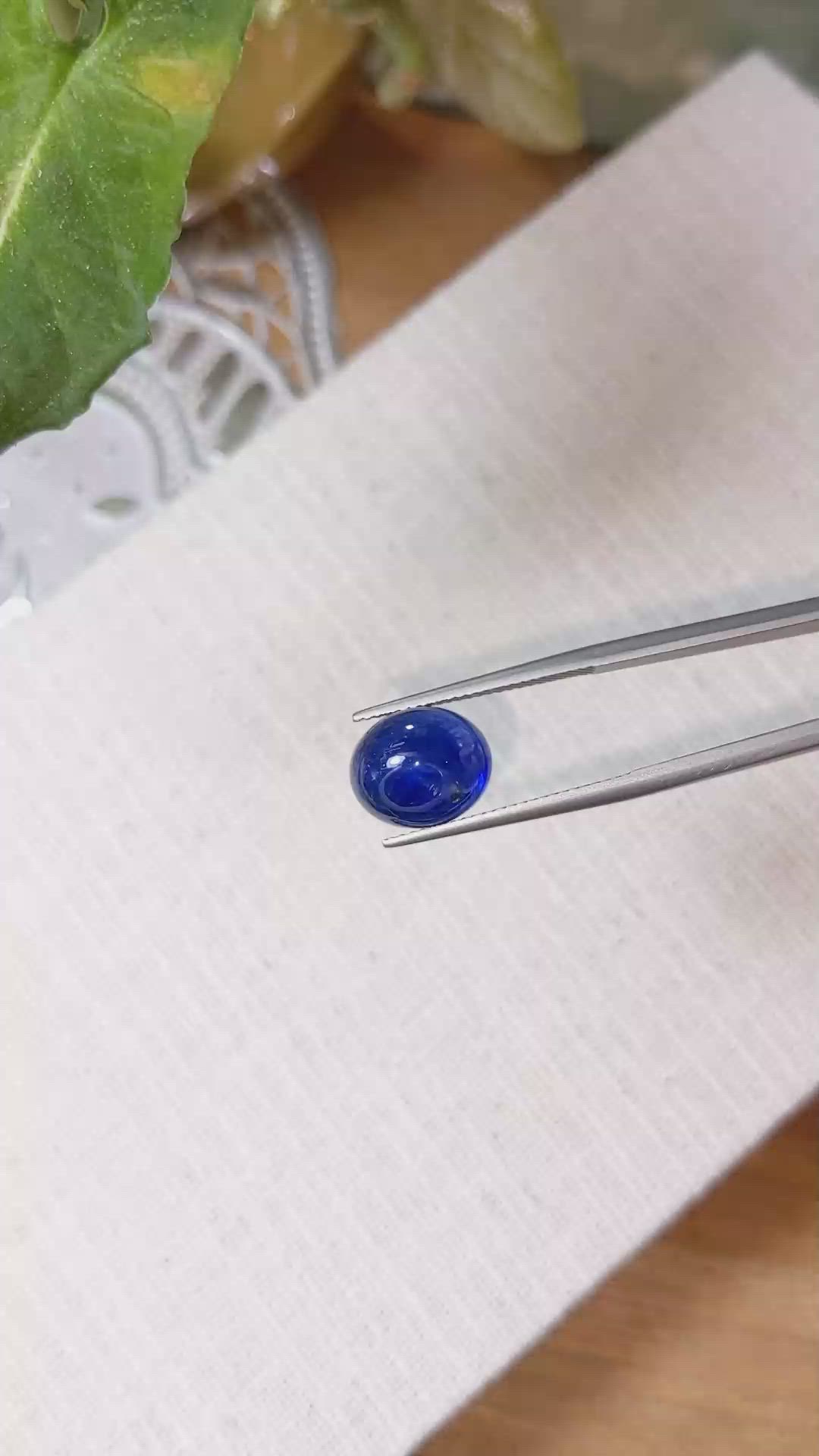
9.68 Ct. Blue Cabochon Sapphire from Ceylon (Sri Lanka)
This loose stone is available to ship now
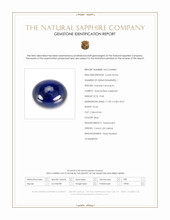
Item ID: | S35867 |
|---|---|
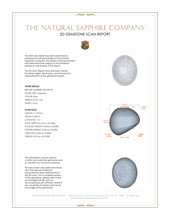
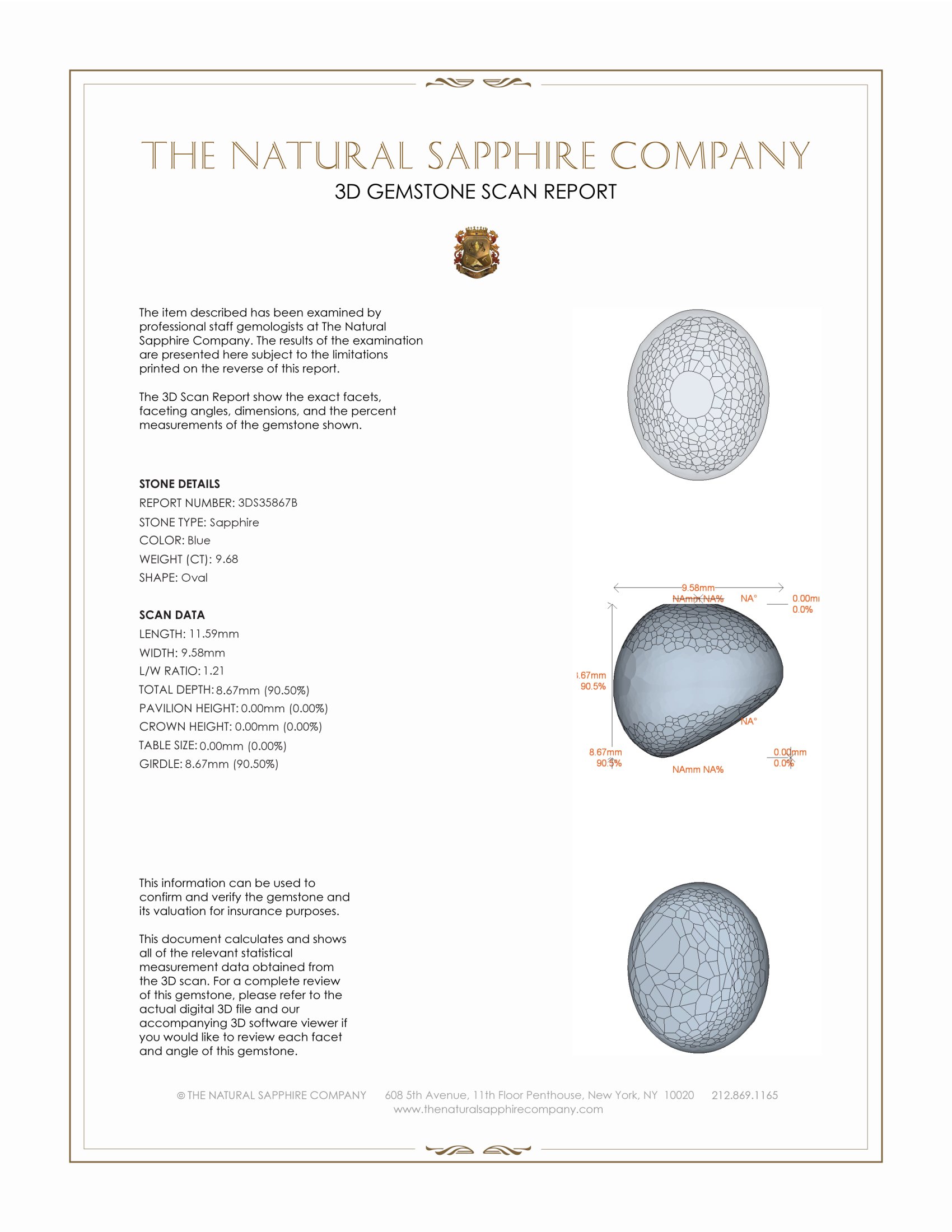
Dimensions (MM): help | Length: 11.59 Width: 9.58 Height: 8.67 |
Weight: | 9.68 Ct. |
Color: help | Blue |
Color intensity: help | Vivid |
Clarity: help | Slightly Included |
Shape: help | Oval |
Cut: | Cabochon |
Cutting style: | Cabochon |
Enhancements: help | Heat Treated |
Origin: help | Ceylon (Sri Lanka) |
Per carat price: help | $833 |
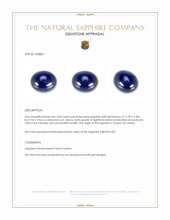
This specimen is a translucent blue sapphire weighing 9.68 carats, presented in a classic oval outline with dimensions of 11.59 by 9.58 by 8.67 millimeters. The gem has been fashioned as a cabochon, a cut that emphasizes the stone’s internal depth and color continuity rather than faceted light return. At eye level the clarity is graded as slightly included, meaning minor inclusions are present but do not materially distract from the overall appearance when viewed without magnification. The color displays a vivid intensity, concentrated and evenly distributed across the cabochon’s dome, and the surface exhibits an excellent polish that preserves luster and tactile quality. The sapphire has been heat treated, a widely accepted enhancement in the trade that stabilizes and intensifies color while leaving the crystal structure intact. Origin is established as Ceylon in Sri Lanka, a provenance historically associated with sapphires that combine bright, saturated blue tones with a degree of translucency that cabochon cuts particularly showcase.
Ceylon origin confers specific, recognizable qualities and market perception. Sri Lankan sapphires are often prized for their lively, medium to vivid blue hues and a certain clarity profile that can include fine silk or needle inclusions, features which can enhance diffusion of color when polished as cabochons. Heat treatment is a standard and disclosed process for many Ceylon sapphires, and when properly conducted it improves color uniformity and appeal without compromising structural integrity. The slightly included clarity grade in this example is consistent with many natural Ceylon stones of significant size and color, and these minor inclusions can serve as natural fingerprints for provenance verification should further gemological testing be undertaken. The cabochon form highlights the stone’s translucency and color saturation, providing a strong visual presence that differs from faceted stones yet remains highly desirable for collectors and designers seeking a more classical or artistically restrained aesthetic.
From an investment perspective, a number of factors underpin the potential for future appreciation. Size is a primary driver of rarity and value, and a near 10 carat weight in a vivid blue sapphire from Ceylon places this gem in a relatively limited supply tier. Color intensity and consistency are critical, and the vivid saturation observed here aligns with market preferences that favor stones with strong, uniform tone and chroma. Provenance from Sri Lanka adds a layer of desirability because collectors and buyers often attach a premium to recognized localities. The disclosed heat treatment must be accounted for in valuation; while untreated natural sapphires can command substantial premiums, heat treated Ceylon sapphires of high visual quality remain attractive and frequently more marketable due to greater availability and more predictable performance in finished jewelry. The cabochon cut has specific collector appeal and can be particularly sought after in markets that value classical and cultural gemstone forms, including collectors interested in historically influenced pieces or designers working in bespoke, high-end jewelry. Liquidity and appreciation will depend on broader market cycles, the buyer’s ability to document provenance and treatment, and the presence of reputable intermediaries or auction channels that recognize the gem’s attributes.
Long-term stewardship and documentation will materially affect both preservation of value and future resale potential. Proper setting that protects the cabochon’s dome from abrasion and impacts is advisable, as is routine care to maintain polish and surface condition. Insurance valuation and periodic re-appraisal will provide accurate market value snapshots over time, and independent gemological reports or provenance documentation enhance buyer confidence and facilitate trade. For investors and collectors evaluating this piece, The Natural Sapphire Company’s handling and disclosure of origin, treatment, and full specifications contribute to provenance integrity and marketability. This 9.68 carat Ceylon cabochon presents a balance of size, vivid color, and classical form that is consistent with both collection-grade holdings and the creation of heirloom jewelry. While no gemstone investment is without market variability, the combination of measurable attributes in this sapphire supports a reasoned expectation of long-term desirability and potential appreciation, contingent on careful custody, transparent documentation, and selection of appropriate resale channels.


