
- Stone13
- Reports3


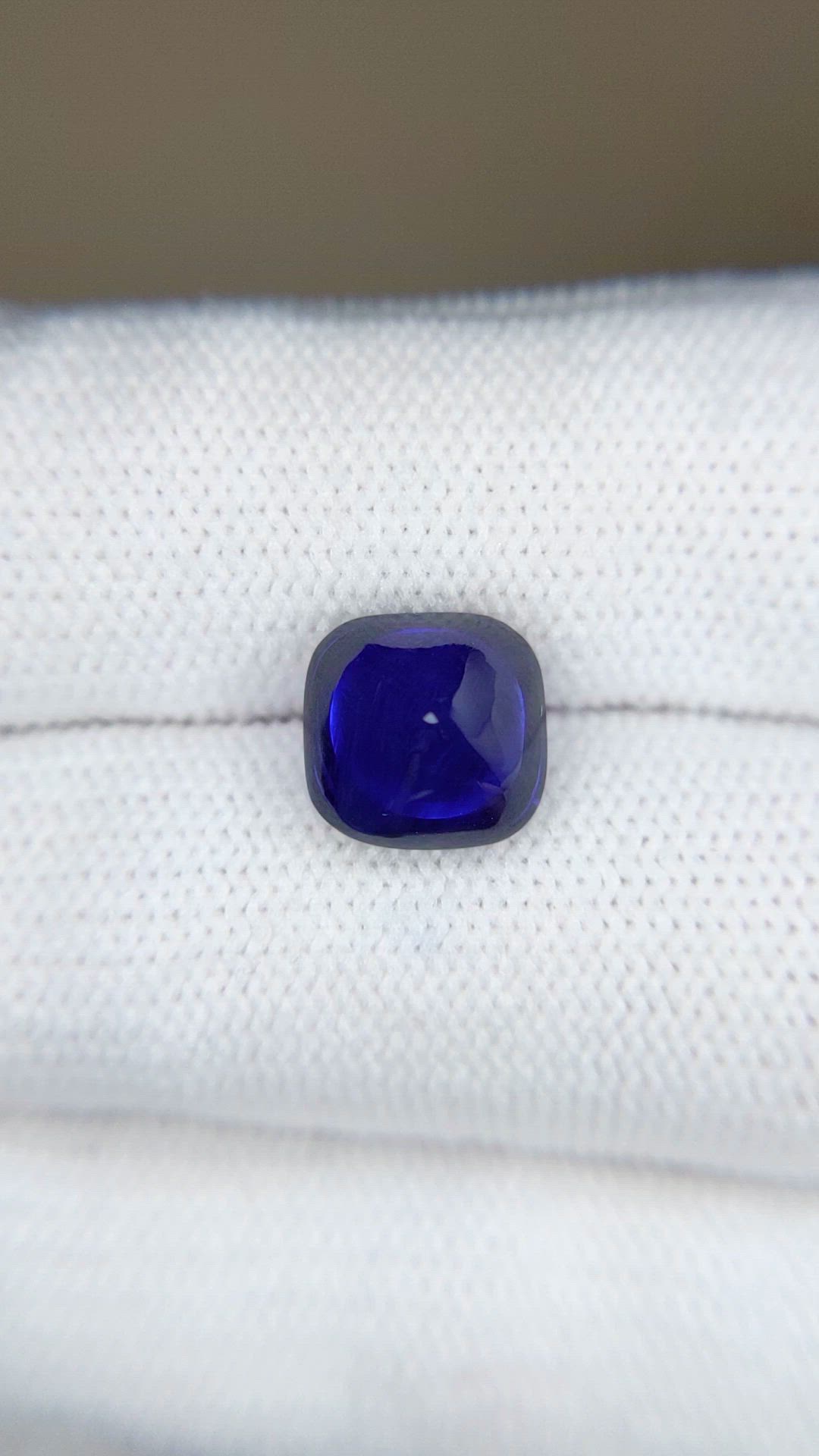
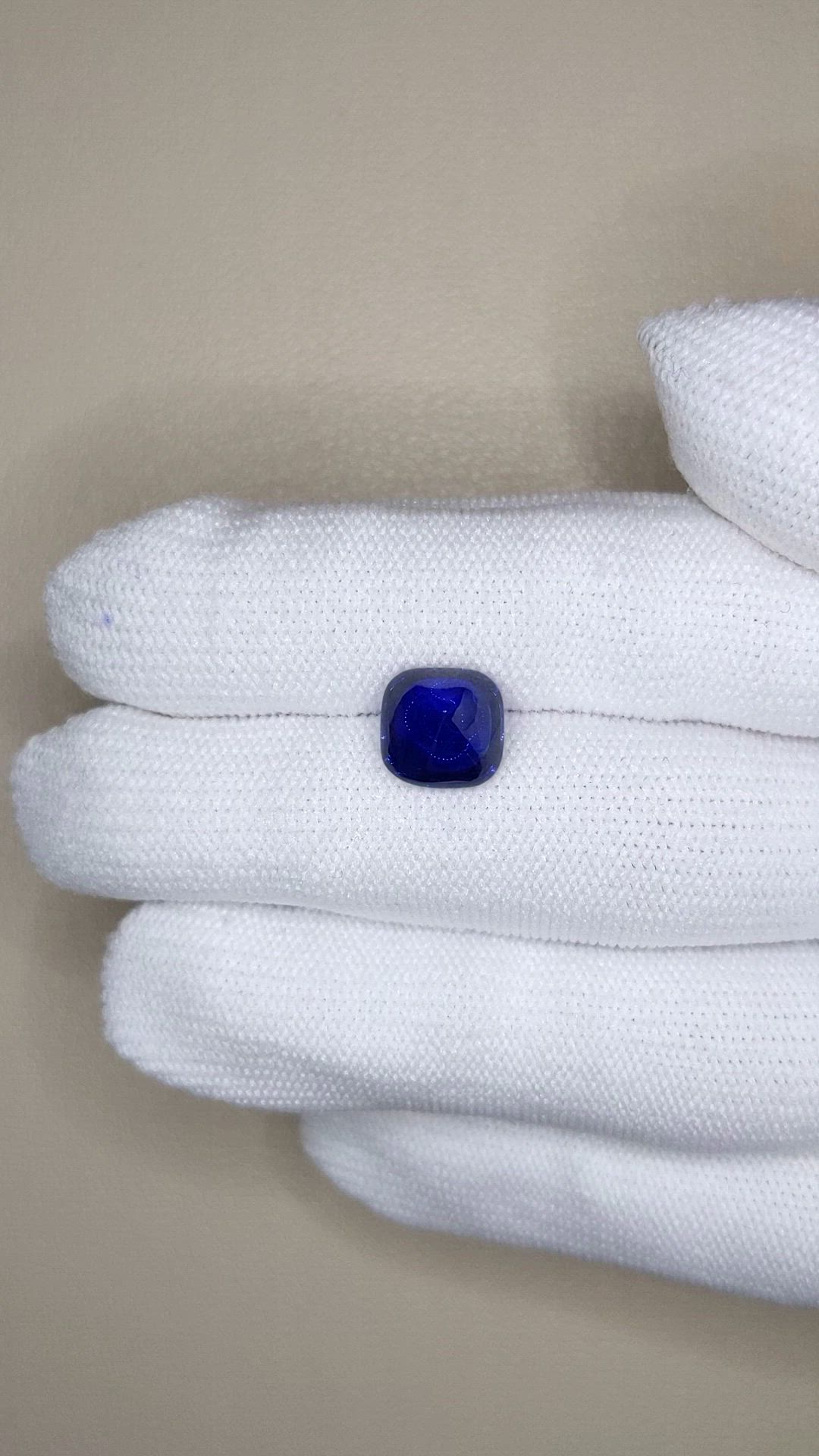
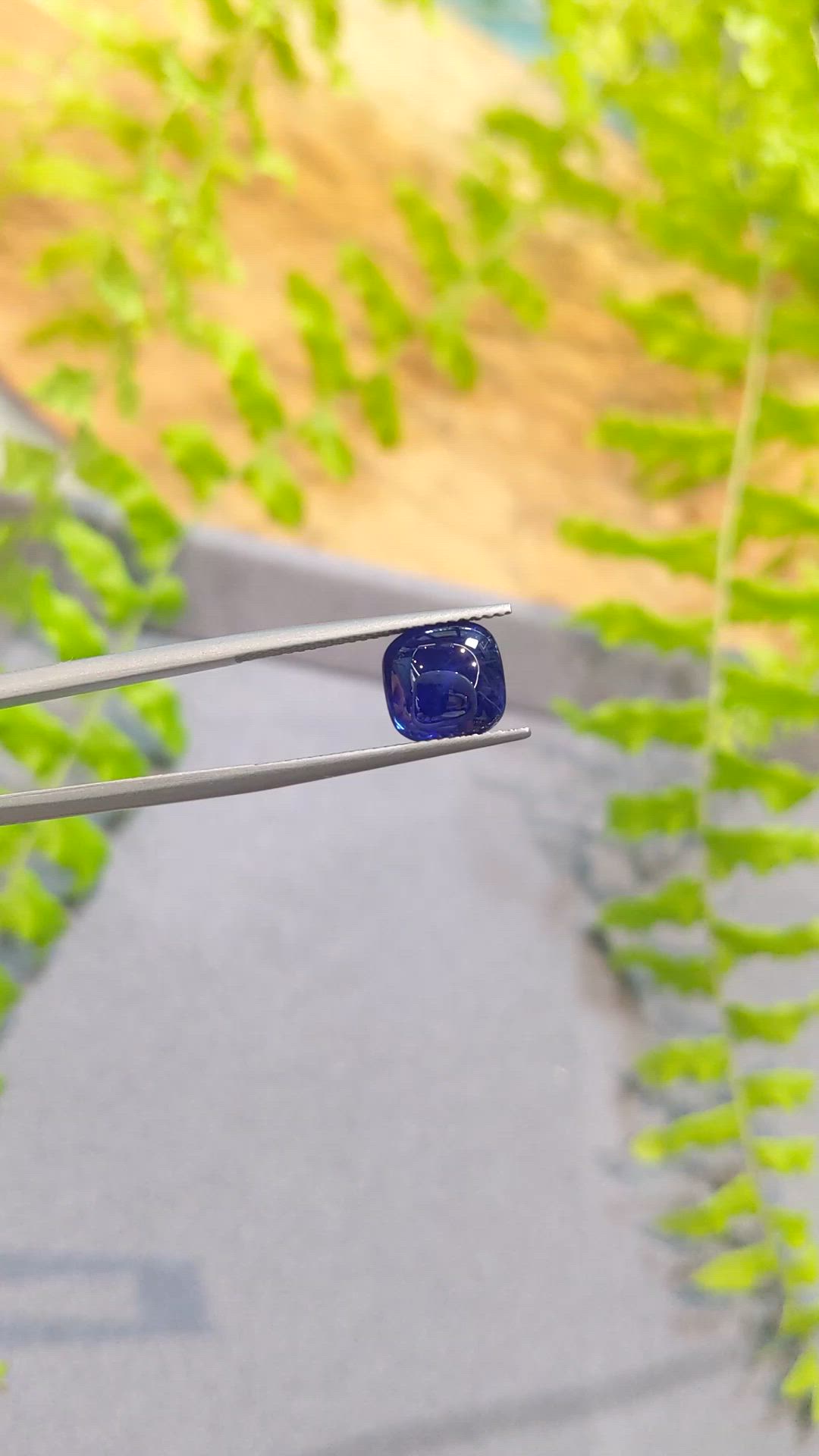
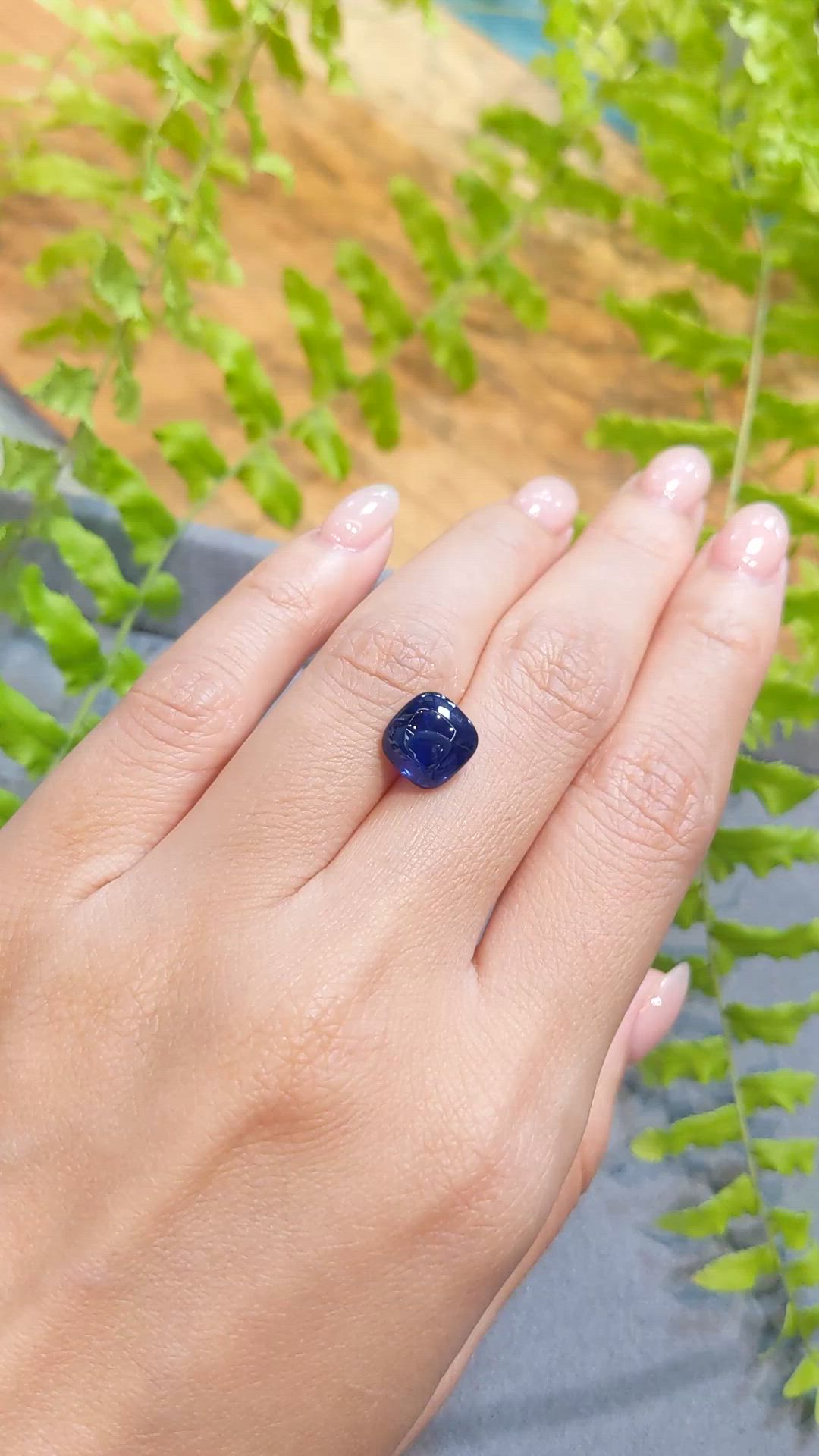




4.65 Ct. Blue Cabochon Sapphire from Ceylon (Sri Lanka)
This loose stone ships by Nov 11
Item ID: | S47140 |
|---|---|
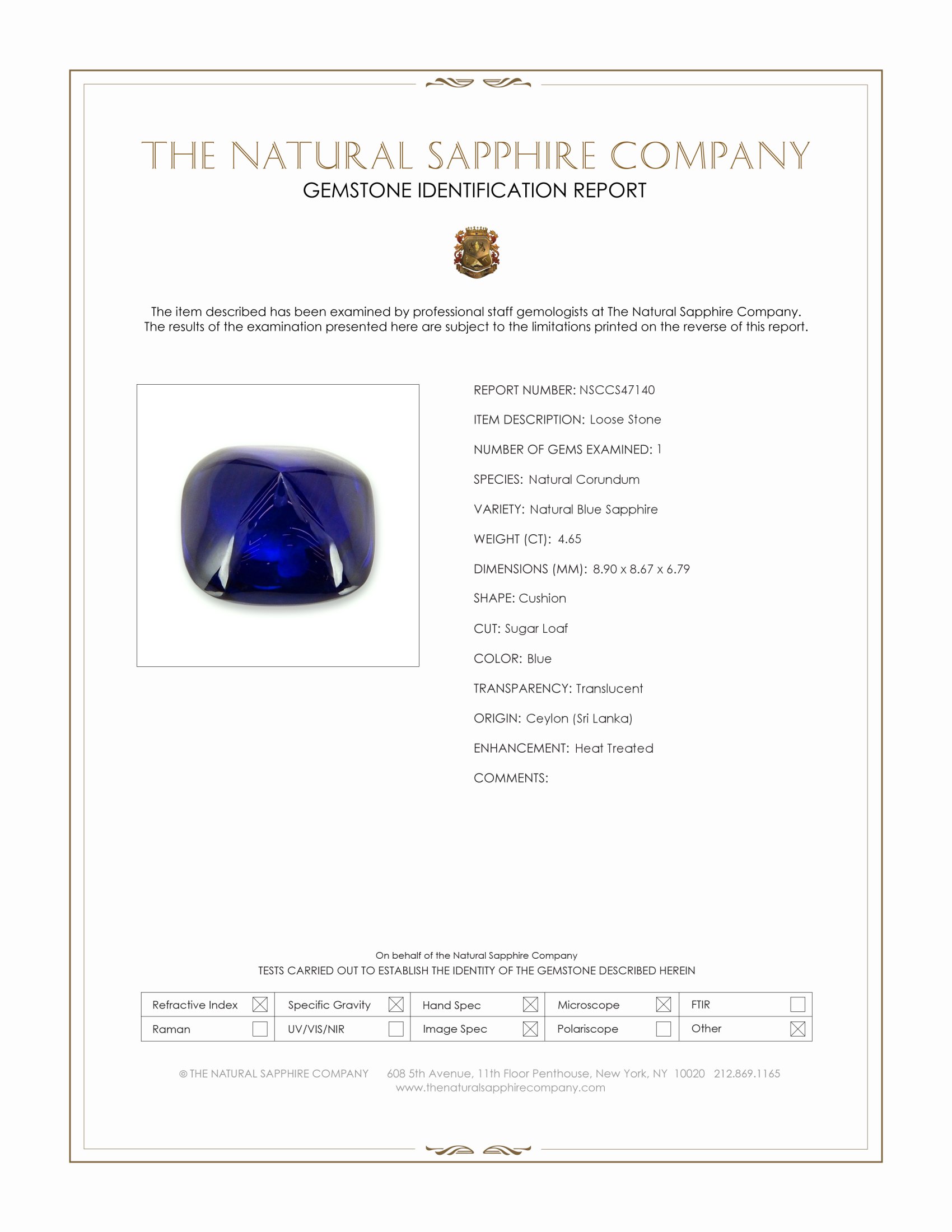
Dimensions (MM): help | Length: 8.9 Width: 8.67 Height: 6.79 |
Weight: | 4.65 Ct. |
Color: help | Blue |
Color intensity: help | Vivid |
Clarity: help | Very Slightly Included |
Shape: help | Cushion |
Cut: | Sugar Loaf |
Cutting style: | Cabochon |
Enhancements: help | Heat Treated |
Origin: help | Ceylon (Sri Lanka) |
Per carat price: help | $2,550 |
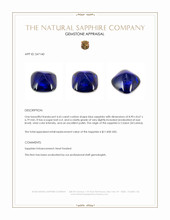
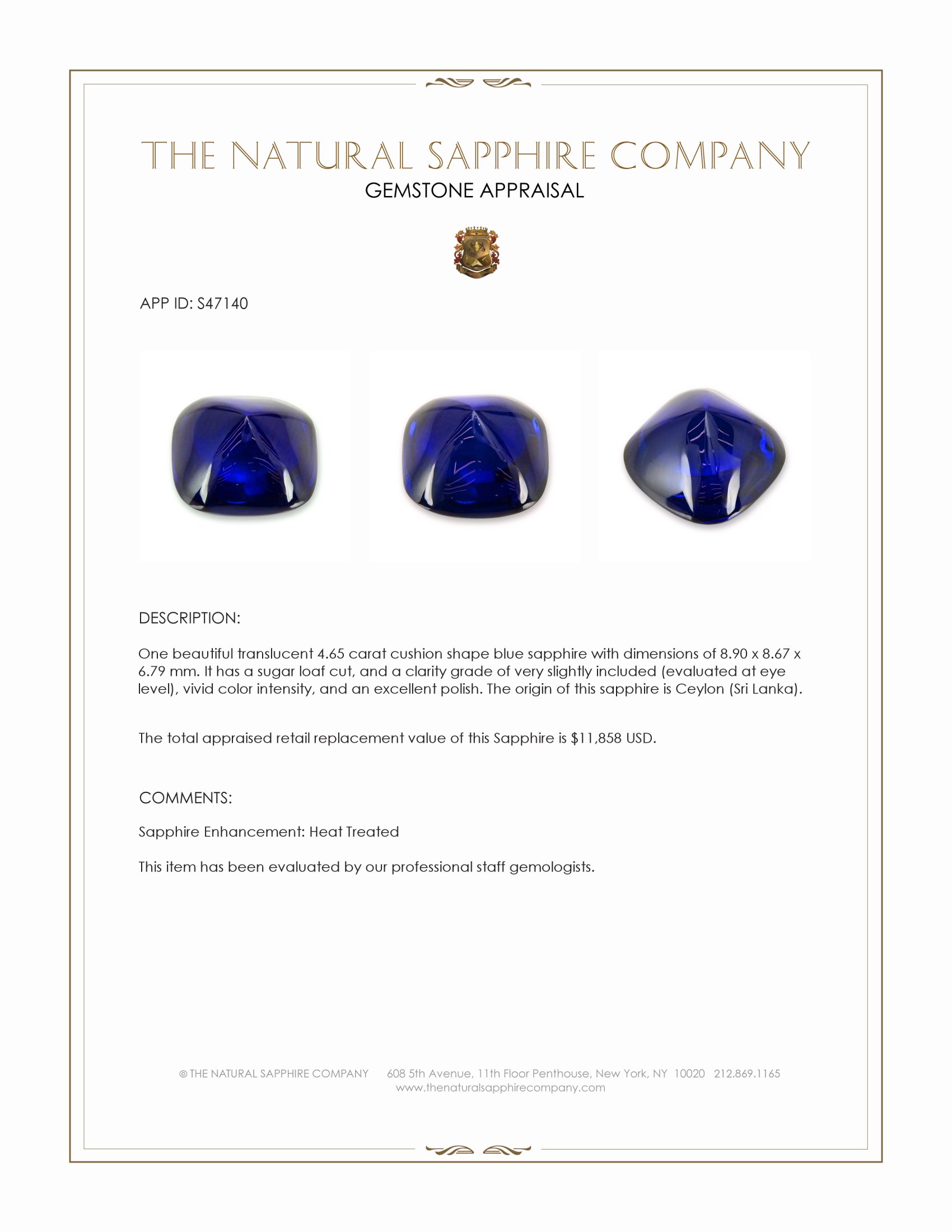
This piece is a 4.65 carat cushion shape blue sapphire, presented as a cabochon with a classic sugar loaf cut, measuring 8.90 by 8.67 by 6.79 mm. The cutting style is intentionally non faceted, with a high central dome and gently rounded pavilion that maximize color depth and internal light diffusion rather than facet driven sparkle. Clarity is graded very slightly included, evaluated at eye level, which in practical terms means only minimal internal features are detectable without magnification and they do not interrupt the even field of color. Color intensity is vivid throughout the table and crown, and the surface finish is an excellent polish that yields a reflective, mirror like surface across the dome. This sapphire has been heat treated to optimize hue and saturation, and it is identified as originating from Ceylon Sri Lanka, a source known for producing stones with lively, saturated blues and clean crystalline character. The Natural Sapphire Company presents this stone as a specimen that emphasizes color and presence over faceted scintillation.
From an optical and gemological perspective this sugar loaf cabochon behaves differently from faceted gems, and those distinctions inform both aesthetic choice and technical handling. Corundum, the species to which sapphire belongs, has a refractive index around 1.76 to 1.77 and low dispersion relative to diamond, which means that faceted sapphires display limited fire but can return strong color and directional light due to facet geometry and pleochroism. In a cabochon the cutter abandons facet geometry in favor of controlled thickness and dome curvature, producing a continuous internal glow rather than a pattern of flashes. The deep vivid blue in this example benefits from the dome height and uniform thickness, which create saturated color when viewed face up, and reduce apparent color zoning by averaging transmitted and reflected light. The excellent polish enhances specular reflection, giving the dome a glossy sheen that reads as both lively and velvety under varied lighting.
When compared to more commonly encountered gemstones the visual and technical contrasts become apparent. Compared with faceted blue sapphires, especially those cut as cushion or oval mixed cuts, this cabochon will not exhibit facet driven brilliance or scintillation, instead offering a more monochromatic and intense color presence. Against diamond, which owes its brilliance to a high refractive index and strong dispersion, this sapphire is subtler, relying on saturated chroma and surface gloss rather than fire. Compared with tanzanite, which can show strong pleochroism and a lighter body color when faceted, this Ceylon sapphire is significantly more durable and displays a stable deep blue that is less dependent on viewing angle. Spinel, when faceted, can approach sapphire in sparkle and often appears brighter due to slightly higher light return when polished with facets, but it typically lacks the specific corundum hue profile and the historical desirability of natural sapphire from Sri Lanka. In short, the sugar loaf cabochon stands out by prioritizing color saturation and surface luster over facet generated brilliance, providing a presence that reads as more jewel like and intensely chromatic than many faceted alternatives.
From a craftsmanship and mounting standpoint the attributes of this stone guide practical choices and conservation. The cutter maintained a well centered dome apex and consistent pavilion curvature to preserve optical evenness, while the excellent polish minimizes microabrasions that could prematurely diminish surface reflection. Given the dome and dimensions a bezel or partial bezel setting is recommended to protect the periphery and secure the stone, while an open back or simple prong mount will expose the pavilion and allow more light transmission for use in a pendant. The stone responds well to low profile settings for rings designed to showcase face up color, and its 4.65 carat weight and cushion footprint make it suitable for statement rings or solitaire pendants. Routine care includes avoiding harsh ultrasonic cleaning and limiting exposure to strong acids or prolonged heat beyond normal wear, because although the stone is durable and heat treated, surface seals and polishing can be affected by aggressive treatment. The Natural Sapphire Company can advise on bespoke mounting options and provide additional gemological documentation on request, to ensure the cutting characteristics and origin are respected in the final piece.


