
- Stone15
- Reports3

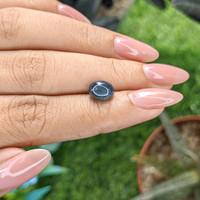
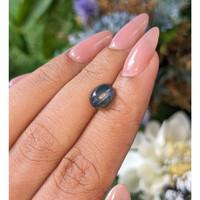
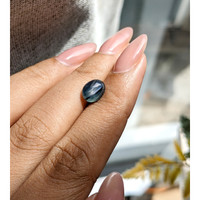
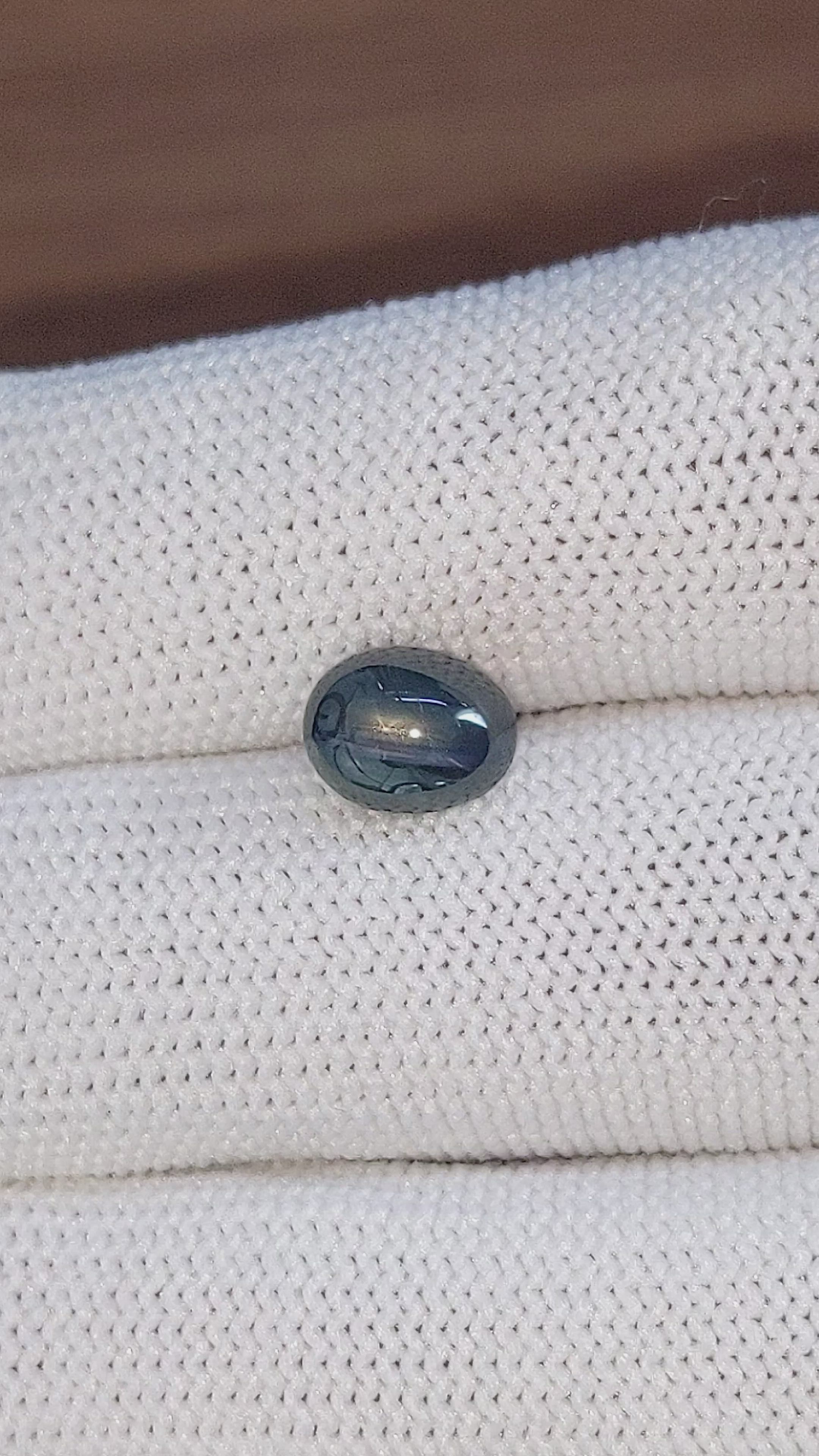
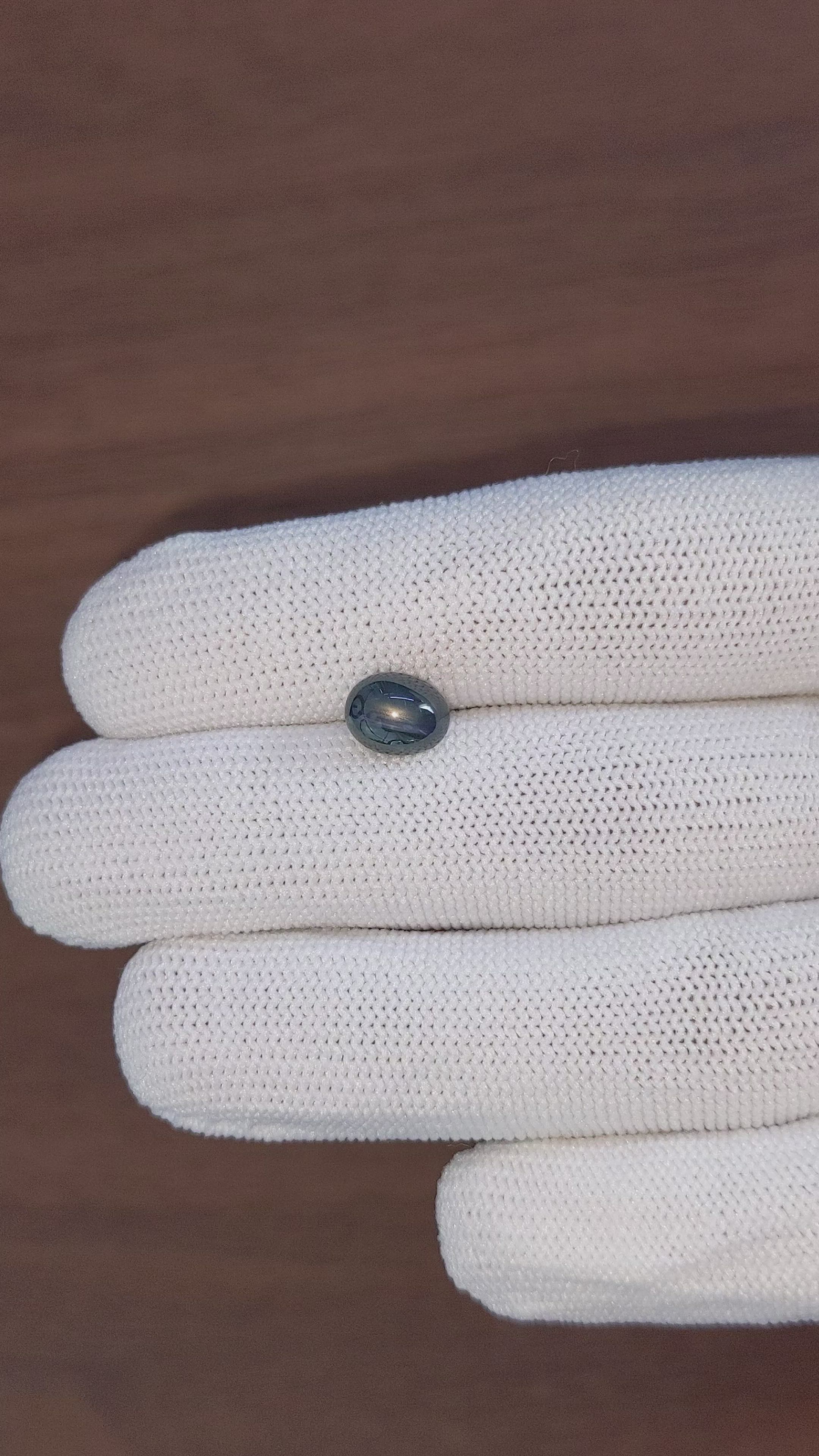
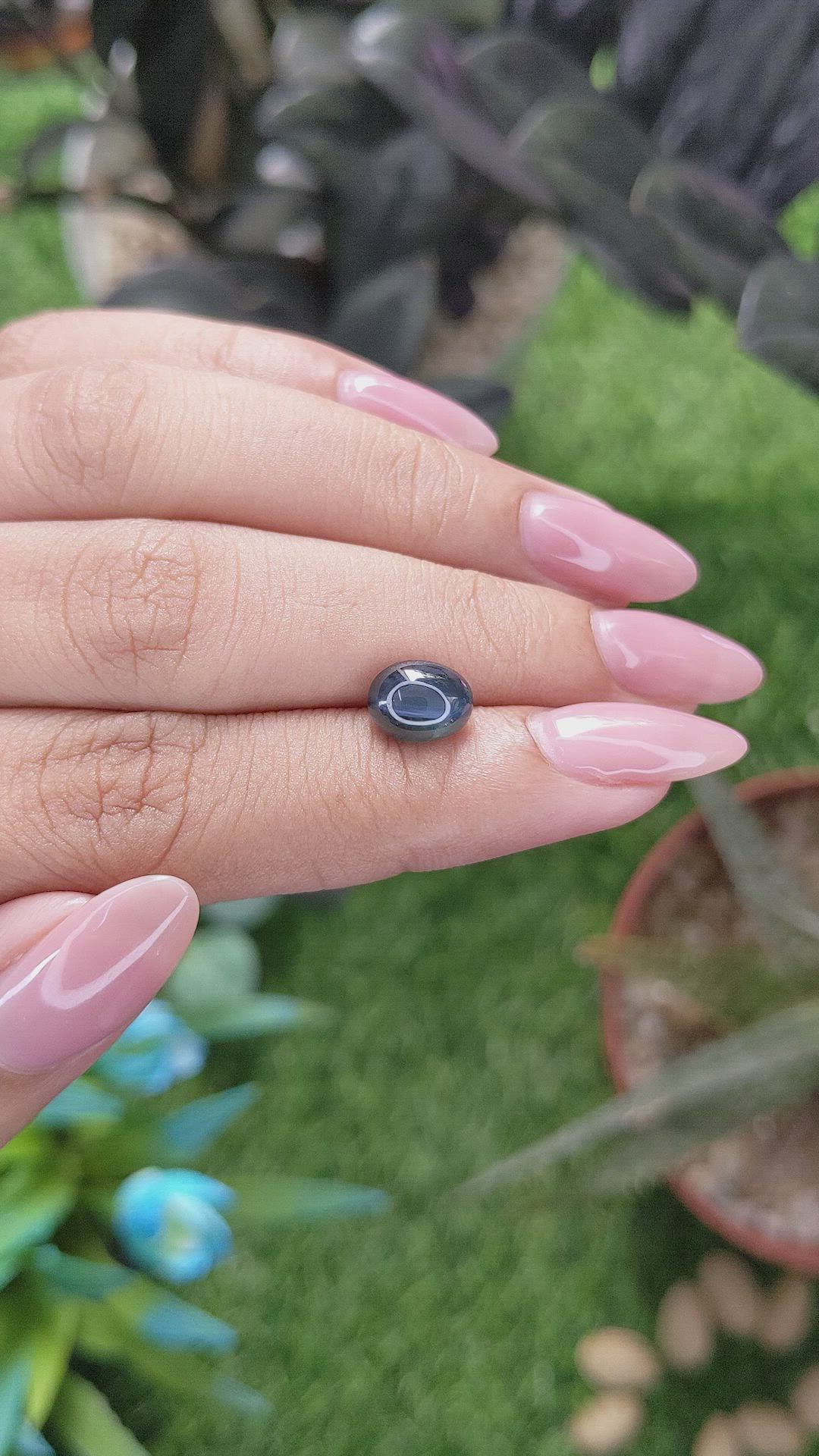
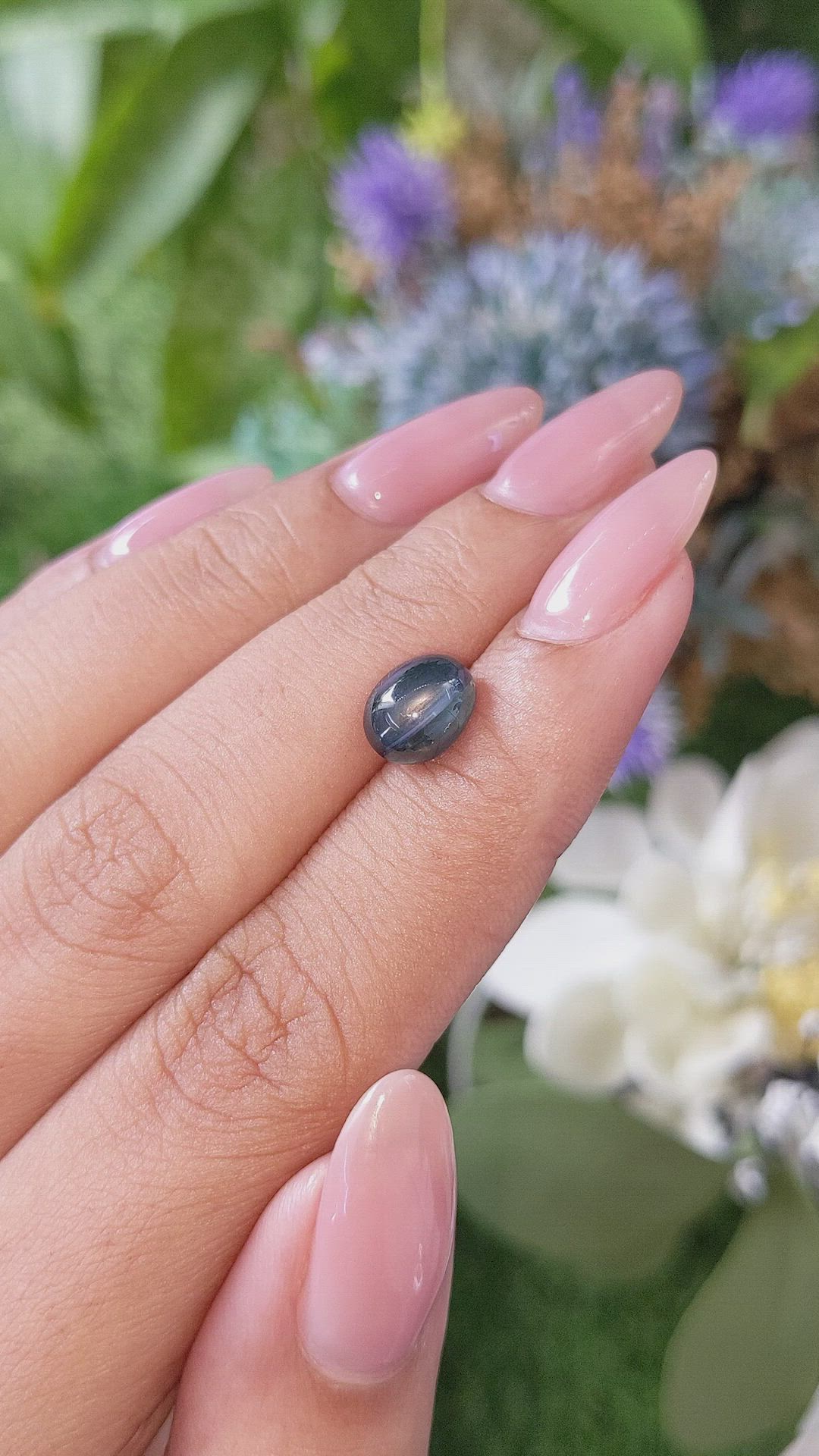
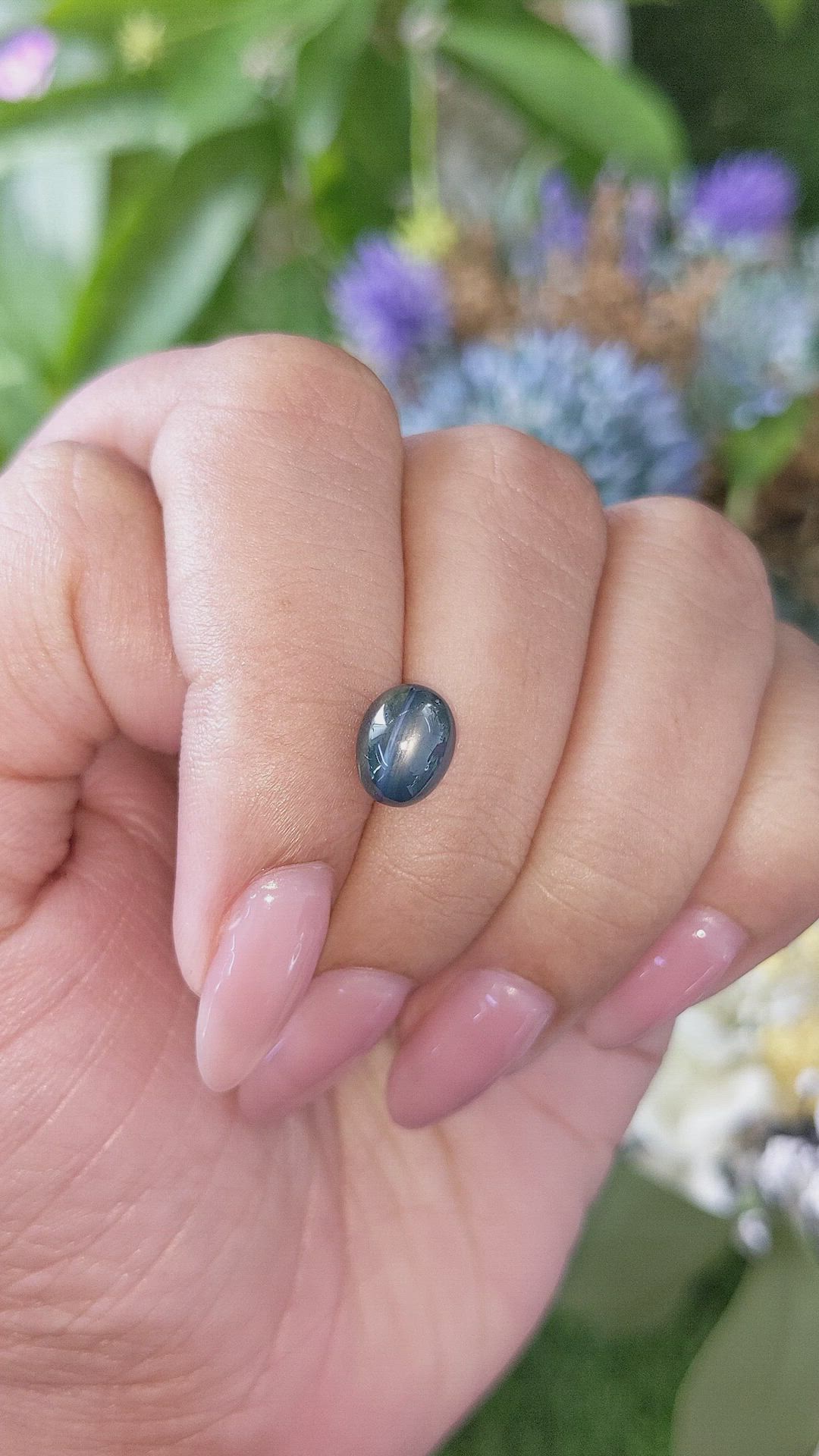
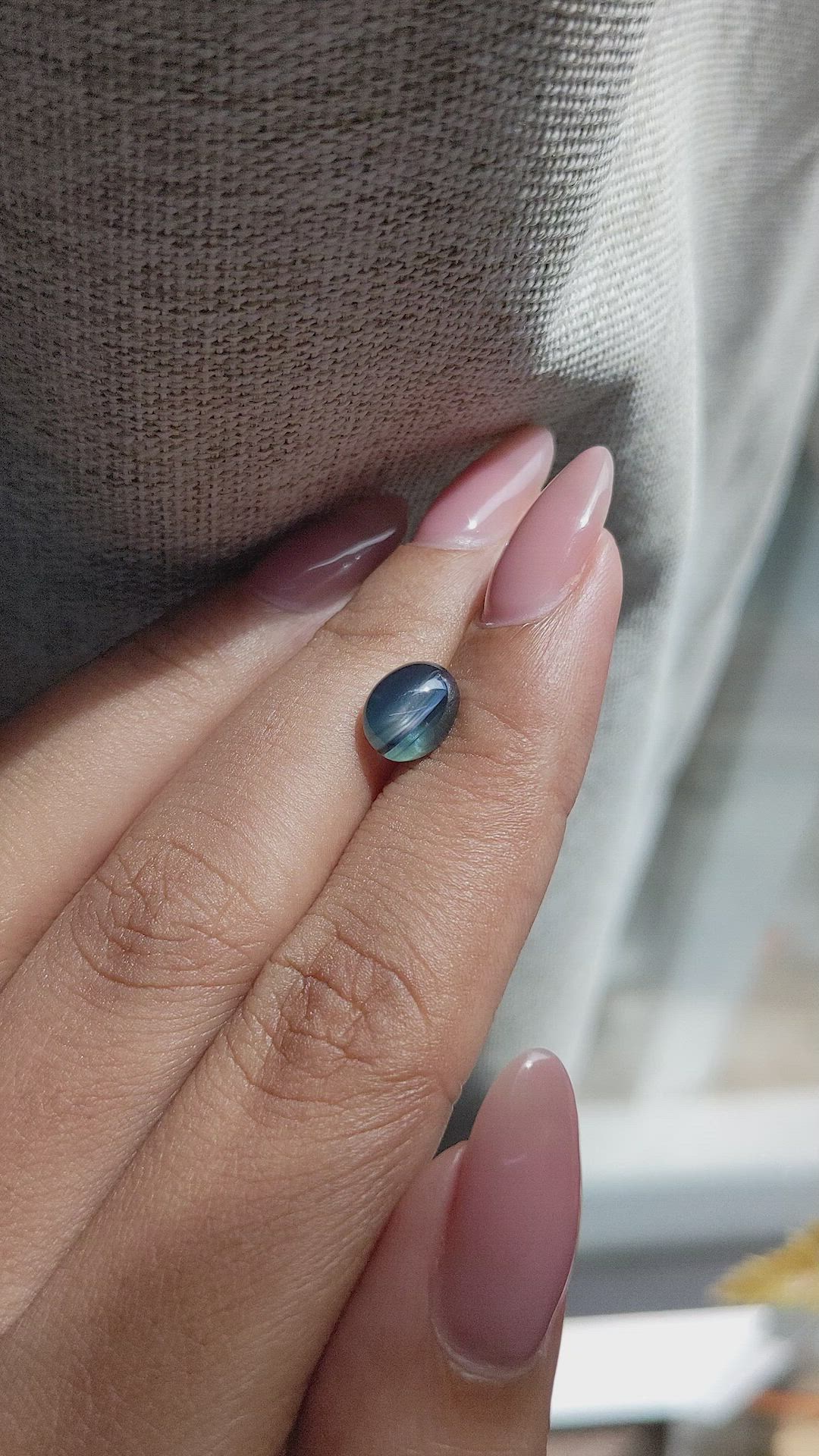


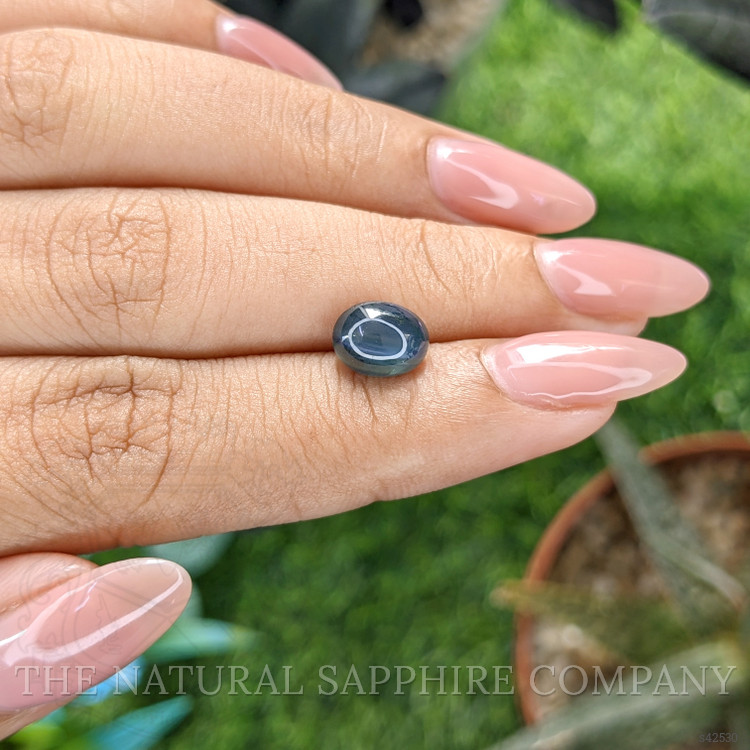
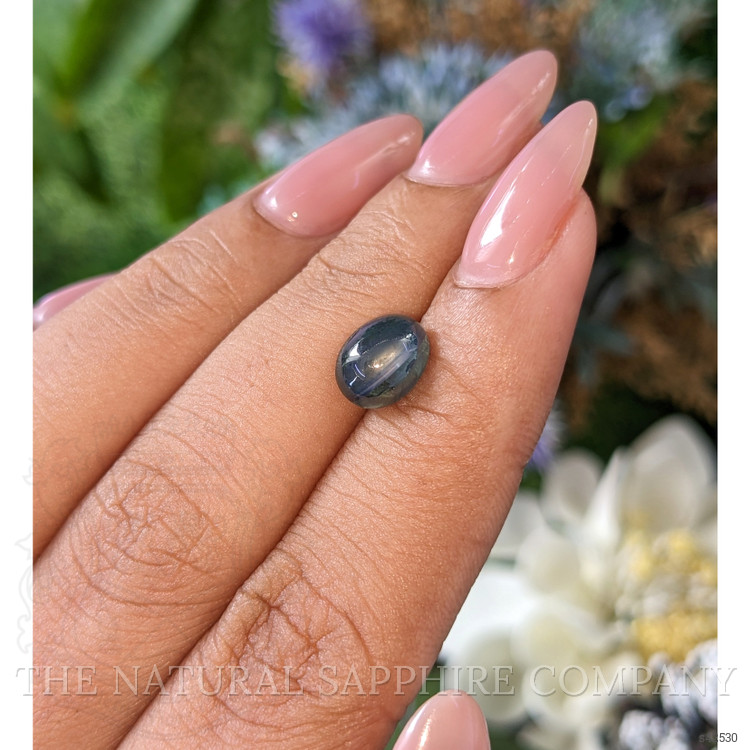
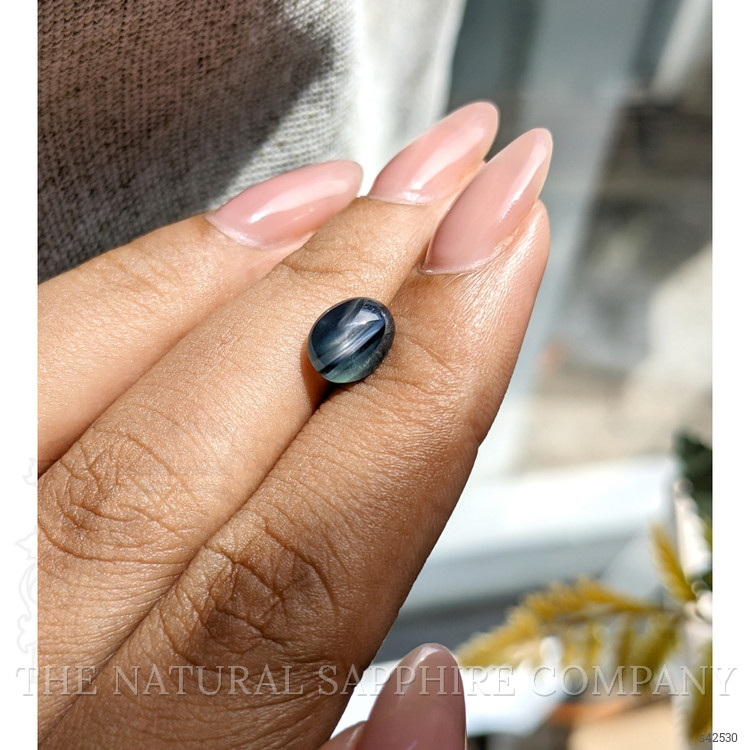


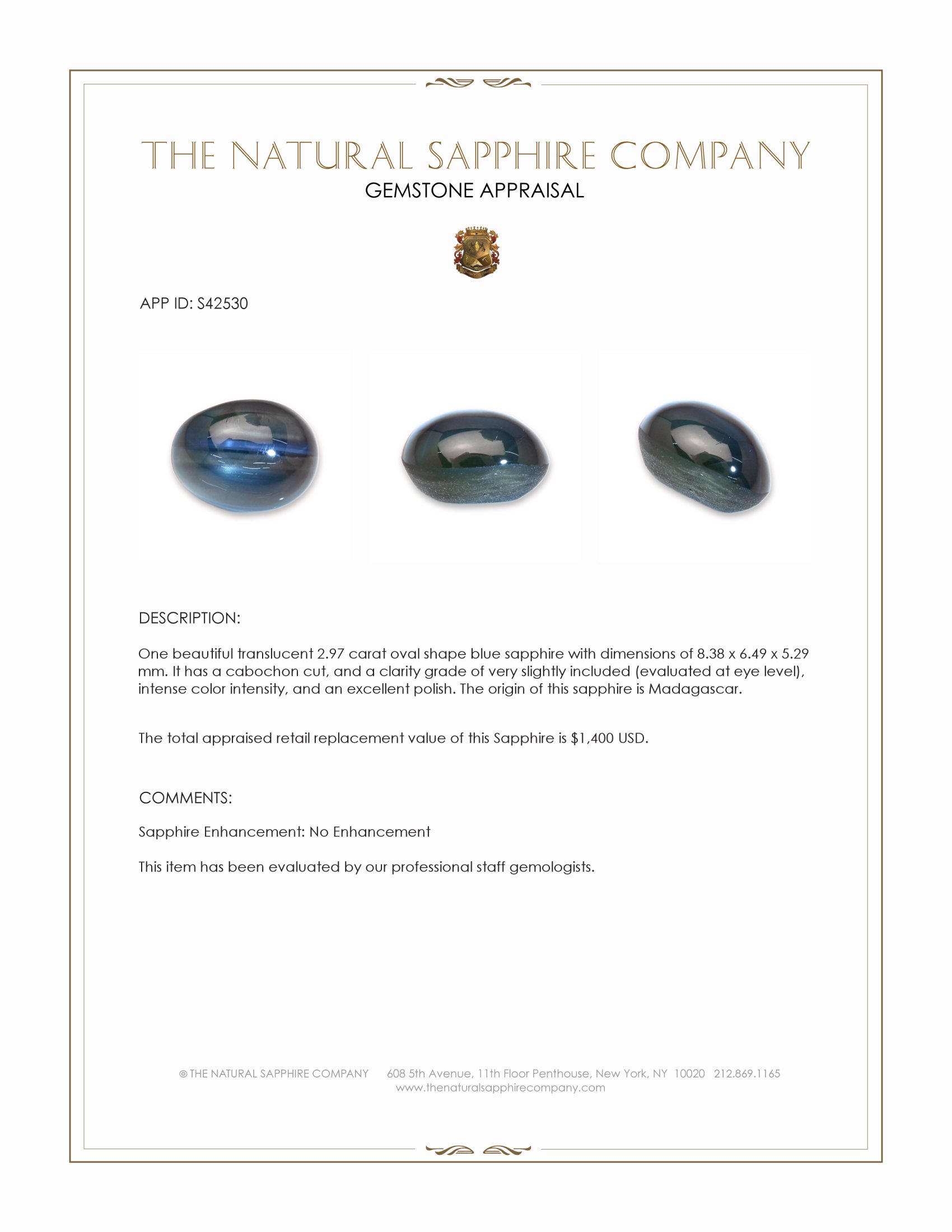
2.97 Ct. Blue Cabochon Sapphire from Madagascar
Item ID: | S42530 |
|---|---|
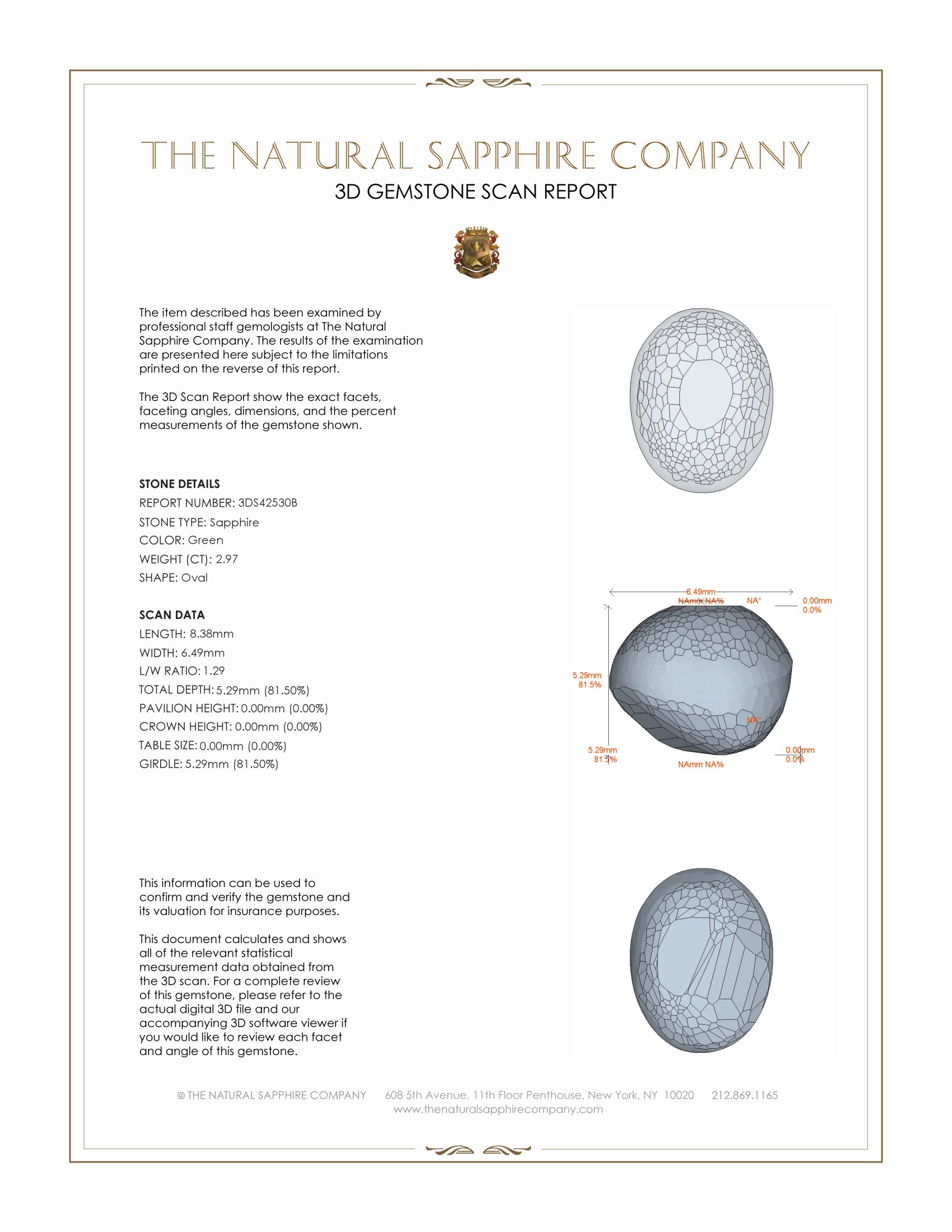
Dimensions (MM): help | Length: 8.38 Width: 6.49 Height: 5.29 |
Weight: | 2.97 Ct. |
Color: help | Blue |
Color intensity: help | Intense |
Clarity: help | Very Slightly Included |
Shape: help | Oval |
Cut: | Cabochon |
Cutting style: | Cabochon |
Enhancements: help | No Enhancement |
Origin: help | Madagascar |
This translucent oval cabochon sapphire weighs 2.97 carats and measures 8.38 by 6.49 by 5.29 millimeters, presenting an optimized dome for color concentration and surface reflection. The cabochon cut preserves the integrity of the corundum crystal, and the dome height of 5.29 millimeters was selected to avoid windowing while maximizing the perceptible depth of the intense blue body color. Clarity is graded as very slightly included at eye level, indicating only minor needle or silk inclusions that do not compromise the overall translucency or the continuity of the cabochon surface, and the gem shows an excellent polish that produces crisp surface reflections and a smooth, even luster. This sapphire is unheated and unenhanced, a significant factor for collectors and connoisseurs who prioritize natural color, and it is sourced from Madagascar, a locality known for producing saturated blues with distinctive trace element chemistry that contributes to rich tone and stable color. On a material property level corundum has a refractive index approximately 1.762 to 1.770 and a hardness of nine on the Mohs scale, these parameters account for the strong color saturation and excellent polish retention you see in this piece.
From a cutting and optical perspective the cabochon form emphasizes different reflective behaviors than a faceted stone, and the domed geometry here yields a broad, soft specular reflection across the surface rather than the discrete faceted return that creates fire and scintillation. The cutting technique for this cabochon focuses on orienting the dome perpendicular to the principal pleochroic axis of the crystal to deliver uniform color when viewed face up, and the lapidary work appears to have aligned the minor silk inclusions into a coherent orientation that elongates the reflective band when light is swept across the dome. The excellent polish enhances both surface reflection and the internal scattering that produces a subtle inner glow, and because the gem is translucent rather than fully transparent light transmission is modulated to produce a deeper apparent color saturation at the center of the oval. Compared directly to a faceted blue sapphire of similar weight and color grade, this cabochon sacrifices faceted brilliance and strong directional sparkle in favor of sustained, even color and a velvety surface sheen, qualities that are particularly desirable for pieces seeking a classical, tactile aesthetic or for jewelry designs that rely on soft, continuous light reflection rather than flash.
When comparing reflective qualities within its category this Madagascar cabochon blue sapphire occupies a specific niche distinct from star sapphires, chatoyant chrysoberyl, moonstones, spinels and tourmalines. Star sapphires are also corundum but exhibit asterism due to densely parallel rutile silk, the resulting six ray star is typically sharp and centrally focused under a single overhead light, whereas this cabochon presents a broader, less defined linear sheen indicative of aligned silk or oriented inclusions that produce diffuse banding rather than a discrete star. Cat eye chrysoberyl commonly shows a very fine, pinpoint sharp cat eye because chrysoberyl has a higher optical clarity of banding relative to its body color and a refractive index in the range of approximately 1.746 to 1.755 which interacts with fibrous inclusions to yield a crisp effect that outperforms sapphire in edge definition, conversely the present sapphire benefits from deeper blue saturation and greater hardness which contribute to remarkable polish longevity. Compared with moonstone and adularescent gems this sapphire delivers higher color saturation and a subadamantine to vitreous luster owing to corundum optical constants, moonstone produces soft internal flashes from layered microstructures that are typically cooler and more ethereal, while this sapphire offers a denser, more jewel like face up appearance. Relative to spinel and tourmaline spinel may show excellent transparency and a lively glassy brilliance, and tourmaline can display strong pleochroism and variable luster, however this cabochon sapphire distinguishes itself by combining intense blue color, durable surface polish and a steady broad reflection that reads as a luxurious, velvety sheen in any mounting. The Natural Sapphire Company presents this piece as a demonstration of how cabochon cutting can prioritize color saturation and tactile surface quality, and for collectors and jewelers seeking a natural, unenhanced Madagascar sapphire with pronounced, consistent surface reflection and excellent polish this example is technically refined and visually compelling.


