
- Stone14
- Reports3


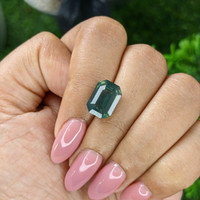
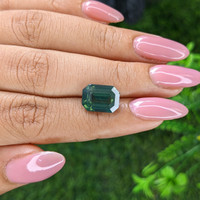
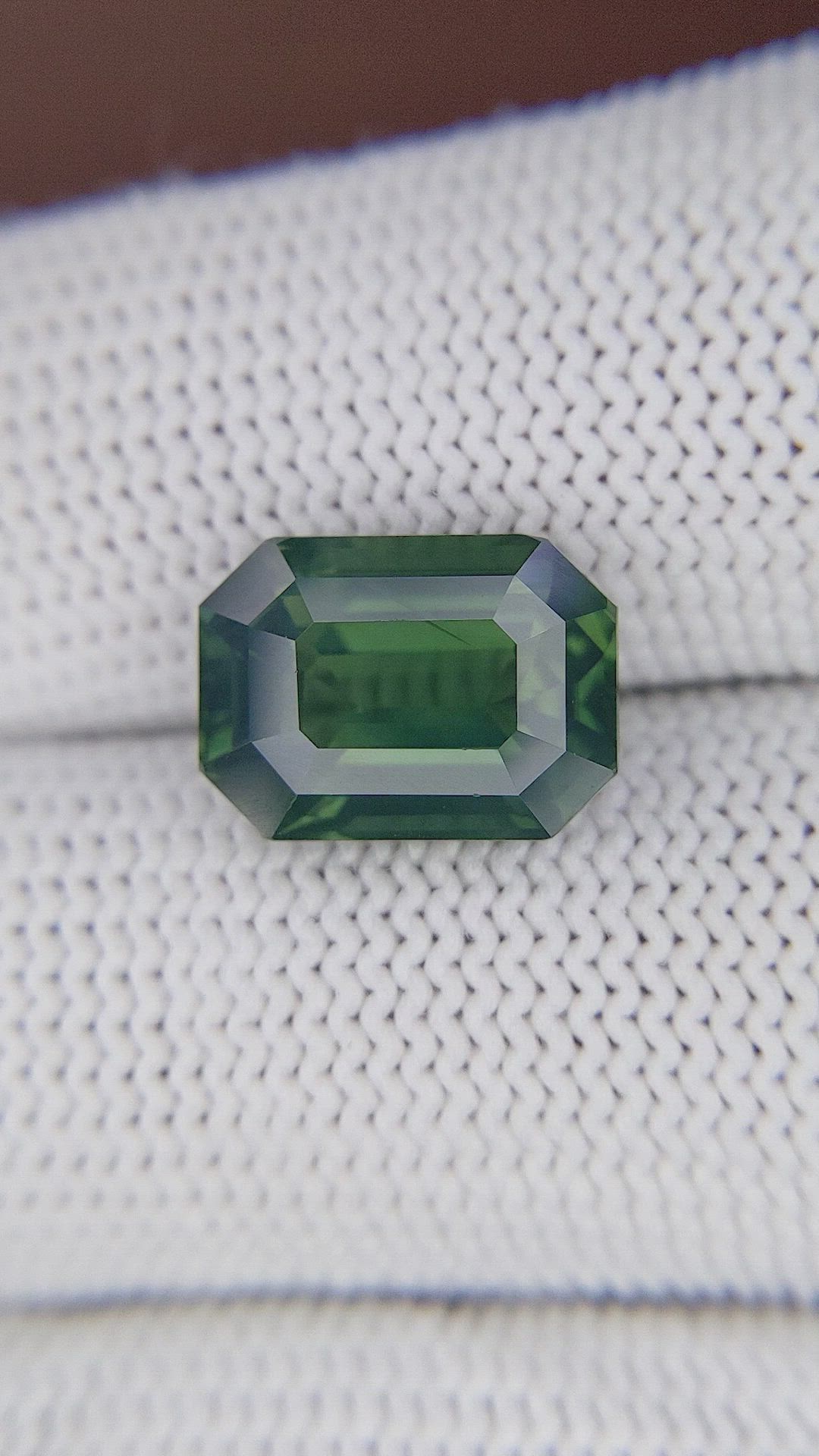
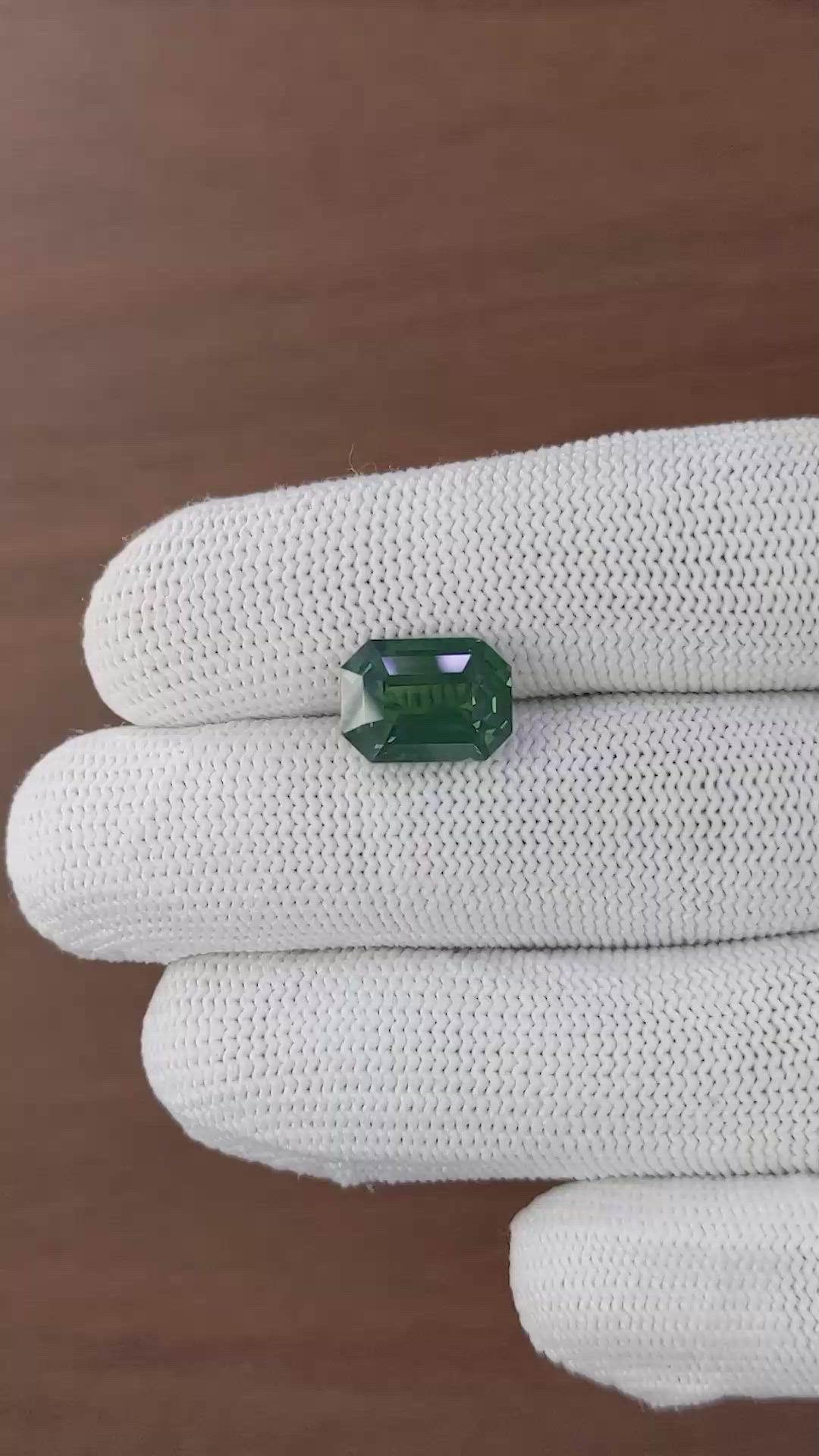
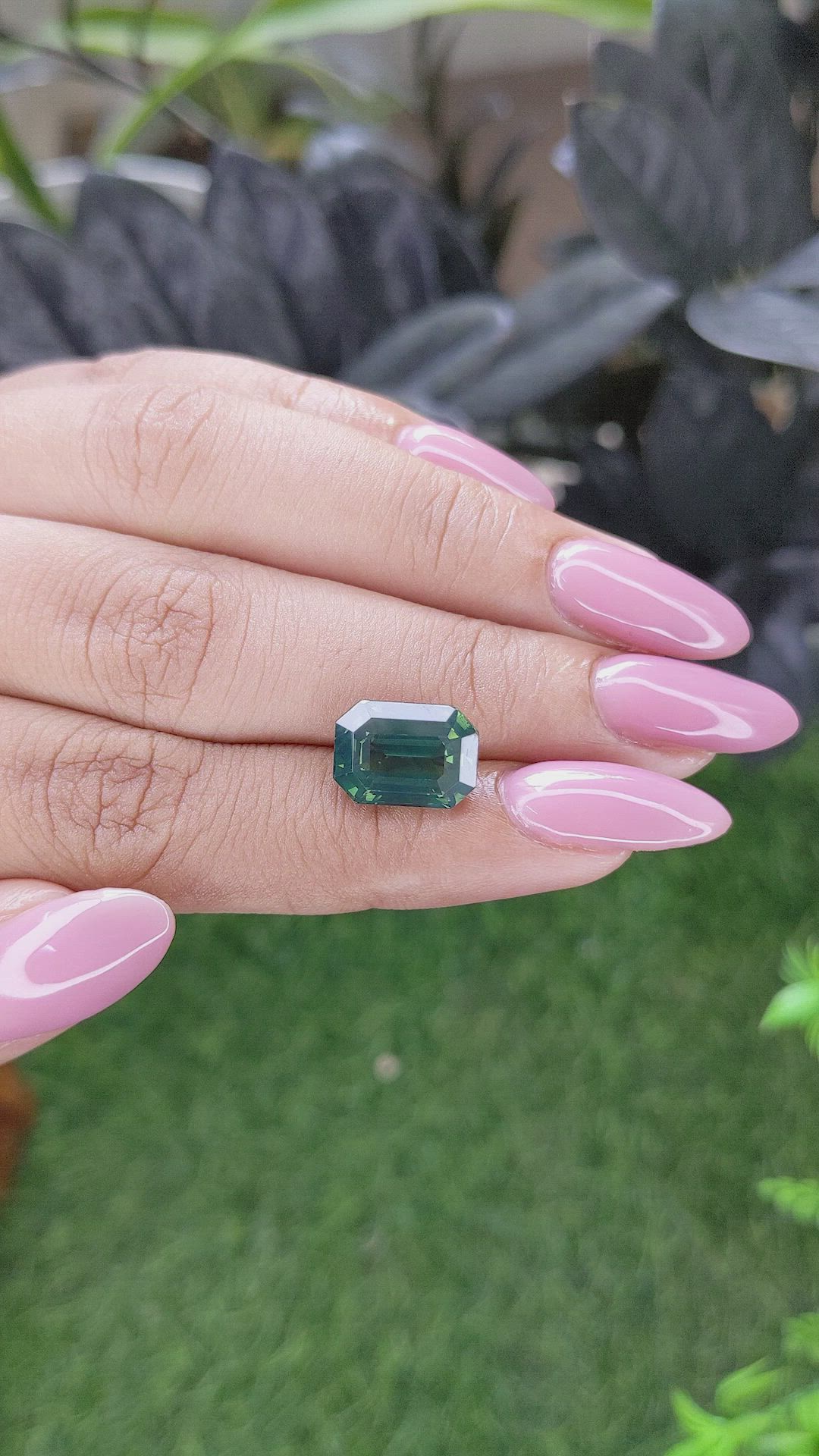
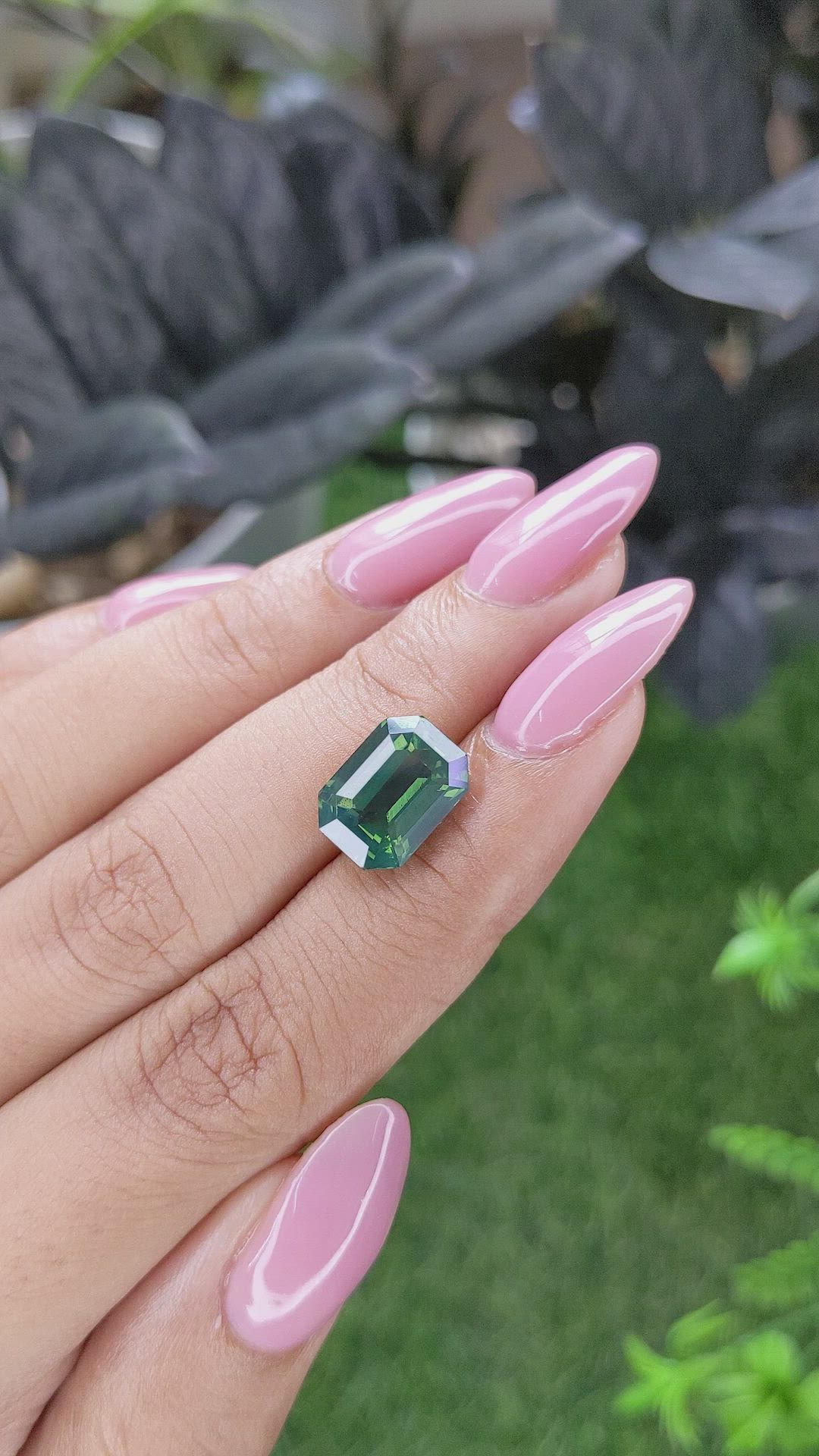
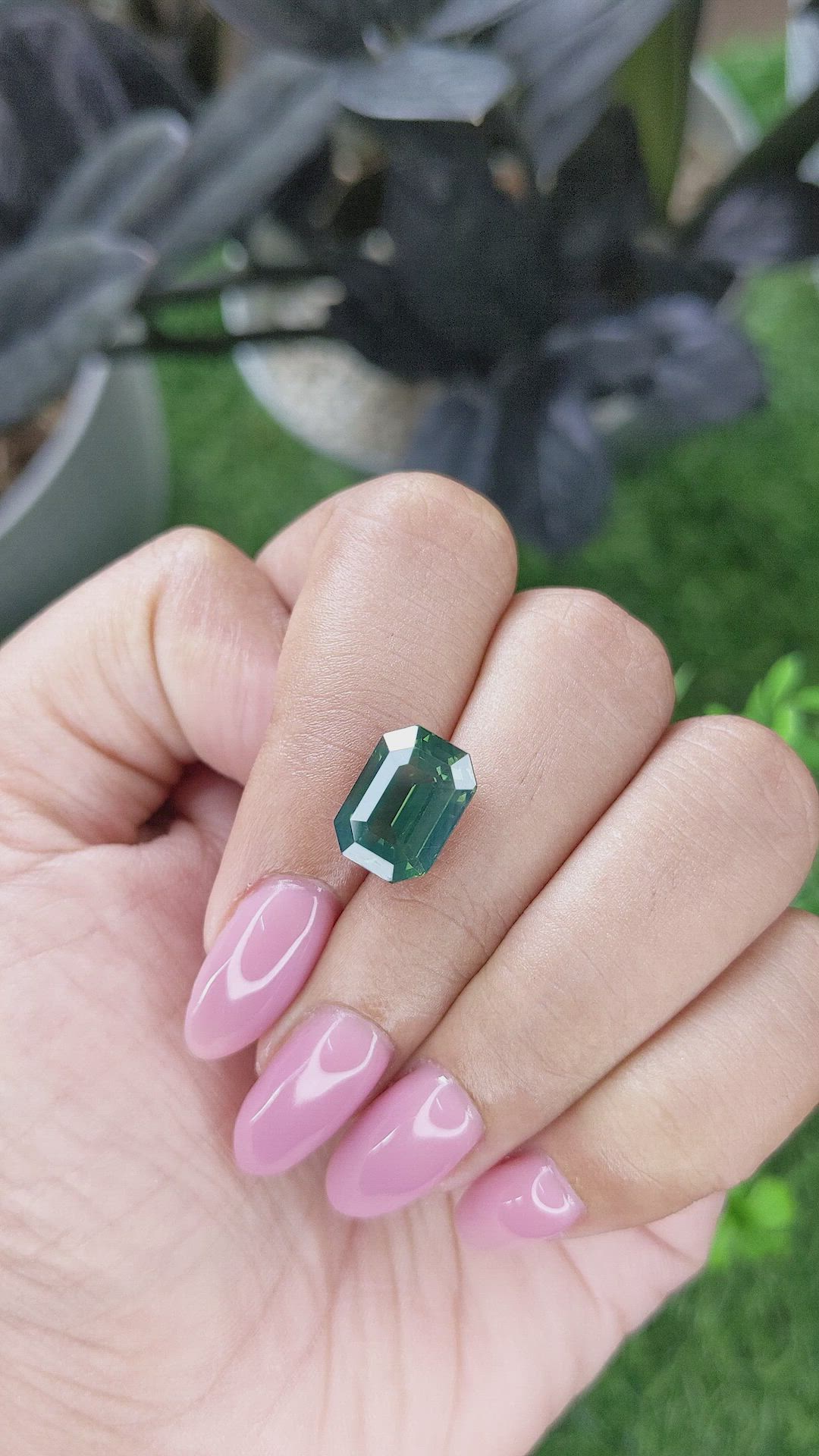

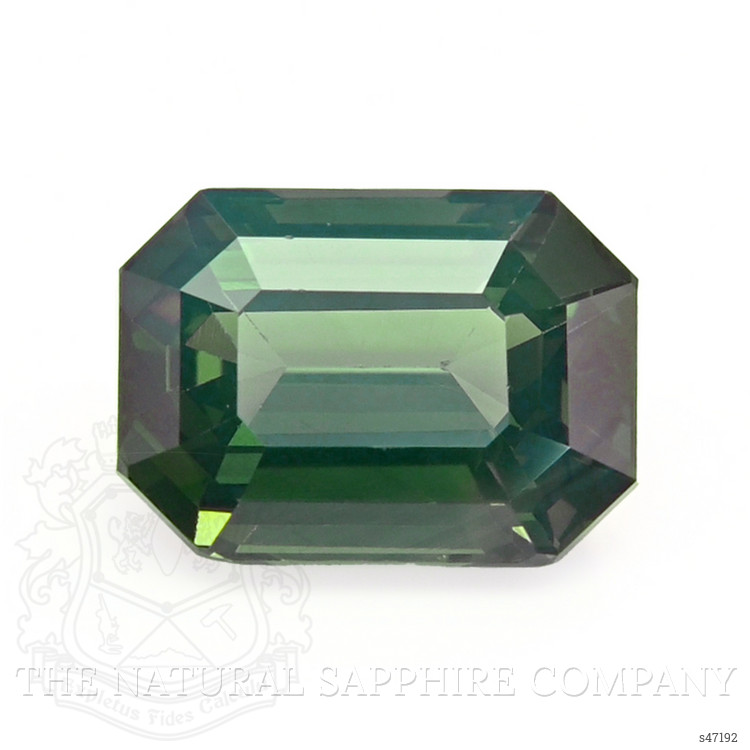
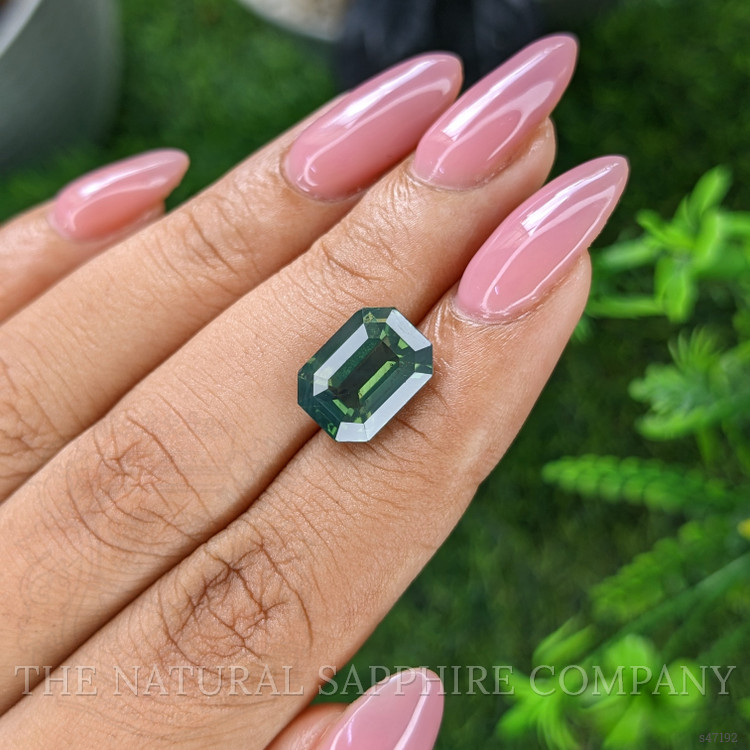
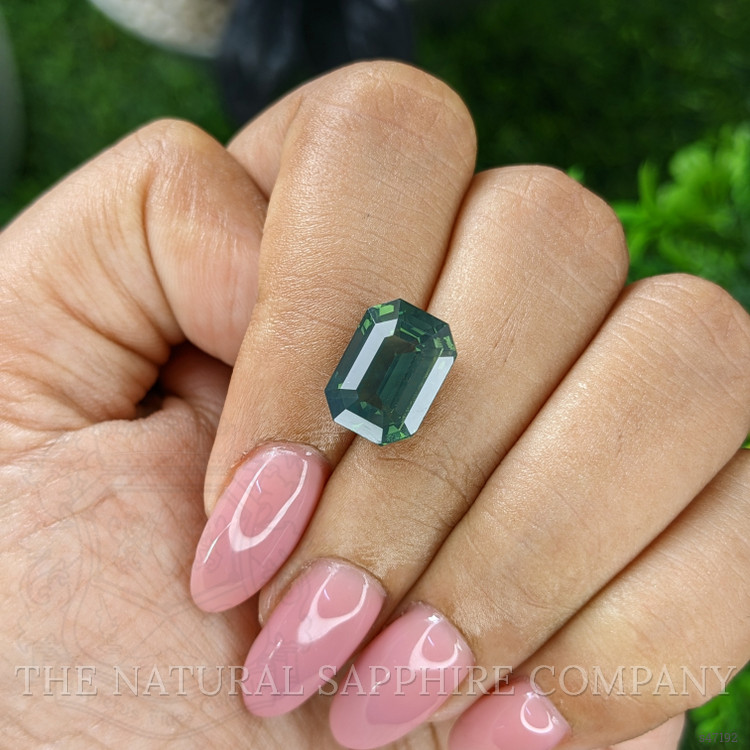
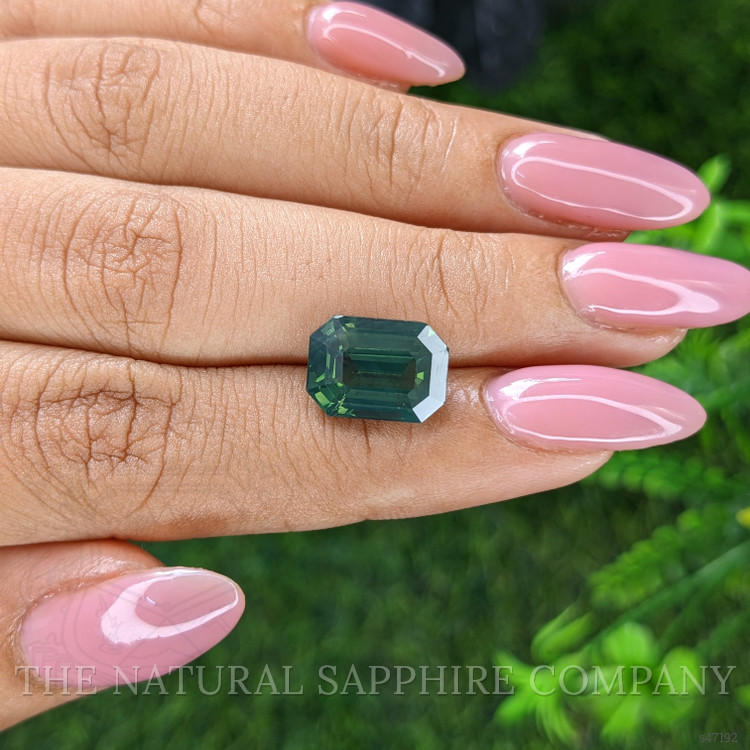


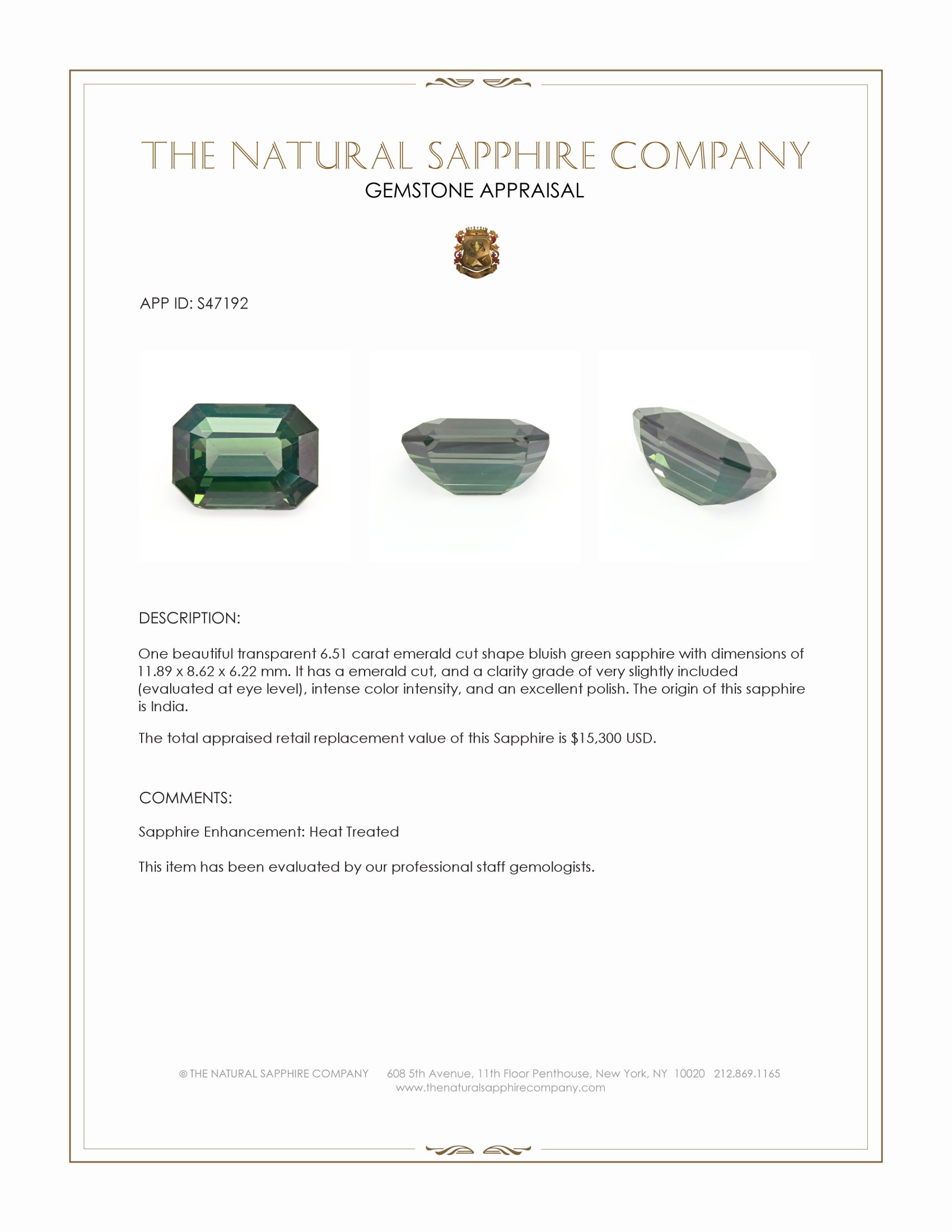
6.51 Ct. Bluish Green Sapphire from India
This loose stone ships by Oct 9
Item ID: | S47192 |
|---|---|
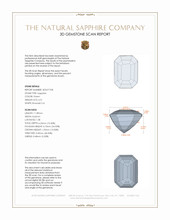
Dimensions (MM): help | Length: 11.89 Width: 8.62 Height: 6.22 |
Weight: | 6.51 Ct. |
Color: help | Bluish Green |
Color intensity: help | Intense |
Clarity: help | Very Slightly Included |
Shape: help | Emerald Cut |
Cut: | Emerald Cut |
Cutting style: | Faceted |
Enhancements: help | Heat Treated |
Origin: help | India |
Per carat price: help | $2,350 |
This listing describes one transparent 6.51 carat bluish green sapphire, cut in an emerald cut faceted style with exact dimensions of 11.89 by 8.62 by 6.22 millimeters, and a length to width ratio of approximately 1.38, which yields an elegant rectangular profile well suited to both solitaire and halo settings. The emerald cut here follows a step facet schema, with broad parallel crown and pavilion facets that emphasize color and saturation over scintillation, producing a sophisticated, architectural light performance. The table facet is proportioned to preserve depth of color without excessive windowing, and the pavilion depth of 6.22 millimeters maintains strong internal reflection while avoiding overly shallow dispersion losses. Facet junctions are consistent, and symmetry across the girdle axis is tightly controlled, which contributes to a balanced face up appearance and predictable behavior under varied lighting conditions. The gem has an excellent polish, allowing the step facets to terminate crisply and minimize surface diffusion, which enhances luster and the perceptible sharpness of facet edges.
Color is intense and sits in a bluish green field, with a primary green presence modulated by a strong blue component, creating a deep, verdant tone that reads richer under natural daylight and slightly cooler under LED sources. The intensity has been graded as intense, which in this stone produces a saturated, vivid presence without appearing over-dark, and the emerald cut strategy was deliberately chosen to showcase that saturation rather than maximize brilliant sparkle. Sapphires of this hue can display pleochroism, and this stone exhibits a noticeable shift between greener and bluer facets when rotated, indicating anisotropic absorption consistent with corundum crystal chemistry. Origin is India, and the piece has undergone a standard heat treatment enhancement to improve color homogeneity and clarity, a stable and widely accepted practice in the trade that does not compromise structural integrity when performed correctly. The treatment is disclosed and should be considered when comparing to untreated material, but it yields a visually superior and market appropriate result that emphasizes the gem s natural character.
Clarity is graded as very slightly included when evaluated at eye level, meaning that the stone is effectively eye clean to most observers, with only minor inclusions visible under close scrutiny or magnification. Inclusions are predominantly fine and oriented along growth planes, typical of natural corundum, and do not interrupt the dominant color or the integrity of facet planes. The very slightly included grade balances value and visual appeal, offering collectors and designers a gemstone that reads clean while retaining the natural fingerprint of an untreated origin prior to heating. From a craftsmanship standpoint, the cutter maintained a conservative approach to inclusion placement, using the elongated table and step facets to mask or redirect attention away from minor internal features. The excellent polish and precise facet alignment reduce apparent inclusion visibility by improving surface reflectance, and the robust girdle execution ensures safe mounting without risk of chipping during standard setting procedures.
In terms of durability, corundum, the mineral family that includes sapphires, rates a 9 on the Mohs scale of hardness, which places it directly below diamond at 10 and above other popular jewelry gemstones such as topaz and quartz. This sapphire s hardness makes it highly resistant to scratching and well suited to daily wear in rings, bracelets, and other frequently handled jewelry, with appropriate protective setting choices. Compared to diamond, sapphires are marginally less hard but significantly more durable than many alternative colored stones, and their toughness resists cleavage, minimizing the risk of catastrophic fractures from common impacts. For mounting recommendations, a protective bezel or a secure prong setting with reinforced corners is advisable to protect the elongated corners typical of emerald cuts, and the stone s dimensions and depth accommodate both low profile and higher style settings depending on design priorities. Routine care involves gentle cleaning with warm water, mild detergent, and a soft brush, avoiding harsh chemicals and extreme thermal shocks, and professional inspection of the setting periodically will preserve the stone s condition. This emerald cut bluish green sapphire from India, presented by The Natural Sapphire Company, represents a technically refined specimen for collectors and designers who value measured proportions, stable enhancement disclosure, and enduring wearability.


