
- Stone12
- Reports4


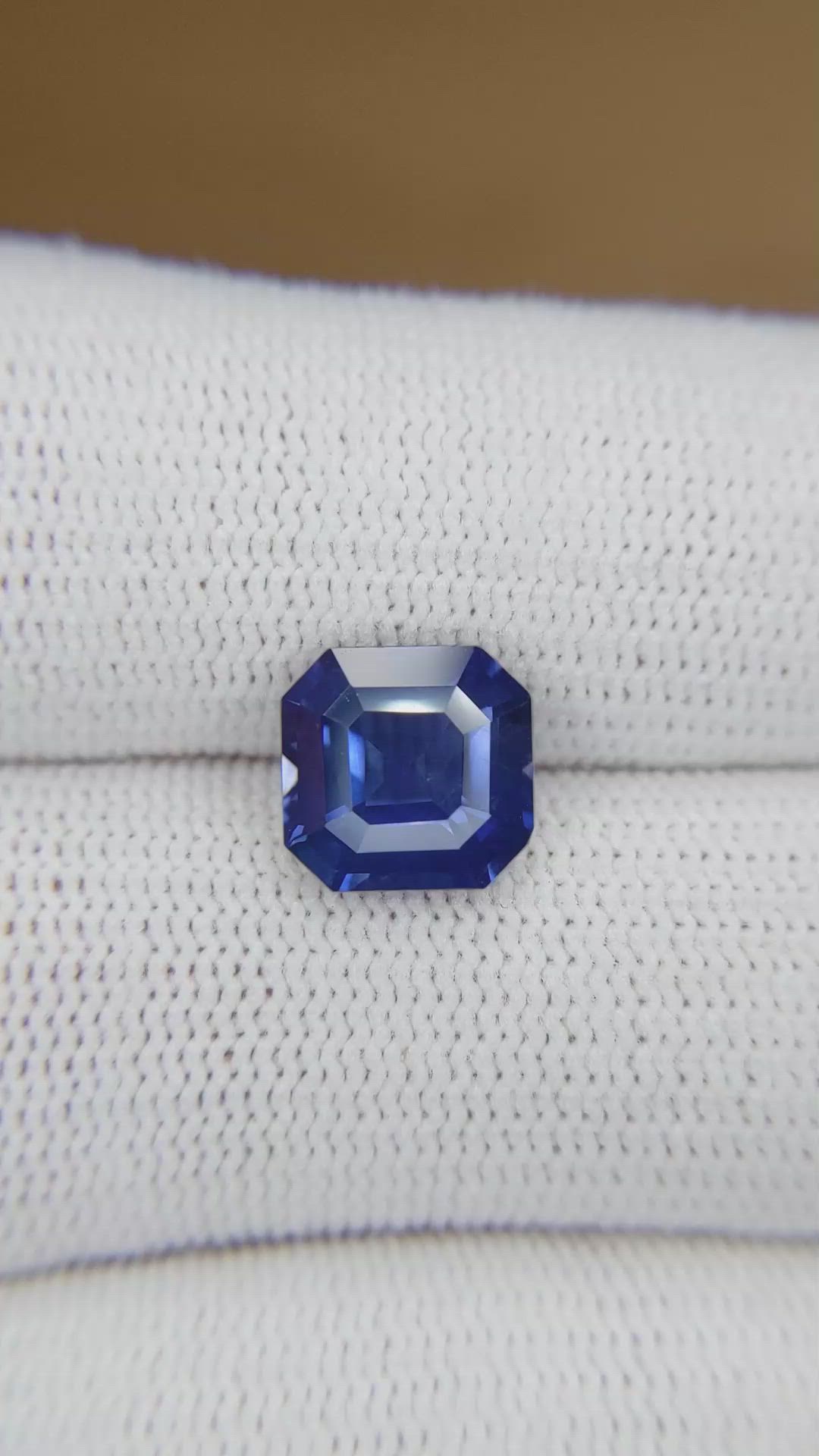
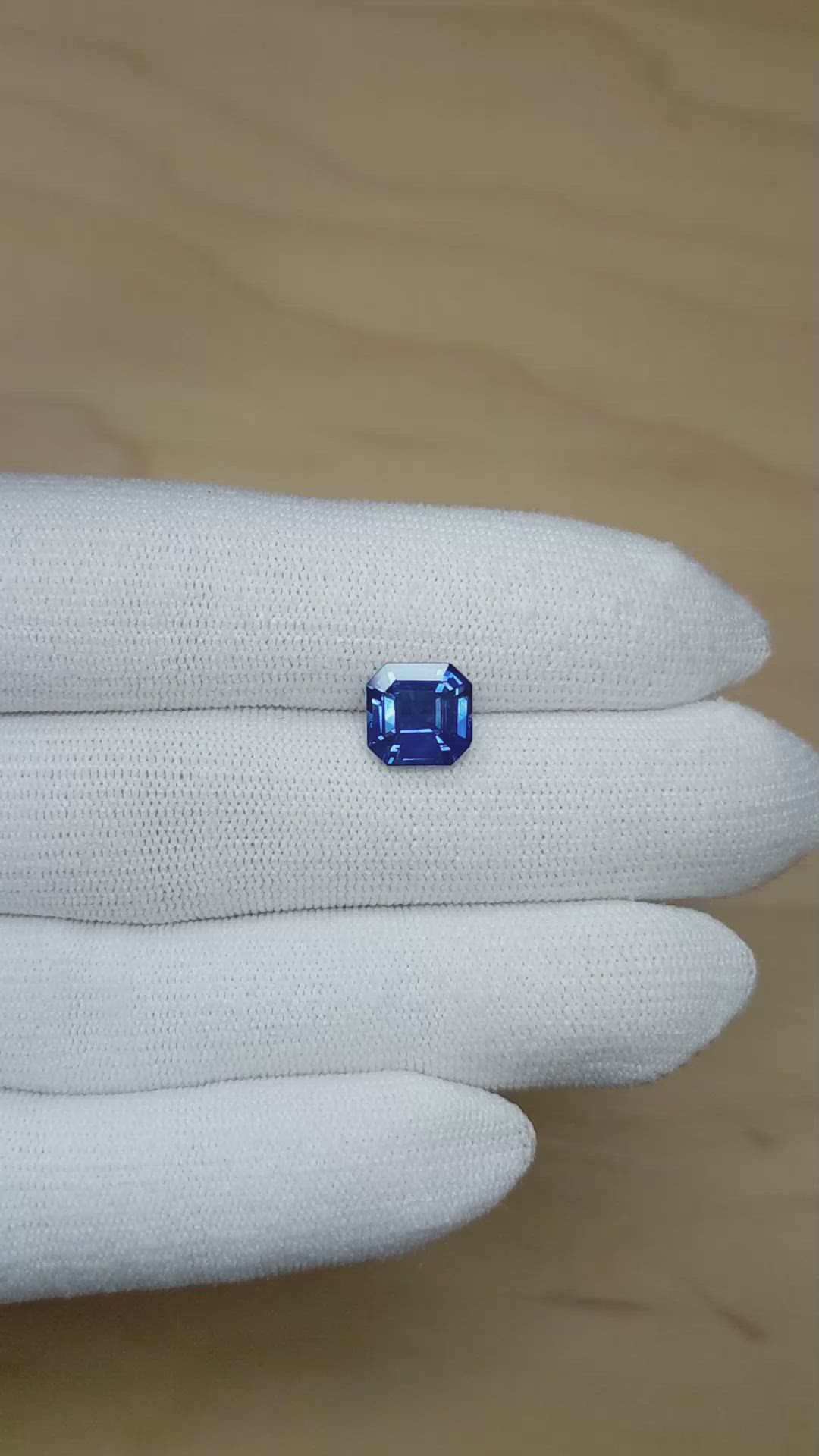
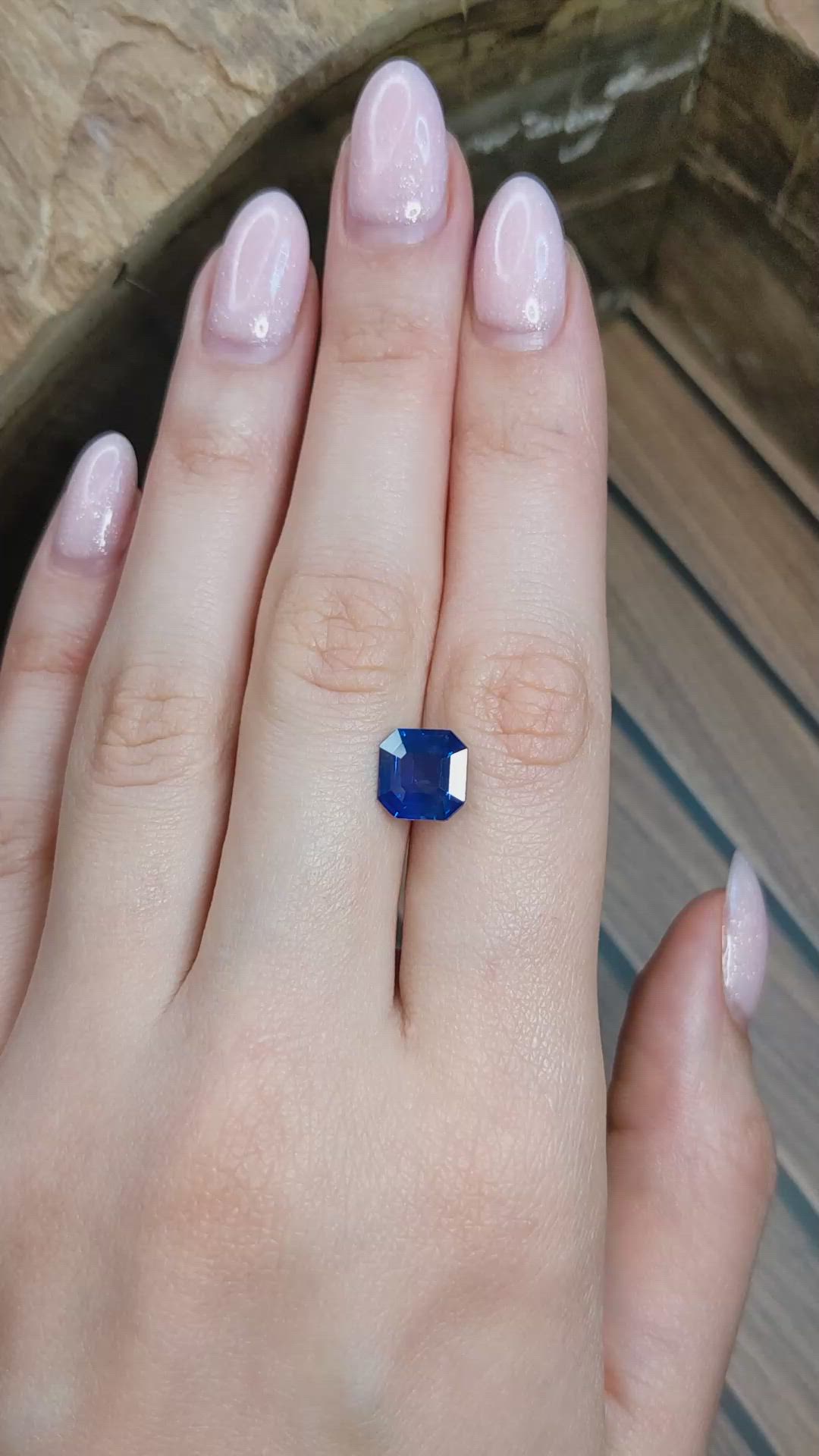

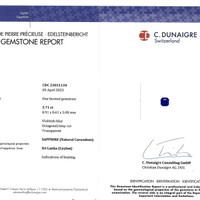
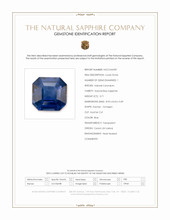
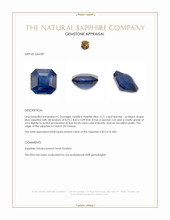


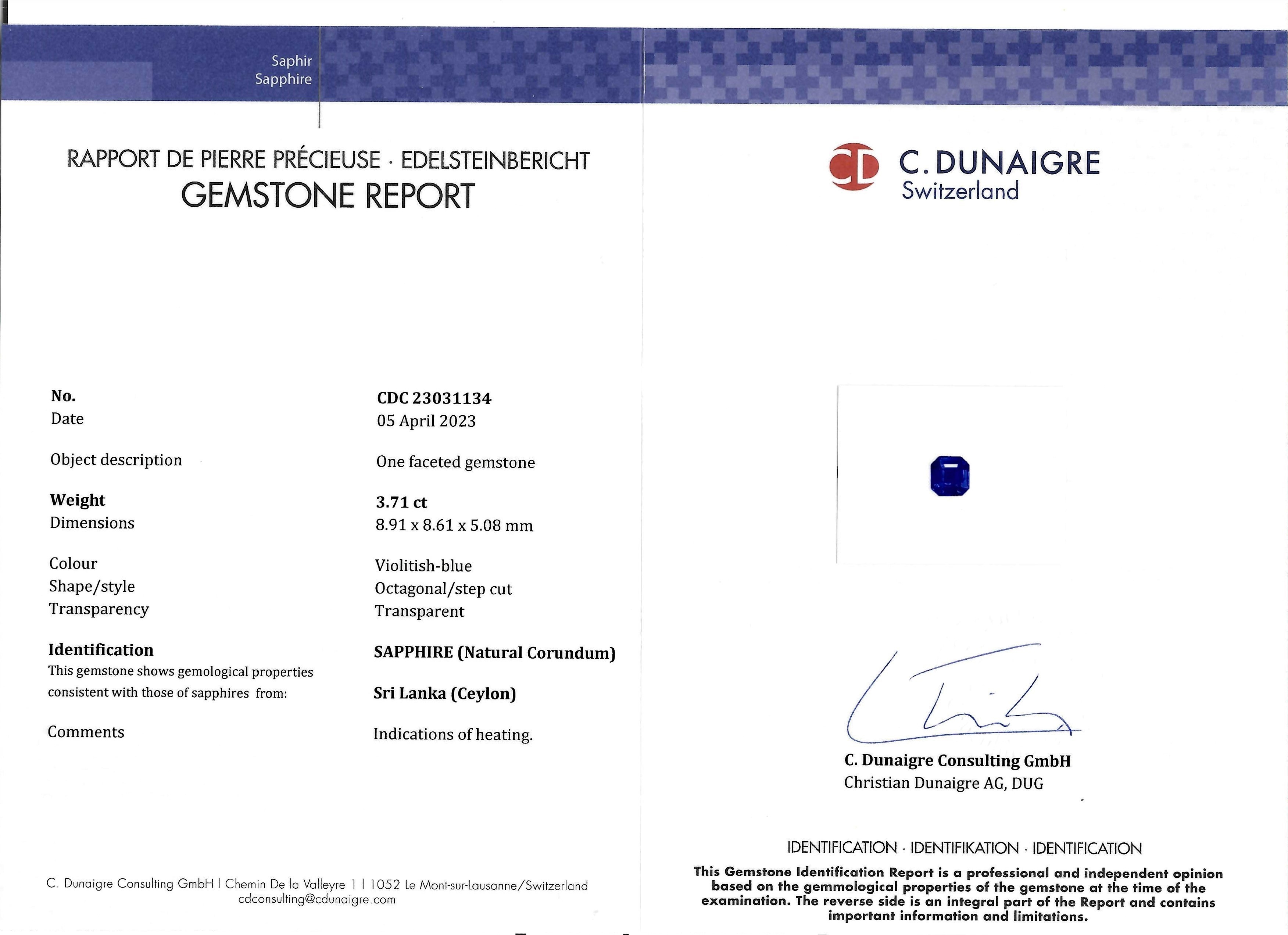

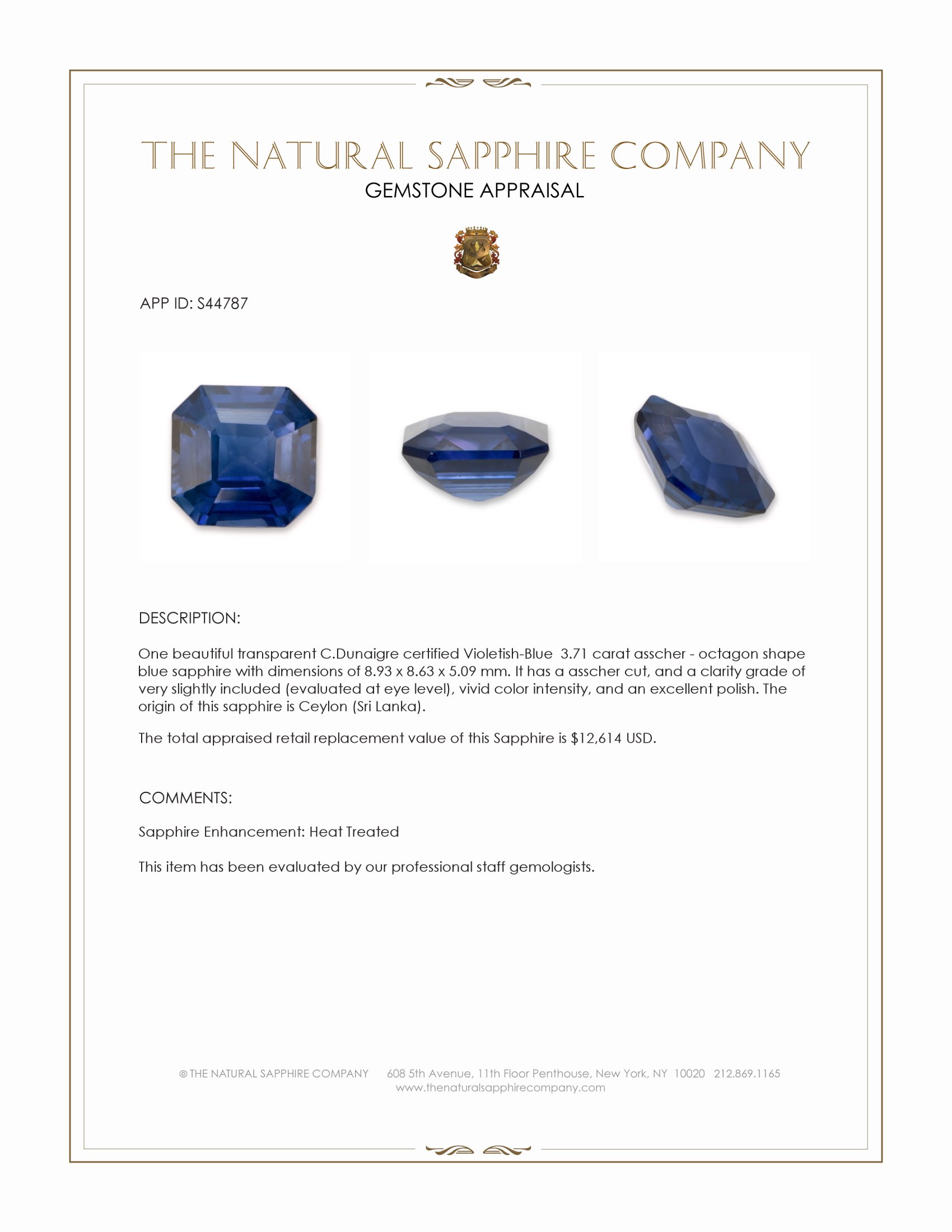
3.71 Ct. Blue Sapphire from Ceylon (Sri Lanka)
This loose stone is available to ship now
Item ID: | S44787 |
|---|---|
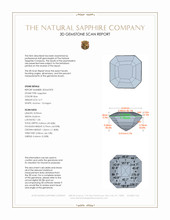
Dimensions (MM): help | Length: 8.93 Width: 8.63 Height: 5.09 |
Weight: | 3.71 Ct. |
Color: help | Blue |
Color intensity: help | Vivid |
Clarity: help | Very Slightly Included |
Shape: help | Asscher - Octagon |
Cut: | Asscher Cut |
Cutting style: | Faceted |
Enhancements: help | Heat Treated |
Origin: help | Ceylon (Sri Lanka) |
Per carat price: help | $3,400 |
This 3.71 carat natural blue sapphire from Ceylon, presented by The Natural Sapphire Company, is an asscher octagon shaped stone with precise dimensions of 8.93 by 8.63 by 5.09 millimeters. The gem is transparent with a vivid color intensity that reads as a deep, true blue under standard lighting, and it benefits from an excellent polish that sharpens facet definition and enhances light return. The clarity is graded as very slightly included when evaluated at eye level, indicating the presence of small natural inclusions that do not detract from the gem at typical viewing distances, while simultaneously providing internal character and confirmation of natural origin. This sapphire has been heat treated, a stable and widely accepted enhancement that improves color uniformity and visual appeal. The stone displays strong overall proportions, a well balanced table and pavilion depth, and symmetrical facet junctions consistent with skilled cutting, attributes that together maximize face up color and contribute to predictable performance once set.
The asscher cut applied to this Ceylon sapphire emphasizes architecture and depth rather than scintillation alone, producing broad, deep flashes of saturated blue and large, open facet planes that present the gem in a refined and contemporary manner. The near square octagonal outline with cropped corners lends the stone a distinctive profile that sits elegantly on the finger and in a bezel or four prong setting. At 5.09 millimeters in depth the pavilion provides sufficient internal travel for light to interact with the corundum crystal, while the well executed crown angles allow the vivid color to read evenly across the table. Natural pleochroic effects typical of Ceylon sapphires give this stone a desirable depth of color when seen from different angles, alternating slightly between medium and more intense blue tones, and the polish quality enhances facet contrast to create a composed and sophisticated visual effect rather than a busy or overly brilliant appearance.
From a practical perspective this sapphire combines aesthetic presence with the inherent toughness and wearability of natural corundum. With a hardness rating of nine on the Mohs scale corundum is well suited to everyday jewelry applications, resisting scratches that would affect many other colored gemstones. For setting this asscher octagon the gem coordinates particularly well with classic solitaire, three stone, and halo designs, and its clean pavilion and girdle dimensions simplify mounting and prong placement. Cleaning and care are straightforward, and for this heat treated sapphire routine maintenance with warm soapy water and a soft brush is appropriate, while avoiding prolonged exposure to harsh chemicals. Heat treatment in sapphires is an accepted, stable enhancement that has been used for decades to optimize natural color, and it does not diminish the gemological significance, provenance, or long term stability of the stone when performed properly, as is the case for this Ceylon example.
When considering natural sapphires versus lab grown alternatives it is important to weigh differences in origin, character, and long term value. Lab grown sapphires can offer very uniform color and clarity at a lower price point, and they serve well in fashion and experimental designs. Natural sapphires such as this 3.71 carat Ceylon stone however possess qualities that many clients seek and retain over time. The geological history of a natural sapphire, including the subtle inclusions and natural growth features, creates a fingerprint that ties the gem to a place of origin and to a unique period of formation that cannot be replicated in a laboratory. This stone exhibits natural internal characteristics and pleochroism that contribute to a layered, complex color presentation, and the Ceylon origin is associated with a long established tradition of producing highly desirable blue tones. From a market perspective natural stones often retain collector interest and can appreciate relative to synthetic material, and for many buyers the natural provenance and narrative associated with a mined sapphire is an intrinsic component of value. At The Natural Sapphire Company we prioritize transparent disclosure of treatments and origin, and we provide documentation and expert support to help clients understand the material differences so they may make informed choices consistent with their priorities.


