
- Stone14
- Reports3
-emeraldcut-blue-sapphire-3.5400-cts-s43941-1.jpg?d=200x200&v=20260624104810)
-emeraldcut-blue-sapphire-3.5400-cts-s43941-lifestyleimage-1.jpg?d=200x200&v=20260626043104)
-emeraldcut-blue-sapphire-3.5400-cts-s43941-lifestyleimage-2.jpg?d=200x200&v=20260626043104)
-emeraldcut-blue-sapphire-3.5400-cts-s43941-lifestyleimage-3.jpg?d=200x200&v=20260626043104)

-emeraldcut-blue-sapphire-3.5400-cts-s43941-1.jpg?d=750x750&s=nsc&v=20260624104810)
-emeraldcut-blue-sapphire-3.5400-cts-s43941-lifestyleimage-1.jpg?d=750x750&s=nsc&v=20260626043104)
-emeraldcut-blue-sapphire-3.5400-cts-s43941-lifestyleimage-2.jpg?d=750x750&s=nsc&v=20260626043104)
-emeraldcut-blue-sapphire-3.5400-cts-s43941-lifestyleimage-3.jpg?d=750x750&s=nsc&v=20260626043104)

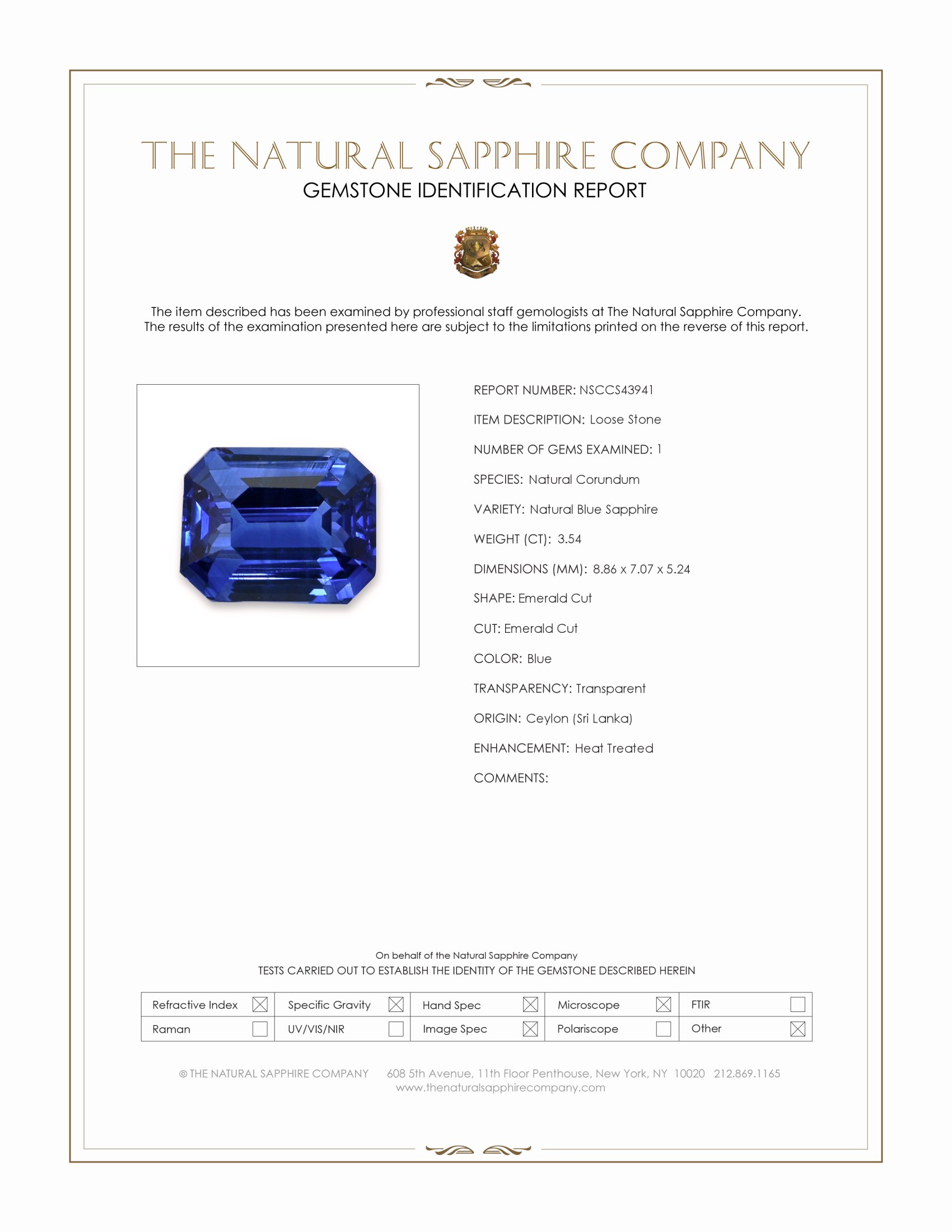
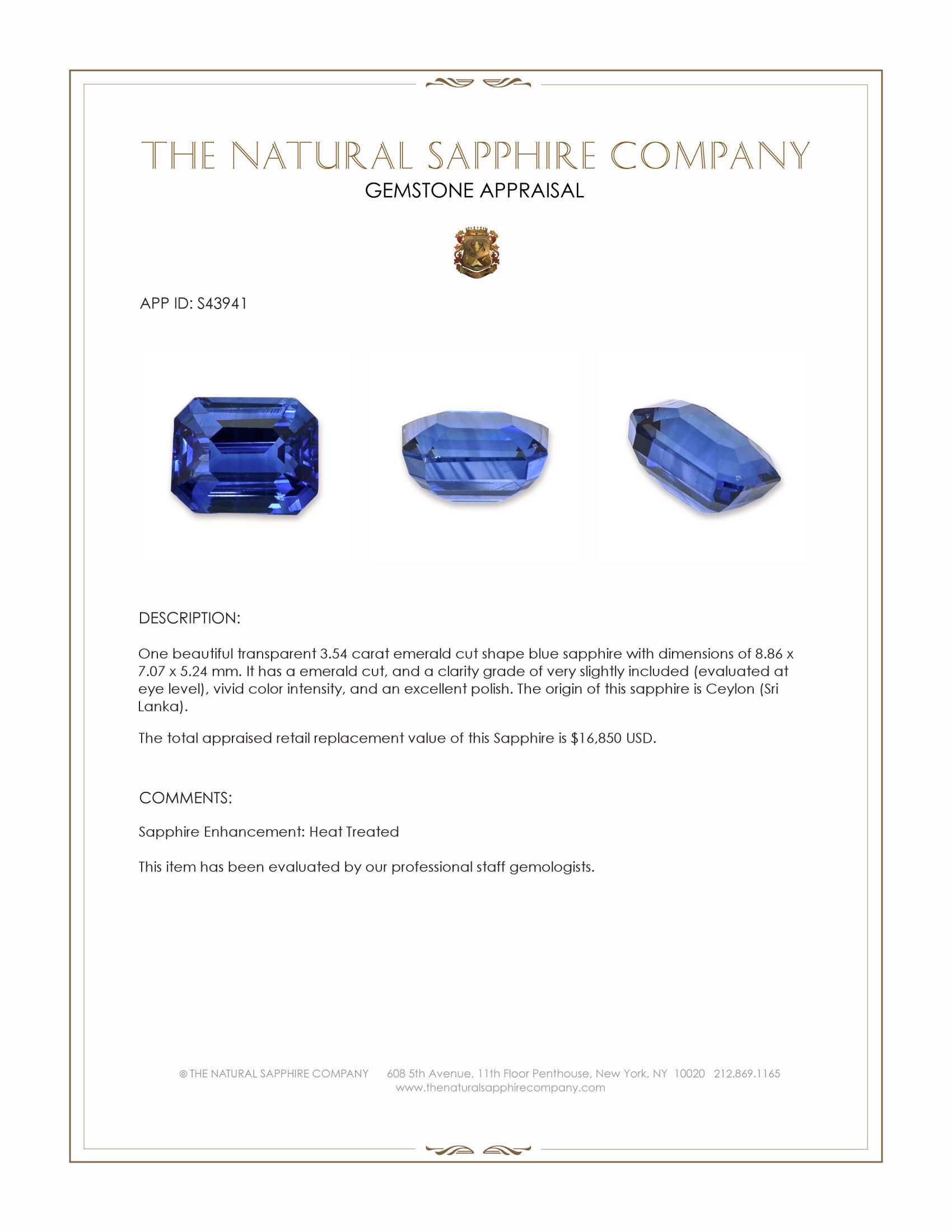
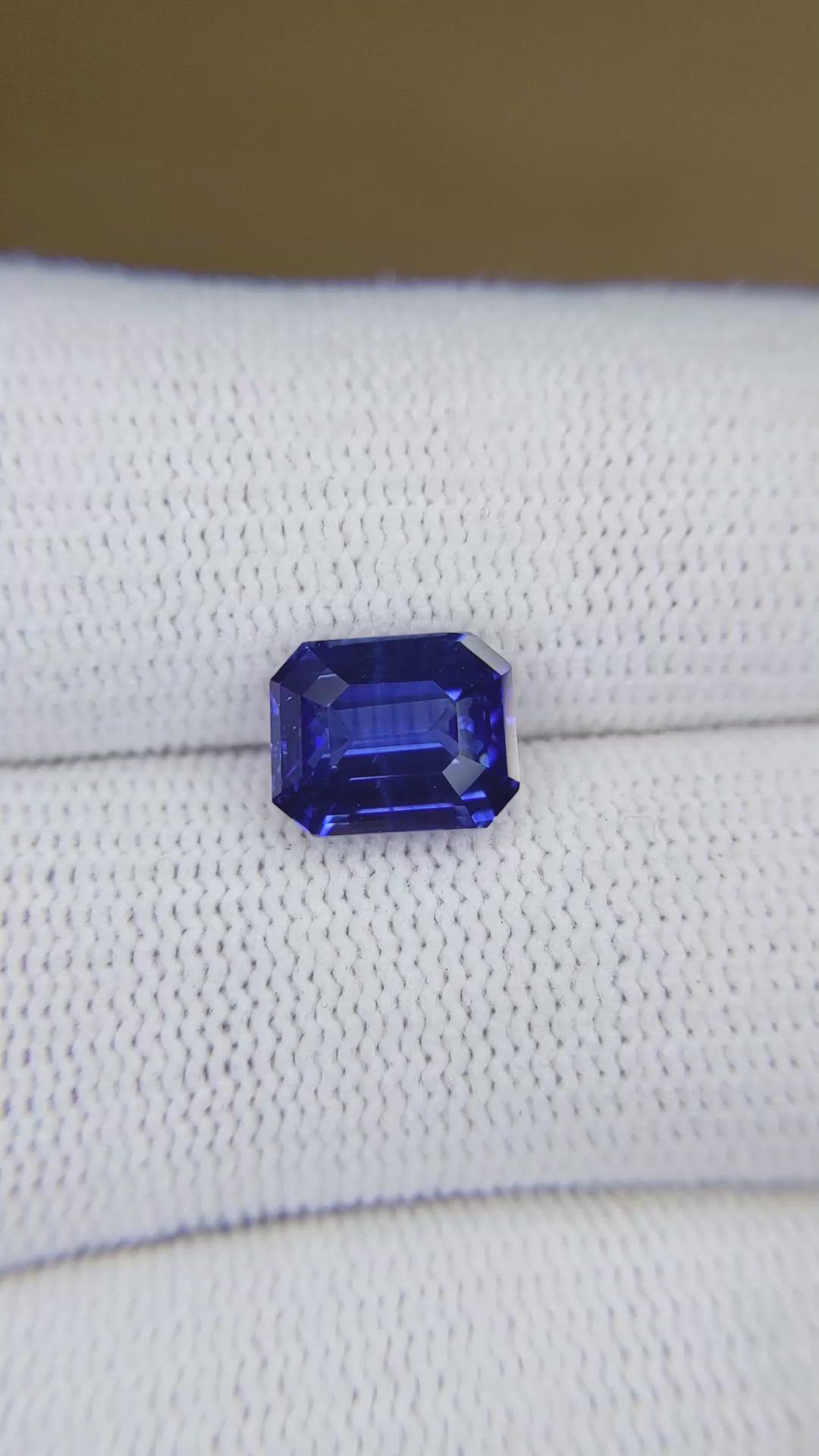
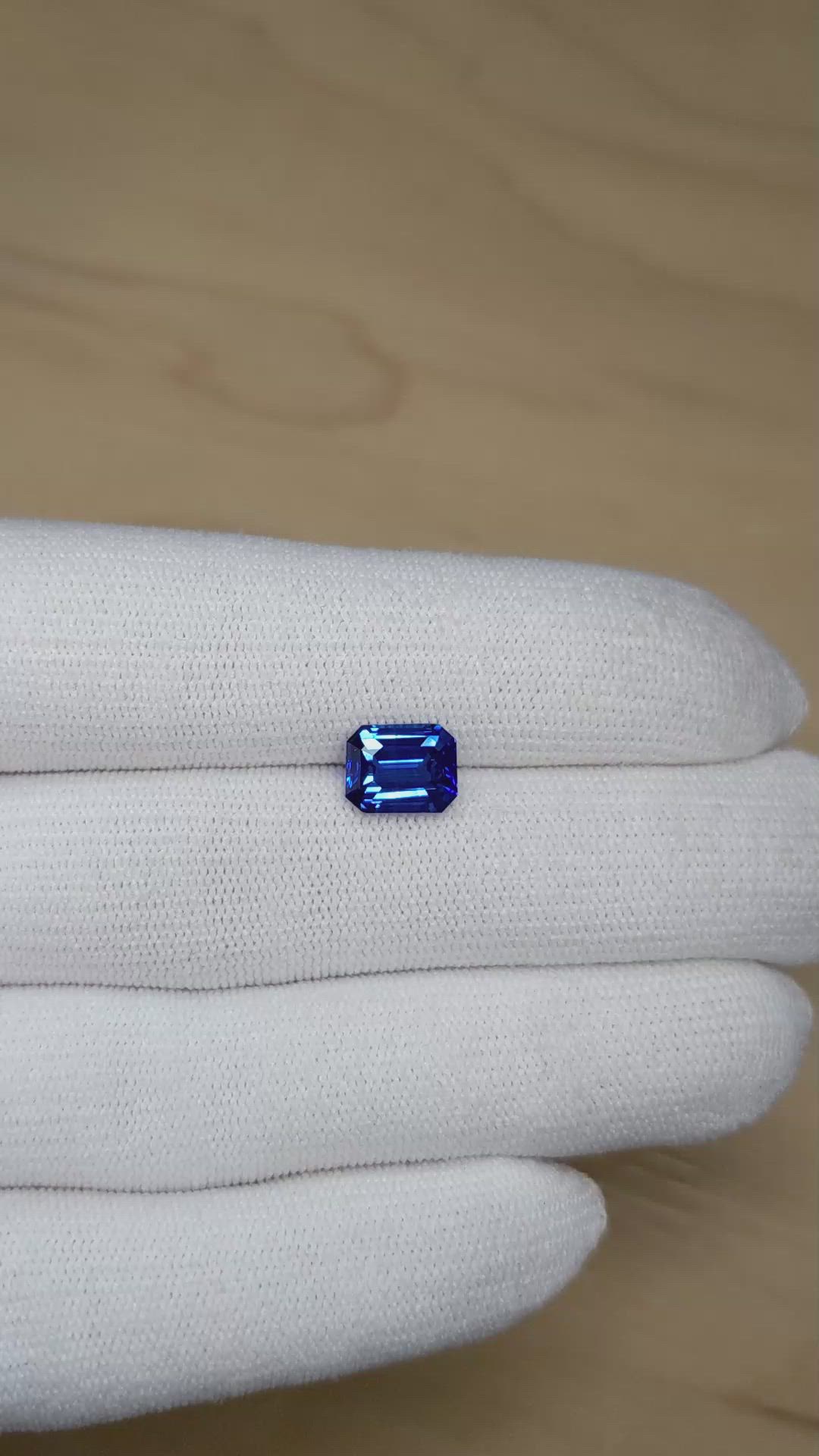
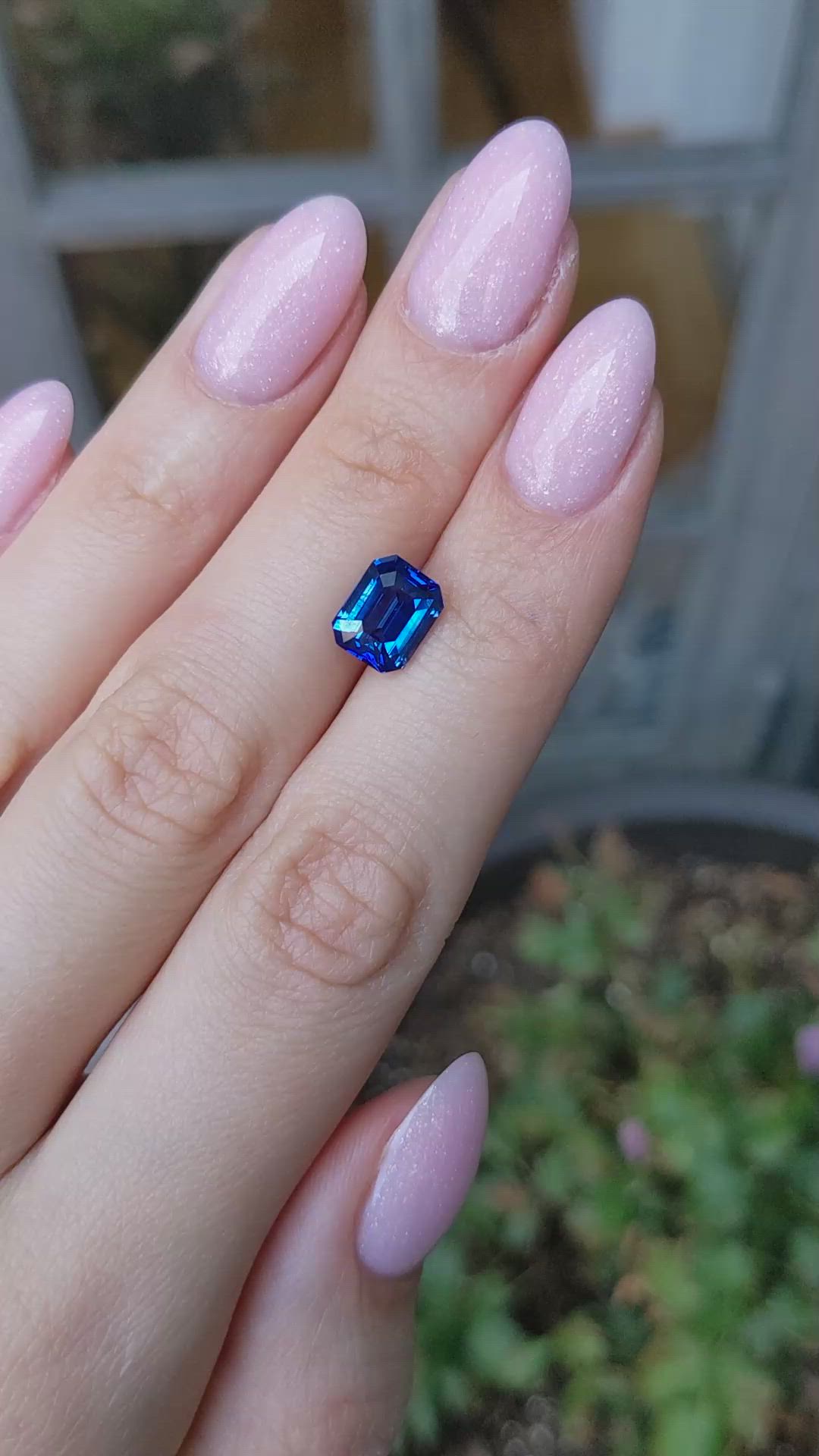
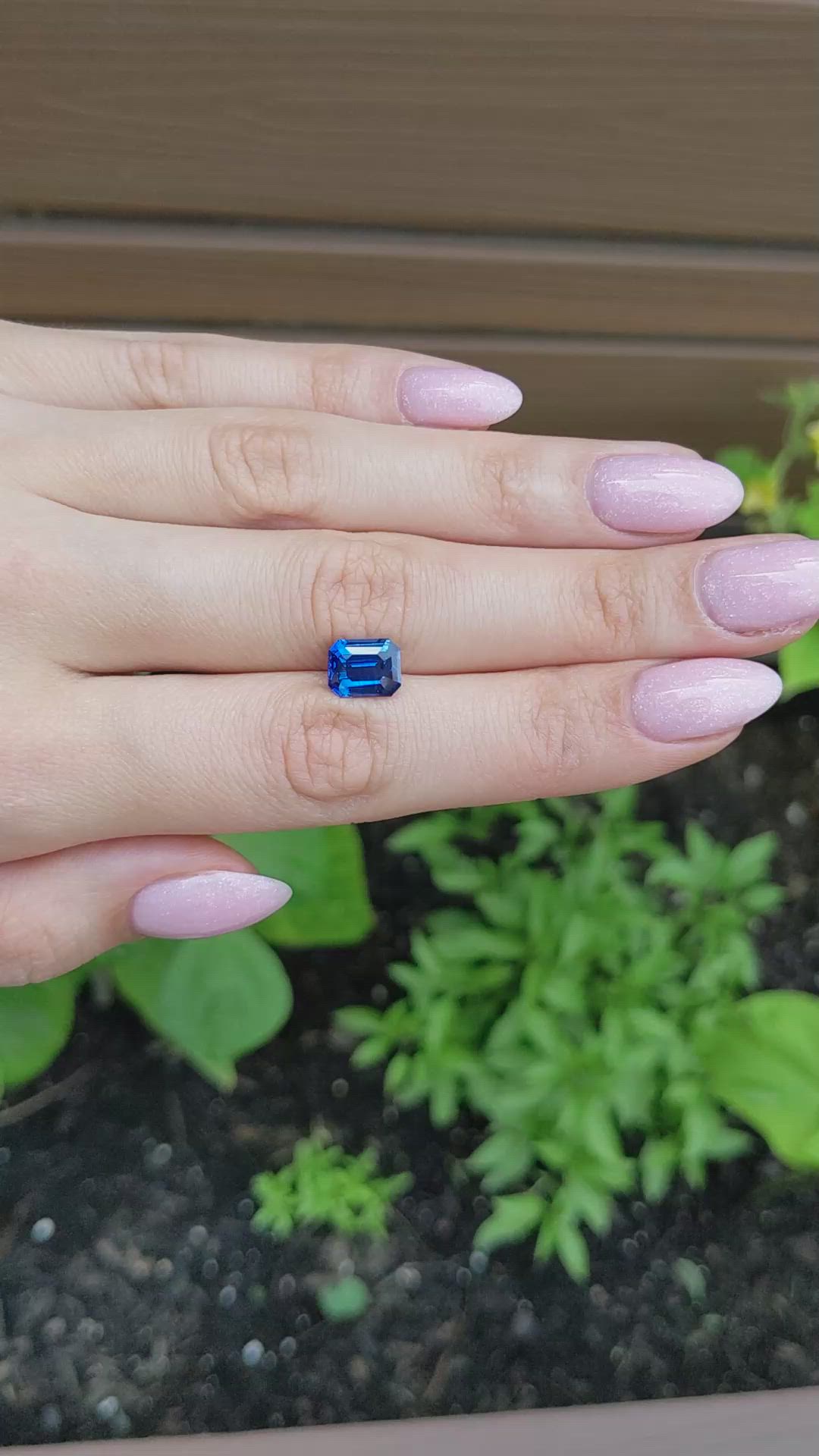
3.54 Ct. Blue Sapphire from Ceylon (Sri Lanka)
This loose stone is available to ship now
Item ID: | S43941 |
|---|---|
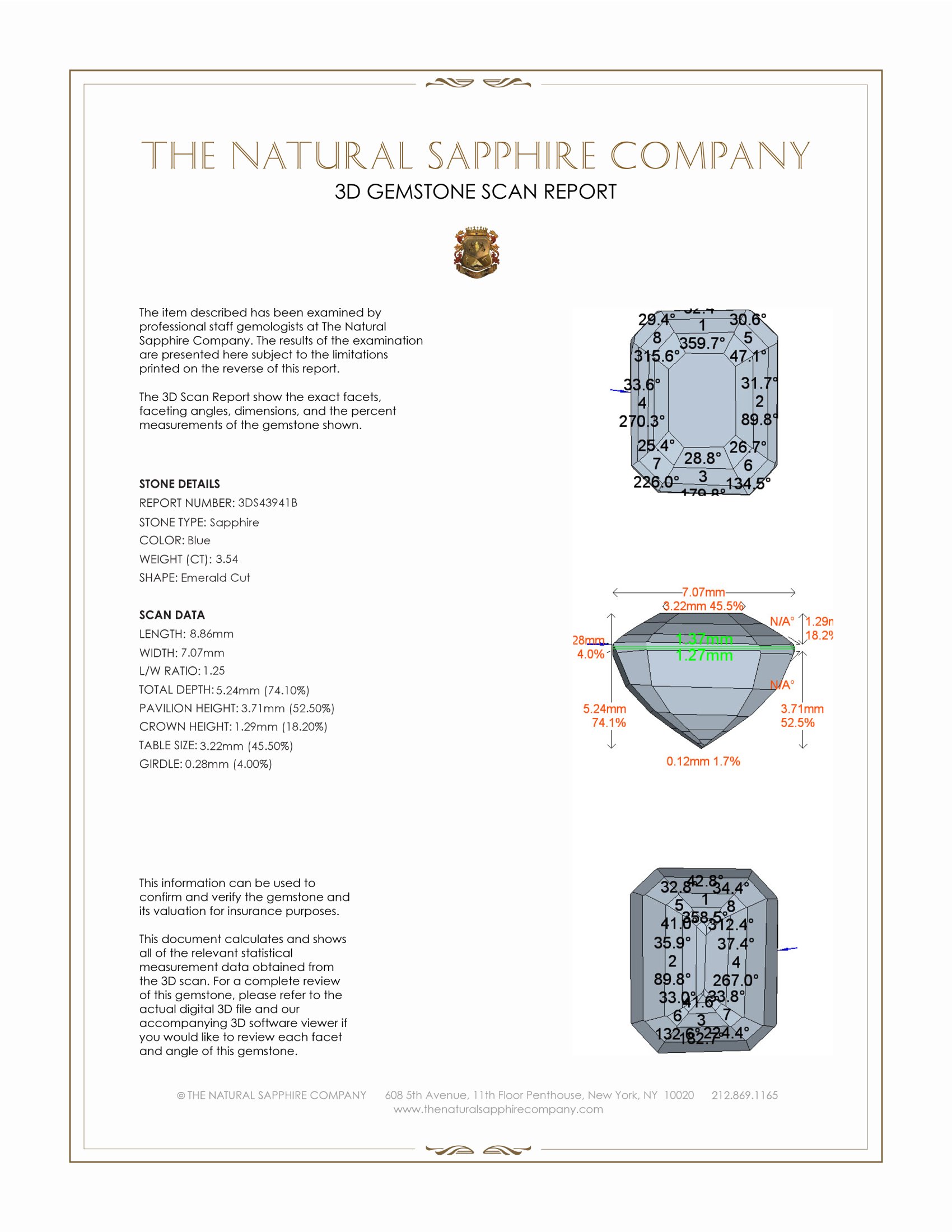
Dimensions (MM): help | Length: 8.86 Width: 7.07 Height: 5.24 |
Weight: | 3.54 Ct. |
Color: help | Blue |
Color intensity: help | Vivid |
Clarity: help | Very Slightly Included |
Shape: help | Emerald Cut |
Cut: | Emerald Cut |
Cutting style: | Faceted |
Enhancements: help | Heat Treated |
Origin: help | Ceylon (Sri Lanka) |
Per carat price: help | $4,760 |
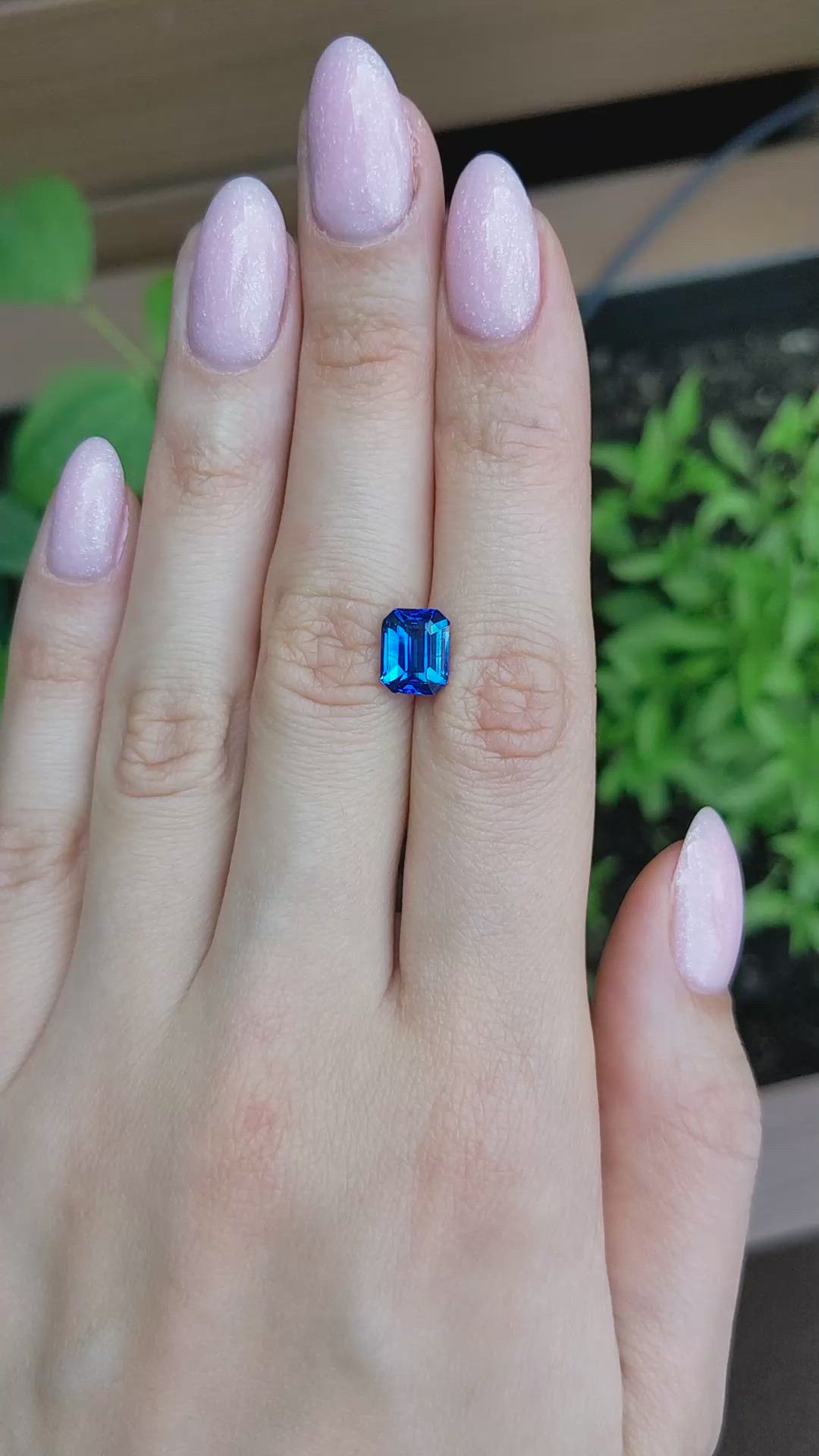
This transparent 3.54 carat blue sapphire, cut to an emerald shape with exact dimensions of 8.86 by 7.07 by 5.24 millimeters, is a study in proportion and material optimization. The cutter maintained a depth of 5.24 millimeters which yields a depth percentage of approximately 65.8 percent, a value chosen to balance face up color saturation and internal light return for this rectangular step cut. The stone exhibits vivid color intensity across the broad table, reflecting a saturated cornflower to deep velvety blue characteristic of high grade Ceylon material. Clarity is described as very slightly included when evaluated at eye level, which for corundum typically indicates fine needlelike or pinpoint inclusions that do not disrupt the gemological integrity or compromise durability. The gem has received professional heat treatment, a standard and stable enhancement for sapphire which improves color uniformity and reduces the visibility of some silk inclusions by causing partial recrystallization, while the original crystal lattice and inherent pleochroism remain intact. Polish quality is excellent with crisp facet junctions and a mirrorlike finish, a finishing quality that enhances surface luster in a stone with a refractive index near 1.76 and Mohs hardness of nine.
The emerald cut faceting scheme employed on this sapphire is deliberate and technically exacting. Step facets on the crown and pavilion create broad, parallel planes that emphasize color distribution and internal saturation rather than scintillation, making the cut ideal for a material with exceptional hue and tone. The large table plane gives an unobstructed window into the stone, enabling direct assessment of color depth and inclusion characteristics, while the concentric step arrangement around the table produces layered flashes of blue and royal violet under different lighting angles. Because sapphire is mildly dichroic along the optic axis, careful orientation during cutting was required to align the color vector with the table for maximum face up saturation. The cutter also adjusted pavilion angles to optimize light retention within the stone given the relatively deep profile, preventing excessive leakage while maintaining the elegant, elongated outline that is so flattering in jewelry mounting. The excellent polish and precise symmetry indicate labor intensive preforming and prolonged lap work, with facet junctions meeting flatly to preserve the integrity of reflected color planes.
This sapphire is the endpoint of a geological narrative that spans millions of years, originating deep within the Precambrian crustal architecture of Ceylon. In a high grade metamorphic terrane, aluminum rich protoliths were subjected to regional metamorphism and localized metasomatism, creating pockets where corundum nucleated in silica deprived environments. Trace elements such as iron and titanium were incorporated into the corundum lattice during crystallization, and their relative proportions set the foundation for the blue hue we observe today. Over geologic time frames, convective heat and pressure episodes, fluid infiltration, and tectonic uplift exposed these corundum crystals to surface weathering, with subsequent mechanical transport concentrating gem quality crystals into secondary alluvial gravels. The rough that yielded this gem displayed intact crystal form and favorable color zoning, allowing our lapidaries to orient and perform an emerald cut that honors the stone as it formed. Heat treatment applied in a controlled environment mimics some natural annealing processes, stabilizing valence states of transition elements to enhance blue saturation without introducing foreign diffusion agents. The finished gem is a technical collaboration between nature and craft, and The Natural Sapphire Company presents it with full disclosure of origin and enhancement, offering a sapphire whose crystal chemistry, cut architecture, and surface finish are all tuned to meet the expectations of technically minded connoisseurs.


