
- Stone14
- Reports3
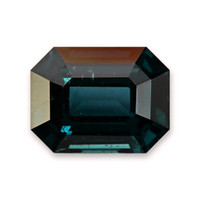
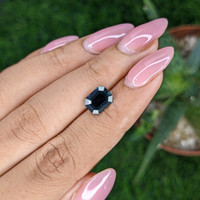
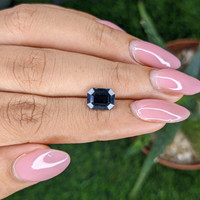
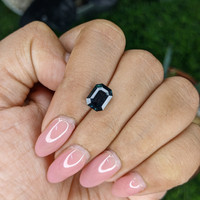
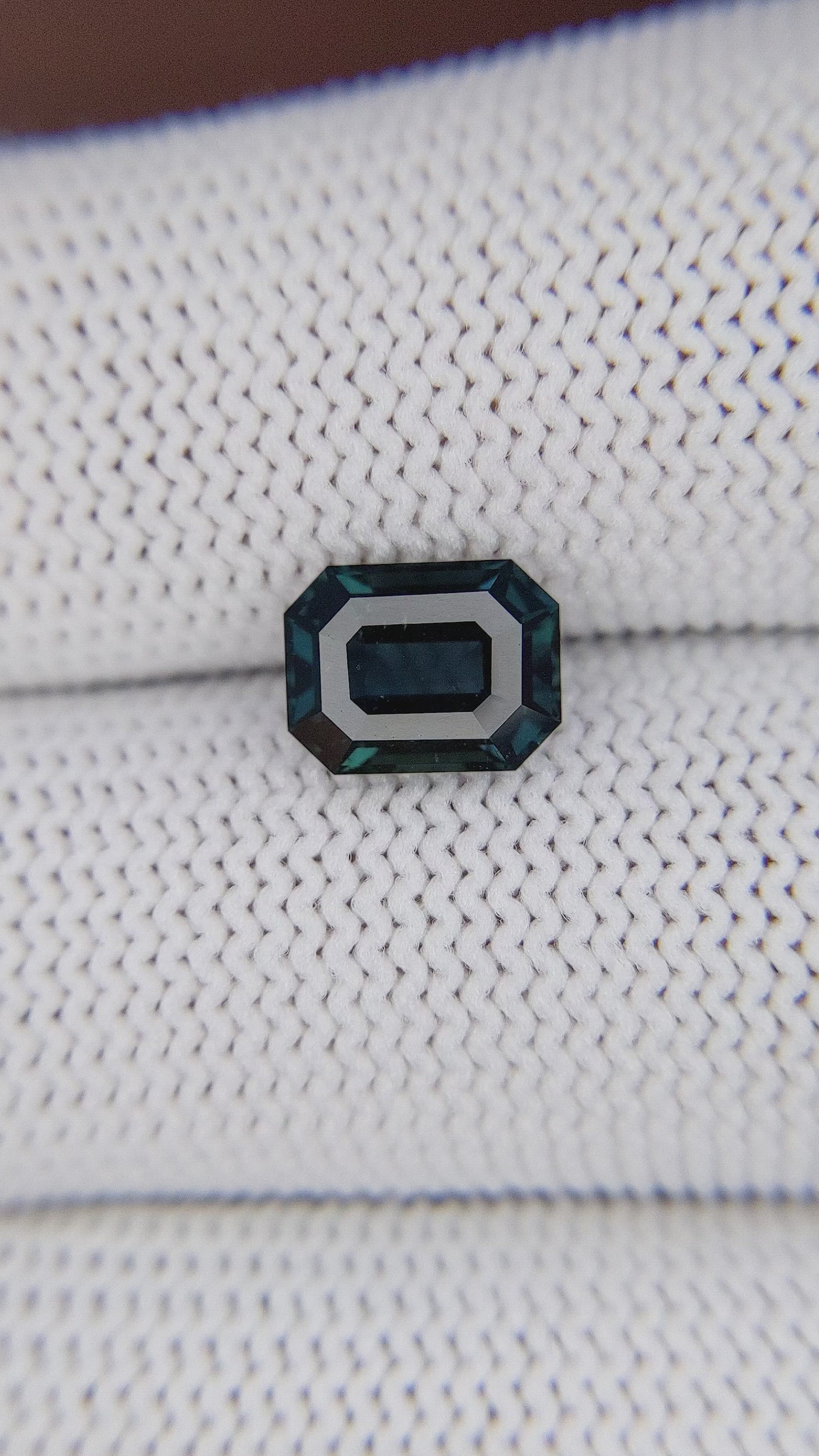
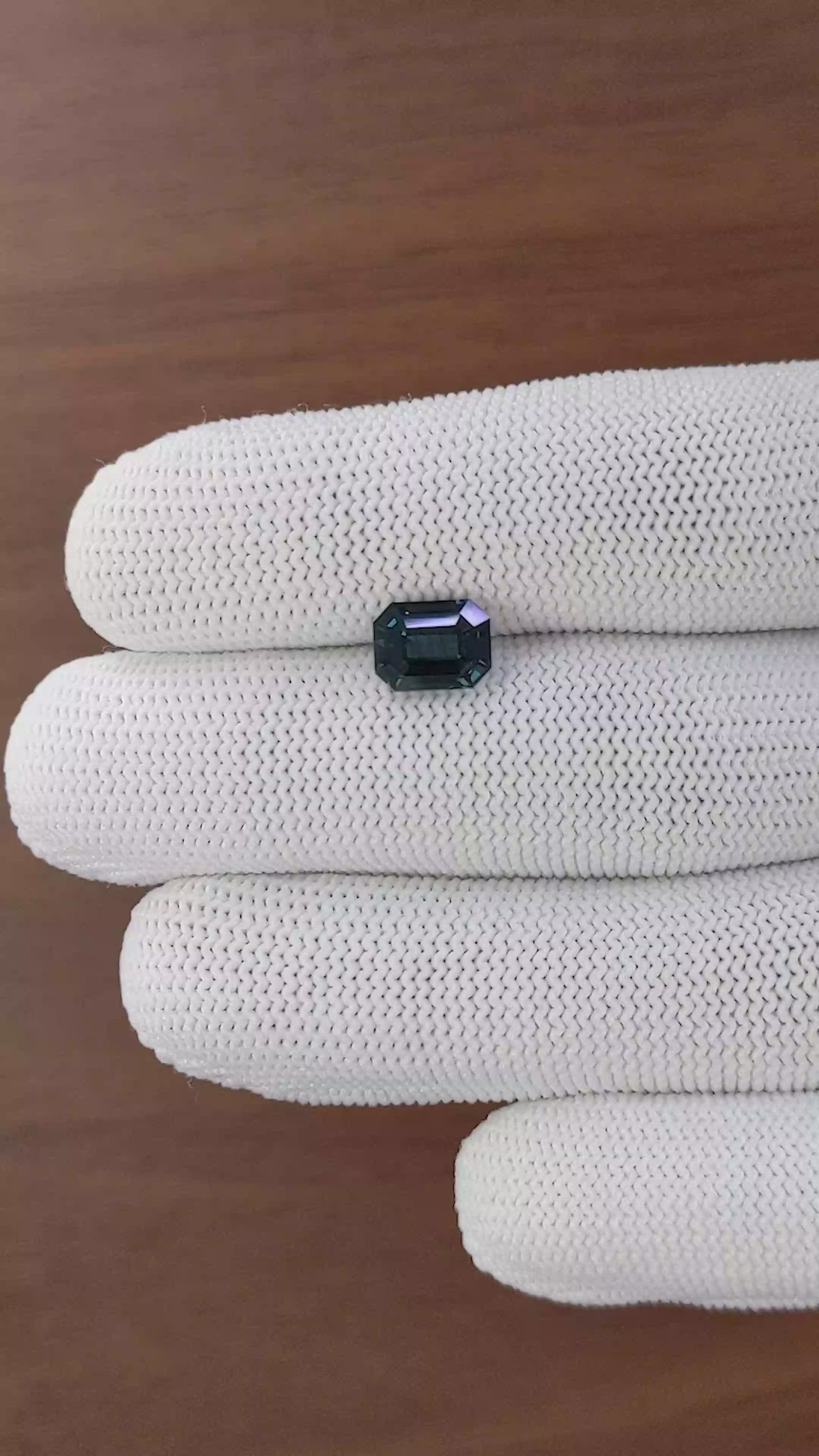
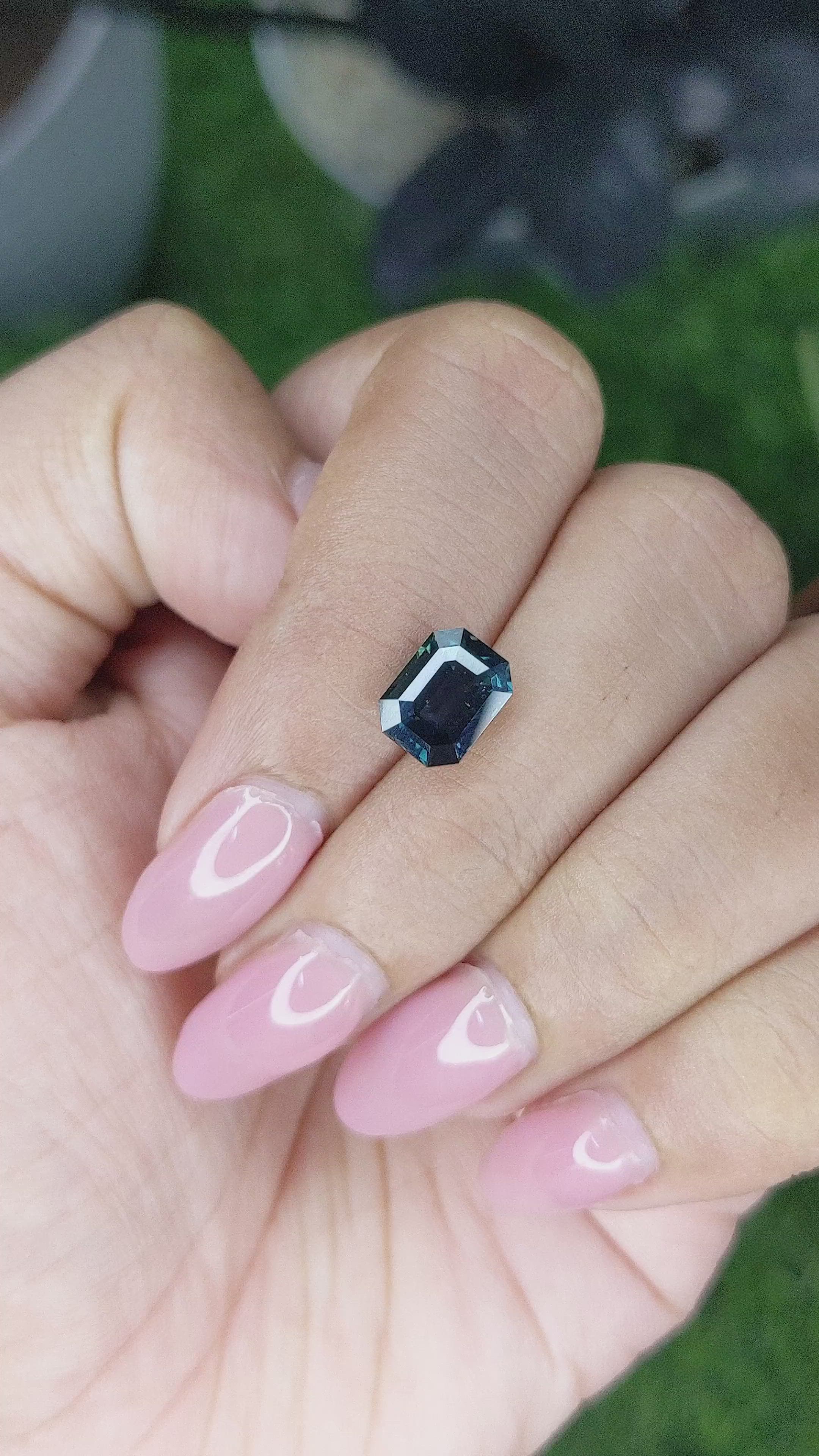
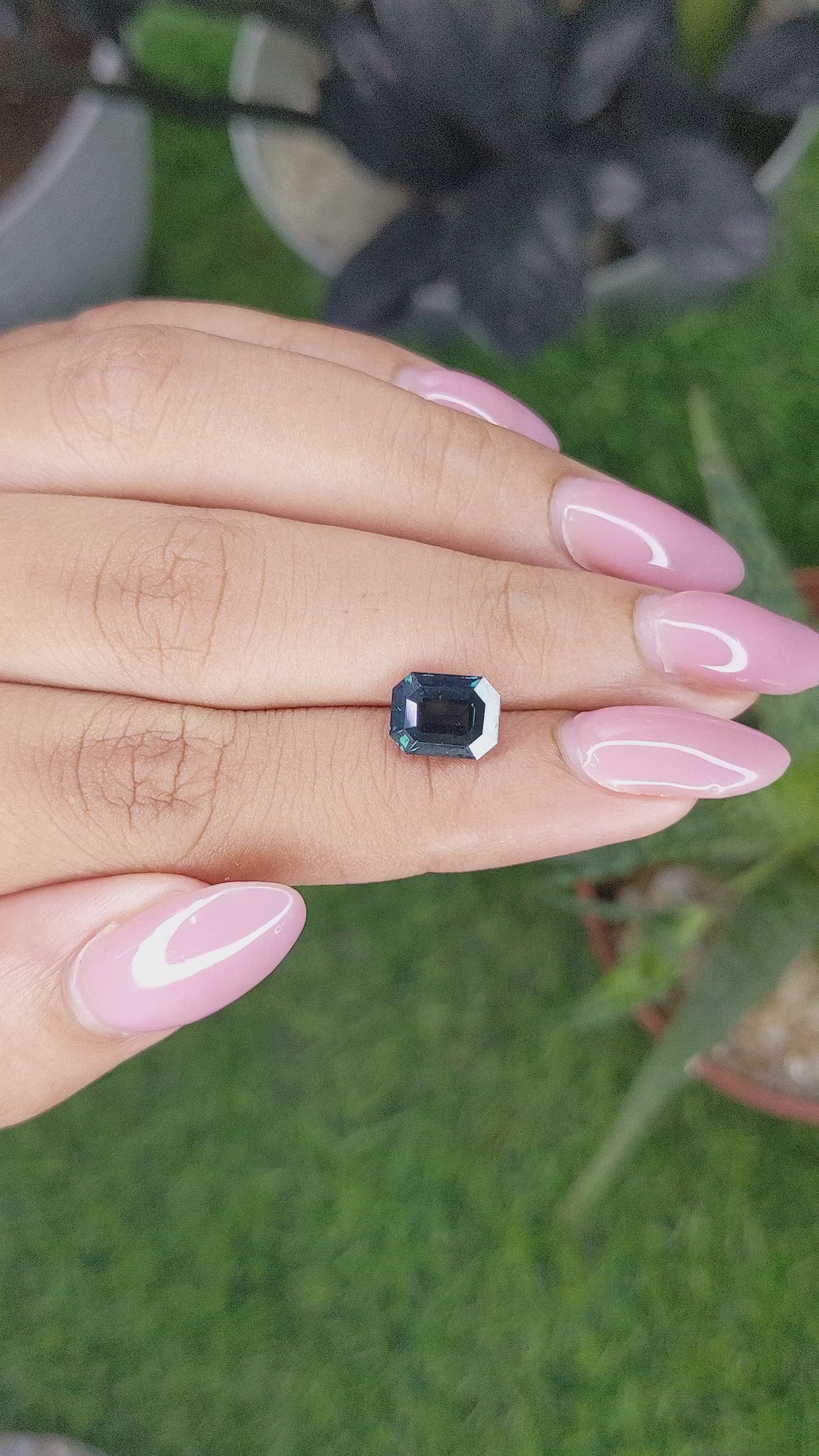

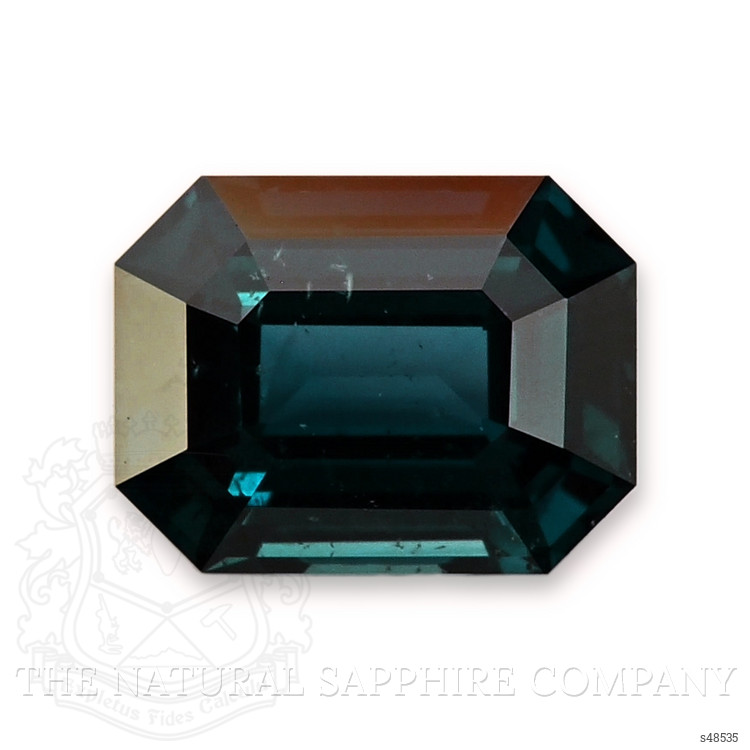
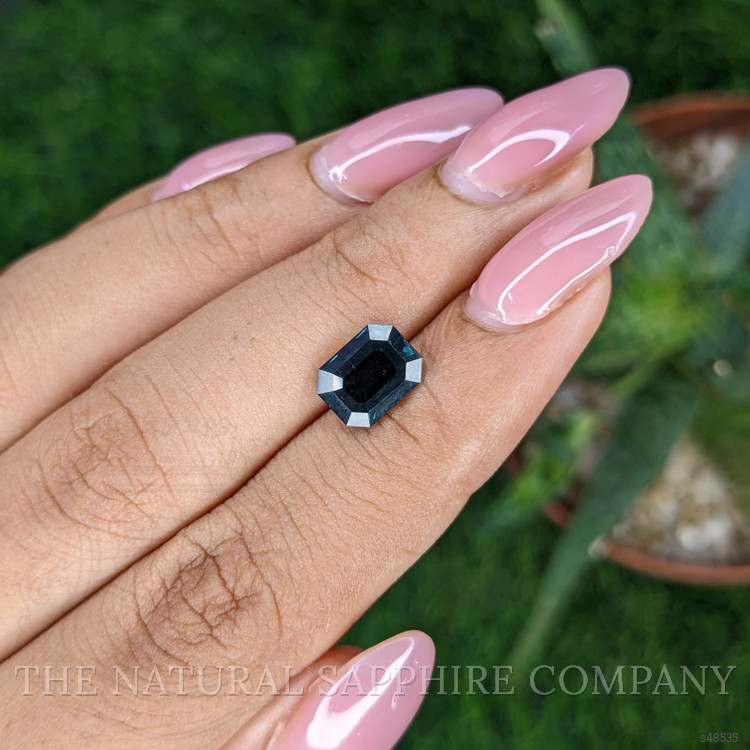
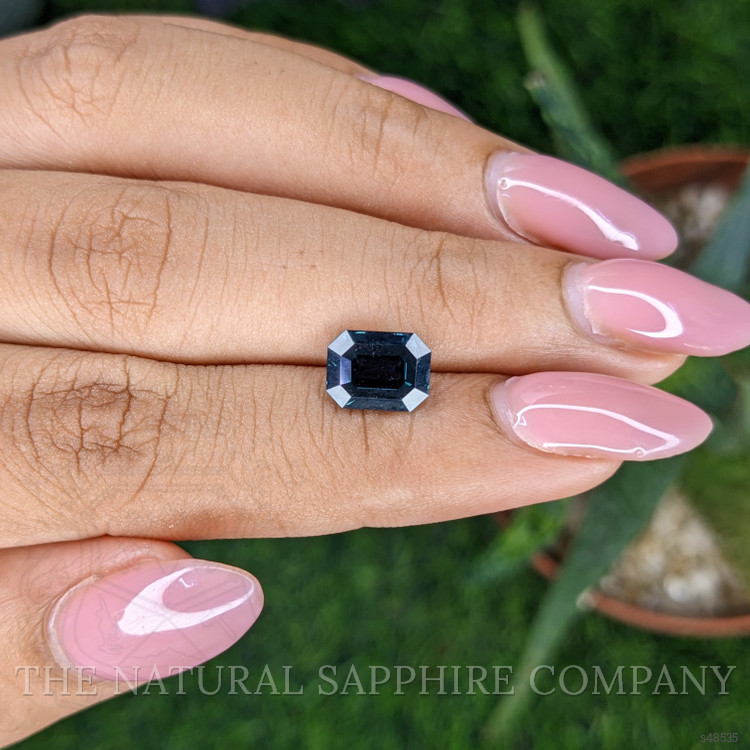
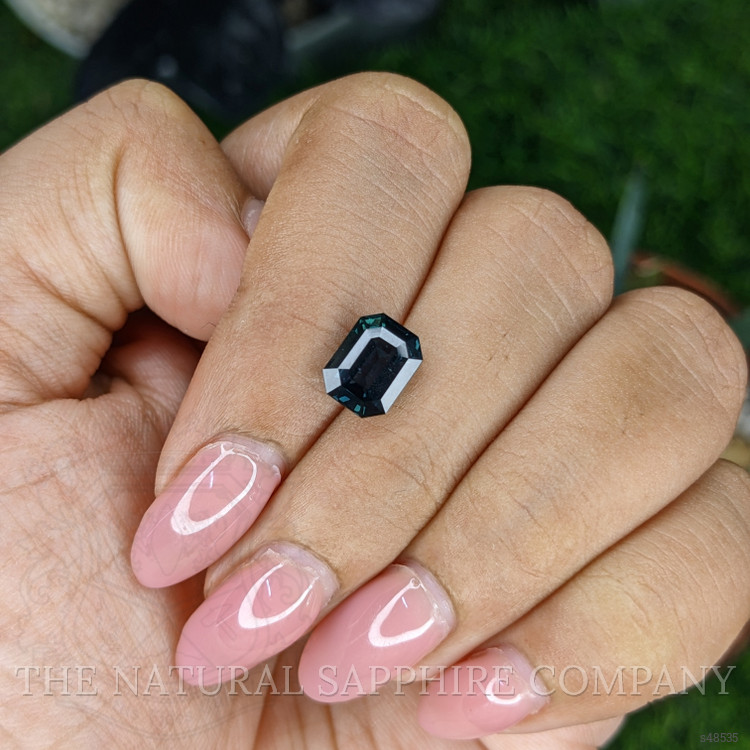

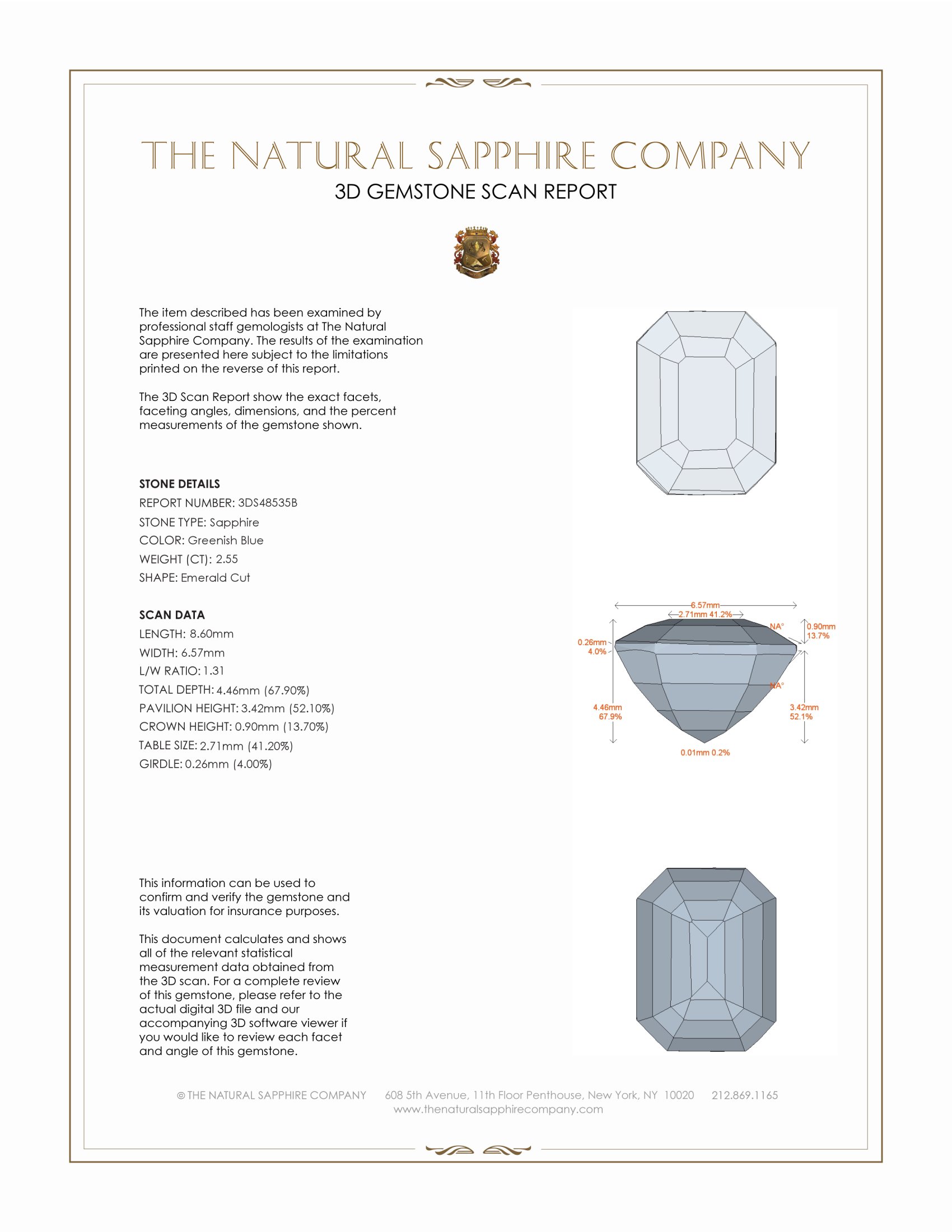
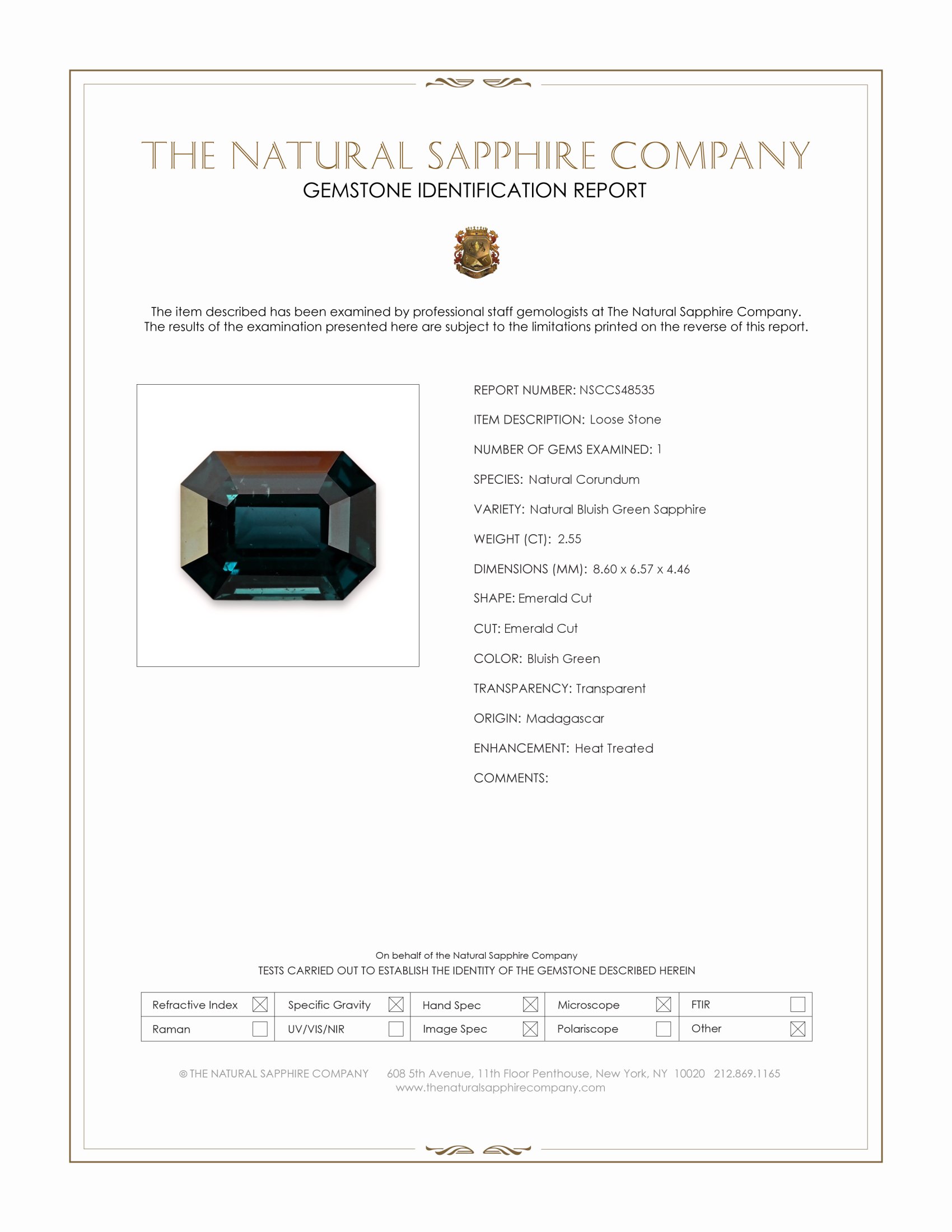
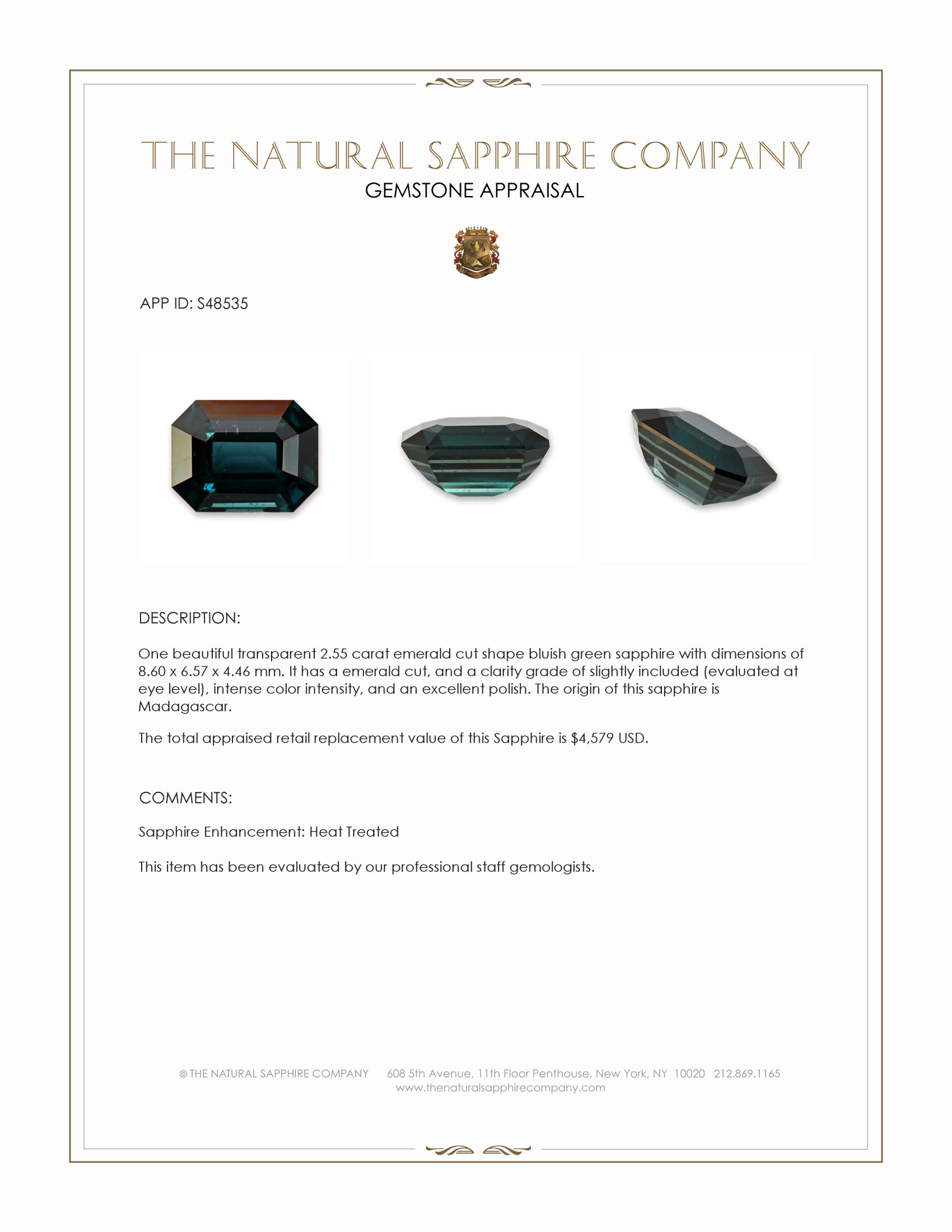
2.55 Ct. Bluish Green Sapphire from Madagascar
This loose stone ships by Oct 19
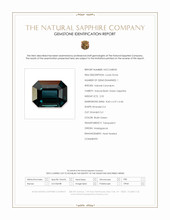
Item ID: | S48535 |
|---|---|
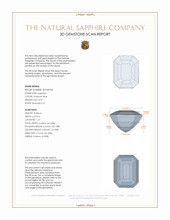
Dimensions (MM): help | Length: 8.6 Width: 6.57 Height: 4.46 |
Weight: | 2.55 Ct. |
Color: help | Bluish Green |
Color intensity: help | Intense |
Clarity: help | Slightly Included |
Shape: help | Emerald Cut |
Cut: | Emerald Cut |
Cutting style: | Faceted |
Enhancements: help | Heat Treated |
Origin: help | Madagascar |
Per carat price: help | $1,796 |
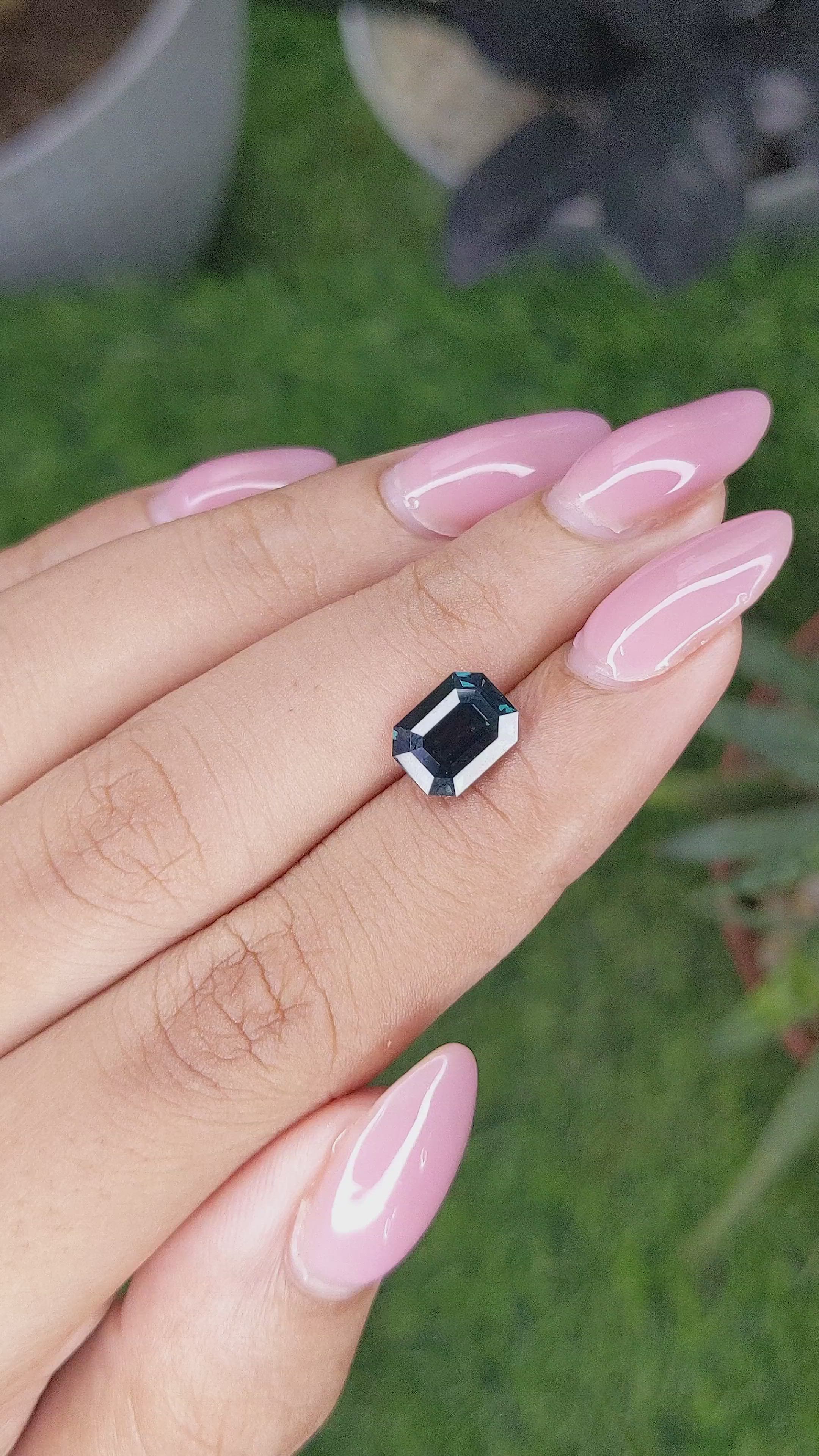
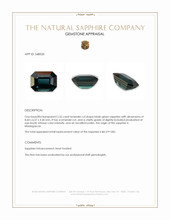
This transparent bluish green sapphire presents as a precisely faceted emerald cut, weighing 2.55 carats, with measurements of 8.60 x 6.57 x 4.46 mm, and an overall form that balances table size and pavilion depth to maximize color saturation and stability of tone. The stone exhibits an intense color intensity, demonstrating a lively bluish green that interacts with light to reveal subtle variations across the table and facets. The cutting style is faceted with an emerald cut geometry that emphasizes linear planes and broad step facets, producing a refined, architectural display rather than a scintillating burst. Clarity is graded as slightly included when evaluated at eye level, and the gem shows an excellent polish that contributes to a clean outline and smooth facet junctions. This sapphire is heat treated, a widely accepted enhancement in the trade that improves clarity and color uniformity while maintaining the natural crystal structure, and its origin is Madagascar, a source known for producing sapphires with attractive color ranges and well defined crystal habits.
Inclusions within this sapphire serve both as indicators of origin and as individual characteristics that contribute to the gem character, and these internal features, while slight, are meaningful for gemological identification and for collectors who value unique signatures. Slight inclusions in sapphires from Madagascar commonly appear as tiny mineral crystals, fine needle like rutile, and faint growth zoning, and when observed in this stone they appear as discreet points and subtle linear features that do not interrupt the overall transparency. These inclusions can act as a fingerprint, assisting trained gemologists in distinguishing natural material from synthetics and in supporting the geographic origin assessment. In a faceted emerald cut, inclusions tend to be more evident in the broad table and along step facets, however the cutting has been executed to minimize their visual impact, preserving a clean face up appearance while retaining the authenticity of the natural stone. The presence of slight inclusions also confirms that the material has not undergone fracture filling with secondary substances, and that the internal structure remains consistent with natural formation processes, attributes that collectors and professionals often prefer for long term value and stability.
Recommendations for use and care are straightforward, and they reflect the practical aspects of integrating this sapphire into fine jewelry with confidence. The strong crystal structure of corundum makes the stone suitable for rings, pendants, and other pieces that are worn regularly, and the emerald cut will sit securely in classic settings that protect the corners and table, while showcasing the stone color in a restrained and elegant manner. Routine cleaning with warm soapy water and a soft brush will maintain the gem luster, and professional inspection of the setting is advisable to ensure prongs or bezels remain secure. As an item sold and presented by The Natural Sapphire Company this sapphire is offered with transparent details regarding treatment and origin, and further laboratory documentation can be provided on request to support appraisal and insurance needs. The combined qualities of precise dimensions, intense bluish green color, slightly included clarity, excellent polish, emerald cut faceting, stable heat treatment, and Madagascar origin make this 2.55 carat sapphire a measured and characterful choice for a refined jewelry commission or for a collector seeking a natural, well documented example of fine corundum.


