
- Stone14
- Reports3


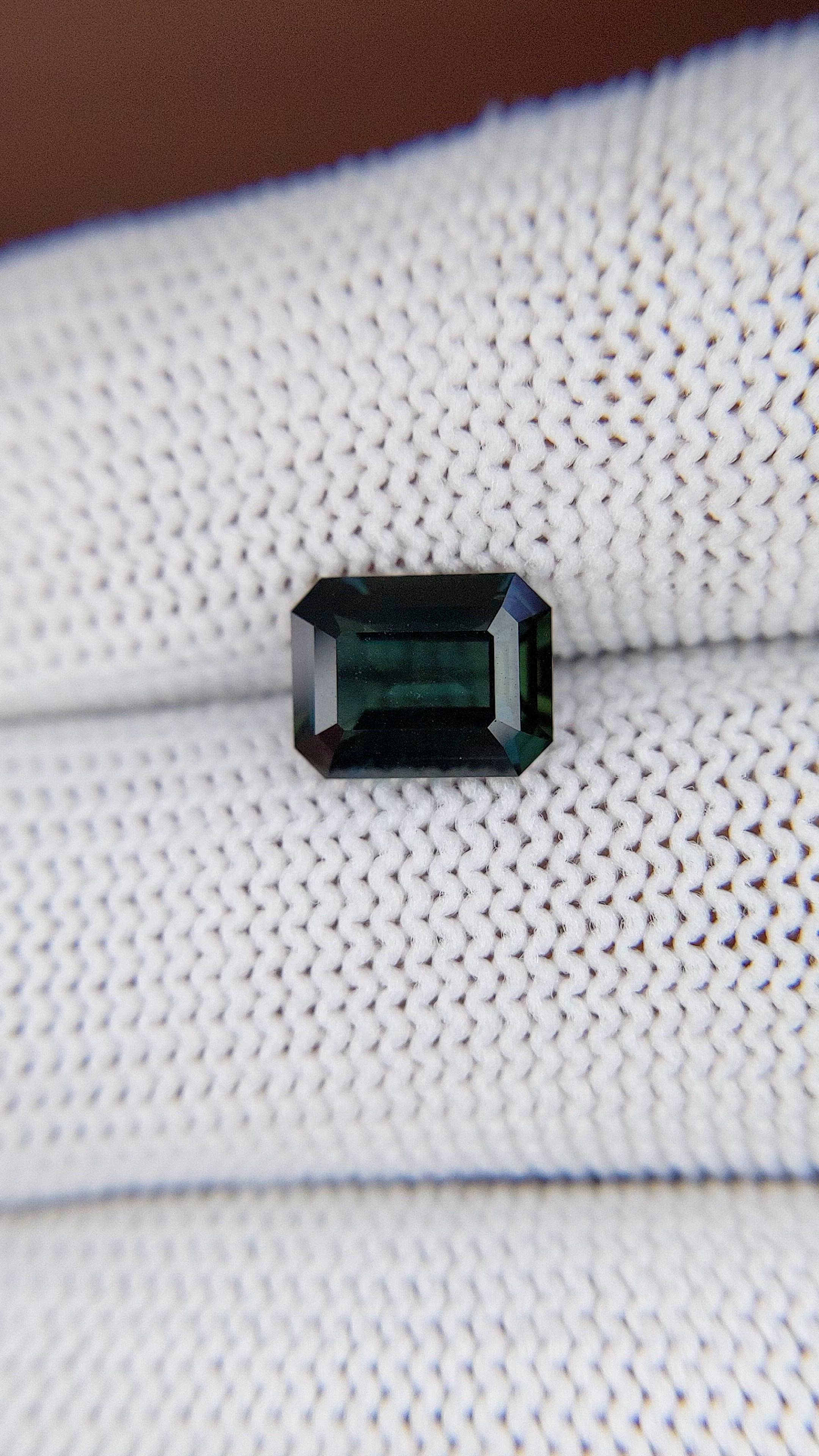
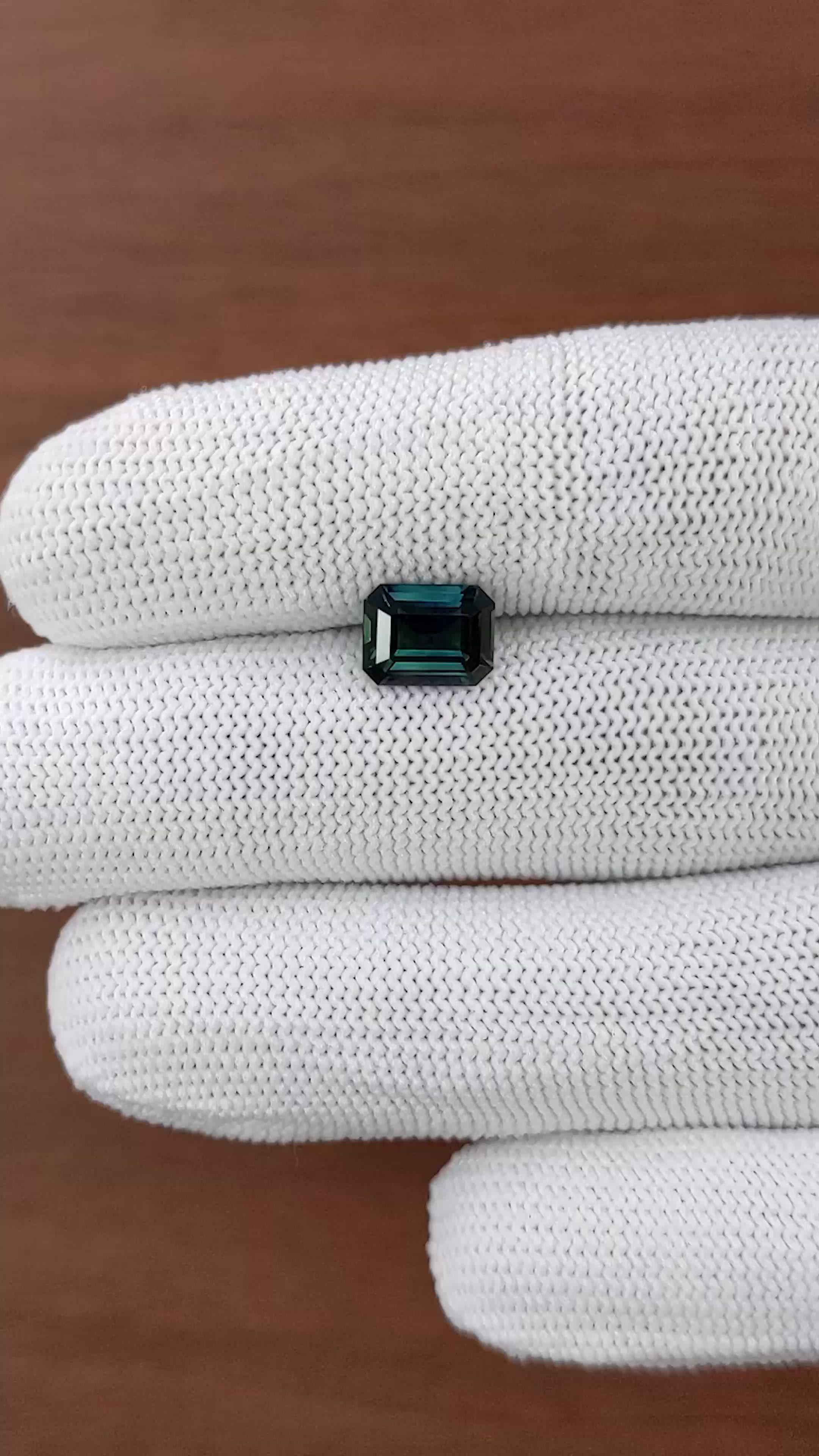
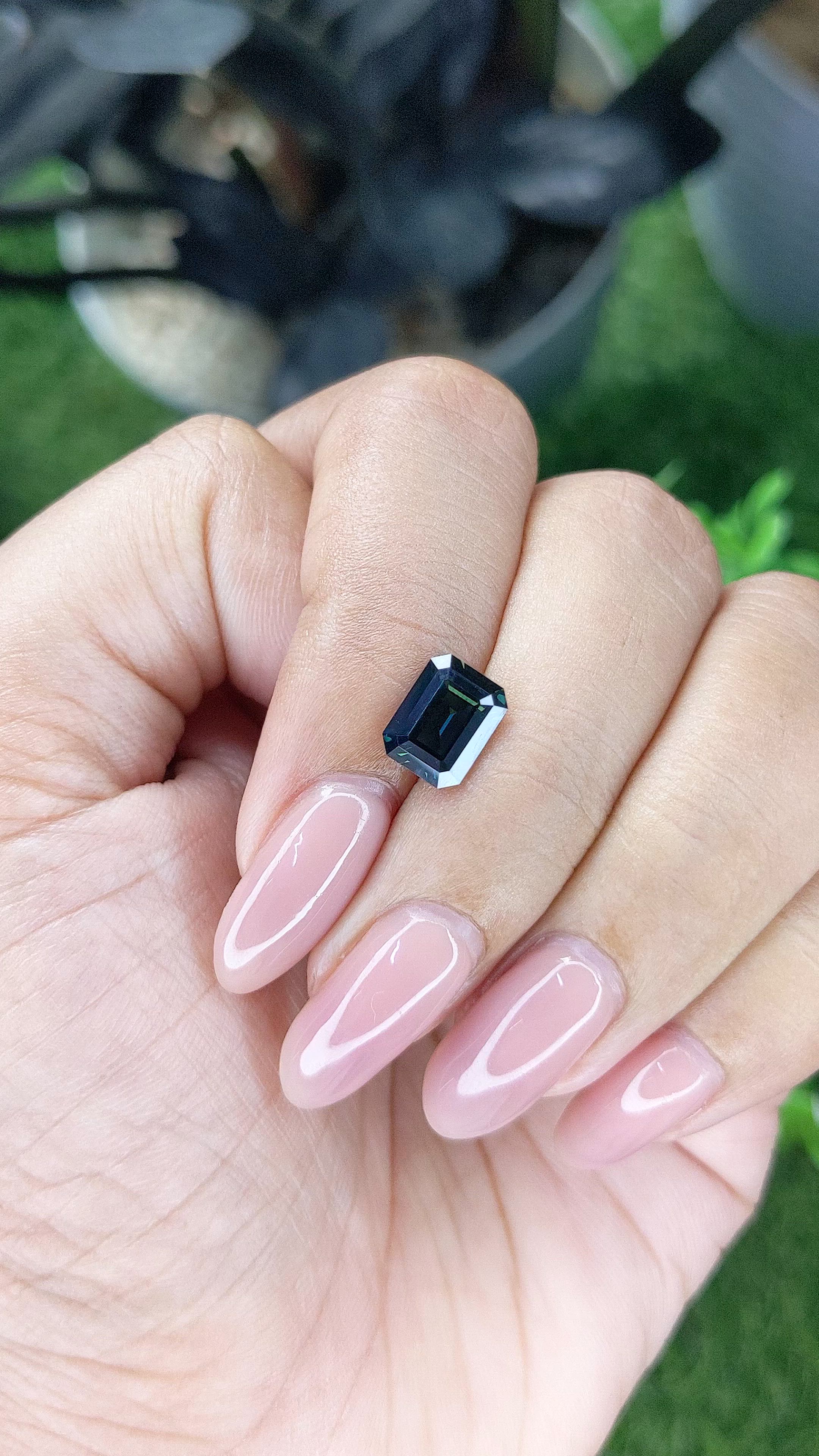
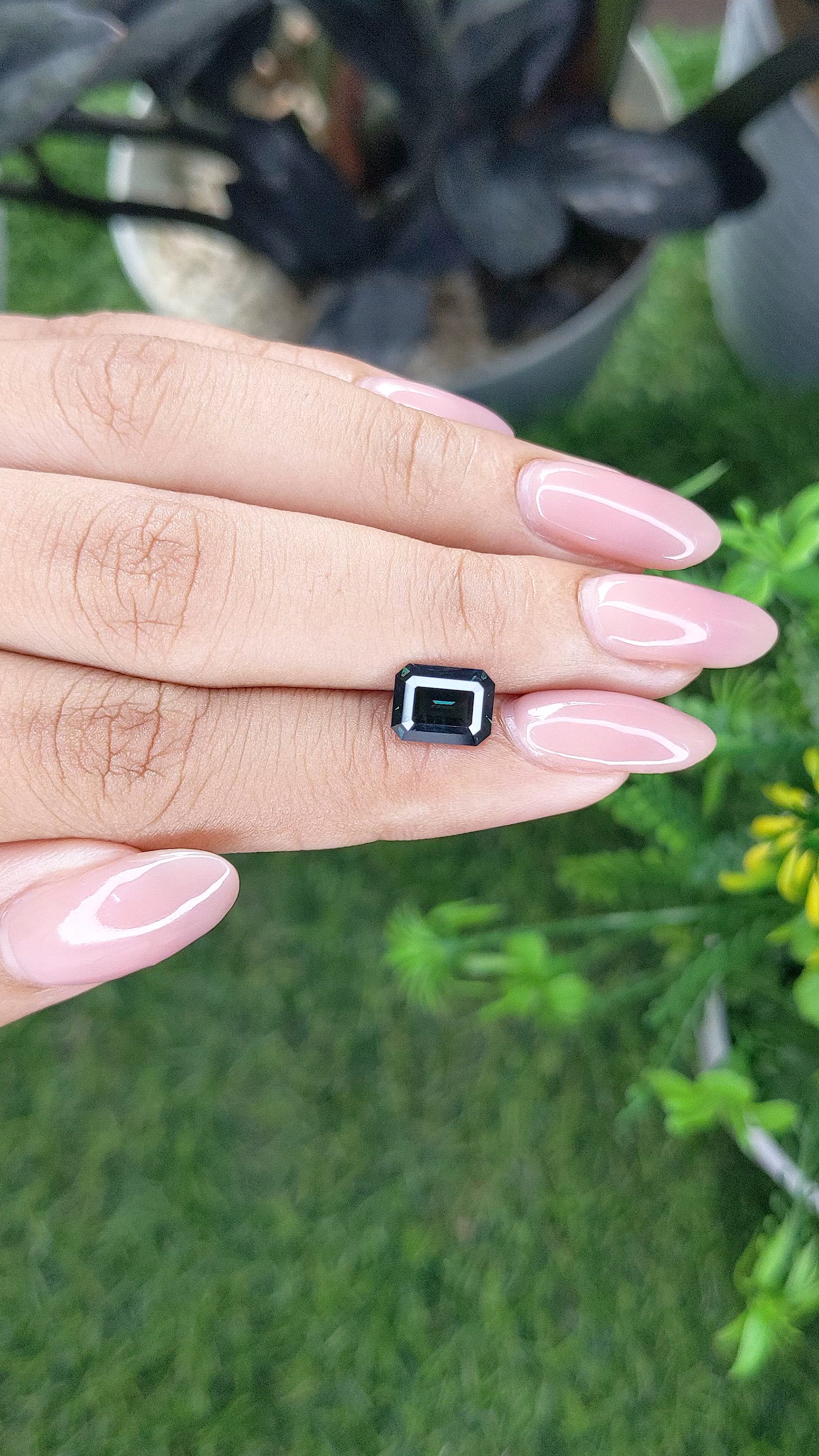
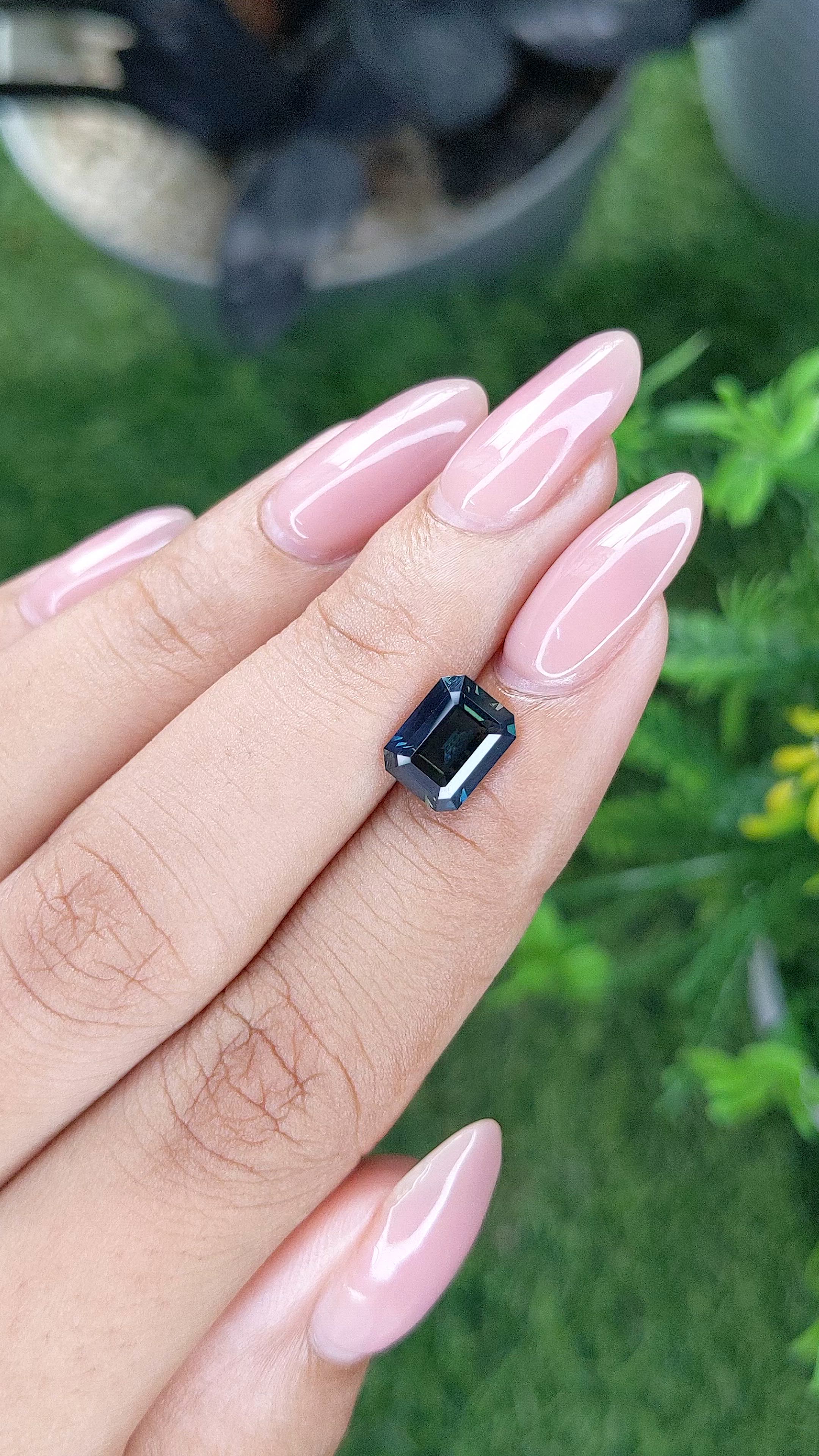



2.18 Ct. Bluish Green Sapphire from Madagascar
This loose stone ships by Sep 13
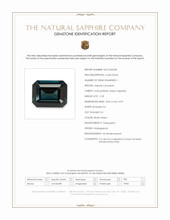
Item ID: | S46783 |
|---|---|
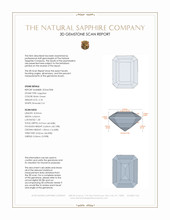
Dimensions (MM): help | Length: 8.52 Width: 6.56 Height: 3.97 |
Weight: | 2.18 Ct. |
Color: help | Bluish Green |
Color intensity: help | Dark |
Clarity: help | Very Very Slightly Included |
Shape: help | Emerald Cut |
Cut: | Emerald Cut |
Cutting style: | Faceted |
Enhancements: help | No Enhancement |
Origin: help | Madagascar |
Per carat price: help | $1,850 |
This transparent bluish green sapphire presents as an elegant emerald cut weighing 2.18 carats, with precise face up dimensions of 8.52 by 6.56 millimeters and a measured depth of 3.97 millimeters, presented by The Natural Sapphire Company. The cutting style is faceted in a classic step pattern, executed with careful symmetry and an excellent polish that yields crisp facet junctions and a mirror like finish. The combination of the stone proportions and the polished facet planes produces a depth to average dimension ratio of approximately 52.7 percent, a balanced depth that optimizes light return for an elongated rectangular outline. The clarity is graded very very slightly included when evaluated at eye level, which in practice means that inclusions are minimal, well distributed, and do not interrupt the overall transparency or visual integrity of the gem. Importantly this sapphire has no enhancement, and its natural origin in Madagascar contributes to its distinctive bluish green hue and stable optical character.
The geometric faceting of this emerald cut is the principal instrument for maximum light play, and the cutter has leveraged classic step facets to create an interplay of broad flashes and dark hall of mirrors contrasts that emphasize the stone color and movement. The crown is configured with shallow to moderate facet slopes that allow the table to act as a controlled window into the pavilion, while the pavilion is cut with precise tiered facets that channel light back in broad, directional flashes rather than a scattering of fine brilliant scintillation. This produces a sophisticated optical performance characterized by long flashes, strong contrast, and a directional scintillation pattern that accentuates the emerald cut geometry. The truncated corners, integral to the emerald cut silhouette, provide additional facet junction surfaces that reflect light at oblique angles, increasing visual depth and producing subtle dynamic shifts as the gem is rotated. Because the polish is graded excellent, light transitions across facet planes are clean and uninterrupted, which enhances the perceived saturation and yields distinct, well defined flash zones even with a darker color intensity.
Color and clarity interact with the geometry to define the gem experience, and this specimen exhibits a dark color intensity that gives the blue green tone a rich, saturated appearance when viewed face up, while revealing secondary blue and green pleochroic responses as the stone is tilted. The step faceting favors color saturation and directional color windows, permitting the wearer to appreciate the layered blue and green components rather than a single uniform field. The very very slightly included clarity grade means that inclusions are present but do not detract from the optical architecture established by the facets, which is particularly important for a step cut where broad flash areas can be disrupted by large or poorly located inclusions. In this case the cutter has oriented the stone to minimize inclusion visibility in the principal face up view, prioritizing both eye appeal and structural integrity. The Madagascar origin is relevant from a gemological perspective, as stones from this locale often exhibit distinct trace element balances that contribute to bluish green hues, and the untreated condition confirms that the color and clarity are entirely natural. For settings that maximize the geometric light play, a solitaire or bezel with low profile crown exposure will allow the elongated flashes and contrast patterns to be read clearly, while halo or step sided settings can complement the stone geometry and further emphasize the hall of mirrors effect. This emerald cut sapphire exemplifies measured proportions, meticulous faceting, and high polish, culminating in a transparent gem where geometric faceting is intentionally deployed to generate controlled and compelling light performance.


