
- Stone14
- Reports3


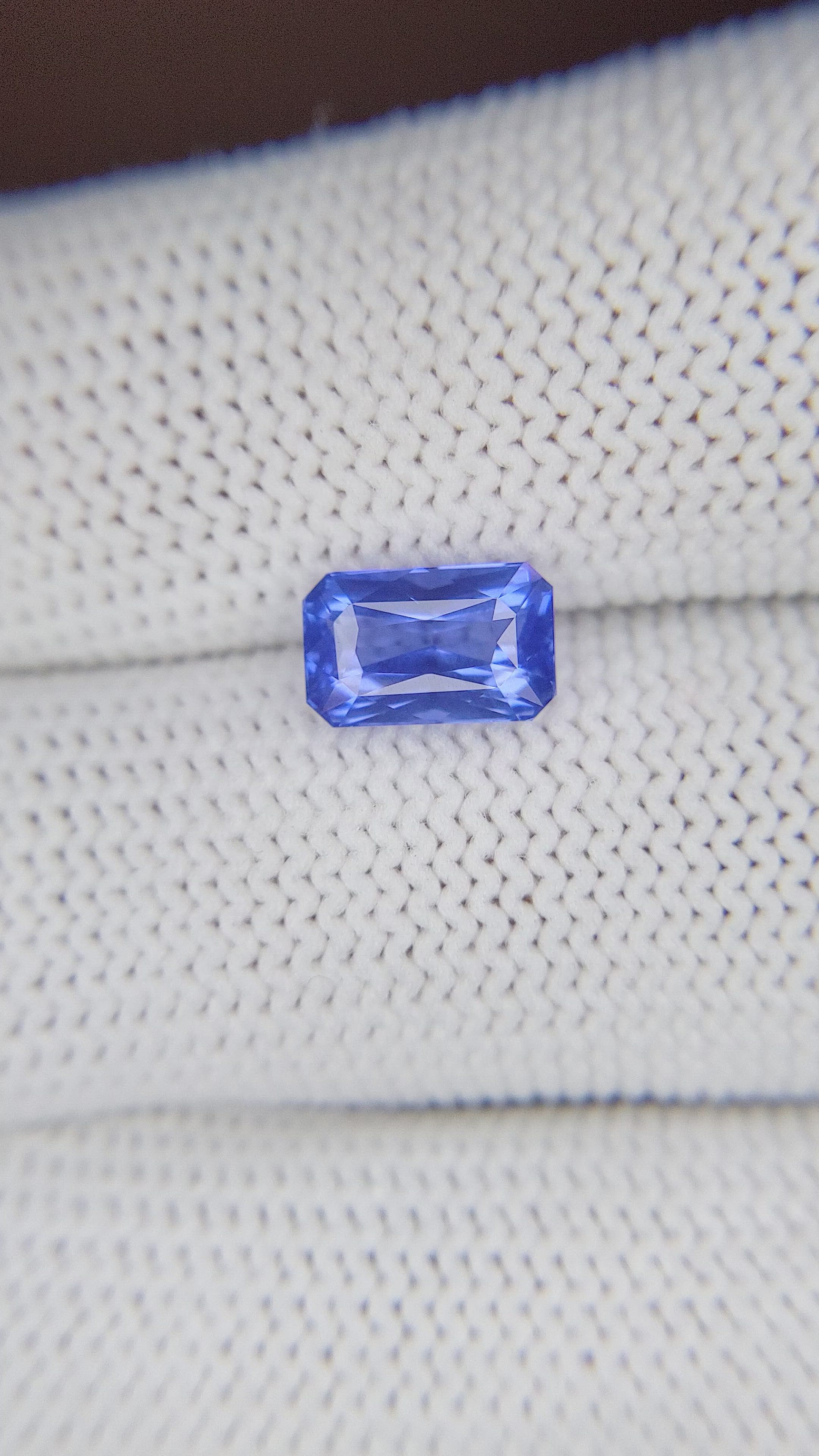
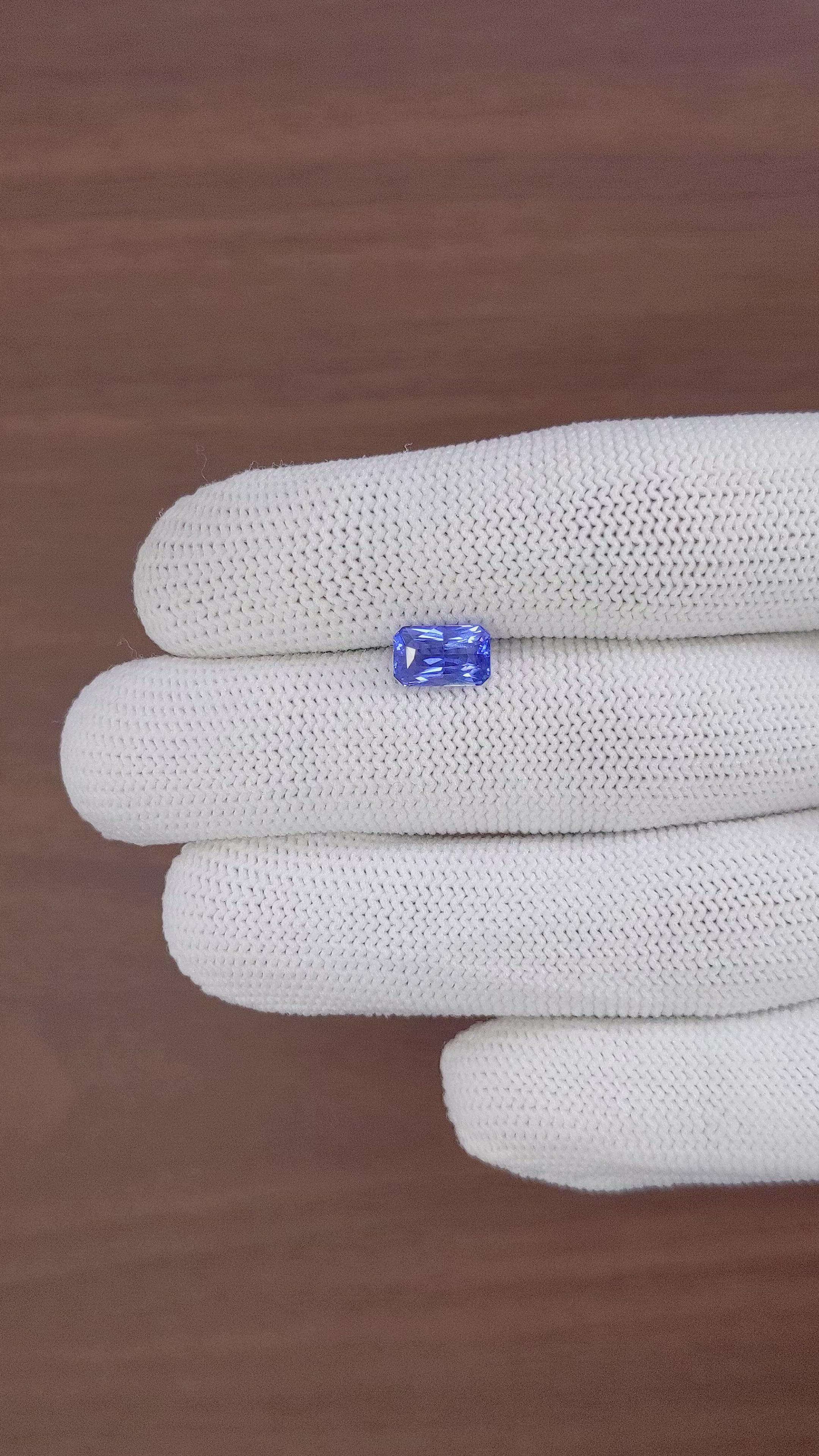
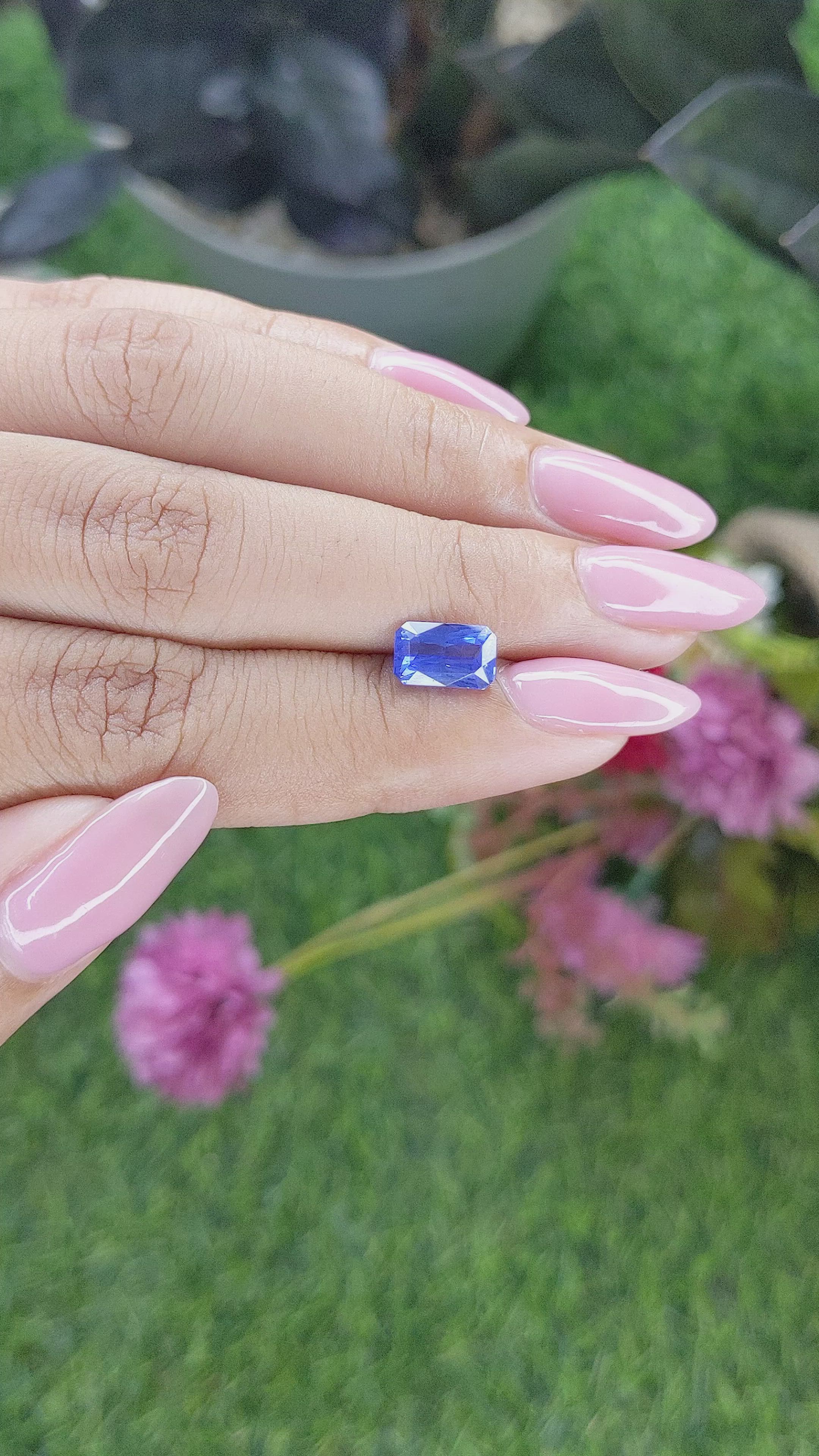
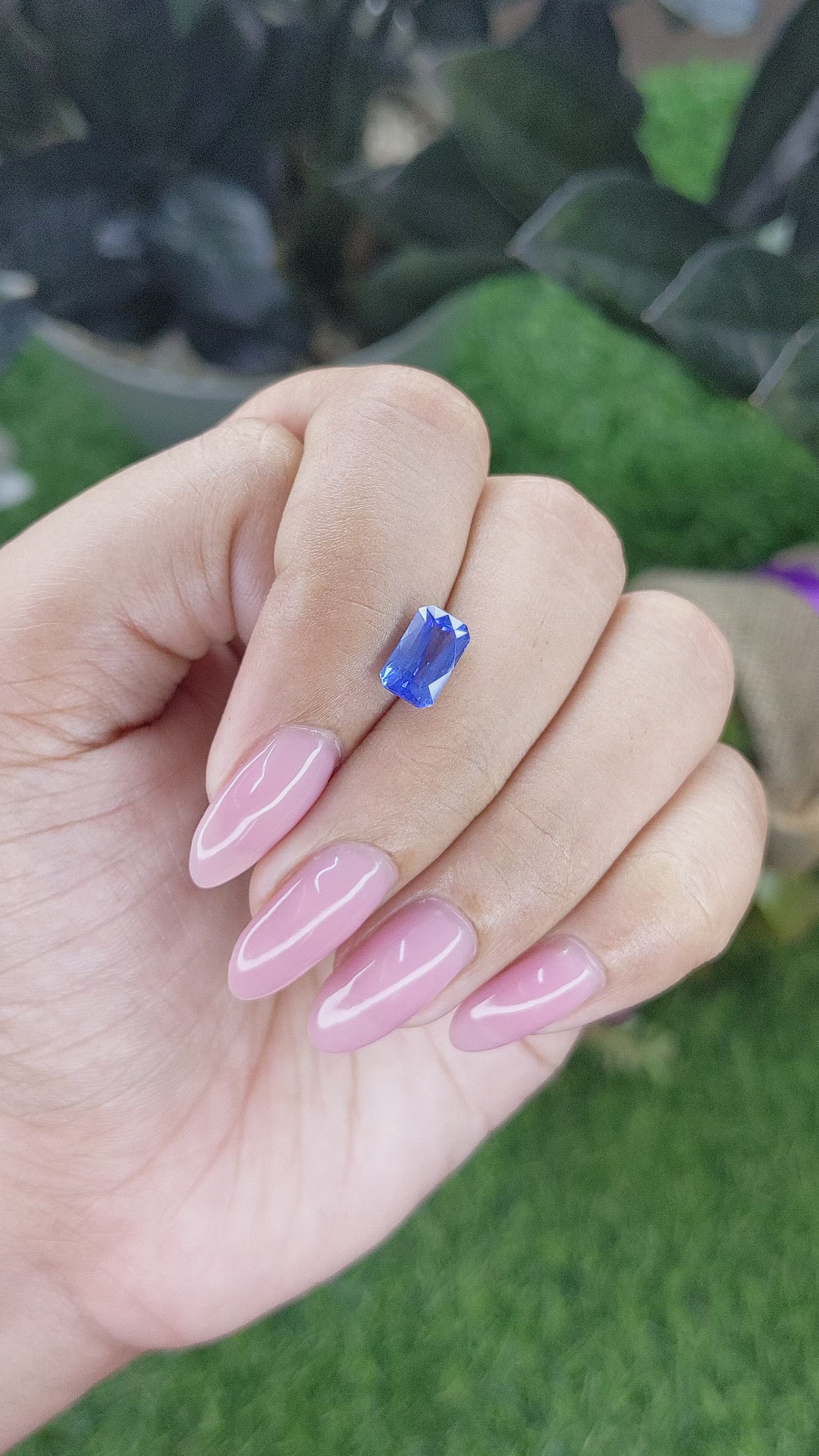
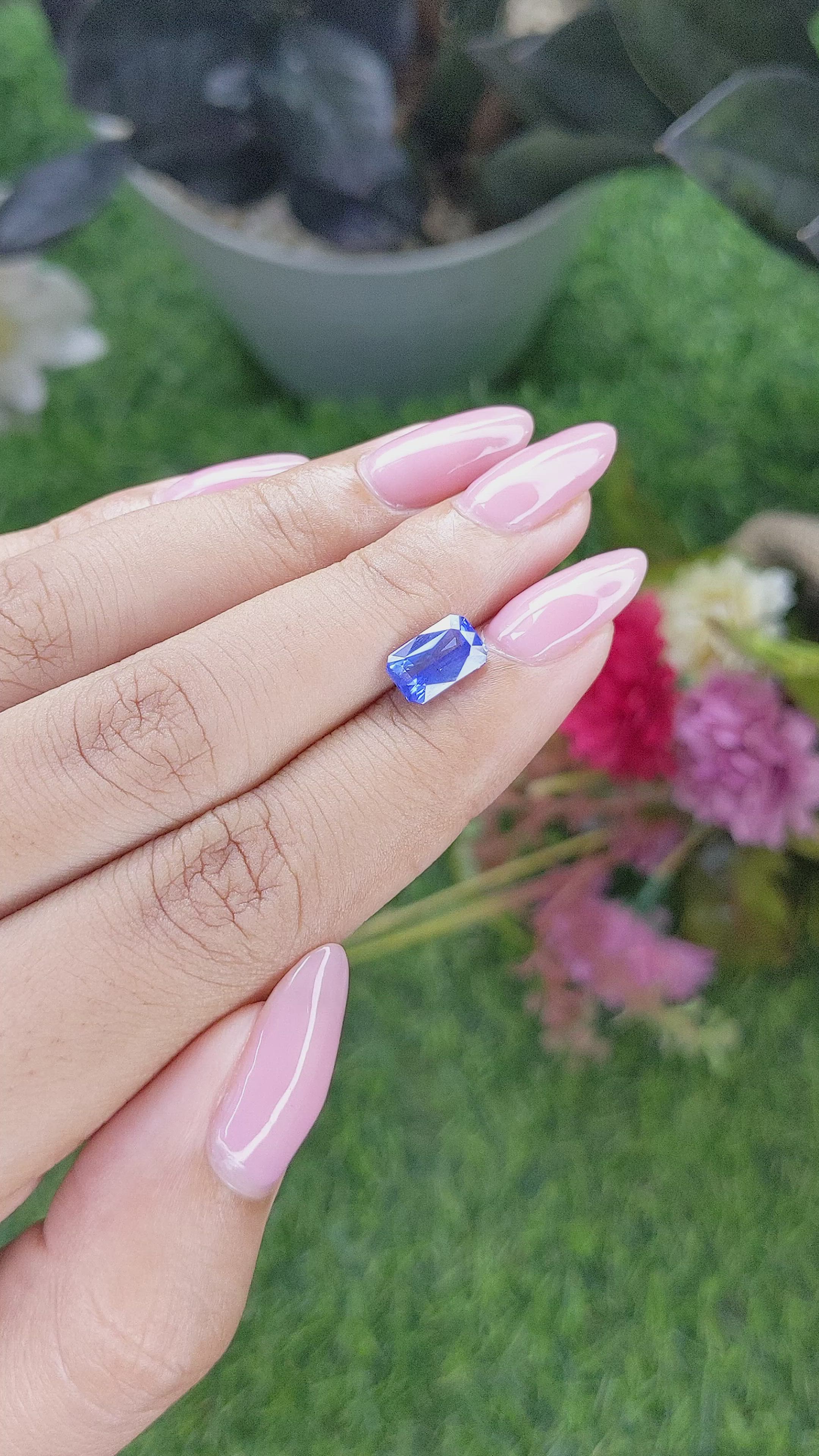


2.07 Ct. Blue Sapphire from Tanzania
Item ID: | S40241 |
|---|---|
Dimensions (MM): help | Length: 8.63 Width: 5.41 Height: 4.1 |
Weight: | 2.07 Ct. |
Color: help | Blue |
Color intensity: help | Medium |
Clarity: help | Very Very Slightly Included |
Shape: help | Radiant |
Cut: | Radiant Cut |
Cutting style: | Faceted |
Enhancements: help | No Enhancement |
Origin: help | Tanzania |
Per carat price: help | $1,739 |
This 2.07 carat radiant shape blue sapphire presents a concise specification set that will satisfy technically minded buyers. The stone measures 8.63 x 5.41 x 4.10 mm, yielding a length to width ratio of approximately 1.60, which gives an elegant, slightly elongated profile suitable for solitaire or three stone orientations. The calculated pavilion depth relative to the average face dimensions is close to 58 percent, an optical proportion that supports balanced light return and an even face up appearance. The radiant cut employed here is a hybrid facet architecture that combines trimmed corners with a mix of step and brilliant facets across the crown and pavilion, providing both directional clarity and facet scintillation. Facet junctions are precisely executed, the table facet is proportionate to the crown plane, and the excellent polish enhances facet crispness, so loupe inspection will reveal sharp facet edges and minimal surface disturbance, while the overall symmetry supports efficient internal reflection and a lively, controlled dispersion.
On gemstone grading parameters, this sapphire is described as transparent with a clarity grade of very very slightly included, evaluated at eye level, and it exhibits medium color intensity in a true blue hue, with no enhancement reported. The unheated provenance from Tanzania is consistent with a clean crystalline matrix and stable color distribution, and the lack of enhancement preserves original crystal structure and natural zoning that educated gem customers often prefer. From a practical perspective, inclusions are present at magnification yet do not compromise transparency or create significant extinction in the face up view, and the medium color intensity situates the stone in a visually versatile zone that reads well in both white and warm metal settings. The absence of heat treatment places additional value on the material, and provenance from Tanzania allows informed buyers to consider typical local characteristics such as a balanced blue saturation and a clean vitreous luster, while understanding that corundum often displays mild pleochroism that may reveal slightly different blue tones as the orientation changes on the finger.
When specifying complementary gemstones for a custom piece, consider facet and scale compatibility to maintain optical cohesion. For a classic frame and contrast, a single row halo of well matched round brilliant diamonds in the one point to two point range, set in a tight micro pavé, will enhance perceived table brilliance without overpowering the sapphire. For linear side stones, tapered baguette diamonds cut with elongated step facets align with the radiant ended geometry and provide a controlled light return that counterpoints the sapphire facets, two stones of approximately 0.25 to 0.35 carat each preserve balance for a ring application. For a more colorful approach, pair the sapphire with medium green tsavorites in calibrated rounds or small oval cuts, since complementary color contrast between blue and green produces a lively but harmonious palette, while small warm tone accents such as cognac diamonds or yellow sapphires will lift the blue and create a vintage inspired contrast. In pendant and earring design, a trio concept using two matched brilliant cut side stones will maintain optical equilibrium, and consistency in facet type among accent stones will minimize competing scintillation, so choose brilliant cuts for pavé and halo, and step cuts for flanking elements.
From a setting and technical mounting perspective, the stone dimensions and depth inform seat design and prong placement, and The Natural Sapphire Company recommends a prong setting that secures each trimmed corner while keeping the profile low enough to display the table without excessive shadowing. Platinum or 18k white gold will maximize perceived brightness and contrast, while 18k yellow or rose gold will warm the visual temperature and emphasize the medium intensity blue, so choose metal according to desired color interaction. When designing bezel settings, allow for a minimal bezel flange to preserve the radiant geometry and avoid masking the corner facets, and when designing prongs, use four corner prongs combined with two minimal side prongs for optimal security without obscuring table area. For bespoke commissions The Natural Sapphire Company can provide matching accent stones, CAD renders, and setting tolerances based on the precise 8.63 x 5.41 x 4.10 mm profile, so contact our design team to review mounting options, metal choices, and complementary gem palettes to achieve a technically precise and visually balanced finished piece.


